Reviews
“Triggers provides the self awareness you need to create your own world, rather than being created by the world around you.”—Alan Mulally, CEO of the Year (US) and #3 on Fortune magazine’s 50 Greatest Leaders in the World (2014)
“Reading Triggers is like talking with Marshall. You get clear, practical, and actionable suggestions.”—Ian Read, CEO, Pfizer
“Triggers inspires us to be better people, better leaders, better fellow travelers. ‘Creating behavior’ is our new battle cry for a bright future.”—Frances Hesselbein, President and CEO, The Frances Hesselbein Leadership Institute, 1998 Presidential Medal of Freedom Award Recipient
“Marshall is a valuable coach and partner in driving organizational change and performance improvement. Triggers will guide a new group of executives looking to reach their full business and personal potential.” —Brian C. Cornell, Chairman and CEO, Target Corporation
“Marshall Goldsmith is one of the world’s foremost experts at helping people get better. In this new book, he provides a rich set of new, practical, life tested ideas, concepts and frameworks that will help those of us who want to change, be the best that we can be, and be the person we want to be.”—Hubert Joly, CEO, Best Buy
“I have had the great fortune of working with Marshall for several years. He has helped me in so many ways. Triggers represents a natural progression in Marshall’s work and many of the ideas in it have already helped me and many of his other clients. As with all of his books, I know that Marshall’s focused, practical and insightful approach will help you in leadership, but even more important, it can help you in life!”—Jim Yong Kim, 12th President The World Bank
“Marshall Goldsmith is a great author and world-renowned executive coach. His contribution to our group has been immense and we have greatly benefited by his unparalleled experience and his knowledge. In Triggers he shares illuminating stories from his work with great global leaders. He helps us transform our lives and helps us become more holistic human beings. This is a book worth reading for every practicing professional and for those who aspire to leadership.—GM Rao, CEO GMR Group (India), Indian Entrepreneur of the Year
“How do we create the change we need for our organizations and for ourselves? Marshall Goldsmith is the master of helping us all find that path, avoiding the negative triggers and building upon the triggers that bring out our best. Here, again, he teaches with his unique insight, warmth and positive energy. Our job is to learn and do better, for a better outcome for all, which this book helps guide.”—Tony Marx – CEO New York Public Library
“You can’t teach an old dog new tricks…without Marshall Goldsmith’s help. With his coaching, you can change your old behavior to create new outcomes.”—Deanna Mulligan – CEO Guardian Life, Fortune 50 Most Powerful Women in Business
This groundbreaking book tackles the age-old question: Why do we struggle to become the person we aspire to be? It explores the hidden environmental and psychological triggers that shape our behavior, often without our awareness. The authors provide a practical framework for identifying these triggers and offer actionable strategies to overcome them. By understanding the power of our environment and learning to ask ourselves daily questions, readers can create lasting positive change in their personal and professional lives. This isn’t just another self-help book; it’s a roadmap for sustainable behavioral transformation based on decades of research and real-world application.
Triggers is primarily aimed at professionals, leaders, and individuals seeking personal growth and behavioral change. The book’s concepts are particularly relevant for managers, executives, and anyone in a position of influence who wants to improve their leadership skills and personal effectiveness. However, the secondary audience includes a broader range of readers interested in self-improvement, psychology, and human behavior. The authors have made complex psychological concepts accessible to the average reader, using clear language and relatable examples. While some familiarity with self-help literature may be beneficial, the book is written in a way that makes it approachable for newcomers to the genre as well as seasoned personal development enthusiasts.
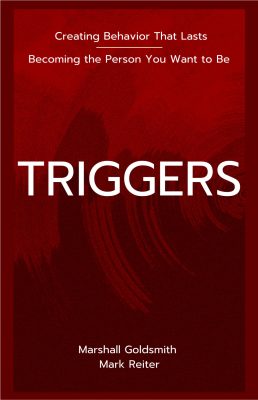
Have you ever wondered why New Year’s resolutions often fizzle out by February? Or why that gym membership card gathers dust while your waistline expands? Marshall Goldsmith and Mark Reiter’s Triggers: Creating Behavior That Lasts–Becoming the Person You Want to Be dives headfirst into this perplexing human tendency to sabotage our own best intentions. It’s not just about willpower, they argue. Our environment is constantly conspiring against us, bombarding us with triggers that can derail our progress in the blink of an eye.
Imagine you’re a ship captain, navigating treacherous waters. Your destination is clear, but hidden beneath the waves are countless reefs and obstacles. These are your triggers – the seemingly innocuous events, people, and circumstances that can knock you off course. Goldsmith and Reiter serve as your seasoned navigators, helping you map out these dangers and chart a course to lasting change.
The book introduces readers to the concept of “behavioral triggers” – those pesky external stimuli that prompt us to act in ways contrary to our goals. From the smell of fresh-baked cookies derailing your diet to a tense email throwing your whole day off-kilter, triggers are everywhere. But fear not! The authors don’t just point out the problem; they equip you with a powerful tool: the daily question process. This simple yet effective technique involves asking yourself a set of questions each day, turning self-reflection into a habit and paving the way for meaningful change.
Triggers isn’t just another self-help book filled with feel-good platitudes. It’s a practical guide backed by Goldsmith’s decades of experience coaching top executives. The authors challenge common misconceptions about willpower and motivation, arguing that our environment plays a far more significant role in our behavior than we often realize. They provide actionable strategies for identifying and managing triggers, creating supportive environments, and developing the self-awareness needed for lasting change.
Readers of Triggers will learn how to:
The core message of Triggers is deceptively simple yet profoundly impactful: our environment shapes our behavior far more than we realize, but we have the power to shape our environment. Goldsmith and Reiter argue that lasting behavioral change isn’t just about willpower or motivation; it’s about understanding and managing the myriad triggers that influence our actions every day.
Think of your mind as a garden. Your goals and aspirations are the seeds you plant, hoping they’ll grow into beautiful flowers. But triggers are like weeds – they pop up unexpectedly, competing for resources and threatening to choke out your carefully planted goals. The authors teach you to become a master gardener of your own mind, identifying and uprooting these weeds before they can take hold.
The book emphasizes the importance of self-awareness and proactive planning. By anticipating triggers and preparing for them in advance, we can dramatically increase our chances of success. The daily question process serves as a powerful tool for cultivating this awareness, turning self-reflection into a habit that reinforces positive behaviors and helps us course-correct when we veer off track.
Goldsmith and Reiter challenge the common belief that change is simply a matter of trying harder. Instead, they argue that sustainable change comes from understanding our environment, creating supportive structures, and consistently engaging in self-reflection. The book’s message is ultimately one of empowerment – while we can’t always control the triggers we encounter, we can control our response to them and create environments that nurture our desired behaviors.
Triggers represents a significant contribution to the fields of personal development and behavioral psychology. By bridging the gap between academic research on behavior change and practical, real-world application, Goldsmith and Reiter have created a work that stands out in the crowded self-help marketplace.
The book’s impact stems from its fresh perspective on the age-old problem of personal change. While many self-help books focus on motivation or goal-setting, Triggers shines a spotlight on the often-overlooked role of environmental factors in shaping our behavior. This approach has resonated with readers and professionals alike, earning the book widespread acclaim and a spot on several bestseller lists.
Goldsmith’s reputation as a top executive coach lends credibility to the book’s insights. His track record of helping leaders achieve meaningful change in high-stakes environments adds weight to the strategies presented in Triggers. The book has been particularly influential in corporate settings, where leaders have applied its principles to drive organizational change and improve team performance.
However, Triggers is not without its critics. Some argue that the daily question process, while effective, can be time-consuming and difficult to maintain long-term. Others suggest that the book oversimplifies complex psychological processes. Despite these criticisms, the overall reception has been overwhelmingly positive, with many readers reporting significant improvements in their ability to create lasting change.
The book’s significance extends beyond individual readers. Its ideas have been incorporated into leadership training programs, therapy practices, and even educational curricula. By emphasizing the importance of environmental factors in behavior change, Triggers has sparked conversations about how we can design our homes, workplaces, and communities to better support positive behaviors and well-being.
In the years since its publication, Triggers has become a touchstone in discussions about personal development and behavioral change. Its blend of scientific insight, practical strategies, and engaging storytelling has made it a go-to resource for individuals and organizations seeking to create meaningful, lasting change. Whether you’re a CEO looking to transform your leadership style or an individual trying to kick a bad habit, Triggers offers a roadmap for becoming the person you want to be – not just in moments of motivation, but consistently, day after day.
We find Triggers: Creating Behavior That Lasts–Becoming the Person You Want to Be by Marshall Goldsmith and Mark Reiter to be a valuable addition to the self-help and personal development genre. The book’s strength lies in its practical, actionable approach to behavioral change, grounded in Goldsmith’s extensive experience as an executive coach. The authors’ focus on environmental triggers and their impact on our behavior offers a fresh perspective that sets it apart from many other works in this field.
We appreciate the book’s emphasis on personal responsibility and proactive behavior management. The daily questions technique and the AIWATT principle (Am I Willing At This Time…) are particularly powerful tools that readers can implement immediately to increase self-awareness and drive positive change. The authors’ engaging writing style and use of relatable examples make complex psychological concepts accessible to a wide audience.
However, we also recognize that the book has its limitations. Its focus on individual control may underestimate the impact of systemic and societal factors on behavior. The book could benefit from a deeper exploration of the neurological aspects of habit formation and a more nuanced discussion of the role of emotions in the change process. Additionally, the examples primarily drawn from corporate settings may limit its relatability for some readers.
Despite these shortcomings, we believe that Triggers offers valuable insights and strategies for anyone seeking to make lasting behavioral changes. Its practical approach complements more theoretical works on habit formation and decision-making, making it a useful addition to a well-rounded personal development library.
Our Recommendation
We recommend Triggers to readers who are looking for practical, actionable strategies to drive personal growth and behavioral change. It’s particularly well-suited for professionals, leaders, and individuals who are committed to self-improvement and are willing to engage in consistent self-reflection and practice.
For those new to personal development literature, Triggers provides an accessible entry point with its clear explanations and immediately applicable techniques. For more experienced readers, it offers a fresh perspective on behavioral change that can complement and enhance insights gained from other works in the field. While it may not provide all the answers, Triggers equips readers with valuable tools to become more intentional in their actions and more effective in achieving their personal and professional goals.
The essence of Triggers by Marshall Goldsmith and Mark Reiter lies in its exploration of behavioral change and the environmental factors that influence our actions. At its core, the book focuses on understanding and managing triggers – the stimuli in our environment that prompt specific behaviors. Goldsmith and Reiter argue that these triggers often derail our best intentions and prevent us from becoming the person we aspire to be. By identifying and anticipating these triggers, we can develop strategies to overcome them and create lasting positive change.
A central concept in the book is the idea of “active” versus “passive” questions. The authors posit that the way we frame our self-reflective questions can significantly impact our behavior. Passive questions, such as “Do I have clear goals?” often lead to rationalization and inaction. In contrast, active questions like “Did I do my best to set clear goals today?” promote accountability and encourage concrete action. This shift in questioning technique forms the foundation of the daily question process, a key tool presented in the book for fostering self-awareness and driving behavioral change.
The book also emphasizes the power of environment in shaping behavior. Goldsmith and Reiter challenge the common belief that willpower alone is sufficient for creating change. Instead, they argue that our surroundings play a crucial role in either supporting or undermining our efforts. This concept extends beyond physical environments to include social and emotional contexts. By recognizing the influence of our environment, we can take proactive steps to create conditions that support our desired behaviors and minimize exposure to triggers that hinder our progress.
Another key topic explored in Triggers is the concept of “meaningful change.” The authors distinguish between superficial alterations in behavior and deep, lasting transformation. They argue that meaningful change requires consistent effort, self-reflection, and a willingness to confront uncomfortable truths about ourselves. This idea is closely tied to the concept of “earned success” – the notion that true satisfaction comes from overcoming challenges and achieving goals through persistent effort, rather than from external validation or quick fixes.
The book also delves into the psychology of habit formation and the role of consistency in creating lasting change. Goldsmith and Reiter emphasize that small, consistent actions can lead to significant transformations over time. They introduce the idea of “habit stacking” – linking new desired behaviors to existing habits to increase the likelihood of follow-through. This approach recognizes the power of routine in shaping behavior and provides a practical strategy for integrating new habits into daily life.
A crucial element of the book’s message is the importance of accountability in the change process. The authors argue that external accountability can significantly boost our chances of success when trying to modify behavior. They introduce various accountability mechanisms, including the “daily question process” and the concept of an “accountability partner.” These tools are designed to keep individuals focused on their goals and committed to taking daily action towards them, even when motivation wanes or obstacles arise.
The CEO and the Speakerphone
Goldsmith shares the story of a CEO who had a habit of putting people on speakerphone without asking their permission first. This behavior was causing resentment among his colleagues and employees. Through the daily question process and increased self-awareness, the CEO was able to identify this trigger (incoming calls) and create a new habit of always asking permission before using the speakerphone. This simple change significantly improved his relationships and effectiveness as a leader.
The Dieting Lawyer
The book recounts the experience of a lawyer struggling with weight loss. Despite numerous attempts at dieting, she found herself constantly snacking on junk food in the office. Through the trigger identification process, she realized that stress and the presence of unhealthy snacks in the office kitchen were major triggers for her overeating. By creating a more supportive environment (bringing healthy snacks to work) and developing stress-management techniques, she was able to make significant progress towards her health goals.
The Impatient Manager
Goldsmith describes a manager who consistently received feedback about his impatience and tendency to interrupt others during meetings. By implementing the daily question process and asking himself, “Did I do my best to listen attentively today?” he became more aware of his behavior in meetings. He also identified that tight schedules and the pressure to make quick decisions were triggers for his impatience. By building in more time for meetings and practicing active listening techniques, he was able to improve his leadership style and team dynamics.
The Procrastinating Writer
The book shares the story of an aspiring author who struggled with procrastination. Through self-reflection, she identified that the trigger for her procrastination was the daunting task of writing an entire chapter. By breaking down her writing goals into smaller, manageable tasks and creating a dedicated writing space free from distractions, she was able to establish a consistent writing habit and make significant progress on her book.
The Angry Commuter
Goldsmith recounts the experience of a client who found himself becoming increasingly angry during his daily commute. Through the trigger identification process, he realized that traffic jams and aggressive drivers were major triggers for his anger. By reframing his commute time as an opportunity for learning (listening to audiobooks) and practicing mindfulness techniques, he was able to transform his commute from a source of stress to a productive and even enjoyable part of his day.
The Micromanaging Executive
The book describes an executive who received consistent feedback about her micromanaging tendencies. Through the daily question process, she became more aware of her behavior and identified that approaching deadlines and high-stakes projects were triggers for her micromanagement. By delegating more effectively, setting clear expectations with her team, and focusing on outcomes rather than processes, she was able to improve her leadership style and increase her team’s autonomy and job satisfaction.
The Power of Daily Questions
One of the most potent insights from Triggers is the transformative power of daily questions. Goldsmith introduces a structured approach to self-reflection that involves asking yourself a set of active questions each day. For example, “Did I do my best to set clear goals today?” or “Did I do my best to be fully engaged?” To apply this insight, create a list of 5-10 questions that align with your personal or professional goals. Set a specific time each day, perhaps before bed or during your lunch break, to answer these questions. Use a scale of 1-10 to rate your efforts, and keep a log to track your progress over time. This daily practice not only increases self-awareness but also prompts you to take consistent action towards your goals. Over time, you’ll notice patterns in your behavior and be better equipped to make adjustments. Remember, the key is consistency – even on days when you fall short, the act of answering these questions keeps your goals at the forefront of your mind.
Creating a Trigger-Free Environment
Goldsmith emphasizes the crucial role our environment plays in shaping our behavior. To leverage this insight, conduct a thorough “trigger audit” of your surroundings. Start by identifying the behaviors you want to change or improve. Then, for each behavior, list all the environmental factors that might be triggering unwanted actions. For instance, if you’re trying to eat healthier, the presence of junk food in your pantry might be a trigger. Once you’ve identified these triggers, systematically remove or alter them. Replace the junk food with healthy snacks, use website blockers to limit access to time-wasting sites, or rearrange your workspace to minimize distractions. Be thorough and creative in this process – even small changes can have a big impact. Remember, the goal is to make your desired behavior the path of least resistance. By shaping your environment, you’re setting yourself up for success before willpower even comes into play.
The AIWATT Principle
Goldsmith introduces the AIWATT principle: “Am I Willing At This Time to make the investment required to make a positive difference on this topic?” This powerful question serves as a decision-making tool for behavioral change. To apply this insight, pause before reacting to any trigger or making a decision that impacts your goals. Ask yourself the AIWATT question. This simple act creates a moment of mindfulness, allowing you to consider the long-term consequences of your actions. For example, when faced with the temptation to skip a workout, asking AIWATT forces you to weigh the momentary comfort against your long-term fitness goals. Make it a habit to use AIWATT in various situations – before responding to a challenging email, when deciding whether to take on a new project, or when faced with a dietary temptation. Over time, this practice will help you make more intentional choices aligned with your goals and values.
Feedback as a Tool for Growth
Triggers highlights the importance of seeking and utilizing feedback for personal growth. Goldsmith argues that we often have blind spots in our behavior that others can see clearly. To apply this insight, actively seek feedback from trusted colleagues, friends, or family members. Create a structured process for this – perhaps a monthly check-in where you ask specific questions about your behavior and progress towards your goals. Be sure to ask for both positive feedback and areas for improvement. When receiving feedback, practice active listening without becoming defensive. Take notes, ask clarifying questions, and thank the person for their input. After receiving feedback, reflect on it and create an action plan to address any issues raised. Remember, the goal is not to achieve perfection, but to make consistent progress. By regularly seeking and acting on feedback, you create a powerful loop of continuous improvement.
The Wheel of Change
Goldsmith introduces the Wheel of Change, a model that outlines four aspects of behavioral change: Creating, Preserving, Eliminating, and Accepting. To apply this insight, use the Wheel of Change as a framework for your personal development efforts. Start by identifying behaviors or traits in each category. What new habits do you want to create? What positive aspects of yourself do you want to preserve? What negative behaviors do you need to eliminate? What unchangeable realities do you need to accept? Once you’ve populated each quadrant, create specific action plans for the “Creating” and “Eliminating” categories. For “Preserving,” establish routines or reminders to maintain these positive traits. For “Accepting,” practice mindfulness or gratitude exercises to come to terms with these realities. Revisit your Wheel of Change regularly, perhaps monthly, to track progress and make adjustments. This comprehensive approach ensures you’re addressing all aspects of personal change, not just focusing on eliminating bad habits.
The Power of Anticipation
A key insight from Triggers is the importance of anticipating and planning for potential obstacles. Goldsmith argues that foresight is a crucial skill for lasting behavioral change. To apply this insight, implement a regular “anticipation session” in your routine. Set aside time each week to think through potential challenges or triggers you might face in the coming days. For each anticipated challenge, develop a specific action plan. For instance, if you know you have a stressful meeting coming up that might trigger unhealthy eating habits, plan to have a healthy snack beforehand and schedule a post-meeting walk to decompress. Write these plans down and review them daily. By anticipating challenges and having pre-planned responses, you’re much more likely to stay on track with your goals, even in difficult situations.
The Earned Success Model
Goldsmith introduces the concept of “earned success,” arguing that true satisfaction comes from achieving goals through consistent effort rather than from external validation or quick fixes. To apply this insight, shift your focus from outcomes to efforts. Instead of setting goals like “lose 20 pounds,” reframe them as effort-based objectives like “exercise for 30 minutes 5 times a week” or “prepare healthy meals at home 6 days a week.” Keep a daily log of these efforts, celebrating your consistency rather than just the end results. This approach helps build intrinsic motivation and resilience. When you do achieve your larger goals, take time to reflect on the efforts that led to that success. This practice reinforces the connection between consistent effort and meaningful achievement, fostering a growth mindset and increasing your likelihood of maintaining positive changes long-term.
The ‘Did You Do Your Best’ Technique
Goldsmith presents a powerful technique for self-evaluation: asking yourself if you did your best to achieve your goals, rather than simply whether you achieved them. To implement this insight, adapt your daily questions to include the phrase “Did I do my best to…” For example, instead of asking “Did I exercise today?” ask “Did I do my best to make time for exercise today?” This subtle shift accomplishes two things: it acknowledges that some factors are outside your control, and it focuses your attention on your level of effort rather than just the outcome. At the end of each day, rate your efforts on a scale of 1-10 for each of your “Did I do my best” questions. If you find yourself consistently scoring low on certain questions, don’t berate yourself. Instead, use this information to problem-solve. What obstacles are preventing you from doing your best? How can you remove or overcome these obstacles? This technique fosters a more compassionate and constructive approach to self-improvement.
Practical and Actionable Insights
One of the most significant strengths of Triggers is its highly practical and actionable approach to behavioral change. Goldsmith and Reiter don’t just present theoretical concepts; they provide concrete strategies that readers can implement immediately. The Daily Questions technique, for instance, is a simple yet powerful tool that anyone can start using right away to increase self-awareness and drive positive change. The authors give clear instructions on how to create personalized questions, when to ask them, and how to track progress over time. This practical focus makes the book’s insights accessible to a wide range of readers, from business executives to individuals seeking personal growth.
Strong Empirical Basis
Triggers stands out for its strong foundation in real-world experience and empirical evidence. Goldsmith draws on his extensive career as an executive coach, providing numerous case studies and examples from his work with high-level leaders. These anecdotes not only illustrate the book’s concepts but also demonstrate their effectiveness in challenging, high-stakes environments. The authors also incorporate findings from psychological research on habit formation, environmental influences on behavior, and the mechanics of willpower. This blend of practical experience and scientific backing lends credibility to the book’s arguments and recommendations, setting it apart from many self-help books that rely solely on anecdotal evidence or personal opinion.
Innovative Perspective on Environmental Influences
The book offers a fresh and insightful perspective on the role of environmental triggers in shaping behavior. While many self-help books focus primarily on internal factors like motivation and willpower, Triggers highlights the often-overlooked external influences that can derail our best intentions. This emphasis on identifying and managing environmental triggers provides readers with a new framework for understanding their behaviors and a broader set of tools for creating change. The authors’ exploration of how to create trigger-free environments and anticipate potential obstacles is particularly valuable, offering a proactive approach to behavioral change that goes beyond traditional advice.
Engaging Writing Style
Goldsmith and Reiter present complex psychological concepts in an engaging and accessible manner. The writing style is conversational yet authoritative, striking a balance that keeps readers interested without sacrificing depth or credibility. The authors use relatable examples and clear explanations to break down complex ideas, making the book accessible to a broad audience. They also employ storytelling effectively, using anecdotes from Goldsmith’s coaching experience to illustrate key points and maintain reader engagement. This approachable style helps ensure that the book’s important messages and strategies are not lost in academic jargon or overly complex explanations.
Emphasis on Personal Responsibility
A key strength of Triggers is its emphasis on personal responsibility in the change process. While acknowledging the significant impact of environmental factors, the authors consistently return to the idea that individuals have the power to shape their responses to triggers and create supportive environments. This approach is empowering, encouraging readers to take an active role in their personal development rather than feeling victimized by circumstances. The AIWATT principle (Am I Willing At This Time…) is a particularly powerful tool in this regard, prompting readers to consciously choose their responses to triggers and take ownership of their actions.
Comprehensive Framework for Change
The book provides a comprehensive framework for behavioral change that addresses multiple aspects of the process. From identifying triggers and creating supportive environments to developing self-awareness and implementing accountability measures, Triggers offers a holistic approach to personal development. The Wheel of Change model, which encourages readers to consider what they need to create, preserve, eliminate, and accept, is particularly valuable in this regard. This comprehensive approach increases the likelihood of success by addressing the multifaceted nature of behavioral change, rather than offering a one-size-fits-all solution.
Limited Discussion of Deeper Psychological Factors
While Triggers excels in its practical approach to behavioral change, it sometimes falls short in exploring the deeper psychological factors that underlie our behaviors and responses to triggers. The book focuses primarily on external triggers and immediate responses, but it could benefit from a more in-depth examination of how past experiences, beliefs, and emotional patterns contribute to our susceptibility to certain triggers. A deeper dive into these psychological aspects could provide readers with a more nuanced understanding of their behaviors and potentially lead to more profound, long-lasting changes.
Potential Oversimplification of Complex Issues
In its effort to provide actionable advice, Triggers occasionally oversimplifies complex psychological and behavioral issues. While this approach makes the content more accessible, it may leave some readers wanting more depth, particularly those dealing with deeply ingrained habits or complex personal challenges. For instance, the book’s strategies may be less effective for individuals struggling with clinical issues like addiction or severe anxiety, where professional intervention might be necessary. A more thorough discussion of the limitations of the book’s approaches and when to seek additional help could have made the work more comprehensive.
Limited Exploration of Cultural and Socioeconomic Factors
Triggers primarily draws on examples and case studies from a corporate, Western context, which may limit its applicability to readers from different cultural or socioeconomic backgrounds. The book could have benefited from a more diverse range of examples and a discussion of how cultural factors might influence both the nature of triggers and the effectiveness of various change strategies. Additionally, some of the book’s advice, such as creating trigger-free environments, may be more challenging for individuals with limited resources or control over their surroundings. A more nuanced exploration of how to apply the book’s principles in diverse contexts would have enhanced its universal appeal and applicability.
Potential for Overemphasis on Self-Criticism
While the book’s focus on personal responsibility is generally a strength, there’s a risk that some readers might interpret this as an invitation for excessive self-criticism. The daily questions technique, while powerful, could potentially lead to feelings of guilt or inadequacy if not approached with self-compassion. The authors could have provided more guidance on how to balance self-reflection with self-acceptance, and how to use the book’s techniques as tools for growth rather than self-judgment. A more explicit discussion of the role of self-compassion in the change process would have been a valuable addition to the book’s framework.
Overemphasis on Individual Control
One potential blind spot in Triggers is its strong focus on individual control over behavior change, which might lead readers to underestimate the impact of systemic and societal factors. While personal responsibility is crucial, there are many situations where external pressures, societal expectations, or institutional barriers play a significant role in shaping behavior. Readers might become frustrated if they fail to achieve desired changes, mistakenly attributing all responsibility to themselves rather than recognizing the complex interplay between individual actions and broader societal structures. This perspective could be particularly problematic for individuals facing systemic discrimination or socioeconomic challenges. Books like Thinking, Fast and Slow by Daniel Kahneman and Predictably Irrational by Dan Ariely offer valuable insights into the often unconscious biases and external influences that shape our decision-making processes, providing a more nuanced view of behavioral change. Additionally, The Power of Habit by Charles Duhigg explores how organizational and societal structures can either support or hinder individual habit formation, offering a complementary perspective to Goldsmith’s more individually-focused approach.
Potential for Trigger Avoidance
While Triggers emphasizes the importance of managing environmental triggers, there’s a risk that readers might misinterpret this advice as a call for complete trigger avoidance. This could lead to an overreliance on controlling external circumstances rather than developing resilience and coping strategies. In real-world scenarios, it’s often impossible to eliminate all triggers, and attempting to do so might result in limited personal growth or increased anxiety when faced with unavoidable triggers. The book could benefit from a more balanced discussion on when to avoid triggers versus when to confront and work through them. The Upside of Stress by Kelly McGonigal offers a compelling counterpoint, exploring how changing our relationship with stressors can lead to personal growth and resilience. Similarly, Mindset: The New Psychology of Success by Carol S. Dweck provides valuable insights into how our beliefs about our abilities (including our ability to handle triggers) can significantly impact our behavior and personal growth.
Limited Discussion of Habit Formation Neuroplasticity
While Triggers provides practical strategies for behavior change, it offers limited insight into the neuroscientific aspects of habit formation and brain plasticity. This omission might lead readers to underestimate the time and consistent effort required for lasting behavioral change, or to misunderstand why some habits are particularly challenging to alter. A deeper exploration of how repeated behaviors create neural pathways, and how these pathways can be rewired over time, would provide readers with a more comprehensive understanding of the change process. The Brain That Changes Itself by Norman Doidge delves into the science of neuroplasticity, offering fascinating insights into the brain’s capacity for change throughout life. Additionally, Atomic Habits by James Clear provides a more detailed exploration of the mechanics of habit formation, complementing Goldsmith’s strategies with a deeper dive into the science of behavior change.
Overlooking the Role of Emotion in Behavior Change
Triggers primarily focuses on cognitive strategies and environmental modifications for behavior change, potentially underestimating the crucial role of emotions in this process. This oversight might lead readers to adopt an overly rational approach to change, neglecting the powerful influence of emotional states on behavior and decision-making. In real-world scenarios, individuals often find that even with the best intentions and well-crafted strategies, intense emotions can override logical thinking and trigger unwanted behaviors. A more comprehensive discussion of emotional regulation techniques and the interplay between emotions and behavior would enhance the book’s approach. Emotional Intelligence by Daniel Goleman explores the critical role of emotional awareness and regulation in personal and professional success, offering valuable insights that complement Goldsmith’s more cognitively-focused strategies. Furthermore, The Happiness Trap by Russ Harris introduces Acceptance and Commitment Therapy (ACT) principles, which provide a framework for managing difficult emotions and aligning behavior with personal values, addressing an aspect of behavior change that Triggers doesn’t fully explore.
The Power of Habit by Charles Duhigg
While both Triggers and The Power of Habit focus on behavior change, they approach the topic from different angles. Duhigg’s work delves deeper into the science of habit formation, exploring the neurological basis of habits and the “habit loop” of cue, routine, and reward. In contrast, Goldsmith’s Triggers places more emphasis on environmental factors and daily self-reflection. Duhigg provides a broader perspective on habits in societal and organizational contexts, whereas Goldsmith focuses more on individual strategies for change. The Power of Habit offers more in-depth case studies and scientific research, while Triggers provides more actionable, day-to-day strategies for personal development. Both books complement each other well, with Duhigg’s work offering the “why” behind habit formation and Goldsmith’s providing the “how” of implementing change.
Atomic Habits by James Clear
Atomic Habits shares Triggers’ focus on practical strategies for behavior change but takes a different approach. Clear emphasizes the power of small, incremental changes (or “atomic habits”) that compound over time, while Goldsmith focuses more on managing environmental triggers and daily self-reflection. Clear’s book provides a more detailed framework for habit formation, introducing concepts like habit stacking and environment design. In contrast, Triggers offers a broader perspective on behavioral change beyond just habits, including strategies for decision-making and self-awareness. Atomic Habits may be more accessible to a general audience with its focus on small, manageable changes, while Triggers might appeal more to those in leadership positions or seeking more comprehensive personal development strategies.
Mindset: The New Psychology of Success by Carol S. Dweck
While Triggers and Mindset both deal with personal change, they approach it from different angles. Dweck’s work focuses on the fundamental beliefs we hold about our abilities and how these beliefs shape our behavior and success. In contrast, Goldsmith’s book emphasizes external triggers and daily practices for behavior change. Mindset provides a deeper exploration of the psychological underpinnings of personal growth, while Triggers offers more concrete, action-oriented strategies. Dweck’s concept of growth mindset could be seen as complementary to Goldsmith’s approach, providing the underlying belief system that supports the daily practices advocated in Triggers.
Thinking, Fast and Slow by Daniel Kahneman
Kahneman’s seminal work provides a more theoretical and research-based exploration of decision-making and behavior compared to Triggers. While Goldsmith focuses on practical strategies for managing behavior in everyday situations, Kahneman delves into the cognitive biases and mental shortcuts that influence our decisions and actions. Thinking, Fast and Slow offers a deeper understanding of why we often act irrationally or against our best interests, which could enhance the strategies proposed in Triggers. However, Kahneman’s book is more academic in nature and may be less immediately applicable for readers seeking practical behavior change strategies. Triggers fills this gap by providing actionable techniques, albeit with less exploration of the underlying cognitive processes.
Conduct a Trigger Audit
Begin your journey of behavioral change by conducting a comprehensive trigger audit. Set aside at least an hour in a quiet space where you won’t be interrupted. Start by identifying 3-5 behaviors you want to change or improve. For each behavior, list all the environmental, emotional, and situational triggers that prompt the unwanted action. Be as specific as possible. For example, if you’re trying to reduce procrastination, triggers might include social media notifications, cluttered workspace, or approaching deadlines. Once you’ve identified these triggers, rate their impact on a scale of 1-10. This will help you prioritize which triggers to address first. Create a document or spreadsheet to record this information, as you’ll refer back to it throughout your change process.
Implement the Daily Questions Technique
Create a personalized set of daily questions based on the behaviors you want to change. Start with 5-7 questions, each beginning with “Did I do my best to…” For example, “Did I do my best to stay focused on important tasks today?” or “Did I do my best to respond calmly in stressful situations?” Set a specific time each day to answer these questions, preferably in the evening to reflect on the entire day. Use a scale of 1-10 to rate your efforts for each question. Create a spreadsheet or use a habit-tracking app to log your daily scores. Review your scores weekly to identify patterns and areas for improvement. After a month, assess the relevance and impact of your questions, and adjust them if necessary.
Create a Trigger-Free Environment
Based on your trigger audit, systematically modify your environment to support your desired behaviors. If social media is a major distraction, use website blockers or remove social media apps from your phone. If a cluttered workspace triggers procrastination, dedicate time to organizing your space and implement a daily 5-minute cleanup routine. For triggers you can’t eliminate entirely, create strategies to minimize their impact. For instance, if you can’t avoid stressful meetings, prepare a pre-meeting relaxation routine. Make these changes gradually, focusing on one or two environmental modifications per week. Keep a journal to note the impact of these changes on your behavior.
Practice the AIWATT Principle
Integrate the AIWATT (Am I Willing At This Time…) principle into your daily decision-making process. Start by identifying 3-5 common situations where you often make choices that don’t align with your goals. Write these situations down and create a visual reminder (like a phone wallpaper or sticky note) with the AIWATT question. When you encounter these situations, pause and ask yourself, “Am I willing at this time to make the investment required to make a positive difference on this topic?” Take a deep breath and give yourself at least 10 seconds to consider your response. Keep a small notebook or use a note-taking app to record your AIWATT moments and decisions. Review these notes weekly to track your progress and identify areas where you might need additional strategies or support.
Implement the Wheel of Change
Use Goldsmith’s Wheel of Change model to create a comprehensive personal development plan. Draw a circle and divide it into four quadrants: Creating, Preserving, Eliminating, and Accepting. For each quadrant, list relevant behaviors or traits. In “Creating,” identify new habits or skills you want to develop. In “Preserving,” note positive aspects you want to maintain. In “Eliminating,” list behaviors you want to stop. In “Accepting,” acknowledge unchangeable realities you need to come to terms with. For each item in the “Creating” and “Eliminating” quadrants, develop a specific action plan with measurable goals and timelines. For “Preserving” items, establish routines or reminders to maintain these positive traits. For “Accepting” items, practice mindfulness or gratitude exercises to foster acceptance. Review and update your Wheel of Change monthly, tracking progress and adjusting your strategies as needed.
Develop an Anticipation Strategy
Implement a weekly “anticipation session” to proactively plan for potential triggers and challenges. Every Sunday evening, spend 20-30 minutes reviewing your upcoming week. Identify potential trigger situations or challenges that might arise. For each anticipated challenge, develop a specific action plan. Write these plans down in a dedicated “Anticipation Journal.” For example, if you know you have a stressful presentation coming up, plan to practice deep breathing exercises before the presentation and schedule a relaxing activity afterwards. Review your anticipation plans each morning, and after encountering an anticipated challenge, reflect on the effectiveness of your strategy. Use these reflections to refine your anticipation skills over time.
Establish Accountability Partnerships
Find an accountability partner to support your behavior change journey. This could be a trusted friend, colleague, or family member. Schedule weekly check-in meetings (in-person or virtual) with your accountability partner. During these meetings, share your progress on your daily questions, discuss challenges you’ve faced, and brainstorm solutions together. Be honest about your struggles and celebrate your successes, no matter how small. Prepare for each meeting by reviewing your daily question scores and anticipation journal. Ask your partner to provide honest feedback and gentle reminders when they notice you slipping into old patterns. Consider using a shared document or app to track progress and commitments between meetings.
Practice Active Self-Reflection
Dedicate time each week for deeper self-reflection beyond the daily questions. Set aside 30 minutes in a quiet space, free from distractions. Use this time to review your progress, identify patterns, and assess the effectiveness of your strategies. Start by reviewing your daily question scores, trigger audit, and anticipation journal. Look for trends or recurring challenges. Ask yourself probing questions like “What situations consistently challenge my new behaviors?” or “What strategies have been most effective in managing my triggers?” Write your reflections in a dedicated journal, noting insights and ideas for improvement. Use these reflections to adjust your action plans and daily questions as needed.
Implement the ‘Did You Do Your Best’ Technique
Adapt your daily questions to include the phrase “Did I do my best to…” This subtle shift focuses on effort rather than outcome. For each of your target behaviors, create a “Did I do my best” question. For example, “Did I do my best to stay calm in stressful situations today?” or “Did I do my best to prioritize important tasks?” At the end of each day, rate your efforts on a scale of 1-10 for each question. If you consistently score low on certain questions, don’t criticize yourself. Instead, use this information to problem-solve. Identify obstacles preventing you from doing your best and brainstorm ways to overcome them. Adjust your environment or strategies based on these insights. Review your “Did I do my best” scores weekly, looking for patterns and improvements over time.
Create a Personal Feedback Loop
Establish a system for regularly seeking and integrating feedback from others. Identify 3-5 trusted individuals in different areas of your life (work, personal, etc.) who can provide honest feedback on your behavior. Create a simple feedback form with 3-5 specific questions about the behaviors you’re trying to change. For example, “How often have you observed me staying calm in stressful situations?” or “In what ways have you noticed improvements in my time management?” Send this form to your chosen individuals monthly. When receiving feedback, practice active listening without becoming defensive. Take notes and ask clarifying questions. After each feedback session, spend time reflecting on the input and create action items based on the feedback. Implement these action items and track their impact on your daily question scores and overall progress.
Implement Organization-Wide Trigger Audits
Organizations can benefit from conducting company-wide trigger audits to identify environmental factors that may be hindering productivity, creativity, or employee well-being. This process involves surveying employees across departments to understand common triggers that lead to undesired behaviors or outcomes. The audit could reveal issues such as disruptive open office layouts, inefficient meeting structures, or communication bottlenecks that trigger stress and reduce productivity.
Implementing such a large-scale audit can be challenging due to time constraints, potential resistance from employees who may feel scrutinized, and the complexity of analyzing data from diverse departments with varying needs. There might also be concerns about confidentiality and how the information will be used, which could lead to hesitant or incomplete responses.
To overcome these challenges, organizations can approach the trigger audit as a collaborative improvement initiative rather than a top-down evaluation. Clearly communicate the purpose and potential benefits of the audit to all employees. Use anonymous surveys and focus groups facilitated by neutral third parties to ensure honest feedback. Involve representatives from different departments in the analysis process to ensure diverse perspectives are considered. Finally, commit to sharing the results transparently and involving employees in developing solutions.
Develop Leadership Daily Questions Program
Inspired by Goldsmith’s daily questions technique, organizations can implement a Leadership Daily Questions Program. This initiative would involve leaders at all levels engaging in daily self-reflection by answering a set of questions tailored to the organization’s values and goals. For example, “Did I do my best to support my team’s development today?” or “Did I make progress on our key strategic initiatives?” This practice can increase leadership accountability and align daily actions with long-term organizational objectives.
Potential obstacles include time constraints for busy executives, maintaining consistency in the practice, and ensuring the questions remain relevant and impactful over time. There may also be resistance from leaders who view the practice as micromanagement or unnecessary additional work. Furthermore, there’s a risk of the process becoming a perfunctory task rather than a meaningful reflection.
To address these challenges, organizations can integrate the daily questions into existing routines, such as end-of-day check-ins or weekly team meetings. Provide training on the importance and proper use of the technique, emphasizing its role in personal and organizational growth. Regularly review and update the questions with input from participants to ensure they remain relevant and engaging. Consider using a user-friendly app or platform to make the process quick and easy, with options for reminders and progress tracking. Encourage leaders to share insights from their daily reflections, fostering a culture of openness and continuous improvement.
Create Trigger-Free Work Environments
Based on the trigger audit results, organizations can redesign their physical and digital work environments to minimize triggers that lead to unproductive behaviors. This could involve creating quiet zones for focused work, implementing better project management tools to reduce stress around deadlines, or redesigning communication protocols to minimize unnecessary interruptions.
Challenges in this process include the potential high costs of physical renovations, resistance to change from employees comfortable with current setups, and the difficulty of addressing diverse needs across different roles and departments. There’s also the risk of inadvertently creating new triggers while trying to eliminate others.
To overcome these obstacles, start with low-cost, high-impact changes based on the most common triggers identified in the audit. Pilot changes in small areas or teams before rolling out company-wide. Involve employees in the redesign process, allowing them to test and provide feedback on proposed changes. This not only ensures the changes are effective but also increases buy-in. For digital environment changes, provide thorough training and support to ease the transition. Regularly reassess the effectiveness of changes and be willing to make adjustments based on ongoing feedback.
Implement AIWATT Decision-Making Framework
Organizations can adopt the AIWATT (Am I Willing At This Time) principle as a decision-making framework for important choices. This could be particularly useful in meetings, project planning, and resource allocation discussions. Before making significant decisions, team members would be encouraged to pause and consider, “Are we willing at this time to make the investment required to make a positive difference on this issue?”
Challenges in implementing this framework include the potential for slowed decision-making processes, particularly in fast-paced environments. There might also be inconsistency in how different team members interpret and apply the principle. Additionally, in hierarchical organizations, junior staff might feel uncomfortable questioning decisions using this framework.
To address these issues, organizations can create clear guidelines on when and how to apply the AIWATT principle, focusing on key decisions rather than everyday choices. Provide training on effective use of the framework, including role-playing exercises to practice its application in various scenarios. Encourage leaders to model the use of AIWATT and create a culture where thoughtful questioning is valued. Consider appointing AIWATT champions in each team to promote and guide the use of the principle. Finally, track and share examples of how AIWATT has led to better decisions to reinforce its value.
Develop a Corporate Wheel of Change
Adapt Goldsmith’s Wheel of Change model to create a Corporate Wheel of Change for organizational transformation. This would involve identifying behaviors, processes, and cultural elements that the organization needs to create, preserve, eliminate, and accept. This comprehensive approach ensures that change initiatives address all aspects of organizational behavior.
Implementing such a broad framework can be overwhelming, particularly in large organizations with complex structures. There may be disagreements among leadership about what belongs in each category, and resistance from employees who feel threatened by proposed changes. Additionally, balancing the need for organization-wide consistency with department-specific needs can be challenging.
To overcome these obstacles, start by forming a diverse committee representing different levels and departments to develop the initial Corporate Wheel of Change. Use data from employee surveys, performance metrics, and industry benchmarks to inform decisions about what to include in each quadrant. Break down the implementation into phases, focusing on one or two key items from each quadrant at a time. Develop clear communication plans to explain the rationale behind each change and how it aligns with organizational goals. Create feedback mechanisms for employees to share their experiences and suggestions throughout the process. Regularly review and update the Wheel of Change based on progress and changing organizational needs.
Establish an Organizational Anticipation Strategy
Implement a company-wide anticipation strategy to proactively identify and plan for potential challenges and opportunities. This could involve regular strategy sessions where teams anticipate potential obstacles to their goals and develop contingency plans. It could also include trend analysis to anticipate market changes and customer needs.
Challenges in implementing this strategy include the time commitment required for regular anticipation sessions, potential skepticism about the value of “speculative” exercises, and the risk of becoming overly focused on potential problems at the expense of action. There’s also the danger of creating a culture of risk aversion if the anticipation strategy is misused.
To address these challenges, integrate anticipation exercises into existing meeting structures rather than creating additional time commitments. Provide training on effective anticipation techniques, emphasizing the balance between preparation and action. Use past successes where anticipation led to better outcomes as case studies to demonstrate value. Encourage a mix of problem anticipation and opportunity identification to maintain a positive, forward-looking perspective. Develop a system for tracking the accuracy and usefulness of anticipations over time to refine the process. Finally, create clear action protocols for addressing anticipated challenges to ensure the strategy leads to proactive problem-solving rather than paralysis.
Rise of Personalized AI Assistants
The concepts in Triggers could be integrated into AI-powered personal development tools. Imagine an AI assistant that learns your specific triggers and provides real-time interventions. It could remind you to ask daily questions, suggest environment modifications, or offer in-the-moment strategies for managing triggers. This technology could make Goldsmith’s techniques more accessible and easier to implement consistently.
However, this trend raises questions about privacy and the potential over-reliance on technology for personal growth. Will we lose the skill of self-reflection if AI does it for us? The challenge will be striking a balance between technological assistance and personal responsibility.
Increasing Focus on Mental Health in the Workplace
As organizations recognize the importance of employee well-being, Triggers’ strategies could become integral to workplace mental health initiatives. Companies might incorporate trigger management and daily reflection practices into their wellness programs. This trend aligns with the growing emphasis on creating psychologically safe work environments.
The challenge lies in implementing these practices without adding stress or invading employee privacy. Organizations will need to find ways to offer these tools as resources rather than requirements. The focus should be on creating a supportive culture where self-reflection and personal growth are valued.
Evolution of Remote and Hybrid Work Environments
The shift towards remote and hybrid work models creates new challenges and opportunities for managing behavioral triggers. Triggers’ emphasis on environmental factors becomes even more relevant as the line between work and home blurs. Future applications of the book’s principles might focus on creating trigger-free home offices or developing strategies for managing the unique triggers of virtual interactions.
This trend also highlights the need for more self-directed behavior management. With less direct oversight, employees will need to become more adept at self-reflection and proactive behavior change. Organizations might need to provide more robust training and support in these areas.
Integration with Wearable Technology
Wearable devices could play a significant role in applying Triggers’ concepts. Smart watches or other wearables could be programmed to detect physiological signs of stress or other trigger responses. They could then prompt users to engage in reflection or offer real-time strategies for managing the situation.
This technology could provide unprecedented insights into our behavioral patterns and triggers. However, it also raises concerns about constant monitoring and the potential for data misuse. The challenge will be leveraging this technology in a way that enhances self-awareness without becoming intrusive.
Gamification of Behavioral Change
The principles outlined in Triggers could be adapted into gamified personal development apps or platforms. Users could earn points for consistent daily reflections, track their progress in managing triggers, and even compete with friends or colleagues in behavior change challenges. This approach could make the process of personal growth more engaging and sustainable.
While gamification can increase motivation, there’s a risk of trivializing serious personal development work. The challenge will be creating systems that maintain the depth and authenticity of the reflection process while leveraging game mechanics to enhance engagement and consistency.
Triggers, published in 2015, continues to be relevant in today’s fast-paced, distraction-filled world. Its focus on managing environmental influences and developing self-awareness is perhaps even more pertinent now, given the increasing prevalence of digital triggers and the growing recognition of the impact of environment on behavior.
The book’s emphasis on personal responsibility and proactive behavior management aligns well with current trends in leadership development and personal growth. As organizations increasingly recognize the importance of emotional intelligence and self-awareness in leadership, Triggers’ strategies for self-reflection and intentional behavior change are likely to remain valuable in professional development contexts.
Looking to the future, the book’s insights may need to be adapted to address emerging challenges. For instance, the proliferation of AI and virtual reality technologies could introduce new types of environmental triggers that Goldsmith didn’t anticipate. The increasing blur between work and personal life, accelerated by remote work trends, may also require a reconsideration of how we manage our environments and triggers.
The book’s long-term influence may be seen in the integration of its strategies into broader personal development and leadership training programs. The daily questions technique, in particular, has the potential to be widely adopted as a tool for increasing self-awareness and driving behavioral change in various contexts.
However, as our understanding of neuroscience and behavior change evolves, some of the book’s approaches may need to be updated or refined. Future editions or follow-up works might benefit from incorporating newer research on habit formation, the role of emotions in decision-making, and the impact of digital environments on behavior.
The broader societal impact of Triggers could be significant if its principles are applied widely. A greater emphasis on personal responsibility and proactive behavior management could lead to more engaged and self-aware individuals in various spheres of life. In the workplace, this could translate to more effective leadership and improved organizational cultures. On a personal level, it could contribute to better mental health and well-being as individuals become more adept at managing their responses to environmental triggers.
However, it’s important to note that the book’s individualistic approach may need to be balanced with a recognition of systemic factors that influence behavior. Future discussions building on Triggers’ insights might need to address how individual behavior change strategies can be complemented by broader societal or organizational changes to create more supportive environments for positive behavior.
Atomic Habits by James Clear
Atomic Habits offers a perfect complement to Triggers by focusing on the power of small, incremental changes in behavior. While Goldsmith emphasizes managing environmental triggers, Clear provides a detailed framework for building and breaking habits. His concept of “habit stacking” aligns well with Goldsmith’s ideas about creating supportive environments. Clear’s book also delves deeper into the neuroscience of habit formation, providing readers with a more comprehensive understanding of why certain behaviors stick while others don’t. For readers looking to expand on the practical strategies offered in Triggers, Atomic Habits provides additional tools and insights for long-term behavior change.
Mindset: The New Psychology of Success by Carol S. Dweck
Dweck’s work on growth mindset provides a valuable psychological foundation for the behavioral changes discussed in Triggers. While Goldsmith focuses on external triggers and daily practices, Dweck explores how our fundamental beliefs about our abilities shape our behavior and success. Understanding the concept of growth mindset can enhance readers’ ability to implement Goldsmith’s strategies by fostering a belief in the possibility of change. Mindset also offers insights into how our beliefs can act as internal triggers, complementing Goldsmith’s focus on external environmental factors.
The Power of Habit by Charles Duhigg
Duhigg’s exploration of the habit loop (cue, routine, reward) offers a broader perspective on habit formation that complements Goldsmith’s trigger-focused approach. The Power of Habit provides more in-depth case studies and scientific research, giving readers a wider context for understanding behavioral change. Duhigg’s discussion of organizational and societal habits also extends Goldsmith’s ideas beyond the individual level, making it particularly relevant for readers interested in implementing change on a larger scale.
Thinking, Fast and Slow by Daniel Kahneman
Kahneman’s seminal work on decision-making and cognitive biases provides a deeper understanding of why we often act against our best interests. While Triggers offers practical strategies for behavior change, Thinking, Fast and Slow explores the underlying mental processes that drive our actions. Kahneman’s insights into System 1 (fast, intuitive) and System 2 (slow, deliberative) thinking can help readers better understand their triggers and why certain habits are so hard to break. This book is particularly valuable for those seeking a more theoretical foundation to complement Goldsmith’s practical approach.
The Willpower Instinct by Kelly McGonigal
McGonigal’s book offers a scientific exploration of self-control that complements Goldsmith’s strategies for managing triggers. While Triggers focuses on external factors and daily practices, The Willpower Instinct delves into the biology of willpower and provides science-based techniques for boosting self-control. McGonigal’s insights into how stress, sleep, and diet affect our ability to resist temptation can help readers create more comprehensive strategies for behavior change. This book is especially relevant for those struggling with willpower in implementing Goldsmith’s techniques.
Drive: The Surprising Truth About What Motivates Us by Daniel H. Pink
Pink’s exploration of intrinsic motivation provides a valuable perspective on sustaining long-term behavior change. While Triggers focuses on managing external factors, Drive delves into the internal motivators that drive human behavior. Pink’s discussion of autonomy, mastery, and purpose can help readers align their behavior change goals with their deeper motivations, potentially making Goldsmith’s strategies more effective and sustainable. This book is particularly relevant for leaders and organizations looking to create environments that foster intrinsic motivation.
Quiet: The Power of Introverts in a World That Can’t Stop Talking by Susan Cain
Cain’s exploration of introversion offers an interesting counterpoint to some of the strategies in Triggers. While Goldsmith’s approach to behavior change may implicitly favor more extroverted traits, Quiet reminds us of the diversity in human temperament and the need for personalized strategies. Cain’s insights can help readers tailor Goldsmith’s techniques to their own personality type, recognizing that different individuals may have different triggers and optimal environments for change. This book is especially valuable for introverted readers or those working with diverse teams.
MindTools
MindTools (www.mindtools.com) offers a wealth of resources on personal development, leadership, and productivity. Their section on self-management includes articles and tools that align well with the concepts in Triggers, such as techniques for managing stress, improving self-discipline, and creating effective habits. The site’s practical approach and focus on actionable strategies complement Goldsmith’s work.
Psychology Today
Psychology Today’s website (www.psychologytoday.com) features a extensive collection of articles on behavior change, habit formation, and environmental influences on behavior. Their “Habit Formation” topic page is particularly relevant to readers of Triggers, offering scientific insights and practical advice from a variety of experts in the field.
Greater Good Science Center
The Greater Good Science Center at UC Berkeley (greatergood.berkeley.edu) provides science-based insights for a meaningful life. Their resources on mindfulness, emotional intelligence, and behavior change offer valuable complementary information to the strategies outlined in Triggers. The center’s focus on the science of well-being can help readers understand the broader context of personal development.
ATD International Conference & Exposition
The Association for Talent Development’s annual conference is one of the largest events focused on workplace learning and professional development. Attendees can explore sessions on behavior change, leadership development, and performance improvement, many of which touch on themes relevant to Triggers. The conference also offers networking opportunities with other professionals interested in personal and organizational development.
Neuroleadership Summit
Organized by the NeuroLeadership Institute, this annual conference brings together scientists and business leaders to explore how neuroscience can inform leadership and organizational practices. Many of the discussions and presentations align with the behavioral change concepts in Triggers, offering scientific backing and practical applications in organizational contexts.
International Coach Federation (ICF)
The ICF (coachfederation.org) is the leading global organization for professional coaches. Their resources, webinars, and conferences often cover topics related to behavior change and personal development, making them a valuable resource for readers looking to deepen their understanding of the coaching techniques that underpin much of Goldsmith’s work in Triggers.
Society for Industrial and Organizational Psychology (SIOP)
SIOP (www.siop.org) is a professional organization for industrial-organizational psychologists. Their publications, conferences, and online resources offer scientific insights into workplace behavior and organizational change, providing a broader context for the individual-focused strategies in Triggers.
Hidden Brain
Hosted by NPR’s Shankar Vedantam, Hidden Brain explores the unconscious patterns that drive human behavior. Many episodes touch on themes relevant to Triggers, such as habit formation, decision-making, and the influence of environment on behavior. The podcast’s blend of scientific research and storytelling provides an engaging way to deepen understanding of behavioral change concepts.
The Psychology Podcast
Hosted by Scott Barry Kaufman, this podcast features in-depth conversations with experts in psychology and related fields. Many episodes explore topics relevant to Triggers, such as motivation, habit formation, and personal growth. The podcast’s academic approach offers a more theoretical complement to Goldsmith’s practical strategies.
“Learning How to Learn” on Coursera
This popular online course, offered by the University of California, San Diego, explores the science of learning and memory. While not directly focused on behavior change, many of the techniques taught in this course can be applied to the process of creating new habits and managing triggers, as discussed in Goldsmith’s book.
“The Science of Well-Being” on Coursera
Taught by Yale professor Laurie Santos, this course explores the psychological science behind happiness and well-being. Many of the concepts covered, such as overcoming biases and forming better habits, align well with the goals of Triggers. The course offers a broader context for personal development that can enhance readers’ understanding of behavior change.
The Social Dilemma
This documentary explores the impact of social media on human behavior and society. While not directly related to Triggers, it offers valuable insights into how our digital environment can act as a powerful trigger for certain behaviors, aligning with Goldsmith’s emphasis on managing environmental influences.
Inside Out
While primarily a children’s animated film, Inside Out offers a creative visualization of how emotions influence behavior. Its portrayal of the interplay between emotions, memory, and decision-making provides an accessible way to think about the internal aspects of triggers and behavior change, complementing Goldsmith’s more external focus.
The Mind, Explained
This Netflix docuseries explores various aspects of the human mind, including episodes on memory, mindfulness, and anxiety. These topics provide valuable context for understanding the cognitive processes underlying the behavior change strategies discussed in Triggers.


Discover the key takeaways from top non-fiction books in minutes. Get the wisdom you need to succeed fast. Here, learning is quick, engaging, and always at your fingertips.
© 2025 All Rights Reserved.