Reviews
“Aided by her formidable intelligence and willingness to try anything, she spent a year road-testing every theory about happiness she could get her hands on, using her own life as the road.” — Time
“Happiness is contagious. And so is The Happiness Project. Once you’ve read Gretchen Rubin’s tale of a year searching for satisfaction, you’ll want to start your own happiness project and get your friends and family to join you. This is the rare book that will make you both smile and think—often on the same page.” — Daniel H. Pink, author of A Whole New Mind
“Rubin had learned that there was a close correlation between habits and happiness, so she figured out how we form them, use them, and change them. Once I came to understand habits as harnessing our own laziness—making a habit frees you from decision-making, which you can use to your advantage—my relationship to them changed permanently.” — New Yorker
“Lays out life’s essential goals… serves as a kind of detailed instruction manual on how to achieve them.” — New York Times Book Review
“If anyone can help us stop procrastinating, start exercising or get organized, it’s Gretchen Rubin. The happiness guru takes a sledgehammer to old-fashioned notions about change.” — Parade
“Gretchen Rubin combines deep research and observations from her own life to explain how habits emerge and—more important—how they can change. It’s indispensable for anyone hoping to overhaul how they (almost unthinkingly) behave.” — Charles Duhigg, The Power of Habit
“Gretchen Rubin is a writer after my own heart—seriously brilliant, very warm, and funny. I think she’s amazing.” — Anne Lamott, Bird by Bird and Help, Thanks, Wow
“Gretchen Rubin’s superpower is curiosity… Weaving together research, unforgettable examples, and her brilliant insight, Better Than Before is a force for real change.” — Brené Brown, Dare to Lead and Daring Greatly
“Loaded with practical solutions and impeccable research. Rubin is also a fine writer, and her enthusiasm for improving lives is contagious.” — Harlan Coben
“With her characteristic mix of delightful charm, thoughtful research, and insightful advice… Gretchen Rubin shows how to add fun, joy, and harmony to your home life.” — Susan Cain, Quiet: The Power of Introverts in a World That Can’t Stop Talking
Ever wondered if you could boost your happiness through simple, everyday actions? This book chronicles one woman’s year-long quest to do just that. It’s a blend of scientific research, classical philosophy, and real-life experiments, all aimed at uncovering the secrets to a happier life. The author takes readers on a journey through twelve months of targeted self-improvement, tackling everything from decluttering her home to cultivating stronger relationships. What sets this book apart is its practical, down-to-earth approach to happiness, making it feel like a conversation with a smart, slightly obsessive friend who’s on a mission to live her best life.
This book casts a wide net, appealing to anyone who’s ever felt stuck in a rut or wondered if there’s more to life than their current day-to-day existence. Its primary audience is likely to be adults, particularly women, who are seeking practical ways to increase their life satisfaction without making drastic changes. The book’s accessible language and relatable examples make it suitable for readers with varying levels of familiarity with self-help literature. It’s especially appealing to those who appreciate a mix of personal storytelling and research-backed advice. While the book doesn’t promise a one-size-fits-all solution to happiness, it offers a buffet of ideas that readers can pick and choose from, making it a valuable resource for anyone interested in personal growth and wellbeing.
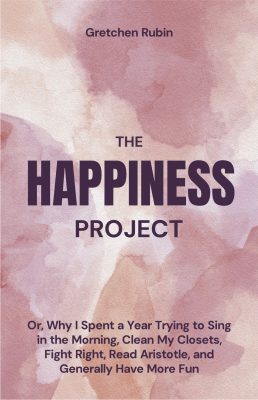
Imagine a life where every day feels like a step towards greater joy and fulfillment. That’s the journey Gretchen Rubin embarks on in The Happiness Project: Or, Why I Spent a Year Trying to Sing in the Morning, Clean My Closets, Fight Right, Read Aristotle, and Generally Have More Fun. Rubin’s quest begins with a simple yet profound realization: despite having a good life, she wasn’t as happy as she could be. This epiphany sparks a year-long experiment to boost her happiness through intentional, everyday actions.
Rubin structures her project around monthly themes, each focusing on a different aspect of life. January kicks off with “Boost Energy,” where she tackles clutter and prioritizes sleep. February is all about improving her marriage, while March focuses on work-related challenges. As the year progresses, Rubin delves into parenting, leisure, friendship, money, spirituality, and more. Each month brings new resolutions, carefully chosen to align with her overall goal of increased happiness.
What sets Rubin’s approach apart is her blend of scientific research, philosophical wisdom, and personal anecdotes. She doesn’t just rely on her own experiences; she dives deep into happiness studies, consults experts, and draws inspiration from historical figures. For instance, when exploring the concept of mindfulness, she looks to Buddhist teachings and modern psychological research, then applies these insights to her daily life in New York City.
Throughout the book, Rubin shares her successes, failures, and unexpected discoveries. She learns that small changes can have big impacts – like how making her bed every morning creates a sense of accomplishment that carries through the day. She also grapples with more challenging realizations, such as the importance of letting go of unrealistic expectations and accepting herself as she is.
Readers of The Happiness Project will gain a toolkit of practical strategies for increasing their own happiness. They’ll learn how to identify personal values and set meaningful goals, how to cultivate good habits and break bad ones, and how to navigate the complexities of relationships and personal growth. Rubin’s honest, often humorous account of her journey serves as both a guide and an inspiration, encouraging readers to embark on their own happiness projects tailored to their unique circumstances and aspirations.
The core message of The Happiness Project is that happiness is not a destination but a journey, one that requires conscious effort and daily choices. Rubin argues that while we can’t change our basic temperament or life circumstances, we can significantly increase our happiness through intentional actions and mindset shifts.
Think of happiness as a garden. You can’t simply plant seeds and expect a lush, thriving space to appear overnight. It requires consistent care, attention to different areas, and the willingness to adapt when things don’t grow as planned. Some days, you might focus on weeding out negative thoughts. Other days, you’re nurturing relationships or cultivating new skills. Over time, these small, daily efforts combine to create a beautiful, fulfilling life.
Rubin emphasizes that there’s no one-size-fits-all approach to happiness. What brings joy to one person might not work for another. The key is self-awareness and the willingness to experiment. She encourages readers to identify their own values and priorities, then make choices that align with these personal truths. This might mean saying no to social obligations that drain you, or dedicating time to hobbies that light you up, even if they seem impractical.
Another crucial aspect of Rubin’s message is the power of the present moment. While it’s important to learn from the past and plan for the future, true happiness exists in the here and now. She advocates for mindfulness and appreciation of daily pleasures, whether it’s savoring a cup of coffee or fully engaging in a conversation with a loved one.
Lastly, Rubin stresses that pursuing happiness isn’t selfish – it’s a gift to ourselves and those around us. When we’re happier, we have more energy and patience to devote to our relationships, work, and communities. By actively working on our own happiness, we create a positive ripple effect that extends far beyond our individual lives.
The Happiness Project has made a significant impact in the field of positive psychology and self-help literature since its publication in 2009. Its blend of academic research, practical advice, and personal narrative struck a chord with readers worldwide, propelling it to the top of the New York Times bestseller list and keeping it there for two years.
The book’s significance lies in its accessibility and actionable approach to happiness. Unlike many self-help books that promise quick fixes or dramatic life overhauls, Rubin’s work acknowledges the complexities of human nature and the challenges of change. It offers a roadmap for incremental improvement that feels achievable to the average reader.
Rubin’s project has inspired countless readers to start their own happiness projects, adapting her framework to their personal circumstances. This has led to a broader conversation about the nature of happiness and how individuals can take an active role in their own wellbeing. The book has been particularly influential in popularizing concepts like habit formation and the importance of self-knowledge in personal development.
However, the book has not been without its critics. Some argue that Rubin’s approach is too individualistic, focusing primarily on personal actions without adequately addressing systemic issues that affect happiness. Others have pointed out that her experiences as an upper-middle-class white woman in New York City may not be universally relatable.
Despite these critiques, The Happiness Project remains a significant work in the field of positive psychology. It has been translated into more than thirty languages and has spawned a series of follow-up books, a popular podcast, and a thriving online community. Rubin’s work has been recognized by academics and mental health professionals as a valuable contribution to the public understanding of happiness and wellbeing.
The book’s enduring popularity and influence underscore a growing societal interest in positive psychology and proactive approaches to mental health. By encouraging readers to take small, consistent steps towards greater happiness, Rubin has helped shift the conversation around personal development from grand, often unrealistic goals to sustainable, everyday practices. This approach has resonated with millions of readers and continues to inspire new generations to embark on their own happiness projects.
The Happiness Project offers a refreshing and accessible approach to the pursuit of happiness. We appreciate Gretchen Rubin’s candid narrative style, which makes complex psychological concepts relatable and actionable. The book’s strength lies in its practical, step-by-step approach to improving various aspects of life, from relationships to personal growth. Rubin’s blend of personal anecdotes and scientific research provides a well-rounded perspective on happiness, making it both informative and engaging.
We find the book’s emphasis on individualized happiness strategies particularly valuable. Rubin consistently reminds readers that what works for her may not work for everyone, encouraging self-reflection and experimentation. This nuanced approach sets The Happiness Project apart from many one-size-fits-all self-help books.
However, we must acknowledge the book’s limitations. Its perspective is largely rooted in the experiences of an upper-middle-class American woman, which may not resonate with readers from different cultural or socioeconomic backgrounds. Additionally, while the book touches on many aspects of happiness, it sometimes lacks depth in exploring complex emotional states or addressing more severe mental health issues.
Despite these shortcomings, we believe The Happiness Project provides valuable insights and practical tools for anyone looking to increase their life satisfaction. The book’s accessible writing style and actionable advice make it a useful starting point for those new to the concept of actively pursuing happiness.
Our Recommendation
We recommend The Happiness Project to readers seeking practical strategies for boosting their happiness and overall life satisfaction. It’s particularly well-suited for those who enjoy personal narratives and are looking for an approachable introduction to positive psychology principles. The book’s month-by-month structure makes it easy to follow and implement changes gradually, which we find especially beneficial for long-term habit formation.
However, we suggest complementing this book with other resources that offer different perspectives on happiness and well-being. For readers looking for a more scientifically rigorous approach, we recommend pairing The Happiness Project with books like Sonja Lyubomirsky’s The How of Happiness or Martin Seligman’s Authentic Happiness. For those interested in exploring happiness from diverse cultural viewpoints, Eric Weiner’s The Geography of Bliss could provide valuable additional insights. Ultimately, we believe The Happiness Project serves as an excellent starting point for anyone’s journey towards greater happiness, offering a blend of inspiration, practical advice, and food for thought.
The essence of The Happiness Project revolves around several key topics that form the backbone of Gretchen Rubin’s year-long experiment in increasing her happiness. One of the most crucial elements is the concept of intentional living. Rubin argues that happiness doesn’t just happen; it requires conscious effort and deliberate choices. She encourages readers to take an active role in shaping their lives, rather than passively waiting for happiness to find them. This involves setting specific goals, creating actionable plans, and consistently working towards them.
Another critical component of the book is the power of habits. Rubin explores how our daily routines and behaviors significantly impact our overall happiness. She emphasizes that small, consistent actions can lead to substantial changes over time. By focusing on developing positive habits and breaking negative ones, Rubin suggests we can create a foundation for lasting happiness.
The book also highlights the importance of self-knowledge in the pursuit of happiness. Rubin stresses that understanding our own values, preferences, and tendencies is crucial for making choices that genuinely increase our happiness. She introduces the concept of “knowing yourself better than you know anyone else” as a key to tailoring happiness strategies to individual needs and personalities.
Relationships play a central role in Rubin’s happiness project. She dedicates significant attention to improving various relationships, including those with family, friends, and colleagues. The book emphasizes that strong, positive relationships are a cornerstone of happiness, and offers strategies for nurturing these connections. Rubin explores how to communicate more effectively, show appreciation, and navigate conflicts in ways that strengthen rather than strain relationships.
Mindfulness and appreciation of the present moment form another essential topic in the book. Rubin discusses the tendency to postpone happiness, always waiting for the next milestone or achievement. Instead, she advocates for finding joy in everyday moments and cultivating gratitude for what we already have. This shift in perspective, from always seeking more to appreciating the present, is presented as a powerful tool for increasing overall life satisfaction.
The book also delves into the concept of personal growth and the pursuit of passions. Rubin argues that engaging in activities that challenge us and align with our interests can significantly boost happiness. She encourages readers to pursue learning, creativity, and personal development as paths to greater fulfillment. This includes exploring new hobbies, setting personal challenges, and continuously expanding one’s knowledge and skills.
Another key topic is the balance between acceptance and change. Rubin grapples with the tension between accepting oneself and striving for improvement. She concludes that true happiness comes from a combination of self-acceptance and thoughtful personal growth. This nuanced approach allows readers to work on themselves without falling into the trap of constant self-criticism.
The role of physical well-being in happiness is another crucial element of the book. Rubin explores how factors like sleep, exercise, and nutrition impact our mood and overall happiness. She emphasizes the interconnectedness of physical and mental health, encouraging readers to prioritize their physical well-being as part of their happiness strategy.
Lastly, the book addresses the concept of balance and the myth of “having it all.” Rubin discusses the challenges of juggling various life aspects and the pressure to excel in every area. She advocates for a more realistic approach, focusing on what truly matters to each individual and making peace with the idea that we can’t do everything perfectly all the time.
The Happiness-Boosting Power of Decluttering: Rubin shares her experience of tackling the clutter in her apartment. She describes the process of going through her belongings, making decisions about what to keep and what to discard, and the surprising emotional impact of this physical task. She notes how clearing out unnecessary items not only created more physical space but also led to a sense of mental clarity and reduced stress. This example illustrates how seemingly small actions, like organizing a closet, can have a significant impact on overall happiness and well-being.
The One-Minute Rule: To combat procrastination and the buildup of small tasks, Rubin introduces the “one-minute rule.” She explains how she started immediately tackling any task that would take less than one minute to complete, such as hanging up a coat or filing a document. Over time, this simple rule prevented the accumulation of minor chores and created a sense of continuous accomplishment. This example showcases how small habit changes can lead to increased productivity and reduced stress, contributing to overall happiness.
The Four Stages of Happiness: Rubin discusses Buddhist monk Matthieu Ricard’s concept of the four stages of happiness: pleasure, gratification, joy, and bliss. She applies this framework to her own life, exploring how different activities and experiences fit into these categories. For instance, she categorizes eating a delicious meal as pleasure, completing a challenging work project as gratification, spending quality time with family as joy, and moments of deep spiritual connection as bliss. This example demonstrates how understanding different types of happiness can help individuals cultivate a more balanced and fulfilling life.
The Happiness-Boosting Effects of Music: Rubin shares her experiment with incorporating more music into her daily life. She describes how she started singing in the morning, created playlists for different moods, and even took up learning a musical instrument. She notes the immediate mood-lifting effects of music and how it added a layer of richness to her everyday experiences. This example illustrates how engaging with art and creativity can significantly enhance happiness and quality of life.
The “Fake It Till You Feel It” Strategy: In tackling relationship improvements, Rubin shares her experience with the “act the way you want to feel” approach. She describes consciously choosing to act more loving and patient with her husband, even when she didn’t feel that way. Over time, she noticed that her feelings began to align with her actions, leading to genuine improvements in their relationship. This example highlights the powerful connection between behavior and emotion, and how consciously changing our actions can influence our feelings and relationships.
The Power of Small Changes
One of the most significant insights from The Happiness Project is that small, consistent changes can lead to substantial improvements in overall happiness. Rubin discovered that seemingly minor adjustments to daily routines and habits could have a profound impact on her mood and life satisfaction. For example, she found that simply making her bed every morning created a sense of order and accomplishment that positively influenced her entire day. To apply this insight, start by identifying one small habit you’d like to cultivate. It could be as simple as drinking a glass of water first thing in the morning, taking a short walk during lunch break, or spending five minutes tidying up before bed. Commit to this small change for a month and observe how it affects your mood and energy levels. As you become comfortable with this new habit, gradually introduce other small changes. Over time, these minor adjustments can accumulate into significant lifestyle improvements and increased happiness.
The Importance of Energy Management
Rubin emphasizes that managing energy levels is crucial for maintaining happiness. She found that factors like adequate sleep, regular exercise, and proper nutrition significantly impacted her mood and ability to engage in happiness-boosting activities. To apply this insight, start by tracking your energy levels throughout the day for a week. Note when you feel most energetic and when you experience slumps. Use this information to restructure your day, scheduling important tasks or activities that require focus during your high-energy periods. Experiment with different sleep schedules to find your optimal amount of rest. Incorporate regular physical activity into your routine, even if it’s just a 10-minute walk or a quick yoga session. Pay attention to how different foods affect your energy and mood, and adjust your diet accordingly. By prioritizing energy management, you’ll likely find yourself more capable of pursuing activities that contribute to your happiness.
The Role of Relationships in Happiness
A key insight from Rubin’s project is the profound impact that relationships have on happiness. She discovered that nurturing connections with family, friends, and even acquaintances significantly boosted her overall life satisfaction. To apply this insight, start by making a list of the important relationships in your life. For each relationship, identify one specific action you can take to strengthen it. This could be scheduling regular phone calls with a distant friend, planning a weekly date night with your partner, or simply expressing gratitude more often to family members. Make an effort to be fully present during interactions, putting away distractions like phones. Consider joining clubs or groups related to your interests to form new connections. Remember that investing in relationships often requires time and effort, but the returns in terms of happiness and support are invaluable.
The Happiness-Boosting Effects of Personal Growth
Rubin found that pursuing personal growth and learning new skills contributed significantly to her happiness. Engaging in activities that challenged her and expanded her knowledge created a sense of accomplishment and added richness to her life. To apply this insight, identify an area of interest or a skill you’ve always wanted to develop. It could be learning a new language, mastering a musical instrument, or improving your cooking skills. Set specific, achievable goals related to this area of growth. For example, if you’re learning a language, aim to learn ten new words each week or have a five-minute conversation with a native speaker once a month. Dedicate regular time to this pursuit, even if it’s just 15 minutes a day. Celebrate your progress along the way, no matter how small. The process of learning and improving can be as rewarding as achieving the end goal.
The Value of Mindfulness and Gratitude
Throughout her project, Rubin discovered the powerful impact of practicing mindfulness and gratitude. By consciously appreciating the present moment and expressing thankfulness for the good things in her life, she experienced increased contentment and joy. To incorporate this insight into your life, start a daily gratitude practice. Each evening, write down three things you’re grateful for from that day. Be specific and try to vary your entries each day. This trains your mind to notice and appreciate positive aspects of your life. Additionally, incorporate mindfulness into your daily routine. This could involve a formal meditation practice, or simply taking a few minutes each day to focus on your breath and observe your surroundings without judgment. During everyday activities like eating or walking, make an effort to engage your senses fully and appreciate the experience. These practices can help shift your focus from worries or dissatisfaction to the richness of the present moment.
The Importance of Self-Understanding
A crucial insight from Rubin’s project is the importance of self-knowledge in crafting a personalized approach to happiness. She found that understanding her own tendencies, preferences, and values was key to creating effective happiness strategies. To apply this insight, start by reflecting on your past experiences. What activities or situations have brought you the most joy? What has consistently drained your energy? Keep a mood journal for a few weeks, noting your emotions and the circumstances surrounding them. This can help you identify patterns and triggers. Take personality tests like the Myers-Briggs Type Indicator or the Big Five to gain additional insights into your character traits. Reflect on your core values and how they align with your current lifestyle. Use this self-knowledge to make choices that align with your authentic self, whether it’s in your career, relationships, or personal habits. Remember that what works for others may not work for you, and that’s okay. The goal is to create a happiness project tailored to your unique personality and circumstances.
The Power of External Order
Rubin discovered that external order contributes significantly to inner calm and happiness. She found that decluttering her physical space not only made her environment more pleasant but also reduced mental stress and increased her ability to focus on important tasks. To apply this insight, start with a small area of your home or workspace. Set a timer for 15 minutes and focus on decluttering and organizing that space. Pay attention to how you feel after creating order in this small area. Gradually expand this practice to other areas of your life. Develop systems for managing paperwork, digital files, and daily tasks. Consider implementing the “one in, one out” rule for possessions to prevent future clutter buildup. Create designated spaces for commonly used items to reduce daily stress and increase efficiency. Remember, the goal isn’t perfection, but rather creating an environment that supports your well-being and productivity.
The Importance of Fun and Play
One of Rubin’s key insights was the vital role of fun and play in adult happiness. She realized that intentionally incorporating enjoyable activities into her routine significantly boosted her mood and overall life satisfaction. To apply this insight, start by making a list of activities you genuinely enjoy but may have neglected due to adult responsibilities. This could include anything from playing board games to dancing to your favorite music. Schedule time for these activities in your calendar, treating them as important appointments. Consider rekindling childhood hobbies or exploring new forms of play. If you struggle to make time for fun, try combining it with other activities – for example, listening to comedy podcasts while doing chores or turning household tasks into games. Remember that what’s fun for you might be different from others, so focus on activities that genuinely bring you joy rather than what you think you “should” enjoy.
The Balance Between Acceptance and Striving
A nuanced insight from Rubin’s project is the importance of balancing self-acceptance with the desire for self-improvement. She found that true happiness comes from accepting oneself while still working towards personal growth. To apply this insight, start by acknowledging your strengths and accepting your limitations. Write down five things you like about yourself and five areas where you’d like to improve. For each area of desired improvement, set a realistic, specific goal. For example, instead of “be more organized,” you might aim to “spend 10 minutes each evening preparing for the next day.” As you work towards these goals, practice self-compassion. Celebrate your progress, no matter how small, and view setbacks as learning opportunities rather than failures. Regularly reassess your goals to ensure they align with your values and bring genuine satisfaction, rather than stemming from external pressures. Remember, the goal is to become the best version of yourself, not a perfect person.
Accessible and Relatable Approach
Gretchen Rubin’s The Happiness Project excels in its accessible and relatable approach to the complex topic of happiness. Rubin writes in a conversational style that feels like chatting with a friend, making the book engaging and easy to read. She doesn’t position herself as an expert or guru, but as a fellow seeker, sharing her struggles, successes, and insights along the way. This approach makes the concept of a “happiness project” feel achievable for the average reader. Rubin’s honesty about her failures and moments of doubt adds authenticity to her narrative, encouraging readers to be patient and persistent in their own pursuit of happiness. By grounding her experiment in everyday life – dealing with clutter, managing family relationships, finding time for hobbies – Rubin creates numerous points of connection for readers, regardless of their life circumstances.
Blend of Research and Personal Experience
One of the book’s major strengths lies in its effective blend of scientific research and personal experience. Rubin doesn’t rely solely on anecdotes or personal opinions; she backs up her insights with relevant studies from the fields of psychology, neuroscience, and sociology. At the same time, she doesn’t get bogged down in academic jargon or dry theoretical discussions. Instead, she skillfully weaves research findings into her personal narrative, showing how scientific insights can be applied in real-life situations. This approach not only adds credibility to her project but also helps readers understand the “why” behind her strategies. For example, when discussing the importance of sleep for happiness, Rubin cites studies on sleep deprivation’s effects on mood and cognitive function, then shares her own experiences with adjusting her sleep schedule.
Practical and Actionable Advice
The Happiness Project stands out for its abundance of practical, actionable advice. Rather than making vague suggestions or presenting abstract concepts, Rubin offers specific strategies and tools that readers can immediately implement in their own lives. Each chapter includes concrete resolutions and clear steps for putting ideas into practice. For instance, when discussing the importance of strengthening relationships, Rubin doesn’t just advise readers to “be a better friend.” Instead, she offers specific actions like “remember birthdays,” “show up,” and “don’t gossip.” This practicality extends to the book’s structure, with each month focusing on a different area of life, making it easy for readers to focus on one aspect of happiness at a time. The book also includes charts, lists, and other tools that readers can use to track their own happiness projects.
Emphasis on Individuality
A significant strength of the book is its emphasis on the individual nature of happiness. Rubin repeatedly stresses that there’s no one-size-fits-all approach to happiness, encouraging readers to tailor their own happiness projects to their unique personalities, values, and circumstances. She introduces concepts like “Be Gretchen” (knowing and accepting oneself) and discusses how different strategies work for different people. This nuanced approach acknowledges the complexity of human nature and avoids prescriptive solutions. Instead, it empowers readers to reflect on their own needs and preferences, fostering a sense of self-awareness that’s crucial for long-term happiness and personal growth.
Holistic Perspective on Happiness
Rubin’s book offers a holistic perspective on happiness, addressing various aspects of life that contribute to overall well-being. She doesn’t focus solely on mental attitudes or positive thinking but explores how factors like physical health, relationships, work satisfaction, and personal interests all play a role in happiness. This comprehensive approach helps readers see the interconnectedness of different life areas and encourages a balanced approach to improving overall life satisfaction. For example, Rubin discusses how decluttering her physical space improved her mental clarity, and how pursuing a passion project boosted her energy in other areas of life. This holistic view provides readers with a more complete roadmap for enhancing their happiness.
Long-Term Perspective
Another strength of The Happiness Project is its long-term perspective. By structuring her project over an entire year, Rubin emphasizes that significant life changes and increased happiness don’t happen overnight. This approach counters the quick-fix mentality often seen in self-help literature and encourages readers to view happiness as an ongoing process rather than a destination. Rubin’s honest portrayal of her ups and downs throughout the year illustrates the reality of personal growth – it’s not always linear or easy, but small, consistent efforts can lead to meaningful change over time. This realistic timeline helps set appropriate expectations for readers embarking on their own happiness projects.
Limited Cultural and Socioeconomic Perspective
One notable weakness of The Happiness Project is its limited cultural and socioeconomic perspective. Rubin’s experiences and strategies are largely rooted in her life as an upper-middle-class, educated woman in New York City. While she occasionally acknowledges her privileged position, the book doesn’t deeply explore how factors like cultural background, economic status, or systemic inequalities might impact one’s ability to pursue happiness in the ways she suggests. For instance, her advice about decluttering assumes a level of material abundance that not all readers may relate to. Similarly, her ability to dedicate significant time and resources to her happiness project may not be feasible for individuals struggling with financial insecurity or lacking work-life balance. This narrow perspective potentially limits the book’s relevance and applicability for a diverse global audience.
Overemphasis on Personal Responsibility
While personal responsibility is an important aspect of happiness, the book at times overemphasizes individual actions at the expense of acknowledging external factors. Rubin’s approach largely focuses on what individuals can do to increase their own happiness, which, while empowering, may inadvertently downplay the role of systemic issues, life circumstances, or mental health conditions in affecting one’s well-being. For example, while Rubin briefly mentions seeking professional help for serious issues, the book doesn’t thoroughly address how clinical depression or anxiety might impact one’s ability to implement her strategies. This focus on personal action, while motivating for many, could potentially lead some readers to feel inadequate if they struggle to achieve similar results, especially if their challenges stem from factors beyond their immediate control.
Lack of Critical Engagement with the Concept of Happiness
Despite its thorough exploration of strategies for increasing happiness, the book somewhat lacks in critical engagement with the concept of happiness itself. Rubin doesn’t deeply explore different cultural or philosophical conceptions of happiness, nor does she significantly question the societal emphasis on the pursuit of happiness. The book largely operates within the framework of positive psychology without substantially critiquing or contextualizing this approach. A more thorough examination of what happiness means in different contexts, or a discussion of potential downsides to the relentless pursuit of happiness, could have added depth to the book’s exploration of the topic.
Limited Discussion of Negative Emotions
While The Happiness Project offers numerous strategies for increasing positive emotions, it provides relatively limited discussion on dealing with negative emotions. Rubin’s focus on cultivating happiness sometimes comes at the expense of exploring the role and value of other emotional states. The book could have benefited from a more nuanced discussion of how to navigate difficult emotions or how to find meaning in challenging experiences. This omission may leave readers with the impression that the goal is to be happy all the time, rather than to develop emotional resilience and a full range of emotional experiences. A more balanced approach that acknowledges the importance of processing and learning from negative emotions could have enhanced the book’s overall message about emotional well-being.
The Universality of Happiness Strategies
One potential blind spot in The Happiness Project is the assumption that the strategies Rubin found effective will work universally. While Rubin does emphasize the importance of personalizing one’s approach to happiness, readers might still fall into the trap of trying to replicate her exact methods without considering their own unique circumstances. This could lead to frustration if certain strategies don’t yield the expected results. For instance, Rubin’s emphasis on productivity and goal-setting might not align with cultures that prioritize collective harmony over individual achievement. To address this blind spot, readers might benefit from exploring books that offer alternative cultural perspectives on happiness, such as The Geography of Bliss by Eric Weiner, which examines how different cultures around the world define and pursue happiness. Additionally, The How of Happiness by Sonja Lyubomirsky provides a more scientific approach to identifying happiness strategies that work for different personality types.
The Role of External Circumstances
While The Happiness Project focuses primarily on individual actions and mindset shifts, it may underestimate the impact of external circumstances on happiness. Readers facing significant life challenges, such as chronic illness, financial hardship, or systemic discrimination, might find it difficult to implement some of Rubin’s suggestions. This blind spot could lead to an oversimplification of the complex factors that influence happiness. To gain a more comprehensive understanding of how external factors affect well-being, readers might turn to books like Happier by Tal Ben-Shahar, which addresses how to find happiness even in challenging circumstances, or The Happiness Advantage by Shawn Achor, which explores how positive psychology can be applied in various life domains, including work and education.
The Potential Downsides of Pursuing Happiness
The Happiness Project primarily frames the pursuit of happiness as an unequivocally positive endeavor. However, it overlooks potential downsides or unintended consequences of an intense focus on personal happiness. For example, constantly striving for happiness might lead to feelings of guilt or inadequacy when one inevitably experiences negative emotions. Moreover, an overemphasis on personal happiness could potentially lead to neglect of other important values or responsibilities. To explore these nuances, readers might benefit from books that take a more critical look at the happiness industry, such as The Happiness Industry: How the Government and Big Business Sold Us Well-Being by William Davies. This book examines the societal and economic implications of our cultural obsession with happiness. Another valuable resource is Against Happiness by Eric G. Wilson, which argues for the importance of melancholy and questions the cultural imperative to be constantly happy.
The Complexity of Habit Formation
While Rubin provides numerous strategies for forming new habits, The Happiness Project might oversimplify the complex process of behavior change. Readers might underestimate the difficulty of breaking ingrained habits or maintaining new ones long-term. This could lead to discouragement if they don’t see immediate results or struggle to stick with their resolutions. To gain a deeper understanding of the science behind habit formation and change, readers could turn to books like Atomic Habits by James Clear, which offers a comprehensive framework for building good habits and breaking bad ones. Another valuable resource is The Power of Habit by Charles Duhigg, which explores the neuroscience of habit formation and provides strategies for lasting behavior change.
The Interplay Between Happiness and Meaning
While The Happiness Project touches on finding meaning through personal growth and relationships, it doesn’t deeply explore the complex relationship between happiness and meaning in life. Readers might come away with the impression that increasing positive emotions is the primary path to a fulfilling life, potentially overlooking the importance of pursuing meaningful goals or grappling with life’s deeper questions. This blind spot could lead to a superficial approach to well-being that doesn’t address deeper existential needs. To explore the relationship between happiness and meaning more thoroughly, readers might turn to Man’s Search for Meaning by Viktor E. Frankl, which argues for the primacy of meaning over happiness based on Frankl’s experiences in Nazi concentration camps. Another valuable resource is The Power of Meaning by Emily Esfahani Smith, which examines various sources of meaning in life and how they contribute to overall well-being.
Stumbling on Happiness by Daniel Gilbert
While both The Happiness Project and Stumbling on Happiness explore the concept of happiness, they approach the topic from different angles. Gilbert’s book focuses on the cognitive biases and mental mistakes that lead us to mispredict what will make us happy in the future. In contrast, Rubin’s work is more practical, offering concrete strategies for increasing happiness in the present. Gilbert’s scientific approach provides a deeper understanding of the psychological mechanisms behind happiness, while Rubin’s personal narrative and actionable advice make the pursuit of happiness feel more accessible to the average reader. Where Gilbert challenges our assumptions about what will bring us joy, Rubin encourages us to experiment with various happiness-boosting activities in our daily lives. Both books complement each other well, with Gilbert’s work providing the theoretical foundation that can help readers understand why Rubin’s practical strategies might be effective.
The How of Happiness by Sonja Lyubomirsky
Lyubomirsky’s The How of Happiness shares Rubin’s goal of providing practical strategies for increasing happiness, but takes a more scientific approach. While Rubin’s book is based on personal experience supported by research, Lyubomirsky’s work is grounded in her own extensive studies in positive psychology. Lyubomirsky introduces the concept that 40% of our happiness is within our control, providing a framework for readers to choose happiness-increasing activities based on their individual preferences and lifestyles. This personalized approach aligns with Rubin’s emphasis on finding what works for you, but Lyubomirsky’s book offers a more structured method for doing so. Where Rubin’s narrative style makes her journey relatable, Lyubomirsky’s academic background provides a rigorous foundation for her recommendations. Both books advocate for taking an active role in one’s happiness, but Lyubomirsky’s work might appeal more to readers seeking a more scientific understanding of happiness interventions.
Flow: The Psychology of Optimal Experience by Mihaly Csikszentmihalyi
Csikszentmihalyi’s concept of “flow” – the state of being completely absorbed in a challenging but manageable task – offers a different perspective on happiness compared to Rubin’s approach. While Rubin focuses on a variety of activities and habits that can boost overall life satisfaction, Csikszentmihalyi argues that true happiness comes from these moments of flow. His book delves deep into the psychology behind this state and how to achieve it more often in various aspects of life. In contrast, Rubin’s work touches on the idea of engagement and challenge but doesn’t explore it as thoroughly. Flow provides a more focused and in-depth examination of one particular path to happiness, while The Happiness Project offers a broader, more varied approach. Readers might find that combining insights from both books – seeking flow states while also implementing Rubin’s wide-ranging happiness strategies – provides a comprehensive approach to well-being.
The Myths of Happiness by Sonja Lyubomirsky
In this book, Lyubomirsky challenges common beliefs about what will make us happy or unhappy, similar to Gilbert’s work but with a different focus. While Rubin’s book is about actively pursuing happiness through various strategies, Lyubomirsky’s The Myths of Happiness is more about recalibrating our expectations and perceptions. Lyubomirsky examines major life events that we typically associate with happiness (like getting married) or unhappiness (like aging), and challenges these assumptions with research findings. This approach complements Rubin’s work by encouraging readers to question their beliefs about happiness and to find joy in unexpected places. Where Rubin focuses on adding positive habits and experiences to increase happiness, Lyubomirsky emphasizes the importance of changing our mindset about existing circumstances. Reading both books could provide a balanced approach to happiness, combining proactive strategies with a more flexible and realistic outlook on life events.
Step 1: Self-Assessment and Goal Setting
Remember, your happiness project should be tailored to your unique circumstances and preferences. Don’t feel pressured to copy Rubin’s resolutions exactly. Instead, use her framework as inspiration to create goals that resonate with your personal values and aspirations.
Step 2: Create a Happiness Toolbox
Step 3: Implement Monthly Themes
Step 4: Track Your Progress
Step 5: Practice Mindfulness and Gratitude
Step 6: Declutter and Organize
Step 7: Nurture Relationships
Step 8: Pursue Personal Growth
Step 9: Cultivate Positive Habits
Step 10: Regular Review and Adjustment
Implement a Corporate Happiness Project
Organizations can adapt Rubin’s happiness project framework to create a company-wide initiative aimed at improving employee wellbeing and job satisfaction. This could involve setting monthly themes focused on different aspects of workplace happiness, such as team building, work-life balance, or professional development. Employees could be encouraged to set personal work-related happiness goals and track their progress, while managers could facilitate team discussions and activities aligned with each month’s theme.
Implementing such a project across an entire organization can be challenging due to varying levels of employee engagement, differing departmental needs, and potential skepticism about “forced” happiness initiatives. Some employees may view it as an additional burden on their already busy schedules, while others might question its relevance to their work.
To overcome these challenges, organizations should emphasize the voluntary nature of participation and highlight the potential benefits for both individual employees and the company as a whole. Providing resources, such as time during work hours for happiness-related activities and a budget for team-building events, can demonstrate the company’s commitment. Additionally, involving employees in the planning process and allowing for customization of themes and activities across departments can increase buy-in and relevance.
Foster a Culture of Gratitude
Businesses can incorporate gratitude practices into their workplace culture, inspired by Rubin’s emphasis on the importance of appreciation. This could include implementing a peer recognition program, starting meetings with a round of appreciation, or creating a digital platform for employees to share kudos and thank-yous.
One potential obstacle is the perception that expressions of gratitude may come across as insincere or forced, especially in highly competitive or stressful work environments. Some employees might feel uncomfortable giving or receiving public praise, while others may worry about favoritism or overlooking less visible contributions.
To address these concerns, companies should focus on creating a genuine culture of appreciation rather than mandating specific gratitude practices. This can be achieved by leading by example, with management consistently expressing sincere gratitude for employees’ efforts. Providing multiple channels for recognition, including both public and private options, can accommodate different comfort levels. Regular training on effective and meaningful ways to express appreciation can also help overcome awkwardness and ensure that gratitude becomes a natural part of workplace interactions.
Encourage Personal Growth and Development
Drawing from Rubin’s insights on the happiness-boosting effects of personal growth, companies can create robust professional development programs. This could include offering learning stipends, creating internal mentorship programs, or allowing employees to dedicate a certain percentage of their work time to personal projects or skill development.
The main challenges in implementing this strategy are time constraints, budget limitations, and ensuring that personal development activities align with organizational goals. Some managers might be hesitant to allow time away from “core” job responsibilities, while employees might struggle to balance development activities with their regular workload.
To overcome these obstacles, organizations should clearly communicate the long-term benefits of employee development, including increased job satisfaction, improved retention, and enhanced skills that can benefit the company. Implementing a structured approach, such as individual development plans that align personal growth goals with organizational objectives, can help justify the investment of time and resources. Additionally, creating a culture that values continuous learning, perhaps by including development activities in performance reviews, can help prioritize these efforts.
Promote Work-Life Balance
Businesses can apply Rubin’s emphasis on energy management and the importance of leisure time by implementing policies that promote better work-life balance. This could include flexible working hours, remote work options, or unlimited vacation policies.
Potential challenges include concerns about decreased productivity, difficulties in coordinating team schedules, and the risk of some employees taking advantage of flexible policies. There might also be resistance from management who prefer traditional work structures or worry about maintaining control and oversight.
To address these issues, companies should focus on results rather than hours worked, implementing clear performance metrics and regular check-ins. Providing training for both managers and employees on how to effectively work in flexible environments can help ease the transition. It’s also crucial to lead by example, with leadership demonstrating healthy work-life balance practices. Regular reviews and adjustments of policies based on feedback and outcomes can help refine the approach over time.
Create a Positive Physical Environment
Inspired by Rubin’s insights on the impact of one’s surroundings on happiness, businesses can focus on improving their physical work environment. This could involve redesigning office spaces to include more natural light, comfortable break areas, or spaces for quiet work and collaboration.
Challenges in implementing this strategy include budget constraints, especially for businesses with leased office spaces. There might also be resistance from employees who are attached to traditional office layouts or concerned about disruptions during renovation.
To overcome these obstacles, companies can start with small, high-impact changes such as introducing plants, improving lighting, or creating comfortable break areas. Involving employees in the design process through surveys or focus groups can increase buy-in and ensure that changes meet actual needs. For more significant renovations, a phased approach can help manage costs and minimize disruptions. Companies can also explore flexible furniture solutions that allow for easy reconfiguration of spaces as needs change.
Implement a Corporate Mindfulness Program
Drawing from Rubin’s experiences with mindfulness practices, businesses can introduce mindfulness and meditation programs to help employees manage stress and improve focus. This could include offering guided meditation sessions, creating quiet spaces for individual practice, or providing subscriptions to mindfulness apps.
Potential obstacles include skepticism from employees who view mindfulness as “new age” or irrelevant to their work, time constraints in busy work schedules, and difficulties in measuring the tangible benefits of such programs.
To address these challenges, companies should begin with education about the science-backed benefits of mindfulness, including improved focus, reduced stress, and enhanced creativity. Offering a variety of options, from brief desk-based exercises to longer guided sessions, can accommodate different preferences and time constraints. Starting with a pilot program and tracking metrics such as employee stress levels, sick days, and self-reported productivity can help demonstrate the value of the initiative. Encouraging leaders to participate and share their experiences can also help normalize mindfulness practices within the organization.
Foster Social Connections
Businesses can apply Rubin’s insights on the importance of relationships to happiness by creating more opportunities for meaningful social connections among employees. This could include organizing cross-departmental projects, implementing a buddy system for new hires, or hosting regular social events.
Challenges might arise from introverted employees feeling pressured to socialize, potential clique formations, or concerns about social activities taking time away from work responsibilities. In remote or hybrid work environments, creating genuine connections can be particularly challenging.
To overcome these obstacles, companies should offer a variety of connection opportunities that cater to different personality types and preferences. This could include both large group events and smaller, more intimate gatherings. For remote teams, virtual coffee chats, online game sessions, or collaborative digital projects can help build connections. It’s important to make participation optional and to create guidelines that promote inclusivity. Allocating specific time for social activities during work hours can alleviate concerns about work-life balance while demonstrating the company’s commitment to employee relationships.
The Rise of Positive Psychology in Mainstream Culture
Gretchen Rubin’s The Happiness Project aligns with the growing trend of positive psychology’s integration into everyday life. As mental health awareness continues to increase, we’re likely to see more emphasis on proactive approaches to wellbeing. The book’s practical strategies for boosting happiness fit well with this shift. In the future, we might see happiness-focused interventions becoming more commonplace in schools, workplaces, and healthcare settings. Curricula could include happiness skills alongside traditional subjects. Companies might incorporate happiness metrics into their performance evaluations. Healthcare providers could prescribe happiness practices as part of treatment plans.
The Quantified Self Movement
Rubin’s approach to tracking happiness and habits dovetails with the quantified self movement. This trend involves using technology to collect data about various aspects of daily life. As wearable devices and AI become more sophisticated, we might see more advanced tools for monitoring and enhancing happiness. Imagine smartwatches that not only track physical health but also emotional wellbeing. Apps could provide personalized happiness recommendations based on individual data patterns. Virtual reality could offer immersive experiences designed to boost mood and life satisfaction.
Work-Life Integration
The book’s holistic approach to happiness, addressing both personal and professional aspects of life, aligns with the trend towards work-life integration. As remote work becomes more common and traditional 9-to-5 schedules evolve, the lines between work and personal life are blurring. In the future, we might see more companies adopting policies that support employees’ overall wellbeing, not just their professional development. Flexible work arrangements could become the norm. Sabbaticals for personal growth might be standard benefits. Companies could offer resources for employees to pursue passions outside of work, recognizing that personal fulfillment contributes to professional success.
Personalized Wellbeing
Rubin’s emphasis on finding what works for you personally reflects a broader trend towards personalization in health and wellness. As genetic testing and AI-driven analytics advance, we might see more tailored approaches to happiness and wellbeing. Imagine AI coaches that create customized happiness plans based on your personality, genetics, and lifestyle. Therapeutic interventions could be precisely tailored to individual brain chemistry and life circumstances. We might even see the development of personalized medications designed to optimize individual happiness levels.
Sustainable Happiness
The book’s focus on finding happiness through everyday actions and mindset shifts, rather than material acquisitions, aligns with growing concerns about sustainability. As society grapples with environmental challenges, we might see a shift towards finding fulfillment in ways that don’t deplete resources. The future could bring more emphasis on experiences over possessions, community engagement over consumerism. We might see the rise of “happiness economics” that prioritize wellbeing over GDP. Urban planning could evolve to create environments that naturally boost happiness through green spaces, community areas, and pedestrian-friendly designs.
The Happiness Project, published in 2009, has had a significant impact on the self-help landscape and continues to be relevant today. Its accessible approach to positive psychology principles has helped popularize the idea that happiness is something we can actively work towards, rather than a state we passively experience. This shift in perspective has broader implications for how society views personal responsibility and mental health.
The book’s emphasis on small, manageable changes has influenced the way many people approach personal development. Rather than advocating for drastic life overhauls, Rubin’s approach encourages incremental improvements, a strategy that has gained traction in various fields, from habit formation to productivity. This “small steps” approach aligns well with current understanding of behavior change and may contribute to more sustainable personal growth practices.
Rubin’s project has also played a role in destigmatizing discussions about happiness and mental well-being. By sharing her personal struggles and experiences, she has helped normalize the idea that everyone, regardless of their life circumstances, can struggle with happiness and actively work to improve it. This openness may contribute to broader societal acceptance of mental health discussions and interventions.
Looking to the future, the book’s relevance is likely to continue, particularly as society grapples with increasing rates of anxiety and depression. The COVID-19 pandemic has brought mental health issues to the forefront, making Rubin’s practical strategies for boosting happiness and resilience more pertinent than ever. However, future discussions may need to more explicitly address how happiness strategies can be adapted for different cultural contexts and socioeconomic circumstances.
The book’s individualistic approach to happiness, while empowering, may face increasing scrutiny as awareness grows about the impact of systemic issues on personal well-being. Future work in this area may need to balance individual strategies with acknowledgment of broader societal factors affecting happiness. Additionally, as research in positive psychology continues to evolve, some of Rubin’s specific strategies may be refined or replaced with more evidence-based interventions.
Ultimately, The Happiness Project has played a significant role in making the pursuit of happiness feel accessible and actionable for many readers. Its long-term influence may be in inspiring individuals to take an active, experimental approach to their own well-being, contributing to a culture that values and actively cultivates happiness and life satisfaction.
Flow: The Psychology of Optimal Experience by Mihaly Csikszentmihalyi
While Rubin focuses on a broad range of happiness-boosting strategies, Csikszentmihalyi delves deep into the concept of “flow” – a state of complete absorption in a challenging but manageable task. This book offers readers a different perspective on happiness, suggesting that true fulfillment comes from these moments of intense focus and engagement. Csikszentmihalyi’s work complements Rubin’s by providing a more in-depth look at one particular path to happiness. Readers of The Happiness Project will find Flow enriches their understanding of how to cultivate meaningful experiences and achieve a sense of purpose in daily life.
The How of Happiness by Sonja Lyubomirsky
Lyubomirsky’s book provides a more scientific approach to the pursuit of happiness, making it an excellent companion to Rubin’s personal narrative. Drawing from her extensive research in positive psychology, Lyubomirsky offers evidence-based strategies for increasing happiness, including a framework for choosing activities based on individual fit. This book adds academic rigor to the practical advice found in The Happiness Project, helping readers understand the science behind happiness interventions. It’s particularly valuable for those who want to dig deeper into the research supporting various happiness-boosting techniques.
Stumbling on Happiness by Daniel Gilbert
Gilbert’s book offers a fascinating exploration of how our minds predict future happiness – and why those predictions are often wrong. This work provides a valuable counterpoint to Rubin’s forward-looking happiness project by highlighting the cognitive biases that can lead us astray in our pursuit of happiness. Readers of The Happiness Project will find Gilbert’s insights help them approach their own happiness goals with a more realistic and informed perspective. The book’s blend of psychology, neuroscience, and humor complements Rubin’s practical approach with a deeper understanding of the mental processes influencing our happiness.
The Power of Habit by Charles Duhigg
Given the central role of habit formation in Rubin’s happiness project, Duhigg’s book serves as an excellent deep dive into the science of habits. Duhigg explores how habits work, why they’re so powerful, and how we can change them. This book provides readers with a more comprehensive understanding of the habit-building process, which can enhance their ability to implement Rubin’s happiness strategies successfully. The Power of Habit offers valuable insights into the neurological and psychological mechanisms behind behavior change, making it a useful resource for those inspired by Rubin’s work to make lasting changes in their lives.
The Myths of Happiness by Sonja Lyubomirsky
In this follow-up to The How of Happiness, Lyubomirsky challenges common beliefs about what will make us happy or unhappy. This book complements Rubin’s work by encouraging readers to question their assumptions about happiness and to find joy in unexpected places. While Rubin focuses on adding positive habits and experiences, Lyubomirsky emphasizes the importance of changing our mindset about existing circumstances. Readers of The Happiness Project will find this book offers a valuable perspective on adapting to life’s inevitable ups and downs, enriching their understanding of long-term happiness and resilience.
Authentic Happiness by Martin Seligman
As one of the founders of positive psychology, Seligman provides a comprehensive overview of the field in this seminal work. Authentic Happiness introduces key concepts like signature strengths and learned optimism, offering a theoretical foundation that complements Rubin’s more practical approach. Readers of The Happiness Project will find Seligman’s book provides a broader context for understanding happiness and wellbeing, helping them situate Rubin’s strategies within the larger framework of positive psychology. This book is particularly valuable for those interested in exploring the philosophical and scientific underpinnings of happiness research.
The Happiness of Pursuit by Chris Guillebeau
Guillebeau’s book explores how pursuing a quest can bring meaning and happiness to life. While Rubin’s project focuses on everyday habits and attitudes, Guillebeau examines how taking on significant challenges or pursuing ambitious goals can lead to fulfillment. This book offers an interesting counterpoint to Rubin’s approach, suggesting that sometimes happiness comes from pushing beyond our comfort zones rather than finding contentment in daily life. Readers of The Happiness Project may find The Happiness of Pursuit inspires them to incorporate more ambitious, long-term goals into their happiness strategies.
The Book of Joy by Dalai Lama, Desmond Tutu, and Douglas Abrams
This unique book captures a week-long conversation between two spiritual leaders about the nature of joy and how to cultivate it. While Rubin’s approach is largely secular and individually focused, The Book of Joy offers a more spiritual and interconnected perspective on happiness. It explores how compassion, gratitude, and acceptance contribute to lasting joy, even in the face of life’s challenges. Readers of The Happiness Project will find this book adds depth to their understanding of happiness, encouraging them to consider the role of spirituality and connection to others in their pursuit of a more fulfilling life.
The Greater Good Science Center (https://greatergood.berkeley.edu/)
This website, run by UC Berkeley, offers a wealth of articles, videos, and quizzes on the science of happiness and well-being. It provides research-based insights on topics like gratitude, mindfulness, and social connection, aligning well with many of the themes in The Happiness Project. The site’s “Science of Happiness” online course is particularly valuable for those wanting to deepen their understanding of positive psychology principles.
Action for Happiness (https://www.actionforhappiness.org/)
This movement, founded by leading experts in positive psychology, offers practical resources for increasing happiness in daily life. Their website provides monthly calendars with daily actions for happiness, courses, and local meetup groups. It’s an excellent platform for readers inspired by Rubin’s work to connect with like-minded individuals and access ongoing support in their happiness journey.
Authentic Happiness (https://www.authentichappiness.sas.upenn.edu/)
Developed by Martin Seligman and his team at the University of Pennsylvania, this website offers a variety of scientifically validated questionnaires to measure different aspects of happiness and well-being. It’s a valuable resource for readers who want to assess their own happiness levels and track their progress over time.
The Science of Happiness
Produced by PRX and UC Berkeley’s Greater Good Science Center, this podcast explores the latest research on happiness and well-being. Each episode focuses on a specific happiness practice, with real people trying it out and reporting back on their experiences. It’s an excellent companion to The Happiness Project, offering scientific context and practical applications of happiness strategies.
Happier with Gretchen Rubin
Hosted by Gretchen Rubin herself and her sister Elizabeth Craft, this podcast offers weekly discussions on happiness, good habits, and human nature. It’s a natural extension of The Happiness Project, providing listeners with ongoing inspiration and practical tips for living a happier life.
The Positive Psychology Podcast
Hosted by Kristen Truempy, this podcast explores various topics in positive psychology, from resilience to character strengths. It offers a more academic perspective on many of the themes touched upon in Rubin’s book, making it valuable for readers who want to dive deeper into the science behind happiness.
World Happiness Summit (WOHASU)
This annual conference brings together thought leaders, researchers, and practitioners in the field of happiness and well-being. It offers a mix of scientific presentations, workshops, and networking opportunities. Attendees can gain insights into the latest happiness research and practical strategies for improving well-being, expanding on the concepts introduced in The Happiness Project.
International Positive Psychology Association (IPPA) Conference
Held biennially, this conference is one of the largest gatherings of positive psychology researchers and practitioners. It offers a more academic perspective on happiness and well-being, making it suitable for readers who want to explore the scientific foundations of happiness in greater depth.
International Positive Psychology Association (IPPA) (https://www.ippanetwork.org/)
IPPA is the leading professional organization for researchers and practitioners in positive psychology. Membership provides access to webinars, research publications, and networking opportunities. It’s an excellent resource for readers of The Happiness Project who want to stay updated on the latest developments in happiness research.
Happy (2011)
Directed by Roko Belic, this documentary explores the secrets behind our most valued emotion. It takes viewers on a journey from the swamps of Louisiana to the slums of Kolkata in search of what really makes people happy. The film’s global perspective offers an interesting counterpoint to Rubin’s more Western-focused approach in The Happiness Project.
The Happiness Machine (2019)
This documentary examines the emerging “science of happiness” and its implications for society. It features interviews with leading researchers in the field and explores how governments and corporations are using happiness research to shape policy and marketing strategies. It provides valuable context for understanding the broader societal impact of the happiness movement that Rubin’s book is part of.
Inside Out (2015)
While not a documentary, this Pixar animated film offers a creative and accessible exploration of emotions and their role in our lives. It aligns well with Rubin’s emphasis on understanding and managing our emotional experiences. The film can be a valuable resource for families looking to discuss happiness and emotional well-being with children.
The Science of Well-Being (Coursera)
Taught by Yale professor Laurie Santos, this popular online course explores what psychological science says about happiness. It covers many of the topics touched upon in The Happiness Project, but with a more rigorous academic approach. The course includes practical “rewirement” activities to help students build happier habits.
Foundations of Positive Psychology Specialization (Coursera)
This series of courses, offered by the University of Pennsylvania, provides a comprehensive introduction to positive psychology. It covers topics like resilience, character strengths, and positive relationships, offering scientific depth to many of the concepts explored in Rubin’s book.

Discover the key takeaways from top non-fiction books in minutes. Get the wisdom you need to succeed fast. Here, learning is quick, engaging, and always at your fingertips.
© 2025 All Rights Reserved.