Reviews
“A wise and witty book that shows how thinking clearly can help us find happiness in our daily lives, get more of what we want, and even make the world a better place.” — Professor Hannah Fry, author of Hello World
“Compelling… Eminently readable… The economist makes brilliant points and readers will learn a lot.” —Chris Stokel-Walker, New Scientist
This thought-provoking book challenges readers to embrace logical thinking as a pathway to personal fulfillment and societal progress. It explores how rational decision-making can lead to better outcomes in various aspects of life, from personal relationships to global policy. The author argues that by honing our logical faculties, we can navigate complex moral dilemmas, make more informed choices, and ultimately find greater happiness. Drawing on a rich tapestry of philosophy, economics, and real-world examples, this work offers a fresh perspective on age-old questions about human behavior and the pursuit of happiness.
The primary audience for this book includes intellectually curious individuals interested in personal development, critical thinking, and the intersection of logic and happiness. It appeals to readers who enjoy exploring philosophical concepts and their practical applications in everyday life. The secondary audience might consist of students and professionals in fields such as psychology, economics, and philosophy, who are looking for fresh insights into human decision-making and well-being. While the book tackles complex ideas, Basu’s accessible writing style makes it suitable for educated general readers. However, some familiarity with basic philosophical and economic concepts would enhance the reading experience.
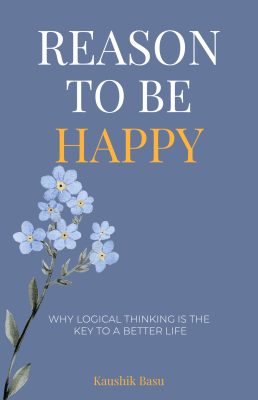
Imagine a world where every decision, from the trivial to the momentous, is guided by a compass of reason. In Reason to Be Happy: Why Logical Thinking is the key to a better life, Kaushik Basu invites readers on an intellectual journey that challenges conventional wisdom about happiness and success. The book opens with a provocative question: What if our pursuit of happiness has been misguided all along?
Basu argues that the path to true contentment lies not in chasing fleeting emotions or material gains, but in cultivating a habit of logical thinking. He draws on a rich tapestry of philosophical traditions, economic theories, and real-world case studies to build his case. The author takes us through the labyrinth of human decision-making, shining a light on the cognitive biases and emotional traps that often lead us astray.
One of the book’s most compelling sections explores the paradox of choice in modern society. Basu posits that the overwhelming array of options we face daily can be a source of anxiety rather than freedom. He introduces readers to the concept of “rational satisficing” – a decision-making strategy that balances the desire for optimal outcomes with the practical limitations of time and cognitive resources.
Throughout the book, Basu challenges readers to apply logical thinking to various aspects of life, from personal relationships to career choices and even political views. He argues that by doing so, we can not only improve our individual circumstances but also contribute to a more rational and harmonious society. The author doesn’t shy away from controversial topics, tackling issues like climate change denial and political polarization through the lens of logical reasoning.
Readers of Reason to Be Happy will come away with a toolkit for more effective decision-making. They’ll learn techniques for recognizing and overcoming cognitive biases, strategies for evaluating complex information, and methods for balancing emotional impulses with rational analysis. Perhaps most importantly, they’ll gain a new perspective on the nature of happiness itself – one that emphasizes long-term fulfillment over short-term pleasure.
At the heart of Reason to Be Happy is the assertion that logical thinking is not just a tool for problem-solving, but a key to unlocking a more fulfilling life. Basu likens the human mind to a garden – one that can be cultivated to produce either weeds of irrational thought or flowers of logical reasoning. Just as a well-tended garden yields beauty and sustenance, a mind honed by logical thinking can lead to better decisions, stronger relationships, and ultimately, greater happiness.
The author argues that many of life’s disappointments and frustrations stem from faulty reasoning or emotional decision-making. By embracing logical thinking, we can navigate the complexities of modern life more effectively, make choices that align with our true values, and find contentment in the process. Basu doesn’t suggest that emotions should be ignored – rather, he proposes a balanced approach where reason acts as a guide, helping us understand and manage our feelings more effectively.
Reason to Be Happy stands out in the crowded field of self-help literature by offering a fresh perspective on the pursuit of happiness. While many books in this genre focus on positive thinking or finding one’s passion, Basu’s work challenges readers to engage their rational faculties as a path to fulfillment. This approach has garnered attention from both academic circles and popular media, sparking debates about the role of logic in personal development.
The book’s significance extends beyond individual self-improvement, touching on broader societal issues. Basu’s arguments for applying logical thinking to public policy and social problems have resonated with policymakers and thought leaders. His ideas have been cited in discussions on everything from economic policy to education reform.
However, the book has not been without its critics. Some argue that Basu’s emphasis on logic undervalues the role of emotion and intuition in human experience. Others contend that the author’s approach is too Western-centric, not fully accounting for diverse cultural perspectives on happiness and decision-making. These critiques have led to lively discussions in academic journals and public forums, further cementing the book’s impact on contemporary discourse about happiness and rational thinking.
Kaushik Basu’s Reason to Be Happy: Why Logical Thinking is the key to a better life offers a unique and thought-provoking perspective on the pursuit of happiness and personal fulfillment. We find the book’s central premise – that cultivating logical thinking skills can lead to better decision-making and, ultimately, greater happiness – to be both innovative and compelling.
The book’s strengths lie in its interdisciplinary approach, combining insights from economics, philosophy, and psychology to create a comprehensive framework for understanding human behavior and decision-making. Basu’s clear and engaging writing style makes complex concepts accessible to a general audience, while still offering depth and nuance for more academically inclined readers.
We appreciate the book’s emphasis on practical applicability, providing readers with concrete strategies for implementing logical thinking in their daily lives. The inclusion of real-world examples and exercises enhances the book’s value as a tool for personal development.
However, we also recognize several limitations in Basu’s approach. The book’s focus on rational thinking, while valuable, may not fully account for the complexities of human emotion and the importance of intuition in certain situations. Additionally, the Western-centric perspective and limited discussion of cultural variability in decision-making processes may reduce its relevance for some readers.
We also note that the book could benefit from a more thorough exploration of the challenges involved in changing ingrained habits and thought patterns. While Basu provides valuable insights into the benefits of logical thinking, he may underestimate the difficulties many readers will face when attempting to implement these ideas in their lives.
Despite these limitations, we believe that Reason to Be Happy makes a significant contribution to the literature on personal development and decision-making. Its unique focus on logical thinking as a path to happiness offers a fresh perspective in a field often dominated by emotion-focused or intuition-based approaches.
Our Recommendation
We recommend Reason to Be Happy to readers who are interested in exploring a rational, analytical approach to personal growth and decision-making. The book is particularly well-suited for individuals who enjoy engaging with interdisciplinary ideas and are looking for practical strategies to improve their critical thinking skills.
However, we suggest that readers approach the book with a critical mindset, considering its ideas in conjunction with other perspectives on happiness and well-being. For a more comprehensive understanding, we recommend pairing this book with works that explore the role of emotion, intuition, and cultural factors in human behavior and decision-making.
For professionals in fields such as management, policy-making, or education, we believe this book offers valuable insights into the potential benefits of applying logical analysis to complex problems. However, we caution against an overly rigid application of its principles, emphasizing the importance of balancing rational analysis with other forms of knowledge and decision-making strategies.
Overall, while Reason to Be Happy may not provide a complete roadmap to happiness and fulfillment, we believe it offers a valuable and thought-provoking contribution to the ongoing conversation about how we can live better, more satisfying lives. Its emphasis on the power of logical thinking serves as a useful counterpoint to more emotion-focused approaches, encouraging readers to critically examine their decision-making processes and potentially discover new paths to personal growth and happiness.
The essence of Kaushik Basu’s Reason to Be Happy lies in its exploration of logical thinking as a pathway to personal fulfillment and societal progress. At its core, the book argues that cultivating rational decision-making skills can lead to better outcomes across various aspects of life. Basu posits that by honing our logical faculties, we can navigate complex moral dilemmas, make more informed choices, and ultimately find greater happiness.
One key topic Basu explores is the concept of cognitive biases and their impact on decision-making. He argues that these unconscious mental shortcuts often lead us astray, causing us to make choices that don’t align with our best interests or values. By understanding and recognizing these biases, we can take steps to mitigate their influence and make more rational decisions. Basu provides tools and techniques for identifying common biases such as confirmation bias, anchoring, and the sunk cost fallacy, empowering readers to overcome these mental pitfalls.
Another crucial element of the book is the exploration of the relationship between logic and emotions. Contrary to the popular belief that reason and emotion are at odds, Basu argues that they can and should work in harmony. He proposes a model of emotional intelligence grounded in logical thinking, suggesting that understanding the rational basis of our emotions can help us manage them more effectively. This approach, he contends, leads to more stable relationships, better mental health, and increased overall life satisfaction.
The book also delves into the concept of “rational satisficing,” a decision-making strategy that balances the desire for optimal outcomes with the practical limitations of time and cognitive resources. Basu argues that in a world of overwhelming choices, trying to find the absolute best option in every situation can lead to decision paralysis and unhappiness. Instead, he advocates for setting reasonable criteria and choosing the first option that meets them, allowing for more efficient and satisfying decision-making.
A significant portion of the book is dedicated to applying logical thinking to societal issues. Basu examines how rational analysis can be used to address complex problems such as economic inequality, climate change, and political polarization. He argues that by approaching these issues with a logical mindset, we can cut through ideological biases and find more effective solutions. This section of the book challenges readers to apply critical thinking skills not just to their personal lives, but to their roles as citizens and members of a global community.
Lastly, Basu explores the concept of long-term thinking as a key component of logical decision-making and happiness. He argues that many of our current problems, both personal and societal, stem from an overemphasis on short-term gains at the expense of long-term well-being. By cultivating the ability to consider long-term consequences and delayed gratification, Basu suggests we can make choices that lead to more sustainable happiness and success.
The Ultimatum Game
To illustrate the interplay between logic and emotion in decision-making, Basu discusses the Ultimatum Game, a classic experiment in behavioral economics. In this game, one player is given a sum of money and must offer a portion of it to another player. If the second player accepts, both keep their shares. If the second player rejects the offer, neither gets anything. Logically, the second player should accept any offer, as some money is better than none. However, studies show that offers perceived as unfair are often rejected, even at a cost to the rejector. Basu uses this example to explore how our sense of fairness and emotional responses can override purely logical considerations, and how understanding this dynamic can lead to better negotiation and conflict resolution skills.
The Trolley Problem
To explore the complexities of moral decision-making, Basu examines the famous Trolley Problem. In this ethical thought experiment, a runaway trolley is headed towards five people tied to the tracks. The participant has the option to divert the trolley to another track where it will kill one person instead of five. Basu uses this scenario to illustrate how logical thinking can help us navigate difficult ethical dilemmas. He discusses various factors that might influence the decision, such as the doctrine of double effect and the distinction between action and inaction. Through this example, Basu demonstrates how applying logical analysis to moral questions can lead to more consistent and defensible ethical frameworks.
The Prisoner’s Dilemma
Basu employs the Prisoner’s Dilemma to demonstrate the importance of logical thinking in social interactions and cooperation. In this game theory scenario, two suspects are interrogated separately and face choices that affect both their outcomes. The logical choice for each individual leads to a worse outcome for both, compared to if they had cooperated. Basu uses this example to discuss how understanding game theory and strategic thinking can lead to better outcomes in various life situations, from personal relationships to business negotiations and even international diplomacy. He argues that by applying logical analysis to such scenarios, we can identify and create win-win situations that benefit all parties involved.
Climate Change Policy
To illustrate the application of logical thinking to global issues, Basu discusses climate change policy. He examines how different countries approach the problem, often prioritizing short-term economic gains over long-term environmental sustainability. Basu argues that a logical analysis of the situation, considering factors such as the tragedy of the commons, externalities, and long-term economic impacts, leads to the conclusion that cooperative action is necessary and beneficial for all. He uses this example to demonstrate how applying rational thinking to complex global issues can help overcome political barriers and lead to more effective solutions.
The Paradox of Choice
Basu explores the concept of choice overload through the example of a supermarket study. In this study, customers were more likely to purchase jam when presented with a limited selection of 6 varieties compared to when they were offered 24 varieties. Basu uses this to illustrate how an overabundance of options can lead to decision paralysis and dissatisfaction. He argues that applying logical thinking to such situations, such as by using the “rational satisficing” approach, can lead to more efficient decision-making and greater satisfaction with our choices. This example serves to demonstrate how logical thinking can be applied to everyday situations to improve our quality of life.
Recognize and Mitigate Cognitive Biases
One of the most crucial insights from Basu’s book is the importance of identifying and counteracting cognitive biases. These mental shortcuts, while often useful for quick decision-making, can lead us astray when dealing with complex issues. To apply this insight, start by familiarizing yourself with common biases such as confirmation bias, anchoring, and the availability heuristic. Then, develop a habit of questioning your initial judgments, especially on important decisions. For example, when forming an opinion on a controversial topic, actively seek out information that challenges your existing beliefs. Additionally, when making financial decisions, use concrete data and predefined criteria rather than relying solely on gut feelings or recent experiences. By consciously working to recognize and mitigate these biases, you can make more balanced and accurate judgments in both personal and professional contexts.
Embrace Rational Satisficing
Basu introduces the concept of “rational satisficing” as a powerful antidote to decision paralysis and the paradox of choice. This approach involves setting reasonable criteria for a decision and choosing the first option that meets those criteria, rather than endlessly searching for the “perfect” choice. To apply this insight, start by identifying the key factors that are truly important in a given decision. For instance, when choosing a new job, you might prioritize salary, work-life balance, and growth opportunities. Set minimum acceptable levels for each factor, and commit to accepting the first offer that meets or exceeds these criteria. This approach can be particularly useful in situations with numerous options, such as selecting a restaurant, buying a car, or choosing a vacation destination. By adopting rational satisficing, you can make decisions more efficiently and reduce the stress and dissatisfaction often associated with choice overload.
Cultivate Long-Term Thinking
A key insight from Basu’s work is the importance of long-term thinking in achieving lasting happiness and success. He argues that many of our problems stem from an overemphasis on short-term gains at the expense of future well-being. To apply this insight, start by regularly setting aside time to reflect on your long-term goals and values. When faced with important decisions, consciously consider the potential consequences over various time horizons – not just the immediate future, but 5, 10, or even 20 years down the line. For example, when considering a career move, don’t just focus on the immediate salary increase, but also consider how it aligns with your long-term professional aspirations and personal values. In your personal life, this might mean prioritizing habits that promote long-term health over short-term pleasures, or investing in relationships that offer lasting fulfillment rather than fleeting excitement. By cultivating this long-term perspective, you can make choices that lead to more sustainable happiness and success.
Integrate Logic and Emotion
Contrary to the common belief that logic and emotion are opposing forces, Basu argues for their integration as a path to better decision-making and increased emotional intelligence. To apply this insight, start by acknowledging your emotions without being ruled by them. When facing a difficult decision or emotional situation, take a moment to identify and name the emotions you’re experiencing. Then, analyze the logical basis for these feelings. Are they proportionate to the situation? Are they based on accurate information? This process can help you understand your emotional responses better and manage them more effectively. For instance, if you’re feeling anxious about a job interview, logically analyze the source of your anxiety and the realistic outcomes of the situation. This can help you calm your nerves and prepare more effectively. By learning to balance emotional awareness with logical analysis, you can develop more nuanced and effective approaches to personal and professional challenges.
Apply Game Theory to Social Interactions
Basu’s exploration of game theory offers valuable insights into social interactions and cooperation. Understanding the strategic aspects of human behavior can lead to more effective communication and mutually beneficial outcomes. To apply this insight, start by considering the incentives and potential outcomes for all parties involved in a given situation. For example, in a workplace conflict, try to identify each person’s motivations and the potential consequences of different actions. Look for opportunities to create “win-win” scenarios where cooperation benefits everyone involved. In personal relationships, this might mean finding ways to align your goals with those of your partner or friends, rather than viewing conflicts as zero-sum games. By adopting a game theory perspective, you can navigate social situations more strategically and foster more positive and productive interactions.
Use Logical Analysis for Ethical Decision-Making
One of the most thought-provoking insights from Basu’s book is the application of logical thinking to moral and ethical dilemmas. He argues that a systematic, rational approach to ethics can lead to more consistent and defensible moral frameworks. To apply this insight, start by clearly defining your core values and ethical principles. When faced with a moral dilemma, systematically analyze the situation using these principles. Consider the potential consequences of different actions, not just in the short term but also in the long term. Look for analogous situations to help clarify your thinking. For instance, if you’re grappling with an ethical issue at work, consider how you would view the situation if it occurred in a different context or if the roles were reversed. By applying logical analysis to ethical questions, you can develop a more robust moral compass and make decisions that align more closely with your values.
Leverage Rational Thinking for Personal Growth
Basu emphasizes the role of logical thinking in personal development and self-improvement. By applying rational analysis to our habits, beliefs, and goals, we can identify areas for growth and develop more effective strategies for change. To apply this insight, start by objectively assessing your current situation and desired outcomes. Use techniques like cost-benefit analysis to evaluate different courses of action. For example, if you’re considering learning a new skill, logically analyze the potential benefits (career advancement, personal satisfaction) against the costs (time, money, effort required). Set specific, measurable goals and develop a systematic plan to achieve them. Regularly review your progress, using data and objective criteria rather than relying solely on subjective feelings. By approaching personal growth with a logical mindset, you can make more informed decisions about where to focus your efforts and how to achieve your goals most effectively.
Address Complex Societal Issues with Rational Analysis
A key insight from Basu’s work is the power of applying logical thinking to complex societal issues. He argues that rational analysis can help cut through ideological biases and lead to more effective solutions for problems like economic inequality, climate change, and political polarization. To apply this insight, start by approaching societal issues with a commitment to objectivity and evidence-based reasoning. Seek out diverse sources of information and be willing to challenge your own assumptions. When evaluating policy proposals or social movements, consider both short-term and long-term consequences, as well as potential unintended effects. For example, when thinking about environmental policies, consider not just the immediate economic impacts but also long-term sustainability and global effects. By applying rational analysis to societal issues, you can become a more informed and effective citizen, capable of contributing meaningfully to public discourse and decision-making.
Innovative Approach to Happiness
Kaushik Basu’s Reason to Be Happy offers a refreshing and unique perspective on the pursuit of happiness. Unlike many self-help books that focus on positive thinking or finding one’s passion, Basu’s work stands out by emphasizing the role of logical thinking in achieving personal fulfillment. This approach provides readers with a concrete, actionable framework for improving their lives. By linking happiness to rational decision-making, Basu offers a more sustainable and reliable path to contentment than methods based solely on emotion or intuition. The book’s emphasis on developing critical thinking skills as a means to happiness is particularly valuable in our current era of information overload and rapid change.
Interdisciplinary Approach
One of the book’s major strengths lies in its interdisciplinary approach. Basu skillfully weaves together insights from economics, philosophy, psychology, and other fields to create a comprehensive framework for understanding human behavior and decision-making. This broad perspective allows readers to gain a more nuanced understanding of complex issues. For example, when discussing the concept of rational satisficing, Basu draws on economic theories of choice, psychological studies on decision fatigue, and philosophical debates about the nature of happiness. This interdisciplinary approach not only makes the book more engaging but also provides readers with a richer, more holistic understanding of the topics discussed.
Practical Applicability
Reason to Be Happy excels in bridging the gap between theory and practice. Basu doesn’t just present abstract concepts; he provides concrete strategies for applying logical thinking to everyday life. Each chapter includes practical exercises and real-world examples that help readers internalize and apply the book’s principles. For instance, when discussing cognitive biases, Basu offers specific techniques for recognizing and mitigating these biases in decision-making. The book’s focus on practical applicability ensures that readers can immediately start implementing its insights, making it a valuable resource for personal development.
Clear and Engaging Writing Style
Despite dealing with complex topics, Basu’s writing remains clear, accessible, and engaging throughout the book. He has a talent for explaining difficult concepts in simple terms without oversimplifying them. His use of anecdotes, thought experiments, and real-world examples helps to illustrate abstract ideas and keep the reader engaged. For example, his explanation of game theory through everyday scenarios makes this complex field of study accessible to a general audience. The clarity of Basu’s writing ensures that the book’s valuable insights are accessible to a wide range of readers, not just those with a background in economics or philosophy.
Balanced Perspective on Emotion and Reason
Reason to Be Happy offers a nuanced and balanced view of the relationship between emotion and reason. Rather than dismissing emotions as irrational or unimportant, Basu argues for integrating emotional intelligence with logical thinking. This balanced approach acknowledges the importance of emotions in human experience while providing tools for managing them more effectively through rational analysis. By advocating for this integration, Basu offers a more holistic and realistic approach to decision-making and personal growth than books that focus exclusively on either emotional or rational aspects of human behavior.
Societal Impact
Beyond its value for personal development, the book makes a compelling case for the importance of logical thinking in addressing broader societal issues. Basu extends his arguments to topics such as economic policy, climate change, and political polarization, demonstrating how rational analysis can lead to more effective solutions to complex problems. This broader perspective adds depth to the book and encourages readers to apply critical thinking not just to their personal lives, but also to their roles as citizens and members of a global community. By linking personal development with societal progress, Basu provides a more comprehensive and impactful framework for his readers.
Western-Centric Perspective
While Basu draws on a wide range of sources, the book’s perspective remains largely rooted in Western philosophical and economic traditions. This Western-centric approach may limit the book’s relevance or applicability for readers from non-Western cultures. For instance, the emphasis on individual decision-making and personal happiness may not resonate as strongly in cultures that place a higher value on collective well-being or familial obligations. The book could have benefited from a more diverse range of cultural perspectives on happiness, decision-making, and the role of logic in human life. Including insights from Eastern philosophy or indigenous knowledge systems would have enriched the discussion and made the book more globally relevant.
Overemphasis on Rationality
While the book’s focus on logical thinking is its unique selling point, at times it may overemphasize the role of rationality in human happiness and decision-making. Some readers might find that the book doesn’t adequately account for the complexity of human emotions and the value of intuitive or non-rational forms of knowledge. For example, in discussions of personal relationships or creative pursuits, the emphasis on logical analysis might seem overly reductive. The book could have provided a more nuanced discussion of situations where non-rational approaches might be more appropriate or effective.
Limited Discussion of Implementation Challenges
While Reason to Be Happy offers many practical strategies for applying logical thinking to various aspects of life, it sometimes underestimates the challenges of implementing these strategies in real-world situations. The book could have benefited from a more in-depth discussion of the obstacles people might face when trying to adopt more rational decision-making processes, such as ingrained habits, social pressures, or psychological resistance. Additionally, more guidance on how to overcome these obstacles would have enhanced the book’s practical value. For instance, while Basu discusses cognitive biases, he could have provided more extensive strategies for overcoming these deeply ingrained mental patterns.
Lack of Empirical Evidence in Some Areas
While Basu draws on a wide range of academic research to support his arguments, there are some areas where the book could have benefited from more robust empirical evidence. Some of the claims about the long-term benefits of logical thinking for happiness and well-being, while intuitively appealing, lack substantial longitudinal studies to support them. The book sometimes relies more heavily on theoretical arguments and anecdotal evidence than on hard data, particularly when discussing the societal benefits of increased rational thinking. Including more empirical studies, especially from fields like positive psychology or behavioral economics, would have strengthened the book’s arguments and provided readers with more confidence in its recommendations.
Overlooking the Role of Unconscious Processes
One significant blind spot in Basu’s Reason to Be Happy is its limited exploration of the role of unconscious processes in decision-making and happiness. While the book emphasizes conscious, logical thinking, it doesn’t fully address the powerful influence of unconscious biases, emotions, and intuitions that often drive our behavior. This oversight might lead readers to overestimate their ability to control their thoughts and actions through purely rational means. In reality, much of our decision-making occurs below the level of conscious awareness, as explored in books like Daniel Kahneman’s Thinking, Fast and Slow and Malcolm Gladwell’s Blink: The Power of Thinking Without Thinking. These works highlight the importance of rapid, intuitive judgments in many situations and suggest that trying to apply conscious logical analysis to every decision might actually be counterproductive in some cases. Incorporating insights from these books could have provided a more balanced view of the interplay between conscious and unconscious processes in shaping our behavior and well-being.
Neglecting Cultural and Situational Variability
Another blind spot in Basu’s work is its limited consideration of how cultural and situational factors might influence the applicability of logical thinking to happiness and decision-making. The book tends to present a one-size-fits-all approach, implying that the benefits of rational analysis are universal across all contexts. However, research in cultural psychology, as presented in books like Richard Nisbett’s The Geography of Thought: How Asians and Westerners Think Differently… and Why, suggests that cognitive processes, including logical reasoning, can vary significantly across cultures. Similarly, situational factors can greatly influence the effectiveness of different decision-making strategies, as explored in Gerd Gigerenzer’s Gut Feelings: The Intelligence of the Unconscious. These works highlight how heuristics and intuitive judgments can sometimes outperform logical analysis, especially in complex or time-constrained situations. By not fully addressing these cultural and situational variations, Basu’s book may lead readers to apply logical thinking in contexts where other approaches might be more effective or culturally appropriate.
Underestimating the Challenges of Behavior Change
While Reason to Be Happy offers valuable insights into the benefits of logical thinking, it may underestimate the difficulties involved in changing ingrained habits and thought patterns. The book’s emphasis on rational decision-making might create the impression that simply understanding the logic behind a better choice is sufficient to change behavior. However, decades of research in psychology and behavioral economics have shown that knowledge alone is often insufficient to drive lasting behavior change. Books like Charles Duhigg’s The Power of Habit: Why We Do What We Do in Life and Business and BJ Fogg’s Tiny Habits: The Small Changes That Change Everything offer more nuanced perspectives on the complexities of habit formation and behavior change. These works emphasize the importance of environmental cues, emotional factors, and gradual, incremental changes in shaping behavior – aspects that are not fully explored in Basu’s book. Readers attempting to apply Basu’s principles might become frustrated if they don’t achieve immediate results, not realizing the complex interplay of factors involved in changing deeply ingrained patterns of thought and behavior.
Limited Exploration of Collective Decision-Making
Basu’s focus on individual logical thinking as a path to happiness and better outcomes overlooks the complexities of collective decision-making processes. In many real-world scenarios, decisions are made by groups, organizations, or societies, where dynamics such as groupthink, power imbalances, and conflicting interests come into play. The book’s approach might lead readers to overestimate the impact of individual rational thinking in these collective contexts. Works like James Surowiecki’s The Wisdom of Crowds and Cass Sunstein and Reid Hastie’s Wiser: Getting Beyond Groupthink to Make Groups Smarter offer valuable insights into the challenges and potential of collective decision-making that could have enriched Basu’s analysis. These books explore how groups can sometimes make better decisions than individuals, and how to structure group decision-making processes to harness collective intelligence effectively. By not fully addressing these collective aspects, Basu’s book may not adequately prepare readers for the complexities of decision-making in organizational or societal contexts.
Potential Overemphasis on Happiness as a Goal
While the book’s focus on happiness as the ultimate goal of logical thinking is appealing, it may inadvertently perpetuate a narrow view of human flourishing. By framing rational decision-making primarily as a means to achieve happiness, the book might overlook other important aspects of a fulfilling life, such as meaning, purpose, or virtue. This perspective could lead readers to prioritize short-term happiness over other valuable life goals. Books like Viktor Frankl’s Man’s Search for Meaning and Martin Seligman’s Flourish: A Visionary New Understanding of Happiness and Well-being offer broader perspectives on human thriving that go beyond happiness alone. These works emphasize concepts like meaning, engagement, relationships, and accomplishment as key components of a well-lived life. Incorporating these multifaceted views of well-being could have provided a more comprehensive framework for applying logical thinking to life’s challenges and decisions.
Thinking, Fast and Slow by Daniel Kahneman
Kaushik Basu’s Reason to Be Happy shares some common ground with Daniel Kahneman’s seminal work Thinking, Fast and Slow, as both books explore the role of rational thinking in decision-making and well-being. However, their approaches and conclusions differ significantly. Kahneman’s book, based on decades of psychological research, presents a dual-system model of thinking: System 1 (fast, intuitive, and emotional) and System 2 (slower, more deliberative, and logical). While Basu emphasizes the importance of logical thinking (akin to Kahneman’s System 2) for achieving happiness, Kahneman’s work suggests a more complex interplay between intuitive and analytical thinking. Kahneman argues that both systems have their strengths and weaknesses, and that relying too heavily on either can lead to errors in judgment. This nuanced view contrasts with Basu’s more straightforward advocacy for logical thinking. Additionally, Kahneman’s book provides a deeper exploration of cognitive biases and their impact on decision-making, offering a more comprehensive understanding of the limitations of human rationality.
Stumbling on Happiness by Daniel Gilbert
Daniel Gilbert’s Stumbling on Happiness offers an interesting counterpoint to Basu’s work. While both books are concerned with the pursuit of happiness, their approaches differ significantly. Gilbert’s book, grounded in psychological research, argues that humans are remarkably bad at predicting what will make them happy in the future. He suggests that our inability to accurately forecast our emotional reactions to future events often leads us astray in our pursuit of happiness. This perspective challenges Basu’s implicit assumption that logical thinking can reliably lead to greater happiness. Gilbert’s work implies that even with perfect logical reasoning, we might still make poor decisions about our future happiness due to fundamental flaws in our ability to imagine our future selves. While Basu emphasizes the role of rational decision-making, Gilbert’s book highlights the importance of understanding the quirks of human psychology in the pursuit of happiness.
The Happiness Hypothesis by Jonathan Haidt
Jonathan Haidt’s The Happiness Hypothesis offers a more integrative approach to understanding happiness compared to Basu’s focus on logical thinking. Haidt draws on philosophy, psychology, and neuroscience to explore various factors that contribute to human happiness and flourishing. While Basu emphasizes the role of rational thinking, Haidt argues for a balance between reason and intuition, likening the mind to a rider (conscious reasoning) on an elephant (automatic processes). Haidt’s book explores concepts like the role of relationships, meaningful work, and spirituality in achieving happiness – aspects that receive less attention in Basu’s work. The Happiness Hypothesis also delves deeper into the biological and evolutionary roots of human behavior and emotion, providing a more comprehensive framework for understanding the complexities of human happiness. This multifaceted approach contrasts with Basu’s more focused emphasis on logical thinking as a path to happiness.
Nudge by Richard Thaler and Cass Sunstein
While not directly focused on happiness, Nudge by Richard Thaler and Cass Sunstein offers an interesting contrast to Basu’s approach to decision-making. Both books are concerned with improving human decision-making, but they propose different methods. Basu advocates for cultivating logical thinking skills to make better choices, while Thaler and Sunstein argue for the power of “choice architecture” – designing the environment in which decisions are made to nudge people towards better choices. Nudge is based on the premise that humans are not purely rational decision-makers (an idea they term “econs”) but are influenced by a variety of cognitive biases and environmental factors. This view aligns more closely with Kahneman’s work than with Basu’s emphasis on logical thinking. Thaler and Sunstein’s approach suggests that sometimes it’s more effective to work with human irrationality rather than trying to overcome it through pure logic, offering a different perspective on how to improve decision-making and, by extension, human well-being.
Develop a Logical Thinking Habit
Implement Rational Satisficing
Cultivate Long-Term Thinking
Integrate Logic and Emotion
Apply Game Theory to Social Interactions
Use Logical Analysis for Ethical Decision-Making
Leverage Rational Thinking for Personal Growth
Fostering a Culture of Logical Decision-Making
Implementing the principles of logical thinking outlined in Basu’s book can significantly enhance an organization’s decision-making processes. By encouraging employees at all levels to apply rational analysis to their work, companies can reduce costly errors, improve efficiency, and make more strategically sound choices. This approach can be particularly beneficial in areas such as project management, resource allocation, and long-term strategic planning.
However, fostering such a culture can face significant obstacles. Employees may resist changes to established decision-making processes, especially if they perceive logical analysis as time-consuming or unnecessarily complex. Additionally, in fast-paced business environments, there may be pressure to make quick decisions based on intuition or experience rather than thorough analysis. Emotional attachments to certain projects or ideas can also hinder objective evaluation.
To overcome these challenges, organizations can implement a gradual, multi-faceted approach. Start by providing training sessions on logical thinking techniques, emphasizing their practical benefits in everyday work scenarios. Develop decision-making frameworks that incorporate logical analysis but are streamlined for efficiency. Recognize and reward employees who demonstrate strong analytical skills in their decision-making. Over time, integrate logical thinking assessments into performance reviews to reinforce its importance. By making rational analysis a valued and rewarded skill, companies can shift their culture towards more logical decision-making.
Implementing Rational Satisficing in Business Processes
Rational satisficing, as described in Basu’s book, can be a powerful tool for businesses dealing with complex decisions or facing analysis paralysis. By setting clear criteria for what constitutes a satisfactory outcome and choosing the first option that meets these criteria, companies can make decisions more efficiently and avoid the pitfalls of endlessly searching for a “perfect” solution. This approach can be particularly useful in areas such as product development, where rapid iteration and market testing are often more valuable than prolonged analysis.
Implementing rational satisficing in a business context can be challenging. Many organizations have deeply ingrained processes that favor exhaustive analysis and consensus-building. Employees, especially those in leadership positions, may fear that satisficing could lead to suboptimal outcomes or be perceived as “settling” for less than the best. There may also be concerns about how to set appropriate criteria for different types of decisions.
To address these challenges, begin by piloting the rational satisficing approach in low-stakes decisions or specific departments. Provide clear guidelines on how to set criteria and when to apply satisficing. Encourage teams to document their decision-making process and outcomes, creating a body of evidence to support the effectiveness of this approach. As successes accumulate, gradually expand the use of rational satisficing to more areas of the business. Regularly review and refine the criteria-setting process based on outcomes to ensure it remains aligned with business goals.
Cultivating Long-Term Thinking in Corporate Strategy
Applying Basu’s emphasis on long-term thinking to corporate strategy can help businesses avoid the pitfalls of short-term focus and create more sustainable growth. By encouraging leaders and employees to consider the long-term consequences of their decisions, companies can build more resilient strategies, invest in innovation more effectively, and build stronger relationships with stakeholders. This approach can be particularly valuable in areas such as sustainability initiatives, talent development, and market expansion.
However, cultivating long-term thinking in a business environment can be challenging. Many companies face intense pressure from shareholders and market forces to deliver short-term results, which can discourage investment in long-term initiatives. Additionally, the rapid pace of change in many industries can make long-term planning seem futile or overly speculative. Employees may also struggle to balance long-term considerations with immediate job responsibilities and performance metrics.
To overcome these obstacles, organizations can start by revising their goal-setting and performance evaluation processes to include long-term metrics. Implement a balanced scorecard approach that considers both short-term performance and long-term value creation. Develop scenario planning exercises that encourage leaders to consider multiple possible futures and their implications. Create cross-functional teams dedicated to long-term strategic initiatives, ensuring they have the resources and authority to influence company direction. By institutionalizing long-term thinking in this way, companies can create a more balanced approach to decision-making and strategy development.
Integrating Logical Analysis with Emotional Intelligence
Basu’s book emphasizes the importance of integrating logical thinking with emotional awareness. In a business context, this approach can lead to more effective leadership, improved team dynamics, and better customer relationships. By encouraging employees to consider both rational analysis and emotional factors in their decision-making and interactions, companies can create a more balanced and effective work environment.
Implementing this integrated approach can be challenging in many organizational cultures. There may be a tendency to view emotions as irrelevant or even detrimental to business decisions. Some employees may struggle to recognize or articulate emotional factors in professional settings. Additionally, there may be concerns that focusing on emotions could slow down decision-making processes or lead to “soft” decisions that prioritize feelings over facts.
To address these challenges, organizations can start by providing training in emotional intelligence alongside logical thinking skills. Develop decision-making frameworks that explicitly include consideration of emotional factors, such as team morale or customer sentiment. Encourage leaders to model this integrated approach in their own decision-making and communication. Implement regular feedback sessions where teams can discuss both the logical and emotional aspects of their work. By demonstrating the value of this balanced approach through improved outcomes and team dynamics, companies can gradually shift their culture towards a more holistic decision-making process.
Applying Game Theory to Business Negotiations and Competitions
The game theory principles discussed in Basu’s book can be powerful tools for businesses engaged in negotiations, competitive strategy, or market positioning. By analyzing business situations through a game theory lens, companies can make more strategic decisions, anticipate competitors’ moves, and identify opportunities for mutually beneficial outcomes. This approach can be particularly valuable in areas such as pricing strategy, merger and acquisition negotiations, and competitive bidding situations.
Implementing game theory approaches in business can face several obstacles. Many executives and employees may lack familiarity with game theory concepts and struggle to apply them to real-world situations. There may also be resistance to changing established negotiation or competitive strategies, especially if current approaches are perceived as successful. Additionally, the complexity of many business environments can make it challenging to accurately model all relevant factors and potential outcomes.
To overcome these challenges, organizations can begin by providing targeted training in game theory concepts and their business applications. Start with small, cross-functional teams tasked with applying game theory to specific business challenges, and use their successes as case studies to demonstrate the value of this approach. Develop simplified game theory models and decision trees that can be easily applied to common business situations. Gradually integrate game theory analysis into strategic planning processes, encouraging teams to consider multiple scenarios and potential competitor responses. By building game theory thinking into regular business processes, companies can enhance their strategic decision-making capabilities over time.
Ethical Decision-Making Frameworks for Corporate Governance
Basu’s emphasis on applying logical analysis to ethical decision-making can be particularly valuable in the realm of corporate governance and business ethics. By developing clear, rational frameworks for addressing ethical dilemmas, companies can make more consistent and defensible decisions, build trust with stakeholders, and mitigate reputational risks. This approach can be especially important in areas such as corporate social responsibility, environmental policy, and data privacy.
Implementing rigorous ethical decision-making frameworks can face several challenges in a business environment. There may be pressure to prioritize short-term profits over ethical considerations, or a tendency to view ethics as a matter of compliance rather than strategic importance. Different stakeholders may have conflicting ethical priorities, making it difficult to establish consistent frameworks. Additionally, employees may struggle to apply abstract ethical principles to complex real-world situations.
To address these challenges, organizations can start by clearly articulating their core ethical values and principles, ensuring they are aligned with the company’s mission and strategy. Develop detailed case studies of ethical dilemmas relevant to the business, and use these to train employees in applying ethical frameworks. Create an ethics committee or advisory board to provide guidance on difficult decisions and help refine the company’s ethical frameworks over time. Integrate ethical considerations into key performance indicators and decision-making processes at all levels of the organization. By making ethical reasoning a core part of business operations, companies can build a culture of integrity that supports long-term success.
Artificial Intelligence and Augmented Decision-Making
As artificial intelligence continues to advance, the ideas presented in Basu’s book about logical thinking and decision-making are likely to become increasingly relevant. We may see a future where AI systems are designed to augment human decision-making by providing logical analysis and highlighting potential cognitive biases. Basu’s emphasis on rational thinking could serve as a framework for developing these AI assistants, ensuring they complement human intuition with rigorous logical analysis. However, this trend also raises important questions about the balance between human judgment and machine-driven decisions. As AI becomes more sophisticated, there may be a growing need for humans to cultivate strong logical thinking skills to effectively oversee and interpret AI-generated insights. The principles outlined in “Reason to Be Happy” could become crucial in helping individuals maintain agency and critical thinking in an AI-augmented world.
The Rise of Evidence-Based Policymaking
The book’s advocacy for applying logical thinking to complex societal issues aligns well with the growing trend of evidence-based policymaking. As governments and organizations increasingly rely on data and rigorous analysis to inform decisions, the skills of logical reasoning and rational analysis that Basu promotes will become even more valuable. We may see a future where policy analysts and decision-makers are explicitly trained in the kind of structured thinking outlined in the book. This trend could lead to more effective and transparent governance, with policies being formulated based on clear logical frameworks rather than ideology or intuition alone. However, it will also require careful consideration of how to balance quantitative analysis with qualitative factors and how to communicate complex reasoning to the general public.
Personalized Education and Cognitive Training
As education systems evolve to meet the demands of the 21st century, there’s a growing emphasis on teaching critical thinking and problem-solving skills. Basu’s ideas about cultivating logical thinking could play a significant role in shaping future educational curricula. We might see the development of personalized cognitive training programs that help individuals identify and overcome their specific cognitive biases and enhance their logical reasoning skills. These programs could utilize adaptive learning technologies to tailor exercises to each person’s cognitive profile and learning style. In the workplace, companies might invest in ongoing logical thinking training for employees, recognizing it as a key skill for innovation and effective decision-making in a rapidly changing business environment.
Ethical AI and Logical Frameworks
As artificial intelligence systems become more complex and autonomous, there’s an increasing need for robust ethical frameworks to guide their development and deployment. Basu’s approach to applying logical thinking to ethical decision-making could prove invaluable in this context. We may see the emergence of formalized logical frameworks for AI ethics, drawing on the principles outlined in the book. These frameworks could help ensure that AI systems make decisions that are not only efficient but also ethically sound and aligned with human values. This trend might lead to the development of new roles, such as AI ethicists, who specialize in applying logical analysis to the ethical implications of AI technologies.
Rational Approaches to Mental Health
The book’s emphasis on logical thinking as a path to happiness and well-being aligns with emerging trends in mental health treatment that incorporate cognitive approaches. We might see a growth in therapeutic methods that explicitly draw on the principles of logical analysis to help individuals manage emotional challenges and improve their mental health. This could include the development of apps and digital tools that guide users through structured logical thinking exercises to address anxiety, depression, or other mental health issues. While not replacing traditional therapies, these logical thinking-based approaches could become valuable complementary tools in mental health care, empowering individuals to apply rational analysis to their emotional experiences.
Logical Thinking in Climate Change Mitigation
As the global community grapples with the complex challenges of climate change, the kind of logical, long-term thinking advocated by Basu could become increasingly crucial. We may see a trend towards applying more rigorous logical frameworks to climate policy decisions, helping to cut through ideological debates and focus on evidence-based solutions. This could involve the development of sophisticated decision-making tools that allow policymakers and citizens to logically analyze the long-term consequences of various climate actions. The book’s emphasis on balancing short-term and long-term considerations could prove particularly valuable in addressing the often-competing demands of immediate economic concerns and long-term environmental sustainability.
The ideas presented in Kaushik Basu’s Reason to Be Happy have the potential to significantly influence both individual behavior and societal approaches to decision-making and well-being. On an individual level, the book’s emphasis on logical thinking as a path to happiness could inspire a renewed interest in critical thinking and rational analysis. This could lead to more people actively working to overcome cognitive biases and make more considered decisions in their personal and professional lives. In the long term, this might result in a populace that is more resistant to misinformation and better equipped to navigate complex choices in areas like healthcare, finance, and career planning.
In the realm of education, Basu’s work could contribute to a growing emphasis on teaching critical thinking skills alongside traditional academic subjects. Schools and universities might increasingly incorporate lessons on logical reasoning, cognitive biases, and decision-making strategies into their curricula. This shift could produce generations of students better prepared to tackle complex problems and make informed choices in an increasingly complex world.
In the field of psychology and self-help, Basu’s book might spark a new wave of research and literature exploring the connections between logical thinking, decision-making, and subjective well-being. This could lead to the development of new therapeutic approaches that incorporate rational analysis techniques alongside more traditional emotional and behavioral interventions.
On a broader societal level, the book’s arguments for applying logical thinking to complex social issues could influence policy-making and public discourse. If embraced by leaders and decision-makers, this approach could lead to more evidence-based policy decisions and a greater emphasis on rational analysis in public debates. This might contribute to more effective solutions for pressing global challenges like climate change, economic inequality, and public health crises.
However, the book’s potential impact is not without controversy. Critics might argue that an overemphasis on logical thinking could lead to a devaluation of emotional intelligence, intuition, and other non-rational forms of knowledge. There’s a risk that taken to an extreme, the book’s ideas could contribute to a culture that undervalues empathy and emotional connections in favor of cold rationality.
In the business world, Basu’s ideas could influence management practices and corporate decision-making processes. Companies might increasingly prioritize logical analysis and evidence-based decision-making, potentially leading to more efficient and effective business strategies. However, this could also result in overlooking the importance of creativity, intuition, and emotional intelligence in areas like innovation and leadership.
The book’s emphasis on individual rational thinking as a solution to personal and societal problems might also face criticism for potentially downplaying the role of systemic factors in shaping human behavior and well-being. This could lead to important debates about the balance between individual responsibility and societal structures in determining outcomes.
Ultimately, the long-term impact of Reason to Be Happy will likely depend on how its ideas are interpreted, applied, and integrated with other perspectives on human behavior and well-being. While it offers valuable insights into the power of logical thinking, its true influence may lie in sparking broader conversations about the nature of happiness, decision-making, and the role of rationality in human life.
Thinking, Fast and Slow by Daniel Kahneman
Thinking, Fast and Slow provides an excellent complement to Basu’s work by offering a deeper exploration of the dual-system model of thinking. While Basu focuses on the benefits of logical thinking, Kahneman’s book provides a more nuanced view of how intuitive (System 1) and analytical (System 2) thinking interact in our decision-making processes. Kahneman’s extensive research on cognitive biases and heuristics offers readers a comprehensive understanding of the obstacles to logical thinking, which can enhance their ability to apply Basu’s principles effectively. The book’s exploration of how these biases affect judgment and decision-making in various contexts, from personal finance to policy-making, provides valuable insights for readers seeking to improve their rational thinking skills.
Nudge: Improving Decisions About Health, Wealth, and Happiness by Richard H. Thaler and Cass R. Sunstein
Nudge offers an intriguing counterpoint to Basu’s emphasis on individual logical thinking by exploring how the design of choice environments can influence decision-making. Thaler and Sunstein’s concept of “choice architecture” provides readers with an alternative perspective on how to improve decision-making outcomes, not just through individual effort but also through thoughtful design of the contexts in which decisions are made. This book can help readers understand how external factors can support or hinder logical thinking, complementing Basu’s focus on internal cognitive processes. The authors’ exploration of “libertarian paternalism” also raises interesting questions about the role of policy in promoting better decision-making, which can enrich readers’ understanding of the societal implications of rational thinking.
Predictably Irrational: The Hidden Forces That Shape Our Decisions by Dan Ariely
Ariely’s Predictably Irrational serves as an excellent companion to Basu’s work by highlighting the systematic ways in which human behavior deviates from rational decision-making. While Basu advocates for logical thinking, Ariely’s research demonstrates the persistent and predictable ways in which emotions and cognitive biases influence our choices. This book can help readers identify and understand their own irrational tendencies, making them better equipped to apply Basu’s principles of logical thinking. Ariely’s engaging style and use of behavioral experiments make complex concepts accessible, offering readers practical insights into the challenges of rational decision-making in real-world contexts.
The Happiness Hypothesis: Finding Modern Truth in Ancient Wisdom by Jonathan Haidt
Haidt’s The Happiness Hypothesis offers a broader perspective on happiness and well-being that can complement Basu’s focus on logical thinking. By exploring ancient wisdom through the lens of modern psychology, Haidt provides insights into the multifaceted nature of happiness, including the roles of relationships, meaningful work, and spirituality. This book can help readers contextualize Basu’s ideas within a wider framework of human flourishing, encouraging them to consider how logical thinking can be integrated with other aspects of a fulfilling life. Haidt’s exploration of the interplay between reason and intuition also offers a nuanced view that can enrich readers’ understanding of the complexities of human cognition and decision-making.
Algorithms to Live By: The Computer Science of Human Decisions by Brian Christian and Tom Griffiths
Algorithms to Live By provides a unique perspective that aligns well with Basu’s emphasis on logical thinking. Christian and Griffiths demonstrate how computer science algorithms can be applied to everyday human problems, offering a fresh approach to decision-making and problem-solving. This book can help readers develop a more structured and analytical approach to life’s challenges, complementing Basu’s advocacy for rational thinking. By exploring concepts like optimal stopping, sorting, and caching in the context of human decision-making, the authors provide practical tools that readers can use to enhance their logical thinking skills and make more effective choices in various aspects of their lives.
Factfulness: Ten Reasons We’re Wrong About the World – and Why Things Are Better Than You Think by Hans Rosling, Ola Rosling, and Anna Rosling Rönnlund
Factfulness offers a compelling exploration of how to think more critically about global trends and statistics, aligning well with Basu’s emphasis on logical analysis. Rosling and his co-authors provide tools for overcoming common cognitive biases that lead to misperceptions about the state of the world. This book can help readers apply logical thinking to their understanding of global issues, complementing Basu’s ideas about using rational analysis to address societal challenges. By encouraging a more data-driven and nuanced view of progress and development, Factfulness can enhance readers’ ability to make informed decisions and engage in constructive dialogue about complex global issues.
The Art of Thinking Clearly by Rolf Dobelli
Dobelli’s The Art of Thinking Clearly offers a practical complement to Basu’s work by providing a comprehensive catalog of cognitive biases and logical fallacies. While Basu focuses on the benefits of logical thinking, Dobelli’s book serves as a detailed guide to the various ways our thinking can go astray. Each chapter focuses on a specific cognitive error, explaining its nature and offering strategies to avoid it. This structured approach can help readers identify and overcome obstacles to rational thinking in their own lives, making it easier to apply the principles Basu advocates. The book’s concise chapters and real-world examples make it an accessible resource for readers looking to enhance their critical thinking skills and decision-making processes.
Farnam Street (fs.blog) Farnam Street is a website dedicated to helping people develop mental models and improve their decision-making skills. It offers a wealth of articles, book summaries, and podcasts that align closely with Basu’s emphasis on logical thinking and rational decision-making. The site’s exploration of cognitive biases, mental models, and decision-making strategies can provide readers with practical tools to apply the principles discussed in “Reason to Be Happy.” Farnam Street also offers a paid membership program that provides access to additional resources and a community of like-minded individuals interested in improving their thinking skills.
Less Wrong (lesswrong.com) Less Wrong is an online community and blog devoted to refining the art of human rationality. It features discussions, essays, and debates on topics related to cognitive science, decision theory, and the nature of intelligence. The site’s focus on rationality and overcoming cognitive biases aligns well with Basu’s ideas about logical thinking. Readers can find in-depth explorations of concepts like Bayesian reasoning, cognitive biases, and effective altruism, which can deepen their understanding of rational decision-making processes.
Clearer Thinking (clearerthinking.org) Clearer Thinking offers free tools and training programs designed to improve decision-making and combat cognitive biases. The site provides interactive exercises, quizzes, and articles that can help readers apply the logical thinking principles discussed in Basu’s book. Their decision-making tools and bias tests can serve as practical supplements to the theoretical concepts presented in “Reason to Be Happy,” allowing readers to assess and improve their own rational thinking skills.
International Conference on Thinking (thinkingconference.org) The International Conference on Thinking is a biennial event that brings together researchers, educators, and practitioners interested in improving thinking skills and promoting critical and creative thinking. Attendees can explore the latest research and practical applications in areas such as decision-making, problem-solving, and cognitive development. This conference can provide readers with opportunities to engage with experts in the field and learn about cutting-edge approaches to enhancing logical thinking skills.
Society for Judgment and Decision Making Annual Conference (sjdm.org) The annual conference of the Society for Judgment and Decision Making offers a platform for researchers and practitioners to share the latest findings in decision science. Attendees can explore topics such as reasoning, judgment under uncertainty, and the interplay between emotion and cognition in decision-making. This conference can provide readers with a deeper understanding of the scientific foundations underlying the logical thinking principles advocated by Basu.
Association for Psychological Science (psychologicalscience.org) The Association for Psychological Science is a nonprofit organization dedicated to advancing scientific psychology across disciplinary and geographic borders. Members have access to cutting-edge research, conferences, and networking opportunities in various fields of psychology, including cognitive psychology and decision science. Joining this organization can help readers stay informed about the latest developments in the scientific understanding of human thinking and decision-making processes.
International Association for Critical Thinking and Problem Solving (think-how.com) This association is dedicated to promoting critical thinking and problem-solving skills across various domains. Members can access resources, workshops, and conferences focused on enhancing logical thinking and decision-making abilities. The organization’s emphasis on practical applications of critical thinking aligns well with Basu’s focus on using logical thinking to improve everyday life and decision-making.
You Are Not So Smart (youarenotsosmart.com) Hosted by David McRaney, this podcast explores the psychology of self-delusion and cognitive biases. Each episode features interviews with researchers and experts in psychology, cognitive science, and related fields, offering insights into why humans often behave irrationally. The podcast’s exploration of the obstacles to logical thinking can help readers better understand and overcome the challenges in applying Basu’s principles.
Rationally Speaking (rationallyspeakingpodcast.org) Hosted by Julia Galef, this podcast features conversations with experts in fields such as psychology, philosophy, and economics, focusing on improving human reasoning and decision-making. The podcast’s exploration of rational thinking techniques and discussions about the nature of rationality can provide valuable context and additional insights for readers of Basu’s book.
Introduction to Logic (Coursera, offered by Stanford University) This online course provides a comprehensive introduction to logic, covering topics such as valid reasoning, logical fallacies, and the structure of arguments. The course can help readers develop a stronger foundation in logical thinking, enhancing their ability to apply the principles discussed in Basu’s book to real-world situations.
Decision Making in Leadership (edX, offered by Harvard University) This course focuses on improving decision-making skills in leadership contexts, exploring topics such as cognitive biases, decision analysis, and ethical decision-making. While aimed at leaders, the course’s content can be valuable for anyone looking to enhance their decision-making abilities, aligning well with Basu’s emphasis on applying logical thinking to improve life outcomes.
The Social Dilemma (2020) This documentary explores the impact of social media on human behavior and decision-making. While not directly focused on logical thinking, the film provides valuable insights into how technology can influence and sometimes manipulate our cognitive processes. Understanding these influences can help viewers become more aware of potential barriers to rational thinking in the digital age, complementing Basu’s ideas about cultivating logical thinking skills.
Inside the Mind (2016) This series of short films produced by National Geographic explores various aspects of human cognition, including decision-making, memory, and perception. The episodes on decision-making and cognitive biases are particularly relevant to readers of Basu’s book, offering visual explanations of key concepts in cognitive psychology that underlie rational thinking processes.
A Beautiful Mind (2001) While primarily a biographical drama about mathematician John Nash, this film offers an engaging exploration of game theory and rational decision-making. The portrayal of Nash’s work on equilibrium in competitive scenarios can provide viewers with an accessible introduction to some of the concepts underlying strategic thinking and rational analysis, topics that align with Basu’s emphasis on logical approaches to decision-making.

Discover the key takeaways from top non-fiction books in minutes. Get the wisdom you need to succeed fast. Here, learning is quick, engaging, and always at your fingertips.
© 2025 All Rights Reserved.