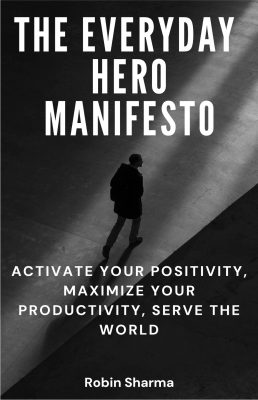
Get ready for a game-changing journey into personal and professional excellence. This book is a powerful guide that teaches you how to unlock your inner potential, boost your productivity, and make a lasting impact on the world. It’s not just another self-help book; it’s a comprehensive blueprint for transforming your life from ordinary to extraordinary. The author combines ancient wisdom with cutting-edge science to provide practical strategies that anyone can use to become their best self. Whether you’re looking to advance your career, improve your relationships, or find deeper meaning in life, this book offers the tools and inspiration you need to make it happen.
The Everyday Hero Manifesto is primarily aimed at professionals, entrepreneurs, and individuals who are committed to personal growth and making a positive impact in their spheres of influence. The book’s accessible language and relatable examples make it suitable for readers at various stages of their personal development journey, from young adults just starting their careers to seasoned executives looking for fresh inspiration. While the concepts presented can be transformative for anyone, they are particularly relevant for those feeling stuck in their current situation or seeking to take their success to the next level. The secondary audience includes coaches, mentors, and educators who can use the principles outlined in the book to guide and inspire others.
Picture a world where every person wakes up with a sense of purpose, tackles their day with unstoppable energy, and goes to bed knowing they’ve made a difference. That’s the vision Robin Sharma paints in The Everyday Hero Manifesto: Activate Your Positivity, Maximize Your Productivity, Serve The World. It’s not a fairytale – it’s a roadmap for turning ordinary lives into extraordinary legacies.
Sharma kicks off by challenging readers to rethink their definition of success. He argues that true fulfillment comes not from accumulating wealth or fame, but from becoming the best version of yourself and using your talents to serve others. The book is structured around what Sharma calls the “4 Interior Empires”: Mindset, Heartset, Healthset, and Soulset. Each of these domains represents a crucial area of personal development that, when cultivated, allows individuals to unlock their full potential.
Throughout the book, Sharma weaves together ancient wisdom, modern science, and personal anecdotes to create a compelling narrative. He introduces readers to concepts like the “Twin Cycle of Elite Performance,” which explains how periods of intense focus and deep recovery lead to sustained high performance. Another key idea is the “90/90/1 Rule,” a productivity hack where you dedicate the first 90 minutes of your day, for 90 days, to your single most important project.
One of the most powerful aspects of The Everyday Hero Manifesto is its emphasis on practical application. Sharma doesn’t just offer lofty ideals; he provides concrete strategies and daily practices that readers can implement immediately. From morning routines that set you up for success to techniques for managing your energy and attention throughout the day, the book is packed with actionable advice.
Readers of The Everyday Hero Manifesto will learn how to cultivate a growth mindset that embraces challenges, develop emotional resilience to navigate life’s ups and downs, optimize their physical health for peak performance, and connect with their deeper purpose to live a life of meaning and impact. Sharma also delves into the importance of continuous learning, the power of gratitude, and the necessity of facing your fears to achieve greatness. By the end of the book, readers will have a comprehensive toolkit for personal transformation and a renewed sense of what’s possible in their lives.
The core message of The Everyday Hero Manifesto is that greatness is not reserved for a select few – it’s available to anyone willing to commit to consistent personal growth and selfless service. Sharma likens this journey to climbing a mountain. At the base, you see only the obstacles immediately in front of you. But as you ascend, your perspective broadens, revealing new possibilities and a clearer view of your ultimate destination.
This metaphor encapsulates Sharma’s belief that becoming an “everyday hero” is a gradual process of elevating your mindset, refining your habits, and expanding your impact. Just as a mountain climber must navigate treacherous terrain and overcome physical limitations, the path to personal excellence requires facing fears, breaking through self-imposed limits, and persevering through setbacks.
The book emphasizes that true heroism isn’t about grand, one-time gestures, but rather the cumulative effect of small, daily acts of courage, kindness, and self-improvement. Sharma argues that by consistently showing up as your best self – whether in your career, relationships, or personal pursuits – you create a ripple effect that positively influences those around you and, ultimately, the world at large.
The Everyday Hero Manifesto stands out in the crowded self-help genre for its holistic approach to personal development. While many books focus on either career success, health, relationships, or spirituality, Sharma’s work integrates all these elements into a cohesive philosophy of living. This comprehensive perspective has resonated with readers across various cultures and professions, contributing to the book’s widespread appeal and impact.
The book has garnered praise for its blend of timeless wisdom and cutting-edge research. Sharma’s ability to distill complex concepts into accessible, actionable strategies has made The Everyday Hero Manifesto a valuable resource for both individuals and organizations looking to foster leadership and drive positive change.
Critics have noted that some of Sharma’s ideas, such as the importance of morning routines and mindfulness practices, are not entirely new. However, the book’s strength lies in its synthesis of these concepts and the author’s skill in presenting them in a fresh, inspiring way. The real-world examples and case studies Sharma includes lend credibility to his methods and demonstrate their applicability across various life situations.
Since its release, The Everyday Hero Manifesto has topped bestseller lists in multiple countries and has been translated into numerous languages, reflecting its global impact. It has been particularly well-received in business and entrepreneurial circles, with many leaders citing the book as a catalyst for organizational culture shifts and improved team performance.
While the book has been widely praised, some critics argue that its ambitious scope might be overwhelming for readers looking for quick fixes. However, supporters counter that this comprehensive approach is precisely what sets The Everyday Hero Manifesto apart, offering a long-term strategy for sustainable personal and professional growth.
After a thorough analysis of Robin Sharma’s The Everyday Hero Manifesto, we find it to be a valuable addition to the personal development genre. The book’s comprehensive approach to self-improvement, covering mental, emotional, physical, and spiritual aspects of life, sets it apart from many other works in the field. We appreciate Sharma’s ability to blend timeless wisdom with modern scientific research, creating a rich tapestry of insights that can appeal to a wide range of readers.
The book’s greatest strength lies in its practical applicability. Sharma doesn’t just present lofty ideals; he provides concrete strategies and techniques that readers can implement immediately in their daily lives. From the 20/20/20 morning routine to the 90/90/1 rule for prioritizing important work, these actionable tools give readers a clear path to start their personal transformation journey.
We also commend Sharma’s emphasis on the connection between personal growth and making a positive impact on the world. By encouraging readers to become “everyday heroes,” the book inspires a sense of purpose and social responsibility that goes beyond mere self-improvement. This focus on service and contribution adds a meaningful dimension to the book’s teachings, potentially motivating readers to pursue goals that are not only personally fulfilling but also socially valuable.
However, we must also acknowledge some limitations of the book. The sheer volume of strategies and concepts presented can be overwhelming, especially for readers new to personal development. Some may find it challenging to implement all the suggested practices without feeling overwhelmed or burnt out. Additionally, while the book’s optimistic tone is generally motivating, it sometimes borders on idealistic, potentially creating unrealistic expectations for rapid transformation.
We also note that the book could benefit from a more nuanced discussion of failure, setbacks, and the role of external factors in shaping one’s success. A deeper exploration of these aspects would provide readers with a more balanced and realistic perspective on the personal development journey.
Despite these limitations, we believe that The Everyday Hero Manifesto offers significant value to its readers. The book’s combination of inspirational content and practical strategies provides a comprehensive toolkit for personal growth and success. Its emphasis on holistic development and social contribution sets it apart from many other self-help books, offering a more meaningful and purpose-driven approach to personal improvement.
Our Recommendation
We recommend The Everyday Hero Manifesto to readers who are seeking a comprehensive guide to personal development and are ready to commit to significant lifestyle changes. The book is particularly well-suited for individuals who are looking to boost their productivity, find a deeper sense of purpose, and make a positive impact on the world around them.
However, we suggest that readers approach the book’s teachings with a balanced perspective. We recommend starting with a few key strategies that resonate most strongly, rather than attempting to implement all of the book’s advice at once. As with any personal development work, it’s important to adapt the teachings to one’s individual circumstances and to be patient with the process of growth and change. For those willing to engage deeply with its concepts and put its strategies into practice, The Everyday Hero Manifesto has the potential to be a transformative and empowering read.
The essence of The Everyday Hero Manifesto revolves around several key topics that form the backbone of Robin Sharma’s philosophy for personal and professional excellence. One of the most crucial concepts is the idea of the “4 Interior Empires”: Mindset, Heartset, Healthset, and Soulset. Sharma argues that true success and fulfillment come from developing and balancing these four aspects of our lives. The Mindset empire involves cultivating a growth-oriented, positive mental attitude that embraces challenges and sees failures as opportunities for learning. The Heartset empire focuses on emotional intelligence, resilience, and the ability to form deep, meaningful connections with others. The Healthset empire emphasizes the importance of physical well-being, including proper nutrition, exercise, and rest, as foundational elements for high performance in all areas of life. Lastly, the Soulset empire encourages individuals to connect with their deeper purpose and values, aligning their actions with their authentic selves.
Another central concept in the book is the “Twin Cycle of Elite Performance.” This model illustrates the importance of balancing periods of intense focus and productivity with deep recovery and renewal. Sharma explains that top performers in any field understand the necessity of pushing their limits during work hours but also prioritize rest and rejuvenation to avoid burnout and maintain long-term success. This cycle involves strategically alternating between periods of concentrated effort and deliberate relaxation, allowing individuals to sustain high levels of performance over time without sacrificing their well-being.
The “90/90/1 Rule” is a powerful productivity strategy introduced in the book. This rule suggests dedicating the first 90 minutes of your workday, for 90 consecutive days, to your single most important project or goal. By consistently focusing your freshest, most alert hours on your highest-priority task, Sharma argues that you can make significant progress in areas that truly matter, leading to breakthrough results. This approach helps combat procrastination and ensures that critical projects receive the attention they deserve, rather than being pushed aside by less important but more urgent tasks.
Sharma also emphasizes the concept of “The 5 AM Club,” which he explored in depth in his previous book but revisits in The Everyday Hero Manifesto. This practice involves waking up at 5 AM to engage in a series of rituals designed to set a positive tone for the day. These morning routines typically include elements of physical exercise, reflection or meditation, and personal growth activities such as reading or journaling. By starting the day early and with intention, Sharma believes individuals can gain a significant advantage in productivity, creativity, and overall life satisfaction.
The idea of “Gargantuan Goals” is another key topic in the book. Sharma encourages readers to dream big and set audacious objectives that push them far beyond their comfort zones. He argues that by aiming for seemingly impossible goals, individuals unlock levels of creativity, resourcefulness, and determination they didn’t know they possessed. These ambitious targets act as powerful motivators, driving personal growth and achievement even if the ultimate goal isn’t fully realized. Sharma emphasizes that the journey toward these grand objectives often yields unexpected benefits and opportunities, making the pursuit worthwhile regardless of the final outcome.
The Violin Virtuoso
To illustrate the power of the Twin Cycle of Elite Performance, Sharma recounts the story of a world-renowned violinist. This musician would practice intensely for 90-minute blocks, followed by equally important 90-minute rest periods. During these rest intervals, the violinist would nap, meditate, or engage in light physical activity. This alternating pattern allowed her to maintain peak focus during practice sessions while giving her brain and body time to recover and consolidate learning. As a result, she was able to achieve mastery of her instrument at a remarkably young age, outperforming peers who practiced for longer hours but without strategic rest periods.
The CEO’s 90/90/1 Transformation
Sharma shares the experience of a CEO who implemented the 90/90/1 Rule to transform her company. Facing declining market share and employee morale, she decided to dedicate the first 90 minutes of her workday, for 90 days straight, to reimagining the company’s product line. By giving this critical task her undivided attention during her most productive hours, she was able to develop a revolutionary new product that revitalized the entire business. This focused effort not only led to a successful product launch but also inspired a culture of innovation throughout the organization, ultimately reversing the company’s fortunes.
The Everyday Hero in Action
To demonstrate how ordinary individuals can make extraordinary impacts, Sharma tells the story of a school janitor who embodied the principles of an everyday hero. This janitor took immense pride in his work, ensuring the school was impeccably clean and safe for students. Beyond his job duties, he learned the names of every student and greeted them warmly each day. He started a mentoring program for at-risk youth, using his lunch breaks to provide guidance and support. Over the years, his positive influence touched countless lives, with many former students crediting him as a key factor in their success. This example illustrates how applying the book’s principles of positivity, excellence, and service can create a profound ripple effect, regardless of one’s formal position or title.
The Gargantuan Goal Achiever
Sharma recounts the journey of an entrepreneur who set a Gargantuan Goal of building a billion-dollar company that would revolutionize renewable energy. Despite having no background in the field and limited initial resources, she committed to this audacious objective. The pursuit of this goal led her to develop innovative technologies, attract top talent, and secure funding from unexpected sources. While she hasn’t yet reached the billion-dollar valuation, her company has already made significant contributions to sustainable energy solutions and created hundreds of jobs. This example showcases how aiming for an seemingly impossible goal can drive innovation, personal growth, and positive societal impact, even if the ultimate target isn’t fully achieved.
The 5 AM Club Success Story
To highlight the transformative power of the 5 AM Club concept, Sharma shares the story of a struggling artist who adopted this practice. By waking up at 5 AM every day and dedicating the first hour to creative work, followed by exercise and meditation, the artist experienced a dramatic boost in productivity and inspiration. Within six months, he had completed a series of paintings that caught the attention of a prominent gallery owner, launching his career to new heights. More importantly, the discipline and self-mastery he developed through this routine spilled over into other areas of his life, improving his relationships and overall well-being. This example illustrates how small, consistent changes in daily habits can lead to significant life transformations.
The 20/20/20 Formula for Morning Mastery
Sharma introduces the 20/20/20 formula as a powerful way to start each day. This technique involves dividing the first hour after waking into three 20-minute segments, each dedicated to a specific activity. The first 20 minutes are for intense exercise to get your blood flowing and energy levels up. The next 20 minutes are for reflection, which can include meditation, journaling, or prayer. The final 20 minutes are for learning, such as reading a book or listening to an educational podcast. To apply this insight, set your alarm 60 minutes earlier than usual and prepare your exercise clothes, reflection materials, and learning resources the night before. Stick to this routine for at least 66 days to form a habit. This practice sets a positive tone for the day, boosting productivity, creativity, and overall well-being.
The Second Wind Workout
Sharma advocates for what he calls the “Second Wind Workout,” a strategy to combat the afternoon energy slump that many people experience. Instead of reaching for caffeine or sugary snacks, he suggests engaging in a brief but intense physical activity around 3 or 4 PM. This could be a 10-minute high-intensity interval training (HIIT) session, a brisk walk, or even a series of desk exercises like push-ups or squats. To implement this, set a daily alarm as a reminder and keep a pair of running shoes or exercise band at your workplace. The Second Wind Workout not only boosts energy levels but also enhances cognitive function, improves mood, and increases overall daily physical activity. Make it a non-negotiable part of your daily routine, and you’ll likely find yourself more productive and focused during the latter part of your workday.
The 90/90/1 Rule for Exceptional Results
The 90/90/1 Rule is a powerful productivity hack designed to help you make significant progress on your most important projects. The rule states that for the next 90 days, you should spend the first 90 minutes of your workday focused entirely on your single most life-changing opportunity. To apply this, first identify your most crucial project or goal. Then, restructure your schedule to protect the first 90 minutes of your workday. Turn off all notifications, inform colleagues of your unavailability during this time, and create a distraction-free environment. Use this time to work solely on your priority project. The cumulative effect of this focused effort over 90 days can lead to remarkable progress and breakthrough results. Remember, consistency is key – resist the temptation to use this time for urgent but less important tasks.
The 60/10 Method for Sustained Focus
To maintain high levels of productivity throughout the day, Sharma recommends the 60/10 method. This involves working with intense focus for 60 minutes, followed by a 10-minute break for recovery and rejuvenation. During the 60-minute work block, eliminate all distractions and concentrate solely on the task at hand. Use a timer to stay accountable. In the 10-minute break, step away from your work completely. Take a short walk, do some stretches, practice deep breathing, or engage in a brief meditation. This method leverages the brain’s natural rhythm of focus and rest, allowing you to maintain high performance over extended periods. To implement this, divide your workday into these 70-minute cycles. Start with just two or three cycles per day and gradually increase as you build your focus muscle. Be sure to honor both the work and rest periods equally for maximum benefit.
The Daily Five Concept for Continuous Progress
Sharma introduces the Daily Five as a simple yet powerful way to ensure consistent progress towards your goals. The idea is to identify and complete five small but significant tasks each day that move you closer to your objectives. These tasks should be specific, actionable, and aligned with your larger goals. To apply this concept, at the end of each workday, write down five key tasks for the next day. These could include making an important phone call, writing a section of a report, or completing a workout. The next day, focus on completing these five tasks before anything else. This approach prevents procrastination, creates a sense of daily accomplishment, and ensures steady progress even on days when you feel unmotivated. Over time, the cumulative effect of consistently completing your Daily Five can lead to substantial achievements.
The 2X3X Mindset for Exponential Growth
The 2X3X Mindset is Sharma’s formula for accelerated personal and professional growth. It challenges you to double (2X) your income and impact in 3 years by delivering 3X the value to others. This mindset shifts your focus from mere self-improvement to dramatically increasing your contribution to others. To implement this, start by assessing your current income and impact. Then, brainstorm ways you can provide three times more value in your work, relationships, and community. This might involve learning new skills, taking on additional responsibilities, or creating innovative solutions to problems. Set specific targets for income and impact growth, breaking them down into quarterly and monthly goals. Regularly review your progress and adjust your strategies as needed. Remember, the key is not just working harder, but working smarter and constantly looking for ways to add more value to others.
The Tight Bubble of Total Focus (TBTF) Technique
In a world full of distractions, Sharma emphasizes the importance of creating what he calls a Tight Bubble of Total Focus (TBTF) for deep, meaningful work. This technique involves creating an environment and mindset that allows for complete concentration on a single task. To apply TBTF, designate a specific area for focused work, free from phones, emails, and other potential interruptions. Use noise-cancelling headphones or white noise to block out ambient sounds. Before starting, take a few deep breaths and set a clear intention for what you want to accomplish. Work in focused bursts of 30 to 90 minutes, depending on your concentration ability. During this time, resist the urge to multitask or check messages. After each TBTF session, take a short break to recharge. By consistently using this technique, you’ll train your brain to enter deep focus more easily, leading to higher quality work and increased productivity.
**The Ins
piration Installation Protocol**
Sharma believes that consistent exposure to inspiring content is crucial for maintaining motivation and a positive mindset. He suggests creating an Inspiration Installation Protocol, a daily practice of consuming uplifting and educational content. To implement this, dedicate at least 30 minutes each day to reading inspiring books, listening to motivational podcasts, or watching educational videos. Create a curated list of resources aligned with your goals and values. You might start your day by reading a few pages of a biography of someone you admire, listen to a thought-provoking podcast during your commute, or end your day with a TED talk on a subject that fascinates you. The key is consistency – make this a non-negotiable part of your daily routine. Over time, this practice will shape your thinking, boost your creativity, and keep you motivated even in challenging times.
The Weekly Design System for Life Architecture
To ensure you’re making progress on what truly matters, Sharma recommends implementing a Weekly Design System. This involves taking time each week to review your goals, plan your upcoming week, and align your daily activities with your long-term vision. To apply this, set aside an hour each Sunday (or whichever day works best for you) for this process. Start by reviewing your annual goals and assessing your progress. Then, identify the key areas you need to focus on in the coming week. Break these down into specific, actionable tasks and schedule them into your calendar. Be sure to include time for self-care, relationships, and personal growth activities. Use this time to also reflect on the past week, celebrating wins and learning from setbacks. By consistently engaging in this weekly planning ritual, you ensure that your day-to-day actions are aligned with your larger life goals, leading to a greater sense of purpose and fulfillment.
Comprehensive Approach to Personal Development
Robin Sharma’s The Everyday Hero Manifesto stands out for its holistic approach to personal growth. Unlike many self-help books that focus on a single aspect of life, such as career success or health, Sharma’s work integrates multiple dimensions of human experience. The book’s framework of the “4 Interior Empires” – Mindset, Heartset, Healthset, and Soulset – provides a balanced and comprehensive roadmap for readers seeking to improve various aspects of their lives. This multifaceted approach acknowledges the interconnectedness of different life areas and offers strategies for developing each one. By addressing mental, emotional, physical, and spiritual well-being, Sharma equips readers with a toolkit for holistic self-improvement that can lead to more sustainable and meaningful personal transformation.
Actionable Strategies and Techniques
One of the book’s major strengths lies in its abundance of practical, actionable strategies. Sharma doesn’t just present lofty ideals or abstract concepts; he provides concrete techniques that readers can implement immediately. Examples include the 20/20/20 formula for morning routines, the 90/90/1 rule for prioritizing important work, and the Second Wind Workout for overcoming afternoon slumps. These strategies are clearly explained and often broken down into step-by-step instructions, making them accessible even to readers new to personal development. The practicality of these techniques increases the book’s value, as readers can start applying the concepts to their lives right away and potentially see tangible results.
Engaging Writing Style and Storytelling
Sharma’s writing style in The Everyday Hero Manifesto is engaging and motivational, which enhances the book’s readability and impact. He skillfully weaves together personal anecdotes, client success stories, and historical examples to illustrate his points. This storytelling approach not only makes the content more memorable but also helps readers connect emotionally with the material. Sharma’s use of vivid metaphors and analogies helps to clarify complex concepts, making them more accessible to a wide audience. The author’s passion for his subject matter shines through in his writing, which can be infectious and inspiring for readers.
Balance of Timeless Wisdom and Modern Research
Another strength of the book is its effective blend of ancient wisdom and contemporary scientific research. Sharma draws on timeless philosophical and spiritual teachings from various cultures, giving the book a depth that goes beyond mere productivity hacks. At the same time, he supports many of his ideas with findings from modern psychology, neuroscience, and performance studies. This combination of old and new knowledge adds credibility to the book’s teachings and appeals to both readers who value traditional wisdom and those who prefer evidence-based approaches. By bridging these two worlds, Sharma creates a rich tapestry of insights that can resonate with a diverse readership.
Emphasis on Service and Greater Purpose
The Everyday Hero Manifesto distinguishes itself by emphasizing the importance of service and contribution to others. While many personal development books focus primarily on individual success, Sharma consistently ties personal growth to making a positive impact in the world. The book challenges readers to think beyond their own achievements and consider how they can use their skills and resources to benefit others and society at large. This focus on service adds a meaningful dimension to the book’s teachings, potentially inspiring readers to pursue goals that are not only personally fulfilling but also socially valuable.
Flexible and Customizable Framework
The book provides a flexible framework that allows readers to adapt its teachings to their individual circumstances and goals. While Sharma offers specific techniques and routines, he also encourages readers to experiment and find what works best for them. This flexibility makes the book’s advice more widely applicable and increases the likelihood that readers will find value in its teachings, regardless of their personal or professional situations. The author acknowledges that there’s no one-size-fits-all approach to personal development, which adds to the book’s authenticity and practicality.
Potential for Overwhelm
While the comprehensive nature of The Everyday Hero Manifesto is generally a strength, it can also be a weakness. The sheer number of strategies, techniques, and concepts presented in the book may be overwhelming for some readers, especially those new to personal development. Sharma introduces numerous daily practices, routines, and mindset shifts, which, if attempted all at once, could be daunting and potentially discourage readers. The book could benefit from a more structured approach to implementation, perhaps suggesting a gradual adoption of practices or providing a clear prioritization of which techniques to start with based on individual needs.
Limited Critical Analysis of Proposed Methods
While Sharma provides many strategies backed by anecdotes and some scientific research, the book sometimes lacks a critical analysis of these methods. There’s limited discussion of potential drawbacks or situations where certain techniques might not be effective. Additionally, the book doesn’t deeply explore alternative viewpoints or conflicting evidence related to some of its claims. A more balanced presentation that acknowledges limitations and potential challenges in implementing the suggested strategies would enhance the book’s credibility and help readers set realistic expectations.
Repetition of Ideas
At times, The Everyday Hero Manifesto suffers from repetition of key ideas. While reinforcement can be beneficial for learning, some readers might find the repeated emphasis on certain concepts redundant. This repetition, coupled with the book’s considerable length, might test the patience of some readers or dilute the impact of the core messages. A more concise presentation of ideas, with focused elaboration on key points, could potentially make the book more accessible and impactful.
Idealistic Tone
The book occasionally adopts an overly idealistic tone that may not resonate with all readers. While Sharma’s enthusiasm and positivity can be motivating, some may find his portrayal of the potential for transformation and success unrealistic or oversimplified. The book sometimes glosses over the real-world challenges and complexities that individuals face when trying to implement significant life changes. A more nuanced discussion of the difficulties involved in personal transformation, along with strategies for overcoming setbacks and maintaining motivation in the face of obstacles, would provide a more balanced and realistic perspective.
One-Size-Fits-All Approach to Success
One potential blind spot in The Everyday Hero Manifesto is the implicit assumption that the strategies presented will work equally well for everyone. While Sharma does encourage readers to adapt his techniques to their own lives, there’s limited discussion of how individual differences in personality, circumstances, or cultural background might impact the effectiveness of these methods. This oversight could lead readers to feel discouraged if they struggle to implement the book’s advice successfully. A more nuanced approach that acknowledges the diversity of human experiences and provides guidance on tailoring strategies to individual needs would be beneficial. Books like Quiet: The Power of Introverts in a World That Can’t Stop Talking by Susan Cain and StrengthsFinder 2.0 by Tom Rath offer valuable insights into how personality differences can influence personal and professional success strategies. These works could complement Sharma’s teachings by helping readers understand how to adapt the book’s advice to their unique strengths and tendencies.
Overemphasis on Individual Action
While The Everyday Hero Manifesto rightly emphasizes personal responsibility and the power of individual action, it may underplay the role of systemic factors and external circumstances in shaping one’s life outcomes. This focus on individual agency, while empowering, could potentially lead readers to overlook important societal, economic, or institutional barriers to success. It might also inadvertently promote a sense of guilt or inadequacy in those facing significant external challenges. A more balanced perspective that acknowledges both personal responsibility and systemic influences would provide a more comprehensive framework for personal development. Books like Mindset: The New Psychology of Success by Carol S. Dweck and Thinking, Fast and Slow by Daniel Kahneman offer valuable insights into how both individual psychology and external factors influence our behavior and outcomes. These works could provide readers with a more nuanced understanding of the interplay between personal effort and environmental factors in achieving success.
Limited Discussion of Failure and Setbacks
While Sharma’s book is overwhelmingly positive and motivational, it may not adequately prepare readers for the inevitability of failure and setbacks in their personal growth journey. The book’s emphasis on success and transformation could potentially create unrealistic expectations, leading to disappointment when readers encounter obstacles or don’t see immediate results. A more in-depth exploration of strategies for coping with failure, bouncing back from setbacks, and maintaining motivation in the face of challenges would enhance the book’s practical value. Works like The Obstacle Is the Way by Ryan Holiday and Grit: The Power of Passion and Perseverance by Angela Duckworth offer valuable perspectives on resilience and perseverance in the face of adversity. These books could provide a useful counterbalance to Sharma’s more optimistic approach, helping readers develop a more realistic and resilient mindset.
Potential for Burnout
The Everyday Hero Manifesto advocates for high levels of productivity and constant self-improvement, which, while inspiring, could potentially lead to burnout if not balanced with adequate rest and self-compassion. The book’s emphasis on early mornings, intense focus, and continuous growth might inadvertently promote a culture of overwork and self-criticism. While Sharma does mention the importance of rest and recovery, the overall tone of the book could lead some readers to push themselves too hard in pursuit of their goals. A more explicit discussion of the importance of work-life balance, self-care, and the potential dangers of perfectionism would provide a more holistic approach to personal development. Books like The Happiness of Pursuit by Chris Guillebeau and Essentialism: The Disciplined Pursuit of Less by Greg McKeown offer valuable insights into finding fulfillment and success without sacrificing well-being. These works could complement Sharma’s teachings by helping readers strike a healthy balance between ambition and self-care.
Limited Exploration of Interpersonal Dynamics
While The Everyday Hero Manifesto touches on the importance of relationships and serving others, it primarily focuses on individual growth and achievement. This approach may overlook the crucial role that interpersonal dynamics and emotional intelligence play in personal and professional success. The book could benefit from a deeper exploration of how to build and maintain meaningful relationships, navigate workplace dynamics, and develop leadership skills that inspire and motivate others. A more comprehensive treatment of these interpersonal aspects would provide readers with a more well-rounded toolkit for success in various life domains. Books like Emotional Intelligence 2.0 by Travis Bradberry and Jean Greaves and Crucial Conversations: Tools for Talking When Stakes Are High by Kerry Patterson et al. offer valuable insights into developing strong interpersonal skills and navigating complex social situations. These works could fill in the gaps left by Sharma’s more individually-focused approach, helping readers develop the social skills necessary for holistic success.
The 7 Habits of Highly Effective People by Stephen R. Covey
Like Sharma’s The Everyday Hero Manifesto, Covey’s seminal work focuses on personal development and effectiveness. Both books emphasize the importance of aligning one’s actions with deeper values and principles. However, Covey’s approach is more structured, presenting a clear progression of habits to be developed sequentially. Sharma’s work, while also offering specific techniques, allows for more flexibility in implementation. Covey’s book places a stronger emphasis on interpersonal effectiveness and win-win thinking, areas that receive less attention in Sharma’s work. On the other hand, Sharma’s book incorporates more recent research and techniques, particularly in the areas of productivity and physical well-being. While both books aim to help readers achieve personal and professional success, Sharma’s work has a stronger focus on inspiring readers to make a positive impact on the world, aligning with his concept of the “everyday hero.”
Atomic Habits by James Clear
Clear’s book and Sharma’s The Everyday Hero Manifesto both emphasize the power of small, consistent actions in creating significant life changes. However, Clear’s work is more narrowly focused on the mechanics of habit formation and behavior change, providing a detailed, science-based approach to building good habits and breaking bad ones. Sharma’s book, while touching on habits, takes a broader approach to personal development, incorporating elements of mindset, spirituality, and life purpose. Clear’s writing style is more straightforward and pragmatic, while Sharma’s is more inspirational and motivational. Atomic Habits might appeal more to readers looking for a systematic, evidence-based approach to behavior change, while Sharma’s book might resonate more with those seeking a more holistic, purpose-driven path to personal growth.
Mindset: The New Psychology of Success by Carol S. Dweck
Dweck’s book focuses primarily on the concept of growth mindset versus fixed mindset, providing extensive research on how our beliefs about our abilities shape our success. While Sharma touches on the importance of mindset in The Everyday Hero Manifesto, his treatment of the subject is less in-depth than Dweck’s. Sharma’s book covers a wider range of topics, providing a more comprehensive approach to personal development. Dweck’s work offers a more nuanced exploration of how mindset affects various aspects of life, including education, business, and relationships. Her book is more grounded in academic research, while Sharma’s work blends research with personal anecdotes and practical strategies. Readers seeking a deep dive into the psychology of success might find Dweck’s book more satisfying, while those looking for a broader personal development toolkit might prefer Sharma’s approach.
Deep Work: Rules for Focused Success in a Distracted World by Cal Newport
Both Newport’s Deep Work and Sharma’s The Everyday Hero Manifesto emphasize the importance of focused, uninterrupted work in achieving high levels of productivity and success. However, Newport’s book is entirely dedicated to this concept, providing a more in-depth exploration of the benefits of deep work and strategies for cultivating it. Sharma’s book touches on similar ideas, particularly in his discussion of the “Tight Bubble of Total Focus,” but as part of a broader personal development framework. Newport’s approach is more analytical and research-based, while Sharma’s is more inspirational and holistic. Deep Work might be more appealing to readers specifically looking to improve their focus and productivity, while Sharma’s book offers a more comprehensive approach to life optimization.
The Power of Purpose: Find Meaning, Live Longer, Better by Richard J. Leider
Leider’s book and Sharma’s The Everyday Hero Manifesto both emphasize the importance of living a purpose-driven life. However, Leider’s work is more focused on helping readers discover and articulate their life purpose, offering exercises and reflections specifically designed for this goal. Sharma’s book, while touching on purpose, presents it as one component of a larger personal development framework. Leider’s approach is more contemplative and introspective, drawing on philosophy and psychology, while Sharma’s is more action-oriented and practical. The Power of Purpose might be more suitable for readers specifically seeking guidance on finding their life’s purpose, while Sharma’s book offers a broader toolkit for personal growth and success.
Step 1: Establish Your Morning Routine
Begin by implementing the 20/20/20 formula for your morning routine. Set your alarm 60 minutes earlier than usual. Dedicate the first 20 minutes to intense physical exercise. This could be a brisk walk, a jog, or a high-intensity interval training (HIIT) session. The goal is to get your blood pumping and energy levels up. For the next 20 minutes, engage in reflection. This could involve meditation, journaling, or prayer, depending on your preferences. Use this time to set your intentions for the day and cultivate a positive mindset. In the final 20 minutes, focus on learning. Read a few pages of an inspirational book, listen to an educational podcast, or watch a TED talk on a subject that interests you. Stick to this routine for at least 66 days to form a habit. To make this easier, prepare your exercise clothes, reflection materials, and learning resources the night before.
Step 2: Implement the 90/90/1 Rule
Identify your most important project or goal – the one that could be truly life-changing if accomplished. For the next 90 days, dedicate the first 90 minutes of your workday to this project. Create a distraction-free environment during this time. Turn off all notifications on your devices, inform colleagues of your unavailability during this period, and find a quiet space to work if possible. Use a timer to stay accountable. Focus solely on tasks related to your priority project during these 90 minutes. At the end of each session, review your progress and plan what you’ll work on during the next day’s 90-minute block. Remember, consistency is key. Even if you don’t feel motivated, stick to this practice daily for the full 90 days to see significant results.
Step 3: Adopt the 60/10 Method for Sustained Focus
Restructure your workday using the 60/10 method. Work with intense focus for 60 minutes, followed by a 10-minute break for recovery and rejuvenation. During the 60-minute work block, eliminate all distractions and concentrate solely on the task at hand. Use a timer or a productivity app to keep track of your intervals. In the 10-minute break, step away from your work completely. Take a short walk, do some stretches, practice deep breathing, or engage in a brief meditation. Start by implementing this method for two or three cycles per day, gradually increasing as you build your focus muscle. Be disciplined about honoring both the work and rest periods equally. This method will help you maintain high performance over extended periods without burning out.
Step 4: Implement the Daily Five Concept
At the end of each workday, identify five small but significant tasks for the next day that will move you closer to your goals. These tasks should be specific, actionable, and aligned with your larger objectives. Write them down in a notebook or a digital task manager. The next day, focus on completing these five tasks before anything else. This approach helps prevent procrastination and ensures steady progress even on days when you feel unmotinated. Over time, the cumulative effect of consistently completing your Daily Five can lead to substantial achievements. Review your progress weekly and adjust your Daily Five selections as needed to ensure they always align with your most important goals.
Step 5: Create Your Inspiration Installation Protocol
Develop a daily practice of consuming uplifting and educational content. Dedicate at least 30 minutes each day to this activity. Create a curated list of resources aligned with your goals and values. This could include inspiring books, motivational podcasts, educational videos, or thought-provoking articles. You might start your day by reading a few pages of a biography of someone you admire, listen to a thought-provoking podcast during your commute, or end your day with a TED talk on a subject that fascinates you. Keep a journal to reflect on what you’ve learned and how you can apply these insights to your life. Make this a non-negotiable part of your daily routine, treating it as important as any other commitment in your schedule.
Step 6: Implement the Second Wind Workout
Combat the afternoon energy slump by incorporating a Second Wind Workout into your daily routine. Set a daily alarm for around 3 or 4 PM as a reminder. When the alarm goes off, engage in a brief but intense physical activity. This could be a 10-minute high-intensity interval training (HIIT) session, a brisk walk around the block, or even a series of desk exercises like push-ups, squats, or stretches. Keep a pair of running shoes or a resistance band at your workplace to make this easier. The goal is to get your blood flowing and energy levels up. After your workout, take a few deep breaths and reset your focus for the rest of the day. This practice not only boosts energy levels but also enhances cognitive function and improves overall mood.
Step 7: Develop Your Tight Bubble of Total Focus (TBTF)
Create a specific environment for deep, focused work. Designate a particular area in your home or office as your TBTF zone. This could be a corner of your room, a specific desk, or even a particular chair. Equip this space with noise-cancelling headphones or a white noise machine to block out distractions. Remove or turn off any potential interruption sources like phones or email notifications. Before starting a TBTF session, take a few deep breaths and set a clear intention for what you want to accomplish. Work in focused bursts of 30 to 90 minutes, depending on your concentration ability. Use this space whenever you need to complete high-priority, complex tasks that require your full attention.
Step 8: Implement the Weekly Design System
Set aside an hour each Sunday (or whichever day works best for you) for your Weekly Design System. During this time, review your annual goals and assess your progress. Identify the key areas you need to focus on in the coming week. Break these down into specific, actionable tasks and schedule them into your calendar. Be sure to include time for self-care, relationships, and personal growth activities. Use this time to also reflect on the past week, celebrating wins and learning from setbacks. Create a written plan for the week ahead, including your top priorities, your Daily Five for each day, and any important appointments or deadlines. This weekly planning ritual ensures that your day-to-day actions are aligned with your larger life goals.
Step 9: Cultivate the 2X3X Mindset
Adopt the 2X3X Mindset to accelerate your personal and professional growth. Set a goal to double (2X) your income and impact in 3 years by delivering 3X the value to others. Start by assessing your current income and impact. Then, brainstorm ways you can provide three times more value in your work, relationships, and community. This might involve learning new skills, taking on additional responsibilities, or creating innovative solutions to problems. Set specific targets for income and impact growth, breaking them down into quarterly and monthly goals. Create a plan for how you’ll increase your value proposition. This could include additional training, networking, or developing new products or services. Regularly review your progress and adjust your strategies as needed.
Step 10: Practice Gargantuan Goal Setting
Set aside time to dream big and set audacious objectives that push you far beyond your comfort zone. Write down your most ambitious goals, even if they seem impossible right now. For each goal, create a detailed vision of what success looks like. Then, break these large goals down into smaller, manageable steps. Create a timeline for these steps, working backwards from your ultimate goal. Regularly visualize yourself achieving these goals, imagining the process and the feeling of success in vivid detail. Review and refine your Gargantuan Goals quarterly, adjusting them as needed based on your progress and any changes in your life circumstances or priorities. Remember, the journey toward these grand objectives often yields unexpected benefits, so stay open to opportunities that arise along the way.
Implement the 90/90/1 Rule for Organizational Priorities
The 90/90/1 Rule can be adapted for businesses to focus on their most critical projects or initiatives. Organizations can designate the first 90 minutes of each workday, for 90 days, to work exclusively on their most important strategic goal. This concentrated effort can lead to significant progress on key initiatives that might otherwise get lost in the day-to-day operations of the business.
Implementing this strategy across an organization can be challenging. Coordinating schedules, especially in global companies with different time zones, may prove difficult. Additionally, urgent matters or client needs might arise during the designated 90-minute block, creating pressure to break focus. Some employees may resist changing their work routines or struggle with the intense focus required.
To overcome these challenges, businesses can start by piloting the 90/90/1 Rule with a single team or department. Clear communication about the importance of this focused time is crucial. Companies can implement a “do not disturb” policy during the 90-minute block, routing urgent matters to designated staff members outside the focus group. Providing training on time management and focus techniques can help employees adapt to this new way of working. Regular check-ins and progress reports can help maintain momentum and demonstrate the value of this approach.
Adopt the 60/10 Method for Improved Productivity
Businesses can implement the 60/10 method to boost productivity and prevent burnout among employees. This involves structuring the workday into 60-minute focused work sessions followed by 10-minute breaks. This approach can help maintain high levels of concentration throughout the day, leading to increased output and improved work quality.
Implementing this method across an organization can face several obstacles. Some employees may view the frequent breaks as unproductive or disruptive to their workflow. In client-facing roles or industries with unpredictable workloads, adhering to strict time blocks may be challenging. There might also be concerns about how to track time and ensure employees are using the method effectively without feeling micromanaged.
To address these challenges, businesses can start by educating employees about the benefits of the 60/10 method, emphasizing how it can improve both productivity and well-being. Companies can provide flexibility in how the method is applied, allowing employees to adjust the timing to fit their roles and workloads. Implementing productivity tracking software that incorporates the 60/10 method can help employees manage their time without feeling overly monitored. Encouraging teams to coordinate their breaks can help maintain workflow continuity. Regular feedback sessions can help identify and address any issues that arise during implementation.
Cultivate a Culture of Continuous Learning
Inspired by Sharma’s emphasis on constant self-improvement, businesses can foster a culture of continuous learning. This could involve implementing regular training sessions, creating a company library, or offering stipends for courses and educational materials. Encouraging employees to dedicate time each day to learning can lead to a more skilled and innovative workforce.
Potential obstacles include time constraints, budget limitations, and varying levels of employee engagement. Some employees may view learning initiatives as additional work rather than an opportunity for growth. There might also be challenges in selecting relevant learning materials that benefit both the employees and the company.
To overcome these challenges, businesses can integrate learning into the regular workday, perhaps using the 20/20/20 morning routine concept with one segment dedicated to learning. Creating a diverse learning program that caters to different learning styles and interests can increase engagement. Implementing a knowledge-sharing system where employees can teach each other skills can be both cost-effective and engaging. Tying learning to career advancement opportunities can provide additional motivation. Regular surveys and feedback sessions can help refine the learning program to ensure it meets both employee and organizational needs.
Implement the Daily Five Concept for Team Productivity
Businesses can adapt the Daily Five concept to help teams focus on high-priority tasks. Each team or department can identify five key tasks to accomplish each day that align with broader organizational goals. This approach can help maintain steady progress on important projects and improve overall productivity.
Challenges in implementing this system might include difficulty in identifying truly impactful daily tasks, especially for long-term projects. There may be resistance from employees who feel their work doesn’t fit neatly into five daily tasks. In dynamic business environments, unexpected urgent matters might consistently derail the planned Daily Five.
To address these issues, businesses can implement a hierarchical Daily Five system. Leadership can set organizational Daily Five priorities, which then cascade down to departmental and individual Daily Fives. Providing training on how to break down larger projects into daily actionable tasks can help employees adapt to this system. Building in flexibility by allowing one or two of the Daily Five to be responsive to urgent matters can help balance planned work with unexpected needs. Regular team meetings to review and adjust the Daily Five can ensure they remain relevant and aligned with organizational goals.
Foster a Second Wind Culture
Businesses can encourage the practice of a “Second Wind” boost in the afternoon to combat the post-lunch productivity dip. This could involve organizing short group exercise sessions, providing spaces for quick meditation or power naps, or encouraging brief nature walks.
Potential obstacles include space constraints in the office, varying employee schedules making group activities difficult, and concerns about time away from work. Some employees may feel uncomfortable exercising or meditating in a work environment.
To overcome these challenges, businesses can offer a variety of Second Wind options to suit different preferences. This could include creating a small exercise area, a quiet room for meditation, and identifying pleasant walking routes near the office. Flexible scheduling can allow employees to take their Second Wind break when it best suits their workday. Providing education about the productivity benefits of these breaks can help alleviate concerns about time away from work. Leaders and managers should be encouraged to participate, setting an example and creating a culture where taking these breaks is seen as valuable rather than unproductive.
Implement a Collective Inspiration Installation Protocol
Businesses can create a company-wide Inspiration Installation Protocol, where inspiring and educational content is regularly shared with all employees. This could involve a daily motivational message, a weekly inspiring video, or a monthly book club discussion.
Challenges might include selecting content that appeals to a diverse workforce, ensuring the initiative doesn’t feel forced or cheesy, and maintaining engagement over time. There may also be concerns about the time investment required to consume and discuss the content.
To address these issues, businesses can create a diverse committee responsible for content selection, ensuring a variety of perspectives are represented. Allowing employees to contribute their own inspiring finds can increase engagement and relevance. Integrating the content into existing communication channels (like a company newsletter or intranet) can make it feel more natural. Offering multiple ways to engage with the content (read, listen, watch, discuss) can cater to different preferences and time constraints. Regular feedback and adjustments can help keep the initiative fresh and valuable.
Adopt the 2X3X Mindset for Organizational Growth
Businesses can apply the 2X3X mindset to their growth strategy, aiming to double their impact and revenue in three years by providing three times more value to their customers or clients.
Challenges in implementing this strategy might include difficulty in quantifying “value” across different business areas, potential strain on resources in the effort to triple value, and maintaining quality while dramatically increasing output. There may also be resistance from employees worried about increased workloads.
To overcome these obstacles, businesses can start by clearly defining what “value” means in their context, setting specific, measurable goals for each department. Investing in technology and process improvements can help increase value delivery without proportionally increasing workload. Regular training and upskilling programs can help employees meet the challenge of delivering increased value. Implementing a robust feedback system from customers can help ensure that efforts to increase value are aligned with customer needs. Tying the 2X3X goals to employee incentives can help align individual efforts with organizational objectives.
Cultivate Everyday Heroes Within the Organization
Businesses can embrace Sharma’s concept of the “everyday hero” by recognizing and celebrating employees who go above and beyond in their roles or in service to others.
Potential challenges include defining what constitutes “hero” behavior in a business context, ensuring recognition is fair and not perceived as favoritism, and maintaining the authenticity of the initiative over time.
To address these challenges, companies can create clear criteria for everyday hero recognition, tied to company values and objectives. Implementing a peer nomination system can help ensure recognition comes from those who directly observe exceptional behavior. Rotating the responsibility for selecting heroes among different departments or levels of the organization can prevent perceptions of bias. Sharing stories of everyday heroes in company communications can inspire others and reinforce desired behaviors. Regularly reviewing and refreshing the initiative can help maintain its impact and relevance.
Atomic Habits by James Clear
Atomic Habits provides a perfect complement to Sharma’s work by offering a detailed, science-based approach to building good habits and breaking bad ones. While Sharma provides a broad framework for personal development, Clear’s book dives deep into the mechanics of behavior change. It offers practical strategies for making small, incremental improvements that compound over time. Clear’s concept of identity-based habits aligns well with Sharma’s idea of becoming an “everyday hero.” This book can help readers implement the daily practices Sharma recommends by providing a systematic approach to habit formation.
Mindset: The New Psychology of Success by Carol S. Dweck
Dweck’s Mindset explores the power of our beliefs and how changing them can dramatically impact our success. This book expands on Sharma’s emphasis on mindset, providing extensive research on the differences between a fixed and growth mindset. Dweck’s work offers valuable insights into how our beliefs about our abilities shape our behavior and our success in various domains of life. Readers of Sharma’s book will find Dweck’s research provides a deeper understanding of the psychological foundations underlying personal growth and achievement.
Deep Work: Rules for Focused Success in a Distracted World by Cal Newport
Newport’s Deep Work is an excellent companion to Sharma’s teachings on productivity and focus. While Sharma touches on the importance of concentrated work, Newport’s book is entirely dedicated to this concept. It offers a more in-depth exploration of the benefits of deep work and provides strategies for cultivating this skill in an increasingly distracted world. Readers looking to enhance their ability to focus and produce high-quality work will find Newport’s book a valuable extension of Sharma’s productivity techniques.
Emotional Intelligence: Why It Can Matter More Than IQ by Daniel Goleman
Goleman’s seminal work on emotional intelligence provides a deeper dive into the “Heartset” aspect of Sharma’s “4 Interior Empires.” This book explores the crucial role of emotional intelligence in personal and professional success. It offers insights into self-awareness, self-regulation, motivation, empathy, and social skills – all key components of becoming an effective “everyday hero.” Readers will find Goleman’s work enhances their understanding of the emotional aspects of personal development that Sharma emphasizes.
Flow: The Psychology of Optimal Experience by Mihaly Csikszentmihalyi
Csikszentmihalyi’s Flow explores the state of total absorption in a task, which aligns closely with Sharma’s concepts of focused work and peak performance. This book provides a deeper understanding of the psychological state that underlies many of Sharma’s productivity recommendations. It offers insights into how we can create more flow experiences in our work and life, leading to greater enjoyment and effectiveness. Readers will find this book adds depth to their understanding of the mental states involved in high performance.
The Power of Purpose: Find Meaning, Live Longer, Better by Richard J. Leider
Leider’s book offers a focused exploration of purpose, a key theme in Sharma’s work. While Sharma touches on the importance of living a purpose-driven life, Leider’s book is entirely dedicated to helping readers discover and articulate their life purpose. It provides exercises and reflections specifically designed for this goal, making it an excellent resource for readers who want to dive deeper into this aspect of personal development. This book can help readers clarify the deeper motivations behind their pursuit of growth and success.
Grit: The Power of Passion and Perseverance by Angela Duckworth
Duckworth’s Grit explores the role of passion and perseverance in achieving long-term goals. This book complements Sharma’s work by providing a deeper look at the psychological traits that underpin success. Duckworth’s research on grit aligns well with Sharma’s emphasis on consistent effort and resilience in the face of challenges. Readers will find this book offers valuable insights into developing the mental toughness required to pursue the kind of ambitious goals Sharma encourages.
Essentialism: The Disciplined Pursuit of Less by Greg McKeown
McKeown’s Essentialism offers a counterpoint to the potentially overwhelming array of strategies and practices in Sharma’s book. While Sharma provides numerous techniques for personal growth, McKeown argues for a more focused approach, emphasizing the importance of identifying and focusing on what’s truly essential. This book can help readers prioritize and simplify their personal development efforts, ensuring they’re focusing their energy on the most impactful areas. It provides a valuable perspective on achieving more by doing less, which can be a helpful balance to Sharma’s comprehensive approach.
The Everyday Hero Manifesto has the potential to significantly influence the field of personal development and, by extension, broader societal trends. By emphasizing the concept of the “everyday hero” and linking personal growth to positive social impact, Sharma’s work could contribute to a shift in how success is perceived and pursued. Rather than focusing solely on individual achievement, readers might be inspired to consider how their personal development can benefit their communities and the world at large.
The book’s holistic approach to personal development, encompassing mental, emotional, physical, and spiritual aspects, could encourage a more integrated view of well-being in both personal and professional contexts. This could potentially influence workplace cultures, leading to more emphasis on employee well-being and personal growth as key components of organizational success.
Sharma’s emphasis on productivity techniques and daily rituals could contribute to changing work habits and routines on a broader scale. If widely adopted, practices like the 20/20/20 morning routine or the 90/90/1 rule could reshape how people structure their days and approach their most important tasks. This could lead to increased productivity across various sectors, potentially driving innovation and economic growth.
The book’s focus on continuous learning and self-improvement might inspire more people to engage in lifelong education and skill development. This could have far-reaching implications for educational institutions and the job market, potentially driving demand for more flexible, continuous learning opportunities and creating a more adaptable workforce.
By encouraging readers to pursue ambitious goals and make a positive impact, The Everyday Hero Manifesto could inspire a wave of social entrepreneurship and community engagement. This could lead to increased volunteerism, charitable giving, and the development of innovative solutions to social and environmental problems.
However, the book’s potential influence should also be considered in light of its limitations. The emphasis on individual action and personal responsibility, while empowering, could potentially downplay the importance of systemic change in addressing social issues. There’s a risk that readers might focus too heavily on personal transformation at the expense of collective action or advocacy for structural reforms.
Moreover, the high standards and intense focus on productivity and achievement promoted in the book could contribute to a culture of overwork and burnout if not balanced with adequate emphasis on rest, self-care, and work-life balance. It will be important for readers and organizations implementing these ideas to find a sustainable approach that promotes well-being alongside achievement.
Atomic Habits by James Clear
Atomic Habits provides a perfect complement to Sharma’s work by offering a detailed, science-based approach to building good habits and breaking bad ones. While Sharma provides a broad framework for personal development, Clear’s book dives deep into the mechanics of behavior change. It offers practical strategies for making small, incremental improvements that compound over time. Clear’s concept of identity-based habits aligns well with Sharma’s idea of becoming an “everyday hero.” This book can help readers implement the daily practices Sharma recommends by providing a systematic approach to habit formation.
Mindset: The New Psychology of Success by Carol S. Dweck
Dweck’s Mindset explores the power of our beliefs and how changing them can dramatically impact our success. This book expands on Sharma’s emphasis on mindset, providing extensive research on the differences between a fixed and growth mindset. Dweck’s work offers valuable insights into how our beliefs about our abilities shape our behavior and our success in various domains of life. Readers of Sharma’s book will find Dweck’s research provides a deeper understanding of the psychological foundations underlying personal growth and achievement.
Deep Work: Rules for Focused Success in a Distracted World by Cal Newport
Newport’s Deep Work is an excellent companion to Sharma’s teachings on productivity and focus. While Sharma touches on the importance of concentrated work, Newport’s book is entirely dedicated to this concept. It offers a more in-depth exploration of the benefits of deep work and provides strategies for cultivating this skill in an increasingly distracted world. Readers looking to enhance their ability to focus and produce high-quality work will find Newport’s book a valuable extension of Sharma’s productivity techniques.
Emotional Intelligence: Why It Can Matter More Than IQ by Daniel Goleman
Goleman’s seminal work on emotional intelligence provides a deeper dive into the “Heartset” aspect of Sharma’s “4 Interior Empires.” This book explores the crucial role of emotional intelligence in personal and professional success. It offers insights into self-awareness, self-regulation, motivation, empathy, and social skills – all key components of becoming an effective “everyday hero.” Readers will find Goleman’s work enhances their understanding of the emotional aspects of personal development that Sharma emphasizes.
Flow: The Psychology of Optimal Experience by Mihaly Csikszentmihalyi
Csikszentmihalyi’s Flow explores the state of total absorption in a task, which aligns closely with Sharma’s concepts of focused work and peak performance. This book provides a deeper understanding of the psychological state that underlies many of Sharma’s productivity recommendations. It offers insights into how we can create more flow experiences in our work and life, leading to greater enjoyment and effectiveness. Readers will find this book adds depth to their understanding of the mental states involved in high performance.
The Power of Purpose: Find Meaning, Live Longer, Better by Richard J. Leider
Leider’s book offers a focused exploration of purpose, a key theme in Sharma’s work. While Sharma touches on the importance of living a purpose-driven life, Leider’s book is entirely dedicated to helping readers discover and articulate their life purpose. It provides exercises and reflections specifically designed for this goal, making it an excellent resource for readers who want to dive deeper into this aspect of personal development. This book can help readers clarify the deeper motivations behind their pursuit of growth and success.
Grit: The Power of Passion and Perseverance by Angela Duckworth
Duckworth’s Grit explores the role of passion and perseverance in achieving long-term goals. This book complements Sharma’s work by providing a deeper look at the psychological traits that underpin success. Duckworth’s research on grit aligns well with Sharma’s emphasis on consistent effort and resilience in the face of challenges. Readers will find this book offers valuable insights into developing the mental toughness required to pursue the kind of ambitious goals Sharma encourages.
Essentialism: The Disciplined Pursuit of Less by Greg McKeown
McKeown’s Essentialism offers a counterpoint to the potentially overwhelming array of strategies and practices in Sharma’s book. While Sharma provides numerous techniques for personal growth, McKeown argues for a more focused approach, emphasizing the importance of identifying and focusing on what’s truly essential. This book can help readers prioritize and simplify their personal development efforts, ensuring they’re focusing their energy on the most impactful areas. It provides a valuable perspective on achieving more by doing less, which can be a helpful balance to Sharma’s comprehensive approach.
Mindvalley
Mindvalley (www.mindvalley.com) is an online personal development platform that offers courses and programs aligned with many of the concepts in Sharma’s book. It features courses on productivity, mindfulness, and personal growth from various experts in the field. The platform’s holistic approach to learning and development mirrors Sharma’s comprehensive view of personal growth.
Coursera
Coursera (www.coursera.org) offers a wide range of online courses from top universities and institutions worldwide. Many courses align with themes from Sharma’s book, such as “Learning How to Learn” from the University of California San Diego and “The Science of Well-Being” from Yale University. These courses can provide academic depth to the practical strategies Sharma presents.
World Domination Summit
The World Domination Summit is an annual gathering of creative, unconventional thinkers focused on living a remarkable life in a conventional world. This conference aligns well with Sharma’s concept of becoming an “everyday hero” and offers attendees the opportunity to connect with like-minded individuals pursuing personal growth and positive impact.
Wisdom 2.0
Wisdom 2.0 addresses the great challenge of our age: to not only live connected to one another through technology, but to do so in ways that are beneficial to our well-being, effective in our work, and useful to the world. This conference explores the intersection of wisdom and technology, offering insights that complement Sharma’s teachings on balancing productivity with personal well-being.
International Coach Federation (ICF)
The International Coach Federation (www.coachfederation.org) is the leading global organization for professional coaches. It provides resources, networking opportunities, and continuing education for coaches. For readers inspired by Sharma’s work to pursue coaching as a career or to work with a coach themselves, the ICF is an excellent resource.
Association for Talent Development (ATD)
The Association for Talent Development (www.td.org) is a professional membership organization supporting those who develop the knowledge and skills of employees in organizations around the world. It offers resources, conferences, and certifications that can help readers implement Sharma’s ideas in organizational contexts.
The Tim Ferriss Show
Hosted by Tim Ferriss, author of “The 4-Hour Work Week,” this podcast features long-form interviews with world-class performers from various fields, dissecting their tools, tactics, and routines. Many episodes touch on themes similar to those in Sharma’s book, offering diverse perspectives on personal development and high performance.
On Purpose with Jay Shetty
Former monk and purpose coach Jay Shetty hosts conversations with the world’s most insightful people, offering wisdom and actionable advice for living a life of purpose. This podcast aligns well with Sharma’s emphasis on purpose-driven living and personal growth.
The Robin Sharma Mastery Sessions
For readers who want to dive deeper into Sharma’s teachings, his own podcast offers short, focused episodes on various aspects of personal and professional development. It’s an excellent way to reinforce and expand on the concepts presented in “The Everyday Hero Manifesto.”
The Science of Well-Being on Coursera
Taught by Yale professor Laurie Santos, this course explores the science behind happiness and offers practical strategies for increasing well-being. It provides scientific backing to many of the well-being practices Sharma recommends.
Learning How to Learn on Coursera
This course, offered by the University of California San Diego, teaches strategies for more effective learning. It can help readers develop the skills needed to implement Sharma’s recommendations for continuous learning and personal growth.
The Secret
While not strictly aligned with Sharma’s teachings, this documentary explores the concept of the law of attraction, which relates to Sharma’s ideas about the power of mindset and visualization in achieving goals.
Jiro Dreams of Sushi
This documentary follows sushi master Jiro Ono and his lifelong quest to create the perfect piece of sushi. It exemplifies many of the principles Sharma discusses, such as dedication to craft, continuous improvement, and finding purpose in one’s work.
The Last Lecture
Based on the final lecture given by Carnegie Mellon professor Randy Pausch, this film explores themes of achieving childhood dreams and living a life of purpose. It aligns well with Sharma’s emphasis on pursuing ambitious goals and making a positive impact.