Reviews
“Intriguing and intelligent.”—The Times
“[Cal’s] ideas are not of the self-optimising wake-up-before-you-go-to-bed life-hack brigade but rather to encourage deep focus, away from the noise of social media and performative busyness.”—Financial Times
“This brilliant and timely book is for all of us who’ve grown disillusioned with conventional productivity advice, yet still yearn to get meaningful things done. With his trademark blend of philosophical depth and realistic techniques, Newport outlines an approach that’s more human and vastly more effective in the long run.”—Oliver Burkeman, author of Four Thousand Weeks
“If you are stretched thin and having trouble getting everything done, you need to speed up, right? Wrong. In Slow Productivity, Cal Newport does what he does best, delivering counterintuitive secrets that just might save your career and sanity.”—Arthur C. Brooks, author of Build the Life You Want
“With profound insights backed by research, analysis, and examples from the lives of scientists and artists, Cal Newport explores a better way to work—one that promises more calm, clarity, and creativity.”—Gretchen Rubin, author of The Happiness Project
“Cal’s mix of storytelling and practical advice makes this a super engaging read that you’ll want to revisit repeatedly.”—Ali Abdaal, author of Feel-Good Productivity
“For anyone who wants individual advice on how to be more productive, there’s nobody better than Cal Newport: calm, evidence-based, and inspiring.”—Johann Hari, author of Stolen Focus
“Slow Productivity is an opportunity to understand why we so often feel frustrated with the demands of the world we live in—and what we can accomplish if we choose to turn inward, once again.”—Meera Lee Patel, author of Start Where You Are
“Slow Productivity is a life-changing book! Newport shares an eye-opening new way to understand productivity and will reshape the way you think about the joy we can—and should— be getting from work. It’s already changed the way I make decisions about how I spend my time. A must read!”—Laurie Santos, Chandrika and Ranjan Tandon Professor of Psychology at Yale University and host of The Happiness Lab podcast
“Slow Productivity is a fantastic blend of stories and practical tips aimed at helping people work in a more sustainable fashion — without compromising their most important projects (which may include personal sanity).”—David Epstein, author of The Sports Gene and Range
In a world obsessed with hustle culture and constant connectivity, Cal Newport’s Slow Productivity offers a refreshing counterpoint. This groundbreaking book challenges the prevailing notion that more is always better when it comes to work. Newport introduces a revolutionary approach to getting things done that prioritizes quality over quantity, depth over speed, and sustainable progress over fleeting bursts of hyperactivity. Drawing on historical examples, cutting-edge research, and practical strategies, Newport demonstrates how slowing down can paradoxically lead to greater accomplishment and fulfillment. This isn’t just another productivity guide; it’s a roadmap to reclaiming your time, attention, and ultimately, your life.
Slow Productivity speaks to a wide range of readers, from overwhelmed professionals to curious knowledge workers looking to optimize their approach to work. The primary audience includes managers, entrepreneurs, and anyone feeling the strain of today’s always-on work culture. Newport’s accessible writing style makes complex ideas digestible for the average reader, while still offering enough depth to satisfy more academically-inclined audiences. The book is particularly relevant for millennials and Gen Z workers who’ve grown up in a hyper-connected world and are seeking a more sustainable approach to their careers. Additionally, it appeals to leaders and policy makers interested in fostering healthier, more productive work environments.
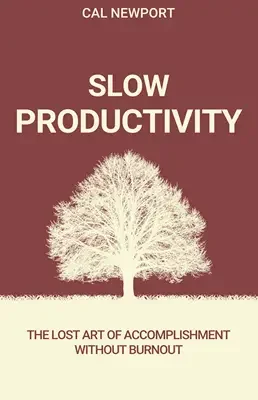
What if everything we’ve been taught about productivity is wrong? In Slow Productivity: The Lost Art of Accomplishment Without Burnout, Cal Newport challenges the breakneck pace of modern work culture with a radical proposition: slowing down is the key to getting more done. It’s a counterintuitive idea in a world where hustle culture reigns supreme, but Newport makes a compelling case that our obsession with speed and quantity is actually hampering our ability to produce meaningful work and live fulfilling lives.
Newport takes readers on a journey through history, examining how great thinkers and doers of the past approached their work. From Charles Darwin’s methodical research habits to the focused creativity of painters like Picasso, he uncovers a pattern of deliberate, unhurried productivity that stands in stark contrast to today’s frenetic work environments. These historical examples serve as a springboard for Newport’s argument that we need to rediscover the lost art of slow productivity.
The book doesn’t just critique current practices; it offers a comprehensive framework for reimagining how we approach work. Newport introduces readers to the concept of “deep productivity,” which prioritizes quality over quantity and emphasizes the importance of sustained focus. He argues that by deliberately slowing down and creating space for deep thought and creativity, we can actually accomplish more meaningful work in less time. This approach, he contends, not only leads to better outcomes but also helps prevent the burnout that plagues so many professionals today.
Readers of Slow Productivity will learn practical strategies for implementing this new approach in their own lives. Newport provides guidance on how to structure your day for maximum focus, how to manage digital distractions, and how to cultivate a sense of purpose in your work. He also addresses the challenges of implementing these changes in organizations that may be resistant to slowing down, offering advice for managers and employees alike on how to advocate for a more sustainable approach to productivity.
Perhaps most importantly, Newport’s book offers a new way of thinking about success and fulfillment in our professional lives. By shifting our focus from the quantity of work we produce to the quality and impact of our contributions, Slow Productivity suggests we can find greater satisfaction in our careers while also achieving more meaningful results. It’s a message that’s likely to resonate with anyone who’s ever felt overwhelmed by the relentless pace of modern work life.
The central thesis of Slow Productivity is that our current approach to work – characterized by constant busyness, multitasking, and an emphasis on speed – is fundamentally flawed. Newport argues that true productivity isn’t about doing more things faster, but about doing the right things well. He likens our current work habits to a hamster wheel: we’re expending a lot of energy and feeling constantly busy, but we’re not actually getting anywhere meaningful.
Instead, Newport proposes a new paradigm of “slow productivity.” This approach is akin to the slow food movement, which emphasizes quality, sustainability, and enjoyment over speed and convenience. In the context of work, slow productivity means deliberately slowing down to focus on what truly matters, allowing time for deep thought and creativity, and prioritizing impact over sheer output.
Slow Productivity represents a significant contribution to the ongoing conversation about work culture and productivity in the digital age. It challenges the prevailing wisdom that equates busyness with productivity and offers a compelling alternative that could revolutionize how we think about and approach work.
The book’s impact extends beyond individual productivity tips to touch on broader issues of work-life balance, mental health, and the nature of meaningful work. By advocating for a slower, more deliberate approach to productivity, Newport is also addressing the growing problem of burnout in the workplace. His ideas have the potential to influence not just individual workers, but also organizational policies and even societal attitudes towards work.
While Slow Productivity has been widely praised for its fresh perspective and practical advice, it’s not without controversy. Some critics argue that Newport’s approach is a luxury that many workers can’t afford in today’s competitive job market. Others contend that slowing down could lead to reduced economic growth. However, Newport anticipates and addresses these concerns in the book, arguing that slow productivity actually leads to better outcomes for both individuals and organizations in the long run.
Despite these debates, Slow Productivity has garnered significant attention and recognition in the business and self-help communities. It’s been featured on numerous “Best Business Books” lists and has sparked discussions in major publications about the future of work. While it’s too soon to say whether Newport’s ideas will lead to widespread changes in work culture, the book has undoubtedly made a significant impact in challenging our assumptions about what it means to be truly productive.
Cal Newport’s Slow Productivity offers a refreshing and thought-provoking perspective on work and productivity in our fast-paced, digital age. We find that the book’s central thesis – that slowing down and focusing on what truly matters can lead to greater accomplishment and satisfaction – is both compelling and timely. Newport’s arguments are well-supported by a blend of historical examples, scientific research, and practical strategies, making the book both intellectually stimulating and immediately applicable.
We appreciate Newport’s holistic approach to productivity, which considers not just task completion, but also career development, skill acquisition, and overall well-being. This comprehensive view sets Slow Productivity apart from many other productivity books that focus solely on time management or efficiency hacks. The book’s emphasis on long-term thinking and the cultivation of “career capital” is particularly valuable in today’s rapidly changing job market.
The practical strategies Newport offers for implementing slow productivity principles are another strong point of the book. From techniques for scheduling deep work to methods for managing digital distractions, readers are given a toolkit for putting these ideas into practice. We find these strategies to be generally accessible and adaptable to various work contexts, although some may require significant changes to one’s work habits or environment.
However, we also recognize that the book has some limitations. The principles of slow productivity may be more challenging to implement in certain work environments, particularly those with rigid schedules or frequent urgent demands. Additionally, while Newport addresses some potential criticisms of his approach, we feel the book could have gone further in exploring how to overcome organizational or cultural resistance to these ideas.
We also note that while Slow Productivity offers excellent advice for individual workers, it provides less guidance on implementing these changes at an organizational level. Given that many workplace norms and expectations are set at the organizational level, this is a significant gap that readers in leadership positions may need to address on their own.
Our Recommendation
Despite these limitations, we strongly recommend Slow Productivity to anyone feeling overwhelmed by the pace and demands of modern work life. The book offers a valuable alternative to the “always-on” mentality that dominates many workplaces, providing both a philosophical framework and practical tools for a more sustainable and satisfying approach to work.
We believe Slow Productivity is particularly well-suited for knowledge workers, freelancers, and anyone with some degree of autonomy over their work schedule. However, even those in more structured work environments may find value in Newport’s ideas, adapting them as needed to their specific contexts. For maximum benefit, we suggest reading Slow Productivity in conjunction with some of the complementary works mentioned in our analysis, which can provide additional perspectives and strategies for implementing these principles in various work settings.
The essence of Cal Newport’s Slow Productivity lies in its radical reimagining of how we approach work and productivity in the modern age. At its core, the book advocates for a shift from the frenetic pace of constant activity to a more deliberate, focused approach to accomplishment. Newport argues that true productivity isn’t about doing more things faster, but about doing the right things well. This philosophy challenges the prevailing notion of productivity as a measure of output quantity, instead emphasizing the quality and impact of our work.
A key concept Newport introduces is the idea of “deep productivity.” This approach prioritizes sustained, focused work on important tasks over the superficial busyness that often characterizes modern work environments. Deep productivity requires creating large blocks of uninterrupted time for complex, cognitively demanding tasks. It’s during these periods of deep work that we can produce our most valuable and meaningful contributions. Newport contends that by cultivating the ability to engage in deep work, we can not only accomplish more but also find greater satisfaction in our professional lives.
Another crucial element of Newport’s philosophy is the concept of “slow motion multitasking.” Unlike traditional multitasking, which involves rapidly switching between different tasks, slow motion multitasking encourages maintaining multiple long-term projects that progress slowly over time. This approach allows for periods of focused work on each project, interspersed with periods of rest and reflection. Newport argues that this method leads to higher quality work and reduces the stress associated with juggling multiple immediate deadlines.
The book also emphasizes the importance of rest and recovery in the productivity equation. Newport challenges the “always-on” mentality prevalent in many workplaces, arguing that periods of downtime are essential for maintaining high levels of productivity over the long term. He introduces the concept of “productive rest,” which involves deliberately scheduling periods of disengagement from work to allow for mental recovery and creative incubation. This approach recognizes that our brains need time to process information and generate new ideas, activities that often happen during periods of apparent idleness.
A final key topic in Slow Productivity is the idea of purposeful career development. Newport encourages readers to take a long-term view of their professional lives, focusing on developing rare and valuable skills rather than chasing short-term achievements. He argues that by cultivating what he calls “career capital” – specialized skills that are both rare and valuable in your field – you can create more opportunities for meaningful and satisfying work. This approach to career development aligns with the overall philosophy of slow productivity, emphasizing sustainable growth and long-term impact over quick wins.
The Darwin Method: Newport uses Charles Darwin’s work habits as a prime example of slow productivity in action. Darwin maintained a strict daily routine that included several hours of focused work in the morning, followed by a long midday break for rest and reflection. This pattern allowed him to make steady progress on his groundbreaking ideas over many years, ultimately leading to the publication of On the Origin of Species. Darwin’s approach demonstrates how consistent, focused effort over time can lead to revolutionary breakthroughs.
The Zeigarnik Effect in Practice: To illustrate the concept of slow motion multitasking, Newport discusses the work of psychologist Bluma Zeigarnik. Zeigarnik discovered that people tend to remember unfinished tasks better than completed ones, a phenomenon now known as the Zeigarnik effect. Newport applies this principle to productivity, suggesting that maintaining multiple ongoing projects can keep our minds engaged and productive. He cites the example of prolific authors who work on several books simultaneously, allowing ideas to percolate and cross-pollinate over time.
Microsoft’s 4-Day Work Week Experiment: Newport highlights Microsoft Japan’s experiment with a four-day work week as a real-world application of the principles of slow productivity. During this experiment, productivity actually increased by 40% despite the reduced hours. This case study demonstrates how intentionally slowing down and providing more time for rest can paradoxically lead to increased productivity and employee satisfaction.
The Newport Notebook Method: To demonstrate practical application of his ideas, Newport shares his own productivity system. He describes his use of a simple notebook to track tasks, schedule deep work sessions, and maintain a “heavy lifting” list of important long-term projects. This personal example shows how the principles of slow productivity can be implemented in a straightforward, low-tech manner, making them accessible to anyone looking to improve their work habits.
The Career of Computer Scientist Leslie Lamport: Newport uses the career of computer scientist Leslie Lamport to illustrate the power of developing rare and valuable skills. Lamport, who won the Turing Award (often called the “Nobel Prize of Computing”), spent years developing expertise in obscure areas of distributed computing. This deep, specialized knowledge eventually led to groundbreaking contributions in the field. Lamport’s career serves as an example of how focusing on skill development rather than immediate recognition can lead to significant long-term success and impact.
The Power of Deep Work
Cal Newport’s concept of deep work is a cornerstone of slow productivity. He argues that the most valuable and meaningful work is often accomplished during periods of intense, uninterrupted focus. To apply this insight, Newport suggests creating a daily schedule that includes dedicated blocks of time for deep work, ideally 90 minutes to 2 hours long. During these periods, eliminate all distractions: turn off notifications, close unnecessary browser tabs, and find a quiet space to work. Start with shorter deep work sessions and gradually increase their duration as you build your concentration muscles. For example, you might begin with 45-minute focused sessions and work up to 2-hour blocks over several weeks. It’s also crucial to identify your most cognitively demanding tasks and reserve your deep work sessions for these activities. By consistently practicing deep work, you’ll find that you can accomplish complex tasks more efficiently and produce higher quality output.
Embrace Slow Motion Multitasking
Newport challenges the conventional wisdom around multitasking, introducing the concept of “slow motion multitasking.” This approach involves maintaining multiple long-term projects that progress slowly over time, rather than rapidly switching between tasks. To implement this strategy, start by identifying 3-5 significant projects you want to work on concurrently. Create a system to track these projects, such as a spreadsheet or a dedicated notebook. Allocate specific days or time slots for each project, ensuring you make steady progress on all of them without feeling overwhelmed. For instance, you might work on Project A every Monday and Thursday, Project B every Tuesday and Friday, and so on. This method allows ideas to cross-pollinate between projects and keeps your mind engaged without the stress of constant task-switching. Remember to regularly review and adjust your project list to ensure you’re focusing on the most important work.
The Importance of Productive Rest
Newport emphasizes that rest is not the absence of productivity, but an essential component of it. He introduces the concept of “productive rest,” which involves deliberately scheduling periods of disengagement from work. To apply this insight, start by identifying activities that help you recharge mentally and physically. These might include exercise, reading for pleasure, spending time in nature, or engaging in a hobby. Schedule these activities into your week with the same level of commitment you give to work tasks. For example, you might set aside every Wednesday afternoon for a long walk in the park, or dedicate Sunday mornings to reading novels. Additionally, incorporate shorter rest periods throughout your workday. Try the Pomodoro Technique, working in focused 25-minute bursts followed by 5-minute breaks. During these breaks, step away from your desk, stretch, or practice a quick meditation. By prioritizing rest, you’ll find that your energy and focus during work hours significantly improve.
Cultivate Career Capital
Newport argues that true career satisfaction comes from developing rare and valuable skills, which he calls “career capital.” To apply this insight, start by identifying the skills that are most valuable in your field or the field you want to enter. Research industry trends, talk to mentors, and analyze job postings to determine which skills are in high demand. Once you’ve identified these skills, create a deliberate practice plan to develop them. This might involve setting aside time each week for skill-building activities, such as online courses, reading technical literature, or working on side projects. For example, if you’re in marketing, you might dedicate 5 hours each week to learning advanced data analysis techniques. Track your progress and regularly reassess your skill development plan to ensure you’re staying aligned with industry needs. Remember, building career capital is a long-term investment that can lead to more autonomy, impact, and satisfaction in your work.
Implement Fixed-Schedule Productivity
Newport introduces the concept of fixed-schedule productivity, where you set strict boundaries on your work hours and then work backward to make everything fit within those constraints. To apply this, start by determining your ideal work schedule. This might be a traditional 9-to-5, or it could be something more unconventional that suits your lifestyle and energy patterns. Once you’ve set your schedule, treat it as fixed and inviolable. Then, analyze your current workload and prioritize ruthlessly. Identify your most important tasks and allocate time for them first. Use techniques like time-blocking to ensure every hour of your workday is accounted for. Be prepared to say no to low-value commitments that don’t fit within your schedule. For instance, if you decide to work from 8 AM to 6 PM, stick to those hours religiously. When 6 PM comes, stop working, even if everything isn’t finished. This constraint will force you to be more efficient during your work hours and create a clear boundary between work and personal time.
Adopt a Seasonal Approach to Work
Newport suggests adopting a seasonal approach to work, recognizing that different periods of the year may be better suited for different types of tasks. To implement this insight, start by mapping out your year and identifying natural rhythms or cycles in your work or industry. For example, if you work in education, you might have more time for deep, focused work during summer breaks. If you’re in retail, the holiday season might be intense, while January could be quieter. Once you’ve identified these patterns, plan your work accordingly. Use high-energy seasons for your most demanding projects or for learning new skills. Reserve lower-energy periods for administrative tasks, planning, or reflection. You might, for instance, schedule a major writing project for a typically quiet month, or plan to attend conferences and networking events during your industry’s busiest season. By aligning your work with these natural rhythms, you can maximize your productivity and reduce stress.
Leverage the Power of Habits and Routines
Newport emphasizes the importance of building strong habits and routines to support slow productivity. To apply this insight, start by identifying the key behaviors that contribute most to your productivity and well-being. These might include things like starting your day with a planning session, taking regular breaks, or ending each day with a reflection period. Once you’ve identified these behaviors, create specific routines around them. For example, you might develop a morning routine that includes 15 minutes of planning, 30 minutes of exercise, and a healthy breakfast before starting work. Or you could create an end-of-day routine that involves reviewing your accomplishments, planning for the next day, and a short meditation session. The key is to make these routines as specific and consistent as possible. Set specific times for each activity and try to perform them in the same order each day. Over time, these routines will become automatic, reducing decision fatigue and ensuring that productivity-supporting behaviors happen consistently without requiring constant willpower.
Practice Digital Minimalism
In line with his previous work on digital minimalism, Newport advocates for a intentional and minimalist approach to technology use as part of slow productivity. To apply this insight, start by conducting a digital declutter. Choose a period (Newport suggests 30 days) during which you’ll take a break from optional technologies. This might include social media, video games, or streaming services. Use this time to rediscover offline activities that you find meaningful and enjoyable. After the declutter period, reintroduce technologies selectively, based on their value to your life and work. For each tool, establish clear rules for use. For instance, you might decide to check email only three times a day, use social media for no more than 30 minutes, or keep your phone in another room while working. Create designated times for technology use, such as a “digital sunset” where you stop using screens an hour before bed. By being more intentional about your technology use, you’ll reclaim time and attention for deep work and meaningful activities.
Paradigm-Shifting Perspective
Cal Newport’s Slow Productivity offers a refreshing and revolutionary approach to work and productivity that challenges the prevailing wisdom of our fast-paced, always-on culture. By advocating for a slower, more deliberate approach to work, Newport provides a much-needed counterpoint to the cult of busyness that dominates many workplaces. His argument that slowing down can actually lead to greater accomplishment is both counterintuitive and compelling. This perspective shift is particularly valuable in a world where burnout and work-related stress are increasingly recognized as serious issues. Newport’s ideas have the potential to transform not just individual work habits, but entire organizational cultures, making this book a significant contribution to the ongoing conversation about the future of work.
Solid Theoretical Foundation
One of the book’s major strengths is its strong grounding in both historical examples and contemporary research. Newport draws on a wide range of sources to support his arguments, from the work habits of historical figures like Charles Darwin to cutting-edge studies in cognitive science and productivity. This blend of historical context and scientific evidence lends credibility to Newport’s ideas and demonstrates that “slow productivity” is not just a modern fad, but a return to proven methods of deep work and sustained focus. By connecting his concepts to established theories in psychology and neuroscience, such as the importance of downtime for cognitive function, Newport provides a robust theoretical framework for his approach to productivity.
Practical Applicability
While Slow Productivity presents a radical rethinking of work, it doesn’t stop at theory. A significant strength of the book is its focus on practical implementation. Newport provides concrete strategies and techniques that readers can apply immediately to their work lives. From methods for scheduling deep work sessions to techniques for managing digital distractions, the book offers a toolkit for putting slow productivity into practice. These practical elements make the book valuable not just as a philosophical treatise, but as a guide for real-world change. The inclusion of case studies and examples of individuals and organizations successfully implementing these principles further enhances the book’s practical utility.
Holistic Approach
Newport’s approach to productivity is commendably holistic, recognizing that true productivity is about more than just getting things done quickly. The book addresses multiple aspects of work and life, including career development, skill acquisition, rest and recovery, and technology use. By considering productivity in this broader context, Newport provides a more comprehensive and sustainable approach to work. This holistic view acknowledges the interconnectedness of different areas of life and work, offering readers a path to not just greater productivity, but also increased satisfaction and well-being.
Clear and Engaging Writing Style
Despite dealing with complex concepts, Slow Productivity is written in a clear, accessible style that makes it engaging for a wide audience. Newport has a talent for explaining complicated ideas in straightforward language, using relatable examples and analogies to illustrate his points. The book’s structure, with each chapter building on the previous ones, helps readers gradually absorb and integrate the concepts of slow productivity. Newport’s writing strikes a balance between academic rigor and popular accessibility, making the book valuable for both scholars of work culture and everyday professionals looking to improve their productivity.
Long-Term Perspective
A notable strength of Slow Productivity is its emphasis on long-term thinking. In a world often focused on quick fixes and immediate results, Newport encourages readers to take a more extended view of their work and careers. His concept of “career capital” and his advocacy for developing rare and valuable skills over time provide a refreshing counterpoint to the short-term thinking that often dominates career advice. This long-term perspective aligns well with the overall philosophy of slow productivity and offers readers a more sustainable and satisfying approach to their professional lives.
Limited Consideration of Diverse Work Contexts
While Newport’s ideas are compelling, the book sometimes falls short in addressing how slow productivity can be implemented across diverse work contexts. The strategies presented often seem most applicable to knowledge workers with a degree of autonomy over their schedules. There’s less discussion of how these principles might be applied in more structured work environments, such as retail, healthcare, or manufacturing. Additionally, the book could have explored more deeply how slow productivity principles might be adapted for different cultural contexts, as work norms and expectations can vary significantly across countries and industries.
Potential Privilege Bias
Related to the previous point, there’s a risk that Newport’s approach could be seen as privileged or out of touch with the realities of many workers. The ability to slow down and focus on deep work may not be feasible for those juggling multiple jobs, caring responsibilities, or financial pressures that necessitate immediate productivity. While Newport does address some of these concerns, the book could have benefited from a more thorough exploration of how slow productivity principles might be adapted or partially implemented in more challenging circumstances.
Limited Discussion of Organizational Change
While Slow Productivity offers excellent advice for individual workers, it provides less guidance on how to implement these changes at an organizational level. Given that many workplace norms and expectations are set at the organizational level, this is a significant gap. The book could have included more strategies for managers and leaders looking to foster a culture of slow productivity within their teams or companies. Case studies of organizations successfully implementing these principles on a large scale would have strengthened the book’s arguments and increased its practical value for those in leadership positions.
Potential Overemphasis on Individual Responsibility
In focusing on individual strategies for implementing slow productivity, the book may inadvertently place too much responsibility on individual workers to change systemic issues. While personal habits and approaches are undoubtedly important, many productivity challenges stem from broader structural issues in how work is organized and valued in our society. The book could have engaged more deeply with these systemic issues and explored how individual actions might be complemented by broader policy or cultural changes to create more conducive environments for slow productivity.
The Myth of Universal Applicability
A potential blind spot in Slow Productivity is the assumption that its principles can be universally applied across all professions and industries. While Newport’s ideas are compelling for knowledge workers, they may not translate as easily to other sectors. For instance, service industry workers, emergency responders, or those in time-sensitive roles may find it challenging to implement extended periods of deep work or to slow down their pace significantly. This oversight might lead readers to feel frustrated if they can’t fully apply the book’s strategies in their own work contexts. To address this blind spot, readers might benefit from supplementing Newport’s work with books that explore productivity in diverse work environments. For example, The Myth of Multitasking by Dave Crenshaw offers strategies for improving focus and productivity that can be applied in various work settings, including those with frequent interruptions. Similarly, Personal Kanban: Mapping Work | Navigating Life by Jim Benson and Tonianne DeMaria Barry provides a flexible system for managing work that can be adapted to different professional contexts.
The Potential for Slow Productivity to Exacerbate Procrastination
While Newport’s emphasis on slowing down and focusing on important work is valuable, there’s a risk that some readers might misinterpret this as permission to procrastinate or avoid challenging tasks. The book could have addressed more explicitly how to balance the principles of slow productivity with the need to meet deadlines and maintain a steady work pace. This blind spot might lead some readers to use the concept of slow productivity as a justification for putting off important but difficult tasks. To counter this potential misunderstanding, readers might find value in pairing Newport’s book with works that address procrastination and task management more directly. The Now Habit by Neil Fiore, for instance, offers strategies for overcoming procrastination while still maintaining a balanced approach to work. Additionally, Getting Things Done by David Allen provides a comprehensive system for managing tasks and projects that could complement Newport’s slower, more focused approach.
The Challenge of Measuring Slow Productivity
Newport’s approach challenges traditional metrics of productivity, which often focus on quantity of output or hours worked. However, the book doesn’t fully address how to measure and demonstrate the value of slow productivity in workplaces that still rely on these conventional metrics. This blind spot could lead to difficulties for readers trying to implement slow productivity principles in organizations that haven’t bought into this philosophy. Readers might struggle to justify their new approach to colleagues or superiors who are still focused on more traditional productivity measures. To fill this gap, readers might turn to books that discuss alternative ways of measuring work value and productivity. Measure What Matters by John Doerr, for example, introduces the concept of Objectives and Key Results (OKRs), which could be adapted to align with slow productivity principles. Additionally, Time Off: A Practical Guide to Building Your Rest Ethic and Finding Success Without the Stress by John Fitch and Max Frenzel explores how to measure and communicate the value of rest and focused work in a business context.
The Tension Between Slow Productivity and Rapid Innovation
In industries driven by rapid innovation and fast-paced change, there might be a perceived conflict between Newport’s advocacy for slowing down and the need to stay competitive. The book could have explored more deeply how to balance the benefits of slow productivity with the demands of fast-moving industries. This blind spot might lead readers in tech startups or other innovation-driven fields to dismiss the book’s ideas as incompatible with their work environment. To address this concern, readers might benefit from books that explore how to maintain focus and depth in fast-paced environments. Sprint: How to Solve Big Problems and Test New Ideas in Just Five Days by Jake Knapp, John Zeratsky, and Braden Kowitz offers a methodology for rapid innovation that incorporates elements of focused work and could potentially be integrated with slow productivity principles. Additionally, Deep Work by Cal Newport himself, while not specifically addressing this tension, provides more detailed strategies for cultivating focused work in various professional contexts, including those with high pressure for rapid output.
The Impact of Slow Productivity on Team Dynamics
While Slow Productivity offers valuable insights for individual work habits, it doesn’t fully explore how these principles might affect team dynamics and collaboration. In many workplaces, the pace and style of work are heavily influenced by team norms and expectations. The book could have addressed more explicitly how to implement slow productivity principles in collaborative environments without causing friction or misalignment within teams. This blind spot might lead to challenges for readers trying to change their work habits while still maintaining effective teamwork. To supplement Newport’s ideas in this area, readers might turn to books that focus on team productivity and collaboration. Team of Teams: New Rules of Engagement for a Complex World by General Stanley McChrystal explores how to build adaptable, productive teams in fast-paced environments, which could provide insights on balancing individual focus with team needs. Additionally, Radical Candor by Kim Scott offers strategies for effective communication and feedback within teams, which could be crucial when implementing new productivity approaches.
Deep Work: Rules for Focused Success in a Distracted World by Cal Newport
Deep Work, an earlier book by Cal Newport, serves as a precursor to Slow Productivity. While both books advocate for focused, uninterrupted work, Deep Work places more emphasis on the cognitive benefits of intense concentration and provides strategies for cultivating this skill. Slow Productivity expands on these ideas, incorporating them into a broader philosophy of work that includes aspects like career development and work-life balance. Where Deep Work focuses primarily on individual strategies for achieving focus, Slow Productivity takes a more holistic view, considering how these principles can be applied across various aspects of one’s professional life. However, Deep Work offers a more in-depth exploration of the science behind focused work and provides more detailed strategies for eliminating distractions, which some readers might find more immediately actionable.
The 4-Hour Work Week by Timothy Ferriss
Timothy Ferriss’s The 4-Hour Work Week shares some similarities with Slow Productivity in its challenge to conventional work norms. Both books advocate for working smarter rather than harder and emphasize the importance of focusing on high-value tasks. However, the approaches differ significantly. Ferriss’s book focuses on extreme productivity hacks and lifestyle design, often with the goal of minimizing work time. In contrast, Newport’s Slow Productivity emphasizes the value of meaningful work and doesn’t necessarily aim to reduce work hours drastically. While Ferriss promotes outsourcing and automation to free up time, Newport encourages deep engagement with important work. The 4-Hour Work Week might appeal more to readers seeking rapid lifestyle changes, while Slow Productivity offers a more sustainable, long-term approach to work and career development.
Essentialism: The Disciplined Pursuit of Less by Greg McKeown
Greg McKeown’s Essentialism shares Newport’s emphasis on focusing on what’s truly important. Both books advocate for eliminating non-essential activities to create space for meaningful work. However, Essentialism takes a broader life philosophy approach, applying its principles to both personal and professional realms, while Slow Productivity maintains a sharper focus on work and career. McKeown’s book provides more guidance on decision-making and prioritization, offering a systematic approach to determining what’s essential. In contrast, Newport’s book delves deeper into the nature of productive work itself and how to cultivate it. Readers might find Essentialism more helpful for overall life simplification, while Slow Productivity offers more specific strategies for improving work quality and satisfaction.
Rest: Why You Get More Done When You Work Less by Alex Soojung-Kim Pang
Alex Soojung-Kim Pang’s Rest aligns closely with Newport’s ideas about the importance of downtime in productivity. Both books challenge the notion that more hours worked equates to greater productivity. However, while Newport incorporates rest as part of his overall productivity philosophy, Pang’s book focuses exclusively on the role of rest in enhancing work performance and creativity. Rest provides a deeper dive into the science of rest and recovery, exploring various forms of restful activities and their benefits. It offers more extensive historical examples and scientific research on the topic of rest than Slow Productivity. Readers particularly interested in the restorative aspects of productivity might find Rest a valuable companion to Newport’s more comprehensive work approach.
Atomic Habits: An Easy & Proven Way to Build Good Habits & Break Bad Ones by James Clear
While Atomic Habits isn’t primarily a productivity book, it shares with Slow Productivity an emphasis on the power of small, consistent actions over time. Both books advocate for a patient, long-term approach to improvement. However, Clear’s book focuses more on the mechanics of habit formation and behavior change, providing a systematic approach to building beneficial routines. In contrast, Newport’s book is more concerned with the nature of the work itself and how to approach it. Atomic Habits might be more helpful for readers struggling with consistency or looking to establish specific productivity routines, while Slow Productivity offers a broader philosophy of work. Combining insights from both books could provide a powerful framework for implementing slow productivity principles through consistent habit formation.
Conduct a Personal Productivity Audit
Begin your journey towards slow productivity by assessing your current work habits. For one week, keep a detailed log of your activities, noting what you’re working on, for how long, and your energy levels throughout the day. Include both work and personal activities. At the end of the week, review your log and identify patterns. Look for times when you’re most focused and productive, as well as periods of distraction or low energy. This audit will provide valuable insights into your current productivity patterns and help you identify areas for improvement.
Identify Your Deep Work
Reflect on your responsibilities and projects to determine which tasks require deep, focused attention. These are typically the activities that create the most value in your work and align with your long-term goals. Make a list of these deep work tasks. For each task, estimate how much uninterrupted time you ideally need to make meaningful progress. This step is crucial for prioritizing your most important work and ensuring you allocate sufficient time for it in your schedule.
Create a Deep Work Schedule
Based on your productivity audit and identified deep work tasks, create a weekly schedule that includes dedicated blocks for deep work. Aim for at least one 90-minute to 2-hour block of deep work each day, preferably during your peak energy hours identified in your audit. Be realistic and start small if necessary – even one hour of truly focused work can be highly productive. Gradually increase the duration and frequency of these deep work sessions as you build your concentration stamina.
Establish a Deep Work Ritual
Design a ritual to signal the start of your deep work sessions. This could include clearing your desk, putting on noise-cancelling headphones, brewing a special tea, or doing a brief meditation. The specific actions don’t matter as much as their consistency – the goal is to create a routine that mentally prepares you for focused work. Over time, this ritual will become a powerful cue that helps you quickly transition into a state of deep concentration.
Implement Digital Minimalism
Reduce digital distractions by conducting a 30-day digital declutter. During this period, eliminate optional technologies from your life, including social media, video streaming services, and non-essential apps. Use this time to rediscover offline activities that you find meaningful and enjoyable. After the 30 days, reintroduce technologies selectively, based on their genuine value to your life and work. For each tool you decide to keep, establish clear rules for use, such as checking email only at specific times or limiting social media to 30 minutes per day.
Practice Slow Motion Multitasking
Identify 3-5 significant long-term projects that you want to make progress on concurrently. These could be work projects, personal goals, or skill development areas. Create a system to track these projects, such as a spreadsheet or a dedicated notebook. Allocate specific days or time slots for each project, ensuring you make steady progress on all of them without feeling overwhelmed. For example, you might work on Project A every Monday and Thursday, Project B every Tuesday and Friday, and so on. Review and adjust your project list monthly to ensure you’re focusing on the most important work.
Cultivate Productive Rest
Recognize that rest is an essential component of productivity, not its opposite. Identify activities that help you recharge mentally and physically, such as exercise, reading, nature walks, or engaging in a hobby. Schedule these activities into your week with the same level of commitment you give to work tasks. Additionally, incorporate shorter rest periods throughout your workday. Try the Pomodoro Technique, working in focused 25-minute bursts followed by 5-minute breaks. During these breaks, step away from your desk, stretch, or practice a quick meditation.
Develop Career Capital
Identify the rare and valuable skills that are most in-demand in your field or the field you want to enter. Research industry trends, talk to mentors, and analyze job postings to determine which skills are highly valued. Create a deliberate practice plan to develop these skills. Set aside time each week for skill-building activities, such as online courses, reading technical literature, or working on side projects. Track your progress and regularly reassess your skill development plan to ensure you’re staying aligned with industry needs.
Implement Fixed-Schedule Productivity
Set strict boundaries on your work hours and then work backward to make everything fit within those constraints. Determine your ideal work schedule, whether it’s a traditional 9-to-5 or something more unconventional that suits your lifestyle and energy patterns. Once you’ve set your schedule, treat it as fixed and inviolable. Analyze your current workload and prioritize ruthlessly. Identify your most important tasks and allocate time for them first. Use time-blocking to ensure every hour of your workday is accounted for. Be prepared to say no to low-value commitments that don’t fit within your schedule.
Adopt a Seasonal Approach to Work
Map out your year and identify natural rhythms or cycles in your work or industry. Use high-energy seasons for your most demanding projects or for learning new skills. Reserve lower-energy periods for administrative tasks, planning, or reflection. For example, if you work in education, you might schedule major writing projects for summer breaks. If you’re in retail, you might use January (typically a quieter month) for strategic planning and skill development. By aligning your work with these natural rhythms, you can maximize your productivity and reduce stress.
Create a Productivity Dashboard
Develop a personal system for tracking your progress and productivity. This could be a simple spreadsheet or a more elaborate project management tool. Include metrics that align with your slow productivity goals, such as the number of deep work hours completed, progress on long-term projects, and time spent on skill development. Also track indicators of well-being, such as stress levels and work-life balance satisfaction. Review your dashboard weekly to assess your progress and make adjustments to your approach as needed.
Establish Regular Reflection Periods
Set aside time each week, month, and quarter for reflection and planning. During these sessions, review your productivity dashboard, assess your progress on various projects and goals, and evaluate the effectiveness of your slow productivity practices. Use these reflections to make informed adjustments to your work habits and strategies. This regular review process ensures that you’re continually refining your approach to slow productivity and aligning your efforts with your long-term goals.
Communicate Your Approach
If you work in a team or collaborative environment, it’s crucial to communicate your new approach to productivity with colleagues and supervisors. Schedule conversations to explain the principles of slow productivity and how you plan to implement them. Discuss how this approach will benefit your work and the team as a whole. Be prepared to negotiate and find compromises where necessary, especially for aspects that affect team workflows or communication. Regular check-ins about your new work style can help address any concerns and showcase the positive impacts of your slow productivity practices.
Create a Distraction-Free Environment
Optimize your physical workspace to support deep work and minimize distractions. This might involve setting up a dedicated home office space if you work remotely, or finding quiet areas in your workplace for focused sessions. Invest in noise-cancelling headphones if you work in a noisy environment. Remove visual clutter from your workspace and keep only essential items within reach. Consider using apps or browser extensions that block distracting websites during your deep work sessions. The goal is to create an environment that signals to your brain it’s time for focused, important work.
Implement Deep Work Zones
Organizations can create dedicated spaces or time periods for deep, focused work. These “Deep Work Zones” could be physical areas in the office designed for concentration, or designated hours where meetings and communications are minimized. This approach allows employees to engage in high-value, cognitively demanding tasks without constant interruptions, potentially leading to higher quality outputs and increased job satisfaction.
However, implementing Deep Work Zones may face resistance from managers accustomed to constant availability of their team members. There might also be concerns about reduced collaboration or communication. Some employees may struggle to adapt to this new way of working, finding it difficult to focus for extended periods or feeling isolated from their colleagues.
To overcome these challenges, organizations can start with a pilot program, perhaps in a single department or team. Provide training on the benefits of deep work and techniques for maintaining focus. Establish clear guidelines for when and how to use Deep Work Zones, and create alternative channels for urgent communications. Regular check-ins and feedback sessions can help refine the system and address any issues that arise.
Adopt Slow Motion Multitasking
Businesses can encourage employees to engage in slow motion multitasking, where they maintain multiple long-term projects that progress slowly over time. This approach can lead to more innovative solutions as ideas cross-pollinate between projects, and it can help prevent burnout by allowing for varied work.
The main challenge in implementing slow motion multitasking is that it may seem counterintuitive to traditional project management approaches that prioritize quick completion of individual projects. There may be pressure from stakeholders or clients for faster results, and some employees might struggle with managing multiple long-term projects simultaneously.
To address these issues, businesses can start by identifying projects that would benefit from a slower, more thoughtful approach. Communicate clearly with stakeholders about the potential benefits of this method, such as higher quality outcomes and more innovative solutions. Provide project management tools and training to help employees effectively juggle multiple long-term projects. Regular progress reviews can help ensure that all projects are moving forward, even if at a slower pace.
Prioritize Productive Rest
Organizations can recognize the importance of rest in maintaining high productivity levels. This could involve implementing policies such as mandatory vacation time, encouraging regular breaks during the workday, or even providing spaces for short naps or meditation.
The main obstacle to prioritizing rest is the deeply ingrained belief in many corporate cultures that more hours worked equals more productivity. There may be concerns about reduced output or perceptions of laziness. Some employees might feel guilty about taking breaks or fear that doing so could negatively impact their career prospects.
To overcome these challenges, businesses should educate their workforce about the science of rest and its impact on productivity. They can start by having leadership model the behavior, taking regular breaks and using their vacation time. Implementing a company-wide policy, such as no-email hours or meeting-free days, can help normalize the practice of taking breaks. Regularly sharing success stories and productivity data can help reinforce the benefits of this approach.
Develop Career Capital Programs
Businesses can create programs that help employees develop rare and valuable skills, or “career capital.” This could involve offering training programs, mentorship opportunities, or allocating time for employees to work on skill-building projects.
The main challenge in implementing career capital programs is the short-term cost in terms of time and resources. There may be pressure to focus on immediate business needs rather than long-term skill development. Some managers might be reluctant to allow employees time away from their regular duties for skill-building activities.
To address these issues, organizations can start by aligning career capital development with business goals. Identify skills that will be valuable for the company’s future projects and growth areas. Implement a system where employees can propose skill-building projects that have potential business applications. Create a mentorship program where more experienced employees can guide others in developing new skills. Regular skills assessments can help track progress and demonstrate the value of these programs to stakeholders.
Implement Fixed-Schedule Productivity
Organizations can encourage employees to set strict boundaries on their work hours and then work backward to make everything fit within those constraints. This approach can lead to more efficient use of time, reduced burnout, and improved work-life balance.
The main obstacle to fixed-schedule productivity is the “always-on” culture prevalent in many businesses. There may be expectations of quick responses to emails or messages outside of work hours. Some managers might interpret strict adherence to work hours as a lack of commitment or flexibility.
To overcome these challenges, businesses should start by having leadership model the behavior, respecting work-hour boundaries and avoiding after-hours communications. Implement clear policies about work hours and response times for different types of communications. Provide training on time management and prioritization to help employees make the most of their work hours. Regularly assess workloads to ensure they’re reasonable within the set work hours. Celebrate successes where projects are completed efficiently within the fixed schedule to reinforce the value of this approach.
Adopt a Seasonal Approach to Work
Businesses can align their work patterns with natural rhythms or cycles in their industry. This could involve scheduling intensive project work during typically slower business periods, or aligning training and development activities with natural lulls in the business cycle.
The main challenge in adopting a seasonal approach is that it may require significant changes to established business processes and schedules. There might be resistance from employees accustomed to a more consistent work pattern. Some clients or stakeholders might expect consistent output regardless of the season.
To address these issues, start by analyzing your business cycles to identify natural ebbs and flows. Communicate clearly with all stakeholders about the potential benefits of this approach, such as increased productivity and innovation during intensive work periods, and reduced burnout. Implement the changes gradually, perhaps starting with a single department or project team. Provide support and resources to help employees adapt to the new rhythms. Regularly review and adjust the seasonal strategy based on business needs and employee feedback.
Create a Culture of Digital Minimalism
Organizations can encourage a more mindful and intentional use of technology. This could involve policies like email-free days, designated times for checking messages, or guidelines for more effective use of digital tools.
The main obstacle to creating a culture of digital minimalism is the deep entrenchment of digital tools in most business processes. There may be fears about reduced responsiveness or missed opportunities. Some employees might feel anxious about being disconnected or struggle to change ingrained habits around technology use.
To overcome these challenges, start with education about the benefits of digital minimalism, including improved focus and reduced stress. Implement changes gradually, perhaps starting with a “digital detox” day once a month. Provide alternative methods for urgent communication. Offer training on how to use digital tools more effectively and efficiently. Regularly assess the impact of these changes on productivity and employee wellbeing, and share positive results to reinforce the value of this approach.
The Rise of Asynchronous Work
Cal Newport’s ideas in Slow Productivity align closely with the growing trend of asynchronous work. As remote and distributed teams become more common, there’s an increasing need for work methods that don’t require constant real-time communication. Slow productivity principles, such as focused deep work sessions and reduced digital noise, are well-suited to this shift. In the future, we might see more companies adopting asynchronous-first policies, allowing employees to work at their own pace and in their own time zones. This could lead to a reimagining of traditional work schedules and communication norms.
The challenge will be balancing asynchronous work with the need for team cohesion and real-time collaboration when necessary. Companies might need to develop new tools and protocols for effective asynchronous communication and project management. We may also see the emergence of new roles, such as “asynchronous work coordinators,” to help teams navigate this new way of working.
The Automation of Routine Tasks
As artificial intelligence and automation technologies advance, many routine and repetitive tasks are likely to be taken over by machines. This trend dovetails with Newport’s emphasis on high-value, cognitively demanding work. In the future, human workers may increasingly focus on tasks that require creativity, complex problem-solving, and emotional intelligence – precisely the kind of deep work that Newport advocates.
This shift could lead to a reevaluation of what constitutes productive work. Metrics based on output quantity may become less relevant, while the quality and impact of work could gain more importance. We might see new performance evaluation methods that align more closely with slow productivity principles, focusing on the value created rather than hours worked or tasks completed.
The Well-being Economy
There’s a growing recognition of the importance of well-being in the workplace, often referred to as the “well-being economy.” Newport’s ideas about the importance of rest, the dangers of burnout, and the value of meaningful work align well with this trend. In the future, we might see more companies implementing policies that prioritize employee well-being as a path to sustainable productivity.
This could manifest in various ways, from mandated rest periods and sabbaticals to mental health support and stress management programs. We might also see a shift in how productivity is measured, with well-being metrics becoming as important as traditional performance indicators. The challenge will be balancing these well-being initiatives with business needs and stakeholder expectations.
The Skills-Based Economy
Newport’s concept of “career capital” – the idea of developing rare and valuable skills – aligns with the emerging trend of a skills-based economy. As the job market becomes more dynamic and traditional career paths less predictable, the ability to continually learn and adapt is becoming crucial. In the future, we might see a shift away from degree-based hiring towards skills-based recruitment.
This trend could lead to new models of education and professional development. We might see the rise of micro-credentials and just-in-time learning platforms. Companies might invest more in ongoing skill development for their employees, viewing it as a strategic asset. The challenge will be creating systems to accurately assess and value these skills, especially the deep, complex skills that slow productivity emphasizes.
Slow Productivity has the potential to significantly influence how we think about work and productivity in the coming years. As issues of burnout and work-life balance gain increasing attention, Newport’s ideas offer a compelling alternative to the “hustle culture” that has dominated much of the business world in recent decades. The book’s emphasis on quality over quantity and its recognition of the importance of rest and recovery align well with emerging research on workplace well-being and cognitive performance.
In the short term, Slow Productivity might inspire individual workers to reevaluate their approach to work, potentially leading to improved job satisfaction and reduced stress levels. However, the book’s broader impact will likely depend on how well its ideas are adopted at an organizational level. If companies begin to embrace slow productivity principles, we could see significant shifts in workplace cultures and practices. This might include more flexible work schedules, a greater emphasis on focused work time, and new metrics for evaluating employee performance that go beyond simple output measures.
Looking further ahead, the concepts in Slow Productivity could contribute to broader societal discussions about the nature of work in the 21st century. As automation and artificial intelligence continue to reshape the job market, the ability to engage in deep, creative work may become increasingly valuable. Newport’s emphasis on developing rare and valuable skills aligns with this trend and could influence educational and career development strategies.
The book’s ideas might also intersect with ongoing debates about work hours and work-life balance. If slow productivity principles gain traction, we might see renewed pushes for shorter work weeks or more flexible work arrangements, based on the argument that quality of work is more important than quantity of hours worked.
However, the long-term impact of Slow Productivity will likely depend on how well its ideas can be adapted to diverse work contexts and how effectively they can be implemented alongside other workplace trends and technologies. As remote and hybrid work models become more common, for instance, the principles of slow productivity may need to be reimagined for virtual environments.
Ultimately, Slow Productivity has the potential to contribute to a broader reimagining of work in the 21st century, one that prioritizes meaningful engagement, sustainable performance, and holistic well-being over mere busyness and output. Whether this vision becomes reality will depend on how individuals, organizations, and society at large respond to and implement these ideas in the coming years.
Deep Work: Rules for Focused Success in a Distracted World by Cal Newport
For readers who want to dive deeper into the concept of focused work, Newport’s earlier book Deep Work is an essential companion to Slow Productivity. While Slow Productivity provides a broader philosophy of work, Deep Work offers a more detailed exploration of the benefits of concentrated effort and strategies for cultivating this skill. The book delves into the science behind focused work and provides practical techniques for eliminating distractions and maximizing cognitive performance. Deep Work can help readers develop the core skills needed to implement the slow productivity approach effectively.
Rest: Why You Get More Done When You Work Less by Alex Soojung-Kim Pang
Alex Soojung-Kim Pang’s Rest complements Slow Productivity by providing a deeper dive into the importance of downtime in enhancing work performance and creativity. Pang explores various forms of restful activities and their benefits, drawing on historical examples and scientific research. While Newport incorporates rest as part of his overall productivity philosophy, Pang’s book focuses exclusively on this aspect, offering readers a more comprehensive understanding of how rest contributes to productivity. Rest can help readers develop effective strategies for incorporating restorative activities into their slow productivity practice.
Essentialism: The Disciplined Pursuit of Less by Greg McKeown
Greg McKeown’s Essentialism aligns with Newport’s emphasis on focusing on what’s truly important. The book provides a systematic approach to determining what’s essential and eliminating the rest, both in personal and professional realms. While Slow Productivity focuses primarily on work approaches, Essentialism offers a broader life philosophy that can complement Newport’s ideas. Readers of Slow Productivity may find McKeown’s strategies for decision-making and prioritization helpful in implementing Newport’s principles across various aspects of their lives.
Digital Minimalism: Choosing a Focused Life in a Noisy World by Cal Newport
Another book by Cal Newport, Digital Minimalism, addresses a crucial aspect of implementing slow productivity in the modern world: managing our relationship with technology. The book offers a philosophy and set of principles for using technology intentionally and sparingly, aligning well with the slow productivity approach. Digital Minimalism can help readers create the distraction-free environment necessary for deep work and slow productivity, providing practical strategies for reducing digital noise and reclaiming time and attention.
The 80/20 Principle: The Secret to Achieving More with Less by Richard Koch
Richard Koch’s The 80/20 Principle offers a complementary perspective to slow productivity by focusing on the idea that 80% of results come from 20% of efforts. This principle aligns with Newport’s emphasis on identifying and focusing on high-value work. Koch’s book can help readers refine their ability to identify the most impactful tasks and projects, a crucial skill for implementing slow productivity effectively. The 80/20 perspective can also aid in decision-making and resource allocation, supporting the overall goals of the slow productivity approach.
Flow: The Psychology of Optimal Experience by Mihaly Csikszentmihalyi
Mihaly Csikszentmihalyi’s seminal work on the concept of ‘flow’ provides a psychological foundation that complements Newport’s ideas on deep work and slow productivity. Flow explores the state of peak performance where one is fully immersed in a task, losing track of time and self-consciousness. Understanding and cultivating flow states can enhance the quality and enjoyment of deep work sessions, making Flow a valuable read for those implementing slow productivity principles. The book offers insights into creating conditions conducive to flow, which align well with Newport’s strategies for focused work.
Atomic Habits: An Easy & Proven Way to Build Good Habits & Break Bad Ones by James Clear
While not primarily focused on productivity, James Clear’s Atomic Habits offers valuable insights into behavior change that can support the implementation of slow productivity principles. Clear’s focus on the power of small, consistent actions aligns well with Newport’s emphasis on sustained, focused effort over time. Atomic Habits can provide readers with practical strategies for building the routines and habits necessary to support a slow productivity practice, such as regular deep work sessions or digital minimalism. The book’s approach to habit formation can help readers make lasting changes to their work habits and overcome common obstacles to implementing new productivity strategies.
A World Without Email: Reimagining Work in an Age of Communication Overload by Cal Newport
In A World Without Email, Newport expands on his ideas about focused work and productivity by addressing one of the biggest obstacles to slow productivity in modern workplaces: the constant barrage of digital communications. The book proposes radical changes to how we structure work and communication in organizations, aligning closely with the principles of slow productivity. Readers of Slow Productivity will find in this book concrete strategies for reducing communication overload and creating more space for focused, high-value work. A World Without Email offers a vision of how organizations might restructure to support slow productivity principles on a larger scale.
Cal Newport’s Blog (calnewport.com) Cal Newport’s personal blog is an excellent resource for readers looking to delve deeper into the concepts presented in Slow Productivity. Newport regularly shares articles, insights, and practical tips on topics such as deep work, digital minimalism, and productivity. The blog often features case studies and reader questions, providing real-world applications of his ideas. It’s a valuable resource for staying up-to-date with Newport’s latest thoughts and research on productivity and work culture.
Farnam Street (fs.blog) Farnam Street, run by Shane Parrish, is a website dedicated to helping readers master the best of what other people have already figured out. While not exclusively focused on productivity, the site offers a wealth of information on decision-making, mental models, and learning – all of which complement the ideas in Slow Productivity. The site’s articles on focus, deliberate practice, and habits can provide additional context and strategies for implementing Newport’s principles.
Freedom App Blog (freedom.to/blog) The Freedom app, which helps users block distracting websites and apps, maintains a blog with articles on productivity, focus, and digital wellness. This resource offers practical advice on implementing many of the digital minimalism concepts that support slow productivity. The blog features guest posts from productivity experts, research summaries, and user success stories, providing a range of perspectives on managing digital distractions and cultivating focused work habits.
World Domination Summit While not specifically focused on productivity, the World Domination Summit (WDS) is an annual gathering of unconventional thinkers and doers who are interested in living a remarkable life in a conventional world. The conference often features speakers and workshops on topics related to meaningful work, work-life balance, and alternative approaches to career and productivity – themes that align well with the principles of slow productivity. Attending WDS could provide readers with inspiration and practical strategies for implementing slow productivity principles in their lives.
Wisdom 2.0 Wisdom 2.0 is a conference that addresses the great challenge of our age: to not only live connected to one another through technology, but to do so in ways that are beneficial to our well-being, effective in our work, and useful to the world. The conference brings together leaders in technology, business, and wellness to explore mindful and ethical approaches to work and technology use. For readers of Slow Productivity, this conference could offer valuable insights into balancing productivity with well-being and mindfulness in the digital age.
Association for Talent Development (ATD) The Association for Talent Development (ATD) is a professional membership organization supporting those who develop the knowledge and skills of employees in organizations around the world. While not exclusively focused on productivity, ATD often addresses topics related to workplace efficiency, skill development, and organizational culture – all of which are relevant to implementing slow productivity principles in a business context. ATD’s resources, webinars, and conferences could be valuable for readers looking to apply slow productivity concepts in training and development roles.
International Association of Productivity Professionals (IAPP) The International Association of Productivity Professionals (IAPP) is a global network of productivity and efficiency professionals. While their focus may be broader than Newport’s specific approach, IAPP offers resources, certifications, and networking opportunities that could be valuable for readers looking to deepen their understanding of productivity principles and practices. Their conferences and webinars often feature diverse perspectives on productivity, which could provide interesting counterpoints or complementary ideas to slow productivity.
Deep Questions with Cal Newport Cal Newport’s own podcast, “Deep Questions,” is an excellent resource for readers of Slow Productivity. In each episode, Newport answers questions from his readers about work, technology, and the deep life. The podcast often delves into practical applications of the principles discussed in his books, offering listeners actionable advice for implementing slow productivity in their own lives. It’s a great way to stay engaged with Newport’s ideas and hear how others are applying them in diverse contexts.
The Productivity Show by Asian Efficiency While not specifically aligned with Newport’s slow productivity approach, “The Productivity Show” offers a wide range of perspectives and strategies related to personal and professional productivity. The podcast features interviews with productivity experts, authors, and successful individuals from various fields. Listeners can gain insights into different productivity methods and tools, which they can evaluate through the lens of slow productivity principles.
Learning How to Learn (Coursera) This popular course, taught by Dr. Barbara Oakley and Dr. Terrence Sejnowski, provides a scientific understanding of how learning works. While not directly about productivity, the course offers valuable insights into cognitive science that can support the implementation of slow productivity principles. Understanding concepts like focused vs. diffuse thinking and the importance of sleep in learning can help readers optimize their deep work sessions and overall productivity approach.
The Social Dilemma (2020) This documentary explores the impact of social media on society, including its effects on mental health, privacy, and productivity. While not directly about slow productivity, The Social Dilemma offers valuable context for understanding the digital landscape that Newport’s work often critiques. The film can help viewers understand the importance of digital minimalism and intentional technology use, key components of implementing a slow productivity approach in the modern world.
Jiro Dreams of Sushi (2011) While not explicitly about productivity, this documentary about sushi master Jiro Ono exemplifies many principles of slow productivity. The film showcases Jiro’s relentless focus, dedication to craft, and pursuit of excellence over a long career. Viewers can draw parallels between Jiro’s approach to his work and Newport’s ideas about developing career capital and engaging in deliberate practice. The documentary offers an inspiring look at the power of sustained, focused effort in achieving mastery.