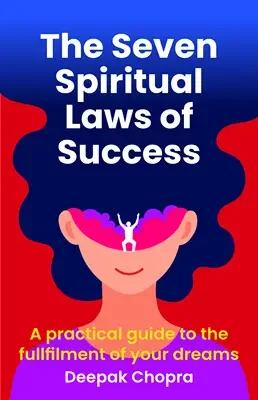
Reviews
“A must-read for anyone who missed The Prophet by Kahlil Gibran.” — The New York Times
“The Seven Spiritual Laws of Success is a virtual reality tool-kit for the 21st-century spiritual traveler.” — Peter Guber, Chairman and CEO, Sony Pictures Entertainment
“Of all Deepak’s books, The Seven Spiritual Laws of Success gives a profound outline for conducting one’s life at the highest and most integrated level. It is magnificent.” — Anthony Robbins, Author, Awaken the Giant Within and Unlimited Power
“The Seven Spiritual Laws of Success make wonderful guiding principles for anyone attempting to create a productive and satisfying life or human organization.” — Ken Blanchard, Co-author, The One Minute Manager
This groundbreaking book offers a fresh perspective on achieving success and fulfillment. It presents seven powerful principles that blend Eastern philosophy with Western productivity concepts. The author argues that by aligning ourselves with the natural laws of the universe, we can effortlessly attract prosperity, happiness, and peace. Unlike traditional self-help books that focus solely on external actions, this work emphasizes the power of consciousness and intention. It provides practical techniques for applying these spiritual laws in everyday life, promising readers a path to success that feels natural and joyful rather than forced or stressful.
This book is primarily aimed at individuals seeking personal growth and success, but with a spiritual twist. It’s ideal for readers who are open to alternative perspectives on achievement and are interested in combining Eastern philosophy with practical Western approaches. The secondary audience includes professionals in high-stress environments looking for a more balanced approach to success, as well as spiritual seekers wanting to apply their beliefs to their careers and personal lives. While the concepts can be profound, Chopra presents them in an accessible manner, making the book suitable for both newcomers to spirituality and long-time practitioners. However, readers with a strictly materialistic worldview might find some of the ideas challenging.
What if success wasn’t about hard work and hustle, but about aligning with the universe’s natural flow?
This radical idea forms the foundation of Deepak Chopra’s The Seven Spiritual Laws of Success: A Practical Guide to the Fulfillment of Your Dreams. In a world obsessed with grinding and pushing, Chopra’s approach feels like a breath of fresh air – or perhaps a challenge to everything we thought we knew about achievement.
Chopra’s book isn’t just another self-help manual; it’s a paradigm shift. He presents seven fundamental principles that he claims govern the universe, from the quantum level to the cosmic scale. These laws – pure potentiality, giving, karma, least effort, intention and desire, detachment, and dharma – form a comprehensive philosophy for living. But don’t mistake this for purely abstract thinking. Chopra provides practical exercises and applications for each law, making the esoteric accessible and actionable.
The author weaves together ancient Vedic wisdom, modern physics, and personal anecdotes to create a tapestry of understanding. He argues that success – in wealth, relationships, or personal fulfillment – isn’t something we chase but something we allow to flow into our lives when we align with these universal principles. It’s a perspective that challenges the Western notion of success as a battle to be won, instead framing it as a natural state of being.
One of the book’s most compelling aspects is its holistic approach to success. Chopra doesn’t just focus on material wealth or career advancement. Instead, he presents a vision of success that encompasses physical health, emotional balance, spiritual growth, and harmonious relationships. It’s a reminder that true success is multifaceted and deeply personal.
Readers of The Seven Spiritual Laws of Success will learn how to tap into their deepest potential, cultivate self-awareness, and harness the power of intention. They’ll discover techniques for letting go of the need to control outcomes, ways to practice generosity that enrich both giver and receiver, and methods for aligning their actions with their life’s purpose. Perhaps most importantly, they’ll gain a new perspective on what success really means and how to achieve it without sacrificing their well-being or ethical values.
The core message of The Seven Spiritual Laws of Success is that success is our natural state, achievable not through force or struggle, but by aligning ourselves with the fundamental laws of the universe. Chopra posits that when we understand and live in harmony with these laws, success in all areas of life flows effortlessly.
Imagine a river flowing towards the ocean. A leaf on that river doesn’t need to struggle or strain to reach its destination; it simply needs to stay in the current. Similarly, Chopra suggests that when we align with the universe’s natural laws, we’re carried along by the “river” of life towards our goals and dreams. This doesn’t mean we become passive; rather, we learn to act with awareness, intention, and in harmony with larger forces.
The Seven Spiritual Laws of Success has left an indelible mark on the self-help and spiritual development landscape since its publication in 1994. Its blend of Eastern philosophy and Western practicality struck a chord with millions of readers worldwide, propelling it to bestseller status and cementing Chopra’s reputation as a leading voice in the mind-body-spirit movement.
The book’s significance lies in its ability to bridge seemingly disparate worlds. It brings spiritual concepts into the realm of everyday life and business, making them accessible and relevant to a broad audience. For many readers, it offered a new way to think about success that didn’t require sacrificing their values or well-being.
However, the book is not without its critics. Some argue that its approach is overly simplistic or that it promotes a form of magical thinking. Others question the scientific basis of some of Chopra’s claims, particularly those drawing on quantum physics. Despite these criticisms, the book’s enduring popularity and the countless testimonials from readers who claim it has transformed their lives speak to its impact.
The Seven Spiritual Laws of Success has been translated into over 40 languages and has sold millions of copies worldwide. Its principles have been adopted by business leaders, celebrities, and everyday individuals alike, spawning workshops, seminars, and even a movie. Whether one fully embraces Chopra’s philosophy or not, there’s no denying that this book has played a significant role in shaping discussions about success, spirituality, and personal development in the modern era.
After thoroughly examining Deepak Chopra’s The Seven Spiritual Laws of Success, we find it to be a thought-provoking and potentially transformative book for readers seeking a more holistic approach to success and fulfillment. The book’s strength lies in its unique blend of Eastern spiritual wisdom and Western pragmatism, offering a fresh perspective on achievement that goes beyond mere material success.
We appreciate Chopra’s emphasis on aligning with universal principles to achieve success effortlessly, which provides a refreshing counterpoint to the often stressful and burnout-inducing hustle culture prevalent in many success-oriented books. The practical exercises and applications offered at the end of each chapter make the abstract spiritual concepts more tangible and applicable to daily life.
However, we must also acknowledge the book’s limitations. The lack of scientific rigor in some of its claims may leave skeptical readers questioning the validity of certain concepts. Additionally, the book’s focus on individual spiritual alignment may not fully address the complex societal and systemic factors that can impact one’s chances of success.
We believe that the book’s holistic view of success – encompassing physical health, emotional well-being, and spiritual growth alongside material achievement – is particularly valuable in our current era, where many are questioning traditional definitions of success and seeking more balanced, fulfilling lives.
The elegant writing style and use of relatable metaphors make the book accessible to a wide audience, from spiritual seekers to pragmatic professionals. However, readers should approach the book with an open yet discerning mind, ready to engage with its ideas while maintaining a critical perspective.
Our Recommendation
We recommend The Seven Spiritual Laws of Success to readers who are open to exploring spiritual approaches to personal development and are seeking a more holistic view of success. It’s particularly well-suited for individuals feeling burnt out by traditional success strategies and looking for a more balanced, mindful approach to achievement.
However, we suggest complementing this book with other resources that offer more scientifically grounded perspectives on behavior change and success, as well as those that address the role of external factors and systemic issues in shaping outcomes. By combining Chopra’s spiritual insights with more practical, evidence-based strategies, readers can develop a well-rounded approach to personal growth and success that addresses both inner alignment and outer action.
The essence of The Seven Spiritual Laws of Success lies in its seven fundamental principles, each offering a unique perspective on achieving success and fulfillment.
The Law of Pure Potentiality emphasizes the importance of self-awareness and connecting with our inner selves. Chopra argues that by tapping into our true nature, which he describes as pure consciousness, we unlock unlimited potential. This law encourages practices like meditation and spending time in nature to access this inner wellspring of creativity and possibility.
The Law of Giving underscores the cyclical nature of life and success. It posits that giving and receiving are different aspects of the same flow of energy in the universe. By freely giving what we seek – whether it’s love, appreciation, or material abundance – we keep the abundance of the universe circulating in our lives. This principle challenges the scarcity mindset often associated with traditional views of success.
The Law of Karma or Cause and Effect reminds us that every action generates a force of energy that returns to us in kind. Chopra extends this beyond the common understanding of karma, suggesting that even our thoughts and intentions create consequences. By becoming more aware of our choices and making them consciously, we can create positive karma and steer our lives in the direction we desire.
The Law of Least Effort proposes that we can achieve more by doing less, but with more awareness. This isn’t about being lazy, but about aligning with the natural flow of life. Chopra draws parallels to nature, pointing out how flowers don’t try to bloom, they simply do. This law encourages acceptance, responsibility, and defenselessness as key strategies for conserving energy and achieving goals effortlessly.
The Law of Intention and Desire focuses on the power of conscious intention coupled with detachment. Chopra argues that attention energizes, and intention transforms. By clearly defining our desires and then releasing attachment to the outcome, we allow the universe to handle the details of manifestation. This law emphasizes the importance of clarity in our goals and trust in the process.
The Law of Detachment might seem counterintuitive in a success-oriented book, but Chopra presents it as crucial. This law suggests that in order to acquire anything in the physical universe, we must relinquish our attachment to it. By detaching from specific outcomes, we keep ourselves open to all possibilities, often achieving even better results than we initially imagined.
Finally, the Law of Dharma or Purpose in Life encourages readers to discover their unique talents and use them in service to humanity. Chopra suggests that when we align our unique gifts with the needs of our fellow humans, we create unlimited wealth and abundance. This law reframes success not just as personal achievement, but as a way to contribute meaningfully to the world.
The Quantum Soup
To illustrate the Law of Pure Potentiality, Chopra uses the metaphor of quantum soup. He explains that at the quantum level, our bodies are composed of energy and information, not solid matter. Just as the quantum field is a vast empty space with infinite possibilities, our consciousness is a field of all possibilities. By regularly experiencing this field through meditation or silence, we can tap into our pure potential and manifest our desires more easily.
The Business Mogul’s Epiphany
Chopra recounts the story of a wealthy businessman who came to him feeling unfulfilled despite his material success. Through applying the Law of Giving, the businessman began to use his wealth and influence to help others, starting charitable initiatives and mentoring young entrepreneurs. As he gave more of himself, he found a renewed sense of purpose and, ironically, his business flourished even more. This example illustrates how giving can lead to receiving in unexpected ways.
The Angry Customer Service Call
To demonstrate the Law of Karma, Chopra shares an anecdote about a customer service representative dealing with an irate caller. Instead of reacting with defensiveness or anger, the representative chooses to respond with patience and kindness. This choice not only diffuses the situation but also creates positive energy that comes back to the representative in the form of a commendation from her supervisor who had been listening in on the call. This example shows how conscious choices can create positive outcomes.
The Effortless Achiever
Chopra tells the story of a corporate executive who was known for her remarkable achievements despite working fewer hours than her colleagues. When asked about her secret, she explained that she practiced the Law of Least Effort. She focused on accepting situations as they were, taking responsibility for her circumstances without blaming others, and remaining open to all points of view without rigidly defending her own. This approach allowed her to navigate challenges with minimal stress and maximum efficiency.
The Seed Visualization
To explain the Law of Intention and Desire, Chopra uses the analogy of planting a seed. He describes a visualization exercise where you imagine planting the seed of your intention, watering it with attention, and then letting it grow naturally without digging it up to check on its progress. This vivid example helps readers understand the balance between focused intention and detached allowance.
The Sliding Doors Scenario
Chopra illustrates the Law of Detachment with a hypothetical scenario of missing a train. He suggests that while one might initially feel frustrated, being detached from the original plan could lead to unexpected positive outcomes – perhaps meeting an important business contact while waiting for the next train. This example shows how detachment can open us up to serendipitous opportunities we might otherwise miss.
The Inspired Teacher
To exemplify the Law of Dharma, Chopra shares the story of a teacher who discovered her gift for inspiring troubled youth. By aligning her talent with the needs of her community, she not only found deep personal fulfillment but also made a significant impact on her students’ lives. Her success came naturally as she lived her purpose, demonstrating how aligning with one’s dharma can lead to both personal and collective benefits.
Harnessing the Power of Self-Referral
One of the key insights from The Seven Spiritual Laws of Success is the concept of self-referral versus object-referral. Chopra argues that true success comes from a state of self-referral, where our sense of self is not dependent on external objects, people, or circumstances. To apply this insight, start by spending 30 minutes each day in silence, simply observing your thoughts without judgment. This practice helps you connect with your inner self and reduces your dependence on external validation. Additionally, make a conscious effort to base your decisions on your inner values and wisdom rather than societal expectations or others’ opinions. For example, when faced with a career decision, instead of choosing based on salary or prestige, reflect on what truly aligns with your passions and principles.
The Transformative Power of Conscious Choice-Making
Chopra emphasizes the importance of making conscious choices in every moment, as these choices shape our karma and, consequently, our future. To implement this insight, start by pausing before each decision, no matter how small. Take a deep breath and ask yourself, “What are the consequences of this choice?” This simple practice can dramatically shift your decision-making process. For instance, before responding to a frustrating email, pause and consider how your response might affect your relationship with the sender and your own peace of mind. Over time, extend this practice to larger life decisions. Before making a significant purchase, take a day to reflect on how it aligns with your values and long-term goals. By making choices with awareness, you can create a life that truly reflects your deepest desires and intentions.
Embracing the Law of Least Effort
Chopra introduces the counterintuitive idea that we can accomplish more by doing less, but with more awareness. This doesn’t mean being lazy, but rather aligning ourselves with the natural flow of life. To apply this law, practice acceptance, responsibility, and defenselessness. Start each day by affirming, “Today, I will accept people, situations, and events as they occur.” When faced with a challenge, instead of immediately trying to force a solution, take a step back and ask, “How can I work with the flow of this situation?” For example, if you’re stuck in traffic, instead of getting frustrated, use the time to listen to an audiobook or practice deep breathing. In your work, focus on your unique strengths and delegate tasks that don’t align with your core competencies. By conserving your energy and working smarter, not harder, you’ll find yourself achieving your goals with less struggle and more joy.
The Art of Conscious Intention Setting
Chopra stresses the power of intention coupled with detachment. To apply this insight, start each day by setting clear intentions. Write down your goals for the day, week, month, and year. Be specific about what you want to achieve, but also include how you want to feel. For instance, instead of just writing “Get a promotion,” you might write “Advance in my career in a way that allows me to use my creativity and make a positive impact.” Once you’ve set your intentions, release them to the universe. Visualize your goals as already accomplished, feeling the emotions associated with their achievement. Then, go about your day, taking inspired action when opportunities arise, but without obsessing over the outcomes. This balance of clear intention and detached action allows for unexpected and often better results than you might have initially imagined.
Giving as a Path to Abundance
One of Chopra’s most powerful insights is that giving is directly connected to receiving. To apply this principle, start each day by asking yourself, “How can I help someone today?” Look for opportunities to give what you seek. If you want more love, give love. If you want success, help others succeed. This doesn’t always have to involve material gifts. You can give your time, attention, appreciation, or knowledge. For example, if you’re seeking career advancement, consider mentoring a junior colleague or volunteering your skills for a non-profit organization. Keep a “giving journal” where you record your acts of giving each day, no matter how small. As you cultivate this habit, you’ll likely notice more opportunities for giving – and receiving – in your life.
Aligning with Your Dharma
Chopra’s insight on dharma or life purpose is particularly powerful. He suggests that we each have unique talents and a way of expressing them that no one else has. To apply this insight, start by making a list of your strengths and the activities that make you lose track of time. Then, ask yourself, “How can I use these talents to serve others?” Experiment with different ways of expressing your gifts. For instance, if you’re good with numbers and enjoy helping people, you might volunteer to teach financial literacy in your community. Pay attention to the feedback you receive and how you feel when engaging in these activities. Gradually, align your career and life choices with your dharma. This might involve making bold changes, like switching careers, or subtle shifts, like taking on new responsibilities in your current role that better match your talents.
The Power of Present-Moment Awareness
While not explicitly one of the seven laws, Chopra emphasizes the importance of living in the present moment throughout the book. To apply this insight, practice mindfulness in your daily activities. Start with simple tasks like brushing your teeth or washing dishes. Focus fully on the sensations, sounds, and movements involved. When your mind wanders, gently bring it back to the present. Extend this practice to your interactions with others. When in conversation, listen fully without planning your response. In meetings, put away your phone and give your complete attention to the speaker. By cultivating present-moment awareness, you’ll find yourself making better decisions, experiencing less stress, and feeling more connected to the people and world around you.
Embracing Uncertainty and Possibility
Chopra argues that uncertainty is actually the foundation for creativity and freedom. To apply this insight, practice embracing uncertainty in your daily life. Start small – try taking a different route to work, ordering a dish you’ve never tried before, or striking up a conversation with a stranger. When facing a decision, instead of anxiously trying to predict every outcome, ask yourself, “What exciting possibilities might this open up?” In your professional life, volunteer for projects outside your comfort zone. When brainstorming solutions to a problem, challenge yourself to come up with ideas that seem impossible at first. By becoming comfortable with uncertainty, you open yourself up to new experiences, ideas, and opportunities that you might otherwise miss.
Holistic Approach to Success
Chopra’s The Seven Spiritual Laws of Success stands out for its comprehensive view of success. Unlike many self-help books that focus solely on material achievement or career advancement, Chopra presents a multifaceted approach that encompasses physical health, emotional well-being, spiritual growth, and harmonious relationships. This holistic perspective acknowledges the interconnectedness of various aspects of life, offering readers a more balanced and sustainable path to success. For instance, the Law of Dharma encourages readers to align their career choices with their innate talents and a sense of purpose, leading to both personal fulfillment and professional achievement. This approach resonates with many readers who find traditional definitions of success lacking in depth and meaning.
Blend of Eastern Wisdom and Western Practicality
One of the book’s major strengths lies in its seamless integration of ancient Eastern philosophy with modern Western concepts of success and productivity. Chopra draws on his background in Vedic tradition and Ayurvedic medicine, presenting timeless spiritual principles in a way that’s accessible and applicable to contemporary life. For example, the Law of Karma is explained not just as a cosmic principle of cause and effect, but as a practical tool for making conscious choices in daily life. This unique fusion offers readers a fresh perspective on success, one that combines the depth of spiritual wisdom with the pragmatism needed in today’s fast-paced world. It provides a bridge for Western readers to access Eastern concepts that might otherwise seem abstract or irrelevant to their lives.
Emphasis on Effortless Achievement
Chopra’s concept of “doing less and accomplishing more” presents a refreshing counterpoint to the hustle culture prevalent in many success-oriented books. The Law of Least Effort, in particular, offers a paradigm shift from the idea that success must be hard-won through constant struggle. Instead, Chopra suggests aligning with the natural flow of the universe, conserving energy, and working smarter rather than harder. This principle is particularly valuable in an era where burnout and stress-related illnesses are increasingly common. By encouraging readers to find ease and flow in their pursuits, Chopra provides a more sustainable and enjoyable path to achievement.
Practical Exercises and Applications
Despite dealing with abstract spiritual concepts, the book excels in providing concrete, actionable steps for applying each law in daily life. Each chapter concludes with specific exercises and practices that readers can immediately implement. For instance, to apply the Law of Giving, Chopra suggests carrying small gifts to give to others throughout the day or practicing gratitude before meals. These practical applications bridge the gap between theory and practice, making the book’s teachings tangible and accessible. This hands-on approach increases the likelihood of readers experiencing real change and seeing results from applying the principles in their lives.
Empowering Message of Self-Actualization
At its core, the book empowers readers by emphasizing their innate potential and ability to shape their reality. Chopra’s message that success is our natural state, achievable through alignment with universal laws rather than through force or struggle, is both inspiring and liberating. The Law of Pure Potentiality, for example, encourages readers to tap into their true nature as infinite potential, transcending limiting beliefs and self-imposed boundaries. This empowering perspective shifts the locus of control inward, encouraging readers to take responsibility for their lives and recognize their power to create positive change.
Elegant and Accessible Writing Style
Chopra’s writing style is another strength of the book. He manages to convey complex spiritual and philosophical concepts in clear, elegant prose that’s accessible to a wide audience. His use of metaphors and real-life examples helps to illustrate abstract ideas in relatable ways. For instance, he compares the process of manifesting desires to planting a seed – a simple yet effective analogy that helps readers grasp the interplay between intention, attention, and detachment. This clarity of expression ensures that the book’s profound ideas are not lost in esoteric language, making its wisdom available to both spiritual seekers and pragmatic professionals alike.
Lack of Scientific Rigor
While Chopra often refers to quantum physics and other scientific concepts to support his arguments, the book falls short in providing rigorous scientific evidence for many of its claims. The connections drawn between quantum mechanics and consciousness, for example, are speculative at best and not supported by mainstream scientific consensus. This lack of empirical backing may leave skeptical readers questioning the validity of some of the book’s core premises. A more thorough grounding in peer-reviewed research or clearer distinctions between scientific fact and spiritual belief would have strengthened the book’s arguments and broadened its appeal to more analytically-minded readers.
Oversimplification of Complex Issues
In its effort to present universal principles of success, the book sometimes oversimplifies complex life issues. For instance, the Law of Karma, while a powerful concept, may not fully account for systemic inequalities or circumstances beyond an individual’s control. The suggestion that all life experiences are a result of one’s choices and intentions could potentially lead to victim-blaming or a denial of real-world challenges faced by many individuals. A more nuanced discussion of how these laws interact with societal structures and personal circumstances would have provided a more balanced perspective.
Potential for Magical Thinking
Some critics argue that the book’s emphasis on the power of intention and cosmic law could promote a form of magical thinking that neglects practical action. While Chopra does advocate for inspired action, the heavy focus on aligning with universal forces might lead some readers to undervalue the importance of concrete planning, skill development, and persistent effort in achieving success. There’s a risk that readers might interpret the laws as a substitute for, rather than a complement to, practical strategies and hard work. A clearer integration of spiritual principles with practical, real-world advice could have mitigated this potential misinterpretation.
Limited Addressing of Failure and Setbacks
While the book offers a positive and empowering message, it could have benefited from a more thorough discussion of how to apply these laws in the face of failure, setbacks, or prolonged challenges. The optimistic tone, while inspiring, may not adequately prepare readers for the inevitable obstacles and disappointments that are part of any journey towards success. Including more examples of how to apply these principles during difficult times, or how to interpret apparent failures through the lens of these spiritual laws, would have provided a more complete guide for navigating life’s ups and downs.
The Illusion of Control
One significant blind spot in The Seven Spiritual Laws of Success is the potential overemphasis on individual control over life outcomes. While Chopra’s principles empower readers to take charge of their lives, they may inadvertently downplay the role of external factors, systemic issues, and sheer chance in shaping one’s success. This perspective could lead readers to believe they have more control over their circumstances than they actually do, potentially causing frustration or self-blame when faced with obstacles beyond their influence. For a more balanced view, readers might benefit from complementing Chopra’s work with books like Thinking, Fast and Slow by Daniel Kahneman, which explores the cognitive biases that influence our decision-making, or Outliers by Malcolm Gladwell, which examines the often-overlooked factors that contribute to success. These books offer valuable insights into the limitations of individual control and the complex interplay of personal effort and external circumstances in achieving success.
Cultural and Socioeconomic Blind Spots
Chopra’s universal principles, while powerful, may not fully account for the diverse cultural and socioeconomic realities faced by readers around the world. The book’s approach to success and spirituality is largely rooted in a blend of Eastern philosophy and Western individualism, which may not resonate or be easily applicable in all cultural contexts. Moreover, the emphasis on detachment and acceptance could be misinterpreted in situations of social injustice or systemic oppression, where active resistance might be more appropriate. To address these blind spots, readers might find value in works like Pedagogy of the Oppressed by Paulo Freire, which offers a perspective on empowerment and success within the context of social struggle, or The Color of Law by Richard Rothstein, which examines how systemic factors can significantly impact individual opportunities for success. These books provide crucial context for understanding how social and economic structures influence personal achievement, complementing Chopra’s more individualistic approach.
The Complexity of Human Psychology
While The Seven Spiritual Laws of Success offers valuable insights into the power of mindset and intention, it may oversimplify the complex psychological factors that influence human behavior and decision-making. The book’s optimistic tone and emphasis on spiritual principles, while inspiring, might not fully address the deep-seated emotional patterns, traumas, or mental health issues that can hinder personal growth and success. Readers grappling with these challenges might benefit from exploring books that delve deeper into human psychology, such as Man’s Search for Meaning by Viktor Frankl, which offers profound insights into finding purpose and resilience in the face of extreme adversity, or Atomic Habits by James Clear, which provides a more detailed exploration of the psychology of habit formation and behavior change. These works can provide a more comprehensive understanding of the psychological barriers to success and offer practical strategies for overcoming them.
The Role of Community and Relationships
Although Chopra touches on the importance of giving and dharma, the book’s focus on individual spiritual laws might underemphasize the crucial role that community, relationships, and social support play in achieving success and fulfillment. The emphasis on self-referral and detachment, while valuable, could potentially be misinterpreted as advocating for isolation or emotional distance from others. In reality, strong social connections and a sense of belonging are often key factors in both personal happiness and professional success. To gain a more balanced perspective on the interplay between individual growth and social connections, readers might explore books like Connected by Nicholas A. Christakis and James H. Fowler, which examines how social networks shape our lives, or Give and Take by Adam Grant, which offers insights into how our interactions with others contribute to success. These works can help readers understand the importance of cultivating meaningful relationships and building supportive communities alongside their personal spiritual practices.
The Challenge of Sustained Change
While Chopra provides powerful principles and practical exercises, the book may not fully address the challenges of maintaining long-term change and integrating these spiritual laws into one’s life in a sustained way. Readers might experience initial enthusiasm and see early results, but struggle to consistently apply the principles in the face of ingrained habits, societal pressures, or long-standing personal issues. This blind spot could lead to disappointment or a sense of failure if readers are unable to maintain their initial momentum. For a deeper exploration of the mechanics of personal transformation and habit formation, readers might turn to books like The Power of Habit by Charles Duhigg, which examines the science behind habit formation and change, or Mindset: The New Psychology of Success by Carol S. Dweck, which offers insights into how our beliefs about our abilities impact our success. These works can provide valuable strategies for making lasting changes and integrating new principles into one’s life over the long term, complementing the spiritual wisdom offered in Chopra’s book.
The Power of Now by Eckhart Tolle
Like Chopra’s work, Tolle’s The Power of Now emphasizes spiritual principles for personal growth and fulfillment. Both books stress the importance of present-moment awareness and transcending ego-based thinking. However, while Chopra focuses on seven specific laws for success, Tolle concentrates more intensely on the practice of presence and the dissolution of the ego. Tolle’s approach is more singularly focused on spiritual awakening, whereas Chopra’s book attempts to bridge spiritual principles with practical success strategies. The Power of Now offers deeper exploration of the nature of consciousness and the ego, while The Seven Spiritual Laws of Success provides a broader framework for applying spiritual principles to various aspects of life, including career and material success.
Think and Grow Rich by Napoleon Hill
Hill’s classic self-help book shares some common ground with Chopra’s work in its emphasis on the power of thought and intention in achieving success. Both authors argue that our mental attitudes and beliefs play a crucial role in shaping our reality. However, Hill’s approach is more grounded in traditional goal-setting and positive thinking techniques, with a strong focus on material wealth and business success. In contrast, Chopra’s spiritual laws offer a more holistic view of success that encompasses emotional and spiritual wellbeing alongside material achievement. While Hill’s book is based on interviews with successful individuals, Chopra draws more heavily on Eastern philosophy and spiritual traditions.
The 7 Habits of Highly Effective People by Stephen Covey
Covey’s influential book shares with Chopra’s work a focus on fundamental principles for personal and professional success. Both authors present a set of laws or habits that they claim are universal and timeless. However, Covey’s approach is more grounded in ethics and character development, with a strong emphasis on integrity and interpersonal effectiveness. Chopra’s spiritual laws, while touching on similar themes, are more focused on aligning with universal forces and inner consciousness. Covey’s book offers more concrete strategies for time management and goal-setting, while Chopra’s work provides deeper insights into the spiritual dimensions of success and fulfillment.
The Alchemist by Paulo Coelho
While The Alchemist is a work of fiction, it shares with Chopra’s book a focus on spiritual principles and the pursuit of one’s personal legend or dharma. Both works emphasize the importance of following one’s heart and trusting in the universe. However, Coelho presents these ideas through a narrative journey, allowing readers to absorb the spiritual lessons through story and metaphor. Chopra, on the other hand, offers a more direct, instructional approach. The Alchemist might be more accessible to readers who prefer learning through narrative, while The Seven Spiritual Laws of Success provides more explicit guidance and exercises for applying spiritual principles in daily life.
The Secret by Rhonda Byrne
Byrne’s The Secret shares with Chopra’s work an emphasis on the law of attraction and the power of intention in manifesting desires. Both books suggest that our thoughts and feelings play a crucial role in shaping our reality. However, The Secret focuses more intensely on the law of attraction as the primary mechanism for achieving success, while Chopra presents a broader set of spiritual laws. Chopra’s approach is more nuanced, incorporating concepts like detachment and dharma that are absent from Byrne’s work. The Secret has been criticized for oversimplifying complex life issues and promoting magical thinking, a critique that has also been leveled at Chopra’s work, albeit to a lesser degree.
Cultivate Self-Awareness
Begin your journey by dedicating time each day to cultivate self-awareness, as suggested by Chopra’s Law of Pure Potentiality. Start with a 15-minute daily meditation practice. Find a quiet space, sit comfortably, and focus on your breath. As thoughts arise, observe them without judgment and gently return your attention to your breath. Gradually increase the duration to 30 minutes. Additionally, spend time in nature regularly, even if it’s just a short walk in a local park. While there, practice mindful observation of your surroundings, engaging all your senses. This connection with nature can help you tap into your inner self and the universal field of pure potential.
Implement the Law of Giving and Receiving
Put the Law of Giving and Receiving into practice by making it a daily habit to give something to everyone you encounter. This doesn’t have to be material gifts; it can be a smile, a compliment, or a silent blessing. Start your day by asking, “How can I serve others today?” Keep a small notebook with you and jot down ideas for acts of kindness or service. At work, look for opportunities to support your colleagues, perhaps by offering assistance on a project or sharing knowledge. Make it a point to express gratitude regularly. Before each meal, take a moment to silently appreciate everyone and everything involved in bringing that food to your table. At the end of each day, write down three things you’re grateful for in a gratitude journal.
Practice Conscious Choice-Making
To apply the Law of Karma, become more aware of the choices you make throughout the day. Start by setting an hourly reminder on your phone. When it goes off, pause and ask yourself, “Am I making conscious choices right now?” Take a deep breath and consider the potential consequences of your current actions or decisions. For important decisions, implement a “pause practice.” Before responding to a challenging email, making a significant purchase, or reacting to a stressful situation, take a 5-minute break to reflect. During this time, consider your options and their potential outcomes. Over time, extend this practice to larger life decisions, perhaps using a decision journal to track your choices and their results.
Apply the Law of Least Effort
Incorporate the Law of Least Effort into your daily life by practicing acceptance, responsibility, and defenselessness. Start each morning by setting an intention to accept people and situations as they are. When faced with a challenge, resist the urge to complain or blame. Instead, take a deep breath and ask yourself, “What can I learn from this situation?” and “How can I respond constructively?” Practice defenselessness by consciously choosing not to defend your point of view in non-critical situations. For instance, in a casual debate with friends, try listening more and arguing less. At work, when receiving feedback, practice accepting it graciously without immediately justifying or explaining yourself.
Clarify Your Intentions and Desires
To harness the Law of Intention and Desire, start by clearly defining your goals and aspirations. Set aside an hour each week for a personal planning session. During this time, write down your short-term and long-term goals in various areas of your life: career, relationships, health, personal growth, and finances. Be specific about what you want to achieve and, importantly, how you want to feel when you achieve it. Create a vision board that visually represents these goals and place it where you’ll see it daily. Each morning, spend five minutes visualizing yourself having already achieved these goals, engaging all your senses in this visualization. Throughout the day, when you find yourself worrying about outcomes, gently redirect your thoughts to your intentions and the feeling of having already achieved them.
Practice Detachment
Implementing the Law of Detachment requires a shift in mindset. Start by identifying areas in your life where you feel overly attached to outcomes. This might be a promotion at work, a romantic relationship, or a personal project. For each of these, write down what you’re hoping to achieve and then consciously release your attachment to that specific outcome. Practice saying to yourself, “I put forth my best effort, and I’m open to all possibilities.” When you notice yourself becoming anxious about results, use this as a cue to take three deep breaths and remind yourself of your intention to remain detached. In your daily life, try new experiences without expectations. For instance, attend a class in a subject you know nothing about, or try a new restaurant without reading reviews first. This practice of embracing the unknown can help cultivate a mindset of detachment and openness.
Discover and Align with Your Dharma
To apply the Law of Dharma, start by identifying your unique talents and passions. Spend a week observing yourself closely. Note down activities that energize you, moments when you lose track of time, and tasks that come naturally to you. Ask trusted friends and colleagues what they see as your strengths. Next, reflect on how you can use these talents to serve others. Brainstorm ways to incorporate more of these activities into your current job or personal life. If there’s a significant mismatch between your current path and your dharma, consider gradual steps towards alignment. This might involve volunteering in an area aligned with your passions, taking on new responsibilities at work that better match your talents, or even exploring a career change. Set aside time each month to review your progress and adjust your path as needed.
Integrate the Laws into Daily Routine
Create a daily routine that incorporates elements from all seven spiritual laws. Start your day with a short meditation (Law of Pure Potentiality), followed by setting intentions for the day (Law of Intention and Desire). Throughout the day, practice giving and gratitude (Law of Giving and Receiving), make conscious choices (Law of Karma), and apply least effort by accepting and not resisting what arises (Law of Least Effort). In the evening, reflect on how you’ve used your unique talents to serve others (Law of Dharma) and practice letting go of attachments to the day’s outcomes (Law of Detachment). Keep a journal to track your experiences and insights as you apply these laws. Review your journal weekly to identify patterns and areas for growth.
Create Supportive Environment
Surround yourself with reminders and support systems that reinforce the seven spiritual laws. Create a dedicated space in your home for meditation and reflection. Decorate this space with objects that inspire you and represent your goals and values. Curate your social media feeds and news sources to include content that aligns with these principles. Seek out like-minded individuals by joining a meditation group, attending workshops on personal development, or participating in online communities focused on spiritual growth. Share your journey with trusted friends or family members who can provide encouragement and accountability.
Regular Review and Refinement
Set aside time every month for a thorough review of your progress in implementing the seven spiritual laws. Reflect on successes and challenges in each area. What has worked well? Where have you struggled? Use these insights to refine your approach. Perhaps you need to adjust your meditation time, find new ways to give, or reassess your goals. Be patient with yourself and remember that this is a lifelong journey of growth and self-discovery. Consider working with a life coach or spiritual mentor who can provide guidance and support as you deepen your practice of these principles. Regularly revisit Chopra’s book, perhaps rereading a chapter each month, to refresh your understanding and gain new insights as you progress on your journey.
Cultivating Organizational Self-Awareness
The Law of Pure Potentiality can be applied to businesses by fostering a culture of self-awareness and reflection. This involves encouraging employees at all levels to take time for mindfulness practices, such as meditation or reflective thinking. Organizations can implement regular “pause and reflect” sessions, where teams step back from their daily tasks to consider broader perspectives and tap into their collective creativity and potential.
Implementing such practices in a fast-paced business environment can be challenging. Many employees and leaders may view these activities as unproductive or a waste of time. There might also be resistance from those uncomfortable with introspective practices or skeptical of their business value. Additionally, finding time for reflection in busy schedules can be difficult.
To overcome these challenges, organizations can start small, perhaps with a pilot program in one department. They can provide education on the benefits of mindfulness in business, citing research on its positive impacts on productivity, creativity, and stress reduction. Leaders should model these practices themselves to demonstrate their importance. Integrating short mindfulness exercises into existing meetings or creating optional lunchtime sessions can make implementation more feasible. Over time, as benefits become apparent, the practice can be expanded across the organization.
Implementing a Culture of Giving
The Law of Giving and Receiving can be applied in business by fostering a culture of generosity and reciprocity. This could involve implementing robust mentoring programs, encouraging knowledge sharing across departments, or creating structured ways for employees to recognize and appreciate each other’s contributions. At a broader level, it might mean prioritizing corporate social responsibility initiatives that genuinely give back to the community.
Challenges in implementing this approach might include concerns about competitive advantage (fear of giving away too much information), time constraints (employees feeling too busy to mentor or engage in giving activities), or cynicism about corporate giving programs (seen as PR exercises rather than genuine giving). There might also be difficulties in measuring the ROI of such initiatives, making them hard to justify to stakeholders.
To address these challenges, businesses can start by clearly communicating the long-term benefits of a giving culture, including improved employee engagement, enhanced reputation, and the creation of a more collaborative work environment. They can implement structured programs that make giving and sharing part of the job description rather than an add-on. For instance, making mentoring or knowledge-sharing sessions a part of performance reviews. To address cynicism about corporate giving, involve employees in choosing and implementing CSR initiatives. This not only increases buy-in but also ensures that giving activities align with employees’ values. Finally, develop metrics that capture both quantitative and qualitative impacts of giving initiatives to demonstrate their value to stakeholders.
Conscious Decision-Making Processes
Applying the Law of Karma in a business context involves implementing more conscious, ethical decision-making processes at all levels of the organization. This could involve creating a robust ethical framework for decision-making, providing ethics training, and encouraging employees to consider the long-term consequences of their choices.
Challenges in this area might include the pressure for short-term results conflicting with long-term ethical considerations, difficulty in quantifying the benefits of ethical decision-making, and resistance from those who view business ethics as a constraint on profitability. There might also be cultural challenges in global organizations where ethical standards may vary.
To overcome these obstacles, organizations can start by clearly articulating their values and ethical standards, and demonstrating how these align with long-term business success. They can implement decision-making frameworks that explicitly include ethical considerations alongside financial ones. Regular ethics training should be provided, using real-world case studies to make the concepts concrete. Leaders should publicly recognize and reward ethical decision-making to reinforce its importance. For global organizations, while maintaining core ethical standards, allow for some flexibility in implementation to account for cultural differences. Finally, develop metrics that capture the long-term benefits of ethical behavior, such as improved reputation, customer loyalty, and employee retention.
Applying the Law of Least Effort
In a business context, the Law of Least Effort translates to creating systems and processes that maximize efficiency and minimize unnecessary struggle. This could involve streamlining workflows, eliminating redundant tasks, and fostering a culture where employees are encouraged to find smarter, not harder, ways of working. It also involves cultivating acceptance of situations that can’t be changed, taking responsibility without blame, and reducing defensive behaviors in the workplace.
Implementing this law can be challenging in organizations with deeply ingrained cultures of overwork or those that equate effort with value. There might be resistance from managers who fear a loss of control or from employees who have become accustomed to defining their worth by how busy they are. Additionally, in some industries, there might be concerns that focusing on “least effort” could lead to corner-cutting or reduced quality.
To address these challenges, organizations need to reframe the concept of “least effort” as “optimal effort.” This involves educating employees and leaders about the difference between being busy and being productive. Implement training programs on time management, prioritization, and efficiency techniques. Encourage and reward innovations that simplify processes or reduce unnecessary work. Leaders should model these behaviors, demonstrating that success is measured by outcomes, not hours worked. To address quality concerns, establish clear performance metrics that focus on results rather than effort. Finally, create channels for employees to suggest process improvements, fostering a culture of continuous optimization.
Aligning Organizational Intentions and Desires
Applying the Law of Intention and Desire in a business context involves clearly defining and communicating organizational goals and vision. This goes beyond traditional goal-setting to include creating a compelling vision that engages employees’ emotions and aspirations. It involves aligning individual and team objectives with the broader organizational purpose.
Challenges in implementing this approach might include difficulty in creating a unified vision in large, diverse organizations, cynicism from employees who have seen previous vision statements come and go without real impact, and the challenge of maintaining focus on long-term intentions in the face of short-term pressures. There might also be difficulty in translating broad intentions into specific, actionable goals for all levels of the organization.
To overcome these obstacles, involve employees at all levels in the process of defining organizational intentions and goals. This creates buy-in and ensures the vision resonates across the organization. Regularly communicate and reinforce the vision through multiple channels. Make the vision concrete by tying it to specific, measurable objectives at the organizational, team, and individual levels. Implement regular check-ins to review progress towards these goals and adjust as needed. Create visual reminders of the organizational vision and place them prominently throughout the workplace. Finally, ensure that reward and recognition systems align with the stated intentions and desires of the organization.
Practicing Organizational Detachment
In a business context, the Law of Detachment can be applied by fostering flexibility and adaptability in the face of change. This involves creating a culture where employees and leaders can let go of rigid expectations and remain open to multiple paths to success. It means being committed to goals but detached from specific methods of achieving them.
Implementing this approach can be challenging in organizations with strong cultures of control or those operating in highly regulated industries. There might be resistance from leaders who fear that detachment could lead to a lack of accountability or commitment. Employees accustomed to detailed directives might struggle with the ambiguity that comes with a more detached approach. Additionally, stakeholders might perceive detachment as a lack of clear direction or strategy.
To address these challenges, organizations need to reframe detachment as strategic flexibility. Provide training on adaptive leadership and agile methodologies. Encourage calculated risk-taking and create safe-to-fail environments where employees can experiment with new approaches. Implement scenario planning exercises to help teams prepare for multiple possible outcomes. Regularly review and update strategies and goals to ensure they remain relevant in changing circumstances. Communicate clearly with stakeholders about how strategic flexibility contributes to long-term resilience and success. Finally, ensure that performance management systems reward adaptability and innovative problem-solving alongside more traditional metrics.
Aligning with Organizational Dharma
Applying the Law of Dharma in a business context involves helping the organization and its employees find their unique purpose and contribution. This means going beyond profit motives to identify how the organization can serve society while leveraging its unique strengths. At an individual level, it involves aligning employees’ roles with their talents and passions.
Challenges in implementing this approach might include difficulty in defining a meaningful purpose beyond profit, especially in industries not traditionally associated with social benefit. There might be skepticism from stakeholders who prioritize financial returns over broader contributions. At an individual level, resource constraints might make it challenging to align all employees’ roles with their passions and talents. There’s also the risk of purpose-washing, where organizations claim a higher purpose without making substantive changes.
To overcome these obstacles, start by engaging in a genuine, organization-wide dialogue about purpose and contribution. Involve employees, customers, and other stakeholders in this process. Once a purpose is defined, integrate it into all aspects of the organization, from strategy and decision-making to hiring and performance management. Provide opportunities for employees to explore and develop their talents, perhaps through job rotation programs or internal project marketplaces. Implement strength-based development programs to help employees identify and leverage their unique talents. Be transparent about the journey towards purpose, acknowledging challenges and setbacks. Finally, regularly measure and report on both financial and non-financial impacts to demonstrate the organization’s commitment to its dharma.
Mindfulness in the Workplace
Chopra’s emphasis on self-awareness and meditation aligns with the growing trend of mindfulness in professional settings. More companies are incorporating meditation rooms and offering mindfulness training. This trend is likely to expand.
Future workplaces might include dedicated time for reflection and meditation during the workday. Mindfulness could become a core part of leadership training programs. We may see the rise of Chief Mindfulness Officers in corporations.
The integration of mindfulness apps and wearable technology in the workplace could further this trend. These tools might help employees track their stress levels and suggest short mindfulness exercises throughout the day.
Purpose-Driven Organizations
The Law of Dharma resonates with the increasing focus on purpose-driven businesses. More companies are defining their missions beyond profit, considering their impact on society and the environment.
This trend is likely to grow stronger. Consumers and employees alike are demanding that companies stand for something more than financial gain. We might see more B-corporations and social enterprises emerging.
In the future, a company’s purpose and social impact could become as important as its financial statements in attracting investors and talent. Corporate success might be measured by a triple bottom line: profit, people, and planet.
Holistic Success Metrics
Chopra’s holistic view of success challenges traditional metrics. This aligns with emerging trends in redefining success and wellbeing.
Countries are beginning to measure Gross National Happiness alongside GDP. Companies are looking at employee wellbeing as a key performance indicator. This trend is likely to continue and expand.
In the future, we might see more comprehensive success metrics for individuals and organizations. These could include measures of physical health, emotional wellbeing, social connections, and spiritual fulfillment.
Personal development plans in workplaces might expand to include goals for all these areas, not just career advancement. School curricula could evolve to teach children about holistic success from an early age.
Conscious Capitalism
The spiritual laws Chopra describes, particularly those of Giving and Karma, align with the growing movement of conscious capitalism. This trend sees businesses as a force for good in the world.
More companies are considering their broader stakeholder ecosystem, not just shareholders. This includes employees, communities, and the environment. The trend is likely to strengthen in the coming years.
We might see new business models emerging that better balance profit with purpose. Impact investing could become mainstream. Corporate structures might evolve to better support long-term, sustainable thinking over short-term gains.
Conscious leadership programs, incorporating spiritual principles similar to those Chopra describes, could become standard in business schools and executive training.
The Seven Spiritual Laws of Success, published in 1994, continues to be relevant nearly three decades later, reflecting a growing interest in holistic approaches to success and wellbeing. The book’s enduring popularity suggests a sustained desire for frameworks that integrate spiritual principles with practical strategies for achievement.
Looking to the future, the book’s emphasis on mindfulness, intention-setting, and alignment with natural laws aligns well with emerging trends in wellness and personal development. As stress and burnout become increasingly recognized as major societal issues, Chopra’s emphasis on effortless achievement and inner peace may gain even more traction.
However, the book’s relevance may be challenged by growing awareness of systemic inequalities and the complex interplay of personal and societal factors in determining success. Future readers may demand approaches that more explicitly address these issues, integrating spiritual principles with social consciousness and collective action.
The book’s blend of Eastern wisdom and Western practicality may continue to serve as a bridge between different cultural approaches to success and fulfillment. As globalization advances, such cross-cultural syntheses could become increasingly valuable.
In the realm of business and leadership, the book’s principles may influence evolving models of conscious capitalism and purpose-driven organizations. Concepts like dharma (purpose) and karma (ethical action) could inform more holistic approaches to corporate success and responsibility.
As scientific research into mindfulness, neuroplasticity, and the mind-body connection advances, some of Chopra’s ideas may gain more empirical support, potentially broadening their acceptance in mainstream success literature. Conversely, aspects of the book that lack scientific backing may face increased scrutiny.
Ultimately, while some of its specific claims may be debated, The Seven Spiritual Laws of Success seems likely to remain a significant text in the personal development genre. Its core message – that success arises from alignment with deeper spiritual principles – continues to offer a compelling alternative to purely materialistic notions of achievement.
Mindset: The New Psychology of Success by Carol S. Dweck
Carol Dweck’s work on growth mindset provides a scientific perspective that complements Chopra’s spiritual approach to personal development. While Chopra emphasizes aligning with universal laws, Dweck focuses on how our beliefs about our abilities shape our success. Her research-based insights can help readers understand the psychological mechanisms behind personal growth and achievement. This book offers practical strategies for developing a growth mindset, which can enhance the reader’s ability to apply Chopra’s spiritual laws effectively. It’s particularly valuable for those who appreciate a more empirical approach alongside spiritual wisdom.
Flow: The Psychology of Optimal Experience by Mihaly Csikszentmihalyi
Csikszentmihalyi’s concept of ‘flow’ aligns well with Chopra’s Law of Least Effort and the idea of effortless success. This book explores the state of total absorption in a task, which leads to heightened creativity and productivity. It offers a psychological perspective on how to achieve a state similar to what Chopra describes through spiritual practices. Readers will gain insights into how to create conditions for flow in their lives, complementing Chopra’s teachings on alignment and effortless action. The book’s blend of scientific research and practical advice makes it an excellent companion to The Seven Spiritual Laws of Success.
Man’s Search for Meaning by Viktor E. Frankl
Frankl’s powerful memoir and psychological analysis provide a different perspective on finding purpose and meaning in life, which relates to Chopra’s Law of Dharma. Through his experiences in Nazi concentration camps, Frankl developed logotherapy, a form of existential analysis. This book offers a profound exploration of how finding meaning can help us survive and thrive even in the most challenging circumstances. It provides a valuable counterpoint to Chopra’s more metaphysical approach, grounding the search for purpose in concrete, often difficult human experiences.
Quiet: The Power of Introverts in a World That Can’t Stop Talking by Susan Cain
Cain’s exploration of introversion offers an interesting complement to Chopra’s emphasis on inner reflection and self-awareness. This book can help readers understand and appreciate different personality types and how they relate to success and fulfillment. It’s particularly relevant to Chopra’s Law of Pure Potentiality, offering insights into how introverts can tap into their unique strengths. For extroverted readers, it provides valuable perspectives on the power of quiet reflection and inner focus that Chopra advocates.
Give and Take: A Revolutionary Approach to Success by Adam Grant
Grant’s research on the dynamics of giving and success provides a scientific perspective that complements Chopra’s Law of Giving and Receiving. This book explores how our interactions with others contribute to our success, offering evidence-based insights into the benefits of generosity. It provides practical strategies for giving effectively in professional contexts, which can help readers apply Chopra’s more spiritual concept of giving in their work lives. The book’s focus on reciprocity and relationship-building offers a valuable expansion on Chopra’s ideas about the flow of energy and abundance.
The Power of Now: A Guide to Spiritual Enlightenment by Eckhart Tolle
Tolle’s focus on present-moment awareness offers a deeper dive into one of the key practices Chopra recommends for applying the spiritual laws. This book provides extensive guidance on how to achieve and maintain a state of presence, which can enhance readers’ ability to implement Chopra’s teachings. Tolle’s exploration of the ego and its role in human suffering offers additional insights into the obstacles one might face when trying to align with universal laws. The book’s practical exercises for achieving presence complement Chopra’s more conceptual approach.
Daring Greatly: How the Courage to Be Vulnerable Transforms the Way We Live, Love, Parent, and Lead by Brené Brown
Brown’s research on vulnerability and courage offers a valuable perspective that can enhance readers’ understanding and application of Chopra’s laws, particularly the Law of Detachment and the Law of Dharma. This book explores how embracing vulnerability can lead to more authentic and fulfilling lives, which aligns with Chopra’s emphasis on living one’s true purpose. Brown’s insights into shame and fear provide a psychological context for understanding the obstacles one might face when trying to live according to spiritual principles. Her practical strategies for cultivating courage and resilience can help readers navigate the challenges of personal growth and transformation.
Mind Valley
Mind Valley (www.mindvalley.com) offers a range of personal development courses and resources that align with Chopra’s spiritual approach to success. Their programs cover topics such as meditation, mindfulness, and energy work, providing practical tools to implement many of the principles discussed in The Seven Spiritual Laws of Success. The platform features courses from various thought leaders in the personal growth space, offering diverse perspectives that can complement Chopra’s teachings.
Greater Good Science Center
The Greater Good Science Center at UC Berkeley (greatergood.berkeley.edu) provides science-based insights for a meaningful life. Their articles, videos, and online courses offer empirical research on topics such as mindfulness, compassion, and purpose, which can provide a scientific foundation to support many of Chopra’s spiritual concepts. The center’s focus on practical applications of positive psychology research can help readers implement Chopra’s laws in their daily lives.
Wisdom 2.0
The Wisdom 2.0 conference (www.wisdom2conference.com) brings together leaders in technology, business, and spirituality to explore mindfulness and wisdom in the digital age. This annual event offers a unique blend of perspectives that can help readers apply Chopra’s spiritual laws in the context of modern, tech-driven lives. The conference features workshops, talks, and networking opportunities that can deepen understanding of mindfulness and its practical applications in personal and professional settings.
Professional Organizations
International Coach Federation (ICF)
The International Coach Federation (www.coachfederation.org) is a global organization for professional coaches. While not directly focused on spiritual principles, many of its members incorporate holistic approaches to success and personal development that align with Chopra’s teachings. The ICF offers resources, training, and networking opportunities that can help readers interested in applying Chopra’s laws in a coaching or mentoring capacity.
On Being with Krista Tippett
This award-winning podcast (onbeing.org) explores the big questions of meaning in 21st-century lives. While not exclusively focused on success or spirituality, it often features conversations with thought leaders whose ideas complement Chopra’s spiritual laws. Episodes cover topics such as mindfulness, purpose, and the intersection of spirituality and science, providing diverse perspectives that can enrich readers’ understanding of Chopra’s concepts.
10% Happier with Dan Harris
Hosted by ABC news anchor Dan Harris (www.tenpercent.com/podcast), this podcast explores meditation and mindfulness from a skeptic’s perspective. It offers practical advice and interviews with meditation teachers, neuroscientists, and other experts. The podcast’s grounded approach to spirituality and personal growth can provide a valuable complement to Chopra’s more metaphysical teachings, especially for readers who may be skeptical of some aspects of The Seven Spiritual Laws of Success.
Mindfulness-Based Stress Reduction (MBSR) Online Course
Developed by Jon Kabat-Zinn at the University of Massachusetts Medical School, the MBSR course (www.mindfulnesscenter.org) offers a structured approach to developing mindfulness skills. While not directly based on Chopra’s work, the course’s focus on present-moment awareness and stress reduction aligns well with several of Chopra’s spiritual laws. This evidence-based program can provide readers with practical tools to implement Chopra’s teachings in their daily lives.
I Am
Directed by Tom Shadyac, this documentary explores what’s wrong with the world and what we can do about it. It touches on themes of interconnectedness and purpose that align closely with Chopra’s spiritual laws. The film features interviews with notable thinkers and scientists, offering a multidisciplinary perspective on many of the concepts Chopra discusses in his book. It can provide readers with a visual and emotional exploration of ideas related to consciousness, purpose, and our relationship with the world around us.
The Secret
While not strictly a documentary, this film based on Rhonda Byrne’s book of the same name explores the law of attraction, which has some parallels with Chopra’s Law of Intention and Desire. It features interviews with various self-help authors and speakers. While it takes a more dramatic approach than Chopra’s book, it can provide readers with additional perspectives on how thoughts and intentions might influence reality. Viewing this film critically alongside Chopra’s more nuanced approach can stimulate deeper reflection on these concepts.