Reviews
“In Practical Optimism Dr. Varma distills an expansive body of research into clear, relatable, and actionable guidance. This book is a must read for anyone who wants to move from surviving to thriving.”— Lisa Damour, PhD, New York Times bestselling author of Untangled, Under Pressure, and The Emotional Lives of Teenagers
“Essential reading, and full of tools to help us move through challenges and embrace the possibility around us. Dr. Sue Varma shows us that practical optimism is a muscle we can build and continue to strengthen—and it can absolutely transform our lives.”- Judson Brewer, MD, New York Times bestselling author of Unwinding Anxiety
“Practical Optimism beautifully weaves science and art, research and storytelling, theory and practice. Sue Varma provides us with a compass that can help us navigate our complex and demanding reality.” —Tal Ben Shahar, New York Times bestselling author of Happier
“Sue is as authentic as they come. This book is insightful, smart, and so much cheaper than therapy.”- Jenny Mollen, New York Times bestselling author of Live Fast Die Hot
“As an Olympic athlete, Practical Optimism appeals to me on so many levels. It doesn’t just try to fix what’s broken but teaches you how to go beyond to cultivate the next level mindset and your own greatness. Inspirational, realistic, achievable, and transformational… whether you are at a crossroads, looking to make small changes, or are reaching for a big goal, this book will help you get there in record time.”- Tara Lipinski, Olympic gold medalist and broadcaster
“Substantive and powerful. Dr. Sue Varma offers us a science-based, step-by-step framework for finding optimism, even in the most difficult of circumstances. This book goes deeper than resilience — it’s about how to embrace the breaks in life and allow them to lead us to greater beauty.”- Suneel Gupta, author of Everyday Dharma and Backable
“Sue Varma has given us an approachable and well researched book that integrates the best of science and experience. Given the shortage of mental health professionals this singular and approachable resource a great place to start for many.”- Kenneth Duckworth, MD, CMO of National Alliance on Mental Illness and author of the national bestseller You Are Not Alone
“Practical Optimism is an exceptional guide to moving through the trauma of life and relationships. Deeply wise, and rooted in Dr. Varma’s clinical work, her own personal experience, and the latest research, it is an essential and inspiring resource to help us all build a critical resource: our inner strength.”- Eric Manheimer, MD, Clinical Professor NYU School of Medicine, writer, producer and author of Twelve Patients
“Get ready to feel inspired as you learn how to overcome obstacles, build genuine relationships, and create a future filled with hope and possibility.”—Kimberly Rae Miller, bestselling author of Coming Clean
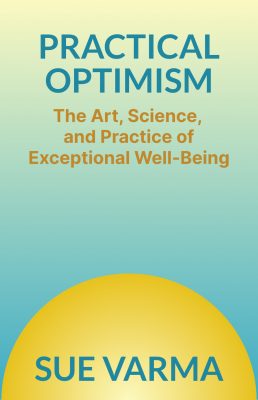
In Practical Optimism: The Art, Science, and Practice of Exceptional Well-Being, Dr. Sue Varma presents a groundbreaking approach to cultivating a positive mindset and achieving lasting happiness. This book stands out in the self-help genre by blending cutting-edge psychological research with actionable strategies, offering readers a unique roadmap to transform their lives. Dr. Varma’s work goes beyond simple positive thinking, delving into the neuroscience of optimism and providing readers with concrete tools to rewire their brains for success and fulfillment. Through engaging anecdotes, scientific insights, and practical exercises, Practical Optimism empowers readers to build resilience, enhance relationships, and unlock their full potential in both personal and professional spheres.
Practical Optimism caters to a wide range of readers seeking to improve their mental well-being and overall quality of life. The primary audience includes individuals struggling with stress, anxiety, or feelings of unfulfillment, as well as those simply looking to enhance their existing positive outlook. Professionals in high-pressure environments, parents navigating the challenges of raising children, and anyone facing significant life transitions will find particular value in Dr. Varma’s teachings. The book’s secondary audience encompasses mental health professionals, life coaches, and educators who can incorporate these evidence-based strategies into their work with clients or students. Dr. Varma’s writing style strikes a balance between scientific rigor and everyday accessibility, making complex psychological concepts understandable and applicable for readers of all backgrounds.
Imagine a world where optimism isn’t just a fleeting emotion but a powerful tool for transforming your life. In Practical Optimism: The Art, Science, and Practice of Exceptional Well-Being, Dr. Sue Varma shatters the myth that optimism is an innate trait, revealing instead that it’s a skill anyone can master. This groundbreaking book challenges readers to rethink their approach to happiness and success, offering a blend of scientific insights and actionable strategies that promise to revolutionize the way we view mental well-being.
Dr. Varma’s work stands out in the crowded self-help landscape by presenting optimism not as a naive outlook, but as a pragmatic approach to life’s challenges. Drawing from her extensive clinical experience and cutting-edge research in positive psychology, she unveils the neuroscience behind optimism, demonstrating how our thoughts and behaviors can literally rewire our brains for greater resilience and happiness. Through a series of engaging case studies and personal anecdotes, Varma illustrates the transformative power of practical optimism in action, from overcoming career setbacks to navigating complex relationships.
At the heart of Practical Optimism lies a comprehensive toolkit designed to help readers cultivate a positive mindset in their daily lives. Varma introduces the concept of “optimism training,” a systematic approach to developing mental habits that foster resilience, creativity, and personal growth. She breaks down complex psychological theories into digestible, actionable steps, ensuring that readers of all backgrounds can apply these principles to their unique situations. Whether it’s reframing negative self-talk, practicing gratitude, or setting achievable goals, each strategy is carefully explained and supported by scientific evidence.
One of the book’s most compelling aspects is its exploration of the ripple effects of optimism. Varma argues convincingly that cultivating personal optimism can have far-reaching impacts on our communities and society at large. She presents research showing how optimistic individuals tend to be more collaborative, innovative, and socially responsible, suggesting that widespread adoption of practical optimism could lead to significant positive changes in workplaces, families, and even global issues.
Readers of Practical Optimism will come away with a rich understanding of the science behind positive thinking and a concrete plan for implementing change in their lives. They’ll learn how to identify and challenge pessimistic thought patterns, develop resilience in the face of adversity, and harness the power of positive emotions to fuel personal and professional success. Moreover, Varma’s emphasis on “practical” optimism ensures that readers aren’t just left with feel-good platitudes, but with real-world strategies they can apply immediately to see tangible improvements in their well-being, relationships, and overall life satisfaction.
The central thesis of Practical Optimism is that exceptional well-being is achievable through the deliberate cultivation of optimism as a skill, rather than viewing it as an innate personality trait. Dr. Sue Varma argues that optimism is not about wearing rose-colored glasses or ignoring life’s challenges, but about developing a resilient mindset that allows us to navigate difficulties more effectively and find opportunities for growth in every situation.
Varma’s approach to optimism is like tending a garden. Just as a gardener nurtures plants by providing the right conditions for growth, we can cultivate optimism by creating the mental and emotional environment that allows it to flourish. This involves understanding the science behind positive thinking, recognizing our thought patterns, and consistently practicing techniques that reinforce an optimistic outlook. The book posits that through this intentional “gardening” of our minds, we can yield a bountiful harvest of improved mental health, stronger relationships, and greater success in all areas of life.
Practical Optimism marks a significant contribution to the field of positive psychology and self-help literature by bridging the gap between academic research and practical application. Dr. Varma’s work has been recognized for its innovative approach to mental well-being, earning praise from leading psychologists and mental health professionals.
The book has sparked discussions in academic circles about the role of optimism in mental health treatment, with some experts hailing it as a potential breakthrough in cognitive behavioral therapy approaches. Its impact extends beyond individual readers, influencing corporate wellness programs and educational curricula that seek to incorporate optimism training into their frameworks.
While widely acclaimed, Practical Optimism has not been without its critics. Some skeptics argue that the book oversimplifies complex psychological processes and may inadvertently downplay the seriousness of clinical depression or anxiety disorders. However, Varma addresses these concerns directly in the book, emphasizing that practical optimism is a complement to, not a replacement for, professional mental health treatment when necessary.
The significance of Practical Optimism lies in its potential to shift public perception of mental well-being from a reactive to a proactive approach. By presenting optimism as a learnable skill, Varma empowers readers to take an active role in their mental health, potentially reducing the stigma associated with seeking help for mental health issues.
Dr. Sue Varma’s Practical Optimism: The Art, Science, and Practice of Exceptional Well-Being offers a comprehensive and accessible approach to cultivating optimism. We find that the book’s strengths lie in its seamless integration of scientific research with practical strategies, making it a valuable resource for readers seeking to improve their mental well-being.
The ‘Optimism Training Program’ presented in the book is particularly noteworthy. We appreciate how Varma breaks down the process of developing optimism into manageable daily practices, making personal transformation feel achievable for readers. The program’s flexibility allows individuals to tailor the exercises to their specific needs and circumstances, increasing its potential effectiveness across a diverse readership.
We commend Varma’s balanced approach to positivity. By acknowledging life’s challenges and the role of negative emotions, she presents a realistic and sustainable model of optimism. This nuanced perspective adds credibility to the book’s message and makes it more applicable to real-world situations.
The book’s holistic view of well-being is another strong point. By exploring the connections between optimism and physical health, social relationships, and broader societal impact, Varma provides readers with a comprehensive toolkit for improving various aspects of their lives. This multifaceted approach acknowledges the complexity of human experience and offers a more complete path to well-being.
However, we note several areas where the book could have been strengthened. The limited discussion of cultural variations in understanding and practicing optimism may reduce its global applicability. Additionally, more attention could have been given to how severe mental health conditions might interact with the proposed strategies, and clearer guidelines for when to seek professional help would have been beneficial.
We also find that the book could have benefited from a more critical engagement with optimism research, including addressing ongoing debates in the field and potential downsides of overly optimistic thinking in certain contexts. A deeper exploration of systemic barriers to optimism and how to cultivate a positive outlook in the face of significant societal challenges would have made the book more relevant to a wider range of readers’ experiences.
Despite these limitations, we believe that Practical Optimism makes a valuable contribution to the field of positive psychology and self-help literature. Its strengths in bridging scientific research with practical application, coupled with its engaging writing style, make it a worthwhile read for many.
Our Recommendation
We recommend Practical Optimism to readers who are looking for a scientifically grounded, practical guide to cultivating a more positive outlook on life. It’s particularly well-suited for individuals who are new to the concept of optimism as a learnable skill, as well as those who have some background in positive psychology but are seeking more concrete strategies for personal growth.
However, we suggest that readers approach the book with a critical mindset, supplementing it with other resources that address its blind spots, particularly regarding cultural variations, socioeconomic factors, and the potential downsides of optimism. For those dealing with severe mental health issues, we strongly advise consulting with mental health professionals alongside reading this book. Overall, when used as part of a broader approach to personal development and well-being, we believe Practical Optimism can be a powerful tool for many readers in their journey towards a more fulfilling life.
The essence of Practical Optimism lies in its comprehensive approach to cultivating a positive mindset through scientifically-backed strategies and real-world applications. Dr. Sue Varma introduces the concept of “practical optimism” as a skillset that can be developed and honed over time, rather than an inherent personality trait. This approach combines cognitive restructuring techniques, mindfulness practices, and behavioral modifications to create a sustainable framework for improving mental well-being and overall life satisfaction.
One of the key topics Varma explores is the neuroscience of optimism. She explains how positive thinking patterns can physically alter brain structures, strengthening neural pathways associated with resilience and happiness. This neuroplasticity forms the foundation for the book’s assertion that optimism can be learned and reinforced through consistent practice. Varma dives into the specific brain regions involved in optimistic thinking, such as the anterior cingulate cortex and the amygdala, and how they interact to shape our emotional responses to life events.
Another crucial element of the book is the “Optimism Training Program” developed by Varma. This structured approach to building optimism includes daily exercises, cognitive reframing techniques, and long-term goal-setting strategies. The program is designed to be flexible and adaptable to individual needs, allowing readers to tailor their optimism practice to their unique life circumstances. Varma emphasizes the importance of consistency and patience in this process, likening it to building physical fitness through regular exercise.
The book also tackles the concept of “realistic optimism” as opposed to blind positivity. Varma argues that true optimism involves acknowledging challenges and setbacks while maintaining confidence in one’s ability to overcome them. This balanced approach helps readers develop resilience in the face of adversity without falling into the trap of toxic positivity. She provides tools for assessing situations objectively while maintaining a growth-oriented mindset.
Varma dedicates significant attention to the role of social connections in fostering optimism. She explores how positive relationships can amplify optimistic thinking and provide support during difficult times. The book offers strategies for cultivating meaningful relationships, improving communication skills, and leveraging social support networks to enhance personal well-being. This social aspect of optimism extends beyond personal relationships to include community engagement and broader social impact.
The concept of “emotional agility” is another key topic in Practical Optimism. Varma introduces techniques for developing greater awareness and control over one’s emotional responses. This includes recognizing and labeling emotions accurately, understanding their triggers, and developing strategies to manage them effectively. By increasing emotional agility, readers can respond to life’s challenges with greater flexibility and optimism.
Varma also explores the intersection of physical health and optimism. She discusses how lifestyle factors such as diet, exercise, and sleep can significantly impact our ability to maintain an optimistic outlook. The book provides practical advice on incorporating health-promoting habits that support both physical and mental well-being, creating a holistic approach to optimism that addresses all aspects of life.
Finally, Practical Optimism delves into the long-term benefits of cultivating an optimistic mindset. Varma presents research on how optimism can lead to improved cardiovascular health, stronger immune function, and even increased longevity. She also discusses the positive impact of optimism on career success, relationship satisfaction, and overall quality of life. This comprehensive look at the far-reaching effects of optimism serves to motivate readers to commit to the practice of optimism for lasting personal growth and fulfillment.
The Gratitude Journal Experiment: Varma describes a study where participants were asked to keep a daily gratitude journal for six weeks. Those who consistently wrote down three things they were grateful for each day showed significant improvements in mood, sleep quality, and overall life satisfaction compared to a control group. This example illustrates the power of intentional focus on positive aspects of life in cultivating optimism.
The Career Setback Turnaround: A case study follows Sarah, a marketing executive who faced a major career setback when her company downsized. Using Varma’s optimism strategies, Sarah reframed her job loss as an opportunity for growth. She used the time to acquire new skills, expanded her professional network, and eventually landed a more fulfilling position with better growth prospects. This example demonstrates how practical optimism can transform challenges into opportunities.
The Relationship Communication Breakthrough: Varma shares the story of a couple, Mark and Lisa, who were on the brink of divorce due to communication issues. By applying optimism-based communication techniques, such as active listening and positive reframing, they were able to rebuild trust and strengthen their relationship. This case study highlights how optimism can improve interpersonal relationships and foster better understanding between individuals.
The Chronic Illness Coping Strategy: The book presents the case of Tom, a patient with a chronic autoimmune condition. By adopting Varma’s optimism techniques, Tom was able to improve his quality of life significantly. He developed a more positive outlook on his treatment, engaged more actively in his care, and reported reduced pain levels and improved overall well-being. This example showcases how practical optimism can be applied to manage health challenges effectively.
The Corporate Culture Transformation: Varma describes how a tech startup implemented her optimism training program company-wide. The result was a significant improvement in employee satisfaction, decreased burnout rates, and increased productivity. This case study illustrates the potential of practical optimism to transform organizational culture and improve business outcomes.
Dr. Varma reveals that optimism is not a fixed trait but a skill that can be developed through neuroplasticity. The brain’s ability to form new neural connections means we can literally rewire our minds for positivity. To apply this insight, start with a daily “optimism workout.” Spend 10 minutes each morning visualizing positive outcomes for the day ahead. When faced with a challenge, consciously pause and generate three potential positive outcomes. Over time, this practice strengthens the neural pathways associated with optimistic thinking, making it your default mode of operation.
Varma introduces the concept of the 3:1 positivity ratio, based on research showing that flourishing individuals and relationships maintain a balance of at least three positive experiences or interactions for every negative one. To implement this in daily life, keep a tally of your positive and negative interactions or thoughts throughout the day. Aim to actively create more positive moments – give sincere compliments, express gratitude, or perform small acts of kindness. If you find yourself falling below the 3:1 ratio, intentionally seek out or create positive experiences to rebalance.
The book emphasizes the importance of emotional granularity – the ability to identify and label emotions with precision – in cultivating optimism. Varma argues that individuals with higher emotional granularity are better equipped to manage negative emotions and amplify positive ones. To develop this skill, create an “emotion wheel” with various nuanced emotions. Each day, identify and label your emotions using this wheel, going beyond basic terms like “happy” or “sad” to more specific descriptors like “contented,” “inspired,” or “melancholic.” This practice enhances emotional awareness and provides a foundation for more effective emotion regulation.
Varma details the concept of explanatory style – how we interpret and explain events in our lives – as a key factor in optimism. She outlines three dimensions: permanence, pervasiveness, and personalization. To adopt an optimistic explanatory style, practice reframing negative events as temporary (“This is a challenging phase, but it will pass”), specific (“This setback affects only one area of my life”), and external (“External factors contributed to this outcome, not just my actions”). Conversely, frame positive events as permanent, pervasive, and personal. Keep a journal where you consciously reframe daily events using this optimistic explanatory style.
The book introduces the transformative power of adding ‘yet’ to statements about unachieved goals or skills. This simple linguistic shift moves the mind from a fixed to a growth mindset. When facing a challenge or failure, consciously add ‘yet’ to your self-talk. Instead of “I can’t do this,” say “I can’t do this yet.” Create a “Yet List” of skills or goals you’re working towards, and regularly review and update it. This practice maintains a sense of possibility and progress, fueling optimism even in the face of current limitations.
Varma presents compelling research on the physical health benefits of optimism, including improved cardiovascular health, stronger immune function, and increased longevity. To leverage this connection, integrate optimism into your health routines. Before exercising, visualize the positive impact on your body. When choosing meals, focus on nourishing your body rather than restricting it. Create a bedtime ritual that includes listing three things you’re looking forward to tomorrow, promoting better sleep through positive anticipation. These practices align your health behaviors with an optimistic mindset, potentially amplifying their benefits.
The book emphasizes the contagious nature of optimism and its role in building stronger relationships. Varma suggests actively spreading optimism through social interactions. Practice “active constructive responding” when others share good news – respond with genuine enthusiasm and ask follow-up questions to help them savor positive experiences. In challenging conversations, apply the “optimistic listening” technique: focus on identifying at least one opportunity or solution in what the other person is saying, even if the overall message is negative. This approach strengthens relationships and creates a more optimistic social environment.
Varma explores the strong connection between optimism and creativity, showing how a positive outlook can enhance problem-solving and innovation. To apply this insight, start each workday with a “possibility brainstorm.” Spend five minutes listing potential positive outcomes or innovative solutions related to your current projects, no matter how unlikely they seem. When faced with a problem, challenge yourself to generate at least five unconventional solutions before settling on an approach. This practice trains your brain to see possibilities rather than obstacles, fostering both optimism and creativity.
The book presents the ABCDE model for maintaining optimism in the face of adversity: Adversity, Beliefs, Consequences, Disputation, and Energization. When confronting a challenge, first clearly define the Adversity. Then, identify your Beliefs about the situation and their Consequences. Next, practice Disputation by challenging negative beliefs with evidence and alternative perspectives. Finally, focus on Energization by visualizing how overcoming this challenge aligns with your long-term goals. Keep an “ABCDE journal” where you apply this model to significant challenges, reinforcing an optimistic approach to adversity over time.
Varma introduces the concept of the “optimism time horizon” – the ability to maintain a positive outlook across different time frames, from immediate situations to long-term futures. To expand your optimism time horizon, practice “future self-journaling.” Regularly write letters to your future self at various intervals (1 month, 1 year, 5 years ahead), focusing on positive developments and achievements you envision. Additionally, create a “legacy statement” outlining the positive impact you hope to have in your lifetime. Revisit and refine these documents periodically, cultivating a sense of optimism that extends far into the future and provides context for present challenges.
Dr. Sue Varma’s Practical Optimism excels in bridging the gap between scientific research and practical application. The book doesn’t merely present optimism as a vague concept but grounds it in solid neurological and psychological research. Varma skillfully translates complex scientific concepts into accessible language, explaining how optimism affects brain structure and function. She then takes this knowledge a step further by providing concrete, actionable strategies that readers can implement in their daily lives. This seamless integration of theory and practice sets the book apart from many self-help titles, offering readers a deep understanding of the ‘why’ behind the ‘how’ of cultivating optimism.
One of the book’s standout features is Varma’s meticulously designed ‘Optimism Training Program’. This structured approach to developing optimism provides readers with a clear roadmap for personal growth. The program is notable for its flexibility, allowing readers to tailor the exercises to their individual needs and circumstances. By breaking down the cultivation of optimism into manageable daily practices, Varma makes the process of personal transformation feel achievable and sustainable. The program’s emphasis on consistency and gradual progress aligns well with current understanding of habit formation and behavioral change, increasing the likelihood of long-term success for readers who commit to the process.
Practical Optimism stands out for its nuanced treatment of positive thinking. Rather than promoting blind positivity, Varma advocates for a realistic and balanced approach to optimism. She acknowledges the existence of life’s challenges and negative emotions, emphasizing that true optimism involves facing these realities while maintaining confidence in one’s ability to overcome them. This balanced perspective adds credibility to the book’s message and makes it more applicable to real-world situations. By addressing the potential pitfalls of excessive positivity, Varma provides a more robust and sustainable model of optimism that readers can rely on even in difficult times.
The book takes a commendably holistic approach to optimism and well-being. Varma doesn’t isolate optimism as a purely mental exercise but explores its connections to physical health, social relationships, and even broader societal impact. By discussing how optimism interacts with diet, exercise, sleep, and social connections, she presents a comprehensive picture of well-being that readers can work towards. This multifaceted approach acknowledges the complexity of human experience and provides readers with a more complete toolkit for improving their lives across various domains.
Varma’s writing style is a significant strength of the book. She strikes an effective balance between informative and engaging, using a mix of scientific explanations, personal anecdotes, and practical exercises to keep the reader interested. The book’s structure, with clearly delineated sections and frequent summaries, makes it easy for readers to navigate and absorb the information. Varma’s use of case studies and real-life examples helps to illustrate abstract concepts and makes the material more relatable and memorable. This accessibility ensures that the book can reach a wide audience, from those new to the concept of practical optimism to those with more background in psychology.
Practical Optimism excels in highlighting the long-term benefits of cultivating an optimistic mindset. Varma goes beyond immediate mood improvements to discuss how optimism can positively impact physical health, longevity, career success, and overall life satisfaction. By presenting compelling research on these long-term outcomes, she provides strong motivation for readers to commit to the practices she outlines. This focus on long-term benefits helps to frame optimism not just as a feel-good technique, but as a fundamental life skill with far-reaching implications for personal and professional success.
While Practical Optimism offers a wealth of insights and strategies, it falls short in addressing how optimism might be understood and practiced differently across various cultures. The book primarily draws from Western psychological research and may not fully account for cultural variations in the conception and expression of optimism. Some cultures, for instance, may place more value on collective well-being over individual optimism, or may have different norms around the expression of positive emotions. A more in-depth exploration of these cultural nuances would have enhanced the book’s global applicability and provided readers with a more comprehensive understanding of optimism in diverse contexts.
Although the book acknowledges that optimism training is not a substitute for professional mental health treatment, it could have provided more detailed guidance on when and how to seek professional help. The strategies presented may be less effective or even potentially harmful for individuals dealing with severe depression, anxiety disorders, or other significant mental health conditions. A more thorough discussion of the limitations of practical optimism in these contexts, along with clearer guidelines for when to seek professional intervention, would have made the book more responsible and comprehensive in its approach to mental well-being.
While Varma presents a wealth of research supporting the benefits of optimism, the book could have benefited from a more critical engagement with the scientific literature. There are ongoing debates in psychology about the nature and measurement of optimism, as well as some studies suggesting potential downsides to overly optimistic thinking in certain contexts. By not fully addressing these controversies or potential limitations, the book may present a somewhat one-sided view of optimism research. A more balanced presentation of the scientific discourse around optimism would have strengthened the book’s credibility and provided readers with a more nuanced understanding of the topic.
The book focuses primarily on individual-level strategies for cultivating optimism, which, while valuable, may overlook the impact of broader societal factors on one’s ability to maintain an optimistic outlook. Issues such as systemic inequality, discrimination, or economic hardship can significantly affect an individual’s capacity for optimism. While Varma touches on some social aspects of optimism, a deeper exploration of how to cultivate and maintain optimism in the face of systemic challenges would have made the book more relevant and applicable to a wider range of readers’ life experiences.
One significant blind spot in Practical Optimism is the limited exploration of the potential downsides of excessive optimism. While Varma advocates for a balanced approach, readers might misinterpret the book’s message and adopt an overly optimistic outlook that could lead to unrealistic expectations or poor risk assessment. In some situations, such as financial planning or health decisions, an optimistic bias could result in inadequate preparation or delayed action. This aspect is more thoroughly addressed in Tali Sharot’s The Optimism Bias: A Tour of the Irrationally Positive Brain, which explores both the benefits and pitfalls of optimistic thinking. Similarly, Barbara Ehrenreich’s Bright-Sided: How Positive Thinking Is Undermining America offers a critical perspective on the culture of positive thinking, highlighting instances where optimism can be detrimental. Incorporating insights from these works could have provided readers with a more comprehensive understanding of when and how to apply optimistic thinking judiciously.
Practical Optimism may overlook the adaptive value of pessimism in certain contexts. While the book focuses on cultivating optimism, it doesn’t fully explore situations where a more cautious or pessimistic outlook might be beneficial. For instance, in crisis management or safety-critical industries, a degree of pessimism can lead to better preparedness and risk mitigation. This blind spot could lead readers to undervalue the role of constructive pessimism in their decision-making processes. Julie Norem’s The Positive Power of Negative Thinking offers a counterpoint, discussing how defensive pessimism can be a useful strategy for anxiety management and performance enhancement. Additionally, Paul Bloom’s The Sweet Spot: The Pleasures of Suffering and the Search for Meaning explores how some negative experiences, including pessimistic thinking, can contribute to a fulfilling life. Integrating these perspectives could have provided a more nuanced view of the interplay between optimism and pessimism in fostering overall well-being.
While Practical Optimism emphasizes the learnable aspects of optimism, it may underplay the role of genetic and temperamental factors in determining an individual’s baseline tendency towards optimism or pessimism. This oversight could lead readers to become frustrated if they don’t experience rapid changes in their outlook, potentially misattributing this to personal failure rather than inherent predispositions. A deeper exploration of the interplay between nature and nurture in shaping optimism would have provided a more realistic expectation for readers. Sonja Lyubomirsky’s The How of Happiness: A Scientific Approach to Getting the Life You Want offers a more comprehensive look at the genetic component of happiness and well-being, proposing that about 50% of our happiness set-point is determined by genetics. Similarly, Richard Davidson’s The Emotional Life of Your Brain delves into the neurological basis of emotional styles, including optimism, providing insights into how innate tendencies interact with learned behaviors. Incorporating these perspectives could have helped readers better understand their starting point and set more realistic goals for cultivating optimism.
A significant blind spot in Varma’s work is the limited discussion of how past trauma can impact an individual’s capacity for optimism. Readers who have experienced significant trauma may find it challenging to apply the book’s strategies without first addressing their traumatic experiences. This oversight could lead to feelings of inadequacy or frustration among readers who struggle to cultivate optimism due to unresolved trauma. Bessel van der Kolk’s The Body Keeps the Score: Brain, Mind, and Body in the Healing of Trauma provides crucial insights into how trauma affects the brain and body, offering a more comprehensive understanding of the barriers some individuals might face in developing an optimistic outlook. Additionally, Judith Herman’s Trauma and Recovery explores the process of healing from trauma, which could complement Varma’s optimism strategies. Integrating perspectives from these works could have made Practical Optimism more inclusive and effective for readers with diverse life experiences.
Practical Optimism may not fully address how socioeconomic factors can significantly influence an individual’s ability to cultivate and maintain an optimistic outlook. The book’s strategies might be more easily implemented by those with certain privileges, such as financial stability or access to supportive environments. This blind spot could lead to an oversimplification of the challenges faced by individuals in disadvantaged circumstances. Carol Graham’s Happiness for All?: Unequal Hopes and Lives in Pursuit of the American Dream explores how economic inequality affects optimism and aspirations, providing a crucial perspective on the societal factors that shape individual outlook. Similarly, Michael Marmot’s The Health Gap: The Challenge of an Unequal World examines how social determinants impact health and well-being, including psychological factors like optimism. Incorporating these broader socioeconomic considerations would have made Varma’s work more comprehensive and applicable across diverse social contexts.
A potential blind spot in Practical Optimism is the limited discussion of the challenges in accurately measuring optimism and its effects. The book might lead readers to expect clear, measurable improvements in their optimism levels, without fully acknowledging the complexity and potential subjectivity involved in assessing changes in outlook. This could result in readers either underestimating their progress or relying too heavily on imperfect measures of their optimism. Martin Seligman’s Learned Optimism: How to Change Your Mind and Your Life delves deeper into the nuances of measuring explanatory styles and optimism, providing a more detailed look at the assessment process. Additionally, Todd Kashdan and Robert Biswas-Diener’s The Upside of Your Dark Side explores the limitations of positive psychology measures and the importance of embracing a full range of emotions. Incorporating insights from these works could have provided readers with a more nuanced understanding of how to evaluate their progress in cultivating optimism.
While both Practical Optimism and The Happiness Advantage focus on the benefits of positive psychology, they approach the topic from different angles. Achor’s work emphasizes happiness as a precursor to success, whereas Varma’s book specifically targets optimism as a learnable skill. Achor provides a broader overview of positive psychology principles, including social support, mindset, and resilience, while Varma offers a more focused and in-depth exploration of optimism. The Happiness Advantage draws heavily on Achor’s experience in corporate settings, making it particularly relevant for workplace applications. In contrast, Varma’s book provides a more comprehensive approach to optimism across various life domains. Both books use scientific research to back their claims, but Varma’s work goes into greater detail about the neurological basis of optimism, offering readers a deeper understanding of the biological mechanisms at play.
Seligman’s Learned Optimism is a seminal work in the field of positive psychology and shares many similarities with Varma’s Practical Optimism. Both books argue that optimism is a learnable skill rather than an innate trait. However, Seligman’s work focuses more on the concept of explanatory style – how people explain events to themselves – as the key to optimism. Varma’s book, while incorporating this concept, takes a more holistic approach, integrating recent neuroscientific findings and a wider range of practical strategies. Seligman’s book is more theoretical and research-heavy, while Varma’s is more accessible and action-oriented. Learned Optimism also addresses the potential downsides of optimism more thoroughly than Varma’s work, providing a more balanced view of the concept.
Burkeman’s The Antidote presents a stark contrast to Varma’s Practical Optimism. While Varma advocates for cultivating optimism, Burkeman argues for embracing uncertainty and negative thinking as paths to happiness and success. He critiques what he sees as the excesses of positive psychology and self-help culture. Where Varma provides strategies for building optimism, Burkeman suggests that accepting and even seeking out negative experiences can lead to greater fulfillment. This book serves as an interesting counterpoint to Varma’s work, challenging readers to consider alternative approaches to well-being. However, Varma’s book is more grounded in scientific research and offers more concrete, actionable strategies for readers.
Seligman’s Authentic Happiness takes a broader approach to well-being than Varma’s more focused exploration of optimism. While both books draw on positive psychology principles, Seligman’s work covers a wider range of topics including strengths, virtues, and different types of happiness. Varma’s book goes into greater depth on the specific topic of optimism, providing more detailed strategies for its cultivation. Authentic Happiness also places more emphasis on the role of meaning and engagement in well-being, whereas Practical Optimism concentrates more on cognitive and behavioral strategies for fostering a positive outlook. Both books are well-researched, but Varma’s more recent publication incorporates newer findings in neuroscience and psychology.
Wilson’s Redirect offers a different perspective on personal change compared to Varma’s Practical Optimism. While both books aim to help readers improve their lives, Wilson focuses on the power of redirecting our personal narratives or “stories” we tell ourselves. Varma’s approach is more direct in targeting optimism as a specific skill to be developed. Wilson’s book is more skeptical of traditional self-help approaches, emphasizing subtle interventions that change behavior indirectly. In contrast, Varma provides more explicit strategies and exercises for readers to follow. Redirect covers a broader range of psychological interventions beyond optimism, making it less focused but potentially more comprehensive in its approach to personal change.
Step 1: Develop Emotional Granularity
Step 2: Implement the 3:1 Positivity Ratio
Step 3: Adopt an Optimistic Explanatory Style
Step 4: Harness the Power of ‘Yet’
Step 5: Integrate Optimism into Health Routines
Step 6: Practice Social Optimism
Step 7: Cultivate Optimistic Creativity
Step 8: Apply the ABCDE Model in Adversity
Step 9: Expand Your Optimism Time Horizon
Implement Optimism Training Programs
Dr. Varma’s ‘Optimism Training Program’ can be adapted for corporate settings to enhance employee well-being and productivity. By implementing structured optimism training sessions, businesses can cultivate a more positive workplace culture, potentially leading to increased job satisfaction, improved team dynamics, and better overall performance. These programs could include workshops on cognitive reframing, mindfulness practices, and exercises to develop an optimistic explanatory style.
However, implementing such programs may face resistance from employees who view them as additional work or from management concerned about the time and resources required. Some employees might be skeptical about the effectiveness of optimism training or feel that it trivializes real workplace issues. Additionally, measuring the tangible benefits of such programs can be challenging, making it difficult to justify the investment to stakeholders.
To overcome these challenges, businesses can start with pilot programs in specific departments, gathering data on employee satisfaction, productivity, and other relevant metrics before and after implementation. Clear communication about the scientific basis and potential benefits of optimism training can help address skepticism. Integrating the training into existing professional development programs and offering it as an optional but encouraged activity can reduce resistance. Partnering with HR analytics teams to develop robust measurement tools can help quantify the program’s impact, making it easier to justify the investment to leadership.
Foster a Culture of Positive Communication
Applying Varma’s insights on the power of positive communication can transform workplace interactions. Businesses can encourage the use of optimistic language in meetings, emails, and performance reviews. This involves training employees to practice active constructive responding, to frame challenges as opportunities, and to regularly express appreciation for colleagues’ efforts. Such a shift can lead to improved morale, better collaboration, and a more supportive work environment.
The main obstacle in implementing this cultural shift is the ingrained nature of communication habits. Employees may find it difficult to change their long-standing ways of interacting, particularly in high-stress situations. There might also be concerns about maintaining professionalism or addressing serious issues if there’s an overemphasis on positivity. Some may view the initiative as inauthentic or forced, potentially leading to cynicism.
To address these challenges, businesses can implement a gradual approach to changing communication norms. This could involve regular training sessions and workshops that provide practical examples of positive communication in various workplace scenarios. Creating a recognition system that rewards positive communication can reinforce the desired behavior. It’s crucial to emphasize that positive communication doesn’t mean ignoring problems, but rather approaching them constructively. Encouraging leaders to model this behavior consistently can help employees see its value and authenticity.
Develop Optimistic Leadership Strategies
Incorporating Varma’s principles of practical optimism into leadership development programs can create more effective and inspiring leaders. This involves training managers to adopt an optimistic explanatory style, to practice resilience in the face of setbacks, and to communicate a positive vision for the future. Optimistic leaders are better equipped to motivate their teams, navigate challenges, and drive innovation.
However, some leaders may resist changing their established leadership styles, particularly if they’ve been successful in the past. There might be concerns that optimistic leadership could be perceived as unrealistic or naive, especially in industries facing significant challenges. Additionally, leaders under pressure to deliver short-term results might find it difficult to maintain an optimistic outlook.
To overcome these obstacles, businesses can provide personalized coaching for leaders to help them integrate optimistic strategies into their existing leadership styles. This approach acknowledges that optimism isn’t a one-size-fits-all solution but can be tailored to individual personalities and situations. Offering case studies of successful optimistic leaders in various industries can demonstrate the practical benefits of this approach. Regular leadership forums where managers can share their experiences and challenges in implementing optimistic leadership can provide ongoing support and refinement of these strategies.
Integrate Optimism into Goal-Setting and Performance Management
Varma’s concept of the “optimism time horizon” can be applied to corporate goal-setting and performance management processes. This involves encouraging employees to set both short-term and long-term optimistic goals, framing performance objectives in terms of growth and possibility rather than just problem-solving or risk mitigation. It also includes training managers to provide feedback that reinforces an optimistic explanatory style.
Challenges in implementing this approach include the potential for unrealistic goal-setting if optimism is overemphasized. There may also be resistance from employees and managers accustomed to more traditional, problem-focused performance management systems. Balancing optimism with pragmatism in goal-setting can be difficult, especially in highly competitive or volatile industries.
To address these issues, businesses can develop a balanced scorecard approach that incorporates both optimistic growth targets and realistic performance metrics. Providing training on “realistic optimism” can help employees and managers set ambitious yet achievable goals. Implementing a mentoring system where experienced optimistic leaders guide others in this approach can facilitate its adoption. Regular review and adjustment of goals, with a focus on learning and growth rather than just achievement, can help maintain a balance between optimism and practicality.
Create Optimism-Based Wellness Programs
Applying Varma’s holistic approach to optimism and well-being, businesses can develop comprehensive wellness programs that go beyond traditional health initiatives. These programs could include optimism-focused mental health support, stress management techniques based on cognitive reframing, and physical health initiatives framed in terms of positive goals rather than risk reduction.
Potential obstacles include budget constraints, as comprehensive wellness programs can be expensive to implement and maintain. There might also be privacy concerns from employees hesitant to engage in mental health initiatives through their workplace. Additionally, measuring the return on investment for such programs can be challenging, making it difficult to justify their continuation or expansion.
To overcome these challenges, businesses can start with low-cost initiatives such as optimism-focused lunch-and-learn sessions or peer support groups. Partnering with external wellness providers can offer employees confidential access to resources, addressing privacy concerns. Developing clear metrics that link wellness program participation to outcomes like reduced absenteeism, improved productivity, and higher employee retention can help justify the investment. Offering incentives for participation, such as additional time off or wellness bonuses, can encourage employee engagement.
Implement Optimistic Change Management Strategies
Varma’s insights on cultivating optimism can be particularly valuable in managing organizational change. Businesses can develop change management strategies that emphasize the positive potential of changes, frame challenges as opportunities for growth, and provide employees with tools to maintain an optimistic outlook during periods of uncertainty.
Resistance to change is a common challenge in organizations, and employees may view optimistic messaging about difficult transitions as insincere or dismissive of their concerns. There’s also a risk of creating unrealistic expectations if the challenges of change are downplayed in favor of an overly optimistic narrative.
To address these issues, change management strategies should balance optimism with transparency. This involves acknowledging the difficulties of change while emphasizing the organization’s and employees’ capacity to navigate them successfully. Providing concrete examples of how similar changes have led to positive outcomes in other organizations can build credibility. Offering optimism-based resilience training to employees can equip them with tools to maintain a positive outlook during the change process. Creating channels for open dialogue where employees can express their concerns and contribute ideas can help build trust and engagement in the change process.
Varma’s emphasis on practical, learnable optimism aligns with the growing trend of personalized mental health technology. As AI and machine learning advance, we may see apps and devices that offer tailored optimism training based on individual personality traits and life circumstances. These technologies could provide real-time cognitive reframing suggestions and track users’ progress in developing an optimistic mindset. The integration of biometric data could further personalize these interventions, adjusting strategies based on physiological stress indicators.
The book’s approach to teaching optimism as a life skill could influence future educational trends. We might see optimism training incorporated into school curricula, from elementary to higher education. This could involve teaching students cognitive reframing techniques, emotional granularity, and the ABCDE model as core life skills. Such integration could lead to a generation better equipped to handle life’s challenges and maintain mental well-being.
As businesses increasingly recognize the link between employee well-being and productivity, Varma’s practical optimism strategies could become a staple of corporate wellness programs. Future workplace wellness initiatives might go beyond physical health to include mandatory optimism training sessions. We could see the emergence of “Chief Optimism Officers” tasked with fostering a culture of positive thinking and resilience within organizations. Performance evaluations might include measures of an employee’s optimistic outlook and its impact on team dynamics.
The book’s insights on the health benefits of optimism could influence future public health policies. Governments might implement population-level optimism interventions as a preventive health measure. This could include public awareness campaigns about the benefits of optimistic thinking, integration of optimism training in national health services, and incentives for participating in optimism-building activities. We might see “optimism scores” becoming a standard health metric alongside traditional indicators like blood pressure or BMI.
As artificial intelligence becomes more sophisticated, we could see the development of AI-powered optimism coaches based on the principles outlined in Varma’s book. These digital assistants could provide 24/7 support, offering personalized optimism exercises, cognitive reframing suggestions, and emotional support. They might analyze a user’s speech patterns, written communications, and social media activity to identify pessimistic thinking and provide real-time interventions. This trend could democratize access to optimism training, making it available to a global audience regardless of location or economic status.
Practical Optimism has the potential to significantly influence the field of positive psychology and self-help literature. By bridging the gap between scientific research and practical application, it could pave the way for more evidence-based, actionable self-improvement books. The book’s emphasis on neuroplasticity and the learnable nature of optimism may encourage more research into the malleability of personality traits and emotional tendencies.
In the broader societal context, the widespread adoption of Varma’s practical optimism techniques could lead to changes in various sectors. In education, it might inspire curriculum changes that incorporate optimism training, potentially improving students’ resilience and academic performance. In the corporate world, companies might integrate optimism training into their employee wellness programs, potentially leading to increased productivity and job satisfaction.
The book’s holistic approach to well-being, linking optimism with physical health, relationships, and societal impact, could contribute to a more integrated understanding of health and wellness. This might influence healthcare policies, encouraging a more preventive and holistic approach to health that includes mental and emotional well-being.
However, the book’s impact may be limited by socioeconomic factors. If the strategies are perceived as more accessible to those with certain privileges, it could inadvertently widen well-being disparities. To maximize its positive impact, future work building on Varma’s ideas might need to address how to make practical optimism techniques more accessible and relevant across diverse socioeconomic contexts.
Looking ahead, the long-term influence of Practical Optimism will likely depend on how well its strategies hold up to further scientific scrutiny and real-world application. If longitudinal studies support the efficacy of Varma’s optimism training program, it could become a standard component of mental health interventions and personal development practices. Conversely, if future research reveals limitations or unintended consequences of these techniques, it might lead to a more nuanced understanding of when and how to apply optimism strategies.
The book’s emphasis on the individual cultivation of optimism might also spark discussions about the balance between personal responsibility and societal factors in determining well-being. This could potentially influence policy debates about mental health resources, education, and social support systems.
The Happiness of Pursuit by Shimon Edelman: This book offers a neuroscientific perspective on happiness and well-being, complementing Varma’s focus on optimism. Edelman explores how the brain constructs our sense of happiness, providing readers with a deeper understanding of the biological underpinnings of positive emotions. This scientific approach aligns well with Varma’s evidence-based strategies, offering readers additional insights into why certain optimism-building techniques might be effective. Edelman’s work can help readers appreciate the neurological changes that occur as they practice Varma’s optimism strategies, potentially increasing motivation to persist with these practices.
The Optimism Bias by Tali Sharot: Sharot’s book provides a critical examination of optimism, exploring both its benefits and potential pitfalls. This perspective offers a valuable counterpoint to Varma’s predominantly positive view of optimism. Readers of Practical Optimism will benefit from Sharot’s exploration of how an optimistic bias can sometimes lead to poor decision-making or unnecessary risk-taking. This balanced view can help readers develop a more nuanced understanding of optimism, allowing them to apply Varma’s strategies more judiciously and effectively in their lives.
Learned Optimism by Martin Seligman: As a foundational text in the field of positive psychology, Seligman’s book provides a comprehensive background to many of the concepts Varma builds upon. Seligman’s work on explanatory styles and learned helplessness offers readers a deeper theoretical understanding of why optimism can be learned and how it impacts our lives. This book can serve as an excellent primer for readers who want to delve deeper into the academic research underlying Varma’s more practical approach.
The Antidote: Happiness for People Who Can’t Stand Positive Thinking by Oliver Burkeman: Burkeman’s book offers a contrasting viewpoint to Varma’s optimism-focused approach, arguing for the benefits of embracing uncertainty and negative thinking. This perspective can provide a valuable balance for readers, encouraging them to consider when optimism might not be the most effective strategy. Burkeman’s exploration of Stoicism, Buddhism, and other philosophical approaches to happiness can broaden readers’ toolkit for well-being beyond optimism alone.
Flourish: A Visionary New Understanding of Happiness and Well-being by Martin Seligman: In this book, Seligman expands on his earlier work, presenting a more comprehensive theory of well-being that goes beyond optimism. His PERMA model (Positive emotions, Engagement, Relationships, Meaning, and Accomplishment) can provide readers with a broader context for Varma’s optimism strategies. This book can help readers integrate optimism into a more holistic approach to well-being, potentially enhancing the effectiveness of Varma’s techniques.
The Happiness Advantage by Shawn Achor: Achor’s book focuses on how happiness can lead to success, rather than the other way around. This perspective complements Varma’s work by highlighting the practical benefits of positive thinking in professional and personal life. Achor’s emphasis on creating lasting positive change through small habits aligns well with Varma’s practical strategies. Readers can benefit from Achor’s workplace-focused examples and exercises, which can help them apply optimism techniques in their professional lives.
Mindset: The New Psychology of Success by Carol S. Dweck: Dweck’s exploration of growth mindset versus fixed mindset provides a valuable companion to Varma’s work on practical optimism. The concept of a growth mindset aligns closely with the idea that optimism can be learned and developed. Readers can benefit from understanding how their beliefs about their own abilities impact their capacity for optimism and personal growth. Dweck’s strategies for developing a growth mindset can complement and enhance the effectiveness of Varma’s optimism-building techniques.
The How of Happiness by Sonja Lyubomirsky: Lyubomirsky’s scientifically-grounded approach to increasing happiness provides an excellent complement to Varma’s work. While Varma focuses specifically on optimism, Lyubomirsky offers a broader range of evidence-based happiness-increasing activities. Her exploration of the genetic, circumstantial, and intentional factors that contribute to happiness can help readers understand where optimism fits within the larger picture of well-being. This book can provide additional tools and strategies for readers to use alongside Varma’s optimism techniques.
Positive Psychology Center at the University of Pennsylvania: This website, founded by Martin Seligman, offers a wealth of resources on positive psychology, including research papers, courses, and practical applications. It provides a scientific foundation for many of the optimism techniques discussed in Varma’s book. https://ppc.sas.upenn.edu/
Greater Good Science Center: Based at UC Berkeley, this website offers articles, videos, and practical tools for cultivating well-being, including specific resources on optimism and resilience. Their science-based approach aligns well with Varma’s evidence-based strategies. https://greatergood.berkeley.edu/
VIA Institute on Character: This platform offers free character strength assessments and resources for personal development. Understanding one’s character strengths can complement the optimism strategies outlined in Varma’s book, providing a more holistic approach to personal growth. https://www.viacharacter.org/
International Positive Psychology Association (IPPA) Conference: This biennial conference brings together researchers, practitioners, and students in the field of positive psychology. Attendees can learn about the latest research and practical applications in optimism and well-being, expanding on the concepts presented in Varma’s book. https://www.ippanetwork.org/conferences/
World Happiness Summit: This annual event focuses on the science and practice of happiness and well-being. It offers presentations, workshops, and networking opportunities that can provide practical insights into implementing optimism strategies in various life domains. https://www.happinesssummit.world/
International Positive Psychology Association (IPPA): This organization promotes the science and practice of positive psychology. Membership provides access to research, webinars, and networking opportunities that can deepen understanding of optimism and its applications. https://www.ippanetwork.org/
American Psychological Association (APA) Division 17 – Society of Counseling Psychology: This division of the APA focuses on positive psychology and well-being in counseling contexts. It offers resources and professional development opportunities that can be valuable for those looking to apply optimism strategies in therapeutic settings. https://www.div17.org/
The Science of Happiness: Produced by the Greater Good Science Center, this podcast explores scientific research on happiness and offers practical tips for a more meaningful life. Episodes often touch on optimism and its role in well-being. https://greatergood.berkeley.edu/podcasts/series/the_science_of_happiness
The Positive Psychology Podcast: Hosted by Kristen Truempy, this podcast explores various topics in positive psychology, including optimism, resilience, and well-being. It offers practical applications of research findings, complementing the strategies in Varma’s book. https://positivepsychologypodcast.com/
The Happiness Lab: Hosted by Dr. Laurie Santos, this podcast delves into the science of happiness, often touching on themes related to optimism and positive thinking. It provides scientific insights and practical tips that can enhance readers’ understanding of Varma’s optimism strategies. https://www.happinesslab.fm/
The Science of Well-Being: This popular Coursera course, taught by Dr. Laurie Santos of Yale University, explores the science behind happiness and offers practical strategies for increasing well-being. It provides a broader context for the optimism techniques discussed in Varma’s book. https://www.coursera.org/learn/the-science-of-well-being
Foundations of Positive Psychology Specialization: Offered by the University of Pennsylvania on Coursera, this series of courses provides a comprehensive introduction to positive psychology, including topics on resilience, optimism, and character strengths. It can provide a deeper theoretical understanding of the concepts underlying Varma’s practical strategies. https://www.coursera.org/specializations/positive-psychology
Happy: This documentary explores the science of happiness across different cultures, providing a global perspective on well-being that can complement Varma’s optimism strategies. It offers insights into how different societies cultivate happiness and optimism. https://www.thehappymovie.com/
The Optimists: This Norwegian documentary follows a volleyball team of women in their 70s and 80s, showcasing the power of optimism and positive thinking in aging. It provides a real-world example of how optimism can impact longevity and quality of life, themes touched upon in Varma’s book. https://www.imdb.com/title/tt3074628/
The Resilience Project: While not a traditional film, this series of video resources explores the concept of resilience, which is closely tied to optimism. It offers practical strategies for building mental toughness and maintaining a positive outlook in the face of adversity, complementing the techniques presented in Varma’s book. https://theresilienceproject.com.au/


Discover the key takeaways from top non-fiction books in minutes. Get the wisdom you need to succeed fast. Here, learning is quick, engaging, and always at your fingertips.
© 2025 All Rights Reserved.