Reviews
“This book was a much-needed gift to my weary and news-battered heart. In a time when we are constantly being told that we are more divided and combative than ever, and that the future will bring only more calamity and despair, Chris Anderson presents an inspiring body of evidence to support the tremendous and transformative power of generosity—that most beautiful of human impulses. Infectious Generosity is a combination of inarguable data and incredibly moving stories. How wonderful to learn that seemingly small and humble acts of kindness can create exponential whirlwinds of benevolent impact, and that generosity is just as contagious as any virus! I flew through these pages with an increasing sense of joy, and was left inspired and hopeful.”—Elizabeth Gilbert, bestselling author of Eat, Pray, Love
“Profound and compelling … This book is a masterpiece, and an important one. I want everyone I know to read this—and everyone I don’t know, too.”—Andrew Solomon, author and speaker on culture and psychology
“Truly inspiring! … This book is the first page-turner ever written about human generosity. It will change the way you see the world around you.”—Elizabeth Dunn, social psychologist and expert on the science of happiness
“Concise and profound, this truly excellent book is going to have a big impact on the key issues of our times.”—Alain de Botton, author and philosopher
“A beautiful book—lucid, warm, intelligent, and persuasive.”—Steven Pinker, author and professor of psychology, Harvard University
“Warning: Reading this book may give you an irresistible urge to get up and take action. This is simply a wonderful book.”—Rutger Bregman, bestselling author of Humankind
“An inspiring, timely book about ways to bring out the best in people rather than focusing on the worst … a joyful road map away from a polarized, selfish society to the hopeful, humane place where we should be.”—Kirkus Reviews (starred review)
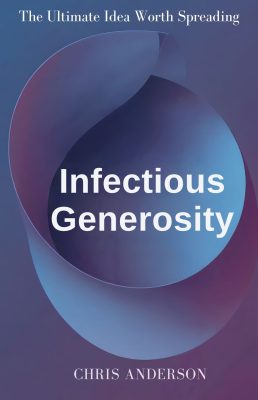
In Infectious Generosity: The Ultimate Idea Worth Spreading, Chris Anderson presents a compelling case for the transformative power of generosity in our interconnected world. Drawing from his extensive experience as the curator of TED, Anderson explores how acts of kindness and selflessness can create a ripple effect, leading to positive change on a global scale. This book goes beyond typical self-help rhetoric, offering a fresh perspective on how generosity can be a catalyst for innovation, problem-solving, and societal progress. Anderson weaves together inspiring stories, cutting-edge research, and practical strategies to show readers how they can harness the power of generosity in their personal and professional lives, ultimately contributing to a more compassionate and collaborative world.
Infectious Generosity is primarily aimed at individuals seeking to make a positive impact in their personal lives, workplaces, and communities. This includes business leaders, entrepreneurs, educators, social activists, and anyone interested in personal growth and societal change. The book’s accessible language and relatable examples make it suitable for a broad audience, from young adults to seasoned professionals. While the concepts may resonate particularly with those already inclined towards philanthropy or social responsibility, Anderson’s engaging writing style and practical approach make the book appealing even to readers who may be new to these ideas. The blend of inspirational stories and actionable strategies ensures that both idealists and pragmatists will find value in its pages.
What if the key to solving the world’s most pressing problems was hidden in plain sight, nestled within our capacity for kindness? In Infectious Generosity: The Ultimate Idea Worth Spreading, Chris Anderson challenges us to rethink the power of giving and its potential to reshape our global society. This isn’t just another feel-good manifesto; it’s a call to action backed by compelling evidence and real-world examples.
Anderson begins by dismantling the notion that generosity is a luxury reserved for the wealthy or a trait limited to a select few. Instead, he posits that generosity is an inherent human quality that, when cultivated and spread, can lead to exponential positive change. Through a series of captivating stories and case studies, he illustrates how small acts of kindness can snowball into movements that address complex issues like poverty, education, and climate change.
The book takes readers on a journey through various facets of generosity, from its evolutionary roots to its modern-day applications in business, technology, and social innovation. Anderson explores how companies that prioritize giving back often outperform their competitors, not just in terms of public image but in innovation and employee satisfaction. He also delves into the science behind generosity, revealing how acts of kindness trigger a cascade of positive neurochemical reactions that benefit both the giver and the receiver.
One of the most compelling aspects of Infectious Generosity is its practical approach. Anderson doesn’t just preach the virtues of giving; he provides actionable strategies for readers to incorporate generosity into their daily lives and professional endeavors. From tips on how to start a giving circle to advice on leveraging social media for charitable causes, the book offers a toolkit for anyone looking to make a difference, regardless of their resources or position.
Readers of Infectious Generosity will come away with a new perspective on the role of generosity in personal growth and societal progress. They’ll learn how to identify opportunities for giving in unexpected places, how to overcome barriers to generosity, and how to create a ripple effect of positive change in their communities. Perhaps most importantly, they’ll gain the confidence to believe that their individual actions, no matter how small, can contribute to solving global challenges when combined with the efforts of others.
The central thesis of Infectious Generosity is that generosity, when practiced consistently and spread widely, has the power to transform individuals, communities, and ultimately, the world. Anderson argues that generosity is not just a personal virtue but a practical solution to many of society’s most intractable problems. He likens generosity to a benevolent virus, capable of spreading rapidly from person to person, crossing boundaries of culture, class, and geography. Just as a single match can start a wildfire, a single act of kindness can ignite a chain reaction of goodwill that grows exponentially.
Infectious Generosity represents a significant contribution to the field of social change and personal development. By bridging the gap between individual action and global impact, Anderson offers a fresh perspective on how we can address complex societal issues. The book has garnered attention for its optimistic yet practical approach to philanthropy and social responsibility.
Critics have praised Anderson’s ability to blend scientific research with compelling storytelling, making the book accessible to a wide audience. Some have noted that the book challenges traditional notions of charity, suggesting a more integrated and sustainable approach to giving that aligns with modern social and economic realities.
However, the book has not been without controversy. Some skeptics argue that Anderson’s vision of widespread generosity is overly idealistic, particularly in a world often driven by self-interest and competition. Others have questioned whether the “infectious” model of generosity can truly scale to address systemic issues that require institutional change.
Despite these debates, Infectious Generosity has been recognized for its potential to inspire action. It has been featured in numerous “must-read” lists for business leaders and social entrepreneurs. Several universities have incorporated the book into their curricula on social innovation and corporate social responsibility.
The impact of Infectious Generosity extends beyond the literary world. It has sparked conversations in boardrooms, classrooms, and community centers about the role of generosity in shaping our collective future. Some organizations have cited the book as inspiration for new charitable initiatives or changes in corporate giving policies.
Anderson’s work has also influenced the tech industry, where he’s well-known due to his role at TED. The book has encouraged discussions about how technology can be leveraged to facilitate and scale acts of generosity, leading to the development of new platforms and apps designed to connect donors with causes and track the impact of giving.
In the academic sphere, Infectious Generosity has prompted further research into the psychological and sociological effects of generosity. Studies inspired by Anderson’s work are exploring the long-term impacts of sustained giving on both individuals and communities, potentially providing empirical support for the book’s central claims.
While it’s too early to gauge the full extent of the book’s influence, Infectious Generosity has undoubtedly made a splash in discussions about social change, philanthropy, and personal growth. Whether it will live up to its ambitious title and become “the ultimate idea worth spreading” remains to be seen, but it has certainly succeeded in bringing the concept of strategic, impactful generosity to the forefront of public discourse.
In our assessment, Chris Anderson’s Infectious Generosity: The Ultimate Idea Worth Spreading offers a compelling and thought-provoking exploration of the power of generosity in our interconnected world. We find that the book’s greatest strength lies in its ability to blend scientific research, real-world examples, and practical strategies into an engaging narrative that challenges readers to reconsider their approach to giving and its potential impact.
Anderson’s background as the curator of TED talks shines through in his ability to present complex ideas in an accessible manner, making the book appealing to a wide audience. From business leaders to everyday individuals looking to make a positive impact, readers will find valuable insights and actionable advice. The book’s global perspective and diverse range of examples demonstrate the universal applicability of its principles, which we believe adds significant value to its content.
We particularly appreciate Anderson’s innovative perspective on the relationship between business success and generosity. By challenging the traditional notion that profit-making and giving are mutually exclusive, the book offers a fresh approach that could potentially reshape how companies think about corporate social responsibility and philanthropy.
The book’s forward-thinking approach to technology and giving is another aspect we find particularly valuable. Anderson’s exploration of how emerging technologies can amplify and facilitate acts of generosity provides readers with a roadmap for leveraging digital tools in their philanthropic efforts, which is especially relevant in our increasingly digital world.
However, we also recognize that the book has certain limitations. Its overwhelmingly positive portrayal of generosity, while inspiring, may not fully address the potential negative consequences or unintended effects of well-meaning giving. We believe that a more critical examination of these potential pitfalls would have provided readers with a more comprehensive understanding of the complexities involved in effective giving.
Additionally, while Anderson makes a strong case for the cumulative impact of individual acts of generosity, we feel that the book could have benefited from a more in-depth discussion of how personal giving can complement and support broader systemic changes. This would have provided a more balanced view of the potential and limitations of generosity as a solution to complex global problems.
Our Recommendation
Despite these limitations, we strongly recommend Infectious Generosity to readers interested in personal growth, social change, and innovative approaches to addressing global challenges. The book offers a unique blend of inspiration and practical guidance that we believe can empower individuals to make a positive impact in their communities and beyond.
For business leaders, policymakers, and social entrepreneurs, we see this book as a valuable resource for reimagining how generosity can be integrated into organizational strategies and societal structures. While we encourage readers to supplement Anderson’s work with other perspectives that offer more critical examinations of philanthropy and systemic change, we believe that Infectious Generosity provides an excellent starting point for anyone looking to harness the power of giving in their personal and professional lives.
The essence of Infectious Generosity lies in its exploration of generosity as a transformative force capable of addressing global challenges. Chris Anderson presents generosity not merely as an individual virtue, but as a powerful tool for social change, innovation, and personal growth. He argues that when generosity becomes widespread and habitual, it can create a ripple effect that amplifies its impact far beyond the initial act of giving. This concept of “infectious” generosity forms the backbone of the book, suggesting that kindness and altruism can spread like a benevolent contagion, influencing individuals, organizations, and entire societies.
Anderson delves into the science behind generosity, exploring its biological and psychological foundations. He examines how acts of kindness trigger the release of oxytocin, often called the “love hormone,” which not only makes us feel good but also encourages further prosocial behavior. This neurochemical reaction helps explain why generosity can be self-reinforcing and contagious. The book also discusses how generosity has played a crucial role in human evolution, fostering cooperation and social bonds that have been key to our species’ success.
The concept of “idea flow” is another critical element in Anderson’s thesis. He posits that generosity facilitates the free exchange of ideas, which in turn drives innovation and problem-solving on a global scale. By creating an environment where knowledge and resources are shared freely, generosity can accelerate progress in fields ranging from technology to social justice. Anderson argues that this open exchange of ideas is not just beneficial but essential for addressing complex, interconnected global issues.
Anderson introduces the idea of “strategic generosity,” which involves thoughtful, targeted giving that maximizes impact. This approach encourages readers to consider not just the immediate effects of their generous acts but also the potential long-term and ripple effects. Strategic generosity might involve investing in education, supporting innovative startups with social missions, or contributing to open-source projects. The key is to identify areas where a relatively small input can lead to disproportionately large positive outcomes.
The book also explores the role of technology in amplifying generosity. Anderson discusses how digital platforms and social media can connect givers with recipients across the globe, making it easier than ever to contribute to causes and communities far beyond our immediate circles. He examines how crowdfunding, online volunteering, and digital activism have created new avenues for generosity that were previously unimaginable. However, he also cautions against the potential pitfalls of “slacktivism” and emphasizes the importance of meaningful, sustained engagement.
Anderson challenges traditional notions of philanthropy, arguing for a more inclusive and participatory approach to giving. He suggests that generosity should not be the exclusive domain of the wealthy or established charitable organizations. Instead, he promotes the idea of “everyday generosity,” where individuals from all walks of life can make meaningful contributions through small, consistent acts of kindness. This democratization of giving is presented as a powerful force for building stronger, more resilient communities.
The concept of “generosity loops” is another key idea presented in the book. Anderson describes how acts of generosity often create reciprocal relationships, where the beneficiaries of kindness are inspired to pay it forward. These loops can grow and intersect, creating a web of positive interactions that strengthen social bonds and build trust within communities. The author argues that fostering these generosity loops can lead to more cooperative, innovative, and harmonious societies.
Anderson also addresses the barriers to generosity, acknowledging that cynicism, fear, and self-interest can often inhibit our impulse to give. He offers strategies for overcoming these obstacles, including mindfulness practices, reframing our perspective on abundance, and recognizing the intrinsic rewards of generosity. By tackling these barriers head-on, the book provides readers with practical tools to cultivate a more generous mindset.
The role of generosity in business is another significant topic explored in Infectious Generosity. Anderson challenges the notion that business success is incompatible with altruism. He presents evidence that companies that prioritize giving back often outperform their competitors in terms of innovation, employee satisfaction, and long-term profitability. The book explores how a culture of generosity within organizations can foster creativity, collaboration, and customer loyalty.
The Wikipedia Revolution: Anderson highlights Wikipedia as a prime example of how generosity can drive innovation and knowledge sharing on a global scale. He describes how millions of volunteers contribute their time and expertise to create and maintain the world’s largest encyclopedia, freely accessible to anyone with an internet connection. This case study illustrates how generosity can harness collective intelligence to create a resource that benefits humanity as a whole.
Charity: Water’s Transparency Model: The book discusses how Scott Harrison’s charity: water revolutionized nonprofit transparency by using technology to show donors exactly where their money goes. Anderson explains how this approach built trust and encouraged more giving, demonstrating how strategic generosity can transform traditional philanthropy.
The Ice Bucket Challenge: Anderson analyzes the viral ALS Ice Bucket Challenge as an example of how social media can amplify acts of generosity. He explores how this campaign raised over $115 million for ALS research, showcasing the power of combining generosity with clever marketing and social networking.
Linux and Open Source Software: The author presents the development of Linux and the broader open-source software movement as a testament to the power of collaborative generosity. He describes how programmers around the world freely contribute their skills to create robust, free software that powers much of the internet and challenges traditional business models.
Patagonia’s Environmental Activism: Anderson examines outdoor clothing company Patagonia’s commitment to environmental causes as an example of how businesses can integrate generosity into their core model. He discusses how Patagonia’s pledge to donate 1% of sales to environmental causes has not only benefited the planet but also enhanced the company’s brand and customer loyalty.
The Giving Pledge: The book explores the Giving Pledge, initiated by Bill Gates and Warren Buffett, as an example of how high-profile acts of generosity can inspire others. Anderson discusses how this commitment by billionaires to give away the majority of their wealth has sparked conversations about philanthropy and responsibility among the ultra-wealthy.
DonorsChoose.org: Anderson presents DonorsChoose.org as a case study in how technology can connect individual donors with specific needs in classrooms across the United States. He explains how this platform has democratized educational philanthropy, allowing anyone to make a direct impact on students’ lives.
The Grameen Bank: The author examines Muhammad Yunus’s Grameen Bank as an example of how generosity can be combined with innovative financial models to address poverty. He discusses how microlending has empowered millions of people in developing countries to start businesses and improve their lives, illustrating the far-reaching effects of strategic generosity.
Anderson emphasizes that even small acts of generosity can have far-reaching consequences. He argues that we often underestimate the impact of our actions because we can’t see their full effects. To apply this insight, start by committing to one small act of kindness each day. This could be as simple as holding the door for someone, offering a sincere compliment, or buying coffee for the person behind you in line. Keep a journal to track these acts and reflect on any positive outcomes you observe. Over time, you might notice changes in your relationships, work environment, or community. Anderson suggests that by consciously practicing these small acts, we can create a habit of generosity that naturally expands over time.
The book highlights how the principles of open-source software development can be applied to other areas of life to foster generosity and innovation. Anderson argues that by freely sharing ideas and resources, we can accelerate progress and solve complex problems more effectively. To put this into practice, look for opportunities to share your knowledge or skills without expectation of immediate return. This could involve contributing to a Wikipedia article in your area of expertise, offering free mentoring sessions to students or young professionals in your field, or sharing your work process or research findings on a blog or social media platform. In your workplace, advocate for more transparent information sharing between departments or teams. By adopting an open-source mindset, you can contribute to a culture of collective problem-solving and mutual support.
Anderson delves into the science behind generosity, explaining how acts of kindness trigger the release of oxytocin, dopamine, and serotonin in our brains. This neurochemical cocktail not only makes us feel good but also reinforces generous behavior. To harness this insight, create opportunities for regular giving in your life. Set up a monthly donation to a cause you care about, even if it’s a small amount. Volunteer for a local organization on a consistent basis, such as every second Saturday. Pay attention to how you feel before, during, and after these acts of generosity. By consciously connecting the act of giving with the positive feelings it generates, you can create a self-reinforcing cycle of generosity in your life.
The book introduces the concept of strategic generosity, which involves carefully considering how to maximize the impact of our giving. Anderson argues that by being thoughtful about where and how we give, we can create disproportionately large positive outcomes. To apply this, take time to research and identify areas where your skills, resources, or donations can have the greatest effect. Use websites like GiveWell or Charity Navigator to find highly effective charities. If you’re skilled in a particular area, look for pro bono opportunities where your expertise can make a significant difference. For example, if you’re a graphic designer, you could offer to create a new website for a small local nonprofit. By focusing your generosity strategically, you can amplify its impact.
Anderson challenges the notion that business success and generosity are mutually exclusive. He provides examples of companies that have thrived by incorporating giving into their core business models. To apply this insight in a business context, look for ways to integrate generosity into your company’s operations. This could involve implementing a policy where a percentage of profits is donated to charity, or where employees are given paid time off for volunteering. Create products or services that have a built-in giving component, such as TOMS Shoes’ “One for One” model. If you’re in a leadership position, foster a culture of generosity by recognizing and rewarding employees who contribute to the community or help their colleagues. By making generosity a key part of your business strategy, you can potentially improve employee satisfaction, customer loyalty, and overall brand perception.
The book explores how digital platforms and social media can amplify acts of generosity and connect givers with recipients across the globe. To leverage this insight, familiarize yourself with online giving platforms and use them to extend your reach. Set up a crowdfunding campaign for a cause you care about, or use apps like ShareTheMeal or Freerice that gamify giving. Utilize social media to spread awareness about charitable causes or to organize collective giving efforts. For example, you could start a Facebook fundraiser for your birthday, encouraging friends to donate to a specific charity instead of buying gifts. By harnessing technology, you can make your generous acts more visible and inspire others to join in.
Anderson acknowledges that fear, cynicism, and self-interest can often inhibit our impulse to give. He offers strategies for overcoming these obstacles. To apply this insight, start by identifying your personal barriers to generosity. Are you worried about financial security? Skeptical about the impact of your contributions? Once you’ve identified these barriers, challenge them systematically. If financial concerns are holding you back, create a “generosity budget” that sets aside a small, affordable amount each month for giving. If you’re skeptical about impact, start with local organizations where you can see the results firsthand. Practice mindfulness techniques to cultivate a sense of abundance rather than scarcity. By consciously addressing your barriers to generosity, you can gradually expand your capacity for giving.
The book introduces the concept of “generosity loops,” where acts of kindness create reciprocal relationships and inspire further giving. To put this insight into action, look for ways to close the loop on acts of generosity you receive. When someone helps you, instead of simply saying thank you, look for an opportunity to pay it forward to someone else. Share stories of generosity you’ve experienced or witnessed, either in person or on social media, to inspire others. In your workplace or community, create systems that encourage reciprocal giving, such as a skills exchange program where people can offer and receive help in different areas. By consciously fostering these generosity loops, you can help create a more giving and connected community around you.
Anderson argues that generosity can drive innovation by facilitating the free exchange of ideas and resources. To apply this insight, create or participate in environments that encourage open sharing. Join or start a meetup group in your field where people can freely exchange ideas and experiences. Participate in hackathons or collaborative problem-solving events. In your workplace, advocate for cross-departmental projects or open brainstorming sessions where ideas can flow freely. Share your own work-in-progress or unfinished ideas, inviting feedback and collaboration. By fostering a generous, open environment, you can tap into collective creativity and potentially spark innovative solutions to complex problems.
Chris Anderson’s writing in Infectious Generosity is both accessible and captivating. He masterfully weaves together personal anecdotes, scientific research, and real-world case studies to create a narrative that keeps readers engaged from start to finish. Anderson’s background as the curator of TED talks shines through in his ability to present complex ideas in a digestible format. He employs a conversational tone that makes the reader feel as if they’re having a one-on-one discussion with a knowledgeable friend, rather than reading a dry academic text. This approach makes the book appealing to a wide audience, from business leaders to everyday individuals looking to make a positive impact in their communities.
One of the book’s most significant strengths is its grounding in scientific research. Anderson doesn’t simply rely on anecdotal evidence or personal opinions to make his case for the power of generosity. Instead, he draws on a wide range of studies from fields such as neuroscience, psychology, and evolutionary biology to support his arguments. For example, he delves into the neurochemical effects of giving, explaining how acts of generosity trigger the release of oxytocin and other “feel-good” hormones in the brain. This scientific approach lends credibility to Anderson’s claims and provides readers with a deeper understanding of why generosity can be so powerful and “infectious.”
Infectious Generosity stands out for its emphasis on practical application. Anderson doesn’t just theorize about the benefits of generosity; he provides readers with concrete strategies for incorporating more giving into their daily lives. Each chapter includes actionable tips and exercises that readers can implement immediately. For instance, he offers a step-by-step guide for starting a “giving circle” in one’s community, complete with advice on how to structure meetings and choose beneficiaries. This focus on practicality ensures that the book’s insights don’t remain abstract concepts but can be translated into real-world impact.
Anderson presents a fresh and thought-provoking take on the relationship between business success and generosity. He challenges the traditional notion that profit-making and giving are mutually exclusive, offering compelling examples of companies that have thrived by integrating generosity into their core business models. This perspective is particularly valuable for business leaders and entrepreneurs looking for ways to create positive social impact while still maintaining a successful enterprise. Anderson’s insights on “strategic generosity” provide a roadmap for companies to align their philanthropic efforts with their business goals, potentially leading to more sustainable and impactful giving.
The book benefits greatly from Anderson’s global perspective and the diverse range of examples he uses to illustrate his points. Drawing from his experiences with TED and his international background, Anderson presents case studies from various cultures and contexts around the world. This global approach allows readers to see how the principles of generosity can be applied across different societies and economic systems. From grassroots movements in developing countries to corporate initiatives in major multinationals, the breadth of examples demonstrates the universal applicability of Anderson’s ideas.
Anderson’s exploration of how technology can amplify and facilitate acts of generosity is particularly timely and insightful. He doesn’t simply focus on traditional forms of giving but looks ahead to how emerging technologies like blockchain, AI, and social media platforms can create new avenues for generosity. This forward-thinking approach makes the book relevant not just for current giving practices but also for understanding how generosity might evolve in the future. Anderson’s analysis of online giving platforms, crowdfunding, and digital activism provides valuable insights for readers looking to leverage technology in their philanthropic efforts.
While Anderson’s ability to make complex ideas accessible is generally a strength, there are instances where this approach may lead to oversimplification. Some critics argue that the book occasionally glosses over the nuanced challenges involved in addressing systemic social issues through individual acts of generosity. For example, while Anderson presents compelling arguments for how small acts of kindness can create ripple effects, he may not fully address the structural barriers that can limit the impact of such actions in certain contexts. A more in-depth exploration of these complexities could have provided a more balanced view of the potential and limitations of generosity as a solution to global problems.
The book’s overwhelmingly positive portrayal of generosity, while inspiring, may not adequately address potential negative consequences or unintended effects of well-meaning giving. For instance, there’s limited discussion of how certain forms of charity can create dependency or disrupt local economies in developing countries. Additionally, the book could have benefited from a more thorough examination of how the pressure to be generous, particularly in a corporate context, might lead to performative or inauthentic actions. A more critical analysis of these potential pitfalls would have strengthened the book’s overall argument and provided readers with a more comprehensive understanding of the complexities involved in effective giving.
While Anderson presents many innovative ideas about generosity and giving, the book somewhat lacks a critical examination of existing philanthropic models, particularly those employed by large foundations and ultra-wealthy individuals. There’s an opportunity for a deeper discussion on the power dynamics involved in traditional philanthropy and how they might be addressed or reformed. The book could have benefited from a more thorough analysis of critiques of “billionaire philanthropy” and a more in-depth exploration of alternative models that might distribute decision-making power more equitably.
Although Anderson makes a strong case for the cumulative impact of individual acts of generosity, some readers might find that the book doesn’t adequately address the need for systemic change to address large-scale social issues. While the power of personal giving is undoubtedly important, there’s an argument to be made that some problems require policy changes, institutional reforms, or large-scale collective action beyond what individual generosity can achieve. A more extensive discussion of how personal giving can complement and support broader systemic changes could have provided a more comprehensive roadmap for readers looking to make a significant impact on complex social issues.
The Privilege of Generosity
One significant blind spot in Infectious Generosity is the limited acknowledgment of how economic and social privilege can impact one’s ability to be generous. While Anderson emphasizes that anyone can practice generosity regardless of their financial situation, he doesn’t fully explore how systemic inequalities might hinder some individuals’ capacity to give. This oversight could lead readers to underestimate the real-world barriers that many people face when trying to engage in acts of generosity. For a more nuanced perspective on this issue, readers might turn to Winners Take All: The Elite Charade of Changing the World by Anand Giridharadas, which critically examines how the wealthy’s philanthropic efforts can sometimes perpetuate the very systems that create inequality. Similarly, Just Giving: Why Philanthropy Is Failing Democracy and How It Can Do Better by Rob Reich offers a thoughtful critique of how traditional philanthropy can reinforce existing power structures, providing a valuable counterpoint to Anderson’s more optimistic view.
The Dark Side of Viral Generosity
While Anderson celebrates the power of social media and digital platforms to spread generosity, he may underestimate the potential downsides of viral giving campaigns. The book doesn’t fully address how the pressure to participate in online charity challenges or the gamification of giving could lead to superficial engagement rather than meaningful, long-term commitment to causes. There’s also limited discussion of how viral generosity can sometimes prioritize emotionally appealing stories over the most effective or urgent needs. For a more critical examination of digital activism and its pitfalls, readers might consider Twitter and Tear Gas: The Power and Fragility of Networked Protest by Zeynep Tufekci, which explores the complexities of online movements and their real-world impacts. Additionally, The Tyranny of Kindness: Dismantling the Culture of the Welfare State by Theresa Funiciello, though focused on a different aspect of giving, provides valuable insights into how well-intentioned charity can sometimes have unintended negative consequences.
The Limits of Individual Action
Anderson’s focus on personal acts of generosity, while inspiring, might lead readers to overestimate the impact of individual actions in addressing large-scale, systemic issues. The book doesn’t fully explore the limitations of this approach or the potential need for collective, organized efforts to create significant social change. This blind spot could result in readers feeling frustrated when their individual acts of generosity don’t seem to make a noticeable difference in complex social problems. For a broader perspective on how to create social change, How Change Happens by Duncan Green offers a comprehensive look at the various factors that drive societal transformations, including the role of institutions, politics, and social movements. Similarly, Small Change: Why Business Won’t Save the World by Michael Edwards provides a critical examination of market-based approaches to solving social problems, offering a valuable counterpoint to some of Anderson’s more business-oriented solutions.
Cultural Variations in Generosity
While Anderson draws examples from various cultures, there’s a potential blind spot in fully exploring how different cultural contexts might influence the practice and perception of generosity. The book’s predominantly Western perspective might not fully capture how generosity is understood and expressed in non-Western cultures, potentially leading to misunderstandings when readers try to apply the book’s principles in diverse cultural settings. This oversight could result in well-intentioned but culturally insensitive acts of giving. For a more nuanced understanding of how culture shapes giving behaviors, readers might turn to The World Giving Index, an annual publication by the Charities Aid Foundation that provides insights into global patterns of generosity. Additionally, The Almoners: Charity and Power in the Middle Ages by Eamon Duffy, while focused on a specific historical period, offers valuable insights into how cultural and religious contexts can shape concepts of charity and generosity.
The Role of Government and Policy
Anderson’s emphasis on individual and corporate generosity might lead readers to underestimate the importance of government policy and public institutions in addressing social issues. The book doesn’t fully explore how personal acts of generosity interact with, or sometimes substitute for, robust public services and social safety nets. This blind spot could potentially reinforce the idea that private charity can replace strong public institutions, overlooking the unique role that government can play in addressing systemic issues. For a more comprehensive view of how public policy intersects with social change, readers might consider The Public Role in the Private World: The Case for Government Support of the Arts by Arthur C. Brooks, which, while focused on arts funding, provides valuable insights into the balance between public and private support for social goods. Additionally, The Givers: Wealth, Power, and Philanthropy in a New Gilded Age by David Callahan offers a critical examination of how wealthy philanthropists influence public policy, providing a necessary counterpoint to Anderson’s more positive view of private giving.
While both Anderson and Grant explore the power of generosity, their approaches and focus differ significantly. Grant’s Give and Take primarily examines generosity in the context of professional success, categorizing people as givers, takers, or matchers. Anderson’s Infectious Generosity, on the other hand, takes a broader view, exploring how generosity can impact society as a whole. Grant’s work is more grounded in organizational psychology, providing specific strategies for being a successful “giver” in the workplace. In contrast, Anderson’s book has a more expansive scope, touching on everything from personal relationships to global issues. Where Grant focuses on the individual benefits of giving, Anderson emphasizes the collective impact and the potential for generosity to solve large-scale problems. However, both authors agree on the fundamental premise that generosity can lead to positive outcomes, both for the giver and for society.
Smith and Davidson’s work provides an interesting counterpoint to Anderson’s Infectious Generosity. While Anderson focuses on the positive impacts of giving, The Paradox of Generosity delves deeper into the scientific evidence behind the benefits of generosity. Through extensive sociological research, Smith and Davidson demonstrate that those who give more of their time and money tend to be happier, healthier, and have a greater sense of purpose. This empirical approach complements Anderson’s more narrative-driven style, providing hard data to support many of his claims. However, where Anderson’s book is more prescriptive, offering strategies for cultivating generosity, Smith and Davidson’s work is primarily descriptive, focusing on documenting the effects of generous behavior. The combination of these two approaches gives readers a more comprehensive understanding of the subject, balancing inspiring stories with rigorous research.
Callahan’s The Givers offers a more critical perspective on philanthropy compared to Anderson’s generally optimistic view in Infectious Generosity. While Anderson focuses on the potential of generosity to create positive change, Callahan examines the power dynamics at play in large-scale philanthropy. He raises important questions about the influence of wealthy donors on public policy and democratic processes, issues that Anderson’s book touches on only lightly. Where Anderson sees the potential for technology and business models to amplify generosity, Callahan warns of the potential for these same forces to concentrate power in the hands of a few mega-donors. This contrast highlights the complexity of modern philanthropy and the need for a balanced approach that considers both the positive potential and potential pitfalls of large-scale giving.
Braun’s The Promise of a Pencil shares some similarities with Anderson’s work in its focus on how small acts of generosity can lead to significant change. However, where Anderson provides a broad overview of generosity’s potential, Braun’s book is more of a personal narrative, detailing how his own journey of giving led to the creation of a successful non-profit organization. Braun’s work complements Anderson’s by providing a concrete, real-world example of many of the principles Anderson discusses. Both books emphasize the power of individual action and the ripple effects of generosity. However, Braun’s book is more focused on inspiring readers through example, while Anderson’s work aims to provide a comprehensive framework for understanding and practicing generosity in various contexts.
Start a Daily Generosity Practice
Begin by incorporating small acts of kindness into your daily routine. Set a goal to perform at least one generous act each day, no matter how small. This could be as simple as holding the door for someone, offering a sincere compliment, or helping a colleague with a task. Keep a journal to track these acts and reflect on their impact. Over time, challenge yourself to increase the frequency or scale of your generous actions. For example, you might start by offering a kind word to a coworker, then progress to volunteering an hour of your time to help them with a project.
Create a Generosity Budget
Allocate a specific portion of your income or resources for giving. Start with a small, manageable amount—even 1% of your income—and gradually increase it over time as you become more comfortable with the practice. Divide this budget into different categories: immediate needs (like helping a friend in crisis), local community support (such as donations to local charities), and global causes that align with your values. Review and adjust your generosity budget regularly, perhaps quarterly, to ensure it reflects your current financial situation and giving priorities.
Leverage Your Skills for Good
Identify your unique skills and expertise, then look for opportunities to use them in service of others. If you’re a graphic designer, offer to create promotional materials for a local non-profit. If you’re a teacher, consider tutoring underprivileged students in your spare time. Join online platforms that connect skilled volunteers with organizations in need. Commit to dedicating a specific number of hours each month to pro bono work. As you engage in these activities, reflect on how your skills can be further developed or combined with others’ to create even greater impact.
Embrace Strategic Giving
Research and identify causes or organizations where your contributions can have the maximum impact. Use resources like GiveWell or Charity Navigator to find highly effective charities. Instead of spreading your giving thin across many causes, consider focusing on one or two areas where you can make a significant difference. Develop a giving strategy that aligns with your values and long-term goals. This might involve supporting a specific organization over several years, or focusing on a particular issue in your local community. Regularly evaluate the impact of your giving and be willing to adjust your strategy based on results and new information.
Cultivate a Generous Mindset
Work on developing a more abundant and generous mindset in your daily life. Practice gratitude by keeping a daily gratitude journal, noting three things you’re thankful for each day. Challenge scarcity thinking by reframing situations in terms of abundance. For example, instead of thinking “I don’t have enough time to help,” consider “How can I make time to contribute?” Meditate on generosity, spending a few minutes each day visualizing yourself as a generous person and imagining the positive impact of your actions. Over time, this practice can help rewire your brain to default to more generous thoughts and actions.
Create Generosity Loops
Look for opportunities to create reciprocal relationships of giving. When someone helps you, instead of simply saying thank you, look for a way to pay it forward to someone else. Share stories of generosity you’ve experienced or witnessed, either in person or on social media, to inspire others. Start a “Generosity Circle” with friends or colleagues, where each person commits to performing an act of kindness for another member of the group each week. This not only spreads generosity but also strengthens social bonds and creates a supportive community.
Engage in Collaborative Giving
Join or start a giving circle in your community. This involves a group of individuals pooling their resources and collectively deciding how to allocate them for maximum impact. Begin by reaching out to friends, family, or colleagues who might be interested. Set regular meeting times (perhaps monthly) to discuss potential beneficiaries and make decisions about donations. Start with a small commitment, like each member contributing $20 per month, and grow from there. This collaborative approach not only amplifies your individual impact but also provides opportunities for learning and social connection around giving.
Harness Technology for Good
Explore and utilize digital platforms that facilitate giving and connection. Set up monthly donations to your chosen causes through online platforms. Use apps like ShareTheMeal or Freerice that gamify giving and make it a part of your daily routine. Participate in online volunteering opportunities that allow you to contribute your skills remotely. Engage in “microvolunteering” through platforms that let you complete small tasks for non-profits in your spare time. Use social media to raise awareness about causes you care about and to organize collective giving efforts, such as birthday fundraisers.
Practice Open-Source Thinking
Look for opportunities to freely share your knowledge and ideas. Start a blog or YouTube channel where you share your expertise in your field. Contribute to Wikipedia articles in areas where you have knowledge. Participate in open-source software projects if you have coding skills. In your workplace, advocate for more transparent information sharing between departments or teams. When you learn something new, make a habit of sharing that knowledge with others who might benefit from it. This open approach not only spreads valuable information but also encourages a culture of collective problem-solving and mutual support.
Incorporate Generosity into Your Career
Look for ways to align your professional life with your values of generosity. If you’re in a position to influence company policy, advocate for corporate social responsibility initiatives or volunteer programs for employees. Suggest implementing a policy where a percentage of profits is donated to charity, or where employees are given paid time off for volunteering. If you’re an entrepreneur or business owner, consider creating products or services that have a built-in giving component. Mentor junior colleagues or offer informational interviews to students interested in your field. By integrating generosity into your work life, you can amplify your impact and potentially influence others in your professional network to do the same.
Measure and Reflect on Your Impact
Develop a system for tracking and evaluating the impact of your generous actions. Create a spreadsheet or use a journaling app to record each act of generosity, no matter how small. Note the immediate effects you observe and any feedback you receive. Set aside time each month to reflect on your giving: What worked well? What could be improved? How did your actions make you feel? Use this reflection to refine your approach and set new goals. Consider setting specific, measurable targets for your giving, such as volunteering a certain number of hours per month or increasing your charitable donations by a set percentage each year. This systematic approach will help you stay accountable to your goals and continuously improve your generosity practice.
Integrate Generosity into Corporate Strategy
Anderson’s concept of strategic generosity can be applied to reshape corporate social responsibility (CSR) initiatives. Instead of viewing CSR as a separate, obligatory function, companies can integrate generosity into their core business strategy. This might involve developing products or services that address social needs, implementing a “buy one, give one” model, or dedicating a percentage of profits to specific causes aligned with the company’s mission.
However, implementing this approach may face resistance from stakeholders who prioritize short-term profits over long-term social impact. There might be concerns about diluting the company’s focus or compromising financial performance. Additionally, aligning generosity initiatives with business goals without appearing opportunistic can be challenging.
To overcome these obstacles, companies can start by educating stakeholders about the potential long-term benefits of strategic generosity, including enhanced brand reputation, increased customer loyalty, and improved employee satisfaction. Implement pilot programs to demonstrate the tangible benefits of this approach. Gradually scale up successful initiatives and regularly communicate their impact to stakeholders. Ensure transparency in all generosity efforts to build trust and avoid accusations of “generosity washing.”
Foster a Culture of Generosity
Businesses can apply Anderson’s ideas by cultivating a culture of generosity within the organization. This could involve implementing peer-to-peer recognition programs, encouraging skill-sharing among employees, or providing paid time off for volunteering. Such initiatives can boost employee morale, improve teamwork, and attract top talent who value social responsibility.
Challenges in fostering this culture might include resistance from employees who view generosity as separate from work responsibilities, difficulty in measuring the impact of these initiatives on business performance, and ensuring that generous actions are genuine rather than forced or performative.
To address these challenges, start by leading by example, with top management actively participating in and promoting generous behaviors. Develop clear metrics to measure the impact of generosity initiatives on employee satisfaction, retention, and productivity. Implement a rewards system that recognizes and celebrates acts of generosity within the organization. Provide training and resources to help employees understand the value of generosity in the workplace and how to practice it authentically.
Leverage Technology for Collective Impact
Anderson emphasizes the role of technology in amplifying generosity. Businesses can apply this by developing or utilizing digital platforms that facilitate employee giving, skill-sharing, or collaborative problem-solving. This could involve creating an internal platform for employees to contribute to social causes, or partnering with external organizations to address community needs through technological solutions.
Potential obstacles include the initial cost of developing or implementing such platforms, ensuring data privacy and security, and maintaining employee engagement with these tools over time. There might also be challenges in measuring the real-world impact of digital giving initiatives.
To overcome these challenges, consider partnering with existing tech platforms rather than developing new ones from scratch to reduce costs. Implement robust data protection measures and be transparent about how data is used. Keep the platforms user-friendly and regularly update them based on employee feedback. Use gamification techniques to maintain engagement, and regularly share stories of impact to motivate continued participation. Develop clear metrics for measuring both digital engagement and real-world impact, and regularly report on these to stakeholders.
Open-Source Innovation for Social Good
Applying Anderson’s concept of “idea flow,” businesses can adopt open-source principles to drive innovation for social good. This could involve sharing non-critical intellectual property, participating in cross-industry collaborations to solve social problems, or creating platforms for employees to contribute ideas for social impact initiatives.
Challenges might include concerns about competitive advantage, difficulty in managing collaborative projects across organizational boundaries, and ensuring that open-source initiatives align with business goals. There might also be legal and intellectual property issues to navigate.
To address these issues, start by clearly defining which areas of the business are open for collaboration and which remain proprietary. Develop clear guidelines for participation in open-source projects. Create a dedicated team or appoint a champion to manage cross-industry collaborations and ensure they align with business objectives. Seek legal counsel to navigate intellectual property concerns and develop agreements that protect the company while allowing for meaningful collaboration. Regularly communicate the benefits of open-source initiatives, both in terms of social impact and business innovation, to maintain internal support.
Implement “Generosity Loops” in Business Relationships
Anderson’s concept of “generosity loops” can be applied to business relationships with customers, suppliers, and partners. This could involve creating loyalty programs that give back to communities, offering favorable terms to suppliers who engage in sustainable practices, or collaborating with partners on social impact projects.
Potential obstacles include the complexity of managing these reciprocal relationships, ensuring fairness and transparency in generosity-based programs, and measuring the long-term impact on business performance. There might also be concerns about the cost of implementing such programs.
To overcome these challenges, start by piloting generosity loop programs with a small group of customers, suppliers, or partners. Develop clear criteria for participation and benefits. Use technology to track and manage these relationships efficiently. Be transparent about how the programs work and regularly communicate their impact to all stakeholders. Develop metrics that measure both the social impact and the business benefits of these programs. Gradually scale up successful initiatives and be willing to adjust based on feedback and results.
Strategic Philanthropy Alignment
Businesses can apply Anderson’s ideas on strategic generosity to their philanthropic efforts by aligning charitable giving with the company’s core competencies and business goals. This could involve donating products or services, providing pro bono consulting in the company’s area of expertise, or focusing charitable efforts on issues directly related to the company’s industry.
Challenges might include ensuring that philanthropic efforts are seen as genuine rather than self-serving, measuring the impact of strategic philanthropy on both social issues and business performance, and maintaining long-term commitment to chosen causes even during economic downturns.
To address these issues, involve employees and other stakeholders in selecting philanthropic focus areas to ensure buy-in. Develop clear criteria for choosing philanthropic initiatives that align with business goals while addressing genuine social needs. Implement robust impact measurement systems that track both social and business outcomes. Communicate transparently about the motivations behind philanthropic choices and regularly share impact stories. Build philanthropic commitments into the company’s long-term strategy and budget to ensure consistency even during challenging times.
Develop “Generosity-Driven” Products or Services
Inspired by Anderson’s emphasis on the power of generosity to drive innovation, businesses can develop new products or services specifically designed to facilitate or encourage giving. This could involve creating platforms that connect donors with recipients, developing financial products that automate charitable giving, or designing products with built-in donation mechanisms.
Potential obstacles include the risk associated with developing new products, ensuring that these products genuinely serve social needs rather than just appearing generous, and navigating the complex regulatory landscape around charitable giving. There might also be challenges in marketing these products effectively to both socially-conscious consumers and traditional customers.
To overcome these challenges, start by conducting thorough market research to identify genuine needs and opportunities in the generosity space. Involve potential users and beneficiaries in the product development process to ensure relevance and effectiveness. Seek legal counsel to navigate regulatory issues around charitable giving. Develop a strong value proposition that emphasizes both the social impact and the personal benefits of using these products. Consider partnering with established charities or social enterprises to leverage their expertise and credibility. Implement robust impact measurement systems and regularly communicate the real-world effects of these products to build trust and attract more users.
Anderson’s ideas align with the growing trend of businesses prioritizing purpose alongside profit. More companies are adopting stakeholder capitalism, focusing on creating value for all stakeholders, not just shareholders. This shift is likely to accelerate in the coming years. Consumers, especially younger generations, increasingly prefer brands that demonstrate social responsibility. Anderson’s concept of strategic generosity provides a framework for businesses to authentically integrate purpose into their core operations. As this trend continues, we may see more companies adopting generosity-driven business models and measuring success not just in financial terms, but also in social impact.
The book’s emphasis on leveraging technology for generosity aligns with the rapid growth of digital philanthropy. Online giving platforms, crowdfunding sites, and mobile apps are making it easier for individuals to donate and for organizations to reach potential donors. This trend is likely to continue and evolve. We may see more sophisticated AI-driven platforms that match donors with causes based on their values and interests. Blockchain technology could enhance transparency in charitable giving. Virtual and augmented reality might be used to create immersive experiences that connect donors more deeply with the impact of their contributions. Anderson’s ideas provide a foundation for thinking about how to harness these technological advancements to amplify generosity.
As the gig economy grows and remote work becomes more common, there’s potential for a shift in how people contribute their time and skills to causes they care about. Anderson’s emphasis on leveraging individual skills for generosity aligns with the rising trend of skill-based volunteering. In the future, we might see more platforms that connect skilled professionals with non-profits or social enterprises in need of specific expertise. This could lead to a more fluid exchange of skills and knowledge across sectors. The lines between paid work and volunteering might blur, with more people integrating purpose-driven projects into their professional lives.
Anderson’s concept of “generosity loops” could become increasingly relevant in a world where social capital is becoming as important as financial capital. We’re already seeing the rise of social credit systems in some countries. In the future, an individual’s or organization’s “generosity score” could become a recognized measure of social value. This could influence everything from job applications to business partnerships. However, this trend also raises important questions about privacy and the quantification of altruism. As this develops, Anderson’s ideas could provide a framework for thinking about how to measure and incentivize generosity in ethical and meaningful ways.
The book’s ideas about the power of sharing and collaboration align with the growing trend of collaborative consumption and the sharing economy. Platforms that facilitate sharing of resources, from cars to living spaces to tools, are becoming increasingly popular. This trend is likely to expand, potentially leading to new forms of community-based generosity. We might see the emergence of neighborhood-level sharing economies or city-wide collaborative consumption initiatives. Anderson’s concepts of “infectious generosity” and “idea flow” could be applied to these systems, creating more resilient and generous communities. As this trend develops, it could challenge traditional notions of ownership and consumption, leading to more sustainable and equitable use of resources.
Infectious Generosity has the potential to significantly influence both individual behavior and organizational practices related to giving and social responsibility. By framing generosity as a powerful force for innovation and problem-solving, Anderson’s work could inspire a shift in how businesses approach corporate social responsibility, moving from a model of obligatory giving to one where generosity is seen as a core strategy for success and innovation.
In the long term, the book’s emphasis on the “infectious” nature of generosity could contribute to a broader cultural shift towards more collaborative and altruistic behaviors. If Anderson’s ideas gain traction, we might see an increase in peer-to-peer giving platforms, community-based initiatives, and open-source projects across various sectors.
The book’s exploration of how technology can amplify generosity is particularly relevant as we move further into the digital age. Anderson’s insights could influence the development of new digital platforms and tools designed to facilitate giving and connect donors with recipients on a global scale. This could potentially lead to more efficient and transparent charitable giving, as well as new forms of digital volunteerism and skill-sharing.
However, the long-term impact of the book will likely depend on how well its ideas can be implemented in the face of existing systemic challenges. If readers and organizations can successfully apply Anderson’s strategies while also addressing issues of inequality and power imbalances in philanthropy, the book could contribute to a more equitable and effective approach to solving global problems.
The book’s interdisciplinary approach, drawing from fields such as neuroscience, evolutionary biology, and behavioral economics, could also inspire more cross-disciplinary research on generosity and its effects. This could lead to a more nuanced and scientifically grounded understanding of altruism and its role in human societies.
Ultimately, Infectious Generosity has the potential to shape conversations about the role of giving in addressing complex global challenges. By presenting generosity not just as a personal virtue but as a powerful tool for social change, Anderson’s work could influence how individuals, businesses, and policymakers approach issues ranging from poverty alleviation to climate change. The book’s long-term impact will depend on how effectively its ideas can be translated into practical, sustainable actions that create meaningful change on both individual and societal levels.
Give and Take by Adam Grant: This book provides a valuable complement to Anderson’s work by focusing on the role of generosity in professional success. While Anderson explores generosity’s broader societal impact, Grant examines how giving behaviors influence individual career trajectories. Grant’s research-based approach offers readers a deeper understanding of the personal benefits of generosity, which could motivate them to implement Anderson’s ideas in their professional lives. The book’s categorization of individuals as givers, takers, or matchers provides a framework for readers to assess their own behaviors and those of others, enhancing their ability to practice strategic generosity as outlined by Anderson.
The Paradox of Generosity by Christian Smith and Hilary Davidson: This book offers a scientific perspective on the benefits of generosity, providing empirical support for many of Anderson’s claims. Through extensive sociological research, Smith and Davidson demonstrate that those who give more tend to be happier, healthier, and have a greater sense of purpose. This rigorous academic approach complements Anderson’s more narrative-driven style, offering readers a solid evidence base for the power of generosity. The book’s exploration of the “paradox” – that giving things away leads to gaining more in return – aligns well with Anderson’s concept of “generosity loops” and provides additional depth to this idea.
Winners Take All by Anand Giridharadas: This book offers a critical counterpoint to Anderson’s optimistic view of generosity, particularly in the context of philanthropy by the wealthy. Giridharadas examines how elite-driven “change-making” can sometimes perpetuate the very systems that create inequality. This perspective challenges readers to think more critically about the broader implications of generosity and philanthropy, complementing Anderson’s work by highlighting potential pitfalls and unintended consequences. The book encourages readers to consider how generosity can be practiced in ways that address root causes of social issues rather than just their symptoms.
The Science of Generosity by Patricia Snell Herzog and Heather E. Price: This book provides a comprehensive overview of scientific research on generosity, offering readers a deeper understanding of the biological, psychological, and social factors that influence giving behaviors. While Anderson touches on some scientific aspects of generosity, Herzog and Price delve much deeper, exploring topics such as the genetic basis of generosity and how it varies across cultures. This scientific grounding can help readers better understand the mechanisms behind the “infectious” nature of generosity that Anderson describes, potentially enhancing their ability to cultivate and spread generous behaviors.
The Givers by David Callahan: Callahan’s book offers an in-depth look at the world of big philanthropy, providing context for Anderson’s ideas about strategic generosity. While Anderson focuses more on individual and corporate giving, Callahan examines how wealthy philanthropists are shaping public policy and social change. This broader perspective helps readers understand the larger ecosystem of giving and its potential impacts on society. The book raises important questions about the power dynamics in philanthropy, encouraging readers to think critically about how generosity can be practiced in ways that promote democracy and equity.
The Healing Power of Doing Good by Allan Luks and Peggy Payne: This book focuses on the personal health benefits of generosity, providing a unique perspective that complements Anderson’s broader societal focus. Luks and Payne explore how helping others can lead to improved physical and mental health, coining the term “helper’s high” to describe the positive feelings associated with altruism. This health-focused approach offers an additional motivator for readers to engage in generous behaviors, potentially increasing the “infectious” spread of generosity that Anderson advocates for. The book’s practical advice on how to incorporate helping behaviors into daily life aligns well with Anderson’s emphasis on making generosity a habitual practice.
Just Giving by Rob Reich: Reich’s book offers a philosophical examination of philanthropy in democratic societies, providing a thought-provoking complement to Anderson’s more practical approach. While Anderson focuses on the potential of generosity to solve social problems, Reich questions whether private philanthropy is always beneficial for democracy. This critical perspective encourages readers to think more deeply about the role of generosity in society and its relationship to public institutions and democratic processes. Reich’s ideas about how philanthropy could be reformed to better serve democratic values offer an important counterpoint to consider alongside Anderson’s vision of “infectious generosity.”
GiveWell: This website provides in-depth research on charities to help donors make informed decisions about their giving. GiveWell’s rigorous analysis aligns with Anderson’s emphasis on strategic generosity, offering readers a practical tool for maximizing the impact of their donations. (https://www.givewell.org/)
Charity Navigator: As one of the largest charity evaluators in America, this platform offers a wealth of information on thousands of charities. Its rating system and financial analysis tools can help readers apply Anderson’s principles of effective giving. (https://www.charitynavigator.org/)
The Giving Pledge: Initiated by Bill Gates and Warren Buffett, this campaign encourages billionaires to commit the majority of their wealth to philanthropy. The website provides insights into large-scale giving, complementing Anderson’s ideas about the potential of generosity to address global issues. (https://givingpledge.org/)
Stanford Social Innovation Review: This online journal publishes research and ideas on social change, offering readers a deeper dive into many of the concepts Anderson discusses. Its articles on philanthropy, social entrepreneurship, and nonprofit management provide valuable context for understanding the broader landscape of generosity. (https://ssir.org/)
SOCAP (Social Capital Markets): This annual conference brings together impact investors, entrepreneurs, and innovators to discuss how to use business as a force for good. Attendees can gain insights into how Anderson’s ideas about generosity are being applied in the business world. (https://socapglobal.com/)
Global Philanthropy Forum: This annual conference convenes philanthropists and social investors from around the world. It offers a platform for exploring strategic approaches to giving, aligning well with Anderson’s emphasis on impactful generosity. (https://philanthropyforum.org/)
Net Impact Conference: This gathering focuses on using business skills to support social and environmental causes. It provides practical examples of how individuals and organizations are integrating generosity into their professional lives, as Anderson advocates. (https://netimpact.org/)
Association of Fundraising Professionals (AFP): This organization provides resources and education for fundraising professionals. Its emphasis on ethical and effective fundraising practices aligns with Anderson’s ideas about strategic generosity. (https://afpglobal.org/)
National Center for Family Philanthropy: This organization supports family philanthropy, offering resources that can help readers understand how to create a legacy of giving, as Anderson discusses. (https://www.ncfp.org/)
B Lab: This non-profit organization supports B Corporations, which are businesses that meet the highest standards of verified social and environmental performance. Its work aligns with Anderson’s ideas about integrating generosity into business models. (https://bcorporation.net/)
The Business of Giving: Hosted by Denver Frederick, this podcast features interviews with nonprofit leaders and philanthropists. It offers listeners real-world examples of how organizations are applying principles similar to those Anderson discusses. (https://businessofgiving.org/)
Giving Done Right: Produced by the Center for Effective Philanthropy, this podcast explores how to maximize the impact of charitable giving. Its focus on effective philanthropy aligns closely with Anderson’s concept of strategic generosity. (https://cep.org/givingdoneright/)
Futures in Fundraising: This podcast offers insights from fundraising professionals and philanthropists. It provides practical advice that can help listeners implement Anderson’s ideas about cultivating generosity. (https://ccsfundraising.com/futures-in-fundraising-podcast/)
“Effective Altruism” on Coursera: Offered by Princeton University, this course explores how to use evidence and reason to do the most good. It provides a philosophical and practical framework that complements Anderson’s approach to strategic generosity. (https://www.coursera.org/learn/altruism)
“Giving 2.0: The MOOC” on Stanford Online: This course, based on Laura Arrillaga-Andreessen’s book, teaches strategic giving for the 21st century. It aligns well with Anderson’s emphasis on using technology and innovation to amplify generosity. (https://online.stanford.edu/courses/soe-y0001-giving-20-mooc)
“Philanthropy and Social Impact” on edX: Offered by the University of Pennsylvania, this course examines how individuals and organizations can create social impact through strategic giving. It provides a deeper dive into many of the concepts Anderson touches on in his book. (https://www.edx.org/course/philanthropy-and-social-impact)
The Philanthropist: This documentary explores the world of high-impact philanthropy, featuring interviews with major donors and nonprofit leaders. It offers viewers a behind-the-scenes look at strategic giving in action, complementing Anderson’s ideas about the potential of generosity to create significant change.
What Is Philanthropy?: This film examines the concept of giving from various perspectives, including historical, philosophical, and practical. It provides valuable context for understanding the broader landscape of generosity that Anderson’s book addresses.
I Am: Directed by Tom Shadyac, this documentary explores how human cooperation and generosity have shaped our world. Its message about the interconnectedness of humanity aligns well with Anderson’s ideas about the “infectious” nature of generosity.


Discover the key takeaways from top non-fiction books in minutes. Get the wisdom you need to succeed fast. Here, learning is quick, engaging, and always at your fingertips.
© 2025 All Rights Reserved.