Reviews
Brilliant.’ — Stylist
‘Thoughtful and thought-provoking—you need to read this book’ — Gina Rippon
‘An affecting and illuminating book for anyone who has feelings, and who wants to know why.’ — Katie Mack
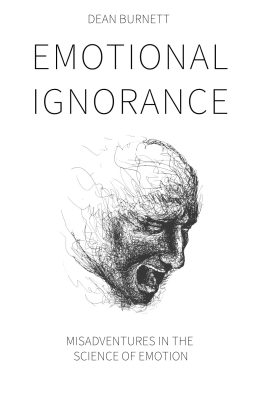
In Emotional Ignorance: Misadventures in the Science of Emotion, Dean Burnett takes readers on a captivating journey through the complex world of human emotions. With his trademark wit and scientific acumen, Burnett explores the often misunderstood realm of feelings, debunking myths and shedding light on the latest research. This book stands out in the popular science genre by combining humor with rigorous scientific inquiry, making it both entertaining and informative. Burnett’s unique approach turns the study of emotions into an adventure, inviting readers to question their assumptions and gain a deeper understanding of what makes us tick emotionally.
Emotional Ignorance is primarily aimed at curious general readers who have an interest in psychology, neuroscience, and human behavior but may not have formal training in these fields. The book’s accessible language and humorous approach make it suitable for anyone from young adults to older readers who enjoy popular science literature. It’s particularly appealing to those who appreciate a blend of entertainment and education in their reading. While the primary audience includes laypeople seeking to understand their own emotions better, the book also serves as a valuable resource for students of psychology, counselors, and educators looking for fresh perspectives on emotional science. Burnett’s writing style ensures that even complex concepts are broken down into digestible bits, making the book accessible to a wide range of readers while still offering depth for those with some background knowledge.
Have you ever wondered why you burst into tears during a sappy commercial or fly into a rage when someone cuts you off in traffic? Dean Burnett’s Emotional Ignorance: Misadventures in the Science of Emotion dares to ask why we’re so clueless about our own feelings. This book is a rollicking adventure through the landscape of human emotions, where science meets silliness and revelations lurk around every corner.
Burnett takes us on a wild ride through the history of emotional research, from ancient philosophers pondering the nature of feelings to modern neuroscientists peering into the brain’s emotional circuitry. He introduces us to a cast of characters that includes overzealous Victorian doctors, hapless lab rats, and humans with bizarre emotional conditions that challenge everything we think we know about how feelings work.
As we journey through the pages, we encounter surprising facts that turn common wisdom on its head. Did you know that smiling can actually make you happier, even if you’re faking it? Or that your gut might have more say in your emotions than your brain? Burnett unpacks these nuggets of knowledge with the precision of a scientist and the timing of a comedian, making complex concepts not just digestible but downright delicious.
The book doesn’t shy away from the messy realities of emotion research. Burnett candidly discusses the challenges scientists face when trying to study something as nebulous as feelings. He highlights the limitations of our current understanding and the often contradictory findings that plague the field. Yet, far from being discouraging, this honesty serves to ignite curiosity and invite readers to join in the scientific process.
Readers of Emotional Ignorance will come away with a treasure trove of insights. They’ll learn about the biological underpinnings of emotions, the social factors that shape our emotional responses, and the ways in which our feelings can trick us. More importantly, they’ll gain tools to better understand their own emotional lives and those of others. Burnett’s book is a crash course in emotional literacy, equipping readers with the knowledge to navigate the turbulent waters of human feelings with greater skill and compassion.
At its heart, Emotional Ignorance argues that our understanding of emotions is far more limited than we’d like to admit. Burnett posits that despite living with our feelings every day, we’re often spectacularly wrong about how they work, why we have them, and what they mean. The book’s central thesis is that by acknowledging our ignorance about emotions, we open the door to genuine understanding and growth.
Imagine emotions as an iceberg. What we typically recognize as our feelings – the joy, anger, or sadness we consciously experience – is merely the tip peeking above the water. Beneath the surface lies a vast, complex system of biological processes, evolutionary adaptations, and social conditioning that shapes our emotional responses in ways we rarely perceive. Burnett’s book is an invitation to dive beneath the surface, exploring the hidden depths of our emotional lives and surfacing with a more nuanced, scientifically-informed perspective on what it means to feel.
Emotional Ignorance makes a significant contribution to the field of popular science by bridging the gap between academic research on emotions and public understanding. By combining rigorous scientific inquiry with accessible language and humor, Burnett has created a work that demystifies complex emotional processes without oversimplifying them.
The book has garnered attention for its fresh approach to a topic that’s often treated with excessive reverence or oversimplified self-help platitudes. Critics have praised Burnett’s ability to tackle serious scientific concepts with a light touch, making the book both informative and entertaining. This balance has helped Emotional Ignorance reach a wider audience than traditional academic texts on emotion, spreading important scientific insights to the general public.
One of the more controversial aspects of the book is Burnett’s critique of popular notions about emotions, particularly those promoted by the self-help industry. He challenges several widely-held beliefs, such as the idea that we have complete control over our emotional responses or that positive thinking alone can overcome negative emotions. While some readers find this perspective refreshing, others accustomed to more optimistic self-help narratives have found it challenging.
The book has been recognized in scientific circles for its comprehensive review of current emotion research. It’s been cited in academic papers and used as a supplementary text in psychology courses, indicating its value as a bridge between popular and academic literature. While it hasn’t won major literary awards, it has received accolades from science communication organizations for its effectiveness in translating complex scientific concepts for a general audience.
Emotional Ignorance has also sparked discussions about the role of emotions in society, particularly in fields like education, business, and mental health. Burnett’s insights into the complexities of emotional processes have led some professionals to reconsider their approaches to emotional intelligence training and therapy. The book’s impact extends beyond individual readers, potentially influencing how institutions and organizations approach emotional well-being.
After thoroughly examining Emotional Ignorance: Misadventures in the Science of Emotion by Dean Burnett, we find it to be a valuable contribution to the popular science literature on emotions. The book’s greatest strength lies in its ability to distill complex neuroscientific and psychological concepts into accessible, engaging content for a general audience. Burnett’s unique blend of scientific rigor and humor creates an enjoyable reading experience that doesn’t sacrifice accuracy for entertainment.
We appreciate the book’s comprehensive coverage of emotion research, from historical perspectives to cutting-edge studies. Burnett’s approach of addressing common misconceptions about emotions is particularly noteworthy, as it challenges readers to reconsider their assumptions and develop a more nuanced understanding of emotional processes. The inclusion of practical implications of emotion science adds value for readers looking to apply this knowledge in their daily lives.
However, we also recognize some limitations of the book. The treatment of cultural variations in emotional experiences could have been more extensive, and the lack of structured practical exercises might leave some readers wanting more concrete guidance on applying the concepts. Additionally, the sheer volume of information presented could potentially overwhelm casual readers or those new to the subject.
We found the book’s balanced perspective on emotional experiences to be refreshing. Unlike many popular psychology books that advocate for constant positivity, Burnett emphasizes the importance of experiencing a full range of emotions, including negative ones. This approach contributes to a more holistic and realistic view of emotional well-being.
In comparing Emotional Ignorance to other significant works in the field, we find that it occupies a unique space. While it may not provide the depth of neuroscientific detail found in Joseph LeDoux’s The Emotional Brain or the radical reconceptualization of emotions presented in Lisa Feldman Barrett’s How Emotions Are Made, Burnett’s book offers a more accessible entry point for general readers interested in understanding the science of emotions. It also provides a more up-to-date and scientifically grounded perspective than some popular works on emotional intelligence.
We believe that Emotional Ignorance has the potential to significantly influence public understanding of emotions and contribute to more nuanced discussions of emotional experiences in various spheres of life, from education to mental health treatment. Its impact may extend to challenging prevailing notions about emotional intelligence in workplace contexts and fostering greater acceptance of diverse emotional experiences in society at large.
Our Recommendation
We wholeheartedly recommend Emotional Ignorance: Misadventures in the Science of Emotion to readers seeking a comprehensive, engaging, and scientifically grounded exploration of emotions. The book is particularly well-suited for curious general readers, students of psychology, and professionals in fields where understanding emotions is crucial, such as education, healthcare, and business.
For those new to the subject, we suggest approaching the book at a measured pace, allowing time to digest the wealth of information presented. Readers might also benefit from supplementing their reading with works that offer more practical exercises or deeper dives into specific aspects of emotion science. Overall, we believe that Emotional Ignorance provides an excellent foundation for understanding the complex world of emotions and will leave readers with a richer, more nuanced appreciation of their own emotional experiences and those of others.
The essence of Emotional Ignorance: Misadventures in the Science of Emotion by Dean Burnett lies in its exploration of the complex and often misunderstood nature of human emotions. At its core, the book challenges our assumptions about how emotions work and why we experience them. Burnett argues that despite living with our feelings every day, we often have a surprisingly limited understanding of their true nature and function.
One key topic the book explores is the biological basis of emotions. Burnett delves into the intricate workings of the brain and nervous system, explaining how various neurotransmitters and hormones contribute to our emotional experiences. He discusses the role of structures like the amygdala and prefrontal cortex in processing and regulating emotions. This exploration helps readers understand that emotions are not just abstract feelings but have concrete physiological underpinnings.
Another crucial aspect of the book is its examination of the evolutionary purpose of emotions. Burnett discusses how emotions evolved as survival mechanisms, helping our ancestors navigate complex social environments and respond quickly to threats. He explains how emotions like fear, anger, and joy served specific adaptive functions throughout human history. This perspective encourages readers to view emotions not as irrational nuisances but as sophisticated tools shaped by millions of years of evolution.
The book also tackles the social and cultural aspects of emotions. Burnett explores how our emotional responses are influenced by the societies we live in and the cultural norms we internalize. He discusses how different cultures have varying emotional vocabularies and display rules, highlighting the complex interplay between biology and culture in shaping our emotional lives. This exploration challenges the idea of universal emotional experiences and encourages readers to consider the diverse ways emotions are expressed and interpreted across the globe.
A significant portion of the book is dedicated to debunking common myths and misconceptions about emotions. Burnett takes aim at popular ideas propagated by self-help books and pop psychology, such as the notion that we have complete control over our emotions or that positive thinking alone can overcome negative feelings. He presents scientific evidence that contradicts these simplistic views, offering a more nuanced understanding of emotional processes. This myth-busting approach empowers readers to question their assumptions and develop a more scientifically grounded perspective on emotions.
Burnett also explores the concept of emotional intelligence and its limitations. He discusses how the popularization of emotional intelligence has led to oversimplified ideas about managing and understanding emotions. The book offers a critical examination of emotional intelligence tests and training programs, highlighting their shortcomings and the complexities involved in truly understanding and navigating emotions. This analysis encourages readers to approach the concept of emotional intelligence with a more discerning eye.
The book delves into the relationship between emotions and decision-making. Burnett explores how emotions influence our choices, sometimes in ways we’re not consciously aware of. He discusses research on phenomena like emotional priming and the impact of mood on judgment. This exploration challenges the traditional view of emotions as obstacles to rational thinking, instead presenting them as integral components of the decision-making process.
Lastly, Emotional Ignorance examines the role of emotions in mental health. Burnett discusses how emotional dysregulation contributes to various mental health disorders and explores current therapeutic approaches that target emotional processes. He presents a balanced view of the complex relationship between emotions and mental well-being, encouraging readers to consider the importance of emotional health alongside physical and cognitive health.
The Crying Judge: Burnett recounts the story of a judge who would burst into tears every time he sentenced someone to prison. This unusual case is used to illustrate how emotions can manifest in unexpected ways and how our conscious experiences of emotions don’t always align with our behaviors or physiological responses.
The Man Who Couldn’t Feel Fear: The book discusses the case of SM, a woman with a rare condition that damaged her amygdala, rendering her incapable of feeling fear. This example is used to demonstrate the crucial role specific brain structures play in generating emotions and how the absence of certain emotions can profoundly impact a person’s life and decision-making.
The Facial Feedback Hypothesis: Burnett describes studies where participants were asked to hold pencils in their mouths in ways that either facilitated or inhibited smiling. Those in the “smile” condition reported more positive emotions, even when unaware they were smiling. This example illustrates the bidirectional relationship between emotional experiences and physical expressions.
The Ultimatum Game: The book explores this economic game where one player proposes how to divide a sum of money, and the other player can either accept or reject the offer. Studies show that players often reject unfair offers, even when it means they get nothing, demonstrating how emotions like anger or a sense of fairness can override purely rational economic decision-making.
The Marshmallow Test: Burnett discusses this famous experiment on delayed gratification, where children were offered a choice between one marshmallow immediately or two marshmallows if they could wait. He uses this to explore the complex interplay between emotions, self-control, and long-term decision-making.
The Polyvagal Theory: The book examines Stephen Porges’ theory about the vagus nerve’s role in emotional regulation and social engagement. Burnett uses this to illustrate how our understanding of emotions is constantly evolving and how new theories can reshape our approach to emotional well-being.
The Kuleshov Effect: Burnett describes this film editing effect where viewers interpret an actor’s neutral expression differently depending on what image is shown immediately after. This example is used to demonstrate how context and cognitive processes influence our perception and interpretation of emotions.
Emotions are not just in your head
One of the key insights from Emotional Ignorance is that emotions are whole-body experiences, not just mental states. Burnett explains how emotions involve complex interactions between the brain, nervous system, and various organs. For instance, when you feel anxious, it’s not just a thought in your mind – your heart rate increases, your palms might sweat, and your digestive system can be affected. To apply this insight, pay attention to your body’s physical reactions when experiencing emotions. Notice how your breathing changes when you’re angry, or how your muscles tense when you’re stressed. By recognizing these physical manifestations, you can become more attuned to your emotional states and potentially intervene earlier in emotional responses. This bodily awareness can be particularly helpful in managing stress and anxiety, as techniques like deep breathing or progressive muscle relaxation directly address the physical components of these emotions.
Cultural context shapes emotional expression
Burnett highlights how cultural norms significantly influence how we express and interpret emotions. What’s considered an appropriate emotional display in one culture might be seen as excessive or insufficient in another. For example, in some cultures, open displays of grief at funerals are expected and encouraged, while in others, stoicism is valued. To apply this insight, practice cultural sensitivity when interacting with people from different backgrounds. Avoid making assumptions about others’ emotional states based solely on their expressions or behaviors. Instead, try to learn about the emotional norms of different cultures. This knowledge can be particularly valuable in multicultural workplaces or when traveling abroad. It can help you navigate social situations more effectively and avoid misunderstandings. Additionally, reflecting on your own cultural biases regarding emotions can lead to greater self-awareness and improved emotional intelligence.
Emotional contagion is a real phenomenon
The book discusses the concept of emotional contagion – the tendency for people to “catch” the emotions of those around them. This phenomenon occurs through mechanisms like mirror neurons and unconscious mimicry of facial expressions and body language. To leverage this insight, be mindful of the emotional atmosphere you create and the company you keep. If you’re constantly surrounded by negative or anxious people, you’re more likely to experience those emotions yourself. Conversely, spending time with positive, calm individuals can help boost your own mood. In leadership roles, recognize that your emotional state can significantly impact your team’s morale and productivity. Practice emotional regulation techniques to maintain a positive demeanor, especially in challenging situations. In personal relationships, be aware of how your emotions might be affecting others, and take responsibility for managing your own emotional states.
The myth of pure rationality in decision-making
Burnett challenges the notion that we can make purely rational decisions devoid of emotional influence. He presents evidence showing that emotions play a crucial role in decision-making processes, even when we believe we’re being entirely logical. To apply this insight, embrace the role of emotions in your decision-making rather than trying to suppress them. When facing important choices, take time to reflect on your emotional responses and consider how they might be influencing your judgment. Use techniques like writing down pros and cons to help balance emotional and rational considerations. In business settings, encourage open discussions about emotional factors that might be influencing strategic decisions. Recognize that gut feelings or intuitions often stem from emotional processing of complex information and can be valuable inputs when combined with logical analysis.
The importance of emotional granularity
Emotional Ignorance introduces the concept of emotional granularity – the ability to distinguish between different emotions with precision. People with high emotional granularity can differentiate between similar emotions (like frustration and anger) and have a more nuanced understanding of their emotional experiences. To develop greater emotional granularity, start by expanding your emotional vocabulary. Learn the subtle distinctions between different emotion words and practice using them in your daily life. Keep an emotion journal where you describe your feelings in detail, going beyond basic labels like “good” or “bad.” When watching movies or reading books, try to identify and name the specific emotions characters are experiencing. Increased emotional granularity can lead to better emotion regulation and more effective communication of your feelings to others.
The role of prediction in emotional experiences
Burnett explores how our brains are constantly making predictions about our environment, including predicting our emotional responses to situations. These predictions can shape our actual experiences of emotions. To apply this insight, become more aware of your expectations in different situations. Before entering a potentially stressful event, like a job interview or a difficult conversation, consciously set positive expectations. Visualize yourself feeling calm and confident. This doesn’t guarantee you’ll feel that way, but it can influence your emotional experience. Additionally, challenge your negative predictions. If you always expect social situations to be anxiety-inducing, try to approach them with an open mind. Over time, this can help reshape your emotional responses to various scenarios.
The benefits of emotional diversity
The book discusses the importance of experiencing a wide range of emotions for psychological well-being. Contrary to the popular belief that we should always strive for happiness, Burnett argues that a healthy emotional life includes both positive and negative emotions. To cultivate emotional diversity, create opportunities to experience different emotions safely. This might involve engaging with various forms of art, music, or literature that evoke different feelings. Practice mindfulness to fully experience your emotions without judgment, allowing yourself to feel sad, angry, or frustrated when appropriate, rather than immediately trying to shift to a positive state. In relationships, create space for partners or friends to express a full range of emotions without trying to “fix” negative feelings. Recognize that all emotions, when experienced in appropriate contexts, can contribute to a rich and fulfilling life.
The connection between memory and emotion
Burnett explores how emotions significantly influence memory formation and recall. Strong emotions can lead to more vivid and lasting memories, while emotional states can affect which memories we’re more likely to recall. To leverage this insight, be mindful of the role emotions play in your learning and memory processes. When studying or trying to remember important information, try to engage positive emotions. This could involve studying in pleasant environments or rewarding yourself for completing tasks. When recalling past events, particularly in therapeutic contexts, pay attention to the emotions associated with the memories. These emotional tags can provide valuable information about the significance of events and help in processing past experiences. In professional settings, consider how you can create positive emotional experiences for others to make your messages or presentations more memorable.
The limitations of emotional intelligence measures
While acknowledging the importance of emotional skills, Burnett critiques the oversimplification and commercialization of emotional intelligence (EI) concepts. He points out that many popular EI tests and training programs may not accurately measure or develop true emotional capabilities. To apply this insight, approach claims about emotional intelligence measures with healthy skepticism. Instead of relying solely on EI scores or brief workshops, focus on developing specific emotional skills through practice and real-world experience. This might involve actively working on empathy by regularly engaging in perspective-taking exercises, or improving your emotion regulation through mindfulness practices. In professional development contexts, prioritize programs that offer concrete skills and ongoing practice over those promising quick EI boosts. Remember that emotional competence is a complex set of skills that develops over time through varied experiences and reflective practice.
Accessible explanation of complex concepts
One of the primary strengths of Emotional Ignorance lies in Dean Burnett’s ability to break down complex neuroscientific and psychological concepts into digestible, engaging explanations. Burnett employs a conversational tone and relatable analogies to make the science of emotions accessible to a general audience. For instance, when explaining the role of neurotransmitters in emotional processing, he compares the brain to a bustling city, with neurotransmitters acting as the messages passed between different neighborhoods. This approach allows readers without a scientific background to grasp intricate biological processes and their impact on our emotional experiences. The book’s accessibility doesn’t come at the cost of accuracy; Burnett maintains scientific rigor while avoiding jargon that might alienate non-specialist readers.
Integration of humor and science
Burnett’s background as a neuroscientist and stand-up comedian uniquely positions him to blend humor with scientific content effectively. Throughout the book, he uses wit and comedic anecdotes to illustrate complex emotional phenomena, making the reading experience both informative and entertaining. This approach serves multiple purposes: it keeps the reader engaged, helps to demystify intimidating scientific concepts, and provides memorable examples that aid in retention of information. For example, when discussing the unreliability of emotional self-reporting, Burnett recounts a humorous personal story of misattributing his feelings of attraction to motion sickness. By weaving humor throughout the book, Burnett creates a learning experience that feels more like an engaging conversation than a dry academic lecture.
Comprehensive coverage of emotion research
Emotional Ignorance stands out for its thorough exploration of the current state of emotion research. Burnett covers a wide range of topics, from the evolutionary origins of emotions to cutting-edge neuroscientific studies. He doesn’t shy away from discussing conflicting theories or areas of uncertainty in the field, providing readers with a nuanced understanding of the complexities involved in studying emotions. The book covers historical perspectives, contemporary research, and potential future directions in emotion science. This comprehensive approach gives readers a well-rounded view of the field, allowing them to appreciate both how far our understanding of emotions has come and how much there is still to learn.
Myth-busting approach
One of the book’s significant strengths is its commitment to challenging common misconceptions about emotions. Burnett systematically addresses and debunks various popular beliefs, such as the idea that we have full conscious control over our emotions or that positive thinking alone can overcome negative feelings. He presents scientific evidence that contradicts these simplistic views, offering readers a more nuanced and accurate understanding of emotional processes. This myth-busting approach is particularly valuable in an era where misinformation about psychology and neuroscience is widespread. By tackling these myths head-on, Burnett empowers readers to think more critically about emotional concepts they encounter in everyday life and popular media.
Practical implications and applications
While Emotional Ignorance is primarily focused on explaining the science of emotions, Burnett doesn’t neglect the practical implications of this knowledge. Throughout the book, he discusses how understanding emotions can impact various aspects of life, from personal relationships to workplace dynamics. For instance, when explaining emotional contagion, he provides insights into how this phenomenon can affect team morale in professional settings. Burnett also offers practical suggestions for applying emotional knowledge, such as techniques for improving emotional granularity or strategies for leveraging the connection between emotions and memory in learning contexts. This focus on real-world applications makes the book not just intellectually stimulating but also practically useful for readers looking to improve their emotional intelligence and overall well-being.
Balanced perspective on emotional experiences
Burnett presents a refreshingly balanced view of emotions throughout the book. Unlike many popular psychology books that advocate for constant positivity, Emotional Ignorance emphasizes the importance of experiencing a full range of emotions, including negative ones. Burnett explains how emotions like sadness, anger, and anxiety can serve important functions and contribute to overall psychological health when experienced appropriately. This balanced perspective helps readers develop a more accepting attitude towards their emotional experiences and challenges the often harmful notion that negative emotions should always be eliminated or suppressed. By promoting emotional diversity, the book contributes to a more holistic and realistic approach to emotional well-being.
Limited discussion of cultural variations
While Emotional Ignorance does touch on the influence of culture on emotional experiences, some readers might find the treatment of this topic insufficient. Given the significant role that cultural factors play in shaping emotional norms, expressions, and interpretations, a more in-depth exploration of cross-cultural emotional differences could have enhanced the book’s global relevance. Burnett could have included more extensive examples of how emotions are conceptualized and expressed in various cultures around the world, providing readers with a broader perspective on the diversity of emotional experiences. This limitation may leave readers from non-Western backgrounds feeling that their emotional realities are underrepresented in the book’s overall narrative.
Lack of structured practical exercises
Although the book offers various insights that can be applied to daily life, it doesn’t provide structured exercises or activities for readers to actively engage with the concepts presented. While Burnett occasionally suggests ways to apply the knowledge, the absence of dedicated sections with step-by-step exercises or reflection prompts may leave some readers uncertain about how to translate the information into practical skills. Including such structured activities could have enhanced the book’s value as a tool for personal development and emotional growth. For instance, guided exercises for improving emotional granularity or practicing emotional regulation techniques could have provided readers with concrete ways to apply the book’s insights in their own lives.
Potential overwhelm for casual readers
While Burnett’s writing style is generally accessible, the sheer volume of information and the complexity of some concepts might be overwhelming for casual readers or those new to the subject of emotion science. The book covers a vast array of topics, from neuroanatomy to evolutionary psychology, which could potentially lead to information overload for some readers. Although Burnett strives to make these concepts understandable, the rapid introduction of new ideas and scientific terms might be challenging for readers to fully absorb and retain. This could potentially limit the book’s effectiveness in communicating its core messages to a broader audience who might benefit from a more gradual introduction to the science of emotions.
Limited exploration of therapeutic applications
Given the book’s focus on the science of emotions, some readers might find the discussion of therapeutic applications somewhat limited. While Burnett does touch on how understanding emotions can contribute to mental health and well-being, he doesn’t delve deeply into specific therapeutic approaches or interventions based on emotion science. For readers struggling with emotional issues or those in helping professions, a more extensive exploration of how the latest research in emotion science is being applied in clinical settings could have added significant value. This limitation may leave some readers wanting more practical guidance on how to address emotional challenges based on the scientific insights presented in the book.
Oversimplification of neurochemical influences
While Emotional Ignorance does an admirable job of explaining the role of neurotransmitters and hormones in emotional experiences, there’s a risk that readers might oversimplify these complex interactions. The book’s accessible explanations could lead some to believe that emotional states can be reduced to simple chemical imbalances, potentially ignoring the multifaceted nature of emotions that involves cognitive, social, and environmental factors. This oversimplification might result in readers seeking purely biological solutions to emotional issues, overlooking the importance of psychological and lifestyle interventions. To address this blind spot, readers might benefit from exploring books that offer a more holistic view of emotional well-being, such as The Body Keeps the Score by Bessel van der Kolk, which examines the interplay between mind, brain, and body in processing emotions and trauma. Additionally, How Emotions Are Made by Lisa Feldman Barrett provides a nuanced exploration of the brain’s role in constructing emotional experiences, challenging simplistic notions of fixed emotional circuits.
Limited discussion of emotional regulation techniques
While Burnett discusses the importance of emotional regulation, the book doesn’t provide an extensive toolkit for developing these skills. This limitation could leave readers aware of the importance of managing their emotions but unsure how to practically achieve this in their daily lives. Without concrete strategies, there’s a risk that readers might resort to ineffective or potentially harmful methods of emotional suppression rather than healthy regulation. To fill this gap, readers could turn to books that focus more specifically on emotional regulation techniques. The Dialectical Behavior Therapy Skills Workbook by Matthew McKay, Jeffrey C. Wood, and Jeffrey Brantley offers practical exercises for managing intense emotions, while Permission to Feel by Marc Brackett provides a comprehensive framework for developing emotional intelligence skills, including regulation strategies. These resources could complement the scientific foundation laid by Emotional Ignorance with more practical, skill-based approaches.
Underemphasis on social and relational aspects of emotions
Although Emotional Ignorance touches on the social nature of emotions, it may not fully explore the complexities of how emotions function in interpersonal contexts. This blind spot could lead readers to focus too heavily on individual emotional experiences without fully appreciating how emotions are shaped by and contribute to social dynamics. There’s a risk that readers might overlook the importance of emotional co-regulation in relationships or the role of social norms in emotional expression. To gain a more comprehensive understanding of the social dimensions of emotions, readers might benefit from exploring Affective Neuroscience by Jaak Panksepp, which delves into the evolutionary and social bases of emotions, or Social Intelligence by Daniel Goleman, which examines how our relationships shape our emotional lives and vice versa. These works could provide valuable complementary perspectives on the interpersonal nature of emotional experiences.
Potential neglect of marginalized emotional experiences
While Emotional Ignorance strives for a broad understanding of emotions, it may not fully address the unique emotional experiences of marginalized groups. This blind spot could lead to an incomplete understanding of how factors such as systemic oppression, discrimination, and cultural trauma impact emotional processing and expression. Readers might inadvertently apply a one-size-fits-all approach to understanding emotions, overlooking the significant variations in emotional experiences across different social and cultural contexts. To address this limitation, readers could explore works that specifically examine emotions through the lens of marginalized experiences. My Grandmother’s Hands by Resmaa Menakem offers insights into racialized trauma and its emotional impact, while The Emotional Politics of Racism by Paula Ioanide examines how emotions shape and are shaped by racial dynamics. These books could provide crucial perspectives on how social and political factors influence emotional experiences in ways that may not be fully captured in Emotional Ignorance.
Underexploration of positive emotions
While Burnett’s book provides a comprehensive overview of emotions, it may disproportionately focus on negative or challenging emotional states. This emphasis, while valuable, could potentially lead readers to underappreciate the complexity and importance of positive emotions in overall well-being. There’s a risk that readers might come away with a skewed perception that emphasizes managing negative emotions at the expense of cultivating and understanding positive emotional experiences. To balance this perspective, readers might benefit from exploring works that focus more explicitly on positive emotions and their role in psychological health. Positivity by Barbara Fredrickson offers an in-depth look at how positive emotions contribute to resilience and well-being, based on her broaden-and-build theory. Similarly, The How of Happiness by Sonja Lyubomirsky provides evidence-based strategies for increasing positive emotions and overall life satisfaction. These books could complement Emotional Ignorance by offering a more comprehensive view of the full spectrum of emotional experiences.
Emotions Revealed: Recognizing Faces and Feelings to Improve Communication and Emotional Life by Paul Ekman
Emotional Ignorance and Ekman’s Emotions Revealed both aim to enhance readers’ understanding of emotions, but they approach the subject from different angles. Ekman’s work focuses heavily on the universal nature of facial expressions and their role in emotional communication. He argues for the existence of basic emotions that are recognizable across cultures through specific facial muscle movements. In contrast, Burnett’s book takes a more holistic approach, exploring the biological, psychological, and social aspects of emotions. While Ekman’s work has been influential in fields like law enforcement and animation, it has faced criticism for potentially oversimplifying the complexity of emotional expressions. Burnett’s approach in Emotional Ignorance aligns more closely with recent research suggesting that emotional expressions are more culturally variable and context-dependent than Ekman’s theory suggests. However, Ekman’s detailed analysis of facial expressions provides a depth in this specific area that Burnett’s broader overview doesn’t match.
How Emotions Are Made: The Secret Life of the Brain by Lisa Feldman Barrett
Barrett’s How Emotions Are Made presents a theory of constructed emotion that challenges traditional views of emotions as universal and innate. This perspective contrasts with some of the more conventional ideas presented in Emotional Ignorance. While Burnett acknowledges the role of context and learning in emotional experiences, Barrett goes further, arguing that emotions are not hardwired but are constructed by our brains based on past experiences and current context. Barrett’s work is more radical in its implications, suggesting that many of our assumptions about emotions need to be reconsidered. Emotional Ignorance, while covering some of the same ground, takes a more moderate stance, integrating both classical and contemporary views on emotions. Burnett’s approach may be more accessible to general readers, while Barrett’s work challenges readers to fundamentally rethink their understanding of emotions.
The Emotional Brain: The Mysterious Underpinnings of Emotional Life by Joseph LeDoux
LeDoux’s The Emotional Brain and Burnett’s Emotional Ignorance both explore the neuroscience of emotions, but with different emphases. LeDoux’s work focuses heavily on the role of the amygdala in fear responses, presenting detailed neurobiological explanations for emotional processes. Burnett’s book, while covering neuroscientific aspects, takes a broader approach, integrating this information with psychological and social perspectives on emotions. LeDoux’s book is more technical and aimed at readers with a stronger scientific background, while Burnett’s writing is more accessible to a general audience. However, LeDoux’s in-depth exploration of fear circuits provides insights that complement Burnett’s wider-ranging discussion of various emotions. Both books contribute to demystifying emotions, but Emotional Ignorance may be more effective in translating complex neuroscientific concepts into practical understanding for everyday life.
Emotional Intelligence: Why It Can Matter More Than IQ by Daniel Goleman
Goleman’s Emotional Intelligence popularized the concept of EI and its importance in personal and professional success. While Burnett’s Emotional Ignorance touches on emotional intelligence, it takes a more critical stance towards some of the claims made in the field. Goleman’s book focuses on the practical applications of emotional skills, offering strategies for improving emotional intelligence. In contrast, Burnett’s work is more concerned with explaining the science behind emotions and challenging common misconceptions. Emotional Ignorance provides a more up-to-date and scientifically grounded perspective on emotions, while Goleman’s book remains influential in business and self-help contexts. Burnett’s critique of oversimplified EI measures indirectly challenges some of Goleman’s more optimistic claims about the malleability and measurement of emotional intelligence.
Develop Emotional Granularity
Begin by expanding your emotional vocabulary. Set aside time each day to reflect on your emotional experiences and try to describe them with greater precision. Instead of simply labeling an emotion as “good” or “bad,” challenge yourself to identify more specific feelings. For example, instead of just feeling “angry,” you might recognize that you’re feeling frustrated, disappointed, or resentful. Keep an emotion journal where you record these more nuanced descriptions of your feelings. As you practice, you’ll likely notice that you become more adept at distinguishing between similar emotions, such as the difference between anxiety and excitement, or between contentment and joy. This increased emotional granularity can lead to better emotional regulation and more effective communication of your feelings to others.
Recognize the Body-Emotion Connection
Pay close attention to the physical sensations that accompany your emotions. Set aside a few minutes each day to perform a brief body scan, noting any areas of tension, changes in breathing, or other physical manifestations of your emotional state. When you experience a strong emotion, take a moment to observe how it affects your body. Does anxiety cause your heart to race? Does anger lead to muscle tension in your jaw or fists? By becoming more aware of these physical cues, you can potentially recognize and address emotional responses earlier. Additionally, you can use this body awareness to influence your emotional state. For example, if you notice tension associated with stress, you can use progressive muscle relaxation techniques to help alleviate both the physical tension and the emotional stress.
Practice Emotional Acceptance
Rather than trying to suppress or eliminate negative emotions, work on accepting the full range of your emotional experiences. Set an intention each morning to approach your emotions with curiosity rather than judgment. When you encounter a difficult emotion, resist the urge to immediately try to change it. Instead, acknowledge the emotion and allow yourself to feel it fully. You might say to yourself, “I’m feeling anxious right now, and that’s okay.” This doesn’t mean wallowing in negative emotions, but rather recognizing them as normal and potentially informative experiences. Over time, this practice can lead to greater emotional resilience and a more balanced emotional life.
Enhance Emotional Prediction Awareness
Start paying attention to your emotional expectations in various situations. Before entering a potentially stressful event, like a job interview or a difficult conversation, take a moment to consciously set positive expectations. Visualize yourself feeling calm and confident. While this doesn’t guarantee you’ll feel that way, it can influence your emotional experience. Additionally, challenge your negative predictions. If you always expect social situations to be anxiety-inducing, try to approach them with an open mind. Keep a log of your emotional predictions and the actual outcomes. Over time, this can help you identify patterns in your emotional expectations and potentially reshape your responses to various scenarios.
Cultivate Emotional Diversity
Make a conscious effort to experience a wide range of emotions. Create a “emotional diversity” challenge for yourself where you engage in activities that evoke different feelings. This might involve watching films from various genres, listening to diverse types of music, or trying new experiences that push you out of your comfort zone. The goal is not to avoid negative emotions, but to ensure you’re experiencing a full spectrum of feelings. In your relationships, create space for others to express a range of emotions without trying to immediately “fix” negative feelings. Recognize that all emotions, when experienced in appropriate contexts, can contribute to a rich and fulfilling life.
Improve Emotional Contagion Awareness
Begin to notice how the emotions of those around you affect your own emotional state. Keep a journal of your interactions and note any shifts in your mood following time spent with different people. Pay particular attention to your emotional state after spending time on social media or consuming news. Once you’ve identified patterns, you can make more informed choices about your social environment. Surround yourself with people who contribute positively to your emotional well-being when possible. In situations where you can’t avoid negative emotional influences, practice emotional regulation techniques to maintain your equilibrium. Additionally, be mindful of how your own emotions might be affecting others, and take responsibility for managing your emotional states in social contexts.
Enhance Decision-Making Through Emotional Awareness
When faced with important decisions, take time to reflect on your emotional responses and consider how they might be influencing your judgment. Create a decision-making template for yourself that includes a section for identifying and examining your emotions related to each option. Use techniques like writing down pros and cons to help balance emotional and rational considerations. For significant decisions, consider discussing your thought process with a trusted friend or mentor who can provide an outside perspective on how emotions might be influencing your choices. Remember that emotions can provide valuable input in decision-making when balanced with logical analysis.
Develop Contextual Emotional Intelligence
Work on recognizing how cultural and social contexts influence emotional expression and interpretation. Start by learning about emotional norms in different cultures. Read books, watch documentaries, or engage with people from diverse backgrounds to expand your understanding of how emotions are expressed and interpreted in various contexts. Practice cultural sensitivity in your interactions, avoiding assumptions about others’ emotional states based solely on their expressions or behaviors. In multicultural settings, be open to discussing and clarifying emotional communications to avoid misunderstandings. This contextual awareness can greatly enhance your ability to navigate diverse social and professional environments.
Leverage Emotion-Memory Connection
Use the connection between emotions and memory to enhance your learning and recall. When studying or trying to remember important information, try to engage positive emotions. Create a pleasant study environment, use rewards to associate positive feelings with learning tasks, or try to find genuine interest and excitement in the material you’re learning. When recalling past events, particularly in therapeutic or self-reflection contexts, pay attention to the emotions associated with the memories. These emotional tags can provide valuable information about the significance of events and help in processing past experiences. In professional settings, consider how you can create positive emotional experiences for others to make your messages or presentations more memorable.
Practice Emotional Regulation Techniques
Develop a toolkit of emotional regulation strategies that you can use in various situations. Start with basic techniques like deep breathing exercises, progressive muscle relaxation, or mindfulness meditation. Practice these regularly, even when you’re not feeling strong emotions, so they become second nature when you need them. For more complex emotional challenges, explore cognitive reframing techniques. When you experience a negative emotion, practice identifying the thoughts that accompany it and challenge any cognitive distortions. Over time, add more sophisticated strategies to your toolkit, such as self-compassion exercises or expressive writing techniques. Remember that different strategies may work better in different situations or for different emotions, so be patient as you discover what works best for you.
Enhance Emotional Intelligence Training
Organizations can leverage the insights from Emotional Ignorance to develop more nuanced and effective emotional intelligence (EI) training programs. Instead of relying on simplistic EI measures, businesses can create workshops that focus on developing specific emotional skills such as emotional granularity, recognition of physical manifestations of emotions, and understanding the role of emotions in decision-making. These programs can help employees better navigate workplace relationships, manage stress, and improve communication.
Implementing such training programs may face challenges such as skepticism from employees who view emotions as irrelevant to the workplace, or resistance from management who prioritize technical skills over emotional competencies. Additionally, measuring the effectiveness of these programs can be difficult, as improvements in emotional skills may not immediately translate to quantifiable business outcomes.
To overcome these challenges, organizations can start by educating leadership on the importance of emotional skills in workplace performance, using case studies and research data to make a compelling case. They can also integrate emotional skills training into existing professional development programs rather than presenting it as a separate initiative. To measure effectiveness, companies can use a combination of self-report measures, peer evaluations, and long-term tracking of key performance indicators related to teamwork, communication, and employee satisfaction.
Develop Emotion-Aware Leadership
Businesses can train leaders to be more aware of the emotional dynamics within their teams and how their own emotions impact their leadership style. This includes understanding emotional contagion in the workplace, recognizing the importance of emotional diversity, and learning how to create psychologically safe environments where a range of emotions can be expressed appropriately.
Challenges in implementing this approach may include leaders’ discomfort with addressing emotions in a professional context, fear of appearing weak or unprofessional, and difficulty in balancing emotional awareness with the need to make tough business decisions. Some leaders may also struggle to recognize their own emotional patterns and how they affect their teams.
To address these issues, organizations can provide one-on-one coaching for leaders to help them develop emotional self-awareness in a safe, confidential setting. They can also create peer support groups where leaders can discuss emotional challenges and share strategies. Additionally, incorporating emotional awareness into leadership performance evaluations can signal its importance and encourage leaders to prioritize this aspect of their development.
Implement Emotion-Conscious Decision-Making Processes
Organizations can redesign their decision-making processes to account for the role of emotions. This could involve incorporating structured emotional check-ins during important meetings, encouraging team members to express and examine their emotional responses to proposals, and training employees to recognize how emotions might be influencing their judgments.
Potential obstacles include time constraints that may make emotional reflection seem impractical, fear that acknowledging emotions will lead to “irrational” decisions, and difficulty in creating a culture where people feel safe expressing their emotions in a professional context. Some employees may also struggle to articulate their emotions or see the relevance of emotional factors in business decisions.
To overcome these challenges, companies can start by piloting emotion-conscious decision-making in smaller teams or for specific types of decisions, allowing them to demonstrate its value before scaling up. They can develop structured frameworks or templates that guide employees through the process of identifying and considering emotional factors alongside other data points. Regular training and reinforcement can help employees become more comfortable with this approach over time. Leaders should also model the behavior by openly discussing their own emotional responses to decisions.
Create Emotionally Intelligent Workspaces
Businesses can apply insights from Emotional Ignorance to design work environments that support emotional well-being and productivity. This could involve creating spaces for relaxation and emotional regulation, using color and lighting to influence mood, and ensuring that the physical layout promotes both collaboration and opportunities for privacy when needed.
Challenges in implementing this strategy may include budget constraints, resistance from traditional-minded executives who view such changes as unnecessary or frivolous, and difficulties in accommodating diverse emotional needs within a single workspace. There may also be concerns about maintaining professionalism or productivity in more relaxed environments.
To address these issues, companies can start with small, cost-effective changes and measure their impact on employee satisfaction and productivity. They can create pilot areas to test different designs before committing to large-scale renovations. Educating decision-makers on the link between environment, emotional well-being, and productivity can help justify the investment. Companies can also involve employees in the design process, allowing them to provide input on what types of spaces would best support their emotional and work needs.
Develop Emotion-Based Customer Experience Strategies
Organizations can use insights about emotions to enhance their customer experience strategies. This could involve training customer service representatives in emotional granularity to better understand and respond to customer emotions, designing products and services with emotional impact in mind, and creating marketing campaigns that resonate with customers on an emotional level.
Implementing such strategies may face challenges such as the difficulty of consistently delivering emotionally intelligent interactions across large customer service teams, the risk of appearing manipulative if emotional tactics are perceived as insincere, and the complexity of addressing diverse emotional needs across different customer segments.
To overcome these obstacles, companies can invest in robust training programs that go beyond scripts to help customer service representatives develop genuine emotional intelligence skills. They can use technology, such as sentiment analysis tools, to support human judgment in understanding customer emotions. Organizations should also focus on authenticity in their emotional approaches, aligning their strategies with their true company values and culture. Regular customer feedback and emotional journey mapping can help refine these strategies over time.
Implement Emotion-Aware Performance Management
Businesses can redesign their performance management systems to account for the emotional aspects of work. This could involve incorporating emotional intelligence competencies into performance evaluations, providing feedback on employees’ emotional impact on their teams, and recognizing emotional labor as a valuable contribution to the organization.
Challenges in this area might include the subjectivity involved in evaluating emotional competencies, potential resistance from employees who feel their privacy is being invaded, and the risk of creating a culture where people feel pressured to perform certain emotions rather than genuinely experiencing them.
To address these issues, organizations can develop clear, behaviorally-based criteria for evaluating emotional competencies, focusing on observable actions rather than trying to assess internal emotional states. They can provide extensive training for managers on how to have constructive conversations about emotional impact and performance. Companies should also emphasize the developmental aspect of emotional feedback, framing it as an opportunity for growth rather than a punitive measure. Creating channels for anonymous feedback can help address privacy concerns while still providing valuable insights.
Foster Emotional Diversity and Inclusion
Organizations can apply the book’s insights on emotional diversity to create more inclusive workplaces. This involves recognizing and valuing different emotional styles and expressions, understanding how cultural backgrounds influence emotional norms, and creating an environment where a range of emotional experiences are accepted and understood.
Potential obstacles include unconscious biases that lead to favoring certain emotional styles over others, difficulties in navigating conflicting emotional norms in multicultural teams, and the challenge of maintaining professional standards while allowing for diverse emotional expressions.
To overcome these challenges, companies can provide training on emotional diversity and cultural emotional norms as part of their broader diversity and inclusion initiatives. They can create guidelines that outline acceptable ranges of emotional expression while still allowing for individual and cultural differences. Establishing employee resource groups focused on emotional well-being and diversity can provide support and education. Leaders should model inclusive behavior by acknowledging and respecting diverse emotional styles in their interactions with team members.
Personalized Emotion Regulation Technology
The insights from Emotional Ignorance align with the growing trend of personalized health technology. As our understanding of emotions becomes more nuanced, we may see the development of advanced wearable devices and apps designed to help individuals track and regulate their emotions in real-time. These technologies could use biometric data to identify emotional states and offer tailored interventions.
For instance, a smartwatch might detect rising stress levels and suggest a quick breathing exercise. Or an app could use voice analysis to detect subtle changes in emotional tone during conversations, providing real-time feedback to improve communication. This trend intersects with advancements in AI and machine learning, potentially leading to highly sophisticated emotional assistant technologies.
However, the widespread use of such technologies also raises important ethical questions about privacy and the potential for emotional manipulation. As these tools evolve, society will need to grapple with establishing appropriate boundaries and regulations.
Emotion-Centric Education Models
The book’s emphasis on emotional literacy could influence future trends in education. We may see a shift towards curricula that place greater emphasis on emotional intelligence and regulation skills alongside traditional academic subjects.
Schools might introduce classes specifically focused on understanding and managing emotions. These could include practical exercises to develop emotional granularity, recognition of physical manifestations of emotions, and strategies for emotional regulation.
Moreover, emotional awareness could be integrated into other subjects. For example, literature classes might focus more on analyzing characters’ emotional journeys, while history lessons could explore the role of emotions in shaping historical events.
This trend could extend to higher education as well, with universities offering degrees in fields like “applied emotional sciences” that combine psychology, neuroscience, and practical applications.
Emotion-Driven Urban Planning
As our understanding of how environments affect our emotions grows, we might see a trend towards emotion-conscious urban planning and architecture. City planners and architects could use insights from emotional science to design spaces that promote emotional well-being.
This could involve creating more green spaces known to reduce stress and improve mood. Or designing buildings with specific color schemes and lighting to influence emotional states positively.
Public transportation systems might be redesigned to reduce commuter stress. And city layouts could be optimized to promote positive social interactions and community bonding.
This trend could lead to the emergence of new professional roles, such as “emotional impact consultants” in urban planning projects. It might also influence real estate markets, with emotional well-being becoming a key factor in property valuation.
Emotion-Based Economic Models
Traditional economic models often assume rational decision-making, but insights from books like Emotional Ignorance highlight the significant role of emotions in our choices. This could lead to a trend of incorporating emotional factors more explicitly into economic theories and models.
We might see the development of “emotional economics” as a distinct field. This could involve creating new metrics to measure emotional well-being alongside traditional economic indicators.
Policymakers might start considering the emotional impact of economic policies more systematically. For instance, beyond just GDP, a country’s success might be measured by its citizens’ emotional health and satisfaction.
This trend could also influence business strategies, with companies focusing more on creating positive emotional experiences for customers rather than just maximizing short-term profits. It might lead to new approaches in areas like pricing strategies, product design, and customer relationship management.
Emotional Ignorance has the potential to significantly influence both public understanding of emotions and future directions in emotion research. By bridging the gap between academic knowledge and popular conceptions of emotions, Burnett’s work could contribute to a more nuanced and scientifically informed discourse on emotional experiences in various spheres of life.
In education, the book’s insights could lead to a reevaluation of how emotions are addressed in schools. Rather than focusing solely on managing disruptive emotions, educators might adopt a more holistic approach that recognizes the value of emotional diversity and the complex interplay between emotions and learning. This shift could result in curriculum changes that incorporate a more sophisticated understanding of emotional processes, potentially improving students’ emotional literacy and overall well-being.
In the workplace, Emotional Ignorance could challenge prevailing notions about emotional intelligence and its role in professional success. As organizations grapple with issues of employee well-being and productivity, Burnett’s critique of oversimplified EI measures might lead to more nuanced approaches to emotional skills training and assessment. This could result in workplace cultures that are more accepting of a range of emotional expressions and better equipped to harness the cognitive and social benefits of diverse emotional experiences.
The book’s exploration of the biological basis of emotions, combined with its emphasis on cultural and contextual factors, could influence approaches to mental health treatment. Therapists and counselors might incorporate a more integrative understanding of emotions into their practice, recognizing both the neurological underpinnings and the social constructions of emotional experiences. This could lead to more personalized and effective interventions for emotional disorders.
In the long term, Emotional Ignorance may contribute to a shift in public discourse about emotions. By debunking common myths and presenting a more complex picture of emotional life, the book could foster greater acceptance of emotional experiences that are often stigmatized or misunderstood. This could have far-reaching implications for how society approaches issues ranging from mental health policy to criminal justice reform.
However, the book’s impact will likely depend on how well its ideas permeate beyond the realm of popular science readership. If its insights are incorporated into professional training programs, public health initiatives, and media representations of emotions, Emotional Ignorance could play a significant role in shaping a more emotionally literate society. Conversely, if its ideas remain confined to a niche audience, its broader impact may be limited.
As research in affective neuroscience and psychology continues to evolve, some of the specific claims in Emotional Ignorance may be refined or challenged. However, the book’s core message about the complexity of emotions and the importance of scientific literacy in understanding them is likely to remain relevant for years to come. Its lasting impact may be in encouraging readers to approach emotions with curiosity, skepticism, and an appreciation for the intricate interplay of biological, psychological, and social factors that shape our emotional lives.
How Emotions Are Made: The Secret Life of the Brain by Lisa Feldman Barrett: This book offers a revolutionary perspective on emotions that challenges traditional views. Barrett argues that emotions are not innate, universal responses, but are constructed by our brains based on past experiences and current context. While Emotional Ignorance provides a broad overview of emotion science, Barrett’s work dives deep into a specific theory that could reshape readers’ understanding of emotional experiences. It complements Burnett’s book by offering a more radical reconceptualization of emotions, encouraging readers to question fundamental assumptions about the nature of feelings.
The Emotional Brain: The Mysterious Underpinnings of Emotional Life by Joseph LeDoux: LeDoux’s work focuses on the neuroscience of emotions, particularly fear responses. It provides a detailed exploration of the brain circuits involved in emotional processing, offering a more in-depth look at the biological underpinnings of emotions than Emotional Ignorance. Readers interested in understanding the neural mechanisms behind emotions will find this book a valuable complement to Burnett’s more accessible overview. LeDoux’s research on the amygdala and fear conditioning has been highly influential in the field, making this book essential reading for those wanting to delve deeper into the neuroscience of emotions.
Emotional Intelligence: Why It Can Matter More Than IQ by Daniel Goleman: While Emotional Ignorance takes a critical stance towards some claims in the emotional intelligence field, Goleman’s book remains a seminal work on the subject. It popularized the concept of emotional intelligence and its importance in personal and professional success. Reading this alongside Burnett’s book allows readers to understand the evolution of thinking about emotional skills and critically evaluate the claims made in both works. Goleman’s focus on practical applications of emotional intelligence complements Burnett’s more theoretical approach, offering readers a balanced perspective on the topic.
The Expression of the Emotions in Man and Animals by Charles Darwin: This classic work provides historical context for modern emotion research. Darwin’s observations on emotional expressions across species laid the groundwork for many current theories about the evolutionary basis of emotions. While some of Darwin’s specific ideas have been superseded by modern research, his approach to studying emotions scientifically remains influential. Reading this in conjunction with Emotional Ignorance allows readers to appreciate how our understanding of emotions has evolved over time and see the roots of contemporary emotion science.
The Happiness Hypothesis: Finding Modern Truth in Ancient Wisdom by Jonathan Haidt: Haidt’s book explores how ancient philosophical and religious ideas about happiness and virtue align with modern psychological research. It offers a broader perspective on emotions, examining how they fit into overall well-being and life satisfaction. While Emotional Ignorance focuses primarily on the science of emotions, Haidt’s work bridges the gap between scientific findings and philosophical insights. This book complements Burnett’s by placing emotions in a larger context of human flourishing and meaning-making.
Affective Neuroscience: The Foundations of Human and Animal Emotions by Jaak Panksepp: Panksepp’s work provides a comprehensive exploration of the neural mechanisms of emotions across species. It offers a deeper dive into the evolutionary and neurobiological bases of emotions than Emotional Ignorance, making it an excellent choice for readers who want to explore these aspects further. Panksepp’s research on core emotional systems in the brain has been influential in understanding the shared emotional heritage between humans and other animals. This book complements Burnett’s by offering a more detailed look at the biological underpinnings of emotions from an evolutionary perspective.
The Neuroscience of Emotion: A New Synthesis by Ralph Adolphs and David J. Anderson: This book offers a cutting-edge overview of how neuroscience is reshaping our understanding of emotions. It provides a more technical and in-depth exploration of the neural circuits and mechanisms underlying emotional experiences than Emotional Ignorance. Adolphs and Anderson’s work is particularly valuable for readers who want to understand the latest research methodologies and findings in affective neuroscience. It complements Burnett’s book by offering a more specialized and detailed look at the brain science of emotions, suitable for those with a stronger scientific background or interest.
The Emotional Intelligence Consortium: This website offers a wealth of resources on emotional intelligence, including research papers, assessment tools, and training materials. It’s an excellent platform for those looking to deepen their understanding of emotions in professional contexts. https://www.eiconsortium.org/
The Association for Psychological Science: This website provides access to cutting-edge research in psychology, including numerous studies on emotions. Their journal “Psychological Science” often features groundbreaking work in emotion science. https://www.psychologicalscience.org/
The Greater Good Science Center: Based at UC Berkeley, this platform offers articles, videos, and practical exercises based on scientific research into well-being, including emotional health. Their resources are particularly useful for applying emotional science insights to daily life. https://greatergood.berkeley.edu/
Conferences
International Society for Research on Emotion (ISRE) Conference: This biennial conference brings together leading researchers in emotion science from around the world. It’s an excellent opportunity to learn about the latest developments in the field and network with experts.
Society for Affective Science (SAS) Annual Conference: This yearly conference focuses on cutting-edge research in affective science, covering topics like emotion regulation, emotional development, and the neuroscience of affect.
EMOTIONS Conference: This annual conference, organized by the Center for the Study of Emotion and Attention at the University of Florida, covers a wide range of topics related to emotion, attention, and psychophysiology.
Professional Organizations
International Society for Research on Emotion (ISRE): This organization promotes multidisciplinary research on emotions. Membership provides access to resources, networking opportunities, and the latest research in the field. https://isre.org/
Society for Affective Science: This organization is dedicated to advancing the scientific study of affect, including emotion, mood, and related phenomena. They offer resources, job postings, and networking opportunities for researchers and practitioners in affective science. https://society-for-affective-science.org/
American Psychological Association (APA) Division 3 – Society for Experimental Psychology and Cognitive Science: While not exclusively focused on emotions, this division of the APA often deals with emotion-related research and provides valuable resources for those interested in the cognitive aspects of emotions. https://www.apa.org/about/division/div3
Podcasts
The Science of Happiness: Produced by the Greater Good Science Center at UC Berkeley, this podcast explores scientific research on happiness and well-being, often touching on emotional topics. It offers practical strategies for applying insights from emotion science to everyday life.
Hidden Brain: While not exclusively about emotions, this NPR podcast frequently covers topics related to emotion science, offering engaging explorations of how our emotions shape our decisions and behaviors.
Emotion Lab: This podcast, hosted by Dr. April Seifert, features conversations with experts in emotion science and related fields, offering in-depth discussions on various aspects of emotional experiences and research.
Courses
Science of Happiness: This free online course offered by UC Berkeley through edX provides a comprehensive introduction to the science of well-being, including significant coverage of emotions and their role in happiness. https://www.edx.org/course/the-science-of-happiness-3
Emotions and Emotional Intelligence in the Workplace: This Coursera course, offered by the University of California, Davis, focuses on applying emotional intelligence concepts in professional settings. It’s particularly relevant for those interested in the practical applications of emotion science. https://www.coursera.org/learn/emotional-intelligence-in-leadership
The Science of Well-Being: Taught by Professor Laurie Santos at Yale, this popular course on Coursera covers various aspects of psychological well-being, including a significant focus on emotions and their impact on happiness. https://www.coursera.org/learn/the-science-of-well-being
Documentaries and Films
Inside Out: While not a documentary, this Pixar animated film offers a creative and surprisingly accurate portrayal of emotional processes. It’s an excellent introduction to emotion concepts for viewers of all ages and can spark interesting discussions about the nature of emotions.
The Mind, Explained: This Netflix documentary series includes an episode specifically focused on anxiety, providing insights into the neuroscience and psychology of this common emotional experience. It offers a accessible look at how emotions manifest in the brain and body.
Free the Mind: This documentary explores how mindfulness and meditation can impact our emotional experiences and overall well-being. It provides a fascinating look at the intersection of contemplative practices and neuroscience, offering insights into potential strategies for emotional regulation.
The Social Dilemma: While primarily focused on social media, this documentary touches on how technology impacts our emotions and social connections. It offers a thought-provoking exploration of the emotional consequences of our increasingly digital lives.

Discover the key takeaways from top non-fiction books in minutes. Get the wisdom you need to succeed fast. Here, learning is quick, engaging, and always at your fingertips.
© 2025 All Rights Reserved.