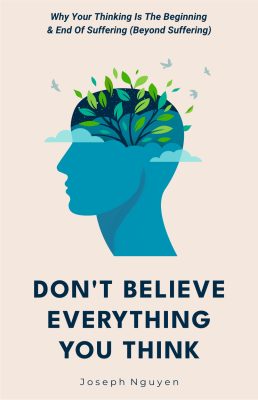
This thought-provoking book challenges readers to question the very foundation of their beliefs and thought patterns. It explores how our thinking can be the root cause of our suffering and, paradoxically, the key to liberation from that same suffering. The author presents a fresh perspective on mindfulness and self-awareness, offering practical strategies to break free from negative thought cycles. By examining the nature of thought itself, the book provides a unique approach to personal growth and emotional well-being that sets it apart from typical self-help literature.
The primary audience for this book includes individuals seeking personal growth, emotional healing, and a deeper understanding of their own minds. It’s particularly well-suited for those who have struggled with anxiety, depression, or persistent negative thinking patterns. The book’s accessible language and practical exercises make it appropriate for readers new to mindfulness concepts, while its depth of insight offers value to experienced practitioners as well. A secondary audience might include mental health professionals, life coaches, and spiritual seekers looking for fresh perspectives on mind-body-spirit connections. The author’s clear, conversational style ensures that complex ideas are presented in a way that’s engaging and comprehensible to a broad readership.
Imagine your mind as a bustling city, teeming with thoughts that dart through the streets like frantic commuters. Some thoughts are helpful citizens, while others are troublemakers causing chaos. In Don’t Believe Everything You Think: Why Your Thinking Is The Beginning & End of Suffering, Joseph Nguyen hands us the keys to this mental metropolis, showing us how to navigate its complex landscape and restore order to our inner world.
Nguyen’s book is a deep dive into the nature of human thought and its profound impact on our well-being. He argues that our suffering stems not from external circumstances, but from our interpretations and beliefs about those circumstances. Through a blend of Eastern philosophy, modern psychology, and practical exercises, Nguyen guides readers on a journey of self-discovery and mental liberation.
The author challenges us to question our most deeply held beliefs and thought patterns. He demonstrates how our minds often create false narratives that we accept as truth, leading to unnecessary anxiety, depression, and inner turmoil. By learning to observe our thoughts without automatically believing or acting on them, we can break free from destructive mental habits and cultivate a more peaceful, balanced state of being.
Readers will learn powerful techniques for mindfulness and self-awareness that can be applied in everyday life. Nguyen introduces concepts such as “thought watching,” where one observes thoughts without judgment, and “belief questioning,” a process of critically examining our core beliefs. These practices help readers develop a healthier relationship with their thoughts, reducing emotional reactivity and increasing mental clarity.
Throughout the book, Nguyen emphasizes the transformative power of present-moment awareness. He teaches readers how to anchor themselves in the now, rather than getting lost in regrets about the past or anxieties about the future. This shift in perspective, he argues, is the key to unlocking inner peace and living a more fulfilling life, free from the constraints of our own thinking.
The core message of Don’t Believe Everything You Think is that our thoughts are not facts, and our suffering is largely self-created through our unexamined beliefs and mental habits. Nguyen posits that by developing a more conscious relationship with our thoughts, we can dramatically reduce our suffering and live more authentic, fulfilling lives.
The author emphasizes that this process isn’t about forcibly controlling or suppressing our thoughts, but rather about cultivating awareness and discernment. By learning to observe our thoughts without immediately identifying with them, we create space for choice in how we respond to our inner experiences. This shift in perspective allows us to break free from automatic reactions and habitual patterns of thinking that often lead to suffering.
Don’t Believe Everything You Think makes a significant contribution to the fields of personal development and mindfulness by bridging Eastern philosophical concepts with Western psychological approaches. Nguyen’s work stands out for its practical, accessible approach to complex ideas about the nature of mind and consciousness.
The book has gained recognition for its fresh take on mindfulness practices, offering a more active and engaged approach compared to traditional meditation techniques. Nguyen’s methods have been praised for their effectiveness in helping individuals deal with anxiety, depression, and other mental health challenges.
While some critics argue that the book oversimplifies complex psychological processes, many readers and professionals in the field have found Nguyen’s approach to be a valuable complement to traditional therapies. The book has sparked discussions in psychological circles about the role of thought in emotional well-being and the potential for mindfulness-based interventions in mental health treatment.
Don’t Believe Everything You Think has been particularly impactful in corporate wellness programs, where its techniques for stress reduction and improved decision-making have been widely adopted. The book’s emphasis on questioning ingrained thought patterns aligns well with efforts to promote innovation and adaptive thinking in rapidly changing business environments.
Nguyen’s work has also attracted attention in educational settings, with some schools incorporating his ideas into social-emotional learning curricula. Educators have reported improvements in students’ emotional regulation and conflict resolution skills after implementing concepts from the book.
In our assessment, Don’t Believe Everything You Think by Joseph Nguyen offers a valuable and accessible approach to managing thoughts and improving mental well-being. We find that the book’s greatest strength lies in its ability to present complex psychological concepts in a digestible format, making it suitable for a wide range of readers. The practical exercises and techniques provided throughout the book offer immediate tools for readers to apply in their daily lives, which we believe significantly enhances its value as a self-help resource.
We appreciate Nguyen’s integration of Eastern philosophical traditions with Western psychological approaches, as this provides a well-rounded perspective on mental health and personal growth. The book’s strong emphasis on self-compassion is particularly noteworthy, addressing a crucial aspect of emotional well-being that is often overlooked in similar works.
However, we also recognize certain limitations in the book. The lack of in-depth scientific backing for some claims may leave more analytically-minded readers wanting. Additionally, the book’s focus on individual thought management, while valuable, doesn’t fully address the impact of external factors on mental health. We believe that readers should be aware that the techniques presented, while helpful for many, may not be sufficient for addressing severe mental health issues.
We find the book’s potential oversimplification of complex issues to be a double-edged sword. While it makes the content more approachable, it may not provide the depth that some readers seek. The limited cultural perspective is another aspect that we feel could have been expanded upon to make the book more inclusive and globally applicable.
Despite these limitations, we believe that Don’t Believe Everything You Think offers significant value to its readers. The book’s practical approach to mindfulness and thought management has the potential to positively impact individuals’ daily lives and overall well-being. Its accessible writing style and relatable examples make it an engaging read, which we think will help readers to more easily grasp and apply the concepts presented.
Our Recommendation
We recommend Don’t Believe Everything You Think to individuals seeking practical tools for managing their thoughts and improving their mental well-being. It’s particularly well-suited for those new to mindfulness and cognitive behavioral techniques, as well as for those looking to expand their existing mental health toolkit. The book can serve as an excellent starting point for developing greater self-awareness and emotional resilience.
However, we suggest that readers approach the book as part of a broader exploration of mental health and personal growth. To gain a more comprehensive understanding, we recommend supplementing this book with works that provide more scientific depth, address severe mental health issues, or explore the role of external factors in well-being. For those dealing with significant mental health challenges, we strongly advise seeking professional help alongside reading this or any self-help book. Overall, we believe that for many readers, Don’t Believe Everything You Think will prove to be a valuable resource in their journey towards improved mental health and self-understanding.
The essence of Don’t Believe Everything You Think revolves around several key topics that form the foundation of Joseph Nguyen’s approach to mindfulness and mental well-being. One crucial concept is the distinction between thoughts and reality. Nguyen emphasizes that our thoughts are not direct representations of reality but rather interpretations filtered through our past experiences, beliefs, and biases. By recognizing this separation, readers can begin to loosen the grip their thoughts have on their emotions and behaviors. This awareness creates a space for choice, allowing individuals to respond to situations more consciously rather than reacting automatically based on habitual thought patterns.
Another central topic is the practice of thought observation. Nguyen introduces techniques for observing thoughts without becoming entangled in them. This skill involves developing a kind of mental distance, where one can watch thoughts arise and pass away without immediately identifying with or acting upon them. By cultivating this observer’s perspective, individuals can gain insights into their thought patterns and emotional triggers, leading to greater self-awareness and emotional regulation.
The book also explores the concept of cognitive defusion, a psychological technique aimed at reducing the impact of negative thoughts. Nguyen teaches readers how to “unstick” from unhelpful thoughts by changing their relationship to them. Instead of trying to eliminate or fight against negative thoughts, cognitive defusion involves seeing thoughts as merely mental events rather than absolute truths. This shift in perspective can significantly reduce the emotional charge of difficult thoughts and make them less influential in driving behavior.
Nguyen places significant emphasis on the role of present-moment awareness in reducing suffering. He argues that much of our mental distress comes from dwelling on the past or worrying about the future, rather than experiencing the present moment fully. The book offers various techniques for anchoring oneself in the present, including mindfulness exercises and sensory awareness practices. By cultivating present-moment awareness, readers can break free from rumination and anxiety, leading to a more peaceful and contented state of mind.
The concept of self-compassion is another key topic explored in the book. Nguyen highlights how self-critical thoughts often contribute to suffering and presents self-compassion as an antidote. He teaches readers how to cultivate a kind and understanding attitude towards themselves, especially in moments of difficulty or failure. This approach involves treating oneself with the same kindness and support one would offer a good friend, leading to improved emotional resilience and self-esteem.
Lastly, the book delves into the idea of cognitive flexibility. Nguyen emphasizes the importance of being able to shift perspectives and adapt one’s thinking in response to changing circumstances. He provides strategies for challenging rigid thought patterns and developing a more flexible, open-minded approach to life’s challenges. This cognitive flexibility not only reduces suffering but also enhances problem-solving abilities and overall life satisfaction.
The Traffic Jam Scenario: To illustrate the concept of thoughts versus reality, Nguyen presents the example of being stuck in a traffic jam. He describes how two people in the same situation might have vastly different experiences based on their thoughts. One person might become increasingly frustrated, thinking about being late and imagining negative consequences. Another person might view the delay as an opportunity to listen to a podcast or enjoy some quiet time. The external reality is the same for both, but their thoughts create entirely different emotional experiences. This example vividly demonstrates how our interpretations, rather than events themselves, often determine our level of suffering.
The Leaves on a Stream Exercise: To teach thought observation, Nguyen introduces the “Leaves on a Stream” visualization exercise. In this practice, readers are guided to imagine sitting by a stream, watching leaves float by. Each leaf represents a thought. As thoughts arise, the reader is instructed to place each thought on a leaf and watch it float away. This vivid metaphor helps readers understand how to observe thoughts without becoming caught up in them. Nguyen describes how regular practice of this exercise can lead to a more detached and peaceful relationship with one’s thoughts.
The Name-Calling Experiment: To demonstrate cognitive defusion, Nguyen presents an exercise where readers are asked to call themselves a negative name repeatedly for a minute. Then, they’re instructed to prefix the thought with “I’m having the thought that…” and repeat the exercise. Finally, they say, “I notice I’m having the thought that…” Nguyen explains how this exercise shows the power of creating distance from thoughts. Many readers report that the emotional impact of the negative self-talk diminishes significantly with each step, illustrating how changing our relationship to thoughts can reduce their influence.
The Raisin Meditation: To explain present-moment awareness, Nguyen describes the classic mindfulness exercise of eating a raisin with full attention. He guides readers through the process of examining the raisin’s appearance, texture, smell, and taste as if experiencing it for the first time. This simple yet powerful exercise demonstrates how much richness we often miss in everyday experiences when we’re not fully present. Nguyen uses this example to show how bringing this level of awareness to daily life can enhance enjoyment and reduce stress.
The Self-Compassion Letter: To illustrate the practice of self-compassion, Nguyen presents an exercise where readers write a letter to themselves from the perspective of a kind, wise friend. He provides an example of someone who failed an important exam. In the letter, the “friend” acknowledges the person’s disappointment, reminds them of their strengths and past successes, and offers words of encouragement for moving forward. This exercise shows how adopting a compassionate perspective can soothe emotional pain and provide a more balanced view of challenging situations.
The Multiple Perspectives Challenge: To demonstrate cognitive flexibility, Nguyen presents a challenge where readers are asked to generate multiple interpretations for a given situation. He provides an example of being ignored by a friend on the street. Readers are encouraged to come up with several possible explanations, ranging from “They’re angry with me” to “They were deep in thought and didn’t notice me” to “They have vision problems and didn’t see me.” This exercise illustrates how broadening our range of possible interpretations can reduce jumping to negative conclusions and promote a more flexible, less reactive mindset.
Thoughts are not facts
One of the most fundamental insights of the book is that our thoughts are not necessarily accurate representations of reality. Nguyen emphasizes that thoughts are mental events, often influenced by our past experiences, beliefs, and current emotional state. To apply this insight, start by noting your thoughts throughout the day, particularly those that cause distress. When you notice a troubling thought, pause and ask yourself, “Is this thought a fact, or just an interpretation?” For example, if you think, “I’m terrible at public speaking,” challenge this by looking for evidence both for and against this belief. You might recall times when you spoke effectively or received positive feedback. By questioning our thoughts, we can loosen their grip on our emotions and behavior, creating space for more balanced perspectives.
The power of the observing self
Nguyen introduces the concept of the “observing self” – the part of our consciousness that can step back and watch our thoughts and emotions without getting caught up in them. To cultivate this skill, practice daily meditation focusing on your breath. When thoughts arise, acknowledge them without judgment and gently return your attention to your breathing. Start with just five minutes a day and gradually increase the duration. As you become more adept at observing your thoughts during meditation, you’ll find it easier to do so in everyday life. This ability can be particularly helpful in emotionally charged situations. For instance, during a heated argument, you might notice thoughts of anger or defensiveness arising. Instead of immediately reacting, take a moment to observe these thoughts, creating a pause that allows for a more measured response.
Cognitive defusion techniques
The book offers several cognitive defusion techniques to help readers create distance from troubling thoughts. One effective method is the “Thank you, mind” technique. When you notice a negative thought, such as “I’ll never be successful,” respond by saying (either aloud or silently), “Thank you, mind, for that thought.” This simple act acknowledges the thought without buying into it, reducing its emotional impact. Another technique is to sing your negative thoughts to a familiar tune, like “Happy Birthday.” For example, if you’re worried about a presentation, try singing “I’m going to mess up this presentation” to the tune of “Happy Birthday.” This often highlights the absurdity of the thought and diminishes its power. Practice these techniques regularly, especially with recurring negative thoughts, to build the habit of creating distance from unhelpful mental patterns.
Present-moment awareness as an antidote to suffering
Nguyen emphasizes that much of our suffering comes from dwelling on the past or worrying about the future, rather than experiencing the present moment. To cultivate present-moment awareness, try the “5-4-3-2-1” grounding exercise. Wherever you are, identify five things you can see, four things you can touch, three things you can hear, two things you can smell, and one thing you can taste. This exercise quickly brings your attention to your immediate sensory experience, anchoring you in the present. Another practice is to set reminders on your phone to pause and take three conscious breaths several times throughout the day. During these brief moments, fully focus on the sensation of breathing, letting go of any thoughts about past or future. Consistently practicing these techniques can help reduce anxiety and increase overall well-being.
Self-compassion as a path to emotional resilience
The book highlights the importance of self-compassion in building emotional resilience. To cultivate self-compassion, start by noticing your self-talk, particularly in challenging situations. When you catch yourself being self-critical, pause and ask, “What would I say to a friend in this situation?” Then, offer yourself the same kindness. For example, if you make a mistake at work, instead of berating yourself, you might say, “This is a difficult moment. Mistakes happen to everyone, and they don’t define your worth or abilities. What can you learn from this?” Additionally, develop a self-compassion phrase to use in times of stress, such as “May I be kind to myself in this moment.” Repeat this phrase whenever you notice self-criticism or emotional pain. Regular practice of self-compassion can lead to greater emotional stability and a more positive self-image.
The trap of thought suppression
Nguyen warns against the common pitfall of trying to suppress unwanted thoughts, explaining that this often leads to those thoughts becoming more persistent. Instead of fighting against unwanted thoughts, practice acceptance. When an unwanted thought arises, acknowledge its presence without trying to push it away. You might say to yourself, “I’m having the thought that [content of the thought]. That’s okay, thoughts come and go.” Then, gently redirect your attention to your current activity or surroundings. If you’re struggling with a particularly persistent thought, try scheduling “worry time.” Set aside 15 minutes each day to fully engage with your worries. Outside of this time, when worries arise, remind yourself that you have a designated time to address them later. This technique can help reduce the overall time spent worrying and increase your ability to focus on the present moment.
Cognitive flexibility for problem-solving
The book emphasizes the importance of cognitive flexibility in navigating life’s challenges. To enhance your cognitive flexibility, practice generating multiple solutions to problems. When faced with a dilemma, challenge yourself to come up with at least five possible solutions, no matter how unconventional they might seem. This exercise expands your thinking beyond habitual patterns. Another technique is to regularly expose yourself to new experiences and ideas. Read books outside your usual genres, try new hobbies, or engage in conversations with people who have different viewpoints. These practices can broaden your perspective and increase your ability to approach problems from various angles. In your daily life, when you find yourself stuck in a particular way of thinking, pause and ask, “What’s another way to look at this situation?” This simple question can open up new possibilities and reduce rigid thinking patterns.
The role of values in guiding behavior
Nguyen discusses the importance of identifying and living according to one’s values as a way to create a sense of meaning and direction. To apply this insight, take time to clarify your personal values. Write down what truly matters to you in areas such as relationships, career, personal growth, and community. Then, assess how your daily actions align with these values. For example, if you value creativity but rarely engage in creative activities, consider ways to incorporate more creativity into your routine, such as setting aside time for a hobby or taking on more innovative projects at work. Regularly check in with yourself by asking, “Is this action moving me towards or away from my values?” This practice can help guide decision-making and increase overall life satisfaction. When faced with difficult choices, referring back to your values can provide clarity and a sense of purpose.
The impact of mindset on perception
The book explores how our mindset shapes our perception of events and experiences. To leverage this insight, practice adopting a growth mindset in various areas of your life. When facing challenges, instead of thinking, “I can’t do this,” reframe it as, “I can’t do this yet.” Keep a “learning journal” where you regularly reflect on what you’ve learned from both successes and setbacks. This practice reinforces the idea that abilities can be developed through effort and learning. Additionally, try the “best possible self” exercise: spend 15 minutes writing about your life in the future, imagining that everything has gone as well as it possibly could. This exercise can help shift your mindset towards optimism and possibility, influencing how you perceive and approach current situations. By consciously cultivating a more positive and growth-oriented mindset, you can significantly impact your experiences and outcomes in various areas of life.
Accessible approach to complex concepts
One of the most notable strengths of Don’t Believe Everything You Think is its ability to present complex psychological and philosophical concepts in an accessible manner. Joseph Nguyen excels at breaking down intricate ideas about the nature of thought and consciousness into digestible, relatable explanations. For instance, his metaphor of the mind as a bustling city with thoughts as its inhabitants provides a vivid and easily graspable image that helps readers understand the often abstract concept of mental processes. This approachability makes the book valuable for a wide range of readers, from those new to mindfulness and self-help literature to more experienced practitioners looking for fresh perspectives.
Practical application of mindfulness techniques
Nguyen’s book stands out for its strong emphasis on practical application. Rather than merely discussing theoretical concepts, the author provides numerous exercises and techniques that readers can immediately implement in their daily lives. The “Leaves on a Stream” visualization for thought observation, the cognitive defusion exercises, and the self-compassion practices are all concrete tools that readers can use to start changing their relationship with their thoughts. This focus on practicality increases the book’s value as a self-help resource, potentially leading to tangible improvements in readers’ mental well-being.
Integration of Eastern and Western approaches
Don’t Believe Everything You Think successfully bridges Eastern philosophical traditions with Western psychological approaches. Nguyen draws from mindfulness practices rooted in Buddhist philosophy while incorporating elements of cognitive-behavioral therapy and modern neuroscience. This integration provides a well-rounded approach to mental health and personal growth. For example, the book’s discussion of cognitive defusion techniques combines the Buddhist concept of non-attachment to thoughts with cognitive-behavioral strategies for managing negative thinking patterns. This synthesis offers readers a comprehensive toolkit for addressing mental and emotional challenges.
Emphasis on self-compassion
The book’s strong focus on self-compassion is another significant strength. Nguyen recognizes that many individuals struggle with self-criticism and negative self-talk, which can exacerbate mental health issues. By dedicating substantial attention to cultivating self-compassion, the book provides a crucial counterbalance to these harmful tendencies. The self-compassion letter exercise, for instance, offers a concrete method for readers to practice kindness towards themselves. This emphasis on self-compassion not only aids in reducing suffering but also supports overall emotional resilience and well-being.
Flexible application to various life domains
Nguyen’s approach in Don’t Believe Everything You Think is remarkably versatile, applicable to a wide range of life situations. The book’s insights and techniques can be applied to personal relationships, professional challenges, mental health struggles, and general life satisfaction. For example, the cognitive flexibility exercises can be used to approach work-related problems from new angles, while the present-moment awareness practices can enhance personal relationships by promoting more attentive listening and engagement. This flexibility enhances the book’s value, making it a resource that readers can return to for various life challenges.
Engaging writing style
The author’s writing style contributes significantly to the book’s effectiveness. Nguyen strikes a balance between being informative and engaging, using anecdotes, metaphors, and relatable examples to illustrate his points. This approach keeps readers interested and helps them connect the book’s concepts to their own lives. For instance, the traffic jam scenario vividly demonstrates how different thought patterns can lead to vastly different emotional experiences in the same situation. This engaging style not only makes the book more enjoyable to read but also aids in the retention and application of its key ideas.
Limited discussion of severe mental health issues
While Don’t Believe Everything You Think offers valuable insights for managing everyday mental and emotional challenges, it falls short in addressing more severe mental health issues. The book’s techniques, while helpful for many, may not be sufficient for individuals dealing with clinical depression, anxiety disorders, or other serious mental health conditions. Nguyen could have provided more context on when professional help is necessary and how the book’s techniques might complement, rather than replace, clinical treatment. This limitation could potentially lead some readers to underestimate the severity of their mental health challenges or delay seeking professional help when needed.
Lack of in-depth scientific backing
Although Nguyen draws from various psychological and philosophical traditions, the book could benefit from more robust scientific evidence to support its claims. While many of the techniques presented are based on established practices, the author could have included more references to scientific studies demonstrating the effectiveness of these approaches. For instance, when discussing the benefits of mindfulness practices, including data from neuroimaging studies or clinical trials would have strengthened the book’s arguments. This additional scientific backing would have provided readers with a more comprehensive understanding of the mechanisms behind the suggested techniques and potentially increased their motivation to implement them.
Potential oversimplification of complex issues
In its effort to make complex concepts accessible, the book occasionally risks oversimplifying some issues. For example, while the idea that “thoughts are not facts” is a powerful one, the book could have delved deeper into the nuances of this concept. There are instances where our thoughts do accurately reflect reality, and learning to distinguish between helpful and unhelpful thoughts requires more nuanced guidance than the book sometimes provides. This simplification, while making the book more approachable, might leave some readers wanting a more in-depth exploration of certain topics.
Limited cultural perspective
While Nguyen draws from both Eastern and Western traditions, the book primarily presents a perspective rooted in Western individualistic culture. There’s limited discussion of how different cultural backgrounds might influence thought patterns, emotional experiences, or the applicability of certain techniques. For instance, the emphasis on self-compassion might be interpreted differently in cultures that place a higher value on group harmony or self-criticism as a means of self-improvement. Expanding on these cultural considerations would have made the book more inclusive and applicable to a broader global audience.
The role of external factors in mental well-being
One blind spot in Don’t Believe Everything You Think is its limited discussion of how external factors contribute to mental well-being. While the book rightly emphasizes the power of our thoughts in shaping our experiences, it may lead readers to underestimate the impact of environmental, social, and systemic factors on mental health. This oversight could potentially create a misconception that all suffering can be eliminated through thought management alone, neglecting the very real effects of factors such as poverty, discrimination, or chronic illness. Readers might misapply the book’s teachings by attempting to “think their way out” of situations that require practical action or systemic change. To address this blind spot, readers could complement Nguyen’s work with books that explore the interplay between individual psychology and broader societal factors. For instance, The Body Keeps the Score by Bessel van der Kolk examines how trauma, including societal trauma, affects the mind and body, offering a more holistic view of mental health. Similarly, Lost Connections by Johann Hari explores how various disconnections in modern society contribute to depression and anxiety, providing a broader context for understanding mental health challenges.
The potential downsides of mindfulness practices
While Don’t Believe Everything You Think presents mindfulness techniques as powerful tools for mental well-being, it overlooks potential negative effects that some individuals might experience when practicing mindfulness. For some people, particularly those with a history of trauma or certain mental health conditions, mindfulness exercises can sometimes trigger anxiety, depersonalization, or resurfacing of traumatic memories. The book’s enthusiastic promotion of mindfulness practices without addressing these potential risks might lead readers to push through discomfort or distress, potentially exacerbating their mental health issues. To gain a more balanced perspective on mindfulness practices, readers could turn to The Buddha Pill by Miguel Farias and Catherine Wikholm, which critically examines the science behind meditation and mindfulness, including potential adverse effects. Additionally, Trauma-Sensitive Mindfulness by David A. Treleaven offers insights into adapting mindfulness practices for individuals with trauma histories, addressing an important aspect that Nguyen’s book overlooks.
The complexity of thought-emotion relationships
Nguyen’s book may oversimplify the relationship between thoughts and emotions, potentially leading readers to believe that changing thoughts will always lead to immediate emotional shifts. In reality, the relationship between cognition and emotion is complex and bidirectional, with emotions often influencing thoughts as much as thoughts influence emotions. This simplification might cause frustration for readers who find that their emotions don’t immediately align with their cognitive efforts. A more nuanced understanding of emotion regulation can be found in The Mindful Way through Depression by Mark Williams, John Teasdale, Zindel Segal, and Jon Kabat-Zinn, which explores how mindfulness can be applied to managing depression while acknowledging the complex interplay between thoughts, emotions, and bodily sensations. Another valuable resource is Emotional Intelligence by Daniel Goleman, which provides a broader framework for understanding and managing emotions beyond just thought management.
The role of physical health in mental well-being
While Don’t Believe Everything You Think focuses primarily on mental and cognitive strategies, it largely overlooks the crucial role that physical health plays in mental well-being. Factors such as sleep, nutrition, and exercise can significantly impact mood, cognitive function, and overall mental health. By not addressing these aspects, the book might inadvertently lead readers to neglect important physical components of mental health in favor of purely cognitive approaches. This oversight could result in readers trying to address mental health issues through thought management alone, when changes to diet, sleep patterns, or physical activity might be equally or more beneficial. To fill this gap, readers might turn to The Sleep Solution by W. Chris Winter, which explores the critical role of sleep in mental and physical health, or Spark: The Revolutionary New Science of Exercise and the Brain by John J. Ratey, which details the powerful effects of exercise on brain function and mental health. These books provide valuable complementary information to Nguyen’s cognitive-focused approach, offering a more holistic view of mental well-being.
The Power of Now by Eckhart Tolle
Don’t Believe Everything You Think shares some similarities with Eckhart Tolle’s influential work The Power of Now. Both books emphasize the importance of present-moment awareness and the role of thoughts in creating suffering. However, they differ significantly in their approach and style. Tolle’s book is more spiritually oriented, drawing heavily from Eastern philosophy and focusing on the concept of ego dissolution. In contrast, Nguyen’s work is more grounded in psychological principles and practical techniques. While Tolle often uses abstract language and metaphysical concepts, Nguyen opts for more concrete examples and actionable strategies. For instance, where Tolle might encourage readers to simply “be present,” Nguyen provides specific exercises like the “5-4-3-2-1” grounding technique. This difference makes Nguyen’s book more accessible to readers seeking practical tools, while Tolle’s work might appeal more to those interested in spiritual growth.
Thinking, Fast and Slow by Daniel Kahneman
Kahneman’s Thinking, Fast and Slow offers a different perspective on human thought processes compared to Nguyen’s book. While both works aim to increase awareness of how our minds function, Kahneman’s focus is on the cognitive biases and heuristics that influence decision-making. His book delves deep into the scientific research behind these mental processes, providing a wealth of empirical evidence. In contrast, Nguyen’s work is more concerned with the subjective experience of thoughts and their impact on emotional well-being. Where Kahneman might explain why we tend to believe our thoughts due to cognitive biases, Nguyen offers strategies for creating distance from these thoughts. The books complement each other well: Kahneman’s work provides a scientific foundation for understanding why we think the way we do, while Nguyen’s offers practical techniques for managing the impact of these thought patterns.
The Happiness Trap by Russ Harris
Russ Harris’s The Happiness Trap shares many similarities with Don’t Believe Everything You Think. Both books are based on the principles of Acceptance and Commitment Therapy (ACT) and emphasize the idea that trying to control or eliminate negative thoughts often backfires. However, Harris’s book places a stronger emphasis on values-based action. While Nguyen touches on the importance of living according to one’s values, Harris makes this a central theme, providing extensive guidance on how to identify core values and align actions with them. Additionally, The Happiness Trap includes a more in-depth exploration of the concept of psychological flexibility, which is touched upon but not as thoroughly developed in Nguyen’s work. Harris’s book might be seen as a more comprehensive guide to ACT principles, while Nguyen’s offers a more focused exploration of thought management techniques.
Full Catastrophe Living by Jon Kabat-Zinn
Jon Kabat-Zinn’s Full Catastrophe Living is another significant work in the field of mindfulness and stress reduction. Like Nguyen’s book, it emphasizes the importance of present-moment awareness and non-judgmental observation of thoughts. However, Kabat-Zinn’s approach is more systematic and structured, based on his Mindfulness-Based Stress Reduction (MBSR) program. His book provides a comprehensive eight-week course in mindfulness, including detailed instructions for various meditation practices. In contrast, Nguyen’s work offers a more flexible set of tools that readers can apply in various ways. While both books aim to help readers develop a different relationship with their thoughts, Kabat-Zinn’s work places a stronger emphasis on formal meditation practice, whereas Nguyen focuses more on integrating mindfulness into everyday life situations.
Step 1: Develop thought awareness
To begin applying the teachings of Don’t Believe Everything You Think, start by cultivating a deeper awareness of your thoughts. Set aside 10 minutes each day for a “thought observation” exercise. During this time, sit quietly and simply observe the thoughts that pass through your mind without trying to change or judge them. As you notice each thought, mentally label it (e.g., “planning thought,” “worry thought,” “memory”). Keep a thought journal where you record particularly persistent or troubling thoughts. After a week of this practice, review your journal to identify patterns in your thinking. This exercise will help you develop the “observing self” that Nguyen describes, allowing you to create distance between yourself and your thoughts.
Step 2: Practice cognitive defusion techniques
Once you’ve developed greater thought awareness, begin incorporating cognitive defusion techniques into your daily routine. Start with the “Thank you, mind” technique. Whenever you notice a negative or unhelpful thought, respond by silently saying, “Thank you, mind, for that thought.” Do this consistently for at least two weeks. Next, try the “Leaves on a Stream” visualization for 5 minutes each day. Imagine sitting by a stream, placing each thought that arises onto a leaf and watching it float away. Gradually increase the duration of this exercise to 10-15 minutes. For recurring negative thoughts, use the singing technique: choose a simple tune (like “Happy Birthday”) and sing the thought to this melody. Practice these techniques regularly to build the habit of creating distance from unhelpful thoughts.
Step 3: Cultivate present-moment awareness
Implement strategies to increase your focus on the present moment. Start by setting reminders on your phone to take three conscious breaths every hour during your waking hours. When the reminder goes off, pause whatever you’re doing and take three slow, deep breaths, focusing entirely on the sensation of breathing. Additionally, practice the “5-4-3-2-1” grounding exercise at least once a day, especially during stressful moments. In this exercise, identify five things you can see, four things you can touch, three things you can hear, two things you can smell, and one thing you can taste. This quickly brings your attention to your immediate sensory experience. Over time, aim to incorporate mindfulness into everyday activities, such as mindful eating (focusing on the taste, texture, and smell of your food) or mindful walking (paying attention to each step and your surroundings).
Step 4: Develop self-compassion
Begin cultivating self-compassion by first becoming aware of your self-talk. For one week, pay close attention to how you speak to yourself, especially during challenging situations. Note instances of harsh self-criticism. Then, start the practice of reframing these critical thoughts with self-compassion. When you notice self-criticism, pause and ask, “What would I say to a friend in this situation?” Write down your compassionate response. Develop a personal self-compassion phrase, such as “May I be kind to myself in this moment” or “I’m doing the best I can with what I know right now.” Repeat this phrase whenever you notice self-criticism or emotional pain. Once a week, write a self-compassion letter, addressing yourself from the perspective of a kind, wise friend. In this letter, acknowledge your struggles, remind yourself of your strengths, and offer words of encouragement.
Step 5: Implement acceptance strategies
Practice acceptance of unwanted thoughts and emotions instead of trying to suppress them. When an unwanted thought or feeling arises, acknowledge its presence without trying to push it away. Say to yourself, “I’m having the thought/feeling that [content]. That’s okay, thoughts and feelings come and go.” Then, gently redirect your attention to your current activity or surroundings. If you’re struggling with persistent worries, try the “worry time” technique. Set aside 15 minutes each day as designated “worry time.” Outside of this time, when worries arise, remind yourself that you have a specific time to address them later. During your designated worry time, fully engage with your concerns, writing them down and brainstorming potential solutions. This technique can help reduce the overall time spent worrying and increase your ability to focus on the present moment.
Step 6: Enhance cognitive flexibility
To improve your cognitive flexibility, start by challenging yourself to generate multiple solutions to problems you encounter. When faced with a dilemma, write down at least five possible solutions, no matter how unconventional they might seem. Practice this technique with both personal and professional challenges. Additionally, make a conscious effort to expose yourself to new experiences and ideas. Set a goal to try one new activity or learn about one new topic each month. This could involve reading a book in a genre you don’t usually explore, trying a new hobby, or engaging in conversations with people who have different viewpoints. In your daily life, when you find yourself stuck in a particular way of thinking, pause and ask, “What’s another way to look at this situation?” Keep a “perspective journal” where you record different viewpoints on situations you encounter.
Step 7: Align actions with values
Take time to clarify your personal values. Write down what truly matters to you in areas such as relationships, career, personal growth, and community. For each value, list three concrete actions that align with it. For example, if you value creativity, actions might include “spend 30 minutes each day on a creative hobby,” “take an art class,” or “brainstorm innovative solutions at work.” Create a weekly check-in routine where you assess how your actions have aligned with your values. During this check-in, celebrate instances where you’ve lived your values and identify opportunities for greater alignment in the coming week. When faced with decisions, big or small, refer back to your values list to guide your choices. Ask yourself, “Which option aligns most closely with my core values?”
Step 8: Integrate mindset shifts into daily life
Work on adopting a growth mindset in various areas of your life. Start by identifying areas where you tend to have a fixed mindset (e.g., “I’m not good at public speaking”). For each area, reframe your thoughts to reflect a growth mindset (e.g., “I’m learning and improving my public speaking skills”). Keep a “learning journal” where you regularly reflect on what you’ve learned from both successes and setbacks. At the end of each day, write down three things you learned or ways you grew. This practice reinforces the idea that abilities can be developed through effort and learning. Additionally, try the “best possible self” exercise: spend 15 minutes writing about your life in the future, imagining that everything has gone as well as it possibly could. Do this exercise once a week, focusing on different areas of your life each time. This can help shift your mindset towards optimism and possibility, influencing how you perceive and approach current situations.
Step 9: Apply techniques in professional settings
Extend the book’s teachings to your work life. Start by identifying common stressors or challenging situations in your professional environment. For each situation, choose a relevant technique from the book to apply. For instance, use cognitive defusion before important presentations to manage performance anxiety. Practice present-moment awareness during meetings to enhance your focus and engagement. When dealing with difficult colleagues or clients, use self-compassion techniques to maintain emotional balance. Implement the cognitive flexibility exercises when brainstorming solutions to work-related problems. Set up reminders on your work computer or in your office to prompt mindfulness moments throughout the day. Gradually, work on creating a more mindful work environment by sharing these practices with interested colleagues or suggesting mindfulness breaks during long meetings.
Step 10: Monitor progress and adjust
Create a system to track your progress and the impact of these practices on your well-being. Design a simple weekly self-assessment questionnaire that covers key areas such as stress levels, emotional well-being, relationship satisfaction, and work performance. Rate each area on a scale of 1-10 and write brief notes on any significant changes or insights. Review this data monthly to identify trends and areas of improvement or challenge. Based on these reviews, adjust your practice plan. For techniques that are particularly beneficial, consider increasing their frequency or duration. For those that seem less impactful, try modifying the approach or replacing them with alternative techniques from the book. Remember that personal growth is a journey, and it’s normal for progress to be non-linear. Celebrate small victories and view setbacks as opportunities for learning and refinement of your approach.
Implement mindfulness training programs
Organizations can significantly benefit from implementing mindfulness training programs based on the principles outlined in Don’t Believe Everything You Think. These programs can help employees develop greater self-awareness, improve focus, and manage stress more effectively. By teaching techniques such as thought observation, cognitive defusion, and present-moment awareness, businesses can foster a more resilient and emotionally intelligent workforce. This can lead to improved decision-making, enhanced creativity, and better interpersonal relationships within the organization.
However, implementing such programs can face several challenges. Skepticism from employees who view mindfulness as “new age” or irrelevant to their work may lead to low participation rates. Time constraints in a busy work environment might make it difficult for employees to engage in regular practice. Additionally, measuring the tangible benefits of mindfulness programs can be challenging, making it hard to justify the investment to stakeholders.
To overcome these obstacles, businesses can start by educating employees about the science-backed benefits of mindfulness, using case studies from other successful organizations. Offering a variety of practice options, such as short guided meditations, mindful breaks, or lunchtime sessions, can make the program more accessible. Implementing a pilot program with a small group and tracking metrics like stress levels, productivity, and job satisfaction can provide concrete data to support wider implementation. Integrating mindfulness practices into existing wellness programs or professional development initiatives can also increase acceptance and participation.
Foster a culture of cognitive flexibility
Businesses can apply the book’s teachings on cognitive flexibility to enhance problem-solving and innovation within the organization. Encouraging employees to generate multiple solutions to problems, consider diverse perspectives, and challenge their own assumptions can lead to more creative and effective outcomes. This approach can be particularly beneficial in rapidly changing industries where adaptability is crucial.
Implementing this cultural shift can be challenging, especially in organizations with established hierarchies or traditional decision-making processes. Employees may feel uncomfortable challenging existing norms or expressing unconventional ideas. Fear of failure or criticism might inhibit creative thinking and risk-taking. Moreover, managers accustomed to more directive styles of leadership may struggle to facilitate open-ended problem-solving sessions.
To address these challenges, organizations can start by providing training in cognitive flexibility techniques and creating safe spaces for brainstorming and idea sharing. Implementing a “no-idea-is-bad” policy during ideation sessions can encourage participation. Leadership can model cognitive flexibility by openly considering multiple perspectives and acknowledging when they’ve changed their minds based on new information. Rewarding innovative thinking and celebrating “successful failures” (where valuable lessons are learned) can help shift the culture. Additionally, organizations can create cross-functional teams or rotation programs to expose employees to diverse viewpoints and approaches.
Develop emotionally intelligent leadership
Applying the book’s principles on self-awareness and emotional regulation can help develop more emotionally intelligent leaders within the organization. Leaders who can observe their own thoughts and emotions without being overly reactive can make more balanced decisions and create a more positive work environment. This can lead to improved team dynamics, better conflict resolution, and increased employee engagement.
However, changing leadership behaviors can be challenging, especially for long-standing executives who have been successful with their current approach. There might be resistance to what could be perceived as “soft skills” in more traditional or results-driven organizations. Additionally, leaders may struggle to find time for self-reflection and practice amidst their busy schedules and responsibilities.
To overcome these obstacles, organizations can integrate emotional intelligence training into leadership development programs, emphasizing its impact on business outcomes. Providing one-on-one coaching for executives can offer personalized support in developing these skills. Implementing 360-degree feedback that includes emotional intelligence competencies can help leaders recognize areas for improvement. Creating peer support groups or mentorship programs where leaders can share experiences and strategies can also be effective. Finally, incorporating mindfulness and emotional intelligence practices into regular leadership meetings or retreats can help normalize these skills and provide ongoing opportunities for practice.
Enhance communication through mindful listening
The book’s emphasis on present-moment awareness can be applied to improve communication within the organization. By training employees in mindful listening techniques, businesses can enhance understanding, reduce misunderstandings, and foster a more collaborative environment. This can lead to more effective meetings, improved customer relations, and better teamwork.
Implementing mindful listening practices can face several hurdles. In fast-paced business environments, employees may feel they don’t have time to engage in deeper, more attentive listening. Multitasking habits and constant digital distractions can make it difficult for people to stay fully present during conversations. Additionally, cultural norms that value quick responses and assertiveness might conflict with the practice of mindful listening.
To address these challenges, organizations can start by educating employees about the benefits of mindful listening, including improved decision-making and relationship building. Implementing “technology-free” meeting times or designated listening spaces can create environments conducive to focused attention. Training programs can include practical exercises in mindful listening, such as paraphrasing exercises or mindful dialogue practices. Leaders can model this behavior by giving their full attention during conversations and acknowledging the value of others’ input. Incorporating mindful listening into performance evaluations and recognizing its positive impact can also encourage adoption.
Implement values-based decision making
Applying the book’s teachings on aligning actions with values can help organizations make more consistent and ethical decisions. By clearly defining and communicating corporate values, and then using these as a framework for decision-making at all levels, businesses can enhance their integrity and build stronger relationships with stakeholders.
However, implementing values-based decision making can be challenging when faced with complex business realities. Short-term financial pressures may conflict with long-term value-based goals. Different interpretations of how values should be applied in specific situations can lead to inconsistencies. Additionally, employees may struggle to prioritize competing values or may not feel empowered to make decisions based on values if they conflict with immediate business objectives.
To overcome these obstacles, organizations can start by clearly defining their values and providing concrete examples of how these values should inform decision-making in various scenarios. Creating a decision-making framework that explicitly incorporates values alongside other business considerations can provide a structured approach. Regular training sessions and workshops can help employees practice applying values to real-world business situations. Implementing an ethics hotline or advisory board can provide support for difficult decisions. Recognizing and rewarding decisions that exemplify corporate values, even if they don’t lead to immediate financial gains, can reinforce the importance of values-based decision making. Finally, regularly reviewing and discussing how well the organization is living up to its values can help identify areas for improvement and maintain focus on this approach.
Integration of mindfulness and technology
The principles outlined in Don’t Believe Everything You Think are likely to intersect with advancements in technology. As digital devices become more integrated into our daily lives, there’s a growing need for mindful technology use. Future trends may include the development of AI-powered mindfulness assistants. These could offer personalized cognitive defusion techniques or present-moment awareness prompts based on an individual’s thought patterns and stress levels. Wearable devices might evolve to detect signs of rumination or stress, gently guiding users back to the present moment. Virtual reality environments could be designed for immersive mindfulness experiences, allowing users to practice techniques in controlled, calming settings.
Neuroscience and cognitive flexibility
Advances in neuroscience are likely to provide deeper insights into the brain mechanisms behind cognitive flexibility. This could lead to more targeted interventions based on the principles in Nguyen’s book. Brain imaging studies might reveal how cognitive defusion techniques physically alter neural pathways. This knowledge could inform the development of more effective mindfulness practices. Neurofeedback technologies might be used to train individuals in achieving states of heightened cognitive flexibility. As our understanding of neuroplasticity grows, we may see the emergence of “brain gyms” that offer cognitive flexibility workouts, much like how we exercise our bodies.
Mindfulness in education
The ideas presented in Don’t Believe Everything You Think are likely to have a significant impact on educational approaches. There’s a growing recognition of the importance of emotional intelligence and mental well-being in academic success. Future trends may include the integration of mindfulness practices into standard school curricula. Students might learn cognitive defusion techniques alongside traditional subjects. Mindfulness-based stress reduction programs could become commonplace in schools and universities. Teacher training programs may incorporate modules on guiding students in present-moment awareness and thought observation. As the benefits become more widely recognized, we might see the emergence of “mindfulness literacy” as a core educational competency.
Workplace mental health revolution
The principles outlined in Nguyen’s book are likely to play a crucial role in the ongoing workplace mental health revolution. As awareness of mental health issues grows, organizations may adopt more comprehensive approaches to employee well-being. Future trends could include the integration of mindfulness practices into daily work routines. Companies might offer regular cognitive flexibility training sessions. Mental health days could evolve to include guided mindfulness retreats. Performance reviews may incorporate measures of emotional intelligence and cognitive flexibility. As remote work becomes more prevalent, we might see the development of virtual mindfulness spaces for distributed teams to practice together.
Mindfulness and artificial intelligence ethics
As artificial intelligence becomes more advanced, the principles of mindfulness and cognitive flexibility may play a crucial role in AI ethics. The ability to question one’s thoughts, a key concept in Nguyen’s book, could inform the development of AI systems with better “self-reflection” capabilities. Future AI might be designed with built-in cognitive defusion algorithms to prevent getting stuck in harmful thought loops. The concept of present-moment awareness could be crucial in developing AI that can make context-appropriate decisions. As we grapple with the implications of increasingly human-like AI, the insights from Don’t Believe Everything You Think may help shape our approach to machine consciousness and ethics.
Don’t Believe Everything You Think has the potential to significantly influence the field of mental health and personal development. By presenting complex psychological concepts in an accessible manner, it may help bridge the gap between academic understanding of cognitive processes and practical application in everyday life. This could lead to a broader public understanding of how thoughts influence well-being, potentially reducing stigma around mental health issues and encouraging more people to actively engage in mental health practices.
The book’s emphasis on questioning thoughts and developing metacognitive awareness could have far-reaching implications beyond individual mental health. In an era of information overload and “fake news,” the ability to critically examine one’s thoughts and beliefs is an increasingly valuable skill. If widely adopted, the principles in Nguyen’s book could contribute to a more discerning and less reactive society, potentially improving public discourse and decision-making processes.
In the long term, the integration of mindfulness practices and cognitive techniques presented in the book could influence approaches to education and workplace practices. Schools might incorporate more mindfulness-based activities to help students manage stress and improve focus. Similarly, businesses could adopt these practices to enhance employee well-being and productivity, potentially leading to shifts in workplace culture and management styles.
The book’s practical approach to mental well-being could also impact the healthcare system. By providing tools for self-management of mild to moderate mental health issues, it might reduce the burden on mental health services, allowing them to focus more resources on severe cases. However, this could also potentially lead to misconceptions about the need for professional help in more serious mental health conditions, highlighting the importance of clear guidelines for when to seek professional support.
Lastly, the book’s insights into the nature of thoughts and their impact on well-being could contribute to advancements in cognitive science and psychology. While the book itself is not a scientific text, its popularity could stimulate increased research interest in areas such as cognitive defusion techniques, the long-term effects of mindfulness practices, and the relationship between thought patterns and emotional well-being. This could lead to more empirical studies in these areas, further refining our understanding of cognitive processes and mental health.
The Mind Illuminated by Culadasa (John Yates, Ph.D.)
The Mind Illuminated offers a comprehensive, science-based approach to meditation that complements the mindfulness techniques presented in Nguyen’s book. While Don’t Believe Everything You Think provides accessible everyday strategies, Culadasa’s work offers a structured, step-by-step guide to developing a deep meditation practice. It combines traditional Buddhist wisdom with neuroscience, providing readers with a detailed understanding of how the mind works during meditation. This book is particularly valuable for those who want to explore the more formal aspects of meditation and mindfulness, offering a roadmap for progressing from novice to advanced practitioner. The scientific explanations in The Mind Illuminated can help readers understand the mechanisms behind the cognitive changes they experience when applying Nguyen’s techniques.
Thinking in Bets by Annie Duke
Annie Duke’s Thinking in Bets approaches decision-making from a unique angle that complements Nguyen’s work on cognitive flexibility. Duke, a former professional poker player, applies poker strategies to real-life decision-making, emphasizing the importance of probabilistic thinking. This book can help readers apply the cognitive flexibility techniques from Don’t Believe Everything You Think to practical decision-making scenarios. It offers strategies for dealing with uncertainty and incomplete information, which can be particularly useful when challenging one’s thoughts and beliefs. Duke’s focus on separating the quality of a decision from its outcome aligns well with Nguyen’s emphasis on observing thoughts without judgment.
The Body Keeps the Score by Bessel van der Kolk
While Nguyen’s book focuses primarily on cognitive approaches to well-being, The Body Keeps the Score explores the physical aspects of mental health, particularly in relation to trauma. Van der Kolk’s work provides a crucial perspective on how the body and mind are interconnected in processing experiences and emotions. This book can help readers understand why some thought patterns might be particularly stubborn or why certain mindfulness practices might trigger unexpected reactions. It offers complementary body-based approaches to healing that can work alongside the cognitive techniques presented in Don’t Believe Everything You Think. For readers dealing with trauma or more severe mental health issues, this book provides valuable context and additional strategies for healing.
Atomic Habits by James Clear
Atomic Habits provides a practical framework for building good habits and breaking bad ones, which can be a powerful complement to the cognitive techniques in Nguyen’s book. Clear’s focus on small, incremental changes aligns well with the gradual process of changing one’s relationship with thoughts. This book can help readers create sustainable routines for practicing mindfulness and cognitive flexibility in their daily lives. Clear’s emphasis on identity-based habits can be particularly useful when working to embody the mindful, flexible thinking advocated in Don’t Believe Everything You Think. The combination of Nguyen’s cognitive insights and Clear’s practical habit-formation strategies can provide a comprehensive approach to personal growth.
Emotional Intelligence by Daniel Goleman
Goleman’s seminal work on emotional intelligence provides a broader context for understanding the importance of managing thoughts and emotions. While Nguyen focuses specifically on cognitive techniques, Emotional Intelligence explores how our ability to recognize and regulate emotions impacts various aspects of life, from personal relationships to professional success. This book can help readers understand why the skills taught in Don’t Believe Everything You Think are so crucial in today’s world. Goleman’s exploration of empathy and social skills also complements Nguyen’s more introspective approach, providing a well-rounded view of emotional and cognitive well-being.
The Happiness Trap by Russ Harris
The Happiness Trap offers an accessible introduction to Acceptance and Commitment Therapy (ACT), which shares many principles with the approach outlined in Don’t Believe Everything You Think. Harris’s book can provide readers with additional techniques for cognitive defusion and present-moment awareness. It also places a strong emphasis on values-based action, which can complement Nguyen’s cognitive focus by helping readers apply mindfulness principles to goal-setting and decision-making. The concept of psychological flexibility, central to ACT, aligns well with Nguyen’s teachings on cognitive flexibility and can provide readers with a broader framework for understanding these ideas.
Mindset: The New Psychology of Success by Carol S. Dweck
Dweck’s work on growth mindset provides a valuable complement to the cognitive flexibility techniques presented in Don’t Believe Everything You Think. While Nguyen focuses on our relationship with individual thoughts, Dweck explores how our overall beliefs about our abilities impact our success and well-being. Understanding the concept of growth mindset can help readers apply Nguyen’s techniques more effectively, particularly when challenging limiting beliefs. Dweck’s research on how praise and feedback impact mindset can also be valuable for readers looking to foster cognitive flexibility in others, whether as parents, educators, or leaders. This book can help readers understand the broader implications of flexible thinking beyond individual well-being.
Mindfulness-Based Stress Reduction (MBSR) Online Course The official MBSR Online Course (https://www.umassmemorialhealthcare.org/umass-memorial-medical-center/services-treatments/center-for-mindfulness/mindfulness-programs/mbsr-8-week-online-live) offered by the University of Massachusetts Medical School provides a structured, 8-week program that aligns well with the principles in Don’t Believe Everything You Think. This course, developed by Jon Kabat-Zinn, offers a comprehensive introduction to mindfulness practices, including guided meditations, body scans, and mindful movement exercises. It can help readers deepen their understanding and practice of present-moment awareness and thought observation techniques.
Greater Good in Action The Greater Good in Action website (https://ggia.berkeley.edu/), developed by the Greater Good Science Center at UC Berkeley, offers a wealth of science-based practices for a meaningful life. Many of these practices, such as mindful breathing, self-compassion exercises, and gratitude activities, complement the techniques presented in Nguyen’s book. The site provides clear instructions, time estimates, and difficulty levels for each practice, making it easy for readers to incorporate these exercises into their daily routines.
Wisdom 2.0 The annual Wisdom 2.0 conference (https://wisdom2conference.com/) brings together leaders in technology, business, and mindfulness to explore how to live with greater presence, purpose, and wisdom in the digital age. This conference offers a unique perspective on applying mindfulness principles in modern contexts, which can help readers of Don’t Believe Everything You Think understand how to integrate these practices into their tech-driven lives. The conference features talks, workshops, and networking opportunities with thought leaders in the field.
Mind and Life Institute’s International Symposium for Contemplative Research This biennial conference (https://www.mindandlife.org/event/international-symposium-for-contemplative-research/) brings together scientists, scholars, and contemplative practitioners to explore the frontiers of contemplative science. Attendees can gain insights into the latest research on mindfulness, meditation, and cognitive flexibility, providing a scientific foundation for the practices described in Nguyen’s book. The conference offers a blend of scientific presentations, experiential workshops, and opportunities for interdisciplinary dialogue.
International Mindfulness Teachers Association (IMTA) The IMTA (https://www.imta.org/) is a professional organization dedicated to maintaining high standards in mindfulness teaching. For readers of Don’t Believe Everything You Think who are inspired to deepen their practice or potentially teach mindfulness to others, the IMTA offers resources, training programs, and a community of like-minded professionals. Their website provides information on best practices, ethical guidelines, and ongoing education opportunities in the field of mindfulness.
Association for Contextual Behavioral Science (ACBS) The ACBS (https://contextualscience.org/) is an organization focused on advancing Contextual Behavioral Science, which includes Acceptance and Commitment Therapy (ACT). Many of the principles in ACT align closely with the concepts in Don’t Believe Everything You Think. The ACBS website offers resources, research updates, and training opportunities that can help readers deepen their understanding of cognitive flexibility and mindfulness-based approaches to psychology.
Ten Percent Happier with Dan Harris This podcast (https://www.tenpercent.com/podcast) features interviews with meditation teachers, scientists, and celebrities about how mindfulness and meditation can improve daily life. Host Dan Harris, a former skeptic turned meditation advocate, offers relatable and practical discussions that can help readers of Don’t Believe Everything You Think understand how to apply mindfulness principles in real-world situations. The podcast often explores themes of cognitive flexibility and thought management, complementing Nguyen’s work.
The Psychology Podcast with Scott Barry Kaufman Hosted by cognitive scientist Scott Barry Kaufman, this podcast (https://scottbarrykaufman.com/podcast/) explores human behavior, creativity, and the science of well-being. Many episodes touch on themes relevant to Don’t Believe Everything You Think, such as cognitive flexibility, mindfulness, and personal growth. The podcast’s scientific approach can provide readers with a deeper understanding of the psychological principles underlying Nguyen’s techniques.
The Mind, Explained This Netflix docuseries explores various aspects of the human mind, including episodes on mindfulness and anxiety. While not exclusively focused on the themes in Don’t Believe Everything You Think, it provides valuable context for understanding how our minds work. The episode on mindfulness, in particular, offers a accessible introduction to the science behind mindfulness practices, which can help readers appreciate the potential impact of Nguyen’s techniques.
The Connection This documentary explores the link between our minds, bodies, and health, featuring leading experts in mind-body medicine. It examines how stress affects our bodies and how practices like mindfulness can improve both mental and physical health. This film can provide readers of Don’t Believe Everything You Think with a broader understanding of the potential benefits of mindfulness practices beyond mental well-being.
Free the Mind Directed by Phie Ambo, this documentary follows neuroscientist Richard Davidson as he conducts experiments on meditation and yoga, particularly focusing on how these practices can help veterans with PTSD and children with ADHD. The film offers a scientific perspective on the effects of mindfulness on the brain, which can deepen readers’ understanding of why the techniques in Nguyen’s book can be so effective.


Discover the key takeaways from top non-fiction books in minutes. Get the wisdom you need to succeed fast. Here, learning is quick, engaging, and always at your fingertips.
© 2025 All Rights Reserved.