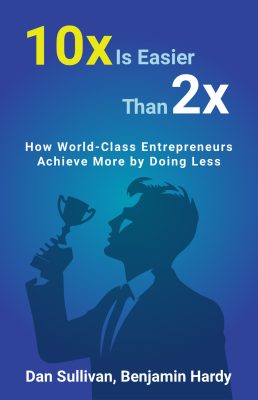
In a world obsessed with doing more and pushing harder, this book flips the script. The central theme is that achieving exponential success is easier and more sustainable than striving for incremental gains. By leveraging unique strategies and mindset shifts, readers can unlock significant growth while maintaining balance and focus. What makes this book stand out is its promise that working less can lead to achieving much more, challenging conventional wisdom about hard work and productivity.
This book is ideal for entrepreneurs, business leaders, and anyone looking to significantly enhance their productivity and success. The primary audience includes seasoned entrepreneurs seeking to break through growth plateaus and innovators aiming for exponential achievements. The secondary audience consists of aspiring entrepreneurs and professionals in various fields who are interested in optimizing their work-life balance while achieving extraordinary results. The book’s language is straightforward and accessible, making it suitable for readers with diverse backgrounds and varying levels of expertise in business and productivity.
Are you tired of feeling stuck in the daily grind, making small, incremental progress toward your goals?
Imagine trying to push a boulder up a hill versus strategically placing levers to move it with minimal effort. 10x Is Easier Than 2x: How World-Class Entrepreneurs Achieve More by Doing Less by Dan Sullivan and Benjamin Hardy challenges the traditional notion that more effort leads to more success. Instead, the book posits that achieving exponential growth (10x) is easier and more sustainable than striving for incremental improvements (2x). By shifting the focus from hard work to smart strategies, the authors provide a fresh perspective on how to attain significant success while maintaining balance and focus.
The book begins with an intriguing premise: the harder you work, the less efficient you become. Sullivan and Hardy illustrate this concept through compelling stories of entrepreneurs who achieved monumental success by working less and focusing on what truly mattered. They argue that our conventional understanding of productivity and success is flawed, and by rethinking our approach, we can unlock tremendous potential. The book is not just about working smarter; it’s about a fundamental shift in mindset that prioritizes quality over quantity and innovation over repetition.
Readers will learn how to identify their unique abilities and leverage them to achieve disproportionate results. The authors introduce various strategies for maximizing impact, such as focusing on strengths, delegating effectively, and setting ambitious goals. The book provides practical tools and frameworks for implementing these strategies, making it a valuable resource for anyone looking to elevate their performance. By the end of the book, readers will have a clear roadmap for achieving 10x growth without the burnout that often accompanies relentless hard work.
One of the key lessons in the book is the importance of saying no to opportunities that don’t align with your core goals. Sullivan and Hardy emphasize that focusing on fewer but more impactful activities can lead to greater success. They highlight real-life examples of entrepreneurs who turned down lucrative opportunities because they didn’t fit their vision, ultimately leading to more significant achievements. This counterintuitive approach challenges readers to rethink their priorities and make intentional choices that drive exponential growth.
The authors also delve into the psychological aspects of success, exploring how our beliefs and mindset shape our outcomes. They provide insights into how to cultivate a 10x mindset, which involves embracing challenges, thinking big, and staying committed to long-term goals. Through a combination of scientific research and anecdotal evidence, the book makes a compelling case for why a 10x approach is not only possible but also more accessible than we might think.
The core message of 10x Is Easier Than 2x is that achieving exponential success requires a fundamental shift in mindset and strategy. Instead of working harder, Sullivan and Hardy advocate for working smarter by focusing on high-impact activities and leveraging unique strengths. The metaphor of pushing a boulder versus using levers effectively captures the essence of their argument. They emphasize that by rethinking our approach to productivity and success, we can achieve more significant results with less effort. This paradigm shift challenges conventional wisdom and encourages readers to adopt a more strategic and innovative approach to their goals.
10x Is Easier Than 2x has made a substantial impact in the field of business and entrepreneurship by challenging widely held beliefs about success and productivity. The book’s provocative thesis has sparked conversations and debates among entrepreneurs, business leaders, and productivity enthusiasts. Its unique perspective has earned it recognition and praise, with many readers lauding its practical insights and actionable advice. The book’s emphasis on a strategic approach to success resonates with those seeking sustainable and meaningful growth in their personal and professional lives.
The book’s contribution lies in its ability to simplify complex concepts and present them in an accessible and engaging manner. By combining scientific research with real-life examples, Sullivan and Hardy provide a comprehensive guide to achieving 10x growth. Their focus on mindset and strategy sets the book apart from other self-help and business titles, offering readers a refreshing and practical approach to success. The book’s impact is further evidenced by its popularity and positive reviews, cementing its place as a valuable resource for anyone looking to achieve more by doing less.
10x Is Easier Than 2x by Dan Sullivan and Benjamin Hardy is a compelling read that challenges conventional wisdom about productivity and success. The book offers a fresh perspective by advocating for exponential growth rather than incremental improvements. Its central thesis—that aiming for 10x results can be easier and more effective than striving for 2x growth—forces us to rethink how we approach our goals and daily activities. The authors provide practical frameworks and actionable advice, making complex concepts accessible and easy to implement.
The book’s strengths lie in its innovative ideas, practical applicability, and engaging writing style. Sullivan and Hardy effectively use real-life examples to illustrate their points, making the concepts relatable and compelling. Their emphasis on leveraging unique abilities, setting ambitious goals, and strategic delegation provides a clear roadmap for achieving significant success. The focus on mindset and psychological resilience adds depth to the book, highlighting the importance of mental frameworks in pursuing ambitious objectives.
However, the book is not without its limitations. It relies heavily on entrepreneurial examples, which may not resonate with readers from different professional backgrounds. The lack of in-depth research and occasional oversimplification of complex concepts can be seen as drawbacks. Additionally, the repetition of ideas throughout the book might make it feel redundant in parts. Addressing these areas could have provided a more robust and comprehensive guide to achieving 10x growth.
In comparison to other significant works in the field, 10x Is Easier Than 2x offers a unique perspective that complements the insights from books like Outliers by Malcolm Gladwell, Atomic Habits by James Clear, and The Lean Startup by Eric Ries. These comparisons highlight the importance of balancing strategic ambition with incremental progress and external factors. Integrating these perspectives can provide a more holistic approach to personal and professional development.
Our Recommendation
We believe that 10x Is Easier Than 2x is a valuable addition to the library of any entrepreneur, business leader, or individual looking to achieve significant growth and success. The book’s practical frameworks, coupled with its emphasis on mindset and strategic focus, offer readers actionable insights that can lead to tangible improvements in productivity and achievement. Its engaging writing style makes it an enjoyable read, even for those who may not have a deep background in business or productivity.
For those seeking a fresh approach to achieving their goals, 10x Is Easier Than 2x provides a compelling argument for aiming higher and working smarter. While it may not cover every aspect of success and productivity in depth, its core principles are sound and can be effectively applied in various contexts. We recommend this book to anyone ready to rethink their approach to success and unlock their potential for exponential growth. By integrating the insights from this book with those from other influential works, readers can develop a comprehensive strategy for achieving their most ambitious goals.
The essence of 10x Is Easier Than 2x revolves around a few pivotal concepts that redefine traditional approaches to productivity and success. The first key topic is the idea that exponential growth is more accessible than incremental progress. Sullivan and Hardy argue that aiming for 10x results requires a different kind of thinking—one that prioritizes innovation and strategic focus over mere hard work. They emphasize that by setting audacious goals and rethinking how we approach our work, we can achieve significant success with less effort.
Another critical concept is the importance of identifying and leveraging unique abilities. The authors suggest that everyone has particular strengths that, when harnessed correctly, can lead to extraordinary outcomes. Instead of trying to improve weaknesses, they advocate for focusing on what you do best and finding ways to amplify these skills. This approach not only enhances productivity but also increases personal satisfaction and motivation.
The book also delves into the power of saying no to opportunities that do not align with one’s core goals. By narrowing focus and dedicating time and energy to activities that have the highest impact, individuals can achieve more significant results. This selective approach is counterintuitive to the often pervasive “always say yes” mindset but is crucial for achieving 10x growth. The authors stress that every decision should be evaluated based on its potential to contribute to long-term goals.
Mindset plays a crucial role in the 10x philosophy. Sullivan and Hardy explore how beliefs and attitudes shape our ability to achieve exponential success. They emphasize the importance of cultivating a growth mindset, thinking big, and remaining committed to ambitious goals. This involves not just setting high targets but also maintaining the psychological resilience to pursue them relentlessly. The authors provide practical advice on how to develop and sustain this mindset.
The final key element is the strategic delegation of tasks. The authors argue that to achieve 10x results, it is essential to delegate effectively and surround oneself with a capable team. This involves identifying tasks that do not require your unique abilities and entrusting them to others who are better suited to handle them. By doing so, individuals can focus on high-impact activities that drive exponential growth.
Richard Branson and Virgin Group
One of the illustrative examples in the book is Richard Branson’s approach to building the Virgin Group. Branson’s strategy of focusing on his strengths—visionary thinking and branding—while delegating operational tasks to his team exemplifies the 10x principle. By leveraging his unique abilities and surrounding himself with competent individuals, Branson managed to create a diverse and successful conglomerate without spreading himself too thin. His ability to say no to ventures that did not align with his core vision further demonstrates the importance of selective focus.
Steve Jobs and Apple
Steve Jobs’ tenure at Apple is another compelling case study presented by the authors. Jobs’ decision to simplify Apple’s product line and focus on creating a few high-quality products highlights the 10x approach. Instead of trying to do everything, Jobs concentrated on what Apple could do best—innovation and design. This focus led to the creation of groundbreaking products like the iPhone and iPad, which revolutionized their respective markets. Jobs’ relentless pursuit of excellence and his ability to inspire his team to think big were crucial elements in Apple’s exponential growth.
Sara Blakely and Spanx
Sara Blakely’s journey with Spanx offers another powerful example. Blakely’s ability to recognize a unique market opportunity and her relentless focus on bringing her vision to life exemplify the principles of 10x growth. By concentrating on her strengths—creativity and salesmanship—Blakely was able to turn a simple idea into a billion-dollar business. Her story also underscores the importance of perseverance and maintaining a growth mindset, as she faced numerous rejections before achieving success.
Warren Buffett and Investment Strategy
Warren Buffett’s investment strategy is highlighted as a model of the 10x principle. Buffett’s focus on long-term investments and his ability to say no to short-term gains in favor of sustainable growth aligns perfectly with the book’s message. By identifying companies with strong potential and sticking to his investment philosophy, Buffett has achieved remarkable success. His approach emphasizes the importance of strategic focus and patience in achieving exponential growth.
Elon Musk and SpaceX
Elon Musk’s work with SpaceX provides a striking example of the 10x mindset in action. Musk’s vision of making space travel affordable and eventually colonizing Mars represents a bold and audacious goal. By leveraging his unique abilities in engineering and innovation, Musk has pushed the boundaries of what is possible. His willingness to take risks, think big, and focus on high-impact activities has led to significant advancements in space technology. This example underscores the power of a 10x mindset in driving monumental achievements.
Focus on Your Unique Abilities
One of the core insights of the book is the importance of identifying and leveraging your unique abilities. Rather than trying to be good at everything, focus on what you do best and find ways to amplify those skills. This involves taking a hard look at your strengths and figuring out how they can be applied to achieve maximum impact. To apply this insight, start by listing your top three skills and brainstorming ways to use them more effectively in your current role. Delegate tasks that do not align with these abilities to others who are better suited for them.
Set Audacious Goals
Sullivan and Hardy emphasize the power of setting ambitious, 10x goals instead of settling for incremental improvements. These goals force you to think differently and innovate rather than just working harder. To apply this insight, identify a key area in your personal or professional life where you want to see exponential growth. Set a goal that seems almost out of reach and then work backward to identify the steps needed to achieve it. This approach will help you break free from conventional thinking and inspire creative solutions.
Say No to Distractions
Another significant insight is the importance of saying no to opportunities and tasks that do not align with your core goals. This selective focus ensures that your time and energy are dedicated to high-impact activities. To put this into practice, create a list of criteria that any new opportunity must meet before you agree to take it on. This could include alignment with your long-term goals, the potential for significant impact, and whether it leverages your unique abilities. By being more selective, you can maintain focus and avoid burnout.
Develop a Growth Mindset
The authors highlight the importance of cultivating a growth mindset, which involves embracing challenges and viewing failures as opportunities for learning. This mindset is crucial for achieving 10x growth. To develop a growth mindset, start by reframing how you perceive challenges and setbacks. Instead of seeing them as obstacles, view them as valuable learning experiences that can help you grow. Practice self-reflection regularly to assess what you’ve learned from your experiences and how you can apply those lessons moving forward.
Delegate Strategically
Effective delegation is a key component of achieving exponential growth. The book stresses that you should delegate tasks that do not require your unique abilities to others who can handle them more efficiently. To apply this insight, make a list of tasks you currently handle and categorize them based on whether they require your unique skills. Delegate the tasks that do not fall into this category to capable team members. This will free up your time to focus on activities that have a higher impact on your goals.
Prioritize Quality Over Quantity
Sullivan and Hardy argue that focusing on fewer but higher-quality activities leads to better results than trying to do everything. This means putting your energy into tasks that significantly contribute to your goals. To implement this, review your current workload and identify activities that do not add substantial value. Eliminate or reduce these tasks and redirect your efforts toward high-quality activities that align with your 10x goals. This approach helps in maintaining a high standard of work without spreading yourself too thin.
Maintain Long-Term Focus
The book emphasizes the importance of staying committed to long-term goals rather than getting sidetracked by short-term gains. This requires patience and the ability to stay focused on your vision. To apply this, create a clear and detailed long-term plan outlining your major goals and the steps needed to achieve them. Regularly review this plan to ensure you are on track and make adjustments as necessary. By keeping your long-term vision in mind, you can make more strategic decisions that contribute to sustained success.
Leverage External Support
The authors discuss the value of leveraging external support, such as mentors, coaches, and networks, to achieve your goals. These resources can provide valuable insights, guidance, and opportunities that you might not have access to on your own. To utilize this insight, identify individuals or groups who can support your growth and reach out to them. This could involve finding a mentor in your field, joining professional networks, or hiring a coach to help you stay on track. Building a strong support system can accelerate your progress and help you achieve your 10x goals.
Think Big and Innovate
Thinking big and being open to innovation is crucial for exponential growth. The book encourages readers to challenge conventional wisdom and explore new ways of doing things. To apply this, regularly set aside time for creative thinking and brainstorming. Challenge yourself to come up with innovative solutions to existing problems or new ideas that can drive significant growth. Encourage your team to do the same and foster a culture of innovation within your organization.
Monitor and Adjust Regularly
Finally, the book highlights the importance of regularly monitoring your progress and being willing to adjust your strategies as needed. This ensures that you stay on track toward your 10x goals and can adapt to changing circumstances. To implement this, establish a routine for reviewing your goals and assessing your progress. Set aside time each month or quarter to evaluate what is working and what isn’t, and make necessary adjustments to your approach. This continuous improvement process will help you stay aligned with your long-term vision and achieve sustainable success.
Innovative Concept
10x Is Easier Than 2x introduces a revolutionary idea that challenges conventional wisdom about productivity and success. The central thesis—that aiming for exponential growth can be easier and more effective than incremental improvements—forces readers to rethink their strategies. This fresh perspective is both engaging and thought-provoking, making the book stand out in the crowded self-help and business genres.
Practical Applicability
The book excels in providing actionable advice that readers can immediately apply to their lives and careers. From identifying unique abilities to setting audacious goals, the authors offer concrete steps that are easy to understand and implement. This practical focus ensures that the insights are not just theoretical but can lead to tangible improvements in productivity and success.
Real-Life Examples
Sullivan and Hardy effectively use real-life examples to illustrate their points. Stories of successful entrepreneurs like Richard Branson and Elon Musk make the concepts more relatable and compelling. These examples provide evidence that the principles discussed are not just theoretical but have been successfully applied in various real-world scenarios.
Engaging Writing Style
The writing style of the book is accessible and engaging, making complex concepts easy to understand. The authors mix short and long sentences, use colloquial language, and avoid jargon, which keeps the reader’s attention and makes the material more relatable. This style is particularly effective for a general audience that may not have a deep background in business or productivity.
Focus on Mindset
A significant strength of the book is its emphasis on mindset. By highlighting the importance of a growth mindset and psychological resilience, the authors provide a holistic approach to achieving success. This focus on mental frameworks helps readers understand that achieving 10x growth is not just about strategies and tactics but also about cultivating the right attitudes and beliefs.
Clear Frameworks and Tools
The book offers clear frameworks and tools that readers can use to implement the 10x principles. These include methods for identifying unique abilities, strategies for effective delegation, and guidelines for setting ambitious goals. These tools are well-explained and practical, providing readers with a roadmap for applying the book’s insights to their own lives.
Overemphasis on Entrepreneurial Examples
While the real-life examples are a strength, the book relies heavily on stories of high-profile entrepreneurs like Elon Musk and Richard Branson. This focus might make the principles seem less applicable to readers who are not entrepreneurs or who do not aspire to be on the same level as these figures. Including more diverse examples from different professions and walks of life could have broadened the book’s appeal.
Lack of In-Depth Research
Although the book is engaging and practical, it sometimes lacks the depth of research that would make its arguments more robust. Some of the concepts are based more on anecdotal evidence rather than rigorous scientific studies. Incorporating more empirical data and research findings could have strengthened the credibility of the book’s claims.
Simplification of Complex Concepts
The book’s strength in making complex concepts accessible can also be seen as a weakness. In some cases, the authors may oversimplify ideas, which could lead to misunderstandings or superficial applications of the principles. Providing more detailed explanations and nuances could have helped readers grasp the full complexity of the concepts discussed.
Repetition of Ideas
There is a degree of repetition in the book, with certain concepts and examples being revisited multiple times. While this can reinforce key points, it can also make the book feel repetitive and padded in places. Streamlining the content and reducing redundancy would have made for a more concise and focused read.
Overlooking the Role of External Factors
One potential blind spot of 10x Is Easier Than 2x is its limited discussion on the role of external factors in achieving success. While the book focuses on mindset and personal strategies, it doesn’t fully address how external circumstances—such as economic conditions, industry trends, and market dynamics—can significantly impact one’s ability to achieve 10x growth. Readers might misconstrue the book’s message as implying that personal effort and mindset are the only determinants of success, overlooking the importance of adapting to external environments. Books like Outliers by Malcolm Gladwell emphasize the role of external factors and environmental influences in achieving success, providing a more balanced perspective.
Neglecting the Importance of Consistency and Incremental Progress
Another potential blind spot is the book’s emphasis on exponential growth, which might lead readers to undervalue the importance of consistency and incremental progress. While aiming for 10x results is inspiring, not every goal can or should be pursued with such high-risk strategies. There is a place for steady, consistent effort that builds over time, which the book does not fully explore. In contrast, Atomic Habits by James Clear offers insights into how small, incremental changes can lead to significant results over time, providing a complementary approach to the high-stakes strategies discussed in Sullivan and Hardy’s book.
Simplifying the Complexity of Goal Setting
The book’s approach to goal setting, while ambitious, may oversimplify the complexity involved in setting and achieving 10x goals. The authors advocate for setting audacious goals, but they don’t sufficiently address the detailed planning and adjustments required to achieve these goals. This can lead to misunderstandings where readers might set unrealistic goals without a clear plan to achieve them. Books like The Lean Startup by Eric Ries provide a more nuanced view on setting and adjusting goals through iterative processes and feedback loops, highlighting the importance of flexibility and learning in the pursuit of ambitious objectives.
Potential Misinterpretation of Delegation Strategies
While the book rightly emphasizes the importance of delegation, it may lead some readers to misinterpret delegation as merely offloading tasks without ensuring quality control. Effective delegation requires not only identifying tasks to delegate but also providing adequate training, support, and feedback to ensure that delegated tasks are performed to a high standard. This aspect is not deeply explored in 10x Is Easier Than 2x. Books like The One Minute Manager by Ken Blanchard and Spencer Johnson offer practical advice on effective delegation and management techniques that ensure both efficiency and quality.
Assuming Universal Applicability of Strategies
The strategies and principles outlined in the book may not be universally applicable to all professions or industries. The book primarily draws from entrepreneurial contexts, which might not resonate with professionals in more structured or regulated fields. This can lead to a narrow application of the principles discussed. For instance, Drive by Daniel Pink explores motivation in various contexts, including corporate and educational settings, offering a broader perspective on how motivational strategies can be tailored to different environments.
Underestimating the Challenge of Mindset Shifts
The book emphasizes the importance of a growth mindset and psychological resilience, but it might underestimate the challenge of making such mindset shifts. Changing deeply ingrained beliefs and attitudes is a complex process that requires more than just reading a book. Readers might find it difficult to implement these changes without additional support and guidance. Mindset by Carol S. Dweck delves deeper into the psychology of mindset changes, providing more comprehensive strategies for developing and maintaining a growth mindset, which could complement the insights provided in Sullivan and Hardy’s work.
Outliers by Malcolm Gladwell
Malcolm Gladwell’s Outliers focuses on the external factors that contribute to extraordinary success, contrasting with the internal focus of 10x Is Easier Than 2x. While Sullivan and Hardy emphasize mindset, unique abilities, and strategic focus, Gladwell argues that success is often influenced by context, timing, and cultural background. Outliers presents the idea that hidden advantages and extraordinary opportunities play a crucial role in achieving high levels of success, which adds depth to the understanding of what it takes to excel. Comparing these perspectives highlights the importance of both internal strategies and external circumstances in the pursuit of exceptional achievements.
Atomic Habits by James Clear
Atomic Habits by James Clear takes a different approach by emphasizing the power of small, consistent changes over time. Clear’s focus on building habits through incremental progress contrasts with Sullivan and Hardy’s emphasis on audacious, exponential goals. While 10x Is Easier Than 2x encourages setting ambitious targets to spur innovation and growth, Atomic Habits advocates for the compound effect of tiny improvements. This comparison underscores the value of integrating both long-term vision and daily habits to achieve sustainable success, offering a balanced approach to personal and professional development.
The Lean Startup by Eric Ries
Eric Ries’ The Lean Startup offers insights into the iterative process of developing and scaling a business, which contrasts with the more immediate leap to 10x growth suggested by Sullivan and Hardy. Ries emphasizes experimentation, feedback loops, and adaptability, which are crucial for navigating the uncertainties of entrepreneurship. While 10x Is Easier Than 2x focuses on leveraging strengths and setting ambitious goals, The Lean Startup highlights the importance of learning and adjusting through continuous testing. This comparison reveals the complementary nature of strategic goal-setting and iterative development in achieving entrepreneurial success.
Drive by Daniel Pink
Drive by Daniel Pink explores the motivations behind human behavior, emphasizing autonomy, mastery, and purpose. This focus on intrinsic motivation contrasts with Sullivan and Hardy’s emphasis on leveraging unique abilities and strategic focus. While 10x Is Easier Than 2x provides practical frameworks for achieving exponential growth, Drive delves into the psychological aspects of motivation that sustain long-term engagement and productivity. Comparing these perspectives highlights the need to align strategic goals with intrinsic motivators to achieve and maintain high levels of performance.
Mindset by Carol S. Dweck
Carol S. Dweck’s Mindset delves deeply into the concept of growth versus fixed mindsets, providing a comprehensive exploration of how mindset affects achievement. Dweck’s work complements Sullivan and Hardy’s emphasis on a growth mindset by offering detailed strategies for developing and sustaining this mindset. While 10x Is Easier Than 2x introduces the importance of mindset in achieving ambitious goals, Mindset provides the psychological underpinnings and practical steps for fostering a resilient and adaptable mindset. This comparison enriches the understanding of the mental frameworks necessary for long-term success.
Identify Unique Abilities
Set Audacious Goals
Say No to Distractions
Develop a Growth Mindset
Delegate Strategically
Prioritize Quality Over Quantity
Maintain Long-Term Focus
Leverage External Support
Think Big and Innovate
Monitor and Adjust Regularly
Identify and Leverage Unique Strengths of Team Members
One of the most relevant applications of 10x Is Easier Than 2x for businesses is the focus on identifying and leveraging the unique strengths of team members. By doing so, organizations can maximize productivity and foster a more engaged and motivated workforce. This involves conducting thorough assessments of employees’ skills, strengths, and interests, and then aligning their roles and responsibilities accordingly. Encouraging employees to work on tasks that match their strengths can lead to higher quality work and greater job satisfaction.
Implementing this strategy can be challenging, particularly in larger organizations with diverse teams. Identifying unique strengths requires time and effort, and there may be resistance from employees who are accustomed to their current roles. Additionally, reassigning tasks and responsibilities might disrupt established workflows and cause short-term inefficiencies.
To overcome these challenges, businesses can use a phased approach. Start by implementing a pilot program within a small team or department to assess the process and gather feedback. Use tools like strength assessments, 360-degree feedback, and regular check-ins to identify and evaluate employees’ strengths. Gradually expand the program based on the initial results and make necessary adjustments to address any concerns or disruptions. Providing training and support during the transition can also help ease the shift and ensure a smooth implementation.
Set Ambitious Organizational Goals
Another key application is setting ambitious, 10x goals for the organization. These goals should be clear, specific, and aligned with the company’s long-term vision. Ambitious goals can inspire innovation, drive higher levels of performance, and encourage employees to think creatively about how to achieve them. By setting high targets, businesses can push the boundaries of what is possible and foster a culture of continuous improvement and excellence.
However, setting and pursuing ambitious goals can pose several challenges. There may be skepticism from employees who doubt the feasibility of such goals, leading to a lack of buy-in and motivation. Additionally, the pressure to achieve high targets can result in stress and burnout if not managed properly. There is also the risk of setting unrealistic goals that are not achievable, which can demoralize the team.
To address these challenges, it is crucial to involve employees in the goal-setting process. Ensure that the goals are challenging yet realistic and that there is a clear plan to achieve them. Communicate the vision and the rationale behind the goals effectively to build trust and commitment. Providing adequate resources, support, and regular progress updates can help maintain motivation and prevent burnout. Encourage a growth mindset by celebrating small wins and learning from setbacks, reinforcing the idea that striving for ambitious goals is a journey.
Encourage Strategic Delegation
Strategic delegation is another critical takeaway from the book. By delegating tasks that do not require their unique abilities, leaders can focus on high-impact activities that drive the organization forward. Effective delegation involves identifying tasks that can be delegated, selecting the right team members for those tasks, and providing clear instructions and support to ensure successful completion.
The main challenge in implementing strategic delegation is ensuring that the delegated tasks are completed to the desired standard. There may be concerns about quality control and accountability, especially if employees lack the necessary skills or experience. Additionally, leaders might struggle with letting go of control and trusting their team to handle important responsibilities.
To overcome these obstacles, businesses should invest in training and development programs to equip employees with the skills needed for delegated tasks. Establish clear guidelines, expectations, and accountability measures to ensure quality control. Leaders should also practice effective communication and provide continuous support and feedback to their team. By building a culture of trust and empowerment, employees will feel more confident and motivated to take on delegated tasks and perform them well.
Foster a Growth Mindset Culture
Fostering a growth mindset within the organization can significantly enhance innovation and resilience. A growth mindset encourages employees to view challenges as opportunities for learning and growth, which can lead to higher levels of creativity and problem-solving. Promoting this mindset involves providing opportunities for continuous learning, encouraging experimentation, and recognizing and rewarding efforts and improvements.
One challenge in fostering a growth mindset is overcoming fixed mindset attitudes that may be deeply ingrained in the organizational culture. Employees may be resistant to change and hesitant to take risks due to fear of failure or criticism. Additionally, there may be a lack of resources or support for continuous learning and development initiatives.
To cultivate a growth mindset, businesses can start by integrating growth mindset principles into their core values and leadership practices. Offer regular training and development programs that focus on personal and professional growth. Create a safe environment where employees feel comfortable taking risks and learning from failures without fear of negative repercussions. Encourage open communication and feedback, and recognize and celebrate not just successes but also efforts and improvements. By consistently reinforcing growth mindset behaviors, organizations can gradually shift their culture and empower employees to embrace challenges and drive innovation.
Prioritize Quality Over Quantity in Work Output
Prioritizing quality over quantity can lead to better results and a more sustainable workload for employees. This involves setting high standards for work output, focusing on the most impactful activities, and ensuring that employees have the time and resources needed to produce high-quality work. Emphasizing quality can improve customer satisfaction, enhance the company’s reputation, and lead to more significant long-term success.
The challenge here is balancing the focus on quality with the need to meet deadlines and deliverables. In fast-paced environments, there may be pressure to produce work quickly, which can compromise quality. Additionally, shifting the focus to quality may initially slow down productivity as employees adapt to new expectations and workflows.
To address these challenges, businesses can implement a balanced approach that integrates quality and efficiency. Set realistic deadlines that allow for thorough work without sacrificing quality. Provide employees with the tools, resources, and support they need to meet high standards. Encourage regular feedback and continuous improvement to identify and address areas for enhancement. By fostering a culture that values both quality and timely delivery, organizations can achieve a sustainable balance and consistently produce exceptional work.
Remote and Hybrid Work Environments
The shift to remote and hybrid work environments is transforming how businesses operate. 10x Is Easier Than 2x aligns with this trend by emphasizing strategic focus and leveraging unique abilities. In remote settings, where traditional oversight is limited, employees must focus on high-impact tasks. The book’s principles encourage self-management and productivity. Future work environments will likely continue to prioritize flexibility and results over hours worked, making these concepts even more relevant.
Artificial Intelligence and Automation
The rise of artificial intelligence (AI) and automation is reshaping job roles and productivity. 10x Is Easier Than 2x highlights the importance of focusing on unique human abilities. As AI takes over repetitive tasks, the emphasis on strategic thinking, creativity, and problem-solving becomes crucial. Businesses will need to leverage these human strengths to achieve exponential growth. The book’s ideas support a future where human ingenuity and AI work together for greater efficiency and innovation.
Continuous Learning and Development
Continuous learning and development are becoming integral to career growth. The book’s focus on a growth mindset and leveraging strengths supports this trend. As industries evolve, employees must continually update their skills. Embracing a mindset that values learning from challenges and setbacks will be key. Organizations investing in learning and development will find the book’s insights valuable for fostering a culture of innovation and adaptability.
Entrepreneurial Mindset in Corporate Settings
More corporations are adopting an entrepreneurial mindset to stay competitive. This trend aligns with the book’s principles of setting ambitious goals and strategic delegation. Encouraging employees to think like entrepreneurs can drive innovation and agility within large organizations. The book’s strategies for achieving 10x results can help corporations foster a dynamic and proactive workforce. As businesses strive for agility, the entrepreneurial approach advocated by the book will become increasingly relevant.
10x Is Easier Than 2x has the potential to significantly influence the field of entrepreneurship and personal development by shifting the focus from hard work to strategic, high-impact activities. This book encourages a fundamental rethinking of productivity, advocating for a more balanced approach that prioritizes quality over quantity. If widely adopted, these principles could lead to a cultural shift in how success is pursued, with more emphasis on leveraging unique strengths and setting ambitious goals that inspire innovation and creativity.
In the broader societal context, the book’s emphasis on saying no to distractions and focusing on high-impact activities could lead to a more intentional and purpose-driven approach to work and life. This shift could enhance overall well-being and reduce burnout, as individuals learn to prioritize what truly matters and delegate less critical tasks. By promoting a mindset that values strategic focus and psychological resilience, the book could contribute to a more sustainable and fulfilling way of achieving success.
Moreover, the book’s potential long-term influence extends to educational and professional training programs, where the principles of identifying unique abilities and setting 10x goals could be integrated into curricula and development initiatives. This could foster a new generation of leaders and entrepreneurs who are equipped with the mindset and strategies necessary for exponential growth and innovation. As these ideas permeate various fields, they could drive significant advancements in how individuals and organizations approach challenges and opportunities.
The book’s broader implications also include encouraging a shift in organizational cultures toward valuing strategic delegation and leveraging diverse talents. By adopting the principles outlined in 10x Is Easier Than 2x, organizations could become more agile and innovative, fostering environments where employees are empowered to focus on their strengths and contribute to high-impact projects. This could lead to more dynamic and successful enterprises, capable of achieving remarkable growth and adaptation in rapidly changing markets.
Atomic Habits by James Clear
Atomic Habits by James Clear focuses on the power of small, incremental changes to achieve significant results over time. This book complements 10x Is Easier Than 2x by providing a detailed framework for building habits that support long-term goals. Clear’s emphasis on consistency and gradual improvement offers a practical approach to achieving sustained success, aligning well with the idea of leveraging unique strengths for exponential growth.
Outliers by Malcolm Gladwell
Outliers by Malcolm Gladwell explores the external factors and hidden advantages that contribute to high levels of success. This perspective contrasts with the internal focus of 10x Is Easier Than 2x, offering a broader understanding of what drives exceptional achievement. Gladwell’s examination of timing, cultural background, and opportunities adds depth to the discussion, highlighting the importance of context in realizing one’s potential.
The Lean Startup by Eric Ries
The Lean Startup by Eric Ries provides a methodology for developing businesses and products through iterative processes and feedback loops. This approach complements 10x Is Easier Than 2x by emphasizing the importance of adaptability and continuous learning. Ries’s focus on experimentation and pivoting aligns with the book’s strategies for achieving ambitious goals and fostering innovation in dynamic environments.
Drive by Daniel Pink
Drive by Daniel Pink delves into the motivations behind human behavior, particularly the importance of autonomy, mastery, and purpose. This book enhances the insights from 10x Is Easier Than 2x by exploring the psychological factors that sustain motivation and engagement. Pink’s emphasis on intrinsic motivation provides a deeper understanding of how to inspire individuals and teams to achieve their best work.
Mindset by Carol S. Dweck
Mindset by Carol S. Dweck examines the impact of fixed and growth mindsets on personal and professional success. This book complements 10x Is Easier Than 2x by offering practical strategies for developing a growth mindset, which is crucial for achieving ambitious goals. Dweck’s research-backed insights help readers understand the importance of resilience and adaptability in the pursuit of excellence.
The One Thing by Gary Keller and Jay Papasan
The One Thing by Gary Keller and Jay Papasan emphasizes the power of focusing on a single priority to achieve extraordinary results. This book aligns with 10x Is Easier Than 2x by advocating for strategic focus and eliminating distractions. Keller and Papasan’s straightforward approach to prioritization provides practical guidance for individuals and organizations aiming to maximize their impact and efficiency.
Grit by Angela Duckworth
Grit by Angela Duckworth explores the role of passion and perseverance in achieving long-term success. This book complements 10x Is Easier Than 2x by highlighting the importance of sustained effort and resilience. Duckworth’s insights into the power of grit offer valuable lessons for those pursuing ambitious goals, reinforcing the need for dedication and hard work in realizing exponential growth.
Good to Great by Jim Collins
Good to Great by Jim Collins examines why some companies make the leap from good to great and others do not. This book provides a complementary perspective to 10x Is Easier Than 2x by focusing on organizational excellence and the factors that drive sustainable success. Collins’s research-based approach offers practical insights for businesses looking to achieve long-term growth and stability, aligning with the book’s emphasis on strategic focus and leveraging strengths.
Harvard Business Review (HBR)
The Harvard Business Review offers a wealth of articles, case studies, and research on business strategy, productivity, and leadership. It provides insights from leading experts and practitioners, complementing the principles discussed in 10x Is Easier Than 2x. Readers can find practical advice and in-depth analysis on how to apply strategic thinking and innovation in their professional lives. Access the platform at hbr.org.
Strategic Coach
Founded by Dan Sullivan, Strategic Coach provides coaching programs, tools, and resources for entrepreneurs looking to achieve exponential growth. The website offers access to Sullivan’s insights, workshops, and educational materials that align with the book’s principles. It’s an excellent resource for those seeking to implement the 10x strategies in their businesses. Visit strategiccoach.com.
Mind Tools
Mind Tools offers a comprehensive collection of articles, videos, and toolkits focused on leadership, strategy, and personal productivity. This platform can help individuals apply the book’s teachings by providing practical tools and techniques for enhancing performance and achieving ambitious goals. Explore resources at mindtools.com.
TED Conferences
TED Conferences feature talks by leading thinkers and practitioners across various fields, including business, psychology, and personal development. These talks often cover topics relevant to 10x Is Easier Than 2x, such as innovation, strategic thinking, and leveraging unique abilities. Attending TED conferences or watching TED Talks online can provide additional insights and inspiration. Access talks at ted.com.
Global Leadership Summit
The Global Leadership Summit is an annual event that brings together top leaders from various industries to share insights and strategies for effective leadership and organizational growth. The summit’s focus on leadership, innovation, and strategic thinking aligns well with the principles of 10x Is Easier Than 2x. Learn more at globalleadership.org.
Entrepreneurs’ Organization (EO)
The Entrepreneurs’ Organization is a global network of entrepreneurs that provides support, mentorship, and resources for business growth. Membership in EO offers access to a community of like-minded individuals who can share experiences and strategies for achieving exponential growth. This aligns with the book’s emphasis on leveraging external support and strategic focus. Find more information at eonetwork.org.
American Management Association (AMA)
The American Management Association offers training, seminars, and resources focused on management, leadership, and professional development. AMA’s programs and materials can help individuals and organizations implement the strategies discussed in 10x Is Easier Than 2x. Access their resources at amanet.org.
The Tim Ferriss Show
Hosted by Tim Ferriss, this podcast features interviews with top performers from various fields, including entrepreneurs, scientists, and athletes. Ferriss often explores topics related to productivity, strategic thinking, and personal development, making it a valuable resource for fans of 10x Is Easier Than 2x. Listen at tim.blog/podcast.
How I Built This
NPR’s How I Built This, hosted by Guy Raz, tells the stories of entrepreneurs, innovators, and idealists who created successful businesses and movements. The podcast provides insights into the mindset and strategies of top entrepreneurs, aligning with the book’s themes. Access episodes at npr.org/sections/how-i-built-this.
Coursera – Strategic Leadership and Management
Offered by the University of Illinois, this Coursera course covers strategic leadership and management principles that align with the teachings of 10x Is Easier Than 2x. The course provides frameworks and tools for effective leadership and strategic decision-making. Enroll at coursera.org.
Udacity – Digital Transformation Leadership
Udacity’s Digital Transformation Leadership course offers insights into leading organizations through digital transformation and innovation. This course complements the book’s emphasis on strategic focus and leveraging technology for exponential growth. Find more information at udacity.com.
Jiro Dreams of Sushi
This documentary follows Jiro Ono, an 85-year-old sushi master, and his relentless pursuit of perfection. Jiro Dreams of Sushi illustrates the principles of focus, dedication, and leveraging unique abilities, aligning with the book’s themes. It provides a visual example of how passion and strategic focus can lead to extraordinary success.
The Social Network
The Social Network tells the story of Facebook’s creation and the entrepreneurial journey of Mark Zuckerberg. The film highlights the importance of innovation, strategic focus, and overcoming challenges to achieve exponential growth. It provides a real-world example of the principles discussed in 10x Is Easier Than 2x.

Discover the key takeaways from top non-fiction books in minutes. Get the wisdom you need to succeed fast. Here, learning is quick, engaging, and always at your fingertips.
© 2025 All Rights Reserved.