Reviews
‘Snappily written […] made me more aware of the nudges and persuasions that were part of my everyday life’ — Mail on Sunday
‘An important new book […] Laura Dodsworth and Patrick Fagan have some great ideas for how to recognise Nudge Unit tactics and how to fight back’ — Telegraph
‘An informative and engaging read’ — Forbes
‘A gripping […] account of how the mind can both be manipulated and resist manipulation in the context of a range of contemporary phenomena’ — Literary Review
‘An essential and entertaining read [..] a treasure trove of a book’ — Critical Therapy Antidote
‘A sceptic’s charter. A thorough and entertaining guide for how to keep other people’s ulterior agendas out of your head.’ — Lionel Shriver
‘Free Your Mind is an instant classic, full of wisdom about what it means to try and hang onto our humanity amidst the clamour of modern life. If you like the quirkily brilliant work of Malcolm Gladwell, you’ll love this book. I’m buying it for all my friends.’ — Allison Pearson
‘We must all learn to spot the difference between useful and harmful persuasion. This book is a perfect place to start.’ — Rory Sutherland
‘Free speech and free minds are inextricably linked and this book will help you achieve both.’ — Toby Young, General Secretary of the Free Speech Union
‘During the pandemic, governments worldwide deployed sophisticated behavioral and psychological techniques. Now that Pandora’s Box has been opened, powerful entities will undoubtedly continue to use these tools to manipulate unwary populations. The best way to be immune to these techniques is to understand when they are being deployed; if you recognize it, you can do something about it. Dodsworth and Fagan provide a compendium of manipulation in the modern world. Their book is a primer on how to survive in an age of ubiquitous propaganda – and it’s great fun to read.’ — Professor Jay Bhattacharya
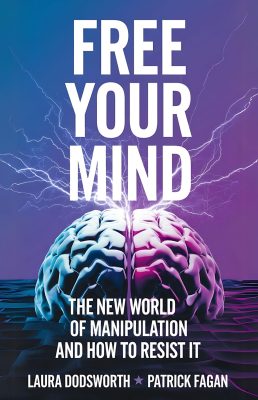
Free Your Mind: The New World of Manipulation and How to Resist It by Laura Dodsworth and Patrick Fagan is a timely and thought-provoking exploration of the myriad ways our thoughts and behaviors are influenced in the modern world. The authors dive deep into the intricate web of manipulation techniques employed by governments, corporations, and media entities, offering readers a comprehensive understanding of how these forces shape our decisions and beliefs. What sets this book apart is its practical approach – Dodsworth and Fagan don’t just expose the problem, they equip readers with actionable strategies to recognize and resist these manipulative tactics, empowering individuals to reclaim their autonomy in an increasingly controlled society.
Free Your Mind is primarily aimed at a general adult audience who are curious about the hidden forces shaping their thoughts and behaviors in the modern world. The book’s accessible language and relatable examples make it suitable for readers without a background in psychology or political science. However, it also holds value for professionals in marketing, media, and politics who want to understand the ethical implications of influence techniques. The authors strike a balance between providing in-depth information and maintaining readability, making the book engaging for both casual readers and those seeking a more analytical understanding of manipulation in society. Secondary audiences might include students of psychology, sociology, and media studies, as well as individuals concerned about privacy and personal autonomy in the digital age.
Imagine a world where your every thought, decision, and action is subtly guided by unseen hands. Now open your eyes – you’re already living in it. This is the chilling reality exposed in Laura Dodsworth and Patrick Fagan’s eye-opening book, Free Your Mind: The New World of Manipulation and How to Resist It. From the moment we wake up to the ping of our smartphones to the time we fall asleep scrolling through social media, we’re unwittingly participating in a grand experiment of mass manipulation.
Dodsworth and Fagan take readers on a journey through the labyrinth of modern influence techniques, shining a light on the dark corners where governments, corporations, and media giants pull the strings of our collective psyche. They reveal how behavioral science, once a tool for understanding human nature, has been weaponized to shape our beliefs, habits, and even our identities. The authors argue that we’ve entered a new era of sophisticated manipulation, one that goes far beyond traditional advertising or propaganda.
The book doesn’t just stop at exposing the problem – it equips readers with the tools to fight back. Dodsworth and Fagan break down the psychological principles behind various manipulation techniques, from nudge theory to neuromarketing, and offer practical strategies for recognizing and resisting these influences. They challenge us to question our assumptions, critically examine the information we consume, and take active steps to protect our mental autonomy.
Through a series of case studies and real-world examples, Free Your Mind illustrates how manipulation manifests in our daily lives. The authors explore how social media algorithms create echo chambers that reinforce our biases, how governments use fear as a tool for compliance, and how advertisers exploit our deepest insecurities to drive consumption. They also delve into more subtle forms of influence, such as the use of language and framing to shape public opinion on complex issues.
Readers of Free Your Mind will come away with a new perspective on the world around them and the forces that shape it. They’ll learn to recognize the signs of manipulation in various contexts, from political campaigns to product marketing. The book provides strategies for developing critical thinking skills, managing information overload, and maintaining personal values in the face of societal pressures. Perhaps most importantly, it offers hope – that by understanding the mechanisms of manipulation, we can reclaim our agency and work towards a more authentic, autonomous existence in the modern world.
The central thesis of Free Your Mind is that we are living in an age of unprecedented manipulation, where powerful entities are using advanced psychological techniques to influence our thoughts, behaviors, and decisions on a massive scale. Dodsworth and Fagan argue that this manipulation is not just a nuisance or an ethical concern, but a fundamental threat to our individual autonomy and societal well-being.
The authors posit that the convergence of big data, behavioral science, and technology has created a perfect storm for widespread manipulation. They contend that while influence has always been a part of human society, the current scale and sophistication of these techniques are unparalleled in history. The book’s core message is a call to awareness and action – urging readers to recognize the manipulative forces at play in their lives and take steps to protect their mental sovereignty.
Dodsworth and Fagan emphasize that the first step in resisting manipulation is understanding it. They break down complex psychological concepts into digestible insights, helping readers see the invisible threads that often guide their choices. The authors stress that manipulation is not always malicious – sometimes it’s framed as being for our own good or for the greater societal benefit. However, they argue that even well-intentioned manipulation can have unintended consequences and erode our ability to make truly free choices.
The book’s message goes beyond individual resistance to manipulation. It calls for a broader societal conversation about the ethics of influence and the importance of protecting cognitive liberty. The authors suggest that as we become more aware of these manipulative techniques, we can demand more transparency from institutions and push for regulations that protect our mental autonomy.
Ultimately, the core message of Free Your Mind is one of empowerment. While the authors paint a sobering picture of the manipulation landscape, they maintain that knowledge and awareness are powerful tools. They argue that by understanding the mechanisms of influence, we can not only protect ourselves but also use these insights to create positive change in our communities and societies.
Free Your Mind makes a significant contribution to the growing body of literature examining the intersection of psychology, technology, and social influence. Its importance lies in its comprehensive approach to the subject, bridging academic research with real-world applications and offering practical solutions for individuals.
The book has garnered attention for its timely and relevant content, sparking discussions in various fields including psychology, media studies, and political science. It has been praised for its accessibility, bringing complex concepts from behavioral science and neuroscience to a general audience without oversimplifying the issues at hand.
One of the most controversial aspects of the book is its critique of ‘nudge theory’ and other forms of ‘soft’ manipulation often used by governments and institutions. The authors challenge the notion that these techniques are benign or beneficial, arguing that they can undermine democratic principles and individual autonomy. This stance has led to debates among policymakers and ethicists about the appropriate use of behavioral insights in governance.
The book’s exploration of manipulation in the digital age has been particularly impactful, coming at a time of increased scrutiny of tech giants and their influence on society. Its insights into social media algorithms and data-driven marketing have been cited in discussions about digital privacy and the need for new regulations in the tech industry.
Free Your Mind has received recognition for its balanced approach to a complex issue. While critical of manipulative practices, the authors avoid falling into conspiracy theories or oversimplification. This nuanced treatment has earned the book respect from both academic circles and mainstream media.
The practical strategies offered in the book for resisting manipulation have been widely discussed and implemented in various settings, from educational institutions to corporate training programs. This real-world application of the book’s ideas further underscores its significance and impact.
While not without its critics, Free Your Mind has been acknowledged as an important work in understanding the psychological landscape of the 21st century. Its blend of scientific rigor, journalistic investigation, and practical advice has positioned it as a valuable resource for anyone seeking to navigate the complex world of modern influence and manipulation.
In our assessment, Free Your Mind: The New World of Manipulation and How to Resist It by Laura Dodsworth and Patrick Fagan offers a valuable and timely exploration of the various manipulation techniques prevalent in our modern, digitally-driven world. We find the book’s comprehensive overview of these techniques, coupled with its practical strategies for resistance, to be particularly noteworthy.
The authors have succeeded in crafting a work that is both informative and accessible, striking a balance between providing in-depth insights and maintaining readability for a general audience. We appreciate the wide-ranging approach, which covers manipulation tactics from various domains including social media, marketing, politics, and behavioral economics.
One of the book’s strongest points is its emphasis on empowering readers with concrete tools to recognize and resist manipulation. This practical focus sets it apart from many other works in the field that may leave readers feeling overwhelmed or helpless in the face of pervasive influence attempts.
We also commend the authors for their nuanced treatment of the ethical implications of manipulation techniques. By acknowledging both the potential benefits and dangers of influence strategies, they encourage readers to think critically about these issues rather than adopting a simplistic viewpoint.
However, we do note some limitations in the book’s approach. The primarily Western-centric focus may limit its global applicability, and we believe it could have benefited from a more in-depth exploration of cultural differences in manipulation techniques and resistance strategies. Additionally, while the book excels in providing qualitative examples, it sometimes lacks the quantitative data and statistical analysis that could have further strengthened its arguments.
We also find that the book could have devoted more attention to the positive applications of influence techniques and the role of systemic factors in enabling manipulation. A more balanced exploration of these aspects would have provided a more comprehensive picture of the complex landscape of influence and manipulation.
Our Recommendation
Despite these limitations, we strongly recommend Free Your Mind to readers seeking to understand and navigate the complex world of modern manipulation. The book provides valuable insights and practical tools that can help individuals maintain their autonomy in an increasingly manipulated environment.
We believe this book is particularly suited for general readers interested in psychology, media studies, and digital literacy, as well as professionals in fields such as marketing, politics, and technology who want to understand the ethical implications of influence techniques. While it may not satisfy those seeking a deeply academic or technical treatment of the subject, it serves as an excellent starting point for anyone looking to become more aware of and resilient to manipulation in the digital age. For a more comprehensive understanding, we suggest pairing this book with some of the other works mentioned in our analysis, which can provide additional perspectives on specific aspects of manipulation and influence.
The essence of Free Your Mind: The New World of Manipulation and How to Resist It by Laura Dodsworth and Patrick Fagan lies in its comprehensive exploration of modern manipulation techniques and their impact on individual and societal autonomy. At its core, the book focuses on the intersection of psychology, technology, and power, revealing how these elements combine to create a pervasive system of influence that shapes our thoughts, behaviors, and decisions often without our conscious awareness.
A key topic the authors explore is the evolution of manipulation techniques in the digital age. They argue that while influence has always been a part of human society, the current scale and sophistication of these techniques are unprecedented. The book details how big data analytics, artificial intelligence, and behavioral science have converged to create highly targeted and effective manipulation strategies. This convergence allows for the micro-targeting of individuals based on their psychological profiles, making manipulation more personalized and potent than ever before.
Another critical element of the book’s message is the role of social media and digital platforms in shaping our perceptions and beliefs. Dodsworth and Fagan examine how these platforms use algorithms to create echo chambers and filter bubbles, reinforcing existing beliefs and polarizing public opinion. They explain how the attention economy drives these platforms to prioritize engagement over truth or user well-being, leading to the spread of misinformation and the exploitation of psychological vulnerabilities.
The concept of “nudge theory” and its application in governance and marketing is another significant topic explored in the book. The authors critically examine how governments and corporations use subtle cues to influence behavior, ostensibly for the greater good or increased efficiency. They question the ethics of these practices, arguing that even well-intentioned nudges can undermine individual autonomy and democratic principles when applied on a large scale without transparency or consent.
Free Your Mind also places considerable emphasis on the psychological mechanisms that make us susceptible to manipulation. The authors break down complex concepts from cognitive psychology, such as confirmation bias, the availability heuristic, and the mere exposure effect, explaining how these natural tendencies of the human mind can be exploited by those seeking to influence us. This understanding forms the foundation for the book’s strategies for resistance.
A crucial aspect of the book’s essence is its focus on practical strategies for recognizing and resisting manipulation. The authors don’t just expose the problem; they equip readers with tools to protect their mental autonomy. These strategies include developing critical thinking skills, managing information intake, recognizing emotional triggers, and cultivating mindfulness. The book emphasizes that resistance to manipulation is not just about individual well-being but is crucial for maintaining a healthy democracy and society.
Lastly, the book explores the broader societal implications of widespread manipulation. Dodsworth and Fagan discuss how the erosion of trust in institutions, the polarization of public discourse, and the commodification of attention all contribute to a society more susceptible to manipulation. They argue for the need to protect cognitive liberty as a fundamental right in the digital age, calling for greater transparency, ethical guidelines, and public awareness about the use of manipulative techniques.
The Facebook Experiment: The authors discuss the controversial 2014 Facebook study where the company manipulated the news feeds of nearly 700,000 users to study emotional contagion. This example illustrates the power of social media platforms to influence users’ emotions and behaviors without their knowledge or consent, raising ethical questions about the boundaries of psychological experimentation in the digital realm.
Cambridge Analytica Scandal: Dodsworth and Fagan delve into the Cambridge Analytica scandal, where the political consulting firm harvested personal data from millions of Facebook profiles without users’ consent to create psychological profiles for targeted political advertising. This case study demonstrates the potential for data-driven manipulation in political campaigns and the vulnerabilities in our digital ecosystems.
Nudge Unit in the UK Government: The book examines the Behavioural Insights Team, also known as the “Nudge Unit,” established by the UK government. This example shows how governments are increasingly using behavioral science to influence public behavior, from increasing tax compliance to promoting public health measures. The authors use this to discuss the fine line between helpful policy implementation and potential manipulation of citizens.
Casino Design Psychology: The authors explore how casinos use psychological principles in their design to encourage gambling. From the layout of gaming floors to the use of sounds and lights, this example illustrates how physical environments can be engineered to manipulate behavior and decision-making.
Social Media Dopamine Loops: Dodsworth and Fagan explain how social media platforms design their interfaces to create dopamine-driven feedback loops. They discuss features like infinite scrolling, push notifications, and “likes,” showing how these elements exploit our brain’s reward system to keep us engaged and potentially addicted to these platforms.
Neuromarketing in Advertising: The book provides examples of how companies use neuromarketing techniques, such as eye-tracking and brain scans, to create more effective advertisements. This case study demonstrates the increasing sophistication of marketing strategies that tap directly into our subconscious responses.
Filter Bubbles in News Consumption: The authors examine how personalized news feeds and recommendation algorithms create filter bubbles, using examples from major news platforms and social media sites. This illustrates how our information environments can be manipulated to reinforce existing beliefs and limit exposure to diverse perspectives.
Fake News and Misinformation Campaigns: Dodsworth and Fagan discuss several case studies of coordinated misinformation campaigns, including examples from recent elections and the COVID-19 pandemic. These examples show how manipulation techniques can be used to spread false information and influence public opinion on a massive scale.
Dark Patterns in UX Design: The book explores how websites and apps use “dark patterns” in their user interface design to manipulate users into making certain choices. Examples include confusing cancellation processes, hidden costs, and default settings that prioritize data collection, illustrating how subtle design choices can have significant impacts on user behavior.
Emotion AI in Customer Service: The authors discuss the use of artificial intelligence to analyze customers’ emotional states during service interactions. This example shows how companies are using advanced technology to tailor their responses and potentially manipulate customers’ emotions for business objectives.
The Attention Economy Shapes Our Digital Experiences
The attention economy, as described by Dodsworth and Fagan, is a crucial concept for understanding modern manipulation techniques. In this model, our attention is the primary commodity, and tech companies design their platforms to capture and retain it at all costs. To apply this insight, users should be mindful of how they spend their time online. Set specific time limits for social media use, perhaps using app-blocking tools that restrict access after a certain period. When browsing, ask yourself: “Is this content serving me, or am I serving the platform?” Regularly audit your digital habits, identifying which online activities genuinely add value to your life and which might be unconscious responses to manipulative design. Consider adopting a ‘slow tech’ approach, deliberately choosing when and how you engage with digital platforms rather than reacting to every notification or prompt.
Echo Chambers and Filter Bubbles Reinforce Biases
The book highlights how social media algorithms create echo chambers that reinforce our existing beliefs and biases. To counter this, actively seek out diverse perspectives. Follow accounts and join online communities that challenge your viewpoints. Use news aggregators that pull from various sources across the political spectrum. When reading news or opinions that align with your beliefs, make a habit of searching for opposing viewpoints on the same topic. Engage in respectful discussions with people who hold different views, focusing on understanding rather than convincing. Regularly “clean” your social media feeds by unfollowing accounts that consistently post inflammatory or divisive content, regardless of whether you agree with them. Consider using privacy-focused search engines that don’t personalize results based on your search history.
Nudge Theory Can Be a Double-Edged Sword
Dodsworth and Fagan critically examine nudge theory, showing how it can be used for both beneficial and manipulative purposes. To apply this insight, start by identifying nudges in your environment. Look for default options in contracts, software settings, or government forms. Question whether these defaults align with your best interests. When making decisions, especially about health, finances, or privacy, consciously consider all options rather than automatically choosing the pre-selected one. In your professional life, if you’re in a position to design systems or processes, strive for transparency. If using nudges, clearly communicate the rationale and allow easy opt-outs. As a citizen, advocate for clear labeling of nudge techniques used in public policy, and support initiatives that require consent for data-driven behavioral interventions.
Emotional Manipulation is a Powerful Tool in Marketing and Politics
The authors reveal how marketers and politicians exploit emotional triggers to influence behavior. To resist this, develop emotional intelligence and self-awareness. Keep a mood journal to track how different media consumption patterns affect your emotional state. Before making important decisions, especially purchases or political choices, take a “cooling off” period. Step away from emotionally charged content and revisit the decision after a day or two. Learn to recognize common emotional manipulation techniques, such as fear-mongering or appeal to vanity. When consuming news or advertisements, ask yourself, “What emotion is this trying to evoke, and why?” Practice mindfulness meditation to increase your awareness of your emotional states and reactions. This can help you respond more rationally to emotionally manipulative content.
The Power of Framing in Shaping Perceptions
Framing, as discussed in the book, is a subtle yet powerful manipulation technique. To apply this insight, become aware of how issues are framed in media and conversations. When presented with a problem or situation, try reframing it in different ways. For example, if a policy is framed as a “tax,” try thinking of it as an “investment” and vice versa. In discussions, practice identifying the implicit frame being used and consider alternative frames. When consuming news, look for articles on the same topic from different sources to see how framing varies. In your own communication, be conscious of how you frame issues and strive for balanced presentations, especially when discussing complex topics. Develop the habit of asking, “What’s not being said here?” to identify missing perspectives or information that might provide a more complete picture.
Data Privacy is Crucial for Mental Autonomy
Dodsworth and Fagan emphasize the link between data privacy and mental autonomy. To apply this insight, start by auditing your digital footprint. Review the privacy settings on all your social media accounts and adjust them to minimize data collection. Use privacy-focused browsers and search engines that don’t track your activity. Regularly clear your browser history and cookies. Be cautious about which apps you grant permissions to, especially regarding location data and microphone or camera access. Consider using a Virtual Private Network (VPN) to encrypt your internet traffic. When signing up for new services, read the privacy policies carefully and opt out of data sharing wherever possible. Support and use services that prioritize user privacy and data minimization. Educate yourself about data protection laws in your region and advocate for stronger privacy regulations.
Critical Thinking is a Key Defense Against Manipulation
The book underscores the importance of critical thinking in resisting manipulation. To develop this skill, start by questioning your own beliefs and assumptions. Regularly challenge yourself to articulate why you hold certain views. Practice identifying logical fallacies in arguments, both those you encounter and those you make. When presented with a claim, especially one that confirms your existing beliefs, actively seek out counter-arguments and evidence. Develop the habit of asking for sources and checking their credibility. Engage in exercises that strengthen critical thinking, such as solving logic puzzles or participating in structured debates. When consuming media, practice distinguishing between facts, opinions, and speculation. Cultivate intellectual humility by being open to changing your mind when presented with compelling evidence.
The Importance of Digital Literacy in the Age of Misinformation
Dodsworth and Fagan highlight how a lack of digital literacy makes individuals vulnerable to manipulation. To apply this insight, invest time in improving your digital literacy skills. Learn how to fact-check information using reliable sources. Familiarize yourself with common signs of fake news, such as sensationalist headlines, lack of author attribution, or poor website design. Practice lateral reading: when you encounter a new source, open new tabs to research its credibility rather than staying on the original site. Learn about different types of media bias and how to identify them. Understand the basics of how algorithms work and how they can influence the content you see online. Teach these skills to others, especially younger generations or those less familiar with digital technologies. Support initiatives that promote digital literacy in schools and communities.
Building Resilience to Psychological Manipulation
The authors emphasize the importance of psychological resilience in facing manipulation attempts. To build this resilience, start by developing a strong sense of self-awareness. Regularly reflect on your values, goals, and beliefs. Practice mindfulness to become more aware of your thoughts and emotions in the moment. Develop healthy coping mechanisms for stress and anxiety, as these states can make you more vulnerable to manipulation. Build a support network of trusted friends or family members with whom you can discuss and validate your experiences. Engage in activities that boost self-esteem and confidence, as a strong sense of self can act as a buffer against manipulative influences. Learn about common psychological biases and how they can affect your decision-making. Practice setting and maintaining healthy boundaries in both personal and professional relationships. Regularly engage in self-care activities to maintain good mental health, which is crucial for resilience against psychological manipulation.
Comprehensive Overview of Modern Manipulation Techniques
Free Your Mind excels in providing a thorough and wide-ranging examination of the various manipulation techniques employed in the digital age. Dodsworth and Fagan leave no stone unturned, exploring everything from social media algorithms and targeted advertising to government nudging and corporate neuromarketing. The authors’ ability to synthesize complex information from diverse fields such as psychology, neuroscience, and data analytics into a cohesive narrative is commendable. They effectively illustrate how these various techniques intersect and compound, creating a pervasive ecosystem of influence that affects nearly every aspect of our lives. This comprehensive approach gives readers a holistic understanding of the manipulation landscape, allowing them to see connections between seemingly disparate influences on their thoughts and behaviors.
Balanced Perspective on Ethical Implications
One of the book’s notable strengths is its nuanced treatment of the ethical implications of manipulation techniques. Rather than taking a purely alarmist stance, Dodsworth and Fagan present a balanced view that acknowledges both the potential benefits and dangers of influence strategies. They explore how nudge theory, for instance, can be used to promote public health or environmental conservation, while also critically examining the ethical concerns of such approaches. This balanced perspective encourages readers to think critically about the use of manipulation techniques in various contexts, rather than adopting a simplistic “all manipulation is bad” viewpoint. The authors’ willingness to grapple with these ethical grey areas adds depth to their analysis and makes the book more intellectually engaging.
Practical Strategies for Resistance
Free Your Mind stands out for its strong focus on actionable strategies for recognizing and resisting manipulation. Many books in this genre stop at exposing the problem, leaving readers feeling helpless or overwhelmed. In contrast, Dodsworth and Fagan dedicate significant portions of the book to equipping readers with practical tools and techniques for maintaining their mental autonomy. From developing critical thinking skills to managing digital habits, the authors provide concrete, implementable advice. These strategies are grounded in psychological research and are explained in a way that makes them accessible to readers without a background in behavioral science. By empowering readers with these tools, the book transforms potentially paralyzing information into a catalyst for positive change.
Engaging Writing Style and Accessible Language
Despite tackling complex and often technical subjects, Dodsworth and Fagan maintain an engaging and accessible writing style throughout the book. They skillfully break down intricate concepts into digestible chunks, using clear language and relatable examples. The authors strike a balance between providing sufficient detail for readers to grasp the nuances of the topics and avoiding overwhelming jargon or overly academic prose. This accessibility makes the book valuable for a wide audience, from casual readers interested in understanding the forces shaping their world to professionals seeking insights into human behavior and influence. The engaging style keeps readers invested in the material, encouraging them to think critically about the information presented.
Rich Use of Case Studies and Real-World Examples
The book’s arguments and insights are greatly enhanced by its abundant use of case studies and real-world examples. Dodsworth and Fagan don’t just explain manipulation techniques in the abstract; they illustrate their points with concrete instances of these techniques in action. From analyzing specific social media campaigns to dissecting the psychological tactics used in political messaging, these examples bring the concepts to life. This approach not only makes the information more memorable but also helps readers recognize similar patterns in their own experiences. The diversity of examples – drawn from politics, marketing, technology, and more – underscores the pervasiveness of manipulation techniques across various domains of modern life.
Interdisciplinary Approach
A significant strength of Free Your Mind is its interdisciplinary approach to the subject matter. Dodsworth and Fagan draw from a wide range of fields including psychology, neuroscience, data science, political theory, and media studies to build their arguments. This cross-disciplinary perspective allows for a more comprehensive understanding of manipulation techniques and their impacts. By connecting insights from different domains, the authors reveal patterns and relationships that might be missed in a more narrowly focused analysis. This approach also reflects the complex, multi-faceted nature of modern manipulation, which often involves the convergence of psychological insights, technological capabilities, and societal trends.
Limited Exploration of Cultural Differences
While Free Your Mind provides a comprehensive overview of manipulation techniques, it falls short in examining how these techniques might vary across different cultural contexts. The book’s examples and analyses are primarily drawn from Western, particularly Anglo-American, societies. This Western-centric focus limits the book’s global applicability and overlooks potential cultural variations in susceptibility to different types of manipulation or in the effectiveness of various resistance strategies. A more in-depth exploration of how manipulation techniques are employed and received in diverse cultural settings would have enriched the book’s insights and made them more universally relevant.
Insufficient Attention to Positive Applications of Influence
Although the book acknowledges that some manipulation techniques can be used for beneficial purposes, it doesn’t explore this aspect in sufficient depth. Dodsworth and Fagan could have devoted more attention to examining how the same psychological principles used for manipulation can be applied ethically to promote positive social change, improve public health outcomes, or enhance education. A more thorough exploration of these positive applications would have provided a more balanced view and potentially offered insights into how to harness these techniques for individual and societal benefit without compromising autonomy.
Lack of Quantitative Data and Statistical Analysis
While Free Your Mind is rich in qualitative examples and case studies, it sometimes lacks robust quantitative data to support its claims. The book would have benefited from more statistical analysis to demonstrate the scale and impact of various manipulation techniques. For instance, including more data on the effectiveness of different influence strategies or the prevalence of certain manipulative practices across industries would have strengthened the authors’ arguments. This additional layer of empirical evidence would have made the book more compelling for readers who are persuaded by hard data and would have provided a clearer picture of the magnitude of the issues discussed.
Overreliance on Anecdotal Evidence in Some Sections
In some parts of the book, Dodsworth and Fagan rely heavily on anecdotal evidence to illustrate their points. While these personal stories and individual cases can be engaging and relatable, they sometimes come at the expense of more systematic, research-based evidence. This overreliance on anecdotes in certain sections may leave some readers questioning the generalizability of the authors’ claims. A more consistent balance between anecdotal illustrations and peer-reviewed research findings throughout the book would have strengthened its overall credibility and scientific rigor.
Overemphasis on Individual Responsibility
One significant blind spot in Free Your Mind is its tendency to place too much emphasis on individual responsibility for resisting manipulation. While personal strategies are crucial, this focus might lead readers to underestimate the systemic nature of many manipulative practices and the need for collective action and regulatory measures. This individual-centric approach could potentially lead to victim-blaming, where those who fall prey to sophisticated manipulation techniques are seen as solely responsible for their vulnerability. A more balanced perspective would acknowledge the limits of individual resistance in the face of powerful institutional actors and pervasive societal influences. Yuval Noah Harari’s 21 Lessons for the 21st Century offers a complementary view, emphasizing the role of social and political structures in shaping our cognitive environment. Similarly, Shoshana Zuboff’s The Age of Surveillance Capitalism provides a deeper exploration of the systemic forces driving manipulation in the digital age, highlighting the need for broader societal and regulatory responses.
Limited Discussion of Psychological Differences
Free Your Mind tends to present manipulation techniques as universally effective, potentially overlooking individual psychological differences that might influence susceptibility to various forms of influence. This blind spot could lead readers to overestimate the power of manipulation techniques or underestimate their own resilience. The book would benefit from a more nuanced discussion of how factors such as personality traits, cognitive styles, and mental health conditions might mediate the impact of manipulation attempts. Robert Cialdini’s Influence: The Psychology of Persuasion offers a more detailed examination of the psychological principles underlying influence, including individual differences in susceptibility. Additionally, Daniel Kahneman’s Thinking, Fast and Slow provides insights into cognitive biases and decision-making processes that could enhance readers’ understanding of why some individuals might be more vulnerable to certain types of manipulation than others.
Insufficient Exploration of Technological Countermeasures
While Free Your Mind offers various strategies for resisting manipulation, it falls short in exploring technological solutions and countermeasures. This oversight might lead readers to overlook potential technological tools that could aid in identifying and mitigating manipulative content online. The book could have included discussions on emerging technologies such as AI-powered fact-checking tools, blockchain-based verification systems, or decentralized social media platforms designed to reduce manipulation. This blind spot might leave readers feeling underprepared to navigate the rapidly evolving digital landscape. Jaron Lanier’s Ten Arguments for Deleting Your Social Media Accounts Right Now provides a more technology-focused perspective on digital manipulation and potential solutions. Additionally, Eli Pariser’s The Filter Bubble: How the New Personalized Web Is Changing What We Read and How We Think offers a deeper dive into the technological mechanisms behind online manipulation and potential technological remedies.
Lack of Historical Context
Free Your Mind primarily focuses on contemporary manipulation techniques, potentially overlooking the historical evolution of influence and propaganda strategies. This narrow temporal focus might lead readers to view current manipulation techniques as entirely novel phenomena, rather than as evolved forms of long-standing practices. A more comprehensive historical perspective would help readers understand how modern manipulation techniques build upon and differ from historical precedents, providing a richer context for understanding current challenges. Edward Bernays’ classic work Propaganda offers valuable insights into the early development of mass manipulation techniques, while Jacques Ellul’s Propaganda: The Formation of Men’s Attitudes provides a broader historical and sociological analysis of propaganda and manipulation. Incorporating these historical perspectives would enhance readers’ understanding of the continuity and evolution of manipulation techniques over time.
Overlooking Positive Aspects of Persuasion and Influence
In its focus on manipulative techniques, Free Your Mind risks conflating all forms of persuasion and influence with manipulation, potentially overlooking the positive and necessary roles that ethical persuasion plays in society. This blind spot could lead readers to adopt an overly cynical view of all attempts to influence behavior or shape opinions, even when such efforts are transparent and aimed at societal benefit. The book would benefit from a clearer distinction between ethical persuasion and manipulative tactics, and a discussion of how influence can be used positively in areas such as education, public health, and social activism. Robert Cialdini’s Pre-Suasion: A Revolutionary Way to Influence and Persuade offers a more balanced view of influence techniques, including their potential for positive application. Additionally, Chip and Dan Heath’s Made to Stick: Why Some Ideas Survive and Others Die explores how ideas can be communicated effectively and ethically, providing a counterpoint to the purely manipulative focus of Free Your Mind.
The Age of Surveillance Capitalism by Shoshana Zuboff
While Free Your Mind offers a broad overview of manipulation techniques, Zuboff’s The Age of Surveillance Capitalism provides a more focused and in-depth examination of how tech companies exploit personal data for profit and control. Zuboff’s work delves deeper into the economic and political structures that enable and incentivize large-scale manipulation, offering a more systemic critique than Dodsworth and Fagan’s book. However, Free Your Mind excels in providing practical strategies for individual resistance, an aspect that Zuboff’s work touches on less. Both books complement each other, with Zuboff providing the broader context and Dodsworth and Fagan offering more actionable advice for individuals.
Thinking, Fast and Slow by Daniel Kahneman
Kahneman’s seminal work on cognitive biases and decision-making processes provides a more scientific and research-based foundation for understanding human vulnerability to manipulation. While Free Your Mind touches on some of these cognitive biases, Kahneman’s book offers a much more comprehensive and nuanced exploration of how our minds work. Thinking, Fast and Slow is more academically rigorous but less directly focused on manipulation techniques. Dodsworth and Fagan’s work, on the other hand, is more accessible to general readers and more explicitly connects cognitive biases to modern manipulation tactics. Reading both books would give readers a more complete understanding of the psychological underpinnings of manipulation and how to counteract it.
Influence: The Psychology of Persuasion by Robert Cialdini
Cialdini’s classic work on the psychology of persuasion offers a more detailed examination of specific influence techniques, backed by extensive research. While Free Your Mind covers a broader range of modern manipulation tactics, particularly in the digital realm, Cialdini’s book provides a deeper dive into the fundamental psychological principles that underlie all forms of persuasion. Cialdini’s work is more neutral in its approach, examining persuasion techniques without necessarily framing them as manipulative, whereas Dodsworth and Fagan take a more critical stance. Free Your Mind builds upon many of the principles Cialdini identified, applying them to contemporary contexts and digital environments.
The Filter Bubble: What the Internet Is Hiding from You by Eli Pariser
Pariser’s book focuses specifically on how personalization algorithms create echo chambers and filter bubbles online, a topic that Free Your Mind also addresses. However, Pariser’s work provides a more in-depth exploration of this particular aspect of digital manipulation. The Filter Bubble offers a more technical examination of how these algorithms work and their societal implications. In contrast, Free Your Mind takes a broader view, placing filter bubbles within a larger context of manipulation techniques. Dodsworth and Fagan’s book also offers more practical advice for breaking out of these bubbles, while Pariser’s work is more focused on exposing the problem.
Propaganda by Edward Bernays
Although written much earlier, Bernays’ Propaganda provides a historical context for many of the manipulation techniques discussed in Free Your Mind. Bernays’ work offers insights into the early development of mass manipulation strategies, many of which have evolved into the digital tactics Dodsworth and Fagan explore. While Propaganda is more focused on how to effectively use these techniques (often framed positively as public relations), Free Your Mind takes a more critical stance, examining how to resist such manipulation. Reading both books provides a fascinating look at how manipulation techniques have evolved over time, with Free Your Mind showing how Bernays’ principles have been supercharged by modern technology and data analytics.
Develop Digital Literacy and Critical Thinking Skills
Manage Your Digital Environment
Build Emotional Resilience
Protect Your Privacy and Data
Engage in Conscious Consumption
Cultivate Real-World Connections
Implement Ethical Marketing Practices
Businesses can apply the insights from the book to develop more ethical and transparent marketing strategies. This involves moving away from manipulative tactics and towards honest, value-driven communication with customers. Companies should focus on clearly presenting the benefits of their products or services without resorting to emotional manipulation or misleading claims. This approach can help build long-term trust and loyalty with customers, ultimately leading to sustainable business growth.
However, implementing ethical marketing practices can be challenging in a competitive business environment. There may be pressure to use more aggressive tactics to meet short-term sales targets or to keep up with competitors who are using manipulative strategies. Additionally, changing established marketing practices can be met with resistance from within the organization, especially if current methods are perceived as effective.
To overcome these challenges, businesses can start by educating their marketing teams about the long-term benefits of ethical marketing. Developing clear guidelines for ethical marketing practices and integrating them into the company’s core values can help ensure consistency. Companies can also invest in measuring the impact of ethical marketing on customer trust and loyalty, using metrics beyond short-term sales to demonstrate the value of this approach. Gradually implementing changes and showcasing successful case studies of ethical marketing can help build internal support for this shift.
Enhance Data Privacy and Transparency
In light of the book’s emphasis on data privacy, businesses should review and enhance their data collection and usage practices. This involves being transparent about what data is collected from customers, how it’s used, and giving customers more control over their personal information. Implementing strong data protection measures and being proactive in communicating these efforts to customers can significantly enhance trust and brand reputation.
The main obstacles in enhancing data privacy and transparency often involve the complexity of existing data systems and the potential loss of valuable customer insights. Many businesses have built their operations around extensive data collection and may fear that limiting this practice could hinder their ability to compete effectively. There might also be technical challenges in retrofitting existing systems to accommodate new privacy standards.
To address these challenges, businesses can adopt a phased approach to enhancing data privacy. Start by conducting a comprehensive audit of current data practices and identifying areas for improvement. Invest in employee training to ensure everyone understands the importance of data privacy. Explore privacy-enhancing technologies that allow for data analysis without compromising individual privacy. Communicate openly with customers about these efforts, turning enhanced privacy into a competitive advantage. Consider partnering with privacy advocacy groups or experts to demonstrate commitment to this issue.
Cultivate a Culture of Critical Thinking
Businesses can apply the book’s emphasis on critical thinking to foster a more innovative and resilient organizational culture. This involves encouraging employees at all levels to question assumptions, analyze information critically, and make decisions based on evidence rather than personal biases or groupthink. Implementing regular training sessions on critical thinking and decision-making can enhance problem-solving capabilities across the organization.
Cultivating such a culture can be challenging, especially in organizations with hierarchical structures or those that have traditionally valued quick decision-making over thorough analysis. Employees may be hesitant to question established practices or voice dissenting opinions. There might also be concerns about slowing down processes or decision-making in the name of more critical analysis.
To overcome these obstacles, leadership must actively model and reward critical thinking behaviors. Create safe spaces for employees to voice diverse opinions and challenge ideas without fear of repercussions. Implement decision-making frameworks that explicitly incorporate critical analysis steps. Recognize and celebrate instances where critical thinking led to improved outcomes. Gradually integrate critical thinking exercises into regular team meetings and project planning sessions to make it a natural part of the organizational workflow.
Develop Resistance to External Manipulation
Businesses can use the book’s insights to build organizational resilience against external manipulation attempts, such as misinformation campaigns or competitor tactics. This involves training employees to recognize manipulation techniques, implementing robust fact-checking processes, and developing crisis management plans for potential manipulation-related incidents.
The main challenge in developing this resistance is the ever-evolving nature of manipulation techniques, especially in the digital realm. It can be difficult to stay ahead of new tactics and technologies used for manipulation. There might also be resource constraints in providing ongoing training and updating systems to counter new threats.
To address these challenges, businesses can establish a dedicated team or task force responsible for monitoring and responding to potential manipulation attempts. Regularly update training programs to cover new manipulation techniques as they emerge. Develop partnerships with cybersecurity firms or academic institutions to stay informed about the latest developments in this field. Implement simulation exercises to test and improve the organization’s response to various manipulation scenarios. Foster a culture where employees feel empowered to report suspected manipulation attempts, creating a human firewall against these threats.
Promote Digital Wellbeing in the Workplace
Applying the book’s emphasis on digital wellbeing, businesses can implement policies and practices that promote healthier digital habits among employees. This could include encouraging regular digital detoxes, setting guidelines for after-hours communications, and providing resources for managing digital overload and stress.
Implementing digital wellbeing practices can be challenging in today’s always-on business environment. There may be resistance from both management and employees who are accustomed to constant connectivity. There might also be concerns about potential decreases in productivity or responsiveness to clients and customers.
To overcome these obstacles, businesses can start by clearly communicating the benefits of digital wellbeing for both employee health and long-term productivity. Implement changes gradually, starting with pilot programs in specific departments or teams. Use productivity tracking tools to demonstrate that digital wellbeing practices don’t negatively impact output and may even enhance it. Provide training on time management and productivity techniques that don’t rely on constant digital connectivity. Lead by example, with management actively participating in and promoting digital wellbeing practices.
Ethical Use of Persuasion Techniques
While the book focuses on resisting manipulation, businesses can also learn to use persuasion techniques ethically in their operations, from sales and marketing to internal communications and leadership. This involves understanding the psychology of influence and applying these insights in ways that respect individual autonomy and promote genuine value.
The challenge lies in distinguishing between ethical persuasion and manipulation, which can sometimes be a fine line. There might be pressure to push boundaries for short-term gains, and it can be difficult to measure the long-term impact of ethical persuasion compared to more aggressive tactics.
To address these challenges, businesses should develop clear ethical guidelines for the use of persuasion techniques. Provide training that not only teaches persuasion skills but also emphasizes the ethical considerations and potential consequences of misuse. Implement review processes for marketing campaigns and internal communications to ensure they align with ethical standards. Encourage open discussions about the ethical use of persuasion within the organization, fostering a culture where employees feel comfortable raising concerns. Develop metrics that measure not just immediate results but also long-term customer satisfaction and trust to demonstrate the value of ethical persuasion.
Rise of AI-Powered Personalization
Artificial Intelligence is becoming increasingly sophisticated in analyzing user data and tailoring content. This trend aligns with the book’s warnings about manipulation techniques. AI-powered personalization could lead to even more targeted and effective manipulation attempts.
Users might find themselves in increasingly narrow information bubbles, expertly crafted to keep them engaged and influenced. The strategies for resistance outlined in the book will become even more crucial. Individuals will need to be extra vigilant about the content they consume and the decisions they make online.
As AI continues to advance, the line between helpful personalization and manipulation may blur further. The book’s emphasis on critical thinking and digital literacy will be vital in navigating this evolving landscape.
Increasing Regulation of Digital Platforms
There’s a growing global movement towards regulating big tech companies and digital platforms. This trend resonates with the book’s call for more ethical practices in the digital space.
Governments and regulatory bodies are becoming more aware of the manipulation techniques discussed in the book. We might see new laws and regulations aimed at curbing these practices. This could include stricter data protection measures, transparency requirements for algorithms, and limitations on certain types of targeted advertising.
However, as regulations increase, so too might the sophistication of manipulation techniques. The cat-and-mouse game between regulators and those seeking to influence user behavior is likely to continue. The book’s strategies for individual resistance will remain relevant, complementing regulatory efforts.
Growth of Digital Detox and Mindful Tech Use
As awareness of digital manipulation grows, so does the trend of digital detoxing and mindful technology use. This aligns closely with the book’s recommendations for maintaining mental autonomy.
More people are seeking ways to limit their screen time and be more intentional about their digital consumption. Apps and tools that help users monitor and control their digital habits are becoming increasingly popular. Schools and workplaces are starting to incorporate digital wellness into their programs.
This trend may lead to a shift in how digital platforms operate. They might need to prioritize user wellbeing to retain engagement. The book’s insights into the psychological impacts of constant connectivity and manipulation will be valuable in shaping these changes.
Emergence of Decentralized and Privacy-Focused Technologies
There’s a growing interest in decentralized technologies and privacy-focused platforms. This trend aligns with the book’s emphasis on data privacy and resisting centralized control of information.
Blockchain technology, decentralized social media platforms, and privacy-centric search engines are gaining traction. These technologies aim to give users more control over their data and reduce the potential for manipulation. They could provide alternatives to the current dominant platforms that the book critiques.
However, these new technologies will likely face their own challenges and potential for misuse. The critical thinking skills emphasized in the book will be crucial for navigating these new digital landscapes. Users will need to stay informed about the benefits and potential drawbacks of these emerging technologies.
Integration of Extended Reality (XR) in Daily Life
As virtual reality (VR), augmented reality (AR), and mixed reality (MR) technologies become more prevalent, new forms of manipulation may emerge. This trend connects with the book’s warnings about evolving manipulation techniques.
Extended reality could create more immersive and persuasive environments for influence attempts. The line between reality and manipulated experiences might blur further. The psychological impact of these technologies could be more profound than current digital media.
The strategies for maintaining mental autonomy discussed in the book will need to evolve to address these new challenges. Users will need to develop new skills for critically engaging with XR content. The book’s emphasis on understanding the psychology of manipulation will be crucial in this new frontier.
Free Your Mind: The New World of Manipulation and How to Resist It has the potential to significantly impact both individual behavior and broader societal discussions about manipulation and autonomy in the digital age. On an individual level, the book’s practical strategies for recognizing and resisting manipulation could lead to more conscious and critical engagement with media, technology, and information. If widely adopted, these strategies could create a more resilient populace, less susceptible to misinformation and manipulative tactics.
In the broader societal context, the book may contribute to growing calls for increased regulation of tech companies and data practices. By raising awareness of the sophisticated manipulation techniques employed by various actors, Free Your Mind could fuel public demand for greater transparency and ethical standards in areas such as targeted advertising, political campaigning, and social media algorithms.
The book’s insights could also influence educational curricula, potentially leading to increased emphasis on digital literacy and critical thinking skills in schools. As the manipulation techniques described become more widely understood, there may be a push to equip younger generations with the tools to navigate an increasingly complex information landscape.
In the business world, the book’s revelations about manipulation techniques could lead to a reevaluation of marketing and persuasion strategies. Companies may face pressure to adopt more transparent and ethical approaches to customer engagement, potentially shifting away from some of the more manipulative tactics described in the book.
Looking to the future, Free Your Mind may serve as a catalyst for ongoing discussions about the nature of free will and autonomy in an age of increasingly sophisticated influence techniques. As technology continues to advance, particularly in areas like artificial intelligence and virtual reality, the insights and warnings presented in the book will likely become even more relevant.
However, the book’s long-term impact will depend on how well its insights keep pace with rapidly evolving technology and manipulation techniques. Regular updates or follow-up works may be necessary to ensure the book’s strategies remain effective against new forms of manipulation that emerge.
Ultimately, Free Your Mind has the potential to contribute to a more informed and critically thinking society, better equipped to maintain individual and collective autonomy in the face of pervasive manipulation attempts. Its broader implications touch on fundamental questions of democracy, free will, and the relationship between technology and human psychology, ensuring its relevance in discussions about the future of our digital society.
The Age of Surveillance Capitalism by Shoshana Zuboff: This book provides a deeper dive into the economic structures that drive digital manipulation. Zuboff’s work offers a comprehensive analysis of how tech companies exploit personal data for profit and control. It complements Dodsworth and Fagan’s book by providing a broader context for the manipulation techniques they discuss. Readers will gain a more nuanced understanding of the systemic forces at play in the digital economy and how they shape individual experiences online. Zuboff’s academic approach offers a different perspective from Free Your Mind, enriching the reader’s grasp of the complex landscape of digital influence.
Thinking, Fast and Slow by Daniel Kahneman: Kahneman’s seminal work on cognitive biases and decision-making processes provides a scientific foundation for understanding human vulnerability to manipulation. While Free Your Mind focuses on specific manipulation techniques, Thinking, Fast and Slow offers insights into the underlying psychological mechanisms that make us susceptible to influence. Readers will learn about the two systems of thinking that govern our decisions and how they can be exploited. This book helps build a deeper understanding of why we fall for manipulative tactics, complementing the practical strategies offered in Dodsworth and Fagan’s work.
The Filter Bubble: What the Internet Is Hiding from You by Eli Pariser: Pariser’s book focuses specifically on how personalization algorithms create echo chambers online, a topic touched upon in Free Your Mind. It offers a more in-depth exploration of this particular aspect of digital manipulation, providing technical insights into how these algorithms work. Readers will gain a clearer picture of how their online experiences are shaped by unseen forces. This book complements Free Your Mind by offering a deeper look at one specific mechanism of digital influence, helping readers better understand and navigate their online information environments.
Propaganda by Edward Bernays: Although written much earlier, Bernays’ work provides historical context for many of the manipulation techniques discussed in Free Your Mind. It offers insights into the early development of mass manipulation strategies, many of which have evolved into the digital tactics Dodsworth and Fagan explore. Reading this alongside Free Your Mind allows readers to trace the evolution of manipulation techniques over time, gaining a historical perspective on current challenges. It also provides a contrasting viewpoint, as Bernays often frames these techniques positively as public relations tools.
The Attention Merchants: The Epic Scramble to Get Inside Our Heads by Tim Wu: Wu’s book explores the history of advertising and attention capture, providing context for the digital manipulation techniques discussed in Free Your Mind. It traces how our attention has been commodified over time, from newspapers to radio, television, and now the internet. This historical perspective complements Dodsworth and Fagan’s work by showing how current digital manipulation tactics are part of a longer trajectory of attention-seeking strategies. Readers will gain a broader understanding of the cultural and economic forces that have shaped our current media landscape.
Weapons of Math Destruction: How Big Data Increases Inequality and Threatens Democracy by Cathy O’Neil: O’Neil’s book focuses on the role of algorithms and big data in decision-making processes that affect our lives. While Free Your Mind discusses manipulation more broadly, Weapons of Math Destruction delves into the specific ways that data-driven systems can perpetuate bias and inequality. This book complements Dodsworth and Fagan’s work by highlighting the societal implications of widespread data collection and algorithmic decision-making. Readers will gain insights into the broader impacts of the data economy beyond individual manipulation.
Digital Minimalism: Choosing a Focused Life in a Noisy World by Cal Newport: Newport’s book offers practical strategies for cultivating a healthier relationship with technology, aligning with the resistance strategies discussed in Free Your Mind. It provides a philosophy and set of principles for reducing digital clutter and reclaiming autonomy in the digital age. While Dodsworth and Fagan focus on recognizing and resisting manipulation, Newport offers a complementary approach centered on intentional technology use. Readers will find additional tools and perspectives for maintaining mental autonomy in the face of digital distractions and influences.
The Hype Machine: How Social Media Disrupts Our Elections, Our Economy, and Our Health–and How We Must Adapt by Sinan Aral: Aral’s book examines the specific role of social media in shaping our behaviors and beliefs. It offers a data-driven analysis of how social media platforms influence everything from consumer choices to political opinions. This complements Free Your Mind by providing a deeper look at one of the primary channels through which digital manipulation occurs. Readers will gain insights into the mechanics of social media influence and strategies for navigating these platforms more consciously. Aral’s work also discusses potential solutions at both individual and societal levels, offering a forward-looking perspective on the challenges outlined in Dodsworth and Fagan’s book.
Websites and Online Platforms
Center for Humane Technology: This organization, founded by former tech insiders, provides resources and research on the ethical design of technology. Their website offers articles, podcasts, and tools to help individuals and organizations create a more humane digital world. https://www.humanetech.com/
Digital Wellness Institute: This platform offers courses, certifications, and resources on digital wellness. It provides practical strategies for maintaining a healthy relationship with technology, aligning with the book’s emphasis on resisting digital manipulation. https://digitalwellnessinstitute.com/
The Markup: A nonprofit newsroom that investigates how powerful institutions are using technology to change our society. Their data-driven reporting offers in-depth looks at various aspects of tech’s impact on our lives. https://themarkup.org/
Conferences
MozFest: Mozilla’s annual festival brings together educators, activists, and technologists to explore the intersection of the web, ethics, and society. It offers workshops and talks on topics like digital rights and online manipulation. https://www.mozillafestival.org/
Computers, Privacy & Data Protection Conference: This annual conference addresses legal, regulatory, academic, and technological developments in privacy and data protection. It provides insights into the evolving landscape of data rights and digital manipulation. https://www.cpdpconferences.org/
Professional Organizations
Association for Computing Machinery (ACM): The world’s largest computing society, ACM offers resources on ethics in computing and organizes conferences addressing the societal impacts of technology. https://www.acm.org/
Electronic Frontier Foundation (EFF): A nonprofit organization defending civil liberties in the digital world. EFF provides resources on privacy, free speech, and consumer rights in the digital age. https://www.eff.org/
Podcasts
Your Undivided Attention: Hosted by the Center for Humane Technology, this podcast explores the forces competing for our attention and how technology can be redesigned to protect our minds. https://www.humanetech.com/podcast
Cyber: A podcast from Vice that explores stories about hackers, cybercrime, and the complex relationships between technology and society. It often touches on issues of digital manipulation and privacy. https://www.vice.com/en/topic/cyber-podcast
Courses
“The Psychology of Social Media” on Coursera: This course from the University of North Carolina explores how social media affects our moods, relationships, and society. It provides insights into the psychological mechanisms underlying digital manipulation. https://www.coursera.org/learn/social-psychology
“Media Literacy and Critical Thinking” on edX: Offered by Arizona State University, this course teaches skills for evaluating media messages and resisting manipulation, aligning closely with the book’s themes. https://www.edx.org/course/media-literacy-and-critical-thinking
Documentaries and Films
The Social Dilemma: This documentary explores the impact of social networking, with tech experts sounding the alarm on their own creations. It provides a visual complement to many of the themes discussed in Free Your Mind. Available on Netflix.
The Great Hack: This documentary delves into the Cambridge Analytica scandal, offering a real-world case study of data manipulation on a massive scale. It illustrates many of the concerns raised in Dodsworth and Fagan’s book. Available on Netflix.
The Creepy Line: This documentary examines how Google and Facebook influence users’ behavior, thoughts, and feelings, touching on themes of digital manipulation and privacy. Available on Amazon Prime.
Research Centers
Digital Ethics Lab at Oxford University: This research center explores the ethical challenges posed by digital innovation. Their publications and events offer academic perspectives on many of the issues raised in Free Your Mind. https://digitalethicslab.oii.ox.ac.uk/
Data & Society: An independent nonprofit research organization studying the social implications of data and automation. They produce original research on topics related to technology, ethics, and society. https://datasociety.net/