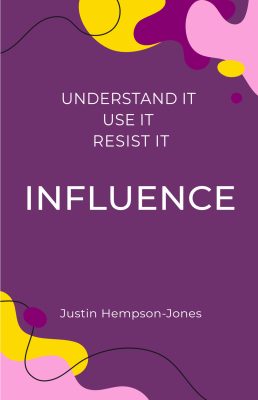
In Influence: Understand it, Use it, Resist it, Justin Hempson-Jones offers a comprehensive exploration of the art and science of influence. This thought-provoking book dives deep into the psychological mechanisms that drive human behavior and decision-making. Hempson-Jones combines academic research with real-world examples to provide readers with practical strategies for both wielding influence effectively and protecting themselves from unwanted persuasion. Unlike many books in the genre, this work stands out for its balanced approach, teaching readers not only how to influence others but also how to recognize and resist manipulative tactics.
Influence: Understand it, Use it, Resist it is primarily aimed at professionals in business, marketing, and leadership roles who want to enhance their persuasion skills and understand the psychology behind influence. However, the book’s accessible language and practical examples make it equally valuable for general readers interested in improving their decision-making abilities and protecting themselves from manipulation. While some concepts may be challenging for complete beginners, Hempson-Jones does an excellent job of breaking down complex ideas into digestible chunks, making the book suitable for a wide range of readers.
Ever wondered why you bought that gadget you never use or why you can’t say no to certain requests? The answers lie in the subtle art of influence, a force so powerful it shapes our daily decisions without us even realizing it. In Influence: Understand it, Use it, Resist it, Justin Hempson-Jones pulls back the curtain on this invisible force, revealing the hidden levers that move us to action.
Picture this: You’re scrolling through your social media feed when an ad catches your eye. Before you know it, you’ve clicked “buy now” on a product you didn’t even know you wanted. What just happened? Hempson-Jones would argue you’ve just fallen prey to a masterfully crafted influence campaign. But fear not, for this book is your shield and sword in the battle for your own mind.
Influence takes readers on a journey through the labyrinth of human psychology, exploring the triggers that drive our behavior. From the power of social proof to the allure of scarcity, Hempson-Jones breaks down each principle of influence with the precision of a neurosurgeon and the storytelling flair of a bestselling novelist.
But this isn’t just a theoretical exercise. Hempson-Jones provides a toolkit for both wielding influence responsibly and defending against its misuse. Whether you’re a business leader looking to motivate your team, a marketer aiming to craft more compelling campaigns, or simply someone who wants to make better decisions, this book has something for you.
Readers will learn how to craft messages that resonate deeply with their audience, how to build trust and credibility in any interaction, and how to spot manipulation tactics before they take hold. Moreover, Hempson-Jones delves into the ethical considerations of influence, challenging readers to use these powerful tools for positive change.
Perhaps most importantly, Influence teaches us how to become more conscious consumers of information in a world where persuasion is constant. By the end of this book, you’ll never look at a sales pitch, political campaign, or even a friendly request the same way again.
At its heart, Influence: Understand it, Use it, Resist it argues that influence is a double-edged sword – a tool that can be used for both good and ill. Hempson-Jones posits that by understanding the mechanics of influence, we can harness its power ethically while protecting ourselves from manipulation. It’s like learning the rules of a game you’ve been playing your whole life without realizing it. Once you know how the pieces move, you can play strategically rather than being moved by unseen forces.
Influence: Understand it, Use it, Resist it has made waves in both academic and business circles for its comprehensive approach to the subject. While many books focus solely on techniques for persuasion, Hempson-Jones’s work stands out for its emphasis on ethical considerations and self-defense against undue influence. The book has been praised for bridging the gap between theoretical research and practical application, making it a valuable resource for both scholars and practitioners. Since its publication, it has been adopted as required reading in numerous business schools and psychology programs. While some critics argue that the book oversimplifies complex psychological processes, its impact on public discourse around influence and decision-making is undeniable. Influence has sparked important conversations about the role of persuasion in modern society and the responsibility that comes with wielding such power.
After thoroughly examining Influence: Understand it, Use it, Resist it by Justin Hempson-Jones, we find it to be a valuable addition to the literature on influence and persuasion. The book’s comprehensive approach, balancing theoretical understanding with practical application, makes it a standout resource for anyone seeking to enhance their influence skills or protect themselves from manipulation.
We appreciate Hempson-Jones’s commitment to ethical considerations throughout the book. In an era where influence techniques are often used without regard for long-term consequences, his emphasis on responsible persuasion is both refreshing and necessary. The dual focus on both using and resisting influence techniques provides readers with a well-rounded perspective that is often lacking in similar works.
The book’s integration of recent research from psychology, behavioral economics, and neuroscience gives it a solid scientific foundation. We found the author’s ability to translate complex concepts into accessible language particularly commendable, making the book suitable for both academic and general audiences.
However, we noted some limitations. The book’s cultural perspective is somewhat narrow, potentially limiting its global applicability. Additionally, while it touches on digital influence, a more in-depth exploration of how traditional influence principles apply in online environments would have enhanced its relevance in today’s digital age.
We also found that the book occasionally oversimplifies complex psychological processes in its effort to be accessible. While this approach makes the content more digestible for general readers, those with a background in psychology or those seeking a deeper understanding might find some explanations lacking in nuance.
Despite these shortcomings, we believe the book’s strengths far outweigh its weaknesses. The comprehensive framework it provides for understanding and applying influence principles is invaluable. The practical strategies and real-world examples make it easy for readers to apply the concepts in their personal and professional lives.
We strongly recommend Influence: Understand it, Use it, Resist it to a wide range of readers. For professionals in business, marketing, or leadership roles, this book offers valuable insights into ethical persuasion techniques that can enhance their effectiveness while maintaining integrity. For general readers, it provides a crucial toolkit for navigating an increasingly complex information landscape, helping them make more informed decisions and resist unwanted influence attempts.
However, we suggest supplementing this book with other resources for a more comprehensive understanding of influence across cultural contexts and in digital environments. Readers with a strong background in psychology might also benefit from pairing it with more academically rigorous texts. Overall, we believe Influence: Understand it, Use it, Resist it is an essential read for anyone looking to improve their understanding of human behavior and decision-making in the modern world.
The essence of Influence: Understand it, Use it, Resist it lies in its comprehensive exploration of the psychological principles that govern human behavior and decision-making. At its core, the book focuses on six key principles of influence: reciprocity, commitment and consistency, social proof, authority, liking, and scarcity. These principles form the foundation of Hempson-Jones’s analysis, providing readers with a framework for understanding how influence operates in various contexts. By dissecting these principles, the author illuminates the often unconscious factors that shape our choices and actions.
Another crucial element of the book’s essence is its dual approach to influence: both as a tool to be wielded and a force to be guarded against. Hempson-Jones emphasizes the importance of ethical persuasion, arguing that influence should be used responsibly and for mutual benefit. He provides strategies for employing these principles in leadership, marketing, and personal interactions, always with an eye towards creating value rather than exploiting others. Simultaneously, the book equips readers with the knowledge to recognize and resist manipulative tactics, fostering critical thinking and decision-making skills.
The concept of cognitive biases plays a significant role in Hempson-Jones’s analysis of influence. He explores how these mental shortcuts, which evolved to help us make quick decisions, can often lead us astray in modern contexts. The author delves into biases such as the availability heuristic, anchoring effect, and confirmation bias, showing how they can be exploited by skilled influencers. By understanding these biases, readers can both harness them for ethical influence and protect themselves from their negative effects.
Hempson-Jones also emphasizes the role of emotional intelligence in effective influence. He argues that truly impactful persuasion goes beyond logical arguments to tap into the emotional drivers of human behavior. The book explores techniques for building rapport, reading non-verbal cues, and crafting emotionally resonant messages. This focus on the emotional aspects of influence sets the book apart from more traditional, logic-focused approaches to persuasion.
The power of storytelling as an influence tool is another key theme of the book. Hempson-Jones demonstrates how narratives can bypass our rational defenses and connect with us on a deeper level. He provides techniques for crafting compelling stories that illustrate key points and motivate action. The author argues that stories are not just a way to entertain, but a fundamental tool for shaping beliefs and behaviors.
Lastly, the book places significant emphasis on the ethical considerations of influence. Hempson-Jones grapples with the moral implications of persuasion techniques, encouraging readers to consider the long-term consequences of their actions. He presents a framework for ethical influence, based on principles of transparency, mutual benefit, and respect for individual autonomy. This focus on ethics elevates the discussion beyond mere tactics, challenging readers to consider their responsibilities as influencers.
The Cookie Experiment: To illustrate the principle of reciprocity, Hempson-Jones recounts a study where researchers posed as restaurant servers. When they gave diners an unexpected small gift (a cookie) with their check, tips increased significantly. This example demonstrates how even small gestures can create a sense of obligation and influence behavior.
The Festinger Doomsday Cult: The author uses the case of a doomsday cult studied by psychologist Leon Festinger to explain the principle of commitment and consistency. When the cult’s prophecy failed to come true, instead of admitting they were wrong, members became even more committed to their beliefs. This example shows how people often go to great lengths to appear consistent with their past actions and statements.
The Hotel Towel Study: To demonstrate the power of social proof, Hempson-Jones describes a study conducted in hotels. When guests were informed that the majority of other guests reused their towels, they were significantly more likely to do so themselves. This example illustrates how people often look to others’ behavior to guide their own actions.
The Milgram Obedience Experiment: The author uses Stanley Milgram’s famous obedience experiments to highlight the influence of authority. Participants were willing to administer seemingly dangerous electric shocks to others simply because an authority figure told them to do so. This example underscores the profound impact that perceived authority can have on behavior.
The Joe Girard Success Story: To illustrate the principle of liking, Hempson-Jones recounts the story of Joe Girard, once known as the world’s greatest car salesman. Girard’s success was largely attributed to his ability to make customers like him through personalized attention and follow-up. This example shows how fostering positive relationships can significantly enhance influence.
The British Airways London Eye Announcement: The author uses British Airways’ announcement of the temporary closure of the London Eye Ferris wheel to demonstrate the principle of scarcity. When the company announced the attraction would close for refurbishment, ticket sales skyrocketed as people rushed to experience it before it became unavailable. This example illustrates how perceived scarcity can drive demand and influence decision-making.
The Xerox Line Study: To explain the power of automatic responses, Hempson-Jones describes a study where researchers asked to cut in line at a copy machine. They found that providing a reason, even if it was meaningless, significantly increased compliance. This example highlights how certain trigger words or phrases can prompt automatic responses, bypassing careful consideration.
The Goldstein Hotel Sustainability Study: The author uses a study by Noah Goldstein to illustrate the importance of tailored messaging. When hotel guests were given a general message about saving the environment, towel reuse increased slightly. However, when the message was specific to the guest’s room, the effect was much stronger. This example demonstrates the power of personalized, contextual influence strategies.
Hempson-Jones emphasizes that reciprocity – the human tendency to repay favors – can be a potent force for ethical influence. He suggests that by offering genuine value first, without expecting immediate returns, individuals and organizations can build goodwill and increase the likelihood of future compliance. For example, a business might provide free, valuable content to potential customers before asking for a sale. To apply this insight, focus on giving before asking. This could mean offering free samples, providing helpful advice, or simply performing small acts of kindness. The key is to ensure that your initial offering is genuinely valuable and not perceived as a manipulative tactic.
The book highlights how people’s desire to appear consistent with their past actions can be leveraged for positive influence. Hempson-Jones argues that getting someone to make a small commitment can lead to larger commitments in the future. To apply this insight, start by asking for small, easy-to-fulfill requests before moving on to larger ones. For instance, a charity might first ask supporters to sign a petition before soliciting donations. In personal relationships, you might ask someone to commit to a small favor before requesting more significant help. The crucial factor is ensuring the initial commitment aligns with the person’s values and self-image.
While the power of social proof is well-known, Hempson-Jones reveals that its effectiveness dramatically increases when the proof is specific and relatable to the target audience. Generic statements about popularity are less impactful than specific examples from similar individuals or groups. To apply this insight, tailor your social proof to your audience. For example, instead of saying “thousands of satisfied customers,” a local business might highlight testimonials from customers in the same neighborhood. In marketing, use case studies and testimonials that closely match your target demographic. The more your audience can see themselves in your social proof, the more influential it becomes.
The book explores how authority influences decision-making and behavior. Hempson-Jones points out that authority isn’t just about titles; it can be conveyed through various symbols and demonstrations of expertise. To apply this insight, consider how you present yourself or your brand. Use relevant credentials, but also demonstrate expertise through actions. For instance, a financial advisor might share regular market analyses or write articles for respected publications. In personal interactions, showcasing knowledge through thoughtful questions and informed opinions can establish authority. Remember, the goal is to build genuine credibility, not to intimidate or overwhelm.
Hempson-Jones emphasizes that people are more likely to be influenced by those they like, and liking is often based on perceived similarity and familiarity. He also notes the power of genuine compliments in building rapport. To apply this insight, look for common ground with others and emphasize shared interests or experiences. In business, this might mean tailoring your communication style to match your client’s or highlighting shared values. Practice active listening to uncover similarities and opportunities for genuine praise. Remember, authenticity is key – insincere flattery or forced commonalities will likely backfire.
The book reveals that while scarcity can drive desire, it’s most powerful when combined with the perception of unique benefits. Hempson-Jones argues that people are more motivated by the potential loss of exclusive advantages than by the mere lack of availability. To apply this insight, don’t just emphasize limited quantity or time when trying to influence. Instead, highlight what unique benefits might be lost if the opportunity isn’t taken. For example, a limited-time offer might focus on the exclusive features or experiences that won’t be available later, rather than just the deadline. In personal situations, you might emphasize the unique aspects of an opportunity that align with the other person’s specific interests or goals.
Hempson-Jones explores how the way information is presented, or framed, can dramatically influence decisions. He notes that people often react differently to the same information depending on whether it’s framed as a gain or a loss. To apply this insight, carefully consider how you present options or information. For instance, instead of highlighting a 10% failure rate, emphasize the 90% success rate. When asking for behavior change, frame the desired action in terms of what will be gained rather than lost. In negotiations, experiment with framing proposals in different ways to see which resonates most with the other party. The key is to truthfully present information in a way that aligns with your audience’s values and motivations.
The book discusses how mental strain or distraction can make people more susceptible to influence attempts. Hempson-Jones explains that when cognitive resources are taxed, people are more likely to rely on mental shortcuts and automatic responses. To ethically apply this insight, consider the context in which you’re communicating important information or making requests. If you need someone’s full attention for a crucial decision, ensure they’re not overwhelmed or distracted. Conversely, if you’re providing information to help people make better automatic decisions (like healthy eating choices), consider how to make that information prominent in high-stress or distracting environments.
Hempson-Jones emphasizes the unique power of storytelling in influence and persuasion. He argues that narratives can bypass our rational defenses and connect with us on an emotional level, making them incredibly effective for changing beliefs and behaviors. To apply this insight, incorporate storytelling into your communication strategy. Instead of just presenting facts and figures, wrap your key points in compelling narratives. For example, a leader implementing organizational change might share stories of similar successful transformations rather than just outlining the plan. In marketing, use customer stories to illustrate the benefits of your product or service. The most effective stories are authentic, relatable, and aligned with your audience’s experiences and values.
Throughout the book, Hempson-Jones stresses the importance of ethical influence. He argues that truly effective influence isn’t about short-term manipulation, but about creating mutual benefit and long-term positive relationships. To apply this insight, always consider the long-term consequences of your influence attempts. Ask yourself if the outcome will genuinely benefit all parties involved. For instance, a salesperson might focus on matching customers with products that truly meet their needs, even if it means losing an immediate sale. In leadership, prioritize decisions that benefit the entire team or organization, not just short-term metrics. By focusing on creating value for others, you build trust and credibility, enhancing your influence over time.
One of the major strengths of Influence: Understand it, Use it, Resist it is its comprehensive framework for understanding the mechanisms of influence. Hempson-Jones doesn’t just list techniques; he provides a structured approach to analyzing and applying influence principles. The book’s six key principles of influence (reciprocity, commitment and consistency, social proof, authority, liking, and scarcity) offer readers a robust toolkit for understanding human behavior. This framework is particularly valuable because it’s grounded in psychological research, giving readers confidence in its validity. The author’s ability to connect these principles to real-world scenarios makes the framework not just theoretical, but practical and applicable across various contexts.
Another significant strength of the book is its effective balance between theoretical knowledge and practical application. Hempson-Jones doesn’t just explain the concepts; he provides concrete strategies for implementing them in business, personal relationships, and everyday life. For each principle of influence, the author offers specific techniques, backed by case studies and examples. This approach ensures that readers don’t just understand the theory, but can also apply it effectively in their own lives. The inclusion of ethical considerations for each technique further enhances its practical value, guiding readers on how to use influence responsibly.
The book’s strong focus on the ethical implications of influence techniques sets it apart from many others in the field. Hempson-Jones doesn’t shy away from addressing the potential for manipulation and misuse of influence tactics. Instead, he consistently emphasizes the importance of using these techniques responsibly and for mutual benefit. This ethical framework provides readers with a valuable perspective on the long-term consequences of their actions, encouraging them to consider not just the effectiveness of their influence attempts, but also their impact on others and society at large. This approach adds depth to the book and makes it a more responsible guide to influence.
Influence: Understand it, Use it, Resist it stands out for its thorough integration of the latest research in psychology, behavioral economics, and neuroscience. Hempson-Jones doesn’t rely solely on classic studies but incorporates recent findings that provide new insights into human behavior. This up-to-date approach ensures that readers are getting the most current understanding of influence mechanisms. The author’s ability to translate complex research into accessible language is particularly commendable, making the book valuable for both academic and general audiences.
A unique strength of the book is its dual focus on both wielding influence and resisting unwanted persuasion. Many books in this genre focus solely on how to influence others, but Hempson-Jones recognizes the importance of understanding these techniques for self-defense as well. This balanced approach equips readers with the tools to become more effective influencers while also becoming more discerning consumers of information. The strategies provided for recognizing and resisting manipulation are particularly valuable in today’s information-rich environment.
The book’s engaging writing style and well-structured format enhance its readability and impact. Hempson-Jones has a talent for explaining complex concepts in clear, accessible language without oversimplifying. He uses a variety of techniques to keep the reader engaged, including relevant anecdotes, thought-provoking questions, and practical exercises. The logical progression of ideas, from basic principles to more advanced applications, allows readers to build their understanding gradually. This structure makes the book accessible to newcomers to the field while still offering depth for more experienced readers.
One weakness of Influence: Understand it, Use it, Resist it is its somewhat limited cultural perspective. While the principles of influence discussed are largely universal, the examples and case studies predominantly come from Western, particularly American and British, contexts. This narrow focus may limit the book’s applicability for readers from other cultural backgrounds. The effectiveness of influence techniques can vary significantly across cultures, and a more diverse range of examples would have enhanced the book’s global relevance. Exploring how influence principles manifest in different cultural contexts could have provided valuable insights for readers operating in an increasingly globalized world.
While the book covers a wide range of influence scenarios, it falls short in fully addressing the nuances of digital influence. In today’s digital age, social media, online marketing, and digital communication platforms play a crucial role in how influence operates. Although Hempson-Jones touches on these topics, a more in-depth exploration of how traditional influence principles apply (or don’t apply) in digital environments would have made the book more comprehensive. The unique challenges and opportunities presented by digital platforms for influence deserve more attention, given their growing importance in both personal and professional spheres.
Despite its strong foundation in research, the book sometimes lacks quantitative data to support its claims. While Hempson-Jones provides numerous anecdotes and case studies, there’s a relative scarcity of hard numbers and statistical analyses. This absence of quantitative evidence may leave some readers, particularly those from scientific or data-driven backgrounds, wanting more concrete proof of the effectiveness of certain influence techniques. Including more quantitative studies and their results would have strengthened the book’s arguments and provided readers with a clearer picture of the measurable impacts of various influence strategies.
In its effort to make complex psychological concepts accessible, the book occasionally oversimplifies some of the underlying processes. While this approach makes the content more digestible for a general audience, it may leave more advanced readers or those with a background in psychology wanting a deeper dive into the nuances of human behavior. Some of the explanations for why certain influence techniques work could benefit from a more thorough exploration of the psychological mechanisms at play. This simplification, while making the book more accessible, sometimes comes at the cost of a more nuanced understanding of influence.
One blind spot in Influence: Understand it, Use it, Resist it is its focus on individual-level influence at the expense of exploring systemic or institutional influences. While understanding personal interactions is crucial, the book may lead readers to underestimate the role of larger societal structures, cultural norms, and institutional practices in shaping behavior and decision-making. This individual focus might cause readers to overlook important contextual factors when applying influence techniques or analyzing influence attempts. Robert Cialdini’s Pre-Suasion: A Revolutionary Way to Influence and Persuade offers a more in-depth look at how context and environment shape influence, providing a valuable complement to Hempson-Jones’s work.
Another significant blind spot is the book’s limited exploration of how influence principles vary across cultures. While the core concepts may be universal, their expression and effectiveness can differ dramatically in different cultural contexts. This oversight might lead readers to incorrectly assume that the strategies presented will be equally effective in all settings. Readers working in multicultural environments or global markets might find themselves unprepared for the nuances of cross-cultural influence. Erin Meyer’s The Culture Map provides valuable insights into how persuasion and influence operate across different cultures, filling this gap in Hempson-Jones’s work.
While the book does address emotional aspects of influence, it may underestimate the extent to which irrational factors and emotions drive human behavior. The focus on logical principles and strategies might lead readers to overestimate the role of rational decision-making in influence processes. In reality, many decisions are made based on gut feelings, unconscious biases, and emotional responses that may not align with the rational frameworks presented. Daniel Kahneman’s Thinking, Fast and Slow offers a deeper exploration of the irrational aspects of human decision-making, providing a valuable counterpoint to the more structured approach in Hempson-Jones’s book.
The rapidly evolving landscape of technology and its impact on influence techniques is a blind spot in the book. While digital platforms are mentioned, the profound ways in which AI, big data, and personalized algorithms are reshaping the field of influence are not fully explored. This oversight might leave readers unprepared for the sophisticated influence techniques employed in modern digital marketing and social media environments. Readers might benefit from supplementing Hempson-Jones’s work with books like Shoshana Zuboff’s The Age of Surveillance Capitalism, which delves into how technology is changing the nature of influence and persuasion in the digital age.
Robert Cialdini’s seminal work Influence: The Psychology of Persuasion is often considered the foundational text in the field of influence and persuasion. While Hempson-Jones’s book builds on many of Cialdini’s principles, it offers a more contemporary perspective and a stronger emphasis on ethical considerations. Cialdini’s work focuses primarily on six principles of influence (reciprocity, commitment and consistency, social proof, authority, liking, and scarcity), which Hempson-Jones incorporates but expands upon. Hempson-Jones’s book provides more up-to-date examples and a greater focus on digital contexts, making it more relevant to today’s readers. However, Cialdini’s work offers deeper psychological explanations for each principle, which some readers might find more compelling.
Cialdini’s follow-up work, Pre-Suasion, focuses on the importance of the moments before an influence attempt. While Hempson-Jones touches on this concept, Cialdini’s book provides a more in-depth exploration of how context and timing can dramatically affect the success of influence strategies. Hempson-Jones’s book offers a broader overview of influence techniques, making it more accessible for beginners, while Pre-Suasion might be more suitable for those already familiar with basic influence principles and looking to deepen their understanding.
Chris Voss’s book approaches influence from the perspective of high-stakes negotiation. While Hempson-Jones provides a broader framework for understanding influence, Voss offers more specific tactics for persuasion in challenging situations. Voss’s work is more anecdotal, drawing from his experience as an FBI hostage negotiator, while Hempson-Jones’s book is more grounded in academic research. However, both emphasize the importance of emotional intelligence and active listening in effective influence, providing complementary perspectives on these crucial skills.
Kahneman’s work, while not specifically about influence, provides crucial insights into decision-making processes that underpin many influence techniques. Hempson-Jones incorporates some of Kahneman’s ideas about cognitive biases, but Thinking, Fast and Slow offers a much deeper dive into the irrational aspects of human thinking. Kahneman’s book is more academic and can be challenging for general readers, while Hempson-Jones’s work is more accessible and practical. However, readers seeking a comprehensive understanding of influence would benefit from both perspectives.
Nudge focuses on how small changes in the way choices are presented can have significant impacts on decision-making. While Hempson-Jones discusses some aspects of choice architecture, Thaler and Sunstein’s book provides a more in-depth exploration of this concept, particularly in policy and public health contexts. Hempson-Jones’s work offers a broader range of influence techniques, while Nudge focuses more narrowly on subtle interventions to guide behavior. Both books emphasize the ethical use of influence techniques, but Nudge provides more extensive discussions on the ethical implications of influencing public behavior.
Ariely’s book explores the irrational patterns that influence decision-making, providing insights that complement Hempson-Jones’s more structured approach to influence. While Hempson-Jones focuses on how to apply influence principles, Ariely delves deeper into why these principles work, offering a more psychological perspective. Predictably Irrational is more focused on consumer behavior and economic decision-making, while Hempson-Jones’s book provides a broader application of influence principles across various contexts. Both books use engaging examples and studies to illustrate their points, but Ariely’s work leans more heavily on experimental evidence.
Hempson-Jones’s principles of influence can significantly enhance a company’s marketing efforts. By incorporating reciprocity, commitment and consistency, social proof, authority, liking, and scarcity into marketing campaigns, businesses can create more compelling and effective messages. This approach involves redesigning marketing materials to leverage these principles, such as offering valuable content to potential customers (reciprocity), showcasing customer testimonials (social proof), and highlighting limited-time offers (scarcity).
However, implementing these strategies may face resistance from traditional marketing teams accustomed to more direct or aggressive tactics. There’s also a risk of appearing manipulative if these principles are applied heavy-handedly. Additionally, measuring the effectiveness of these subtler influence techniques can be challenging, potentially making it difficult to justify the approach to stakeholders focused on immediate, quantifiable results.
To overcome these challenges, businesses should start with a pilot program in a specific market segment or product line. This allows for controlled testing and refinement of the approach. Comprehensive training for marketing teams on the ethical application of influence principles is crucial. Developing new metrics that capture long-term customer relationships and brand loyalty, rather than just immediate sales, can help demonstrate the value of this approach to stakeholders. Regular ethical audits of marketing materials can ensure that influence techniques are being used responsibly.
The book’s insights on influence can transform leadership and management practices within an organization. Leaders can use the principles to more effectively motivate teams, drive change initiatives, and foster a positive organizational culture. This might involve leaders demonstrating expertise (authority), building genuine connections with team members (liking), and consistently following through on commitments (commitment and consistency).
Implementing these changes can be challenging in organizations with entrenched leadership styles or hierarchical structures. Some leaders may view these influence techniques as manipulative or beneath their position. There’s also a risk of inconsistent application across different levels of management, leading to confusion or cynicism among employees.
To address these issues, organizations should invest in comprehensive leadership development programs that incorporate influence principles. These programs should emphasize the ethical application of influence and its role in creating a positive work environment. Encouraging leaders to share success stories and best practices can help spread adoption. Regular employee feedback surveys can help track the effectiveness of these new leadership approaches and identify areas for improvement. It’s also crucial to align performance evaluations and promotions with these influence-based leadership practices to ensure consistent application throughout the organization.
Hempson-Jones’s influence principles can significantly enhance sales and customer service processes. Sales teams can use reciprocity by offering valuable insights or resources to potential clients, leverage social proof through case studies, and apply scarcity principles ethically in their offers. Customer service can benefit from the liking principle by training representatives to build genuine rapport with customers.
However, implementing these changes may face resistance from sales teams accustomed to high-pressure tactics or quotas that incentivize short-term gains over long-term relationship building. There’s also a risk of these techniques being applied manipulatively, potentially damaging customer trust. In customer service, the challenge lies in maintaining authenticity while applying influence principles, especially in high-stress situations.
To overcome these obstacles, businesses should revise their sales and customer service training programs to incorporate ethical influence techniques. This should include role-playing exercises and real-world scenarios to practice applying these principles authentically. Revising compensation structures to reward long-term customer relationships rather than just immediate sales can align incentives with ethical influence practices. For customer service, developing scripts and guidelines that incorporate influence principles while maintaining flexibility for individual interactions can help. Regular customer feedback and satisfaction surveys can help measure the effectiveness of these new approaches and identify areas for refinement.
The influence principles outlined in the book can be powerful tools in business negotiations. By understanding and applying concepts like reciprocity, commitment and consistency, and scarcity, negotiators can create more favorable outcomes while building stronger relationships. This approach involves preparing negotiation strategies that incorporate these principles, such as identifying opportunities for mutual benefit (reciprocity) or framing proposals in terms of potential losses (scarcity).
Implementing these strategies may face resistance from negotiators accustomed to more adversarial approaches. There’s a risk of appearing weak or giving away too much in an effort to build reciprocity. Additionally, in high-stakes negotiations, there may be pressure to use these principles manipulatively to gain short-term advantages.
To address these challenges, organizations should develop comprehensive negotiation training programs that emphasize the long-term benefits of ethical influence in negotiations. This training should include case studies demonstrating how ethical influence can lead to better outcomes and stronger business relationships. Creating a supportive culture that values long-term partnerships over short-term gains is crucial. Implementing a system for negotiation debriefs and lessons learned can help refine the application of these principles over time. It’s also important to develop ethical guidelines for negotiations to ensure that influence principles are used responsibly.
Hempson-Jones’s work on influence can be leveraged to shape a more positive and productive organizational culture. By consciously applying principles like social proof and commitment and consistency, leaders can encourage desired behaviors and values throughout the organization. This might involve highlighting exemplary employees (social proof), creating public commitments to organizational values (commitment and consistency), and fostering a culture of reciprocity and mutual support.
However, changing organizational culture is notoriously difficult and time-consuming. There may be resistance from employees comfortable with the existing culture or skeptical of new initiatives. There’s also a risk of the influence principles being perceived as manipulative attempts to control employee behavior, potentially leading to backlash.
To overcome these obstacles, organizations should take a long-term, multifaceted approach to cultural change. This should include clear communication about the reasons for change and the benefits to employees. Involving employees in the process of defining and implementing the new culture can increase buy-in. Leaders at all levels should be trained in the ethical application of influence principles and held accountable for modeling the desired culture. Regular cultural assessments and employee feedback mechanisms can help track progress and identify areas for adjustment. Celebrating and rewarding behaviors that align with the new culture can reinforce positive changes over time.
The influence principles described in the book can significantly improve an organization’s ability to manage and implement change. By leveraging social proof, commitment and consistency, and authority, change leaders can more effectively overcome resistance and drive adoption of new initiatives. This might involve showcasing early adopters (social proof), getting public commitments from key stakeholders (commitment and consistency), and ensuring that change messages come from respected leaders (authority).
Implementing these strategies in change management can be challenging due to the complex and often emotional nature of organizational change. There’s a risk of appearing manipulative if influence techniques are used heavy-handedly, potentially increasing resistance. Additionally, in large organizations, consistently applying these principles across different departments and levels can be difficult.
To address these challenges, organizations should integrate influence principles into their existing change management frameworks and methodologies. This integration should emphasize the ethical and transparent use of these techniques. Comprehensive training for change leaders and change agents on the application of influence principles in the context of organizational change is crucial. Developing a network of “change champions” who understand and can model these influence techniques can help spread adoption throughout the organization. Regular pulse surveys and feedback sessions during the change process can help gauge the effectiveness of these approaches and allow for real-time adjustments. It’s also important to document and share success stories of how these influence principles positively impacted change initiatives to build credibility and support for the approach.
Artificial Intelligence is revolutionizing the field of influence and persuasion. AI algorithms can analyze vast amounts of data to predict human behavior and tailor influence strategies. This trend will likely accelerate, making Hempson-Jones’s principles even more crucial for understanding and navigating AI-driven influence attempts.
As AI becomes more sophisticated, we may see more personalized and targeted influence strategies. This could make influence attempts more effective but also raises ethical concerns. Understanding the psychological principles behind influence, as outlined in the book, will be essential for both leveraging AI-powered influence ethically and resisting manipulative uses of this technology.
As online misinformation and digital manipulation become more prevalent, there’s a growing emphasis on digital literacy. Hempson-Jones’s insights on resisting unwanted influence will likely become increasingly relevant in this context.
Educational institutions and organizations may incorporate influence resistance training into their curricula and professional development programs. This trend could lead to a more discerning and critical public, potentially changing how influence operates in digital spaces.
There’s a growing demand for ethical business practices, driven by increased transparency and consumer awareness. Hempson-Jones’s emphasis on ethical influence aligns well with this trend.
Companies may increasingly adopt influence strategies that prioritize long-term relationships and mutual benefit over short-term gains. This could lead to a shift in marketing, sales, and leadership practices across industries.
As businesses and interactions become increasingly global, understanding how influence principles vary across cultures is becoming more critical. While Hempson-Jones’s book provides a solid foundation, this trend may necessitate expanded research and application of influence principles in diverse cultural contexts.
We may see more studies and literature focusing on cross-cultural influence strategies. This could lead to more nuanced and culturally sensitive applications of the book’s principles in global business and diplomacy.
Advancements in neuroscience are providing new insights into decision-making and behavior. This trend is likely to intersect with influence studies, potentially validating or refining some of Hempson-Jones’s principles.
Future research may use brain imaging and other neuroscientific techniques to study influence processes in real-time. This could lead to more precise and scientifically grounded influence strategies, as well as more effective resistance techniques.
Influence: Understand it, Use it, Resist it by Justin Hempson-Jones has the potential to significantly shape the discourse around influence and persuasion in both academic and practical spheres. Its balanced approach, combining insights on wielding influence ethically and resisting unwanted persuasion, addresses a growing need in our information-saturated society. As digital platforms continue to evolve and AI-driven persuasion techniques become more sophisticated, the book’s emphasis on understanding and critically evaluating influence attempts becomes increasingly relevant.
In the business world, the book’s insights could lead to more ethical marketing and leadership practices. By highlighting the long-term benefits of ethical influence, Hempson-Jones’s work may encourage organizations to move away from manipulative tactics towards more transparent and mutually beneficial approaches. This shift could have far-reaching implications for consumer trust and corporate social responsibility.
The book’s focus on resisting unwanted influence is particularly timely in an era of misinformation and targeted advertising. As readers become more aware of influence techniques, they may become more discerning consumers of information, potentially leading to a more informed and critical public. This could have broader societal impacts, from changing how political campaigns are run to altering how social media platforms approach content moderation.
In educational settings, the book’s accessible explanation of complex psychological principles could lead to increased integration of influence and persuasion studies in curricula across various disciplines. This could result in a new generation of professionals who are more adept at navigating the complexities of human behavior and decision-making.
However, the book’s impact may be limited by its cultural specificity. As global interactions continue to increase, there may be a growing demand for resources that address influence techniques across different cultural contexts. Future editions or supplementary works might need to address this gap to maintain relevance in an increasingly globalized world.
The long-term influence of the book will likely depend on how well its principles adapt to rapidly changing technological landscapes. As AI and machine learning continue to transform how influence operates in digital spaces, some of the book’s strategies may need to evolve. Nevertheless, its core principles and ethical framework provide a solid foundation that can be built upon as new challenges in the field of influence emerge.
Thinking, Fast and Slow by Daniel Kahneman: This seminal work provides a deep dive into the dual-process theory of cognition, explaining how our fast, intuitive thinking and slower, more deliberative thinking interact. It offers valuable insights into the cognitive biases that underpin many of the influence principles discussed in Hempson-Jones’s book. Kahneman’s work can help readers understand why certain influence techniques are effective and how to guard against irrational decision-making.
The Power of Habit by Charles Duhigg: Duhigg’s exploration of habit formation and change complements Hempson-Jones’s work by providing a deeper understanding of how behaviors become ingrained and how they can be altered. This book can help readers apply influence principles more effectively by leveraging the power of habit, particularly in relation to the commitment and consistency principle.
Predictably Irrational by Dan Ariely: Ariely’s book delves into the irrational patterns that influence decision-making, providing a perfect companion to Hempson-Jones’s more structured approach to influence. It offers additional insights into why people make certain choices, which can enhance readers’ understanding of how influence works in practice.
Made to Stick by Chip Heath and Dan Heath: This book focuses on what makes ideas memorable and influential, complementing Hempson-Jones’s work by providing practical strategies for making messages more impactful. It’s particularly useful for readers looking to enhance their ability to communicate persuasively in various contexts.
Never Split the Difference by Chris Voss: Voss’s book on negotiation techniques offers a different perspective on influence, drawing from high-stakes FBI hostage negotiations. It provides additional tactical approaches to influence that can complement Hempson-Jones’s more strategic framework, particularly useful for readers in business or leadership roles.
The Culture Map by Erin Meyer: Meyer’s work on cross-cultural communication and management addresses a gap in Hempson-Jones’s book by exploring how influence and persuasion operate across different cultures. It’s an essential read for anyone applying influence principles in a global context.
Influence: The Psychology of Persuasion by Robert Cialdini: While Hempson-Jones builds on Cialdini’s work, reading the original can provide valuable context and additional examples. Cialdini’s book offers a more in-depth exploration of the six principles of influence, which can deepen readers’ understanding of the concepts presented in Hempson-Jones’s work.
Pre-Suasion: A Revolutionary Way to Influence and Persuade by Robert Cialdini: This follow-up to Cialdini’s original work focuses on the importance of the moments before an influence attempt. It complements Hempson-Jones’s book by providing a more detailed look at how context and timing affect influence, offering readers additional tools for enhancing their persuasive abilities.
Influence at Work: This website, founded by Robert Cialdini, offers articles, webinars, and training programs on ethical influence and persuasion. It provides valuable resources for applying influence principles in business contexts. (https://www.influenceatwork.com/)
Behavioral Scientist: An online magazine that publishes articles on behavioral science research and its applications. It offers insights into the latest developments in influence and decision-making studies. (https://behavioralscientist.org/)
Society for Personality and Social Psychology: This organization’s website provides access to research papers, conferences, and webinars on social psychology topics, including influence and persuasion. (https://www.spsp.org/)
Persuasive Technology Conference: An annual conference focusing on the design of technologies to change attitudes or behaviors. It offers insights into the intersection of technology and influence. (https://persuasive2023.com/)
Behavioral Science & Policy Association Annual Conference: This conference brings together behavioral scientists, policymakers, and practitioners to discuss the application of behavioral insights, including influence principles. (https://behavioralpolicy.org/events/)
Association for Consumer Research: A global organization dedicated to advancing consumer behavior research. Membership provides access to publications, conferences, and networking opportunities in the field of consumer psychology and influence. (https://www.acrwebsite.org/)
International Association of Applied Psychology: This organization offers resources and networking opportunities for professionals interested in the application of psychology, including influence and persuasion techniques. (https://iaapsy.org/)
Choiceology: Hosted by Katy Milkman, this podcast explores the psychological and economic factors that drive human decision-making, offering insights into influence and behavior change. (https://www.schwab.com/resource-center/insights/podcast)
Hidden Brain: Hosted by Shankar Vedantam, this podcast explores the unconscious patterns that drive human behavior, providing valuable context for understanding influence principles. (https://hiddenbrain.org/)
You Are Not So Smart: This podcast, hosted by David McRaney, explores self-delusion and cognitive biases, offering insights into why people fall for certain influence techniques. (https://youarenotsosmart.com/podcast/)
Influence: Bootcamp for Change Agents: Offered by the University of Pennsylvania on Coursera, this course provides practical strategies for influencing others and driving change. (https://www.coursera.org/learn/influence-change)
The Science of Persuasion: A free online course offered by Robert Cialdini through Alison, covering the six principles of influence. (https://alison.com/course/the-science-of-persuasion)
The Social Dilemma: This documentary explores how social media platforms use influence techniques to shape user behavior, providing a critical perspective on the application of influence principles in the digital age.
Merchants of Doubt: This documentary examines how skilled influencers can shape public opinion on scientific issues, offering insights into the power and ethics of influence in public discourse.
12 Angry Men: While not a documentary, this classic film provides an excellent case study in group influence and persuasion dynamics, illustrating many of the principles discussed in Hempson-Jones’s book.