Reviews
“Former FBI Hostage Negotiator Chris Voss has few equals when it comes to high stakes negotiations. Whether for your business or your personal life, his techniques work.” — Joe Navarro, FBI Special Agent (Ret.) and author of the international bestseller, What Every Body is Saying
“Chatty and friendly and packed with helpful resources, this is an intriguing approach to business and personal negotiations.” — Publishers Weekly
In this gripping narrative, Chris Voss unveils the art of high-stakes negotiation through the lens of his experiences as an FBI hostage negotiator. The book challenges conventional wisdom about deal-making and presents a fresh, counterintuitive approach to negotiation that works in both boardrooms and everyday life. Voss argues that human emotion, not logic, ultimately drives all human behavior and decision-making. He introduces readers to powerful techniques like tactical empathy, mirroring, and labeling, showing how these tools can be used to gain the upper hand in any negotiation. With real-life examples and practical advice, Voss demonstrates how his methods can help readers become more persuasive in both their professional and personal lives.
Never Split the Difference caters to a broad audience, ranging from business professionals to individuals seeking to improve their personal relationships. The primary audience includes executives, salespeople, and anyone involved in high-stakes negotiations in their professional lives. However, the secondary audience is equally significant, encompassing those who want to enhance their communication skills and become more persuasive in everyday interactions. Voss’s writing style makes complex negotiation concepts accessible to readers without specialized knowledge, using relatable examples and clear explanations. While the book draws from intense hostage situations, it skillfully translates these lessons into practical advice for common scenarios, making it valuable for readers at all levels of negotiation experience.
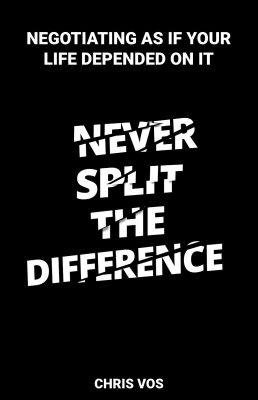
Imagine walking into a high-stakes negotiation armed with the skills of an FBI hostage negotiator. That’s exactly what Chris Voss offers in his groundbreaking book, Never Split the Difference: Negotiating As If Your Life Depended On It. But can the same techniques used to save lives in dangerous standoffs really work in everyday business and personal situations? Voss argues they can – and he’s got the stories to prove it.
From the streets of New York to the war-torn Middle East, Voss takes readers on a thrilling journey through his career as the FBI’s lead international kidnapping negotiator. He recounts pulse-pounding incidents where the right word or phrase made the difference between life and death. But this isn’t just a collection of war stories. Voss deftly translates these extreme scenarios into practical lessons for everyday life, challenging long-held beliefs about negotiation along the way.
At the heart of Voss’s approach is a radical idea: emotions, not logic, drive human behavior. He argues that traditional negotiation tactics focusing on rational argument and compromise often fall short. Instead, Voss introduces readers to powerful techniques like “tactical empathy,” “mirroring,” and “labeling” – tools designed to build rapport, gather information, and influence decision-making on an emotional level.
Voss doesn’t just tell readers what to do; he shows them how to do it. Through a series of exercises and real-world examples, he guides readers in applying his techniques to common scenarios. Whether it’s asking for a raise, buying a car, or resolving a family dispute, Voss demonstrates how his methods can lead to better outcomes. He emphasizes the importance of preparation, active listening, and reading non-verbal cues – skills that can be honed with practice.
Readers of Never Split the Difference will learn how to:
The core message of Never Split the Difference is that successful negotiation is less about logic and compromise and more about understanding and influencing human emotions. Voss argues that by mastering the art of “tactical empathy” – the ability to recognize, understand, and influence others’ feelings – anyone can become a skilled negotiator.
He emphasizes that the key to uncovering this crucial information lies not in asserting your own position, but in genuinely trying to understand the other person’s perspective. This approach turns traditional negotiation wisdom on its head. Instead of trying to be rational and meet in the middle, Voss advocates for embracing the emotional and irrational aspects of human decision-making. He shows how techniques like mirroring (repeating the last few words someone has said) and labeling (putting a name to someone’s emotion) can create a sense of trust and understanding, opening the door to more productive negotiations.
Never Split the Difference has made a significant impact in the field of negotiation and communication since its publication in 2016. It challenges the long-standing approach popularized by books like Getting to Yes, which emphasize rational problem-solving and finding mutually beneficial solutions. Voss’s emotion-based approach offers a fresh perspective that many find more effective in real-world situations.
The book has been widely praised for its practical, actionable advice. Unlike many business books that offer vague platitudes, Voss provides specific techniques and scripts that readers can immediately put into practice. This has made the book popular not just among business professionals, but also with a general audience looking to improve their communication skills.
Never Split the Difference has received numerous accolades, including being named one of the Best Books of 2016 by Inc. Magazine and one of the 7 Best Negotiation Books of 2019 by Thinkers360. It has been translated into over 30 languages, indicating its global appeal and relevance.
However, the book is not without its critics. Some argue that Voss’s techniques, while effective, can be manipulative if not used ethically. Others point out that while his approach may work well in high-pressure, short-term negotiations, it may be less suited to building long-term relationships or solving complex, multi-party disputes.
Despite these criticisms, Never Split the Difference has undeniably shifted the conversation about negotiation. It has brought attention to the role of emotions and psychological dynamics in deal-making, areas that were often overlooked in traditional negotiation theory. Whether you agree with all of Voss’s methods or not, his book has become required reading for anyone serious about improving their negotiation skills.
Never Split the Difference by Chris Voss offers a fresh and compelling perspective on negotiation that we find both innovative and practical. Drawing from his experiences as an FBI hostage negotiator, Voss presents a set of techniques that challenge traditional negotiation wisdom and place emotional intelligence at the forefront of successful negotiation strategies.
We appreciate the book’s emphasis on tactical empathy and active listening, which provide readers with powerful tools for understanding and influencing their negotiation counterparts. The clear, actionable techniques described in the book, such as mirroring, labeling, and calibrated questions, are particularly valuable. These methods are explained in detail and illustrated with engaging real-world examples, making them accessible to readers regardless of their negotiation experience.
The book’s unique approach, blending high-stakes negotiation tactics with everyday scenarios, sets it apart from many other negotiation texts. We find that this makes the content not only intellectually stimulating but also immediately applicable to a wide range of personal and professional situations.
However, we also recognize that the book has its limitations. The focus on emotional tactics, while powerful, may overshadow other important aspects of negotiation such as thorough preparation, understanding of power dynamics, and long-term relationship building. Additionally, the emphasis on techniques derived from high-pressure, adversarial situations may not always translate well to more collaborative environments.
We also note that the potential for misuse of these psychological tactics raises ethical considerations that readers should carefully consider. While Voss emphasizes the importance of creating value for both parties, some of the techniques could be interpreted as manipulative if not applied with integrity and genuine concern for mutual benefit.
Our Recommendation
Despite these caveats, we strongly recommend Never Split the Difference to anyone looking to improve their negotiation skills. The book offers valuable insights and practical techniques that can enhance one’s ability to navigate complex interpersonal dynamics in both professional and personal contexts.
We suggest reading this book as part of a broader study of negotiation theory and practice. Pairing it with more traditional texts like Getting to Yes or more comprehensive works like Negotiation Genius can provide a well-rounded understanding of different negotiation approaches. This balanced approach will allow readers to develop a flexible negotiation style that can be adapted to various situations and cultural contexts.
The essence of Never Split the Difference revolves around several key concepts that form the backbone of Chris Voss’s negotiation philosophy. At the core is the idea of tactical empathy, a skill that involves understanding and acknowledging the other person’s emotions and perspective without necessarily agreeing with them. Voss argues that by demonstrating empathy, negotiators can build trust and rapport quickly, creating a more favorable environment for negotiation. He emphasizes that tactical empathy is not about being nice, but about understanding the emotional drivers behind the other party’s behavior and using that understanding to guide the conversation.
Another crucial concept is the power of active listening, which Voss calls “listening between the lines.” He posits that effective negotiators don’t just hear the words being said, but also pay attention to tone, body language, and what’s not being said. This skill allows negotiators to gather valuable information and identify potential “black swans” – unexpected pieces of information that can change the entire dynamic of a negotiation. Voss provides techniques like mirroring (repeating the last few words the other person said) and labeling (putting a name to the other person’s emotions) to enhance active listening and encourage the other party to reveal more information.
The book also introduces the concept of calibrated questions, which are carefully worded open-ended questions designed to gather information and subtly influence the other party’s thinking. Voss argues that by asking the right questions in the right way, negotiators can guide the conversation, uncover hidden information, and even plant ideas in the other party’s mind without seeming pushy or aggressive. He emphasizes the importance of starting questions with “what” or “how” rather than “why,” as “why” questions can often make people feel defensive.
Voss challenges the traditional notion of “yes” as the ultimate goal in negotiation. Instead, he introduces the concept of “that’s right” as a more powerful agreement. He argues that getting someone to say “yes” can often be a false victory, as people may say yes just to end a conversation or out of politeness. In contrast, when someone says “that’s right,” it indicates a genuine agreement and understanding. Voss provides strategies for leading conversations to this more meaningful agreement.
The book also explores the concept of anchoring in negotiation. Voss explains how the first number mentioned in a negotiation often serves as an anchor, influencing all subsequent offers. He provides strategies for setting strong anchors and for dealing with anchors set by the other party. This includes techniques like making an extreme first offer (to set a favorable anchor) and using precise numbers (which appear more credible than round numbers).
The Allen Incident: One of the most compelling examples in the book is the story of a man named Allen, who had taken his family hostage. Voss describes how he used tactical empathy to connect with Allen, acknowledging his feelings of frustration and desperation without condoning his actions. By demonstrating understanding, Voss was able to build rapport with Allen, which eventually led to a peaceful resolution of the situation. This example illustrates how tactical empathy can be effective even in high-stakes, emotionally charged situations.
The Salary Negotiation: Voss provides a detailed example of how to use calibrated questions in a salary negotiation. He describes a scenario where instead of directly asking for a higher salary, the negotiator asks questions like “How am I supposed to do that?” when presented with a low offer. This question forces the employer to consider the employee’s perspective and often leads to them volunteering a better offer. The example demonstrates how calibrated questions can shift the dynamic of a negotiation without creating confrontation.
The Kidnapping in Haiti: The book recounts a complex negotiation involving a kidnapping in Haiti. Voss describes how he used active listening and labeling to understand the kidnappers’ true motivations, which weren’t solely financial. By accurately labeling their emotions and concerns, he was able to build trust and eventually negotiate a resolution that satisfied both parties. This case study showcases how understanding underlying emotions can be crucial in resolving seemingly intractable conflicts.
The Car Purchase: Voss provides a detailed walkthrough of how to apply his techniques when buying a car. He describes how to use anchoring by making an extreme first offer, how to use silence as a negotiation tool, and how to employ calibrated questions to gather information about the dealer’s position. This example is particularly valuable as it shows how high-stakes negotiation techniques can be applied to common everyday scenarios.
The MBA Class Negotiation: The book includes an interesting example from Voss’s experience teaching negotiation to MBA students. He describes a role-playing exercise where students consistently achieved better outcomes when they focused on building rapport and understanding the other party’s perspective, rather than aggressively pushing for their own interests. This example illustrates how the soft skills of empathy and active listening can often outperform more aggressive negotiation tactics.
The Business Acquisition: Voss recounts a negotiation involving the acquisition of a business where the seller was emotionally attached to the company. By using labeling to acknowledge the seller’s emotional investment and fears about the future of the company, the buyer was able to navigate the negotiation more smoothly. This example highlights how addressing emotional factors can be crucial even in seemingly straightforward business transactions.
The Briefcase Technique: While not a specific incident, Voss describes a technique he calls “the briefcase trick.” This involves preparing a document outlining your negotiation position and the rationale behind it, but not immediately sharing it. Instead, you hint at its existence, creating curiosity and anticipation in the other party. When finally revealed, the document often has more impact. This example demonstrates how preparation and timing can significantly influence negotiation outcomes.
Tactical Empathy is Your Secret Weapon
Tactical empathy is more than just understanding someone’s feelings – it’s about actively demonstrating that understanding to build trust and rapport. To apply this insight, start by carefully observing the other person’s tone, body language, and word choice. Then, verbalize your observations using phrases like “It seems like you’re feeling frustrated by this situation” or “I sense that this project is really important to you.” Be sure to maintain a neutral tone – you’re acknowledging their emotions, not agreeing with them. Practice this in low-stakes situations, like casual conversations with friends or colleagues, before applying it to more critical negotiations. Remember, the goal is to create a connection that makes the other person feel heard and understood, which in turn makes them more likely to listen to your perspective.
The Power of “That’s Right”
While many negotiators focus on getting to “yes,” Voss argues that “that’s right” is actually a more powerful indicator of agreement. When someone says “that’s right,” it means they truly feel understood and are more likely to be open to your ideas. To elicit a “that’s right” response, use a technique called summarizing. After listening carefully to the other person, paraphrase what you’ve heard, including both the facts and the emotions behind them. For example, you might say, “So what I’m hearing is that you’re concerned about meeting the deadline because of the limited resources available, and that’s making you feel pressured and frustrated. Is that right?” If you’ve accurately captured their position, they’re likely to respond with “that’s right,” indicating a moment of genuine connection and agreement.
Calibrated Questions: Your Guide to Information and Influence
Calibrated questions are carefully crafted, open-ended questions that encourage the other party to solve your problems for you. The key is to start with “what” or “how” rather than “why,” as “why” questions can make people feel defensive. For instance, instead of asking “Why can’t you meet the deadline?”, try “What’s preventing us from meeting the deadline?” This subtle shift invites the other person to problem-solve with you rather than defend their position. Another powerful calibrated question is “How am I supposed to do that?” When faced with an unreasonable demand, this question gently forces the other party to see the situation from your perspective. Practice formulating these questions in advance of negotiations, and be prepared to use them in response to difficult situations.
Mirroring: The Shortcut to Rapport
Mirroring is a simple yet powerful technique where you repeat the last few words (or critical words) of what someone has just said. This technique works on a subconscious level to build rapport and encourage the other person to elaborate. To apply mirroring effectively, repeat the last three words (or the critical one to three words) of what someone has just said. Then, stay silent and wait. This silence is crucial – it prompts the other person to expand on their thoughts, often revealing valuable information. For example, if someone says, “We can’t approve this budget,” you might respond, “You can’t approve this budget?” Then wait. They’re likely to elaborate on why, giving you more information to work with. Practice mirroring in everyday conversations to make it feel natural before using it in high-stakes situations.
The Art of Strategic Silence
Silence can be an incredibly powerful tool in negotiations. Many people feel uncomfortable with silence and rush to fill it, often revealing more information than they intended or making concessions. To leverage silence strategically, deliberately pause after the other person finishes speaking, especially after you’ve asked a question or they’ve made an offer. Count to five slowly in your head if you need help resisting the urge to speak. This technique can be particularly effective after you’ve labeled an emotion or asked a calibrated question. The silence creates pressure for the other person to elaborate or revise their position. However, use this technique judiciously – overuse can make the other party feel manipulated or uncomfortable.
Anchoring: Setting the Stage for Success
Anchoring refers to the cognitive bias where people rely heavily on the first piece of information offered (the “anchor”) when making decisions. In negotiations, the first number mentioned often serves as an anchor, influencing the entire negotiation. To use anchoring to your advantage, be prepared to make the first offer when appropriate, and make it an extreme one (while still being justifiable). For example, if you’re selling a product, start with a price that’s about 15-20% higher than what you expect to get. This sets a high anchor and gives you room to “concede” later. When you’re the recipient of an anchor, acknowledge it, but don’t engage with it directly. Instead, pivot to non-monetary terms or use labels and calibrated questions to shift the focus. Remember, precise numbers (like $32,713 instead of $33,000) can be more effective anchors as they appear more thoroughly considered.
The Accusation Audit: Defusing Negative Emotions
The accusation audit is a proactive technique where you list all the negative things the other party might say about you and acknowledge them upfront. This disarms the other party and often makes them feel the need to defend you against your own accusations. To implement this, before a negotiation, brainstorm all the negative things the other party might think about you or your position. Then, at the start of the negotiation, voice these concerns. For example, “You might think that I’m being unreasonable, or that I don’t understand the pressures you’re under. You might even feel that I’m not taking this situation seriously enough.” By voicing these concerns, you demonstrate empathy and self-awareness, which can significantly improve the tone of the negotiation. This technique is particularly useful when you’re entering a negotiation from a seemingly weaker position.
The 7-38-55 Rule: Reading Beyond Words
The 7-38-55 rule suggests that in a negotiation, only 7% of a message is conveyed through words, 38% through tone of voice, and 55% through body language. To apply this insight, focus on more than just the words being spoken. Pay close attention to the other person’s tone – does it match their words, or is there a discrepancy? Watch for changes in body language – crossed arms, leaning away, or avoiding eye contact can all indicate discomfort or disagreement, even if the words being spoken are positive. Practice your own non-verbal communication as well. Maintain an open posture, use a calm and steady tone, and make appropriate eye contact to convey confidence and trustworthiness. Remember, in phone negotiations, tone becomes even more critical as body language cues are absent.
The Ackerman Model: A Systematic Approach to Haggling
The Ackerman Model is a systematic approach to haggling that helps you reach your target price while appearing to be offering value to your counterpart. Here’s how to apply it: First, set your target price (your goal). Then, set your first offer at 65% of your target price. Calculate three raises of decreasing increments (85%, 95%, and 100% of your target price). As the negotiation progresses, use empathy and different ways of saying “no” to get the other side to counter before you increase your offer. When calculating the final amount, use precise numbers like $32,713 instead of $33,000. On your final number, throw in a non-monetary item (that costs you little or nothing) to show you’re at your limit. This approach allows you to seem flexible by making multiple concessions while still reaching your target price.
Real-world Application of High-stakes Techniques
One of the most compelling strengths of Never Split the Difference is its ability to translate high-stakes negotiation techniques into everyday scenarios. Voss doesn’t just explain his methods in theory; he provides concrete examples of how these techniques can be applied in various situations, from business deals to personal interactions. For instance, he shows how tactical empathy, a technique used in hostage negotiations, can be equally effective in salary negotiations or resolving family disputes. This practical approach makes the book’s insights accessible and immediately applicable for readers, regardless of their professional background or negotiation experience.
Unique Perspective from FBI Experience
Voss’s background as an FBI hostage negotiator lends a unique and compelling perspective to the field of negotiation. Unlike many business negotiation books that draw primarily from corporate experiences, Voss brings insights from life-or-death situations where the stakes couldn’t be higher. This background allows him to offer fresh, counterintuitive advice that challenges conventional wisdom. For example, his emphasis on emotional intelligence and reading subtle cues stems directly from his experience in crisis negotiations. This unique viewpoint not only makes the book more engaging but also provides readers with techniques that have been tested in the most extreme circumstances.
Clear, Actionable Techniques
The book excels in providing clear, actionable techniques that readers can immediately put into practice. Voss doesn’t just tell readers what to do; he shows them how to do it. Each technique, from mirroring to labeling to calibrated questions, is explained in detail with step-by-step instructions on how to implement it. For instance, when discussing the mirroring technique, Voss not only explains the concept but also provides specific phrases to use and guidance on timing and tone. This level of detail makes it easy for readers to experiment with these techniques in their own lives, increasing the book’s practical value.
Emphasis on Emotional Intelligence
Never Split the Difference stands out for its strong emphasis on emotional intelligence in negotiations. Voss argues convincingly that understanding and influencing emotions is more critical to successful negotiation than logical argumentation. He provides numerous examples of how recognizing and addressing emotional undercurrents can shift the entire dynamic of a negotiation. This focus on the human aspect of negotiation offers a refreshing counterpoint to more traditional, logic-based approaches, and aligns well with current research on decision-making and influence.
Engaging Storytelling
Voss’s writing style is another significant strength of the book. He weaves his lessons into engaging stories from his FBI career and consulting work, making complex concepts easy to grasp and remember. For example, when explaining the concept of tactical empathy, he recounts a gripping hostage negotiation where acknowledging the kidnapper’s feelings was key to resolving the situation peacefully. These stories not only illustrate the principles effectively but also make the book a compelling read, more akin to a thriller at times than a typical business book.
Scientific Backing
While the book is largely based on Voss’s personal experiences, he also incorporates relevant scientific research to support his methods. He references studies in psychology and neuroscience to explain why certain techniques work, giving his approach added credibility. For instance, when discussing the power of using someone’s name in a negotiation, he cites research on how hearing one’s own name activates specific brain regions. This blend of personal experience and scientific backing creates a well-rounded and persuasive argument for his negotiation approach.
Potential for Misuse
One potential weakness of the book is that some of the techniques described, if misused, could be seen as manipulative. While Voss emphasizes the importance of honesty and creating value for both parties, some readers might interpret techniques like mirroring or labeling as ways to gain an unfair advantage. The book could benefit from a more in-depth discussion of the ethics of negotiation and clearer guidelines on using these techniques responsibly. Without this, there’s a risk that some readers might apply these powerful tools in ways that damage relationships or erode trust.
Limited Focus on Long-term Relationships
While Never Split the Difference excels in teaching tactics for individual negotiations, it pays less attention to strategies for building and maintaining long-term relationships. Many business and personal situations require ongoing negotiations with the same parties, where the goal is not just to “win” a single interaction but to create lasting, mutually beneficial partnerships. The book could be strengthened by including more discussion on how to balance short-term gains with long-term relationship building, and how to adapt the techniques for repeated interactions with the same party.
Overemphasis on Adversarial Negotiations
The book’s focus on high-stakes, adversarial negotiations, while compelling, may not always translate well to more collaborative environments. In many business and personal situations, the goal is to find win-win solutions rather than to “beat” the other party. While Voss does touch on creating mutual gains, the overall tone and many of the examples emphasize a more competitive approach. This could lead readers to adopt an unnecessarily adversarial mindset in situations where a more collaborative approach might be more appropriate and effective.
Cultural Limitations
While the book’s techniques are presented as universally applicable, there’s limited discussion of how these methods might need to be adapted for different cultural contexts. Negotiation norms and communication styles can vary significantly across cultures, and some of the techniques described (like direct labeling of emotions) might be less effective or even counterproductive in some cultural settings. A more nuanced discussion of cross-cultural negotiation and how to adapt these techniques for global contexts would make the book more comprehensive and globally relevant.
Overreliance on Emotional Manipulation
One potential blind spot in Never Split the Difference is the risk of readers overrelying on emotional manipulation techniques. While Voss emphasizes the importance of understanding and addressing emotions in negotiations, there’s a fine line between emotional intelligence and emotional manipulation. Readers might misinterpret techniques like labeling and mirroring as ways to control or manipulate others’ emotions for personal gain, rather than as tools for building genuine understanding and rapport. This approach could backfire, especially in situations where authenticity and trust are paramount. The book Crucial Conversations: Tools for Talking When Stakes Are High by Patterson, Grenny, McMillan, and Switzler offers a complementary perspective, focusing more on creating a safe environment for open dialogue rather than tactical emotional engagement. Similarly, Getting to Yes: Negotiating Agreement Without Giving In by Roger Fisher and William Ury presents a more balanced approach to negotiation that emphasizes mutual gains and objective criteria, which could help readers avoid the pitfall of overly emotional tactics.
Neglect of Power Dynamics
Another blind spot in Voss’s approach is the limited attention paid to power dynamics in negotiations. While the book provides powerful tools for individual negotiators, it doesn’t deeply explore how systemic power imbalances can affect negotiation outcomes. In many real-world scenarios, factors like organizational hierarchy, economic disparities, or social status can significantly influence negotiation dynamics in ways that aren’t easily addressed by individual tactics. Readers might mistakenly believe that mastering these techniques will level the playing field in all situations, overlooking the need to address underlying power structures. The book Negotiation Genius: How to Overcome Obstacles and Achieve Brilliant Results at the Bargaining Table and Beyond by Deepak Malhotra and Max Bazerman offers a more comprehensive look at how various contextual factors, including power dynamics, influence negotiations. Additionally, The Mind and Heart of the Negotiator by Leigh Thompson provides a broader framework for understanding negotiation contexts, including power imbalances and organizational dynamics.
Overemphasis on Win-Lose Scenarios
While Never Split the Difference draws from high-stakes hostage negotiations, this background may lead to an overemphasis on win-lose scenarios. In many business and personal contexts, the goal is often to find collaborative, win-win solutions rather than to “win” at the other party’s expense. Readers might mistakenly apply an adversarial approach to situations where a more cooperative strategy would be more beneficial. This could potentially damage relationships and close off opportunities for mutual value creation. The book Getting More: How You Can Negotiate to Succeed in Work and Life by Stuart Diamond offers a different perspective, focusing more on collaborative problem-solving and finding creative solutions that benefit all parties. Similarly, Bargaining for Advantage: Negotiation Strategies for Reasonable People by G. Richard Shell provides a more balanced view of negotiation, emphasizing the importance of understanding different negotiation styles and adapting to various situations.
Lack of Focus on Preparation and Information Gathering
While Voss provides powerful in-the-moment tactics, the book may underemphasize the critical role of thorough preparation and information gathering in successful negotiations. Readers might focus too heavily on applying techniques during the negotiation itself, neglecting the important work that should be done beforehand. This could lead to missed opportunities or vulnerabilities that could have been identified and addressed with proper preparation. The book 3-D Negotiation: Powerful Tools to Change the Game in Your Most Important Deals by David A. Lax and James K. Sebenius addresses this blind spot by emphasizing the importance of “setting the table” before negotiations begin, including gathering information, involving the right parties, and framing the negotiation effectively. Additionally, Influence: The Psychology of Persuasion by Robert Cialdini, while not strictly a negotiation book, provides valuable insights into the psychological principles that underlie persuasion, which can be crucial in the preparation phase of negotiations.
Getting to Yes by Roger Fisher and William Ury
Never Split the Difference offers a stark contrast to the approach presented in Getting to Yes, a seminal work in negotiation theory. While Voss emphasizes emotional intelligence and tactical empathy, Fisher and Ury focus on principled negotiation based on interests rather than positions. Getting to Yes advocates for separating people from the problem, focusing on interests instead of positions, generating options for mutual gain, and insisting on objective criteria. Voss, on the other hand, argues that emotions drive decision-making and that understanding and influencing these emotions is key to successful negotiation. Where Fisher and Ury suggest looking for win-win solutions, Voss’s approach is more focused on achieving the best possible outcome for oneself, albeit while creating value for the other party. The contrast between these approaches highlights the ongoing debate in negotiation theory between more rational, interest-based models and those that emphasize psychological and emotional factors.
Crucial Conversations by Patterson, Grenny, McMillan, and Switzler
While both Never Split the Difference and Crucial Conversations emphasize the importance of managing emotions in high-stakes situations, they differ significantly in their approach. Voss’s book focuses on using emotional intelligence as a tactical tool in negotiations, often to gain an advantage. Crucial Conversations, on the other hand, is more concerned with creating a safe environment for open dialogue, particularly in situations where opinions vary and emotions run strong. Where Voss provides techniques like labeling and mirroring to influence others’ emotions, Crucial Conversations offers strategies for managing one’s own emotions and fostering mutual understanding. The authors of Crucial Conversations place a greater emphasis on collaborative problem-solving and maintaining relationships, while Voss’s approach is more geared towards achieving specific negotiation outcomes.
Influence: The Psychology of Persuasion by Robert Cialdini
While not strictly a negotiation book, Cialdini’s Influence provides a useful counterpoint to Never Split the Difference. Both books draw heavily on psychological principles, but they apply this knowledge in different ways. Cialdini’s work focuses on six key principles of persuasion: reciprocity, commitment and consistency, social proof, authority, liking, and scarcity. Voss, while touching on some of these ideas, places a greater emphasis on emotional intelligence and active listening techniques. Where Cialdini’s principles are often applied in marketing and sales contexts, Voss’s techniques are more tailored to direct, high-stakes negotiations. However, both authors share a focus on understanding human psychology to influence decision-making, albeit with different end goals and in different contexts.
Negotiation Genius by Deepak Malhotra and Max Bazerman
Negotiation Genius offers a more comprehensive and academic approach to negotiation compared to Voss’s more tactical, experience-based method. While Voss focuses primarily on psychological techniques derived from his FBI experience, Malhotra and Bazerman draw on a broader range of research and theory from economics, psychology, and organizational behavior. They place a greater emphasis on systematic preparation and analysis of negotiation situations, including consideration of cognitive biases and decision-making errors. Where Voss’s book excels in providing immediately applicable techniques, Negotiation Genius offers a deeper understanding of the underlying principles of negotiation. The authors also pay more attention to complex, multi-party negotiations and long-term strategic considerations, areas that receive less focus in Never Split the Difference.
Step 1: Master the Art of Active Listening
Begin your journey by focusing on active listening, a cornerstone of Voss’s negotiation approach. Start by practicing mirroring in your daily conversations. When someone speaks, repeat the last three words (or the critical one to three words) of what they’ve said. For example, if a colleague says, “I’m frustrated with the project timeline,” you might respond, “The project timeline?” Then, pause and allow them to elaborate. Do this consistently for a week in various conversations, both personal and professional. Pay close attention to how people respond when you mirror them. Do they provide more information? Do they seem to feel more understood? Keep a journal of your experiences, noting which interactions seemed most affected by this technique.
Step 2: Develop Your Emotional Intelligence through Labeling
Next, focus on improving your emotional intelligence by practicing labeling. Start by identifying emotions in others during your interactions. When you think you’ve identified an emotion, verbalize it using phrases like “It seems like you’re feeling…” or “It sounds like you’re…”. For instance, “It sounds like you’re worried about meeting this deadline.” Practice this technique in low-stakes situations first, such as casual conversations with friends or family. As you become more comfortable, start using it in professional settings. Remember, the goal is to acknowledge the emotion without necessarily agreeing with the person’s position. Keep track of how often you use labeling and how people respond. Are they opening up more? Do they seem to feel more understood?
Step 3: Implement Tactical Empathy in Negotiations
Now that you’ve practiced active listening and labeling, it’s time to combine these skills into tactical empathy. Before entering any negotiation, take time to consider the other party’s perspective. What are their potential fears, hopes, and motivations? Write these down. During the negotiation, use your active listening and labeling skills to demonstrate understanding. For example, “It seems like you’re concerned about the risk involved in this venture.” Use this understanding to guide your responses and proposals. After each negotiation, reflect on how tactical empathy influenced the interaction. Did it help build rapport? Did it lead to any unexpected revelations or concessions?
Step 4: Master the Art of Calibrated Questions
Calibrated questions are a powerful tool for gathering information and influencing the conversation. Start by practicing formulating questions that begin with “what” or “how” rather than “why”. For example, instead of “Why can’t you meet the deadline?”, try “What’s preventing us from meeting the deadline?” Prepare a list of calibrated questions before entering any negotiation or important conversation. Some universal ones might include: “How am I supposed to do that?”, “What’s the biggest challenge you’re facing?”, or “How would you like me to proceed?” Use these questions in your interactions and pay attention to how they shift the dynamic of the conversation. Do they encourage the other person to problem-solve with you? Do they reveal information you wouldn’t have otherwise obtained?
Step 5: Implement the Accusation Audit
The accusation audit is a proactive technique to address potential negative perceptions. Before your next important meeting or negotiation, take time to list all the negative things the other party might think about you or your position. Then, at the start of the interaction, voice these concerns. For instance, “You might think that I’m being unreasonable, or that I don’t understand the pressures you’re under.” Practice this technique in various situations, from work meetings to personal relationships. Notice how it affects the tone of the interaction. Does it disarm the other party? Does it make them more likely to defend you against your own accusations?
Step 6: Apply the Ackerman Model in Price Negotiations
When you’re in a situation where you need to negotiate a price, whether it’s for a salary, a car, or a business deal, implement the Ackerman Model. First, set your target price. Then, calculate your first offer at 65% of your target. Plan three raises, decreasing the increment each time: 85%, 95%, and 100% of your target. Use this model in your next price negotiation. Start with your 65% offer and be prepared with reasons why this is a fair starting point. As you move through your planned increments, use empathy, labeling, and calibrated questions between each raise. On your final number, add a non-monetary item to show you’re at your limit. After the negotiation, reflect on how this systematic approach affected the outcome compared to your previous negotiation experiences.
Step 7: Harness the Power of “That’s Right”
Focus on eliciting a “that’s right” response in your interactions. This indicates a moment of genuine agreement and understanding. To practice, start summarizing what the other person has said in your conversations, including both the facts and the emotions behind them. For example, “So what I’m hearing is that you’re excited about the potential of this project, but you’re also concerned about the resource constraints. You’re feeling optimistic but cautious. Is that right?” Do this in various interactions throughout your week. Pay attention to when you get a “that’s right” response. How does it change the dynamic of the conversation? Does it create a turning point in the interaction?
Step 8: Leverage Strategic Silence
Silence can be a powerful tool in negotiations, but it requires practice to use effectively. Start by consciously implementing pauses in your conversations. After asking a question or receiving an offer, count to five slowly in your head before responding. This can be challenging at first, so practice in low-stakes situations to build your comfort with silence. As you become more comfortable, use this technique in more important negotiations. Notice how others react to your silence. Do they elaborate on their previous statement? Do they make concessions? Keep a log of when strategic silence seems most effective.
Step 9: Develop Your Late-Night DJ Voice
Voss emphasizes the importance of tone in negotiations. Practice developing a calm, slow, and steady voice, which he calls the “late-night DJ voice”. Start by recording yourself reading a passage or having a conversation. Listen to the recording and note areas where your voice sounds tense, rushed, or emotional. Practice speaking more slowly and calmly, modulating your tone to sound soothing and non-threatening. Use this voice in your next few negotiations or difficult conversations. Pay attention to how it affects the other person’s responses and the overall tone of the interaction.
Step 10: Integrate All Techniques in Real-Life Scenarios
Now that you’ve practiced individual techniques, it’s time to bring them all together. Choose a upcoming negotiation or important conversation in your personal or professional life. Before the interaction, prepare by:
During the interaction, consciously apply the techniques you’ve practiced: mirroring, labeling, tactical empathy, calibrated questions, strategic silence, and your late-night DJ voice. After the interaction, take time to reflect on how the techniques worked together. Which seemed most effective? Were there any challenges in applying multiple techniques simultaneously? How did the outcome compare to similar situations before you learned these techniques? Use these reflections to refine your approach for future negotiations.
Implement Company-Wide Negotiation Training
Introducing Chris Voss’s negotiation techniques across the organization can significantly enhance the company’s negotiation capabilities. This involves creating a comprehensive training program that covers key concepts like tactical empathy, active listening, labeling, and calibrated questions. The training should include both theoretical knowledge and practical exercises, allowing employees to apply these techniques in simulated scenarios relevant to their roles. This company-wide approach ensures that all employees, from sales teams to customer service representatives to executives, are equipped with advanced negotiation skills.
However, implementing such a wide-scale training program comes with challenges. There may be resistance from employees who are comfortable with their current negotiation styles or skeptical about new approaches. Additionally, the time and resources required for comprehensive training can be substantial, potentially disrupting regular business operations. There’s also the risk of inconsistent application of the techniques across different departments or individuals, which could lead to confusion or conflicting approaches in cross-departmental negotiations.
To overcome these challenges, consider a phased implementation approach. Start with a pilot program in a single department, preferably one that frequently engages in negotiations. Use the success stories and data from this pilot to build buy-in from other departments. Develop a train-the-trainer program to create internal experts who can provide ongoing support and refresher courses. To address time constraints, consider a blended learning approach that combines in-person training with online modules that employees can complete at their own pace. Regular follow-up sessions and performance metrics tied to negotiation outcomes can help ensure consistent application of the techniques across the organization.
Integrate Tactical Empathy into Customer Service Protocols
Incorporating tactical empathy into customer service protocols can significantly improve customer satisfaction and resolution rates. This involves training customer service representatives to use techniques like labeling emotions, mirroring language, and asking calibrated questions when interacting with customers. By demonstrating a deeper understanding of customer concerns and emotions, representatives can de-escalate tense situations more effectively and find mutually beneficial solutions.
However, implementing this approach in a customer service context presents unique challenges. Customer service interactions often occur under time pressure, making it difficult for representatives to apply these techniques thoroughly. There may also be resistance from representatives who are used to following strict scripts or who fear that deviating from standard protocols could lead to negative consequences. Additionally, measuring the effectiveness of these techniques in a quantitative, metrics-driven customer service environment can be challenging.
To address these challenges, start by revising call scripts and email templates to incorporate elements of tactical empathy. Provide representatives with a list of go-to phrases for labeling emotions and asking calibrated questions that they can easily integrate into their conversations. Implement role-playing exercises in training sessions to help representatives become comfortable with these techniques. To measure effectiveness, consider introducing new metrics that capture customer sentiment and problem resolution rates alongside traditional metrics like call duration. Gradually increase the flexibility given to representatives in their customer interactions as they demonstrate proficiency with the new techniques.
Develop a Negotiation Preparation Framework
Create a standardized framework for negotiation preparation based on Voss’s principles. This framework should guide employees through steps like conducting an accusation audit, preparing calibrated questions, and setting strategic anchors. By institutionalizing this preparation process, the organization can ensure that all negotiations, from vendor contracts to client deals, are approached with the same level of thoroughness and strategic thinking.
Implementing a new preparation framework can be met with resistance, particularly from experienced negotiators who have their own established methods. There may also be concerns about the additional time required for preparation, especially in fast-paced business environments. Furthermore, ensuring consistent use of the framework across different departments and levels of the organization can be challenging.
To overcome these obstacles, involve key stakeholders from various departments in the development of the framework to ensure it’s adaptable to different types of negotiations. Create a user-friendly digital tool or checklist that guides users through the preparation process, making it easier to adopt and less time-consuming. Showcase early wins and case studies where the framework led to better outcomes to build buy-in. Consider appointing “negotiation champions” in each department who can advocate for the framework and provide support to their colleagues.
Incorporate “Black Swan” Hunting into Due Diligence Processes
Integrate Voss’s concept of hunting for “Black Swans” (unknown pieces of information that, when uncovered, can change the entire negotiation dynamic) into the organization’s due diligence processes. This involves training teams to look beyond surface-level information and ask probing, calibrated questions to uncover hidden information or motivations. This approach can be particularly valuable in mergers and acquisitions, vendor selection, and high-stakes client negotiations.
The main challenge in implementing this approach is that it requires a shift in mindset from gathering readily available information to actively seeking out unknown factors. This can be time-consuming and may not always yield immediate results, potentially leading to frustration or skepticism about its value. Additionally, employees may struggle with formulating effective calibrated questions or identifying potential areas where Black Swans might be hiding.
To address these challenges, develop a set of industry-specific and general “Black Swan” questions that teams can use as a starting point in their due diligence processes. Provide training on how to identify potential areas of hidden information based on the specific context of each negotiation. Create case studies of past negotiations where uncovering a Black Swan led to a significant advantage, to demonstrate the value of this approach. Implement a system for sharing and cataloging discovered Black Swans across the organization, building a knowledge base that can inform future negotiations.
Revamp Sales Training with Tactical Empathy
Transform the organization’s sales training program by centering it around Voss’s concept of tactical empathy. This involves teaching sales teams to focus on understanding and addressing the emotional drivers behind client decisions, rather than solely emphasizing product features or pricing. Train salespeople to use techniques like labeling, mirroring, and calibrated questions to build rapport and uncover clients’ true needs and concerns.
Shifting to an empathy-based sales approach can be challenging for salespeople accustomed to more traditional, feature-focused selling methods. There may be concerns that spending more time on understanding client emotions could lengthen the sales cycle or reduce the number of client interactions. Additionally, some salespeople might struggle with the subtlety required in applying these techniques effectively, potentially coming across as insincere if not done well.
To overcome these obstacles, start by showcasing success stories from organizations or individuals who have effectively implemented empathy-based selling. Provide extensive role-playing opportunities for salespeople to practice these techniques in a safe environment. Develop a library of example scripts and questions that salespeople can reference when preparing for client interactions. Adjust sales metrics to account for the potential initial slowdown in the sales cycle, focusing on metrics like client satisfaction, deal size, and long-term client retention rather than just the number of calls or meetings. Implement a mentoring system where salespeople who excel at tactical empathy can coach their colleagues.
Establish a Negotiation Review Process
Implement a systematic negotiation review process where teams analyze completed negotiations using Voss’s principles. This involves examining how effectively techniques like tactical empathy, labeling, and calibrated questions were used, and identifying missed opportunities or “Black Swans” that could have been uncovered. The goal is to create a continuous learning environment where negotiation skills are constantly refined based on real-world experiences.
The primary challenge in implementing such a review process is finding the time and resources to conduct thorough analyses, especially in fast-paced business environments where teams quickly move from one negotiation to the next. There may also be resistance to critiquing negotiations, particularly if the outcomes were positive, as teams might feel that success validates their approach regardless of the process.
To address these challenges, create a standardized, efficient review template that guides teams through the analysis process without requiring excessive time. Make the review process a regular part of project closure procedures, ensuring it’s seen as a standard step rather than an additional burden. Foster a culture of continuous improvement by emphasizing that the goal is learning and skill development, not criticism. Consider implementing a reward system for teams that consistently engage in thorough reviews and demonstrate improvement in their negotiation skills over time. Finally, use insights from these reviews to regularly update and refine the organization’s negotiation training and preparation processes, creating a feedback loop that continually enhances the company’s negotiation capabilities.
Rise of Emotional Intelligence in Business
The principles outlined in Never Split the Difference align closely with the growing emphasis on emotional intelligence in the business world. As organizations recognize the importance of EQ alongside IQ, Voss’s techniques for reading and influencing emotions are becoming increasingly relevant. This trend is likely to continue, with negotiation skills becoming a key component of emotional intelligence training in corporations.
Companies are already incorporating EQ assessments into their hiring processes. In the future, we might see specific evaluations of negotiation skills based on emotional intelligence. Voss’s techniques could become standard training for executives and managers across industries.
Artificial Intelligence and Negotiation
As AI systems become more sophisticated, there’s potential for Voss’s negotiation techniques to be incorporated into AI-driven negotiation tools. This could lead to AI assistants that can read emotional cues and apply tactical empathy in automated negotiations.
However, this also raises questions about the ethics of AI using psychological tactics in negotiations. We may see debates about the appropriate use of emotionally intelligent AI in business contexts.
Global Business and Cross-Cultural Negotiation
In an increasingly globalized business environment, Voss’s techniques may need to be adapted for cross-cultural negotiations. While emotional intelligence is universally valuable, the specific manifestations of tactics like labeling or mirroring may vary across cultures.
We might see the development of culture-specific variations of these negotiation techniques. Training programs could emerge that combine Voss’s methods with cross-cultural communication skills.
Neuroscience and Negotiation
Advances in neuroscience are providing deeper insights into decision-making processes. This could lead to further validation or refinement of Voss’s techniques based on brain imaging studies.
Future negotiation training might incorporate neurofeedback, allowing negotiators to monitor and modulate their own emotional states in real-time during high-stakes discussions.
Shift Towards Collaborative Negotiation
While Voss’s techniques are often framed in the context of high-stakes, adversarial negotiations, there’s a broader trend towards more collaborative, win-win negotiation styles. This could lead to adaptations of Voss’s methods that emphasize mutual value creation.
We might see the emergence of hybrid negotiation models that combine Voss’s emotional intelligence techniques with frameworks focused on joint problem-solving and value creation.
Never Split the Difference, published in 2016, has already had a significant impact on the field of negotiation and continues to be highly relevant. Its emphasis on emotional intelligence and psychological tactics in negotiation represents a shift away from more traditional, rationality-based approaches. This shift aligns with broader trends in psychology and neuroscience that highlight the role of emotions in decision-making.
In the business world, Voss’s approach has implications for how organizations train their employees in negotiation skills. The book’s techniques are being incorporated into sales training, customer service approaches, and leadership development programs. This could lead to a greater emphasis on emotional intelligence and active listening skills across various business functions.
Looking to the future, the book’s influence may extend beyond negotiation into areas like conflict resolution, diplomacy, and even artificial intelligence. As AI systems become more sophisticated, the insights from Voss’s work could inform how these systems are designed to interact with humans in negotiation-like scenarios.
However, the book’s approach also raises ethical questions that are likely to be debated in the coming years. As these techniques become more widely known and used, there may be growing concerns about manipulation and the potential for misuse of psychological tactics in negotiations. This could lead to a broader societal discussion about the ethics of negotiation and the balance between achieving one’s goals and maintaining trust and authenticity in relationships.
In the long term, the book’s impact may be in sparking a reevaluation of how we approach communication and conflict resolution in various spheres of life. Its emphasis on understanding and addressing emotions could influence fields as diverse as education, law enforcement, and international relations. As our understanding of human psychology continues to evolve, Voss’s work may be seen as part of a larger shift towards more emotionally intelligent approaches to human interaction and problem-solving.
Getting to Yes: Negotiating Agreement Without Giving In by Roger Fisher and William Ury
This classic negotiation text offers a complementary perspective to Voss’s approach. While Voss focuses on psychological tactics and emotional intelligence, Fisher and Ury present a principled negotiation method based on separating people from the problem, focusing on interests rather than positions, and insisting on objective criteria. Readers will benefit from understanding this more traditional approach alongside Voss’s techniques, allowing them to develop a more comprehensive negotiation toolkit. The book’s emphasis on finding mutually beneficial solutions provides a valuable counterpoint to Voss’s more tactically oriented methods.
Crucial Conversations: Tools for Talking When Stakes Are High by Kerry Patterson, Joseph Grenny, Ron McMillan, and Al Switzler
While not strictly a negotiation book, Crucial Conversations offers valuable insights into managing high-stakes communications, which is highly relevant to negotiation contexts. The book focuses on creating a safe environment for open dialogue, particularly in emotionally charged situations. Its techniques for managing one’s own emotions and fostering mutual understanding complement Voss’s approach, especially in scenarios where long-term relationships are as important as immediate outcomes. Readers will find the book’s strategies for handling disagreements and moving from talking to action particularly useful in conjunction with Voss’s negotiation tactics.
Influence: The Psychology of Persuasion by Robert B. Cialdini
Cialdini’s seminal work on the psychology of persuasion provides a broader context for understanding many of the psychological principles underlying Voss’s negotiation techniques. The book outlines six key principles of influence: reciprocity, commitment and consistency, social proof, authority, liking, and scarcity. Understanding these principles can help readers more effectively implement Voss’s methods and recognize when these tactics are being used on them. Cialdini’s work also offers additional tools for influencing others that can be valuable in negotiation contexts.
Negotiation Genius: How to Overcome Obstacles and Achieve Brilliant Results at the Bargaining Table and Beyond by Deepak Malhotra and Max Bazerman
This book offers a more comprehensive and research-based approach to negotiation compared to Voss’s experiential method. Malhotra and Bazerman draw on a wide range of studies in psychology, economics, and organizational behavior to provide a systematic framework for negotiation. Their focus on cognitive biases and decision-making errors complements Voss’s emphasis on emotional factors. Readers will benefit from the book’s in-depth treatment of complex, multi-party negotiations and its strategic approach to deal-making.
The Mind and Heart of the Negotiator by Leigh Thompson
Thompson’s book provides a balanced approach to negotiation that bridges the gap between the rational, problem-solving methods advocated by books like Getting to Yes and the more psychologically oriented tactics in Voss’s work. It offers a comprehensive overview of negotiation theory and practice, including both cognitive and emotional aspects. The book’s coverage of team negotiations, cross-cultural issues, and ethical considerations in negotiation makes it a valuable complement to Never Split the Difference, addressing areas that Voss’s book touches on less extensively.
Bargaining for Advantage: Negotiation Strategies for Reasonable People by G. Richard Shell
Shell’s book offers a systematic approach to negotiation that takes into account individual personality differences and negotiation styles. This perspective can help readers understand how to adapt Voss’s techniques to their own personality and the personalities of those they’re negotiating with. The book’s emphasis on preparation and information gathering provides a valuable complement to Voss’s focus on in-the-moment tactics. Readers will also appreciate Shell’s discussion of ethical issues in negotiation, which can help guide the responsible use of psychological tactics.
3-D Negotiation: Powerful Tools to Change the Game in Your Most Important Deals by David A. Lax and James K. Sebenius
Lax and Sebenius present a three-dimensional approach to negotiation that goes beyond tactics to include deal design and setup. Their emphasis on “setting the table” before negotiations begin offers a valuable expansion on Voss’s techniques, which focus more on the negotiation itself. The book’s treatment of complex, multi-party negotiations and its strategic approach to changing the game in negotiations provide readers with tools for situations that may not be fully addressed by Voss’s methods. Its focus on creating and claiming value in negotiations also offers a useful counterpoint to Voss’s more tactically oriented approach.
Harvard Law School Program on Negotiation (PON): The Program on Negotiation at Harvard Law School offers a wealth of resources on negotiation theory and practice. Their website (www.pon.harvard.edu) features articles, case studies, and research papers that can help readers deepen their understanding of negotiation principles. The PON Daily Blog provides regular updates on negotiation topics, offering practical tips and analysis of current events through a negotiation lens. This resource is particularly valuable for those wanting to explore academic perspectives on negotiation to complement Voss’s more practical approach.
MasterClass – Chris Voss Teaches the Art of Negotiation: For those who want to learn directly from Chris Voss, his MasterClass (www.masterclass.com) offers an in-depth video course on negotiation. The course expands on the concepts in Never Split the Difference, providing visual demonstrations of techniques and additional case studies. While this is a paid resource, it offers a unique opportunity to see Voss’s methods in action and hear him elaborate on his strategies.
The Black Swan Group: Chris Voss’s company, The Black Swan Group (www.blackswanltd.com), offers a range of resources on their website, including articles, case studies, and a newsletter. These materials provide ongoing updates and applications of Voss’s negotiation techniques, often addressing current business scenarios. The site also offers information about more intensive training programs for those who want to dive deeper into Voss’s methods.
Negotiation Experts: (https://www.negotiations.com/) This website provides free resources, including articles, case studies, and negotiation simulations. It covers various aspects of negotiation, from basic concepts to advanced strategies.
Negotiation and Leadership Conference: Offered by the Program on Negotiation at Harvard Law School, this conference provides a comprehensive overview of negotiation theory and practice. It features workshops led by experts in the field and offers opportunities to practice negotiation skills in simulated scenarios. While not exclusively focused on Voss’s methods, this conference can provide valuable context and alternative perspectives on negotiation.
International Association for Conflict Management (IACM) Annual Conference: This conference brings together researchers and practitioners in conflict management and negotiation.
Association for Conflict Resolution (ACR) Annual Conference: This event focuses on various aspects of conflict resolution, including negotiation techniques and strategies.
Global Negotiation Conference: Organized by the University of Zurich, this event brings together students and young professionals to compete in negotiation simulations and learn from experts in the field.
International Association for Conflict Management (IACM): The IACM (www.iafcm.org) is a professional organization that brings together researchers, teachers, and practitioners in the field of negotiation and conflict management. Membership provides access to the latest research in the field, networking opportunities, and an annual conference. This can be a valuable resource for those looking to engage with the academic side of negotiation studies.
Association for Conflict Resolution (ACR): The ACR (www.acrnet.org) is a professional organization for mediators, arbitrators, and conflict resolution practitioners. While its focus is broader than just negotiation, many of its resources and events are relevant to negotiation skills. Membership can provide access to training opportunities, publications, and a network of professionals in related fields.
American Bar Association – Section of Dispute Resolution: (https://www.americanbar.org/groups/dispute_resolution/) While primarily focused on legal disputes, this organization offers valuable negotiation and conflict resolution resources.
Negotiation and Conflict Resolution Network (NCR Network): This international network connects professionals and researchers in negotiation and conflict resolution.
Negotiate Anything: Hosted by Kwame Christian, this podcast features interviews with negotiation experts and practical tips for everyday negotiations. It often touches on themes similar to those in Voss’s book, making it a good companion resource for readers wanting to hear how different experts approach negotiation challenges.
The Negotiation: This podcast, hosted by Negotiation Ninja, features interviews with negotiation experts from various fields. It covers a wide range of negotiation topics and often includes discussions of psychological tactics similar to those Voss advocates, providing listeners with diverse perspectives on negotiation strategies.
Negotiations Ninja Podcast by Mark Raffan: This show covers various aspects of negotiation, from tactical tips to broader strategic concepts.
Negotiate! by Anne Stark: This podcast features interviews with negotiation experts and practitioners, offering diverse perspectives on negotiation techniques.
Successful Negotiation: Essential Strategies and Skills: Offered by the University of Michigan through Coursera, this free online course provides a comprehensive introduction to negotiation skills. While it’s not based specifically on Voss’s methods, it offers a solid foundation in negotiation theory and practice that can help readers put Voss’s techniques into a broader context.
Negotiation Mastery: This online course offered by Harvard Business School provides an in-depth exploration of negotiation strategies and tactics. It includes interactive elements and simulations that allow participants to practice negotiation skills in realistic scenarios. While it’s a significant investment, it offers a comprehensive education in negotiation that can complement and expand on the techniques presented in Voss’s book.
Introduction to Negotiation: A Strategic Playbook for Becoming a Principled and Persuasive Negotiator by Barry Nalebuff, Yale University (https://www.coursera.org/learn/negotiation)
Negotiation Fundamentals by MIT (https://www.edx.org/course/negotiation-fundamentals)
The Complete Negotiating Masterclass (https://www.udemy.com/course/negotiating/)
Thirteen Days: While not a documentary, this film dramatizes the negotiations during the Cuban Missile Crisis. It provides a compelling look at high-stakes negotiation in action, illustrating many of the psychological principles Voss discusses in a historical context.
The Negotiator: This thriller starring Samuel L. Jackson and Kevin Spacey, while fictionalized, provides an intense portrayal of crisis negotiation techniques. Viewers familiar with Voss’s book will recognize many of the tactics employed, making it an entertaining way to see these principles dramatized.
Inside Job: This documentary about the 2008 financial crisis includes segments on complex negotiations between financial institutions and regulators.
The Fog of War: This documentary featuring former U.S. Secretary of Defense Robert McNamara offers insights into strategic thinking and negotiation in international relations.
The Art of Negotiating the Best Deal: This series of lectures by Professor Seth Freeman for The Great Courses provides a comprehensive overview of negotiation strategies.
The Kill Team: While not directly about negotiation, this film offers insights into moral dilemmas and decision-making under pressure, which can be relevant to understanding the psychological aspects of high-stakes negotiations.
12 Angry Men: This classic film showcases various persuasion and influence techniques as jurors deliberate on a case, providing valuable insights into group dynamics and decision-making.