
Reviews
“Crisply written, rational and practical, Zero to One should be read not just by aspiring entrepreneurs but by anyone seeking a thoughtful alternative to the current pervasive gloom about the prospects for the world.”– The Economist
“An extended polemic against stagnation, convention, and uninspired thinking. What Thiel is after is the revitalization of imagination and invention writ large…”– The New Republic
“Might be the best business book I’ve read…Barely 200 pages long and well lit by clear prose and pithy aphorisms, Thiel has written a perfectly tweetable treatise and a relentlessly thought-provoking handbook.” – Derek Thompson, The Atlantic
“This book delivers completely new and refreshing ideas on how to create value in the world.”— Mark Zuckerberg, CEO of Facebook
“Peter Thiel has built multiple breakthrough companies, and Zero to One shows how.”— Elon Musk, CEO of SpaceX and Tesla
“Zero to One is the first book any working or aspiring entrepreneur must read—period.”— Marc Andreessen, co-creator of the world’s first web browser, co-founder of Netscape, and venture capitalist at Andreessen Horowitz
“Zero to One is an important handbook to relentless improvement for big companies and beginning entrepreneurs alike. Read it, accept Peter’s challenge, and build a business beyond expectations.”—Jeff Immelt, Chairman and CEO, GE
“When a risk taker writes a book, read it. In the case of Peter Thiel, read it twice. Or, to be safe, three times. This is a classic.”- Nassim Nicholas Taleb, author of Fooled by Randomness and The Black Swan
“Thiel has drawn upon his wide-ranging and idiosyncratic readings in philosophy, history, economics, anthropology, and culture to become perhaps America’s leading public intellectual today”- Fortune
“Peter Thiel, in addition to being an accomplished entrepreneur and investor, is also one of the leading public intellectuals of our time. Read this book to get your first glimpse of how and why that is true.”— Tyler Cowen, New York Times best-selling author of Average is Over and Professor of Economics at George Mason University
“The first and last business book anyone needs to read; a one in a world of zeroes.”— Neal Stephenson, New York Times best-selling author of Snow Crash, the Baroque Cycle, and Cryptonomicon
“Forceful and pungent in its treatment of conventional orthodoxies—a solid starting point for readers thinking about building a business.”—Kirkus Reviews
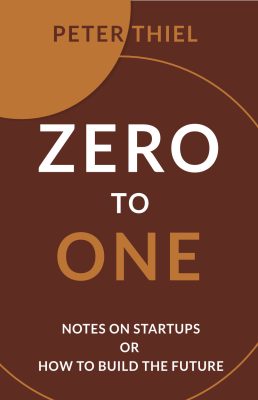
Zero to One is a groundbreaking exploration of entrepreneurship and innovation, challenging conventional wisdom about starting and scaling businesses. Peter Thiel, a co-founder of PayPal and an influential venture capitalist, draws on his extensive experience to provide unconventional insights into creating value in the modern world. The book argues that true innovation comes from creating something entirely new (going from zero to one) rather than making incremental improvements (going from one to n). Thiel’s unique perspective makes this book a must-read for anyone interested in understanding what it takes to build a successful startup.
Zero to One is ideal for aspiring entrepreneurs, startup founders, and business leaders looking to gain a competitive edge. It offers valuable insights for anyone interested in technology and innovation, making complex ideas accessible through clear and concise language. The book’s practical advice and thought-provoking concepts are also beneficial for investors, corporate executives, and students of business and economics. Thiel’s engaging writing style ensures that readers from various backgrounds can grasp and apply the lessons presented.
Why settle for incremental improvement when you can change the game?
Imagine a world where every great idea has already been taken, and innovation is nothing more than a myth. Peter Thiel, in his book Zero to One: Notes on Startups, or How to Build the Future, challenges this very notion. He boldly states that the future is still full of undiscovered innovations waiting to be created. Thiel opens the door to a new way of thinking about startups and innovation, emphasizing that the most significant advancements come not from copying what has already been done but from creating entirely new solutions to problems.
Zero to One begins with a compelling premise: progress is not guaranteed. Thiel argues that many startups fail because they focus on imitating success rather than creating something new. Through a series of thought-provoking questions and real-world examples, Thiel illustrates how entrepreneurs can break free from the constraints of competition and find unique opportunities for growth. He presents the idea that monopolies, often seen as negative, can be beneficial when they result from innovation and create new value.
Throughout the book, Thiel draws on his vast experience in Silicon Valley to provide a roadmap for aspiring entrepreneurs. He shares insights from his time co-founding PayPal and investing in companies like Facebook and SpaceX. Readers will learn the importance of thinking differently, identifying and solving unique problems, and building companies that create new markets rather than competing in existing ones. Thiel’s principles challenge the status quo, urging entrepreneurs to aim for monopoly by offering something so unique that no one else can compete.
In Zero to One, Thiel also delves into the psychology of successful entrepreneurs. He explores the traits and mindsets that set them apart, such as resilience, contrarian thinking, and a willingness to take risks. Thiel argues that the best entrepreneurs are those who envision a future that others cannot see and work relentlessly to bring that vision to life. Readers will gain valuable insights into developing these traits and applying them to their ventures.
Moreover, the book offers practical advice on building and scaling a startup. Thiel covers essential topics like hiring the right team, securing funding, and navigating the challenges of growth. He emphasizes the importance of finding the right co-founders and creating a company culture that fosters innovation. By combining visionary thinking with practical strategies, Zero to One provides a comprehensive guide for anyone looking to build a successful startup.
The central message of Zero to One is that the most valuable companies are those that create something entirely new rather than improving on existing ideas. Thiel uses the metaphor of “going from zero to one” to illustrate this concept. While going from one to n represents making incremental improvements, going from zero to one means creating something unique and unprecedented. Thiel argues that this type of innovation is what drives real progress and creates significant value.
Zero to One has had a profound impact on the entrepreneurial world, offering a fresh perspective on innovation and business strategy. The book has sparked discussions and debates about the nature of competition, the role of monopolies, and the importance of contrarian thinking. Thiel’s ideas challenge conventional wisdom and encourage entrepreneurs to think differently about how they approach building their businesses.
The book has been widely recognized for its contributions to the field of entrepreneurship. It has received praise from industry leaders and has become a staple in the startup community. Zero to One has also been influential in shaping the mindset of many successful entrepreneurs, who have used Thiel’s principles to guide their ventures. The book’s emphasis on creating new markets and avoiding competition has resonated with many readers, making it a must-read for anyone interested in building a successful startup.
Despite its acclaim, Zero to One has not been without controversy. Some critics argue that Thiel’s views on monopolies and competition are overly idealistic and not applicable to all industries. Others have questioned the practicality of some of his advice, suggesting that it may not be feasible for all entrepreneurs to follow. However, these debates only serve to highlight the book’s significance and the impact it has had on the entrepreneurial community.
Thiel’s Zero to One continues to inspire and challenge entrepreneurs to think beyond the ordinary, pushing the boundaries of what is possible in the business world. Its legacy is a testament to the power of innovative thinking and the importance of creating new solutions to old problems.
Zero to One by Peter Thiel is a thought-provoking and insightful read that challenges conventional wisdom about startups and innovation. Thiel’s unique perspective on creating new markets and striving for monopolies provides a refreshing alternative to the traditional focus on competition and incremental improvements. His emphasis on definite optimism, contrarian thinking, and the importance of unique value is both inspiring and practical, offering a clear roadmap for entrepreneurs looking to make a significant impact.
Thiel’s writing is clear and accessible, making complex concepts easy to understand for readers from various backgrounds. The use of real-world examples from his own experiences adds credibility and practical relevance to his arguments. These examples, such as the founding of PayPal and early investments in companies like Facebook and SpaceX, illustrate Thiel’s principles in action and provide valuable lessons for aspiring entrepreneurs.
One of the book’s strengths is its ability to stimulate intellectual curiosity and challenge readers to think differently about business and innovation. Thiel’s provocative ideas about the benefits of monopolies and the pitfalls of competition push readers to reconsider their own beliefs and assumptions. This makes Zero to One not just a guide for entrepreneurs but also a source of inspiration for anyone interested in innovation and creative problem-solving.
However, the book does have its limitations. Thiel’s focus on monopolies and his tech-centric examples may not resonate with all readers, particularly those in non-tech industries or those who value competition as a driver of innovation. Additionally, the lack of diverse perspectives and detailed execution strategies can make the book feel somewhat narrow in scope. Addressing these blind spots with complementary readings, such as The Lean Startup by Eric Ries or The Innovator’s Dilemma by Clayton Christensen, can provide a more rounded understanding of innovation and entrepreneurship.
Our Recommendation
We believe that Zero to One is an essential read for aspiring entrepreneurs, startup founders, and anyone interested in the dynamics of innovation. Thiel’s insights provide a fresh perspective on how to create significant value and establish successful companies. The book’s emphasis on thinking differently and creating new markets is particularly relevant in today’s rapidly changing business environment.
For readers looking for actionable advice and practical strategies, Zero to One offers valuable guidance on building strong teams, securing funding, and navigating the challenges of growth. While some of Thiel’s ideas may be controversial or polarizing, they are sure to provoke thought and encourage deeper reflection on the principles of entrepreneurship.
We recommend Zero to One as a must-read for anyone serious about making a mark in the world of startups and innovation. Thiel’s visionary thinking and practical advice provide a comprehensive framework for building successful, game-changing companies. Whether you are an entrepreneur, investor, or simply curious about the future of business, Zero to One offers insights that can inspire and guide you on your journey to creating something truly extraordinary.
Zero to One by Peter Thiel revolves around the idea that true innovation involves creating something entirely new rather than merely improving existing products or services. Thiel argues that the path to significant success lies in generating unique ideas that open up unexplored markets. He emphasizes that entrepreneurs should aim to build monopolies, not in the negative sense, but as a means to provide unmatched value that stands apart from any competition. This central theme is the foundation upon which Thiel builds his arguments and insights.
Thiel introduces the concept of “definite optimism,” which he describes as the belief that the future can be better than the present and that we have the power to shape it through innovative thinking and proactive measures. He contrasts this with “indefinite optimism,” where people expect progress to occur but do not have a clear plan or vision to achieve it. According to Thiel, the most successful entrepreneurs are those who are definitely optimistic, possessing a clear vision and the determination to turn their ideas into reality.
Another crucial topic in Zero to One is the importance of thinking differently and avoiding competition. Thiel warns against the trap of trying to outdo existing companies by making marginal improvements. Instead, he advocates for a contrarian approach, where entrepreneurs identify unique opportunities that others overlook. This way of thinking leads to the creation of new markets and the establishment of monopolies, which Thiel sees as essential for long-term success and stability.
Thiel also discusses the characteristics and mindsets that distinguish successful entrepreneurs. He emphasizes the value of resilience, creativity, and a willingness to challenge the status quo. Successful entrepreneurs are those who can envision a future that others cannot and are willing to take the necessary risks to bring their vision to life. Thiel highlights the importance of being able to learn from failures and adapt quickly to changing circumstances.
Additionally, Thiel outlines practical strategies for building and scaling a startup. He covers critical aspects such as hiring the right team, securing funding, and developing a strong company culture. Thiel argues that having the right people in place is crucial for a startup’s success, as is creating an environment that fosters innovation and collaboration. He provides insights into the dynamics of startup teams and the importance of aligning everyone’s efforts toward a common goal.
PayPal
One of the most compelling examples Thiel uses is his own experience co-founding PayPal. At the time, digital payments were not widespread, and traditional financial institutions dominated the market. Instead of competing directly with banks, PayPal created a new, more efficient way for people to transfer money online. This innovation solved a significant problem and opened up a new market that traditional banks had not yet explored. PayPal’s success demonstrates Thiel’s principle of creating something new rather than improving on existing solutions.
Thiel also discusses his early investment in Facebook as an example of recognizing unique opportunities. When Facebook was first launched, social networking was already a crowded space with several established players like MySpace. However, Thiel saw that Facebook had a different approach, focusing on real identities and exclusivity within college networks. This unique angle allowed Facebook to grow rapidly and eventually dominate the social media landscape. Thiel’s investment in Facebook underscores the importance of identifying and supporting truly innovative ideas.
SpaceX
Another example Thiel uses to illustrate his points is SpaceX, founded by Elon Musk. Traditional aerospace companies had long dominated the industry, making incremental improvements to existing technologies. SpaceX, however, took a radically different approach by aiming to reduce the cost of space travel and eventually colonize Mars. By rethinking the fundamentals of rocket design and operation, SpaceX was able to achieve breakthroughs that legacy companies had not. This example highlights Thiel’s argument that real innovation involves reimagining industries from the ground up.
Thiel also references LinkedIn, co-founded by his PayPal colleague Reid Hoffman, as an example of creating a new market. Before LinkedIn, there was no dedicated platform for professional networking. By identifying this gap and building a service that catered specifically to professionals, LinkedIn was able to create a new category and become the dominant player in professional social networking. This success story exemplifies Thiel’s belief in finding and developing new markets rather than competing within existing ones.
Tesla
Thiel points to Tesla as a prime example of innovation through differentiation. While the automotive industry was heavily focused on improving internal combustion engines, Tesla reimagined the car entirely by focusing on electric vehicles. Tesla’s approach was not just about making a better car but about transforming the entire automotive industry. By tackling challenges like battery technology and sustainable energy, Tesla created a new market for electric vehicles and positioned itself as a leader in innovation. This example reinforces Thiel’s message that groundbreaking success comes from thinking differently and creating new solutions.
Focus on Creating Unique Value
One of the central insights from Zero to One is the importance of creating unique value rather than competing in existing markets. Thiel emphasizes that startups should strive to build something new that doesn’t yet exist, rather than trying to outdo competitors with incremental improvements. To apply this, entrepreneurs should identify unmet needs or unexplored markets and develop innovative solutions that address these gaps. This requires thinking creatively and being willing to take risks on unproven ideas. By focusing on unique value, startups can establish monopolies where they dominate their market niche, leading to greater success and stability.
Think Differently
Thiel advocates for contrarian thinking—seeing opportunities where others see none. This means questioning common assumptions and looking at problems from new angles. Entrepreneurs can apply this by regularly challenging their own and their industry’s conventional wisdom. For example, if the prevailing belief is that a particular technology is too costly or impractical, a contrarian thinker would explore ways to make it feasible. This mindset not only helps in discovering new opportunities but also in avoiding the pitfalls of following the crowd. By thinking differently, entrepreneurs can carve out unique paths to innovation.
Monopolies Are Good for Innovation
Contrary to popular belief, Thiel argues that monopolies drive innovation because they have the resources and incentives to invest in long-term projects. He suggests that entrepreneurs should aim to create monopolies by offering products or services that are so superior that no one else can compete. To achieve this, focus on creating a strong brand, securing patents, or developing proprietary technology that sets your company apart. This approach not only ensures a competitive edge but also provides the financial stability needed to innovate continuously.
Definite Optimism
Thiel introduces the concept of definite optimism, which involves having a clear vision for the future and a concrete plan to achieve it. Entrepreneurs should not only be hopeful about the future but should also outline specific steps to turn their vision into reality. This requires setting ambitious goals and mapping out a strategic plan to reach them. By practicing definite optimism, entrepreneurs can motivate their teams, attract investors, and navigate the challenges of building a startup with a clear sense of purpose and direction.
The Power of a Strong Team
Building a strong, cohesive team is crucial for the success of any startup. Thiel emphasizes that the early team members set the foundation for the company’s culture and future growth. To apply this, entrepreneurs should be meticulous in their hiring process, ensuring that new hires share the company’s vision and values. It’s also important to foster an environment of collaboration and trust, where team members feel empowered to contribute their ideas. A strong team can drive innovation, overcome challenges, and propel the company toward its goals.
Sales Matter as Much as Product
Thiel highlights that no matter how innovative a product is, it won’t succeed without effective sales and distribution. He stresses the importance of developing a robust sales strategy and understanding the nuances of customer acquisition. Entrepreneurs should invest in building a strong sales team and leverage marketing techniques to reach their target audience. This might involve direct sales, online marketing, or partnerships with other companies. By prioritizing sales alongside product development, startups can ensure their innovations reach the market and achieve commercial success.
Focus on Long-Term Vision
Thiel advises entrepreneurs to focus on long-term vision rather than short-term gains. This means making decisions that may not yield immediate results but will benefit the company in the long run. For example, investing in research and development or building a strong brand might not pay off immediately but can create substantial value over time. Entrepreneurs should align their strategies with their long-term goals, ensuring that every step they take contributes to the larger vision. This approach helps in building sustainable businesses that can withstand market fluctuations and continue to grow.
Competition Is for Losers
Thiel provocatively states that competition is for losers, suggesting that competing in crowded markets with similar products leads to mediocrity. Instead, entrepreneurs should seek to create monopolies by offering something unique. To apply this, avoid entering markets where several players are vying for the same customers with similar offerings. Instead, focus on niche markets or develop innovative solutions that differentiate your company. This strategy not only reduces direct competition but also allows for greater pricing power and higher profit margins.
Start Small and Scale
Thiel advises startups to begin by dominating a small niche market and then scale up. This approach allows companies to establish a strong foothold and gain valuable insights before expanding. Entrepreneurs should identify a specific target market where they can quickly become the leading player. Once established, they can leverage their success to move into adjacent markets or broaden their offerings. This incremental approach to scaling reduces risk and increases the chances of sustainable growth.
Look for Secrets
Thiel encourages entrepreneurs to look for secrets—undiscovered truths or opportunities that others have overlooked. This requires curiosity, extensive research, and a willingness to explore unconventional ideas. Entrepreneurs should question why certain problems remain unsolved and whether there are hidden solutions waiting to be uncovered. By identifying and exploiting these secrets, startups can develop breakthrough innovations that provide a significant competitive edge. This mindset of constant discovery and curiosity is essential for driving continuous innovation.
Unique Perspective on Innovation
Zero to One offers a refreshing and unique perspective on innovation by emphasizing the importance of creating entirely new products and markets rather than improving existing ones. Thiel’s concept of moving from zero to one, as opposed to one to n, challenges conventional wisdom and encourages entrepreneurs to think outside the box. This perspective is particularly valuable in a business landscape often focused on incremental improvements and competition. Thiel’s insights push readers to consider more radical, game-changing ideas, making the book a standout in its genre.
Real-World Examples
Thiel’s use of real-world examples from his own experiences, such as the founding of PayPal and his investments in companies like Facebook and SpaceX, adds significant credibility and practical relevance to his arguments. These examples illustrate his principles in action, providing readers with concrete cases that demonstrate the feasibility and success of his ideas. This practical applicability makes the book not only theoretical but also a useful guide for aspiring entrepreneurs who can learn from Thiel’s successes and failures.
Clarity and Accessibility
The book is written in a clear and accessible style, making complex concepts easy to understand for readers from various backgrounds. Thiel avoids jargon and uses straightforward language, which broadens the book’s appeal. The structure of the book, with well-organized chapters and concise explanations, helps readers grasp and retain the key concepts. This clarity ensures that the book is not only informative but also engaging and easy to read, which is crucial for maintaining the reader’s interest.
Thought-Provoking Ideas
Thiel’s ideas are thought-provoking and often challenge conventional business wisdom. His arguments about the benefits of monopolies, the pitfalls of competition, and the importance of contrarian thinking push readers to reconsider their own beliefs and assumptions about entrepreneurship. These provocative ideas stimulate intellectual curiosity and encourage deeper reflection on what it takes to achieve true innovation. This quality makes the book a valuable read for those looking to be challenged and inspired.
Actionable Advice
Zero to One provides actionable advice that readers can apply directly to their entrepreneurial endeavors. Thiel’s practical tips on building strong teams, securing funding, and creating a sustainable business model are grounded in his extensive experience in the startup world. This practical guidance, combined with the theoretical insights, makes the book a comprehensive resource for entrepreneurs at any stage of their journey. Readers can take away specific strategies and frameworks to implement in their own ventures.
Holistic View of Entrepreneurship
The book offers a holistic view of entrepreneurship, covering a wide range of topics from innovation and competition to team building and company culture. Thiel addresses both the visionary and practical aspects of starting and running a business, providing a well-rounded perspective. This comprehensive approach ensures that readers gain a thorough understanding of the various elements that contribute to a successful startup. The balance between visionary ideas and practical advice enhances the book’s overall value.
Overemphasis on Monopolies
One of the main criticisms of Zero to One is its overemphasis on the benefits of monopolies. While Thiel makes a compelling case for why monopolies can drive innovation, this perspective can be seen as overly idealistic and not applicable to all industries. In reality, monopolies can also stifle competition and lead to negative outcomes for consumers. Thiel’s argument would have been stronger with a more balanced discussion of the potential downsides of monopolies and how to mitigate them.
Lack of Diverse Perspectives
The book primarily draws on Thiel’s own experiences and those of his close associates, which can result in a somewhat narrow perspective. By focusing on the successes of Silicon Valley tech companies, the book overlooks insights from other industries and regions. Including a wider range of case studies and examples from different sectors and geographies would have provided a more comprehensive view of innovation and entrepreneurship. This limitation can make the book less relatable to entrepreneurs operating outside the tech bubble.
Controversial Opinions
Some of Thiel’s opinions, such as his skepticism about the value of competition and his advocacy for monopolies, are controversial and may not resonate with all readers. While these ideas are thought-provoking, they can also be polarizing. Thiel’s contrarian views can sometimes come across as dismissive of widely accepted business principles. A more nuanced approach that acknowledges the strengths and weaknesses of different viewpoints would have made his arguments more palatable and convincing to a broader audience.
Insufficient Practical Examples
While the book includes several compelling examples from Thiel’s career, it could benefit from more detailed case studies that illustrate the application of his principles in a variety of contexts. The existing examples are mainly high-profile tech companies, which might not be directly applicable to entrepreneurs in other fields. Providing more diverse and in-depth examples would help readers see how Thiel’s ideas can be implemented in different industries and stages of business development. This would enhance the book’s practical value and relevance.
Overlooking Market Dynamics
Zero to One focuses heavily on creating new markets and becoming a monopoly, but it sometimes overlooks the complexities of market dynamics. In the real world, markets are constantly evolving, and consumer preferences can shift rapidly. Thiel’s model can be seen as somewhat static, not fully addressing how businesses need to adapt to these changes over time. Books like The Lean Startup by Eric Ries offer a more flexible approach to innovation, emphasizing continuous adaptation and feedback loops to respond to market changes. By incorporating the iterative processes outlined in Ries’s work, entrepreneurs can better navigate the unpredictable nature of market dynamics.
Neglecting Execution Risks
While Thiel emphasizes the importance of having a unique idea and vision, he somewhat underplays the challenges involved in executing these ideas. The path from concept to market is fraught with risks, including technical difficulties, regulatory hurdles, and scaling challenges. The Innovator’s Dilemma by Clayton Christensen provides a more nuanced view of the execution risks involved in bringing disruptive innovations to market. Christensen’s framework helps entrepreneurs understand the barriers to innovation within established companies and how startups can overcome these obstacles. Integrating Christensen’s insights can provide a more balanced view of the innovation process, highlighting the importance of execution as well as ideation.
Ignoring the Role of Incremental Innovation
Thiel’s strong focus on radical innovation might lead readers to undervalue the role of incremental improvements, which can also drive significant progress. Incremental innovation is often essential for sustaining business growth and competitiveness. Books like Good to Great by Jim Collins discuss how companies can achieve outstanding performance through a series of small, continuous improvements. Collins’s research shows that successful companies often excel through disciplined, incremental changes rather than relying solely on breakthrough innovations. Recognizing the value of incremental innovation alongside radical ideas can offer a more comprehensive strategy for long-term success.
Underestimating the Importance of Timing
Thiel suggests that having a unique idea is paramount, but he doesn’t fully address the critical role of timing in a startup’s success. Entering the market too early or too late can significantly impact the viability of even the most innovative ideas. Outliers by Malcolm Gladwell explores the concept of timing and its influence on success, highlighting how being in the right place at the right time can be crucial. Gladwell’s analysis of various success stories underscores that timing, combined with other factors like skill and opportunity, plays a vital role in achieving breakthrough success. Entrepreneurs should consider timing as a crucial element when applying Thiel’s principles.
Limited View on Diversity and Inclusion
Zero to One primarily focuses on the technical and strategic aspects of building a startup, but it lacks a discussion on the importance of diversity and inclusion within teams. Diverse teams bring a wide range of perspectives and ideas, which can drive innovation and improve problem-solving. The Difference by Scott Page delves into how diversity in teams enhances their collective intelligence and innovation potential. Page’s research shows that diverse groups often outperform homogenous ones in solving complex problems. Incorporating a focus on building diverse and inclusive teams can strengthen Thiel’s framework and enhance the overall effectiveness of startup strategies.
Overemphasis on Technology Startups
Thiel’s experiences and examples are heavily rooted in the technology sector, which might not fully resonate with entrepreneurs in other industries. This tech-centric view can limit the applicability of his insights to a broader audience. Books like Blue Ocean Strategy by W. Chan Kim and Renée Mauborgne offer strategies for innovation and market creation across various sectors, not just technology. Blue Ocean Strategy provides tools for identifying and capturing uncontested market space, applicable to a wide range of industries. By looking beyond the tech sector and considering diverse examples, readers can better apply Thiel’s principles in their own contexts.
Simplistic View on Business Competition
Thiel’s dismissal of competition as inherently detrimental can be misleading. In reality, competition can drive companies to innovate and improve their offerings. A more nuanced view recognizes that while avoiding direct competition can be beneficial, understanding and responding to competitive pressures is also crucial. Competing Against Luck by Clayton Christensen offers insights into how businesses can understand customer needs and innovate effectively within competitive environments. Christensen’s focus on the “jobs to be done” framework helps companies align their innovations with what customers are truly seeking. Balancing Thiel’s views with Christensen’s approach can provide a more rounded perspective on competition and innovation.
The Lean Startup by Eric Ries
Zero to One and The Lean Startup by Eric Ries both focus on innovation and entrepreneurship but from different angles. Thiel emphasizes the importance of creating entirely new markets and monopolies through breakthrough innovations, whereas Ries advocates for a methodology of continuous improvement and validated learning. Ries’s approach involves iterative development and customer feedback to refine products, which contrasts with Thiel’s focus on having a unique, well-defined vision from the outset. While Thiel champions definite optimism, Ries’s philosophy is more about adapting and pivoting based on market response. This makes The Lean Startup more accessible for entrepreneurs who may not have a grand, innovative idea but want to build a successful business through systematic experimentation.
The Innovator’s Dilemma by Clayton Christensen
The Innovator’s Dilemma by Clayton Christensen shares some thematic similarities with Zero to One, particularly in its focus on disruptive innovation. However, Christensen’s book delves deeper into why established companies fail to innovate and how they can overcome these barriers. While Thiel discusses the importance of monopolies and creating new markets, Christensen provides a more comprehensive analysis of the structural challenges that incumbents face and the strategies they can use to foster disruptive innovation. Christensen’s work complements Thiel’s by offering insights into the innovation process within large organizations, providing a broader context for understanding innovation beyond startups.
Good to Great by Jim Collins
Jim Collins’ Good to Great contrasts with Thiel’s Zero to One by focusing on how existing companies can achieve sustained excellence through disciplined management and incremental improvements. Collins’s research identifies the common traits of companies that transitioned from good to great, emphasizing the importance of leadership, disciplined thought, and consistent action. While Thiel argues for the creation of monopolies and breakthrough innovations, Collins shows that gradual, consistent improvement can also lead to exceptional success. This perspective is valuable for entrepreneurs and managers who may not be looking to start from scratch but want to elevate their existing organizations.
Blue Ocean Strategy by W. Chan Kim and Renée Mauborgne
Blue Ocean Strategy by W. Chan Kim and Renée Mauborgne aligns with Zero to One in its focus on creating new market space rather than competing in existing markets. Both books advocate for differentiation and innovation as pathways to success. However, Blue Ocean Strategy provides more practical tools and frameworks for identifying and capturing these new markets, such as the Strategy Canvas and the Four Actions Framework. Thiel’s book is more conceptual, emphasizing the mindset and principles needed to innovate, while Blue Ocean Strategy offers actionable steps for achieving this innovation in a variety of industries. The combination of Thiel’s visionary thinking and Kim and Mauborgne’s strategic tools can provide a comprehensive guide for entrepreneurs aiming to create new markets.
Competing Against Luck by Clayton Christensen
In Competing Against Luck, Clayton Christensen introduces the “jobs to be done” theory, which focuses on understanding customer needs and innovating accordingly. This book contrasts with Zero to One by emphasizing customer-centric innovation rather than creating new markets for the sake of uniqueness. Christensen argues that successful innovations are those that fulfill specific customer jobs, which can sometimes involve incremental improvements rather than groundbreaking inventions. Thiel’s approach is more about the entrepreneur’s vision and creating a monopoly, while Christensen stresses the importance of aligning innovation with customer needs. This difference highlights the complementary nature of these perspectives: Thiel’s emphasis on unique value creation and Christensen’s focus on customer-driven innovation.
Develop a Unique Value Proposition
Adopt a Contrarian Mindset
Plan with Definite Optimism
Build and Nurture a Strong Team
Prioritize Sales and Marketing
Maintain Long-Term Vision
Leverage Incremental Innovation
Time Your Initiatives Wisely
Foster Diversity and Inclusion
Fostering Unique Value Creation
Zero to One emphasizes the importance of creating unique value to achieve market dominance. Businesses should focus on developing innovative products or services that meet unaddressed needs or create entirely new markets. This approach can lead to significant competitive advantages and long-term success.
One of the main challenges in fostering unique value creation is overcoming the organizational inertia that favors maintaining the status quo. Established processes and risk-averse cultures can stifle innovation and discourage employees from pursuing bold ideas. Additionally, identifying genuinely unique opportunities requires significant research and insight, which can be resource-intensive.
To overcome these challenges, businesses should cultivate a culture that encourages innovation and rewards creative thinking. This can be achieved by setting up dedicated innovation teams, providing resources for research and development, and offering incentives for employees who contribute innovative ideas. Leadership should also promote a mindset that values experimentation and learning from failure, creating an environment where employees feel empowered to take risks and think outside the box.
Encouraging Contrarian Thinking
Businesses can benefit from adopting a contrarian mindset, challenging conventional wisdom, and exploring unconventional solutions. This approach can lead to breakthrough innovations and identify opportunities that competitors may overlook.
Encouraging contrarian thinking can be difficult in environments where conformity and adherence to established practices are valued. Employees may be hesitant to voice unconventional ideas due to fear of criticism or failure. Additionally, contrarian ideas often face resistance from stakeholders who are invested in traditional methods.
To foster contrarian thinking, businesses should create a safe space for employees to share unconventional ideas without fear of retribution. This can be facilitated through regular brainstorming sessions, innovation workshops, and anonymous idea submission platforms. Leaders should actively seek and support diverse perspectives, demonstrating that challenging the status quo is valued and encouraged. By celebrating successful contrarian ideas and integrating them into the business strategy, organizations can gradually shift their culture towards one that embraces innovative thinking.
Implementing Definite Optimism
Definite optimism involves having a clear vision for the future and a strategic plan to achieve it. Businesses should articulate their long-term goals and develop actionable steps to turn their vision into reality.
One of the main obstacles in implementing definite optimism is the difficulty in maintaining focus and commitment to long-term goals amidst short-term pressures. Market fluctuations, competitive pressures, and internal challenges can divert attention from strategic objectives. Additionally, aligning the entire organization with a long-term vision requires effective communication and buy-in from all levels.
To successfully implement definite optimism, businesses should regularly communicate their vision and strategic plan to all employees, ensuring everyone understands their role in achieving long-term goals. Leadership should prioritize initiatives that align with the strategic vision and resist the temptation to pursue short-term gains at the expense of long-term objectives. Setting measurable milestones and tracking progress can help maintain focus and momentum. Additionally, fostering a culture of continuous improvement and adaptability will enable the organization to navigate challenges while staying committed to its vision.
Building Strong, Cohesive Teams
Thiel emphasizes the importance of building strong, cohesive teams that share a common vision and values. A well-aligned team can drive innovation, overcome challenges, and achieve strategic objectives more effectively.
Building and maintaining cohesive teams can be challenging, especially in large organizations with diverse workforces. Differences in backgrounds, perspectives, and working styles can lead to misunderstandings and conflicts. Additionally, ensuring that all team members are aligned with the company’s vision and values requires continuous effort.
To build strong teams, businesses should prioritize hiring individuals who not only possess the necessary skills but also fit well with the company’s culture and values. Investing in team-building activities, training programs, and open communication channels can help foster trust and collaboration. Regularly reinforcing the company’s vision and values through leadership communication and employee recognition programs can ensure alignment and commitment. Encouraging cross-functional collaboration and creating opportunities for employees to engage with different parts of the organization can also enhance team cohesion.
Prioritizing Sales and Marketing
Thiel highlights the importance of effective sales and marketing strategies in ensuring the success of innovative products and services. Businesses need to develop robust sales and marketing plans to reach their target audience and achieve commercial success.
Developing and executing effective sales and marketing strategies can be challenging due to market competition, changing consumer preferences, and budget constraints. Additionally, aligning sales and marketing efforts with product development and overall business strategy requires coordination and collaboration across departments.
To prioritize sales and marketing, businesses should invest in market research to understand their target audience’s needs and preferences. This information can inform the development of compelling brand messages and marketing campaigns. Leveraging digital marketing channels, such as social media, email marketing, and content marketing, can help reach a broader audience cost-effectively. Ensuring close collaboration between sales, marketing, and product development teams can align efforts and enhance the overall strategy’s effectiveness. Regularly reviewing and adjusting sales and marketing tactics based on performance data will enable businesses to stay responsive to market changes and optimize their approach.
Balancing Long-Term Vision with Short-Term Execution
Thiel advises businesses to focus on long-term vision while effectively managing short-term execution. This balance ensures sustainable growth and the achievement of strategic objectives.
Balancing long-term vision with short-term execution can be challenging due to competing priorities and resource constraints. Short-term pressures, such as meeting quarterly targets or addressing immediate operational issues, can detract from long-term strategic initiatives. Additionally, maintaining organizational alignment with long-term goals requires ongoing effort and communication.
To strike this balance, businesses should establish a clear strategic plan that outlines long-term objectives and the short-term actions needed to achieve them. Leadership should communicate the importance of both long-term vision and short-term execution to all employees, ensuring alignment and commitment. Setting clear priorities and allocating resources effectively can help manage competing demands. Regularly reviewing progress against long-term goals and making necessary adjustments will ensure that short-term actions support overall strategic objectives. Encouraging a culture of continuous improvement and adaptability will enable the organization to navigate short-term challenges while staying focused on long-term success.
Rise of AI and Automation
As artificial intelligence and automation continue to advance, Thiel’s ideas about creating unique value will become even more relevant. Businesses will need to innovate to stay ahead of the curve. Automation will handle routine tasks, so companies must focus on unique, human-centric solutions. This trend aligns with Thiel’s emphasis on monopolistic innovation. AI can also help identify new market opportunities by analyzing vast amounts of data. Companies that leverage AI to create new, unique solutions will have a competitive edge.
Remote Work and Distributed Teams
The shift to remote work is reshaping the traditional workplace. Thiel’s focus on building strong, cohesive teams is crucial here. With teams spread across various locations, fostering collaboration and alignment becomes challenging. Technology will play a key role in connecting remote teams. Virtual communication tools and collaboration platforms will be essential. Businesses that can build strong remote teams while maintaining their vision and culture will thrive.
Sustainable and Ethical Business Practices
There is a growing emphasis on sustainability and ethical practices in business. Thiel’s ideas about definite optimism and having a clear vision can drive this trend. Companies are increasingly expected to address environmental and social issues. Innovating in these areas can create new markets and opportunities. Businesses that align their goals with sustainable practices will attract customers and investors. This shift requires a long-term vision, which Thiel advocates.
Personalization and Customer-Centric Innovation
Consumers now expect personalized experiences. Thiel’s emphasis on unique value creation fits well with this trend. Companies must innovate to meet individual customer needs. Data analytics and AI can help provide tailored solutions. Thiel’s idea of avoiding competition by creating unique offerings is key. Personalization can set businesses apart in crowded markets. Focusing on customer-centric innovation will drive future success.
Tech-Driven Healthcare Innovations
The healthcare industry is rapidly evolving with technology. Thiel’s principles of creating new markets are highly applicable. Innovations in telemedicine, personalized medicine, and biotech are transforming healthcare. Companies that create unique solutions in healthcare can dominate new niches. Thiel’s emphasis on monopolistic innovation will guide successful healthcare startups. The integration of tech and healthcare will be a major trend in the coming years.
Zero to One was published in 2014, making it a relatively recent addition to the entrepreneurship literature. Its relevance remains significant today, particularly in a rapidly evolving business landscape where innovation continues to be a critical driver of success. Thiel’s emphasis on creating new markets and aiming for monopolies challenges entrepreneurs to think boldly and take risks that can lead to transformative change. This perspective is crucial as technological advancements and global competition require businesses to continuously innovate and differentiate themselves.
The book’s long-term influence is likely to persist as the principles it outlines—such as definite optimism, contrarian thinking, and the importance of unique value—are timeless concepts in the world of entrepreneurship. As startups and established companies alike strive to navigate the complexities of modern markets, Thiel’s insights provide a strategic framework for achieving long-term success. Moreover, the ongoing dialogue about the benefits and drawbacks of monopolies and competition will ensure that Zero to One continues to spark debate and reflection among business leaders and policymakers.
In the broader societal context, Thiel’s ideas about innovation and market creation have implications beyond business. They encourage a mindset of proactive problem-solving and creative thinking, which can be applied to various fields such as education, healthcare, and public policy. As society faces increasingly complex challenges, the principles of innovation and unique value creation discussed in Zero to One can inspire new approaches and solutions.
Looking ahead, the relevance of Zero to One may grow as emerging technologies such as artificial intelligence, blockchain, and biotechnology create new opportunities and disrupt existing industries. Thiel’s call for definite optimism and visionary thinking will resonate with entrepreneurs and innovators seeking to leverage these technologies to build the future. The book’s impact on encouraging bold, innovative thinking will likely endure, influencing the next generation of entrepreneurs and shaping the landscape of business and innovation for years to come.
The Lean Startup by Eric Ries
The Lean Startup offers a practical approach to innovation through continuous improvement and validated learning. Ries’s methodology focuses on testing ideas quickly and efficiently, which complements Thiel’s emphasis on creating unique value. This book provides actionable strategies for iterating on ideas and minimizing risks, making it a perfect companion for those looking to implement Thiel’s principles in a structured manner.
The Innovator’s Dilemma by Clayton Christensen
The Innovator’s Dilemma explores why successful companies often fail to innovate and how startups can capitalize on these opportunities. Christensen’s insights into disruptive innovation offer a valuable contrast to Thiel’s focus on monopolies. This book helps readers understand the dynamics of industry disruption and provides frameworks for fostering innovation within established organizations.
Blue Ocean Strategy by W. Chan Kim and Renée Mauborgne
Blue Ocean Strategy presents a systematic approach to creating uncontested market space and making the competition irrelevant. Kim and Mauborgne’s strategic tools and frameworks complement Thiel’s ideas by offering practical steps to identify and capture new markets. This book is essential for entrepreneurs seeking to differentiate their offerings and achieve sustainable growth.
Good to Great by Jim Collins
Good to Great examines how companies transition from mediocrity to excellence through disciplined management and incremental improvements. Collins’s research on the traits of successful companies provides a valuable perspective for entrepreneurs. His findings offer a balanced view that complements Thiel’s emphasis on breakthrough innovation by highlighting the importance of disciplined execution and consistent performance.
Competing Against Luck by Clayton Christensen
Competing Against Luck introduces the “jobs to be done” theory, which focuses on understanding customer needs to drive innovation. Christensen’s approach emphasizes aligning innovations with what customers are seeking, providing a customer-centric perspective that contrasts with Thiel’s visionary approach. This book offers valuable insights into creating products and services that fulfill specific customer jobs, enhancing the applicability of Thiel’s principles.
The Innovator’s Solution by Clayton Christensen and Michael E. Raynor
The Innovator’s Solution extends the ideas from The Innovator’s Dilemma and provides practical strategies for creating and sustaining successful growth. Christensen and Raynor offer a comprehensive guide to innovation, focusing on market-creating strategies and disruptive technologies. This book complements Thiel’s focus on unique value creation by providing detailed methodologies for fostering innovation and sustaining growth in competitive markets.
Outliers by Malcolm Gladwell
Outliers explores the factors that contribute to high levels of success, including timing, cultural background, and practice. Gladwell’s analysis of success stories offers a broader context for understanding the elements that contribute to extraordinary achievements. This book complements Thiel’s emphasis on innovation by highlighting the importance of external factors and preparation in achieving success.
Bold by Peter H. Diamandis and Steven Kotler
Bold explores exponential technologies and their potential to create significant impact and disruption. Diamandis and Kotler’s focus on leveraging emerging technologies to solve global challenges aligns with Thiel’s vision of creating unique value. This book provides practical insights into harnessing the power of exponential growth and innovation, making it a valuable addition for entrepreneurs looking to stay ahead in rapidly evolving markets.
Y Combinator’s Startup School
Y Combinator’s Startup School offers a wealth of resources for entrepreneurs, including free courses on starting and scaling a business. The platform features lectures from successful founders and investors, providing practical insights that align with Thiel’s principles. This resource is ideal for those looking to implement the strategies discussed in Zero to One. You can find more information at startupschool.org.
Harvard Business Review
The Harvard Business Review (HBR) provides a vast array of articles, case studies, and insights on innovation, entrepreneurship, and business strategy. Many of its pieces complement Thiel’s ideas by offering in-depth analysis and practical advice from leading experts. HBR is an excellent resource for staying updated on the latest trends and best practices in business. Visit hbr.org for more information.
Coursera
Coursera offers numerous courses on entrepreneurship and innovation from top universities and institutions. Courses such as “Innovation for Entrepreneurs: From Idea to Marketplace” by the University of Maryland can provide a structured learning path to apply Thiel’s concepts. These courses often include practical assignments and peer interactions, enriching the learning experience. Explore available courses at coursera.org.
TechCrunch Disrupt
TechCrunch Disrupt is a leading conference for startup founders and investors, featuring talks, workshops, and networking opportunities. The event aligns with Thiel’s focus on innovation and market creation, showcasing cutting-edge startups and technologies. Attending this conference can provide valuable insights and connections for entrepreneurs. Learn more at techcrunch.com/events/disrupt-sf/.
SXSW (South by Southwest)
SXSW is an annual conglomerate of film, interactive media, and music festivals and conferences. The event includes sessions on entrepreneurship, technology, and innovation, making it a relevant platform for those inspired by Zero to One. SXSW offers opportunities to learn from industry leaders and network with other innovators. More details can be found at sxsw.com.
Entrepreneurs’ Organization (EO)
The Entrepreneurs’ Organization (EO) is a global network of entrepreneurs that provides peer-to-peer learning, networking opportunities, and mentorship. EO’s resources and events can help entrepreneurs apply Thiel’s ideas in their own ventures. Membership offers access to a community of like-minded individuals committed to business growth and innovation. Visit eonetwork.org for more information.
Kauffman Foundation
The Kauffman Foundation focuses on education and entrepreneurship, providing research, resources, and programs to support entrepreneurs. Their initiatives and publications can help deepen understanding of the principles discussed in Zero to One. The foundation’s resources are particularly useful for those looking to foster innovation and entrepreneurial ecosystems. Learn more at kauffman.org.
How I Built This
How I Built This, hosted by Guy Raz, features interviews with founders of successful companies. The podcast explores the stories behind the people who created iconic businesses, offering insights that complement Thiel’s principles of innovation and market creation. Listening to these stories can provide inspiration and practical advice for aspiring entrepreneurs. Available on npr.org.
The Tim Ferriss Show
The Tim Ferriss Show covers a wide range of topics, including entrepreneurship, productivity, and personal development. Ferriss interviews world-class performers and dives deep into their strategies and habits, many of which align with the concepts in Zero to One. This podcast is a valuable resource for actionable insights and inspiration. Find episodes at tim.blog/podcast.
Stanford Online’s “Startup Engineering”
Stanford Online offers the course “Startup Engineering,” which combines technical and business skills for aspiring entrepreneurs. The course content is closely aligned with the principles in Zero to One, focusing on creating scalable startups and innovative solutions. This comprehensive course provides both theoretical knowledge and practical skills. More information is available at online.stanford.edu.
MIT OpenCourseWare
MIT OpenCourseWare provides free online courses on various aspects of entrepreneurship and innovation. Courses such as “New Enterprises” and “Innovation and Commercialization” offer insights into building and scaling startups, complementing Thiel’s ideas. These courses are a valuable resource for anyone looking to deepen their understanding of business innovation. Access courses at ocw.mit.edu.
The Social Network
The Social Network dramatizes the founding of Facebook, a company Thiel invested in early. The film provides a behind-the-scenes look at the challenges and opportunities of building a tech startup, illustrating many of the themes discussed in Zero to One. It’s a compelling watch for those interested in the dynamics of startup culture and innovation.
Something Ventured
Something Ventured is a documentary that explores the rise of venture capital in Silicon Valley and the stories behind some of the world’s most successful tech companies. The film features insights from key investors, including Thiel, and offers a historical perspective on the principles of innovation and entrepreneurship. This documentary is insightful for understanding the venture capital industry’s role in fostering innovation.


Discover the key takeaways from top non-fiction books in minutes. Get the wisdom you need to succeed fast. Here, learning is quick, engaging, and always at your fingertips.
© 2025 All Rights Reserved.


