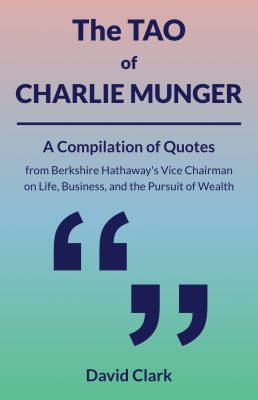
This compelling book offers readers a unique glimpse into the mind of one of the most successful investors and business thinkers of our time. It’s a treasure trove of wisdom, featuring carefully curated quotes from Charlie Munger on topics ranging from investment strategies to life philosophy. The author skillfully weaves these insights into a cohesive narrative, providing context and analysis that make Munger’s often complex ideas accessible to a broad audience. What sets this book apart is its ability to distill decades of experience and knowledge into bite-sized, actionable advice that readers can apply to their own lives and careers.
The primary audience for this book includes investors, business professionals, and entrepreneurs who are looking to gain insights from one of the most successful business minds of our era. Charlie Munger’s wisdom extends beyond just investing, making this book valuable for anyone interested in critical thinking, decision-making, and personal development. The secondary audience might include students of business and finance, as well as general readers interested in self-improvement and success principles. Clark’s writing style makes Munger’s often complex ideas accessible to a broad audience, breaking down sophisticated concepts into understandable language. However, some familiarity with basic business and investing terms would enhance the reader’s experience and understanding of the more nuanced points.
What if the key to unlocking wealth, wisdom, and a well-lived life could be found in the musings of a 99-year-old billionaire? In “The Tao of Charlie Munger,” David Clark presents a compelling case that it can. This book isn’t just another collection of quotes; it’s a roadmap to success drawn from the mind of Berkshire Hathaway’s legendary vice chairman.
Charlie Munger’s insights cut through the noise of modern business advice like a hot knife through butter. His straightforward, no-nonsense approach to investing and life has guided countless individuals to financial success and personal fulfillment. But what sets Munger apart isn’t just his track record – it’s his unique ability to distill complex ideas into simple, actionable wisdom.
From the boardrooms of Fortune 500 companies to the classrooms of top business schools, Munger’s principles have found their way into the fabric of modern business thinking. His emphasis on “mental models” – frameworks for understanding how the world works – has revolutionized the way many approach problem-solving and decision-making. Clark’s book brings these powerful tools to the fingertips of everyday readers, offering a chance to see the world through Munger’s eyes.
Readers will learn how to avoid common pitfalls in decision-making, cultivate a multidisciplinary approach to problem-solving, and develop the patience and discipline required for long-term success. Munger’s insights on everything from the psychology of human misjudgment to the importance of continuous learning offer a comprehensive guide to personal and professional growth.
But “The Tao of Charlie Munger” isn’t just about making money. It’s about living a life of integrity, continuous improvement, and rational thinking. Munger’s philosophy extends far beyond the realm of finance, touching on ethics, education, and the pursuit of happiness. By the end of this book, readers will have gained not just investment advice, but a new lens through which to view the world and their place in it.
The core message of “The Tao of Charlie Munger” can be summed up in one powerful phrase: think differently to live differently. Munger’s philosophy is built on the foundation of independent thinking, continuous learning, and the relentless pursuit of wisdom. It’s about developing a “latticework of mental models” – a toolbox of interdisciplinary knowledge that allows you to approach problems from multiple angles.
Imagine your mind as a Swiss Army knife. Most people go through life with just one or two blades extended – perhaps the blade of their professional expertise, or the corkscrew of their personal experiences. Munger’s approach is about unfolding every tool, sharpening each one, and learning when and how to use them in concert. This multidisciplinary thinking is what sets apart the truly successful from the merely competent.
The significance of “The Tao of Charlie Munger” lies in its ability to distill decades of wisdom from one of the most successful investors and thinkers of our time into a format accessible to all. While Munger himself has never authored a book, his influence on the world of business and investing is undeniable. This compilation by David Clark serves as a critical contribution to preserving and spreading Munger’s unique insights.
The book has garnered praise from financial experts and everyday readers alike for its practical wisdom and no-nonsense approach. It’s been featured on numerous “must-read” lists for investors and business professionals, cementing its place in the canon of business literature. However, it’s not without its controversial points. Munger’s staunch advocacy for value investing and his skepticism towards modern portfolio theory have put him at odds with some contemporary financial theorists. His blunt speaking style and unapologetic criticism of what he sees as foolish behavior in business and politics have also raised eyebrows in some circles.
Despite – or perhaps because of – these controversies, “The Tao of Charlie Munger” has become a touchstone for those seeking a clearer path through the often murky waters of business and life. Its impact extends beyond the world of finance, influencing fields as diverse as psychology, education, and public policy. By presenting Munger’s ideas in such a comprehensive and accessible format, Clark has ensured that this wisdom will continue to shape thinking and decision-making for generations to come.
After carefully examining “The Tao of Charlie Munger” by David Clark, we find it to be a valuable resource for anyone interested in business, investing, and personal development. The book successfully distills Charlie Munger’s wisdom into an accessible format, offering readers a unique opportunity to learn from one of the most successful investors and thinkers of our time.
We appreciate the book’s multidisciplinary approach, which encourages readers to develop a broad base of knowledge and apply concepts from various fields to problem-solving. This aspect of the book is particularly valuable in today’s complex and rapidly changing world, where narrow specialization can often lead to blind spots in decision-making.
The practical applicability of the ideas presented is another strong point. Clark does an admirable job of not only presenting Munger’s thoughts but also providing context and suggestions for how readers can apply these principles in their own lives and careers. This focus on application elevates the book from a mere collection of quotes to a practical guide for personal and professional growth.
We also value the book’s emphasis on ethics and long-term thinking. In an era often characterized by short-term profit-seeking and ethical shortcuts, Munger’s insistence on integrity and sustainable success is both refreshing and necessary. This aspect of the book has the potential to positively influence business practices and individual decision-making.
However, we must note some limitations. The book sometimes lacks critical perspective on Munger’s ideas and could benefit from a more structured framework to tie the various concepts together. Additionally, a deeper exploration of potential failures or mistakes in applying Munger’s principles would have provided a more balanced view.
Despite these shortcomings, we believe the strengths of “The Tao of Charlie Munger” far outweigh its weaknesses. The book offers a wealth of insights that can benefit readers across various stages of their careers and lives.
Our Recommendation
We wholeheartedly recommend “The Tao of Charlie Munger” to a wide range of readers. For those new to business and investing, it provides an excellent introduction to fundamental principles and ways of thinking that can set them on a path to success. Experienced professionals will find value in the book’s ability to distill complex ideas into actionable wisdom, potentially helping them refine their decision-making processes and broaden their perspectives.
However, we suggest reading this book as part of a broader study of business and investing principles. While it offers invaluable insights, complementing it with other resources that provide more technical details, alternative viewpoints, or deeper dives into specific topics will give readers a more comprehensive understanding. With this approach, “The Tao of Charlie Munger” can serve as a cornerstone in one’s library of business wisdom, offering timeless principles to return to again and again throughout one’s career and life.
The essence of “The Tao of Charlie Munger” centers on several key principles that form the backbone of Munger’s philosophy. One of the most crucial is the concept of mental models. Munger advocates for developing a “latticework” of mental models drawn from various disciplines, including psychology, economics, mathematics, and physics. These models serve as cognitive tools, allowing individuals to analyze situations from multiple perspectives and make more informed decisions. By cultivating this interdisciplinary approach, Munger argues that one can avoid the pitfalls of narrow thinking and gain a more comprehensive understanding of complex problems.
Another fundamental principle in Munger’s philosophy is the importance of continuous learning. He emphasizes the need for lifelong education, not just in one’s field of expertise, but across a wide range of subjects. This commitment to learning enables individuals to adapt to changing circumstances, identify new opportunities, and make better-informed decisions. Munger’s approach to learning isn’t just about accumulating facts, but about understanding underlying principles and how they interconnect across different domains.
Value investing forms a cornerstone of Munger’s financial wisdom. He advocates for a patient, long-term approach to investing, focusing on intrinsic value rather than short-term market fluctuations. This strategy involves thoroughly researching companies, understanding their business models, and investing only when there’s a significant margin of safety between the stock’s price and its intrinsic value. Munger’s value investing philosophy extends beyond just financial analysis, incorporating an understanding of human psychology and market dynamics.
The concept of circle of competence is another key element in Munger’s approach. He stresses the importance of knowing the boundaries of one’s knowledge and expertise. Operating within this circle allows individuals to make decisions based on genuine understanding rather than speculation. Munger advises expanding one’s circle of competence gradually through continuous learning, but always being aware of its limits and avoiding overconfidence.
Munger places great emphasis on the role of psychology in decision-making. He highlights common cognitive biases and logical fallacies that can lead to poor choices. By understanding these psychological tendencies, individuals can guard against them and make more rational decisions. This focus on psychological factors in decision-making sets Munger’s approach apart from purely quantitative methods of analysis.
The importance of patience and discipline runs through much of Munger’s advice. He advocates for a long-term perspective in both investing and life decisions. This approach involves resisting the temptation of quick gains or easy solutions in favor of strategies that yield sustainable results over time. Munger’s emphasis on patience extends to the ability to wait for the right opportunities and to hold steady during market volatility or personal challenges.
Ethical behavior and integrity form a crucial part of Munger’s philosophy. He stresses the importance of honesty and ethical conduct not just as moral imperatives, but as practical strategies for long-term success. Munger argues that maintaining a reputation for integrity creates trust, opens up opportunities, and leads to more sustainable success than short-term gains achieved through dishonest means.
The Coca-Cola Investment
One of the most illustrative examples of Munger’s principles in action is Berkshire Hathaway’s investment in Coca-Cola. This case study demonstrates the application of value investing, patience, and the importance of understanding a company’s intrinsic value. In 1988, Berkshire Hathaway began purchasing shares of Coca-Cola, eventually accumulating a significant stake in the company. Despite Coca-Cola being a well-known brand, Munger and Buffett identified it as undervalued based on its strong brand, global distribution network, and potential for growth in emerging markets. This investment showcased their ability to see value where others didn’t and their willingness to make a substantial, long-term commitment to a company they understood well.
The Daily Journal Corporation Turnaround
Another compelling example of Munger’s principles at work is the turnaround of the Daily Journal Corporation. Munger became chairman of this small newspaper company in 1977 and guided its transformation into a successful legal software business. This case illustrates Munger’s ability to adapt to changing circumstances, his long-term thinking, and his skill in identifying opportunities outside his primary field of expertise. Under Munger’s leadership, the Daily Journal Corporation diversified its business model, made strategic investments, and significantly increased its value over time. This example showcases how Munger’s mental models and multidisciplinary thinking can be applied to transform a struggling business in a declining industry.
The Rejection of Long-Term Capital Management
A powerful example of Munger’s emphasis on avoiding undue risk and staying within one’s circle of competence is Berkshire Hathaway’s decision not to invest in Long-Term Capital Management (LTCM) in 1998. LTCM was a highly leveraged hedge fund that faced collapse during the 1997 Asian financial crisis. Despite LTCM’s impressive track record and the involvement of Nobel laureates in economics, Munger and Buffett decided against bailing out the fund. They recognized that the complexity and leverage involved in LTCM’s strategies were outside their circle of competence. This decision proved wise when LTCM ultimately failed, requiring a bailout orchestrated by the Federal Reserve. This example illustrates Munger’s principles of risk management, the importance of understanding investments thoroughly, and the wisdom of saying “no” to opportunities that don’t fit within one’s area of expertise.
The See’s Candies Acquisition
The acquisition of See’s Candies by Berkshire Hathaway in 1972 serves as a prime example of Munger’s influence on Buffett’s investing strategy and the power of buying quality businesses. Initially, Buffett was hesitant to pay a premium for See’s Candies, focusing primarily on its tangible assets. Munger, however, recognized the intangible value of the brand and its potential for price increases due to customer loyalty. This shift in thinking – from buying fair businesses at wonderful prices to buying wonderful businesses at fair prices – marked a significant evolution in Berkshire’s investment philosophy. The See’s Candies case demonstrates the importance of considering intangible assets, brand value, and pricing power in assessing a company’s worth, all key components of Munger’s investment approach.
Develop a Latticework of Mental Models
One of the most powerful insights from “The Tao of Charlie Munger” is the importance of developing a latticework of mental models. Munger advocates for learning and applying concepts from various disciplines such as psychology, economics, mathematics, and physics to create a multidimensional understanding of the world. To apply this insight, start by identifying key concepts from different fields that can be applied to decision-making. For example, learn about supply and demand from economics, cognitive biases from psychology, and probability theory from mathematics. Then, practice applying these models to real-world situations. When faced with a complex problem, consciously cycle through your mental models, asking how each might apply to the situation at hand. Over time, this practice will become more natural, allowing you to analyze problems from multiple angles and make more informed decisions.
Invert, Always Invert
Munger often emphasizes the power of inversion in problem-solving and decision-making. This approach involves considering the opposite of what you want to achieve to identify potential pitfalls and solutions. To apply this insight, whenever you’re faced with a challenging problem or important decision, start by asking yourself, “What don’t I want to happen?” or “How could this go wrong?” For instance, if you’re developing a business strategy, instead of just focusing on how to succeed, spend time thinking about all the ways your business could fail. This exercise can help you identify potential risks and develop strategies to mitigate them. By thinking backwards, you can often find clearer paths forward and avoid common pitfalls that might not be immediately obvious when thinking only about success.
Focus on Circle of Competence
Munger strongly advocates for operating within one’s circle of competence – the areas where you have genuine knowledge and expertise. To apply this insight, start by honestly assessing your areas of expertise and the limits of your knowledge. Make a list of your strengths and weaknesses, and be ruthless in your self-assessment. When making decisions, especially investment decisions, ask yourself if you truly understand the subject matter. If you’re considering investing in a tech company, for example, but don’t understand the technology or the industry dynamics, it’s probably outside your circle of competence. Instead of trying to operate in areas where you lack expertise, focus on expanding your circle of competence gradually through focused learning and experience. Remember, it’s not the size of your circle that matters, but how well you operate within it.
Avoid Cognitive Biases
A crucial insight from Munger’s philosophy is the importance of recognizing and mitigating cognitive biases. These mental shortcuts can lead to poor decision-making if left unchecked. To apply this insight, start by familiarizing yourself with common cognitive biases such as confirmation bias, anchoring, and the availability heuristic. Then, develop strategies to counteract these biases in your decision-making process. For example, to combat confirmation bias, actively seek out information that contradicts your beliefs or initial hypotheses. To avoid anchoring, consider multiple reference points when making estimates or judgments rather than fixating on a single initial value. Keep a decision journal where you record your thought process, predictions, and the actual outcomes. Regularly review this journal to identify patterns of biased thinking and improve your decision-making over time.
Prioritize Long-Term Thinking
Munger consistently emphasizes the importance of long-term thinking in both investing and life decisions. To apply this insight, start by reframing your goals and decisions in terms of their long-term consequences. When making investment decisions, focus on the fundamental value and long-term prospects of a company rather than short-term market fluctuations. In your career, prioritize building skills and relationships that will pay off over decades rather than chasing quick promotions or salary bumps. Develop the habit of asking yourself, “What will the consequences of this decision be in 10 years?” before making important choices. This long-term perspective can help you avoid the pitfalls of short-term thinking and make more sustainable, beneficial decisions.
Continuously Learn and Adapt
Munger’s approach to success heavily emphasizes continuous learning and adaptation. To apply this insight, develop a systematic approach to lifelong learning. Set aside dedicated time each week for reading and studying, focusing not just on your field of expertise but on a wide range of subjects. Develop the habit of reading annual reports of companies in various industries to broaden your business understanding. Attend lectures or take online courses in subjects outside your comfort zone. Practice applying new knowledge to real-world situations to reinforce learning. Additionally, regularly reassess your beliefs and strategies in light of new information. Be willing to change your mind when presented with compelling evidence, and view every experience – especially failures – as an opportunity to learn and improve.
Simplify Complex Problems
Munger is known for his ability to simplify complex problems into their core elements. To apply this insight, practice breaking down complicated issues into their fundamental components. When faced with a complex problem, start by identifying the key variables or factors at play. Then, try to express the problem in the simplest terms possible. For example, if analyzing a business, boil it down to its basic value proposition: what does it sell, to whom, and why do customers buy it? Use visual aids like diagrams or flowcharts to map out complex systems or processes. By simplifying problems, you can often see solutions or opportunities that weren’t apparent when grappling with all the complexity at once.
Cultivate Patience and Discipline
Patience and discipline are recurring themes in Munger’s philosophy. To apply this insight, develop strategies to cultivate these qualities in your decision-making and behavior. Set clear, long-term goals and create a plan to achieve them. Then, practice sticking to your plan even when faced with short-term temptations or setbacks. In investing, this might mean holding onto quality stocks during market downturns rather than panic selling. In personal development, it could involve sticking to a learning plan or fitness regimen even when progress seems slow. Regularly remind yourself of your long-term objectives to maintain motivation. Practice delayed gratification in small ways daily to build your “patience muscle.” Remember Munger’s advice that the big money is not in the buying and selling, but in the waiting.
Distillation of Wisdom
“The Tao of Charlie Munger” excels in distilling decades of Munger’s wisdom into a digestible format. David Clark has skillfully curated and organized Munger’s quotes, providing readers with a comprehensive overview of his philosophy on investing, business, and life. The book manages to capture the essence of Munger’s thinking, which spans a wide range of topics from psychology to economics, and presents it in a way that’s accessible to both novice and experienced readers. This distillation allows readers to grasp complex concepts quickly and efficiently, making it an invaluable resource for those seeking to understand Munger’s approach to decision-making and success.
Practical Applicability
One of the book’s greatest strengths lies in its practical applicability. Clark doesn’t just present Munger’s ideas in isolation; he provides context and explanations that help readers understand how to apply these concepts in their own lives and businesses. For example, when discussing Munger’s idea of a “latticework of mental models,” Clark offers concrete suggestions on how readers can start building their own interdisciplinary knowledge base. This focus on application transforms the book from a mere collection of quotes into a practical guide for decision-making and personal development.
Multidisciplinary Approach
The book stands out for its multidisciplinary approach, reflecting Munger’s own wide-ranging interests and knowledge. It doesn’t confine itself to just investing or business advice but draws insights from fields as diverse as psychology, physics, and philosophy. This breadth of perspective offers readers a unique opportunity to expand their thinking beyond traditional boundaries. By showcasing how Munger integrates knowledge from various disciplines to form a cohesive worldview, the book encourages readers to adopt a similar approach in their own thinking and problem-solving.
Clear Writing Style
Clark’s writing style is another significant strength of the book. He presents Munger’s often complex ideas in clear, concise language that’s easy to understand without oversimplifying the concepts. The author strikes a balance between preserving Munger’s distinctive voice in the quotes and providing necessary context and explanations. This clarity of writing makes the book accessible to a wide audience, from business students to seasoned investors, ensuring that Munger’s wisdom can reach and benefit as many readers as possible.
Rich in Anecdotes and Examples
“The Tao of Charlie Munger” is enriched by numerous anecdotes and real-world examples that illustrate Munger’s principles in action. These stories, drawn from Munger’s experiences at Berkshire Hathaway and beyond, provide concrete examples of how his ideas play out in the real world of business and investing. For instance, the book details how Munger’s concept of “inversion” helped Berkshire Hathaway avoid significant losses during the 2008 financial crisis. These examples not only make the book more engaging but also help readers better understand and remember the key concepts.
Emphasis on Ethics and Integrity
A notable strength of the book is its emphasis on the importance of ethics and integrity in business and life. Unlike many business books that focus solely on strategies for financial success, “The Tao of Charlie Munger” consistently underscores the value of ethical behavior and long-term thinking. Clark effectively communicates Munger’s belief that integrity is not just morally right but also practically beneficial in the long run. This focus provides readers with a more holistic view of success, encouraging them to consider the broader implications of their actions beyond immediate financial gain.
Limited Critical Perspective
One weakness of “The Tao of Charlie Munger” is its limited critical perspective on Munger’s ideas. While the book does an excellent job of presenting Munger’s thoughts, it often falls short in critically examining these ideas or presenting alternative viewpoints. For instance, while Munger’s skepticism towards modern portfolio theory is presented, the book doesn’t delve deeply into the counterarguments or explore situations where this theory might be applicable. A more balanced approach, including critiques of Munger’s philosophy, would have provided readers with a more comprehensive understanding of his ideas in the broader context of business and investment thought.
Lack of Structured Framework
While the book successfully presents a wide range of Munger’s ideas, it sometimes lacks a cohesive, structured framework to tie these concepts together. The organization of ideas can feel somewhat fragmented at times, with readers left to connect the dots between different principles on their own. A more structured approach, perhaps organizing Munger’s ideas into a clear, step-by-step framework for decision-making, could have enhanced the book’s practical value and made it easier for readers to implement Munger’s philosophy systematically.
Limited Exploration of Failures
Although the book provides numerous examples of Munger’s successes, it gives relatively little attention to his failures or mistakes. A more in-depth exploration of instances where Munger’s approach didn’t work as expected could have provided valuable lessons and a more balanced view of his philosophy. Discussing failures and how Munger learned from them would not only have made the book more credible but also more instructive, as understanding mistakes is often as valuable as studying successes in the world of business and investing.
Overemphasis on Anecdotal Evidence
While the book’s use of anecdotes and examples is generally a strength, at times it relies too heavily on anecdotal evidence to support Munger’s ideas. This approach, while engaging, can sometimes come at the expense of more rigorous, data-driven analysis. For instance, when discussing the superiority of value investing, the book could have benefited from more comprehensive statistical evidence comparing different investment strategies over time. This overreliance on anecdotes may leave some readers, particularly those with a more academic bent, wanting for more substantive proof of the effectiveness of Munger’s approaches.
Oversimplification of Value Investing
One blind spot in “The Tao of Charlie Munger” is the potential oversimplification of value investing principles. While Munger’s approach to value investing has undoubtedly been successful, the book may not fully explore the complexities and challenges of implementing this strategy in today’s rapidly changing markets. Readers might come away with the impression that value investing is a straightforward path to success, overlooking the difficulties in accurately assessing intrinsic value or the impact of technological disruption on traditional valuation methods. This simplification could lead to misconceptions about the ease of replicating Munger’s success. For a more nuanced view of value investing in the modern era, readers might benefit from pairing this book with Joel Greenblatt’s The Little Book That Still Beats the Market or Aswath Damodaran’s The Little Book of Valuation. These works provide additional perspectives on value investing and offer more detailed methodologies for valuation, helping to fill in some of the gaps left by Munger’s more philosophical approach.
Limited Discussion of Market Psychology
While “The Tao of Charlie Munger” touches on psychological aspects of decision-making, it may not fully address the complexities of market psychology and its impact on investing. The book’s focus on rational decision-making and long-term thinking, while valuable, might lead readers to underestimate the power of market sentiment and short-term irrationality in driving stock prices. This blind spot could potentially leave readers unprepared for the psychological challenges of navigating volatile markets or understanding bubble formations. To gain a more comprehensive understanding of market psychology, readers might consider supplementing Munger’s wisdom with insights from books like Robert Shiller’s Irrational Exuberance or Daniel Kahneman’s Thinking, Fast and Slow. These works delve deeper into the psychological factors that influence market behavior, providing a valuable counterpoint to Munger’s more rationalist approach.
Lack of Emphasis on Quantitative Analysis
Another potential blind spot in the book is its limited emphasis on quantitative analysis. While Munger’s qualitative approach to assessing businesses has been highly successful, the book may not adequately stress the importance of rigorous financial analysis in investment decisions. This could lead to a misconception that successful investing is primarily about big-picture thinking and identifying quality businesses, potentially causing readers to undervalue the role of detailed financial modeling and quantitative risk assessment. For a more balanced approach that incorporates both qualitative and quantitative elements, readers might turn to Mary Buffett and David Clark’s Warren Buffett and the Interpretation of Financial Statements or Benjamin Graham’s classic The Intelligent Investor. These books provide more in-depth guidance on financial analysis, complementing Munger’s qualitative insights with quantitative rigor.
Underexploration of Global and Emerging Markets
“The Tao of Charlie Munger” may not fully explore the challenges and opportunities presented by global and emerging markets. While Munger’s principles are broadly applicable, the book’s examples and context are primarily drawn from the U.S. market. This focus could lead to a blind spot in understanding how these principles might need to be adapted for different economic, political, and cultural contexts. Readers might mistakenly assume that Munger’s approach can be applied uniformly across all markets without consideration for local factors. To gain a more global perspective, readers could complement this book with works like Ruchir Sharma’s The Rise and Fall of Nations or Antoine van Agtmael’s The Emerging Markets Century. These books offer insights into the unique dynamics of global and emerging markets, helping readers apply Munger’s wisdom in a more nuanced, globally-aware manner.
Limited Discussion of Technological Disruption
A significant blind spot in the book is its limited exploration of the impact of technological disruption on traditional business models and investment strategies. While Munger’s principles of seeking durable competitive advantages and understanding business fundamentals remain relevant, the book may not fully address how rapid technological change can upend entire industries and challenge long-held assumptions about value creation. This could lead readers to underestimate the importance of technological trends in their investment decisions or business strategies. To gain a more forward-looking perspective on how technology is reshaping the business landscape, readers might benefit from exploring works like Clayton Christensen’s The Innovator’s Dilemma or Ray Kurzweil’s The Singularity Is Near. These books provide valuable insights into disruptive innovation and long-term technological trends, offering a complementary perspective to Munger’s more traditional approach to business analysis.
Poor Charlie’s Almanack: The Wit and Wisdom of Charles T. Munger by Peter D. Kaufman
Poor Charlie’s Almanack is another compilation of Charlie Munger’s wisdom, but it differs from The Tao of Charlie Munger in several key aspects. While Clark’s book presents Munger’s ideas in a more condensed, quote-based format, Kaufman’s work is more expansive, including lengthy speeches and essays by Munger himself. This allows for a deeper dive into Munger’s thoughts, providing more context and elaboration on his ideas. Poor Charlie’s Almanack also includes biographical information and personal anecdotes that are largely absent from Clark’s work. However, The Tao of Charlie Munger excels in its organization and accessibility, making it easier for readers to quickly grasp and apply Munger’s key concepts. Clark’s book is more focused on distilling practical wisdom, while Kaufman’s work serves as a more comprehensive record of Munger’s life and thoughts.
The Intelligent Investor by Benjamin Graham
Benjamin Graham’s The Intelligent Investor is often considered the bible of value investing and shares many principles with Munger’s philosophy. Both books emphasize the importance of rational analysis, margin of safety, and long-term thinking. However, Graham’s work is more technical and focused specifically on investment strategies, while The Tao of Charlie Munger covers a broader range of topics including business management and personal development. Graham’s book provides detailed methods for analyzing securities, which are largely absent from Clark’s compilation of Munger’s wisdom. The Intelligent Investor also introduces the concept of “Mr. Market,” a metaphor for market psychology, which is not as explicitly addressed in Munger’s teachings. While both books advocate for value investing, Munger’s approach as presented by Clark is more qualitative and focused on understanding business fundamentals, whereas Graham’s method is more quantitative and centered on statistical analysis of financial statements.
Thinking, Fast and Slow by Daniel Kahneman
Kahneman’s Thinking, Fast and Slow shares Munger’s interest in cognitive biases and decision-making, but approaches the topic from a more scientific, research-based perspective. While The Tao of Charlie Munger presents practical wisdom gleaned from years of business experience, Kahneman’s work is grounded in psychological research and experiments. Both books highlight the importance of understanding human psychology in decision-making, but Kahneman provides a more systematic framework for understanding cognitive biases and heuristics. Munger’s approach, as presented by Clark, is more focused on practical application in business and investing, while Kahneman’s work has broader implications for understanding human behavior in various contexts. Thinking, Fast and Slow offers a more comprehensive exploration of the mechanics of human thought, whereas The Tao of Charlie Munger provides more direct advice on how to apply this understanding in real-world situations.
The Essays of Warren Buffett: Lessons for Corporate America by Warren Buffett and Lawrence A. Cunningham
This compilation of Warren Buffett’s shareholder letters shares many similarities with The Tao of Charlie Munger, given the close partnership between Buffett and Munger. Both books offer insights into value investing, business principles, and ethical leadership. However, Buffett’s essays tend to be more detailed and specific, often discussing Berkshire Hathaway’s investments and operations in depth. In contrast, The Tao of Charlie Munger presents Munger’s ideas in a more condensed, aphoristic style. Buffett’s writing focuses more on the practical aspects of running a business and making investment decisions, while Munger’s wisdom, as presented by Clark, often extends to broader life principles and mental models. The Essays of Warren Buffett also provide a chronological view of Buffett’s thinking over time, allowing readers to see how his ideas evolved, whereas Clark’s book presents Munger’s wisdom in a more timeless, distilled format.
Develop a Multidisciplinary Knowledge Base
Build and Apply Mental Models
Implement the Circle of Competence Concept
Develop a Long-Term Perspective
Implement Inversion Thinking
Cultivate Rational Decision-Making
Focus on Continuous Learning and Adaptation
Simplify Complex Problems
Cultivate Patience and Discipline
Foster a Culture of Multidisciplinary Thinking
Implementing Munger’s approach to multidisciplinary thinking can significantly enhance a business’s problem-solving capabilities and innovation potential. This involves encouraging employees across all levels to expand their knowledge beyond their specific roles, and to apply insights from various fields to business challenges. For example, a marketing team might incorporate principles from psychology, anthropology, and data science to develop more effective campaigns.
However, fostering such a culture can be challenging. Employees may resist venturing outside their comfort zones, viewing it as irrelevant to their immediate job responsibilities. Additionally, the pressure to meet short-term goals and deadlines can make it difficult to allocate time and resources for broader learning initiatives. There’s also the risk of losing focus if employees become too scattered in their pursuits.
To overcome these challenges, businesses can start by integrating multidisciplinary thinking into their existing processes. This could include setting up cross-functional teams for key projects, organizing regular “lunch and learn” sessions where employees share insights from different fields, and incorporating diverse perspectives into decision-making processes. Leadership should actively model this behavior and reward employees who successfully apply interdisciplinary approaches to solve business problems. Companies can also provide resources and time for employees to pursue learning in other disciplines, perhaps through partnerships with online learning platforms or local universities.
Implement the Circle of Competence Concept
Applying the circle of competence concept at an organizational level can help businesses focus on their core strengths while identifying areas for strategic growth or partnership. This involves clearly defining what the company does exceptionally well, understanding the boundaries of its expertise, and making strategic decisions based on this knowledge. For instance, a technology company might excel in software development but recognize its limitations in hardware manufacturing.
The main challenge in implementing this concept is the tendency for organizations to overestimate their competencies or to be reluctant to admit limitations. This can lead to overreach, where a company expands into areas beyond its expertise, potentially leading to costly failures. Additionally, strictly adhering to a defined circle of competence might cause a company to miss out on important opportunities for innovation and growth.
To address these challenges, companies can implement regular, objective assessments of their competencies, involving both internal and external perspectives. This could include customer feedback, market analysis, and benchmarking against competitors. It’s crucial to create a culture where admitting knowledge gaps is seen as a strength rather than a weakness. When venturing beyond the circle of competence, companies should do so cautiously, perhaps through strategic partnerships or by gradually building expertise in adjacent areas. Regular review and honest assessment of new ventures should be conducted to ensure they align with the company’s evolving competencies.
Develop Long-Term Thinking in Corporate Strategy
Incorporating Munger’s emphasis on long-term thinking into corporate strategy can lead to more sustainable business practices and better long-term performance. This involves setting long-term goals, making decisions based on their long-term impact rather than short-term gains, and investing in initiatives that may not show immediate returns but have significant future potential.
The primary obstacle to implementing long-term thinking is the pressure for short-term results, often driven by quarterly reporting cycles, shareholder expectations, and executive compensation structures tied to short-term performance metrics. Additionally, in rapidly changing markets, long-term planning can be challenging as it’s difficult to predict future trends and disruptions.
To overcome these challenges, companies can start by redefining their performance metrics to include long-term indicators alongside short-term ones. This could involve setting and communicating clear long-term goals and regularly reporting on progress towards these goals. Companies can also adjust their compensation structures to reward long-term thinking and performance. Implementing scenario planning and regularly updating long-term strategies can help address the uncertainty of rapidly changing markets. It’s also crucial to educate shareholders and other stakeholders about the importance of long-term value creation, perhaps through enhanced reporting on long-term initiatives and their expected impacts.
Apply Inversion Thinking in Strategic Planning
Incorporating inversion thinking into strategic planning processes can help businesses identify potential risks and pitfalls more effectively. This approach involves considering how a strategy or project could fail, then working backwards to prevent those failures. For example, when launching a new product, a company might start by imagining all the ways the launch could go wrong and then develop strategies to mitigate these risks.
The main challenge in implementing inversion thinking is that it can be psychologically uncomfortable. Teams often prefer to focus on positive outcomes and may resist spending time considering potential failures. There’s also a risk that too much focus on potential problems could lead to overly cautious decision-making or paralysis.
To address these challenges, companies can integrate inversion thinking into their existing planning processes. This could involve making “pre-mortems” a standard part of project planning, where teams imagine a project has failed and then work backwards to understand why. It’s important to frame this process positively, as a tool for strengthening plans rather than finding faults. Leadership should model this thinking and create a safe environment where discussing potential failures is seen as valuable rather than negative. To prevent overly cautious decision-making, balance inversion thinking with traditional forward-looking planning and emphasize that the goal is to identify and mitigate risks, not to avoid all risk.
Cultivate Rational Decision-Making Processes
Implementing Munger’s approach to rational decision-making can significantly improve the quality of business decisions. This involves recognizing and mitigating cognitive biases, seeking diverse perspectives, and basing decisions on thorough analysis rather than intuition or emotion. For example, when considering a major investment, a company might use a structured decision-making framework that explicitly accounts for potential biases and incorporates multiple viewpoints.
The primary obstacles to rational decision-making in organizations are entrenched habits, time pressures, and the natural human tendency towards cognitive biases. In many businesses, decisions are made based on hierarchy or “gut feeling” rather than systematic analysis. Additionally, in fast-paced business environments, there may be pressure to make quick decisions without time for thorough consideration.
To overcome these challenges, companies can implement structured decision-making processes that explicitly account for and mitigate common biases. This could include using checklists, decision journals, and formal devil’s advocate roles in important decisions. Training programs can be developed to help employees recognize and counteract their own biases. For major decisions, consider forming diverse teams and implementing processes that ensure all viewpoints are heard, regardless of hierarchy. To address time pressures, companies can develop streamlined versions of these processes for different levels of decisions, ensuring that even quick decisions benefit from some level of structured thinking.
Emphasize Continuous Learning and Adaptation
Implementing a culture of continuous learning and adaptation, as emphasized by Munger, can help businesses stay innovative and resilient in changing markets. This involves encouraging ongoing skill development, staying attuned to industry trends, and being willing to adapt strategies based on new information. For instance, a company might implement regular “learning sprints” where teams focus on acquiring new skills or knowledge relevant to emerging trends in their industry.
The main challenges in fostering such a culture are time constraints, resistance to change, and difficulty in measuring the ROI of learning initiatives. Employees may struggle to balance learning with their regular workload, and some may be reluctant to admit knowledge gaps or the need to learn new skills. Additionally, the benefits of learning initiatives may not be immediately apparent, making it hard to justify the investment.
To address these challenges, companies can integrate learning into everyday work processes rather than treating it as a separate activity. This could involve allocating a certain percentage of work time for learning activities, creating internal knowledge-sharing platforms, or implementing mentorship programs. To overcome resistance, leaders should model continuous learning behaviors and create a culture where curiosity and knowledge-seeking are valued and rewarded. To demonstrate ROI, companies can develop metrics that track how new knowledge and skills are applied to business problems, perhaps through case studies or project outcomes. Regular skills assessments can help identify areas where learning initiatives have had a tangible impact on capabilities.
Simplify Complex Business Problems
Applying Munger’s approach to simplifying complex problems can help businesses make better decisions and communicate more effectively. This involves breaking down complex issues into their fundamental components, focusing on the most critical factors, and expressing problems and solutions in clear, simple terms. For example, when tackling a complex market expansion, a company might distill the challenge down to a few key questions about customer needs, competitive advantage, and operational capabilities.
The main obstacles to simplifying complex problems in a business context are the fear of oversimplification, resistance from experts who may feel their expertise is being devalued, and the difficulty of identifying truly fundamental factors in complex systems. There’s also a risk that important nuances might be lost in the simplification process.
To overcome these challenges, companies can implement structured problem-solving methodologies that guide teams through the process of breaking down complex issues. This could include techniques like the “5 Whys” or the Pareto principle (80/20 rule). It’s important to involve subject matter experts in this process, emphasizing that the goal is to leverage their knowledge more effectively, not to discard it. Regular cross-functional problem-solving sessions can help build this skill across the organization. To ensure important details aren’t lost, simplified models should be treated as starting points for discussion and decision-making, not as final answers. Companies should also develop processes for “zooming in” on specific aspects of a simplified model when needed, ensuring that simplification enhances rather than replaces detailed analysis.
Artificial Intelligence and Decision-Making
The rise of AI is reshaping how businesses and individuals make decisions. Munger’s emphasis on rational thinking and avoiding cognitive biases aligns well with this trend. AI systems can process vast amounts of data and identify patterns humans might miss. However, they lack the multidisciplinary thinking Munger advocates.
In the future, successful decision-makers will likely combine AI insights with Munger’s approach. They’ll use AI to handle data-heavy tasks and spot trends. But they’ll apply human judgment, informed by a broad knowledge base, to interpret these insights. This hybrid approach could lead to more nuanced, context-aware decision-making.
Challenges will arise in balancing AI recommendations with human intuition. Munger’s focus on understanding one’s circle of competence will be crucial. It will help leaders know when to trust AI and when to rely on human expertise.
Sustainability and Long-Term Thinking
Environmental concerns and social responsibility are becoming central to business strategy. Munger’s emphasis on long-term thinking aligns perfectly with this shift. Companies are increasingly evaluated on their long-term impact, not just quarterly profits.
Munger’s approach to value investing, focusing on durable competitive advantages, fits well with sustainable business models. Companies that create long-term value for all stakeholders are likely to outperform in the future. This trend validates Munger’s skepticism of short-term thinking and financial engineering.
However, applying long-term thinking to sustainability presents challenges. The full impact of business decisions on the environment and society can be hard to predict. Munger’s emphasis on continuous learning and adapting to new information will be crucial in navigating these complexities.
Decentralization and Network Effects
The rise of blockchain technology and decentralized systems is challenging traditional business models. Munger’s ideas about competitive moats and value creation may need to evolve in this context. Network effects in decentralized systems operate differently from those in traditional businesses.
However, Munger’s emphasis on understanding fundamental principles remains relevant. Those who can grasp the underlying mechanisms of decentralized systems will have an advantage. The multidisciplinary thinking Munger advocates will be crucial in understanding these complex, interconnected systems.
Challenges will arise in valuing and investing in decentralized projects. Traditional metrics may not apply. Munger’s approach of focusing on intrinsic value and avoiding speculative frenzies will be more important than ever.
Rapid Technological Change and Lifelong Learning
The pace of technological change is accelerating, making continuous learning essential. Munger’s emphasis on building a latticework of mental models aligns perfectly with this trend. Those who can quickly adapt and apply knowledge from various fields will thrive.
In the future, the ability to learn and unlearn rapidly will be a key competitive advantage. Munger’s approach of simplifying complex problems and focusing on fundamental principles will be invaluable. It will help individuals and organizations navigate rapidly changing landscapes.
However, the sheer volume of new information can be overwhelming. Munger’s advice on focusing on one’s circle of competence will be crucial. It will help people decide what to learn deeply and what to leave to others.
The Tao of Charlie Munger, published in 2017, continues to be relevant and is likely to remain so for years to come. The book’s emphasis on timeless principles of critical thinking, ethical behavior, and long-term perspective gives it enduring value in a rapidly changing business landscape. As the pace of technological change accelerates and economic uncertainties persist, Munger’s focus on developing a multidisciplinary approach to problem-solving becomes increasingly crucial.
The book’s potential long-term influence extends beyond the realms of investing and business management. Its emphasis on continuous learning and the development of mental models could have a significant impact on educational approaches, encouraging a more interdisciplinary curriculum in business schools and beyond. The focus on ethical decision-making and long-term thinking could also influence corporate governance practices and potentially shape regulatory policies aimed at promoting more sustainable business practices.
In an era of information overload and short-term thinking, Munger’s approach to simplifying complex problems and focusing on fundamental principles is likely to become even more valuable. The book’s insights on cognitive biases and decision-making could contribute to the growing field of behavioral economics, influencing how we understand and address societal challenges beyond just business and investing.
However, as technology continues to reshape industries and create new business models, some aspects of Munger’s traditional value investing approach may need to be adapted. Future readers and practitioners may need to find ways to apply Munger’s principles to emerging sectors and technologies that may not fit neatly into traditional valuation models. This could lead to new interpretations and applications of Munger’s wisdom in the coming decades.
Ultimately, the broader implication of The Tao of Charlie Munger is its potential to foster a more thoughtful, ethical, and long-term oriented approach to decision-making in business and life. As society grapples with complex global challenges, the multidisciplinary thinking and ethical framework advocated by Munger could play a crucial role in developing sustainable solutions. The book’s lasting influence may be in inspiring readers to cultivate a similar breadth of knowledge and depth of thinking, contributing to more informed and responsible leadership across various sectors of society.
Thinking, Fast and Slow by Daniel Kahneman
For readers intrigued by Munger’s insights on cognitive biases and decision-making, Kahneman’s work provides a deeper, scientifically grounded exploration of these topics. Kahneman, a Nobel laureate in Economics, presents a dual-system model of cognition that explains why we often make irrational decisions. This book complements Munger’s practical wisdom with rigorous psychological research, offering readers a more comprehensive understanding of human decision-making processes. It’s particularly valuable for those looking to further develop their critical thinking skills and awareness of cognitive pitfalls.
Poor Charlie’s Almanack: The Wit and Wisdom of Charles T. Munger edited by Peter D. Kaufman
This compendium serves as an excellent companion to “The Tao of Charlie Munger,” offering a more expansive collection of Munger’s thoughts and teachings. It includes full transcripts of Munger’s speeches and a broader range of topics than Clark’s book. Readers will gain a deeper understanding of Munger’s life experiences and the development of his investment philosophy. The book’s inclusion of Munger’s famous “multiple mental models” approach provides a valuable extension to the ideas presented in Clark’s work.
The Intelligent Investor by Benjamin Graham
Graham’s classic work on value investing is essential reading for anyone seeking to understand the foundations of Munger’s investment philosophy. While Munger has evolved beyond some of Graham’s specific techniques, the core principles of value investing and the concept of “margin of safety” remain central to his approach. This book provides readers with a more technical understanding of security analysis, complementing Munger’s broader life and business wisdom.
Antifragile: Things That Gain from Disorder by Nassim Nicholas Taleb
Taleb’s work on randomness, uncertainty, and robustness offers a valuable counterpoint to Munger’s emphasis on rationality and predictability. “Antifragile” introduces the concept of systems that benefit from volatility, a perspective that can enrich Munger’s approach to risk and decision-making. Readers will gain insights into handling uncertainty and building resilient systems, both in business and life, adding nuance to Munger’s more structured approach.
Influence: The Psychology of Persuasion by Robert B. Cialdini
Cialdini’s exploration of the psychology of influence and decision-making complements Munger’s insights on human behavior and market psychology. This book offers a deeper dive into specific psychological principles that drive human behavior, particularly in the context of business and marketing. Readers will gain a more nuanced understanding of the forces shaping market dynamics and consumer behavior, enhancing their ability to apply Munger’s investment principles.
The Lessons of History by Will and Ariel Durant
This concise work by renowned historians Will and Ariel Durant aligns with Munger’s emphasis on learning from history and understanding broad patterns in human behavior and society. The book distills key insights from the Durants’ massive study of world history, offering readers a broad perspective on the cycles and trends that shape human affairs. It’s an excellent resource for developing the kind of multidisciplinary thinking that Munger advocates.
Seeking Wisdom: From Darwin to Munger by Peter Bevelin
Bevelin’s book serves as an excellent bridge between Munger’s ideas and their broader intellectual context. It explores the thinking of great minds that have influenced Munger, including Charles Darwin, Benjamin Franklin, and others. The book’s focus on mental models and decision-making frameworks provides readers with practical tools for applying Munger’s approach to critical thinking. It’s particularly valuable for those looking to deepen their understanding of the intellectual foundations of Munger’s philosophy.
Farnam Street (fs.blog)
Farnam Street, founded by Shane Parrish, is a website dedicated to helping people develop mental models and make better decisions. It offers articles, podcasts, and courses that align closely with Munger’s emphasis on multidisciplinary thinking and continuous learning. The site’s exploration of mental models and decision-making frameworks provides practical ways to apply Munger’s principles in various aspects of life and business.
Value Investing World (valueinvestingworld.com)
This blog aggregates content related to value investing, including articles, interviews, and book recommendations. It’s a valuable resource for those looking to deepen their understanding of Munger’s investment philosophy and stay updated on current trends in value investing. The site often features content directly related to Munger and his long-time partner, Warren Buffett.
Poor Charlie’s Almanack (poorcharliesalmanack.com)
This official website companion to the book “Poor Charlie’s Almanack” offers additional resources and insights into Charlie Munger’s thinking. It includes selected content from the book, updates, and links to related materials, making it a valuable resource for those wanting to delve deeper into Munger’s philosophy.
Berkshire Hathaway Annual Shareholders Meeting
While not exclusively focused on Munger, this annual meeting in Omaha, Nebraska, is a unique opportunity to hear directly from Charlie Munger and Warren Buffett. The Q&A session during the meeting often provides valuable insights into their investment philosophy and thoughts on current business trends. Even for those who can’t attend in person, the meeting is now live-streamed, making it accessible to a global audience.
Value Investing Congress
This conference brings together value investors from around the world to share ideas and strategies. While not specifically focused on Munger, the event often features speakers who have been influenced by his thinking. It’s an excellent opportunity for readers to engage with practical applications of value investing principles and network with like-minded investors.
CFA Institute (cfainstitute.org)
The CFA Institute, which offers the Chartered Financial Analyst designation, provides numerous resources on investment analysis and portfolio management. While broader in scope than Munger’s specific approach, it offers rigorous, ethically grounded financial education that aligns with many of Munger’s principles. The institute’s emphasis on ethics in investment management resonates with Munger’s focus on integrity in business.
“Masters in Business” hosted by Barry Ritholtz
This Bloomberg podcast features interviews with leaders in finance, including many who have been influenced by or have insights relevant to Munger’s philosophy. While not exclusively focused on Munger, it often touches on themes central to his thinking, such as behavioral finance, value investing, and long-term economic trends.
“Invest Like the Best” hosted by Patrick O’Shaughnessy
This podcast explores the ideas and strategies of the world’s greatest investors, many of whom have been influenced by Munger. It offers in-depth discussions on a range of investment topics, providing listeners with practical insights that complement Munger’s teachings.
“Value Investing” on Coursera (offered by the University of Melbourne)
This online course provides a comprehensive introduction to value investing principles, many of which align with Munger’s approach. It covers topics such as intrinsic value calculation, margin of safety, and behavioral finance, offering practical skills to apply Munger’s investment philosophy.
Becoming Warren Buffett (2017)
While focused on Buffett, this HBO documentary provides insights into the partnership between Buffett and Munger, and their shared investment philosophy. It offers viewers a glimpse into the thinking and decision-making processes that have made Berkshire Hathaway so successful, many of which reflect Munger’s influence.
The Investor: Charles T. Munger (1995)
This rare documentary, produced by CSPAN, features an extended interview with Charlie Munger. While not easily accessible, it provides valuable insights directly from Munger on his life, philosophy, and approach to investing. For those able to find it, it’s a unique resource for understanding Munger’s thinking in his own words.


Discover the key takeaways from top non-fiction books in minutes. Get the wisdom you need to succeed fast. Here, learning is quick, engaging, and always at your fingertips.
© 2025 All Rights Reserved.