Reviews
“The Lean Startup has a kind of inexorable logic, and Ries’ recommendations come as a bracing slap in the face to would-be tech moguls: Test your ideas before you bet the bank on them. Don’t listen to what focus groups say; watch what your customers do. Start with a modest offering and build on the aspects of it that prove valuable. Expect to get it wrong, and stay flexible (and solvent) enough to try again and again until you get it right. It’s a message that rings true to grizzled startup vets who got burned in the Great Bubble and to young filmgoers who left The Social Network with visions of young Zuckerberg dancing in their heads. It resonates with Web entrepreneurs blessed with worldwide reach and open source code. It’s the perfect philosophy for an era of limited resources, when the noun optimism is necessarily preceded by the adjective cautious.” —Wired
“I make all our managers read The Lean Startup.” —Jeffery Immelt, CEO, General Electric
“Eric has created a science where previously there was only art. A must read for every serious entrepreneur—and every manager interested in innovation.”—Marc Andreessen, co-founder of Andreessen Horowitz, Opsware Inc. and Netscape
“This book should be mandatory reading for entrepreneurs, and the same goes for managers who want better entrepreneurial instincts. Ries’s book is loaded with fascinating stories—not to mention countless practical principles you’ll dearly wish you’d known five years ago.” —Dan Heath, co-author of Switch and Made to Stick
“Ries shows us how to cut through the fog of uncertainty that surrounds startups. His approach is rigorous; his prescriptions are practical and proven in the field. The Lean Startup will change the way we think about entrepreneurship. As startup success rates improve, it could do more to boost global economic growth than any management book written in years.” —Tom Eisenmann, Professor of Entrepreneurship, Harvard Business School
“The Lean Startup is the book whose lessons I want every entrepreneur to absorb and apply. I know of no better guide to improve the odds of a startup’s success.”—Mitchell Kapor, Founder, Lotus Development Corp.
“At Asana, we’ve been lucky to benefit from Eric’s advice firsthand; this book will enable him to help many more entrepreneurs answer the tough questions about their business.”—Dustin Moskovitz, co-founder of Facebook and Asana
“Ries’ splendid book is the essential template to understand the crucial leadership challenge of our time: initiating and managing growth!” —Warren Bennis, Distinguished Professor of Business, University of Southern California and author of the recently published, Still Surprised: A Memoir of a Life in Leadership
“The Lean Startup isn’t just about how to create a more successful entrepreneurial business, it’s about what we can learn from those businesses to improve virtually everything we do. I imagine Lean Startup principles applied to government programs, to healthcare, and to solving the world’s great problems. It’s ultimately an answer to the question ‘How can we learn more quickly what works, and discard what doesn’t?'”— Tim O’Reilly, CEO O’Reilly Media
“Eric Ries unravels the mysteries of entrepreneurship and reveals that magic and genius are not the necessary ingredients for success but instead proposes a scientific process that can be learnt and replicated. Whether you are a startup entrepreneur or corporate entrepreneur there are important lessons here for you on your quest toward the new and unknown.” —Tim Brown, CEO of IDEO
“The roadmap for innovation for the 21st century. The ideas in The Lean Startup will help create the next industrial revolution.” —Steve Blank, lecturer, Stanford University, U.C. Berkeley Haas Business School
“The key lesson of this book is that start-ups happen in the present—that messy place between the past and the future where nothing happens according to PowerPoint. Ries’s ‘read and react’ approach to this sport, his relentless focus on validated learning, the never-ending anxiety of hovering between ‘persevere’ and ‘pivot’, all bear witness to his appreciation for the dynamics of entrepreneurship.” —Geoffrey Moore, Author, Crossing the Chasm
“If you are an entrepreneur, read this book. If you are thinking about becoming an entrepreneur, read this book. If you are just curious about entrepreneurship, read this book. Starting Lean is today’s best practice for innovators. Do yourself a favor and read this book.” —Randy Komisar, founding director of TiVo and author of the bestselling The Monk and the Riddle
“How do you apply the 50 year old ideas of Lean to the fast-paced, high uncertainty world of Startups? This book provides a brilliant, well-documented, and practical answer. It is sure to become a management classic.” —Don Reinertsen, author of The Principles of Product Development Flow
“The Lean Startup is a foundational must-read for founders, enabling them to reduce product failures by bringing structure and science to what is usually informal and an art. It provides actionable ways to avoid product-learning mistakes, rigorously evaluate early signals from the market through validated learning, and decide whether to persevere or to pivot, all challenges that heighten the chance of entrepreneurial failure.” —Professor Noam Wasserman, Harvard Business School
“One of the best and most insightful new books on entrepreneurship and management I’ve ever read. Should be required reading not only for the entrepreneurs that I work with, but for my friends and colleagues in various industries who have inevitably grappled with many of the challenges that The Lean Startup addresses.” —Eugene J. Huang, Partner, True North Venture Partners
“What would happen if businesses were built from the ground up to learn what their customers really wanted? The Lean Startup is the foundation for reimagining almost everything about how work works. Don’t let the word startup in the title confuse you. This is a cookbook for entrepreneurs in organizations of all sizes.” —Roy Bahat, President, IGN Entertainment
“Every founding team should stop for 48 hours and read Lean Startup. Seriously stop and read this book now.” —Scott Case, CEO Startup America Partnership
“In business, a ‘lean’ enterprise is sustainable efficiency in action. Eric Ries’ revolutionary Lean Startup method will help bring your new business idea to an end result that is successful and sustainable. You’ll find innovative steps and strategies for creating and managing your own startup while learning from the real-life successes and collapses of others. This book is a must read for entrepreneurs who are truly ready to start something great!” —Ken Blanchard, coauthor of The One Minute Manager® and The One Minute Entrepreneur
“Every entrepreneur responsible for innovation within their organization should read this book. It entertainingly and meticulously develops a rigorous science for the innovation process through the methodology of “lean thinking”. This methodology provides novel and powerful tools for companies to improve the speed and efficiency of their innovation processes through minimum viable products, validated learning, innovation accounting, and actionable metrics. These tools will help organizations large and small to sustain innovation by effectively leveraging the time, passion, and skill of their talent pools.”—Andrea Goldsmith, professor of Electrical Engineering at Stanford University, and cofounder of several startups
“Business is too important to be left to luck. Eric reveals the rigorous process that trumps luck in the invention of new products and new businesses. We’ve made this a centerpiece of how teams work in my company … it works! This book is the guided tour of the key innovative practices used inside Google, Toyota, and Facebook, that work in any business.” —Scott Cook, Founder and Chairman of the Executive Committee, Intuit
This groundbreaking book revolutionizes the way entrepreneurs approach building and growing their businesses. It introduces a novel methodology that challenges traditional notions of product development and business management. The author presents a scientific approach to creating and managing successful startups in an age when companies need to innovate more than ever. By advocating for rapid experimentation, iterative product releases, and validated learning, this book offers a blueprint for how companies can streamline their processes, make better use of their resources, and increase their chances of success in today’s fast-paced business environment.
The Lean Startup is primarily aimed at entrepreneurs, startup founders, and business leaders who are looking to build innovative, scalable companies in uncertain environments. However, its principles are also valuable for managers and employees in established companies seeking to foster innovation and adapt to rapid market changes. The book’s concepts are presented in an accessible manner, making it suitable for readers with varying levels of business experience. While some familiarity with basic business concepts is helpful, Ries takes care to explain complex ideas using relatable examples and clear language, ensuring that even those new to entrepreneurship can grasp and apply the lean startup methodology.
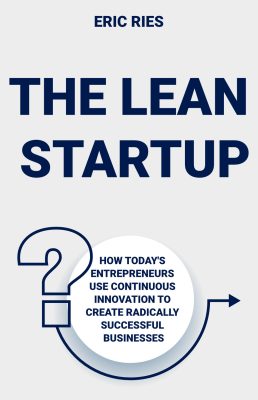
What if everything you thought you knew about building a successful business was wrong? Eric Ries challenges conventional wisdom in his groundbreaking book, The Lean Startup: How Today’s Entrepreneurs Use Continuous Innovation to Create Radically Successful Businesses. He proposes a revolutionary approach to entrepreneurship that turns traditional business practices on their head.
Imagine a world where companies don’t spend months or years developing products in secret, only to launch them with great fanfare and watch them fail spectacularly. Instead, picture a business landscape where startups and established companies alike embrace uncertainty, experiment rapidly, and learn from their customers every step of the way. This is the world Ries envisions and the one he argues is necessary for businesses to thrive in today’s fast-paced, unpredictable markets.
Ries introduces readers to the concept of validated learning, a rigorous method for demonstrating progress in the face of extreme uncertainty. He explains how this approach allows entrepreneurs to test their vision continuously, adapting and adjusting before it’s too late. Through real-world examples and detailed case studies, Ries shows how companies of all sizes can leverage these techniques to drive innovation and growth.
The book delves into the build-measure-learn feedback loop, a core component of the lean startup methodology. Ries demonstrates how this iterative process can help businesses avoid wasting time and resources on products or features that customers don’t want. He emphasizes the importance of creating a minimum viable product (MVP) to test key business hypotheses quickly and efficiently.
Readers of The Lean Startup will learn how to:
At its heart, The Lean Startup advocates for a scientific approach to creating and managing successful startups in an age of uncertainty. Ries argues that entrepreneurship is management, and that by adopting a hypothesis-driven approach to product development and business model innovation, companies can significantly increase their chances of success.
Think of the lean startup methodology as a GPS for entrepreneurs navigating the treacherous waters of business creation. Just as a GPS constantly recalculates and adjusts the route based on real-time data, the lean startup approach encourages businesses to continuously test their assumptions, measure results, and pivot when necessary. This adaptive strategy allows companies to find their optimal path to success, even in the face of unexpected obstacles or changing market conditions.
The Lean Startup has had a profound impact on the world of entrepreneurship and business management since its publication in 2011. The book’s principles have been adopted by startups and Fortune 500 companies alike, fundamentally changing how many organizations approach innovation and growth.
Ries’s work has sparked a global movement, with lean startup meetups and conferences held in cities around the world. The methodology has been incorporated into entrepreneurship curricula at universities and business schools, shaping the next generation of business leaders.
While widely acclaimed, the lean startup approach has faced some criticism. Some argue that its focus on rapid iteration and pivoting can lead to a lack of long-term vision or commitment to solving complex problems. Others contend that the methodology may not be suitable for all types of businesses or industries, particularly those with long development cycles or heavy regulatory requirements.
Despite these criticisms, The Lean Startup has received numerous accolades, including being named one of the best books of the year by the Wall Street Journal and Forbes. Its impact extends beyond the business world, with government agencies and non-profit organizations adopting lean startup principles to improve their efficiency and effectiveness.
The book’s emphasis on validated learning and data-driven decision-making has also influenced the broader conversation about evidence-based management and the role of experimentation in business. By challenging traditional notions of business planning and product development, Ries has helped to usher in a new era of entrepreneurship that values flexibility, customer feedback, and continuous innovation.
Eric Ries’s The Lean Startup is a groundbreaking work that has significantly influenced the field of entrepreneurship and business management. We find that the book’s core principles of rapid experimentation, validated learning, and iterative product development offer valuable insights for both aspiring entrepreneurs and seasoned business leaders.
The book’s strengths lie in its innovative approach to entrepreneurship, providing a scientific framework for navigating the uncertainties inherent in starting and growing a business. We appreciate Ries’s clear and engaging writing style, which makes complex concepts accessible to a wide audience. The numerous case studies and practical examples effectively illustrate how lean startup principles can be applied in real-world scenarios.
However, we also recognize several limitations in Ries’s work. The book’s heavy focus on tech startups may not fully resonate with entrepreneurs in other industries. Additionally, the emphasis on quantitative metrics and rapid iteration could potentially lead to short-term thinking at the expense of long-term vision and disruptive innovation.
We believe that The Lean Startup is most effective when read in conjunction with other complementary works in the field. Books like Peter Thiel’s Zero to One or Clayton Christensen’s The Innovator’s Dilemma can provide valuable counterpoints, offering perspectives on visionary thinking and disruptive innovation that balance Ries’s data-driven approach.
The book’s enduring relevance is evident in its continued influence on business education, corporate innovation strategies, and even government and non-profit sectors. We anticipate that the core principles of the lean startup methodology will remain valuable in the face of ongoing technological advancements and economic uncertainties.
Our Recommendation
We wholeheartedly recommend The Lean Startup to entrepreneurs, business students, and corporate innovators seeking a structured approach to building and growing successful ventures in uncertain environments. The book provides a robust framework for minimizing waste, maximizing learning, and increasing the odds of success in new business ventures.
However, we advise readers to approach the book with a critical mindset, recognizing its limitations and potential blind spots. To gain a comprehensive understanding of modern entrepreneurship and innovation, we suggest complementing The Lean Startup with other key works in the field that address different aspects of business strategy and innovation. By doing so, readers can develop a well-rounded perspective that combines Ries’s scientific approach with other crucial elements of business success, such as visionary thinking, competitive strategy, and long-term innovation.
The essence of The Lean Startup revolves around a set of key concepts that form the backbone of Eric Ries’s innovative approach to entrepreneurship. At its core, the book advocates for a scientific method of creating and managing startups to deliver products to customers more quickly. The lean startup methodology emphasizes rapid experimentation, iterative product releases, and validated learning to help entrepreneurs and businesses of all sizes navigate the uncertainty inherent in bringing new products to market.
One of the fundamental concepts introduced in the book is the build-measure-learn feedback loop. This iterative process encourages entrepreneurs to quickly build a minimum viable product (MVP), measure its effectiveness in the real world, and learn from the results. The goal is to maximize learning about customers and their needs while minimizing time and resources spent. This approach allows startups to pivot or persevere based on validated learning, rather than gut feelings or untested assumptions.
Validated learning is another crucial element of the lean startup methodology. It’s a rigorous method for demonstrating progress when a company is buried in the soil of extreme uncertainty. Ries argues that startups exist not just to make stuff, make money, or serve customers. They exist to learn how to build a sustainable business. This learning can be validated scientifically by running frequent experiments that allow entrepreneurs to test each element of their vision.
The concept of the MVP is central to the lean startup approach. An MVP is the version of a new product that allows a team to collect the maximum amount of validated learning about customers with the least effort. It’s not about creating a smaller or cheaper version of the final product. Instead, it’s about finding the fastest way to start learning. This could be a simple landing page, a video demonstration, or a basic prototype. The key is to start the learning process as quickly as possible.
Innovation accounting is another key topic explored in the book. This is a quantitative approach that allows startups to objectively demonstrate their growth and progress. It involves setting up actionable metrics that can be used to evaluate the success of experiments and guide decision-making. Ries contrasts this with “vanity metrics” that might look good on paper but don’t actually help in understanding or improving the business.
The pivot, a structured course correction designed to test a new fundamental hypothesis about the product, business model, and engine of growth, is another essential concept in The Lean Startup. Ries emphasizes that pivoting is not a sign of failure, but a sign of entrepreneurial leadership. It’s about keeping one foot rooted in what you’ve learned so far, while making a fundamental change in strategy to seek even greater validated learning.
Lastly, Ries introduces the concept of the three engines of growth: the sticky engine (focused on customer retention), the viral engine (relying on customer referrals), and the paid engine (using paid advertising to acquire customers). Understanding which engine of growth a startup is using can help focus efforts and measure progress more effectively.
Dropbox
One of the most compelling examples Ries uses to illustrate the power of the MVP is the story of Dropbox. Before building their product, the founders created a simple video demonstrating how their file-synchronization service would work. This video, targeted at a community of technology early adopters, generated hundreds of thousands of people signing up for a beta of a product that didn’t yet exist. This validated their assumption that people wanted and needed this type of service, allowing them to move forward with development with confidence.
Zappos
Ries also shares the story of Zappos to illustrate the concept of validated learning. When founder Nick Swinmurn had the idea to sell shoes online, he didn’t immediately build a complex e-commerce platform. Instead, he went to local shoe stores, took pictures of their inventory, and put them online. When he made a sale, he would go back to the store, buy the shoes, and ship them himself. This allowed him to test his hypothesis that people would buy shoes online without investing in inventory or building a complex website.
Grockit
To illustrate the concept of pivoting, Ries discusses the example of Grockit, an online social learning company. Initially, Grockit focused on creating a full-fledged learning management system for teachers. However, after gathering user feedback, they realized that teachers were more interested in using the platform for test preparation. This led to a successful pivot, with Grockit refocusing its efforts on creating a peer-to-peer learning platform for standardized test preparation.
IMVU
Ries often draws from his own experience as CTO of IMVU, a social entertainment company, to illustrate various lean startup principles. For instance, he discusses how IMVU initially believed customers would want to import their buddy lists from other instant messaging services. However, after releasing an MVP and measuring customer behavior, they discovered this feature wasn’t important to users. This led to a pivot in their product strategy, focusing instead on creating a standalone network.
Intuit
To demonstrate how established companies can also benefit from lean startup principles, Ries shares the story of Intuit. The financial software company implemented a system of rapid experimentation for their Turbotax product. By running many small experiments during tax season, they were able to continuously improve the product based on real customer data. This approach led to significant improvements in conversion rates and customer satisfaction.
Toyota
While not a startup, Toyota’s production system serves as a historical precedent for many lean startup principles. Ries draws parallels between Toyota’s focus on eliminating waste, continuous improvement, and worker empowerment, and the lean startup’s emphasis on efficiency, iterative development, and validated learning. He uses Toyota’s example to show how these principles can lead to long-term success and innovation, even in large, established companies.
Build-Measure-Learn: The Foundation of Lean Startup
The Build-Measure-Learn feedback loop is at the heart of the lean startup methodology. To implement this, start by clearly defining your riskiest assumption about your business idea. Then, build a Minimum Viable Product (MVP) that tests this assumption. For example, if you’re developing a new app, your MVP could be a landing page describing the app’s features and a sign-up form for interested users. Measure the results using actionable metrics, such as the number of sign-ups or the percentage of users who complete a key action. Finally, learn from these results to inform your next steps. If your assumption is validated, proceed with development. If not, consider pivoting your strategy. Remember, the goal is to go through this loop as quickly and efficiently as possible to maximize learning and minimize wasted resources.
Embrace the Minimum Viable Product (MVP)
The MVP is not about creating a smaller or cheaper version of your final product. Instead, it’s about finding the fastest way to start the Build-Measure-Learn loop. To create an effective MVP, focus on the core value proposition of your product. For a software product, this might mean developing only the essential features that solve the main problem for your users. For a physical product, consider using techniques like 3D printing or small batch production to create prototypes. The key is to resist the urge to perfect the product before releasing it. Instead, get it into the hands of real customers as quickly as possible. Use techniques like smoke tests, concierge MVPs, or Wizard of Oz testing to simulate your product’s core functionality without fully building it. This approach allows you to gather valuable customer feedback early in the development process, potentially saving months of wasted effort.
Validated Learning: The True Measure of Progress
In the lean startup model, progress is measured by validated learning, not just by traditional metrics like revenue or number of employees. To implement validated learning in your startup, start by clearly articulating your leap-of-faith assumptions – the riskiest elements of your startup plan. These might include assumptions about who your customers are, what features they want, or how they’ll use your product. Then, design experiments to test these assumptions. For instance, if you believe customers will pay for a certain feature, create a simple version of that feature and offer it to a small group of users. Track not just whether they use it, but whether they’re willing to pay for it. Use cohort analysis to compare different groups of customers over time, allowing you to see if your product changes are actually improving customer behavior. Remember, the goal is not just to collect data, but to gain insights that can drive decision-making.
The Power of the Pivot
A pivot is a structured course correction designed to test a new fundamental hypothesis about the product, strategy, or engine of growth. To effectively use pivots in your startup, regularly schedule “pivot or persevere” meetings where you critically evaluate your progress. Look for signs that you might need to pivot: Are your actions failing to move the needle on your key metrics? Are you seeing diminishing returns from product experiments? When you decide to pivot, don’t change everything at once. Instead, maintain your overarching vision and what you’ve learned so far, while making a fundamental change to your strategy. For example, you might pivot from a platform play to a single-feature product, or from a business-to-consumer model to a business-to-business one. Remember, pivoting is not failure – it’s a normal part of the entrepreneurial process and a sign of leadership.
Innovation Accounting: Measuring Progress in a Startup
Traditional accounting methods often fall short when measuring the progress of a startup operating in conditions of extreme uncertainty. Innovation accounting provides a framework for defining, measuring, and communicating progress when the usual metrics don’t apply. To implement innovation accounting, start by establishing a baseline through your MVP. Then, tune the engine by improving the product through small changes and measuring their impact. Finally, pivot or persevere based on whether you’re making sufficient progress towards your ideal metrics. Use cohort-based metrics rather than cumulative or gross numbers. For instance, instead of looking at total number of customers, examine the behavior of each cohort of customers over time. Are newer cohorts performing better than older ones? This approach allows you to see if your product changes are truly driving improvement.
The Three Engines of Growth
Ries identifies three primary engines of growth for startups: the sticky engine (focused on customer retention), the viral engine (relying on customer referrals), and the paid engine (using paid advertising to acquire customers). To leverage these engines effectively, first identify which one is most applicable to your business model. For the sticky engine, focus on metrics like churn rate and customer lifetime value. Implement strategies to increase engagement and reduce reasons for customers to leave. For the viral engine, optimize your viral coefficient – the number of new customers each existing customer brings in. This might involve building sharing mechanisms directly into your product. For the paid engine, focus on customer acquisition cost and lifetime value. Experiment with different marketing channels and constantly work to improve your conversion rates. Remember, while you may use multiple engines, it’s usually most effective to focus primarily on one.
Continuous Deployment and Small Batches
Continuous deployment and working in small batches are key principles of the lean startup methodology. To implement continuous deployment, set up an automated testing and deployment pipeline. Every time code is committed, it should be automatically tested and, if it passes, deployed to production. This might seem risky, but it actually reduces risk by catching and fixing errors quickly. To work in small batches, break down large projects into smaller, independently shippable features. Instead of spending months on a big release, aim for weekly or even daily releases. This approach allows you to get customer feedback faster and reduces the risk of building something customers don’t want. In practice, this might mean releasing a new feature to only a small percentage of users at first, or breaking a complex feature into several simpler ones that can be released and tested independently.
Build an Adaptive Organization
To truly embrace the lean startup methodology, you need to build an adaptive organization that can respond quickly to what you learn from your experiments. This involves creating cross-functional teams that have the skills and authority to build, measure, and learn without constantly seeking approval from management. Implement a culture of experimentation where failure is seen as a learning opportunity, not something to be punished. Use techniques like the “Five Whys” to dig deep into the root causes of problems, addressing systemic issues rather than just symptoms. Encourage transparency by making all metrics and experiment results visible to everyone in the organization. This might involve creating dashboards that display key metrics in real-time, or holding regular company-wide meetings to discuss what’s been learned. Remember, the goal is to create an organization that can innovate sustainably, not just once.
Innovative Approach to Entrepreneurship
The Lean Startup presents a groundbreaking methodology that challenges traditional business practices. Ries’s approach of applying scientific rigor to the often chaotic world of startups is refreshingly original. By advocating for rapid experimentation, validated learning, and iterative product releases, Ries provides a structured framework for navigating the uncertainty inherent in new ventures. This methodology offers a much-needed alternative to the conventional “build it and they will come” mentality, which has led to countless startup failures. The book’s emphasis on testing assumptions and gathering real-world data before making major investments of time and resources is a game-changer for entrepreneurs and intrapreneurs alike.
Practical Tools and Techniques
One of the book’s greatest strengths lies in its provision of concrete tools and techniques that readers can immediately apply to their own ventures. Concepts like the Minimum Viable Product (MVP), innovation accounting, and the Build-Measure-Learn feedback loop are not just theoretical constructs but practical strategies with clear implementation guidelines. Ries goes beyond simply explaining these tools; he provides detailed examples of how to use them in various scenarios. For instance, his explanation of how to create an MVP – whether it’s a simple landing page or a “concierge” service – gives entrepreneurs actionable steps to start testing their ideas quickly and efficiently. These practical applications make the book invaluable for readers looking to implement lean startup principles in their own businesses.
Comprehensive Case Studies
Ries bolsters his arguments with a wealth of real-world case studies drawn from his own experiences and those of other entrepreneurs. These case studies span a range of industries and company sizes, from tech startups to established corporations, demonstrating the broad applicability of lean startup principles. By detailing both successes and failures, Ries provides a nuanced view of how these principles play out in practice. The case study of IMVU, Ries’s own startup, is particularly illuminating, offering an insider’s perspective on the challenges and pivots involved in building a successful company. These detailed examples not only illustrate the book’s concepts but also make them more relatable and memorable for readers.
Adaptability to Various Business Contexts
While the book’s title might suggest a focus solely on new ventures, one of its strengths is the adaptability of its principles to various business contexts. Ries effectively argues that lean startup methodologies can be applied in established companies, non-profit organizations, and even government agencies. He provides examples of how large corporations like General Electric have implemented these principles to drive innovation and efficiency. This broad applicability makes the book relevant not just for entrepreneurs, but for managers and leaders in all types of organizations looking to foster innovation and adapt to rapidly changing markets.
Clear and Engaging Writing Style
Ries’s writing style is another significant strength of the book. He manages to convey complex business concepts in clear, accessible language without oversimplifying. The book strikes a balance between being intellectually rigorous and easily digestible, making it suitable for both experienced business leaders and aspiring entrepreneurs. Ries uses analogies and metaphors effectively to illustrate abstract concepts, such as comparing the lean startup process to driving a car, constantly making small adjustments to stay on course. This engaging style, combined with the book’s logical structure, helps maintain reader interest and facilitates understanding of the lean startup methodology.
Emphasis on Learning and Adaptability
A key strength of The Lean Startup is its emphasis on learning and adaptability as core components of business success. Ries convincingly argues that in today’s fast-paced business environment, the ability to learn quickly and adapt is more valuable than perfect planning or execution. The book’s focus on validated learning provides a framework for turning this principle into practice, encouraging entrepreneurs to view failures as learning opportunities rather than setbacks. This mindset shift is potentially transformative, fostering resilience and innovation in the face of uncertainty. By prioritizing learning and adaptability, Ries offers a blueprint for building businesses that can thrive in rapidly changing markets.
Limited Discussion of Team Dynamics
While The Lean Startup provides a comprehensive framework for product development and business strategy, it falls somewhat short in addressing the human element of startups. The book focuses heavily on processes and metrics but offers limited insight into team dynamics, leadership challenges, or the cultural aspects of implementing lean startup methodologies. For instance, pivoting can be emotionally challenging for a team that has invested significant time and effort in a particular direction. The book could have benefited from more discussion on how to manage these human factors, including strategies for building a team culture that embraces experimentation and learning from failure. This omission may leave readers well-equipped with technical tools but underprepared for the interpersonal challenges of leading a lean startup.
Potential for Misinterpretation of MVP Concept
While the Minimum Viable Product (MVP) is one of the book’s most powerful concepts, there’s a risk of misinterpretation that Ries could have addressed more thoroughly. Some readers might take the idea of an MVP to an extreme, launching products that are so minimal they fail to deliver any real value to customers. The book could have provided more guidance on striking the right balance between minimalism and functionality in MVPs. Additionally, more discussion on how to apply the MVP concept in different industries, particularly those with high regulatory barriers or where product quality is critical (such as healthcare or finance), would have strengthened the book’s applicability across various sectors.
Overemphasis on Quantitative Metrics
While Ries rightly emphasizes the importance of measuring progress, the book sometimes seems to overemphasize quantitative metrics at the expense of qualitative insights. In many cases, especially in the early stages of a startup, qualitative feedback from customers can be just as valuable as, if not more valuable than, quantitative data. The book could have provided more guidance on how to gather and interpret qualitative feedback within the lean startup framework. Additionally, there’s a risk that an overreliance on metrics could lead to short-term thinking or manipulation of numbers, issues that could have been addressed more thoroughly.
Limited Exploration of Scaling Challenges
The Lean Startup focuses primarily on the early stages of a company’s development, with less attention given to the challenges of scaling a successful lean startup. While the principles of continuous innovation and adaptation remain relevant as a company grows, the practical application of these principles can become more complex in larger organizations. The book could have explored more deeply how lean startup methodologies evolve as a company expands, including how to maintain a culture of experimentation and rapid iteration in the face of increasing organizational complexity and stakeholder pressures. This additional perspective would have made the book even more valuable for entrepreneurs looking to build long-term, sustainable businesses.
Overemphasis on Tech Startups
While The Lean Startup principles are meant to be universally applicable, the book’s examples and case studies heavily favor tech startups. This bias might lead readers to mistakenly believe that the methodology is less relevant or harder to implement in non-tech industries. In reality, lean startup principles can be just as effective in manufacturing, service industries, or even non-profit organizations. However, the book doesn’t provide enough diverse examples to fully illustrate this adaptability. This blind spot might discourage entrepreneurs in traditional industries from adopting these valuable techniques. To address this limitation, readers might benefit from complementing Ries’s work with books like The Startup Owner’s Manual by Steve Blank and Bob Dorf, which offers a broader range of industry examples, or Running Lean by Ash Maurya, which provides more diverse case studies of lean methodology application.
Potential for Short-Term Thinking
The lean startup methodology’s emphasis on rapid iteration and pivoting based on customer feedback can potentially lead to short-term thinking. While the book advocates for a long-term vision, the focus on immediate customer reactions might cause entrepreneurs to lose sight of broader market trends or disruptive innovations that customers can’t yet articulate. This approach might work well for incremental improvements but could potentially blind entrepreneurs to more radical innovations. Clayton Christensen’s The Innovator’s Dilemma provides a valuable counterpoint here, discussing how excessive focus on current customers can cause companies to miss disruptive innovations. Balancing Ries’s customer-centric approach with Christensen’s insights on disruptive innovation could provide a more comprehensive strategy for long-term success.
Underestimation of Market Research
In its zeal to advocate for rapid prototyping and real-world testing, The Lean Startup might undervalue the role of traditional market research. While Ries rightly points out the limitations of relying solely on market research, especially for truly innovative products, he perhaps swings too far in the opposite direction. This could lead entrepreneurs to neglect valuable insights that can be gained from thorough market analysis. The book could have provided more guidance on how to integrate traditional market research methods with lean startup principles. For a more balanced approach, entrepreneurs might consider reading The Mom Test by Rob Fitzpatrick alongside Ries’s work. Fitzpatrick’s book offers techniques for conducting effective customer conversations that complement the lean startup methodology while addressing some of its blind spots in customer research.
Overlooking the Importance of Intuition and Vision
While The Lean Startup rightfully emphasizes data-driven decision making, it may undervalue the role of entrepreneurial intuition and visionary thinking. The book’s scientific approach, while valuable, might lead readers to discount the importance of gut feeling and long-term vision in entrepreneurship. Some of the most successful companies were built on ideas that data alone might have rejected in their early stages. This blind spot could potentially stifle truly innovative ideas that don’t immediately show positive metrics. To balance this perspective, entrepreneurs might benefit from reading Zero to One by Peter Thiel, which emphasizes the importance of visionary thinking and creating truly novel solutions. Combining Ries’s data-driven approach with Thiel’s emphasis on breakthrough innovation could provide a more holistic view of successful entrepreneurship.
Insufficient Attention to Funding Challenges
While The Lean Startup offers valuable advice on efficient use of resources, it doesn’t fully address the challenges of securing funding while adhering to lean principles. Traditional investors often expect to see more fully developed products or larger user bases than a lean startup might have in its early stages. This can create a tension between following lean principles and meeting investor expectations. The book could have provided more guidance on how to communicate the value of the lean approach to potential investors and how to balance lean principles with the need to demonstrate traction to secure funding. For more insights on this aspect, entrepreneurs could turn to Venture Deals by Brad Feld and Jason Mendelson, which offers detailed advice on startup funding and could complement Ries’s work by addressing this blind spot.
Limited Discussion of Competitive Strategy
The Lean Startup focuses primarily on product development and customer validation but provides limited guidance on competitive strategy. While the book’s principles can help create a product that customers want, it doesn’t fully address how to position that product in a competitive market or how to defend against competitors who might quickly copy a successful idea. This blind spot could leave lean startups vulnerable to more strategically minded competitors. To fill this gap, entrepreneurs might benefit from reading Blue Ocean Strategy by W. Chan Kim and Renée Mauborgne alongside Ries’s work. Blue Ocean Strategy provides a framework for creating uncontested market spaces and making competition irrelevant, which could complement the lean startup methodology by adding a crucial strategic dimension.
Zero to One by Peter Thiel
While The Lean Startup focuses on iterative development and validated learning, Thiel’s Zero to One takes a different approach. Thiel argues for creating monopolies through radical innovation rather than incremental improvements. Where Ries advocates for rapid experimentation and pivoting based on customer feedback, Thiel emphasizes the importance of having a bold, long-term vision and the courage to pursue it despite initial market skepticism. Thiel’s approach might lead to more groundbreaking innovations but carries higher risks, while Ries’s method aims to minimize risk through constant testing and adaptation. However, both books agree on the importance of creating real value for customers and the need for entrepreneurs to think critically about their business assumptions.
The Innovator’s Dilemma by Clayton Christensen
Christensen’s work provides an interesting counterpoint to The Lean Startup. While Ries focuses on how startups can innovate and grow, Christensen examines why established companies often fail in the face of disruptive innovations. The Innovator’s Dilemma argues that by focusing too much on current customers’ needs (which aligns with lean startup principles), companies can miss disruptive technologies that initially underperform in mainstream markets but improve over time. This presents a potential challenge to Ries’s customer-centric approach. However, both books emphasize the importance of continuous innovation and adaptability in business. Combining insights from both could help entrepreneurs balance short-term customer needs with long-term disruptive potential.
The Four Steps to the Epiphany by Steve Blank
Blank’s book, which predates The Lean Startup, laid much of the groundwork for Ries’s ideas. Both emphasize customer development and the importance of testing business hypotheses. However, Blank’s approach is more structured, outlining a specific four-step process for building a successful startup. Ries’s methodology, while influenced by Blank’s work, is more flexible and adaptable to different business contexts. The Lean Startup also places more emphasis on rapid iteration and the Build-Measure-Learn feedback loop. While Blank’s book might be more suitable for those who prefer a more structured approach, Ries’s work offers a more adaptable framework that can be applied in various business settings.
Running Lean by Ash Maurya
Maurya’s Running Lean can be seen as a practical companion to The Lean Startup. While Ries provides the theoretical framework, Maurya offers more concrete, step-by-step guidance on implementing lean principles. Running Lean introduces tools like the Lean Canvas, a simplified version of the Business Model Canvas, to help entrepreneurs quickly outline and test their business models. Both books emphasize the importance of validated learning and rapid iteration, but Maurya’s work provides more tactical advice on how to conduct customer interviews, set up experiments, and measure results. Entrepreneurs might find value in reading both books: Ries for the overarching philosophy and Maurya for practical implementation strategies.
Blue Ocean Strategy by W. Chan Kim and Renée Mauborgne
While The Lean Startup focuses on how to build and grow a startup through rapid experimentation, Blue Ocean Strategy concentrates on finding uncontested market spaces. Kim and Mauborgne argue for creating new demand rather than competing in existing markets, which they term “red oceans.” This approach contrasts with Ries’s emphasis on iterative product development based on existing customer feedback. However, both books stress the importance of challenging industry assumptions and creating unique value for customers. Entrepreneurs might benefit from combining Ries’s methodology for product development with Kim and Mauborgne’s strategies for market creation and differentiation.
Identify Your Assumptions
Start by listing all the assumptions you’re making about your business idea or personal project. These could be assumptions about your target market, the problem you’re solving, your solution’s effectiveness, or how you’ll reach customers. Be as comprehensive as possible. For example, if you’re developing a new fitness app, your assumptions might include “people want to track their workouts on their phones,” “users will pay a monthly subscription for premium features,” or “our app’s interface is intuitive enough for users to navigate without assistance.” Once you have this list, rank these assumptions based on their importance to your project’s success and the level of uncertainty surrounding them. This process will help you prioritize which assumptions to test first.
Design Minimum Viable Products (MVPs)
For each of your critical assumptions, design an MVP to test it. Remember, an MVP is not about creating a smaller version of your final product, but the simplest thing you can build to get meaningful feedback. For a fitness app, this could be as simple as a landing page describing your app’s features and a sign-up form for interested users. Or it could be a basic version of the app with only one or two core features. If you’re testing assumptions about user interface, you might create a series of mockups or a clickable prototype. The key is to create something quickly and inexpensively that will allow you to gather real-world data about your assumption.
Set Up Measurable Experiments
For each MVP, design a clear experiment with specific, measurable outcomes. Define what success looks like before you start. For instance, if you’re testing whether users will pay for premium features, you might set a goal of 10% of users signing up for a paid tier within the first month. If you’re testing the effectiveness of a new workout routine, you might aim for 80% of users reporting improved fitness levels after three months. Be sure to define not just what you’re measuring, but how you’ll measure it. Will you use surveys, analytics tools, or direct user feedback? Having clear metrics will help you objectively evaluate the results of your experiments.
Implement the Build-Measure-Learn Loop
Put your MVP out into the world and start collecting data. This could mean launching your landing page and tracking sign-ups, releasing your basic app to a small group of beta testers, or starting a small-scale trial of your new service. As you gather data, analyze it regularly. Look for patterns and insights. Are users behaving as you expected? Are there any surprising results? Don’t just focus on the numbers; try to understand the “why” behind the data. If possible, conduct user interviews or surveys to get qualitative feedback alongside your quantitative data. Use this information to inform your next steps.
Practice Validated Learning
Based on the results of your experiments, make decisions about how to proceed. If an assumption is validated, you can move forward with more confidence. If it’s invalidated, you’ll need to adjust your approach. This is where the concept of pivoting comes in. A pivot doesn’t mean completely abandoning your idea, but rather making a fundamental change to your strategy based on what you’ve learned. For example, if you find that users aren’t willing to pay for premium features in your fitness app, you might pivot to a freemium model with in-app purchases. Or if you discover that users are more interested in nutrition tracking than workout logging, you might pivot your focus to that area. Remember, pivoting is not a sign of failure, but a sign that you’re learning and adapting.
Embrace Continuous Deployment
If you’re working on a digital product, adopt a continuous deployment approach. This means making small, frequent updates to your product rather than large, infrequent releases. Set up an automated system that allows you to push updates quickly and easily. This approach allows you to respond rapidly to user feedback and test new features or improvements in real-time. Start by identifying the smallest valuable change you can make to your product. implement it, deploy it to a subset of your users, and measure its impact. If it’s successful, roll it out to all users. If not, you can quickly roll it back with minimal disruption.
Implement Innovation Accounting
Develop a system for tracking your progress that goes beyond traditional business metrics. While revenue and user numbers are important, they don’t tell the whole story, especially in the early stages of a project. Create a dashboard that tracks your key metrics, such as customer acquisition cost, lifetime value, activation rate, or retention rate. Update this dashboard regularly and use it to inform your decision-making. Pay particular attention to cohort analysis – tracking how groups of users who joined at different times behave over time. This can give you valuable insights into whether your product is improving and whether changes you’re making are having the desired effect.
Create a Culture of Experimentation
Even if you’re working on your own, cultivate a mindset that embraces experimentation and learning. View every feature, marketing campaign, or business decision as an experiment to be tested. Develop the habit of forming hypotheses and designing ways to test them quickly. Don’t be afraid of failure – reframe it as a learning opportunity. Keep a log of your experiments, their results, and what you learned from each one. Over time, this will become a valuable resource of insights and help you refine your approach to testing and learning.
Apply Lean Thinking to Personal Projects
The principles of the lean startup can be applied beyond business to personal projects and goals. For instance, if you’re learning a new skill, break it down into small, testable chunks. Set clear, measurable goals for each stage of learning. Regularly assess your progress and be willing to pivot your approach if you’re not seeing the results you want. If you’re writing a book, you might create an MVP in the form of a blog post or a short e-book to test reader interest in your topic. By applying lean principles to personal projects, you can make more efficient use of your time and resources, and increase your chances of achieving your goals.
Network with Other Lean Practitioners
Join or create a community of people applying lean startup principles. This could be an online forum, a local meetup group, or even just a few friends or colleagues who are interested in this approach. Regular discussions with others can help you refine your understanding of lean principles, get new ideas for applying them, and stay motivated. Share your experiences, both successes and failures, and learn from others’ experiences. Consider participating in lean startup workshops or conferences to deepen your knowledge and expand your network.
Continuously Educate Yourself
Stay updated on new developments in lean methodology and related fields. Read blogs, articles, and books by thought leaders in the lean startup movement. Explore case studies of companies successfully applying lean principles. Also, look into adjacent fields like design thinking, agile development, and business model innovation, which can complement and enhance your lean startup approach. Consider taking online courses or attending workshops to deepen your understanding of specific aspects of the lean methodology, such as customer development or metrics analysis.
Implement Cross-Functional Teams
The lean startup methodology emphasizes the importance of rapid experimentation and learning, which requires close collaboration across different business functions. Implementing cross-functional teams can significantly enhance a company’s ability to iterate quickly and respond to customer feedback. These teams should include members from product development, marketing, sales, and customer service, ensuring a holistic approach to problem-solving and innovation. By breaking down silos and fostering direct communication between different departments, businesses can accelerate their build-measure-learn cycles and make more informed decisions.
However, creating effective cross-functional teams can be challenging, especially in larger, more established organizations. Resistance to change, conflicting priorities between departments, and lack of clear leadership can hinder the formation and effectiveness of these teams. Additionally, team members may struggle to balance their cross-functional responsibilities with their regular departmental duties, leading to burnout or reduced productivity.
To overcome these challenges, businesses should start by clearly communicating the purpose and benefits of cross-functional teams to all employees. Leadership should actively support and participate in the process, demonstrating its importance. Implement a gradual approach, starting with pilot projects that demonstrate the value of cross-functional collaboration. Provide training in lean methodologies and team collaboration skills. Establish clear roles, responsibilities, and decision-making processes within the teams. Finally, adjust performance metrics and reward systems to recognize and incentivize cross-functional teamwork.
Adopt Continuous Deployment
Continuous deployment, a key principle of the lean startup methodology, involves releasing product updates frequently and in small batches. This approach allows businesses to get new features and improvements to customers quickly, gather feedback, and make necessary adjustments. By shortening the feedback loop, companies can reduce the risk of building features that customers don’t want and can respond more rapidly to changing market conditions.
Implementing continuous deployment can be challenging, particularly for businesses with complex products or those in heavily regulated industries. It requires a significant shift in development processes and mindset. Technical challenges include setting up robust automated testing and deployment pipelines. There may also be resistance from team members accustomed to longer development cycles or concerns about potential negative impacts on product stability.
To successfully adopt continuous deployment, start by investing in a strong automated testing infrastructure to ensure that frequent releases don’t compromise product quality. Gradually transition to shorter release cycles, allowing teams to adjust to the new pace. Implement feature flags, which allow new features to be turned on or off without redeploying code, providing more control over releases. Provide training to all team members on the principles and practices of continuous deployment. Foster a culture that values experimentation and learning from failure. For regulated industries, work closely with compliance teams to develop processes that allow for rapid deployment while meeting regulatory requirements.
Implement Innovation Accounting
Innovation accounting, as described in The Lean Startup, involves creating alternative metrics to measure progress when traditional business metrics aren’t applicable. This approach helps startups and innovative projects within larger companies to demonstrate progress and make data-driven decisions in highly uncertain environments. Implementing innovation accounting requires identifying and tracking actionable metrics that provide insights into the success of new products or features.
However, implementing innovation accounting can be challenging. Traditional financial departments may resist adopting new, unfamiliar metrics. There might be difficulty in identifying which metrics are truly actionable and indicative of long-term success. Furthermore, there’s a risk of focusing too heavily on short-term metrics at the expense of long-term strategy. Stakeholders accustomed to traditional financial reporting may struggle to understand and trust these new metrics.
To overcome these challenges, start by educating key stakeholders about the principles of innovation accounting and its importance for innovative projects. Work closely with finance teams to develop a hybrid reporting system that incorporates both traditional financial metrics and innovation accounting metrics. Invest time in identifying truly actionable metrics that align with long-term business goals. Use cohort analysis to provide context and demonstrate trends over time. Regularly review and adjust your metrics to ensure they remain relevant as your product evolves. Consider using visualization tools to make innovation accounting metrics more accessible and understandable to all stakeholders.
Foster a Culture of Experimentation
Creating a culture of experimentation is crucial for implementing lean startup principles effectively. This involves encouraging employees at all levels to propose and test new ideas, embracing failure as a learning opportunity, and making data-driven decisions. Such a culture can lead to increased innovation, faster problem-solving, and more engaged employees.
However, fostering this culture can be challenging, especially in organizations with a more traditional, risk-averse culture. Employees may be hesitant to propose ideas or admit failures for fear of negative consequences. There might be resistance from middle management who see experimentation as a threat to established processes. Additionally, the pressure for short-term results can make it difficult to justify the time and resources needed for experimentation.
To build a culture of experimentation, start from the top. Leadership should actively model and encourage experimentation. Implement a formal process for proposing and running experiments, making it accessible to all employees. Celebrate learning from both successful and failed experiments. Provide training in experimental design and data analysis. Create safe spaces for experimentation, such as innovation labs or dedicated time for side projects. Adjust performance evaluations to recognize and reward innovative thinking and calculated risk-taking. Regularly communicate the results and learnings from experiments across the organization to demonstrate their value.
Implement the Build-Measure-Learn Feedback Loop
The Build-Measure-Learn feedback loop is at the core of the lean startup methodology. It involves quickly building a minimum viable product (MVP), measuring its effectiveness through real-world testing, and learning from the results to inform the next iteration. This approach allows businesses to validate or invalidate their assumptions quickly and efficiently, reducing the risk of investing significant resources in products or features that customers don’t want.
Implementing this feedback loop can be challenging, particularly in larger organizations accustomed to longer development cycles. There may be resistance to releasing “unfinished” products for testing. Measuring the right things can be difficult, especially for innovative products without established metrics. Learning from the data and translating it into actionable insights requires skill and practice. There’s also a risk of over-pivoting, making too many changes based on limited data.
To effectively implement the Build-Measure-Learn loop, start by clearly defining your key assumptions and hypotheses before building anything. Develop a culture that values learning over perfection in early-stage products. Invest in analytics tools and training to ensure you can effectively measure product performance. Create cross-functional teams that include data analysts to help interpret results. Establish a regular cadence for reviewing results and making decisions. Develop clear criteria for when to persevere with an idea and when to pivot. Remember that the goal is validated learning, not just gathering data. Regularly reassess your metrics to ensure they’re providing meaningful insights as your product evolves.
Embrace Pivoting
Pivoting, or making a fundamental change in strategy based on validated learning, is a key concept in the lean startup methodology. It allows businesses to adapt quickly to market realities, potentially saving significant time and resources that might otherwise be wasted pursuing unviable strategies. Embracing pivoting means being ready to make significant changes to your product, target market, or business model based on customer feedback and data.
However, pivoting can be challenging for several reasons. There’s often emotional attachment to original ideas, making it difficult for founders or project leads to abandon them. Pivoting can be seen as an admission of failure, which may damage team morale or stakeholder confidence. It can also be logistically complex, potentially requiring changes in team structure, resource allocation, or even company culture. There’s also the risk of pivoting too frequently, leading to a lack of focus and direction.
To effectively embrace pivoting, foster a culture that values learning and adaptation over being right. Clearly communicate to all stakeholders that pivots are a normal and valuable part of the innovation process. Establish clear criteria for when to consider a pivot, based on predefined metrics and learning milestones. When a pivot is necessary, involve the entire team in the decision-making process to ensure buy-in. Develop contingency plans for potential pivot scenarios to make the transition smoother if needed. Celebrate pivots as signs of learning and progress, not as failures. Maintain a clear long-term vision while being flexible about how to achieve it, to ensure that pivots align with overall business goals.
Artificial Intelligence and Machine Learning Integration
The lean startup methodology could be significantly enhanced by AI and machine learning. These technologies can accelerate the build-measure-learn loop. AI can analyze vast amounts of user data quickly, identifying patterns and insights humans might miss. Machine learning algorithms could optimize A/B testing, automatically adjusting variables to find the most effective solutions.
This integration isn’t without challenges. There’s a risk of over-relying on AI-driven insights, potentially stifling human creativity and intuition. Ethical concerns around data privacy and algorithmic bias must be addressed. However, when used responsibly, AI and machine learning could supercharge the lean startup approach. They could enable even faster iterations and more precise pivots based on data-driven predictions.
Sustainability and Social Responsibility
The lean startup principles align well with growing demands for sustainable and socially responsible business practices. The emphasis on minimizing waste and maximizing efficiency resonates with environmental concerns. The focus on creating real value for customers aligns with calls for more ethical business practices.
In the future, we might see an evolution of the lean startup methodology that explicitly incorporates sustainability metrics. MVPs might be evaluated not just on customer adoption but also on environmental impact. The build-measure-learn loop could include measuring social impact alongside traditional business metrics.
This trend presents both opportunities and challenges. It could lead to more holistic, responsible business practices. However, balancing profit motives with social and environmental concerns can be complex. Companies will need to find ways to measure and communicate their impact effectively.
Remote Work and Distributed Teams
The rise of remote work is likely to influence how lean startup principles are applied. Distributed teams can potentially accelerate the build-measure-learn cycle by allowing for 24/7 development and testing across different time zones. They can also provide access to a global talent pool and diverse customer bases for testing.
However, remote work also presents challenges to the lean startup approach. Building a culture of experimentation and rapid iteration can be harder when team members are not physically co-located. Informal communication and spontaneous collaboration, often crucial in startups, may be more difficult in remote settings.
Future iterations of the lean startup methodology may need to address these challenges. We might see new tools and practices emerge specifically designed to facilitate lean startup principles in distributed teams. Virtual reality and augmented reality technologies could play a role in creating more immersive remote collaboration experiences.
Personalization and Micro-Segmentation
Advancements in data analytics and machine learning are enabling increasingly granular customer segmentation. This trend aligns well with the lean startup’s emphasis on understanding and serving customer needs. In the future, we might see lean startup principles applied at a micro-level, with companies creating and testing MVPs for highly specific customer segments.
This could lead to more personalized products and services, potentially increasing customer satisfaction and loyalty. It could also result in more efficient use of resources, as companies can focus on developing features that specific segments truly value.
However, this level of personalization raises privacy concerns. It also presents technical challenges in managing multiple product versions. Balancing personalization with scalability will be a key challenge for future lean startups.
The Lean Startup, published in 2011, has had a profound and lasting impact on the field of entrepreneurship and business management. Its influence extends far beyond startups, reaching into established corporations, non-profit organizations, and even government agencies. The book’s emphasis on rapid experimentation, validated learning, and data-driven decision-making has become deeply ingrained in modern business practices.
The lean startup methodology has significantly influenced how entrepreneurship is taught in universities and business schools worldwide. Many institutions have incorporated lean startup principles into their curricula, shifting the focus from traditional business planning to more adaptive, iterative approaches. This shift in education is likely to continue shaping the mindset of future business leaders, potentially leading to more innovative and adaptable organizations across various sectors.
In the corporate world, many large companies have adopted lean startup principles to drive innovation and stay competitive in rapidly changing markets. This trend is likely to continue, potentially leading to more agile and customer-focused large organizations. The emphasis on continuous innovation and rapid adaptation may help established companies better compete with disruptive startups, potentially changing the dynamics of various industries.
The lean startup approach has also influenced government and non-profit sectors, encouraging more efficient use of resources and data-driven decision-making in public policy and social initiatives. This trend could lead to more effective and responsive public services and social programs in the future.
Looking ahead, the principles outlined in The Lean Startup are likely to remain relevant as businesses continue to face uncertainty and rapid change. However, as technology evolves, we may see new tools and techniques emerge for implementing these principles. For instance, advancements in artificial intelligence and big data analytics could provide new ways to gather and interpret customer feedback, potentially making the Build-Measure-Learn loop even faster and more accurate.
The book’s emphasis on sustainability and efficient use of resources aligns well with growing concerns about environmental sustainability and social responsibility in business. In the future, we might see an increased integration of lean startup principles with sustainability practices, potentially leading to more environmentally and socially responsible business models.
As the business world becomes increasingly global and interconnected, the application of lean startup principles across different cultural contexts may present new challenges and opportunities. Future editions or spin-offs of the book might need to address how these principles can be adapted to various cultural and economic environments.
Zero to One by Peter Thiel
While The Lean Startup focuses on iterative development and validated learning, Thiel’s Zero to One offers a contrasting perspective on innovation. Thiel argues for creating monopolies through radical innovation rather than incremental improvements. This book challenges readers to think beyond competition and create entirely new markets. It’s an excellent complement to Ries’s work, providing a different approach to startup success that emphasizes long-term vision and unique value creation. Entrepreneurs will benefit from considering both perspectives, balancing rapid iteration with bold, innovative thinking.
The Innovator’s Dilemma by Clayton Christensen
Christensen’s seminal work explores why established companies often fail in the face of disruptive innovations. It provides a valuable counterpoint to The Lean Startup by examining the challenges of innovation from the perspective of established firms. The book introduces the concept of disruptive innovation, which can help entrepreneurs understand how to position their startups against incumbents. Reading this alongside Ries’s work can give entrepreneurs a more comprehensive view of the innovation landscape and help them navigate both as startups and potentially as they grow into established companies.
Running Lean by Ash Maurya
Maurya’s book serves as a practical companion to The Lean Startup, offering more concrete, step-by-step guidance on implementing lean principles. It introduces tools like the Lean Canvas, a simplified version of the Business Model Canvas, to help entrepreneurs quickly outline and test their business models. Running Lean provides tactical advice on conducting customer interviews, setting up experiments, and measuring results. This book is particularly useful for readers looking to put Ries’s theories into practice, offering hands-on strategies and techniques for applying lean startup principles.
The Startup Owner’s Manual by Steve Blank and Bob Dorf
This comprehensive guide expands on many of the concepts introduced in The Lean Startup. Blank, who was Ries’s mentor, provides a detailed roadmap for building a successful startup, with a strong emphasis on customer development. The book offers step-by-step instructions for testing and validating business model hypotheses, making it an excellent resource for those wanting to dive deeper into the practical application of lean startup principles. It’s particularly valuable for its extensive coverage of customer development techniques, which complement Ries’s focus on product development.
Lean Analytics by Alistair Croll and Benjamin Yoskovitz
For readers intrigued by Ries’s emphasis on measurement and data-driven decision making, Lean Analytics offers a deep dive into the world of startup metrics. The book provides guidance on which metrics to track at different stages of a startup’s growth and how to use these metrics to make better decisions. It explores the concept of the “One Metric That Matters” and how to identify it for your specific business. This book is an excellent resource for entrepreneurs looking to implement the measurement aspect of the Build-Measure-Learn loop more effectively.
The Lean Product Playbook by Dan Olsen
Olsen’s book provides a practical guide to implementing lean principles specifically in product development. It offers a step-by-step approach to creating products that customers want, complementing Ries’s more theoretical framework with actionable strategies. The book introduces the Lean Product Process, a six-step methodology that includes determining your target customers, identifying underserved needs, defining your value proposition, specifying your MVP feature set, creating your MVP prototype, and testing it with customers. This book is particularly valuable for product managers and entrepreneurs focused on product development.
Lean Impact by Ann Mei Chang
For readers interested in applying lean startup principles beyond the business world, Lean Impact offers insights into how these methodologies can be used in the social sector. Chang adapts the lean startup approach for nonprofits and social enterprises, showing how it can be used to create greater social impact more effectively and efficiently. This book is valuable for social entrepreneurs and those interested in corporate social responsibility, demonstrating the versatility and broad applicability of lean principles beyond traditional startup environments.
Lean Startup Co.
Lean Startup Co. (https://leanstartup.co/) is the official platform for Eric Ries’s Lean Startup methodology. It offers a wealth of resources including blog posts, case studies, and online courses. The site regularly updates with new content from thought leaders in the lean startup community, making it an excellent resource for staying current with the latest developments and applications of lean principles.
Strategyzer
Strategyzer (https://www.strategyzer.com/) is a platform that provides tools and resources for business model innovation, including the Business Model Canvas and Value Proposition Canvas. These tools align well with lean startup principles and can help entrepreneurs visualize and test their business models. The site offers free resources as well as paid courses and workshops.
Y Combinator Startup School
Y Combinator’s Startup School (https://www.startupschool.org/) offers free online courses and resources for founders. While not exclusively focused on lean startup methodology, many of the principles taught align closely with Ries’s approach. The platform provides valuable insights from successful founders and investors, making it a great complementary resource for aspiring entrepreneurs.
Lean Startup Conference
The annual Lean Startup Conference brings together entrepreneurs, corporate innovators, and thought leaders to discuss the latest developments in lean methodology. The conference features workshops, keynote speeches, and networking opportunities. It’s an excellent venue for deepening understanding of lean principles and connecting with others in the lean startup community.
Business of Software Conference
While not exclusively focused on lean startups, the Business of Software Conference (https://businessofsoftware.org/) often features talks and workshops relevant to lean principles, particularly in the context of software and tech startups. It’s a valuable event for entrepreneurs looking to apply lean methodologies in the software industry.
Lean Startup Circle
Lean Startup Circle is a global network of entrepreneurs and innovators practicing lean startup methodologies. With local chapters in many cities, it offers opportunities for in-person meetups, discussions, and knowledge sharing. Joining a local chapter can provide valuable networking and learning opportunities for entrepreneurs implementing lean principles.
International Business Innovation Association (InBIA)
InBIA (https://inbia.org/) is a global network for entrepreneurship centers. While not exclusively focused on lean startups, many of its resources and events are relevant to lean principles. It’s particularly valuable for entrepreneurs looking to connect with incubators, accelerators, and other support organizations that often employ lean methodologies.
Lean Startup
The official Lean Startup podcast features interviews with entrepreneurs, authors, and thought leaders in the lean startup space. It offers insights into how different organizations are applying lean principles and discusses current trends and challenges in the startup world.
Masters of Scale
Hosted by LinkedIn co-founder Reid Hoffman, Masters of Scale (https://mastersofscale.com/) features interviews with successful entrepreneurs. While not exclusively about lean startups, many episodes discuss principles that align with lean methodology, offering valuable insights into scaling businesses efficiently.
Udacity’s Lean Startup Course
Udacity offers a “How to Build a Startup” course (https://www.udacity.com/course/how-to-build-a-startup–ep245) taught by Steve Blank, one of the pioneers of the lean startup movement. This course provides a comprehensive introduction to lean startup principles and customer development.
Stanford University’s “Lean LaunchPad” on Coursera
This course, available on Coursera, is taught by Steve Blank and focuses on the application of lean startup principles. It’s particularly valuable for its emphasis on customer development and business model design.
The Startup Kids
This documentary features interviews with young tech entrepreneurs from the U.S. and Europe. While not specifically about lean startups, it provides insights into the challenges and strategies of modern entrepreneurs, many of whom employ lean principles.
Something Ventured
This documentary explores the early days of venture capital in Silicon Valley. While it predates the lean startup movement, it provides valuable context for understanding the evolution of startup culture and funding, which can enrich one’s understanding of the ecosystem in which lean startups operate.
The Social Network
While a dramatized account, this film about the founding of Facebook illustrates many principles that align with lean startup methodology, such as rapid iteration and pivoting based on user feedback. It can provide an engaging way to see some lean principles in action, albeit in a fictionalized context.


Discover the key takeaways from top non-fiction books in minutes. Get the wisdom you need to succeed fast. Here, learning is quick, engaging, and always at your fingertips.
© 2025 All Rights Reserved.