Reviews
“More than any other business book released this year, Hard Things gives an insider’s perspective on what it’s like to lead and scale a startup.” —Business Insider’s Best Business Books of 2014
“This is easily one of the essential books every business leader should read if they’re looking for proven and honest management advice.” —Entrepreneur’s 25 Amazing Business Books from 2014
“The most valuable book on startup management hands down” — PandoDaily
“There is more than enough substance in Mr. Horowitz’s impressive tome to turn it into a leadership classic.” — The Economist
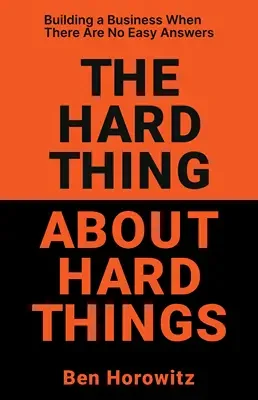
This book offers a raw, honest look at the gritty realities of building and running a successful business. It’s not your typical business advice book filled with feel-good platitudes. Instead, it dives deep into the messy, often painful challenges that leaders face when making tough decisions with no clear right answers. The author shares hard-earned wisdom from his own roller-coaster experiences as a CEO and venture capitalist, offering practical advice on everything from managing your own psychology to laying off employees. What sets this book apart is its unflinching honesty about the emotional toll of leadership and its focus on the decisions that can make or break a company but are rarely discussed in public.
This book speaks directly to entrepreneurs, CEOs, and aspiring business leaders who are in the trenches of building and scaling companies. It’s particularly relevant for those in high-growth, high-pressure environments like the tech industry. However, its lessons on leadership, decision-making, and organizational culture make it valuable for managers and executives in any industry. The secondary audience includes investors, business students, and anyone interested in the realities of running a company beyond the glossy success stories usually presented. While Horowitz doesn’t shy away from complex topics, he presents them in an accessible, often humorous way that makes the book engaging even for readers without extensive business experience. That said, some of the more technical discussions about topics like equity and financing might be challenging for complete newcomers to business concepts.
What if the hardest part of being a CEO isn’t making the big decisions, but living with them? In The Hard Thing About Hard Things, Ben Horowitz rips away the glamorous facade of entrepreneurship to reveal the gritty, often gut-wrenching realities of leading a company. Forget the sanitized success stories – Horowitz serves up a raw, unfiltered look at the moments that make or break businesses and the leaders who guide them.
From the brink of bankruptcy to a billion-dollar sale, Horowitz’s journey with his company Opsware forms the backbone of this no-holds-barred guide to surviving the startup rollercoaster. He doesn’t just tell you what to do; he shows you how it feels to make the calls that keep you up at night. Ever wondered how to fire your friend? Or how to maintain your sanity when your company is bleeding cash? Horowitz has been there, done that, and isn’t afraid to share the scars.
But this isn’t just a memoir of Silicon Valley war stories. Horowitz distills his experiences into practical advice for navigating the treacherous waters of building and scaling a business. He tackles the questions that most business books are too afraid to touch: How do you tell your employees that the company might go under? What’s the right way to poach a star employee from a friend’s company? How do you design a compensation plan that won’t blow up in your face?
Readers will learn how to manage their own psychology as a leader, build a company culture that can weather storms, and make the tough calls when there’s no clear right answer. Horowitz offers frameworks for decision-making in crisis, strategies for giving feedback that actually improves performance, and techniques for keeping your cool when everything’s falling apart.
Perhaps most valuably, The Hard Thing About Hard Things gives leaders permission to be human. Horowitz acknowledges the fear, doubt, and emotional turmoil that come with high-stakes leadership. He argues that great CEOs aren’t fearless superheroes, but rather individuals who’ve learned to function effectively in the face of constant stress and uncertainty. By the end of the book, readers will have a new appreciation for the challenges of leadership and a toolkit for facing their own hard things.
The core message of The Hard Thing About Hard Things is that there’s no easy formula for success in business leadership. The most crucial skills are often those that can’t be taught in a classroom: the ability to make difficult decisions under pressure, to lead with authenticity in times of crisis, and to persevere in the face of seemingly insurmountable obstacles.
Imagine you’re a tightrope walker, balancing precariously between two skyscrapers. The wind is howling, the rope is swaying, and one misstep could spell disaster. That’s the metaphor Horowitz uses to illustrate the life of a CEO. There’s no safety net, no clear path forward, and every decision carries enormous weight. The book argues that true leadership isn’t about avoiding these difficult moments, but about developing the resilience and decision-making skills to navigate them successfully.
Horowitz emphasizes that the “hard things” in business are hard because they often involve conflicting imperatives with no clear right answer. Should you prioritize growth or profitability? Is it better to be transparent about company struggles or project confidence to maintain morale? These are the types of questions that can’t be answered with a simple formula or business school case study. Instead, Horowitz advocates for developing a nuanced understanding of your specific situation, gathering the best information available, and then having the courage to make a decision and own the consequences.
The Hard Thing About Hard Things has had a significant impact on the business literature landscape since its publication in 2014. Its raw, honest approach to discussing the challenges of leadership struck a chord with entrepreneurs and executives who felt that traditional business books glossed over the real difficulties they faced.
The book’s significance lies in its willingness to tackle topics that are often considered taboo in business discourse. While many business authors focus on strategies for success, Horowitz dives deep into how to manage failure, deal with personal stress, and navigate ethical gray areas. This approach has been particularly influential in the startup world, where the book has become required reading for many aspiring entrepreneurs.
Horowitz’s work has also contributed to a broader conversation about mental health and well-being in leadership roles. By openly discussing his own struggles with anxiety and the emotional toll of high-pressure decision-making, Horowitz has helped destigmatize these issues in the business community. This has paved the way for more open discussions about the psychological challenges of leadership and the importance of resilience.
While widely praised, the book has not been without controversy. Some critics argue that Horowitz’s hard-charging approach and willingness to make tough, sometimes ruthless decisions promote a cutthroat business culture. Others have questioned whether his experiences in the high-stakes world of tech startups are applicable to more traditional businesses. However, these debates have only served to increase the book’s influence, sparking important conversations about leadership styles and business ethics.
The impact of The Hard Thing About Hard Things is evident in its enduring popularity and the frequency with which it’s cited by other business leaders. It has received numerous accolades, including being named one of the best books of 2014 by The Economist and Financial Times. Perhaps most tellingly, it’s often referenced by other CEOs and entrepreneurs as a source of comfort and guidance during their own challenging times, cementing its place as a modern classic in the business literature canon.
We find that Ben Horowitz’s The Hard Thing About Hard Things offers a unique and valuable perspective on the challenges of business leadership. The book’s greatest strength lies in its raw honesty and practical advice, drawn from Horowitz’s personal experiences in the high-stakes world of tech startups. Unlike many business books that present a polished view of leadership, Horowitz’s work acknowledges the messy realities of building and running a company, providing readers with a realistic picture of what to expect.
The book excels in addressing topics often overlooked in traditional business literature, such as the psychological toll of leadership, the nuances of company culture, and the challenges of scaling an organization. Horowitz’s insights on these subjects, coupled with his practical frameworks and actionable advice, make the book a valuable resource for both aspiring and experienced leaders.
We particularly appreciate Horowitz’s storytelling approach, which makes complex business concepts accessible and engaging. His use of personal anecdotes, pop culture references, and even rap lyrics helps to illustrate key points and makes the book not just informative, but also enjoyable to read.
However, we must note that the book’s Silicon Valley-centric perspective may limit its applicability for leaders in more traditional industries or smaller businesses. Some readers may find that Horowitz’s experiences and advice don’t always translate directly to their own business contexts.
Additionally, while the book touches on ethical considerations in business, we believe it could have provided a more in-depth exploration of this crucial area. In today’s business landscape, where corporate social responsibility and ethical leadership are increasingly important, a more thorough examination of how leaders can navigate ethical dilemmas while achieving business objectives would have added valuable depth to the book’s insights.
Our Recommendation
We strongly recommend The Hard Thing About Hard Things to entrepreneurs, CEOs, and aspiring business leaders, particularly those in high-growth, high-pressure environments like the tech industry. The book’s candid approach and practical advice provide invaluable insights into the realities of leadership that are often glossed over in other business literature.
For readers in more traditional industries or smaller businesses, we still recommend the book, but with the caveat that some of its advice may need to be adapted to fit different business contexts. We believe that the book’s core messages about resilience, honest communication, and the importance of company culture are universally applicable, even if some of the specific situations Horowitz describes may not be. Overall, The Hard Thing About Hard Things is a worthy addition to any business leader’s library, offering a refreshingly honest and practical guide to navigating the challenges of building and running a successful company.
The essence of The Hard Thing About Hard Things lies in its unflinching examination of the challenges faced by business leaders, particularly in high-pressure, high-growth environments. One of the key topics Horowitz explores is the importance of making difficult decisions in the face of uncertainty. He argues that the true test of leadership isn’t in making the right choice when the path is clear, but in navigating ambiguous situations where every option has significant drawbacks. Horowitz emphasizes that these decisions often involve trade-offs between competing priorities, and that leaders must develop the ability to quickly analyze complex situations, make a call, and then fully commit to their chosen course of action.
Another critical element of the book’s message is the need for leaders to manage their own psychology. Horowitz delves into the emotional toll of leadership, discussing how constant stress, anxiety, and self-doubt can impact decision-making and overall effectiveness. He provides strategies for maintaining mental health and perspective in the face of overwhelming challenges, including the importance of finding trusted confidants and creating personal routines that provide stability amidst chaos. This focus on the psychological aspects of leadership sets Horowitz’s work apart from many traditional business books and reflects his belief that emotional resilience is as crucial to success as strategic acumen.
The book also places significant emphasis on the importance of building and maintaining company culture, especially during times of rapid growth or crisis. Horowitz argues that culture isn’t about perks or mission statements, but about the values and behaviors that are truly rewarded and reinforced within an organization. He discusses how leaders can shape culture through their actions, decisions, and communication, and why maintaining a strong culture is critical for attracting and retaining top talent, as well as for navigating challenging times. Horowitz provides practical advice on how to hire for cultural fit, how to train employees to embody company values, and how to make difficult personnel decisions that ultimately strengthen the organization.
The concept of “peacetime CEO vs. wartime CEO” is another key topic explored in the book. Horowitz argues that different leadership styles are required depending on whether a company is in a period of stability and growth (“peacetime”) or facing existential threats (“wartime”). He outlines how wartime CEOs must be more directive, hands-on, and willing to break with convention to ensure the company’s survival. This concept challenges the idea that there’s a single “right” way to lead, instead suggesting that effective leaders must be able to adapt their style to the current context and needs of their organization.
Horowitz also dedicates significant attention to the practical aspects of running a company, including topics like organizational design, performance management, and product development. He introduces the concept of “the right way to lay people off,” arguing that how a company handles downsizing can have long-lasting impacts on morale, productivity, and reputation. He provides detailed advice on how to structure layoffs to minimize trauma and maintain the trust of remaining employees. Similarly, he explores effective techniques for giving feedback, conducting performance reviews, and designing compensation systems that align with company goals.
The book emphasizes the importance of clear, honest communication in leadership. Horowitz argues that many leaders struggle with delivering bad news or addressing difficult topics, which can lead to a lack of trust and alignment within the organization. He provides strategies for communicating effectively in various high-stakes situations, from announcing major strategic shifts to addressing rumors and speculation. Horowitz stresses the importance of being transparent about challenges while also providing a clear vision for the future, helping employees understand both the realities of the current situation and the path forward.
The Fall and Rise of Loudcloud/Opsware
Throughout the book, Horowitz draws heavily on his experiences leading Loudcloud (later renamed Opsware) from near-bankruptcy to a successful $1.6 billion acquisition by Hewlett-Packard. He details the company’s struggles during the dot-com crash, including a perilous IPO and a strategic pivot that involved laying off the majority of the company’s employees. This case study illustrates many of the book’s key concepts, including making tough decisions under pressure, managing personal psychology during crisis, and the importance of clear communication during times of upheaval.
The “Freaky Friday” Management Technique
Horowitz shares an innovative approach he used to improve cross-functional collaboration at Opsware. Inspired by the movie “Freaky Friday,” he had the engineering and sales teams switch roles for a week. Engineers went on sales calls, while salespeople sat in on engineering meetings. This exercise dramatically improved understanding and cooperation between the two departments, illustrating Horowitz’s points about the importance of empathy and cross-functional understanding in building a strong company culture.
The “Reggie Fils-Aimé” Story
To illustrate the concept of hiring for strength rather than lack of weakness, Horowitz recounts the story of how Nintendo hired Reggie Fils-Aimé as President of Nintendo of America. Despite lacking traditional qualifications for the role, Fils-Aimé’s unique strengths and passionate vision for the company made him an excellent fit. This example underscores Horowitz’s advice about looking beyond conventional metrics when making hiring decisions, especially for key leadership roles.
The “Bill Campbell” Mentorship
Throughout the book, Horowitz frequently references lessons learned from his mentor, Bill Campbell, a legendary Silicon Valley executive coach. He recounts how Campbell provided crucial guidance during some of Opsware’s most challenging moments, offering both emotional support and strategic advice. This ongoing example illustrates Horowitz’s points about the importance of seeking mentorship and building a support network as a leader.
The “Good Product Manager/Bad Product Manager” Memo
Horowitz shares a memo he wrote at Netscape called “Good Product Manager/Bad Product Manager,” which became widely circulated in Silicon Valley. This document clearly outlined the expectations and behaviors of effective product managers, contrasting them with common pitfalls. The memo serves as an example of how clear communication of expectations can shape company culture and improve performance across an organization.
The Importance of Candid Feedback
Horowitz emphasizes the critical role of honest, direct feedback in building a high-performing organization. He argues that many leaders shy away from giving difficult feedback, either out of a misplaced sense of kindness or fear of confrontation. However, this approach ultimately harms both the individual and the company. To implement this insight, Horowitz suggests a specific feedback format: start by clearly stating the issue, provide concrete examples of the problem behavior, explain the impact of this behavior on the organization, and offer specific suggestions for improvement. He recommends delivering this feedback in private, as soon as possible after observing the issue, and following up regularly to ensure progress. By making candid feedback a regular part of your management style, you can create a culture of continuous improvement and accountability.
The “Minimum Viable CEO”
Horowitz introduces the concept of the “Minimum Viable CEO” to help leaders prioritize their responsibilities. He argues that CEOs often get bogged down in tasks that, while important, don’t leverage their unique position in the company. The Minimum Viable CEO focuses on just three things: setting the overall vision and strategy of the company, recruiting and retaining top talent, and making sure there’s always enough cash in the bank. To apply this insight, Horowitz suggests conducting a thorough audit of how you spend your time. Identify tasks that could be delegated or eliminated, and ruthlessly prioritize activities that fall into these three key areas. This might mean saying no to meetings that don’t align with these priorities or restructuring your leadership team to take on more operational responsibilities.
The “Bushido” Approach to Layoffs
One of the most challenging aspects of leadership is handling layoffs, and Horowitz provides a detailed framework for doing so with integrity and minimal damage to company morale. He calls this the “Bushido” approach, referencing the samurai code of honor. The key elements are: make the decision swiftly once it’s clear layoffs are necessary, cut deep enough that you’re confident you won’t have to do another round soon, be clear about the reasons for the layoffs, and treat departing employees with respect and generosity. In practice, this means preparing a clear, honest explanation for the layoffs, delivering the news personally to affected employees, providing generous severance packages, and offering support in finding new jobs. Importantly, Horowitz also emphasizes the need to address the remaining employees immediately after the layoffs, providing reassurance and a clear path forward for the company.
The “Barksdale Test” for Organizational Design
Horowitz shares a valuable tool for evaluating organizational design, which he learned from his former boss at Netscape, Jim Barksdale. The test asks: Is it clear who is responsible for what? Do people know what they are responsible for? Is it clear who is working for whom? Are there too many direct reports? To apply this insight, regularly audit your organizational structure using these questions. If any answers are unclear, it’s time to redesign. Horowitz suggests creating a detailed organizational chart that clearly outlines reporting structures and areas of responsibility. He also recommends limiting direct reports to 8-10 per manager to ensure adequate attention and support. By regularly applying the Barksdale Test, you can maintain a clear, efficient organizational structure that scales with your company’s growth.
The “Ones and Twos” Hiring Strategy
Horowitz presents a nuanced approach to hiring that goes beyond simply looking for the most qualified candidates. He categorizes executives into “ones” (visionaries who create new directions) and “twos” (excellent operators who optimize existing directions). The key insight is that a company needs both types, but in different ratios depending on its stage and challenges. To apply this, first assess your company’s current needs. Are you in a period of innovation where you need more “ones,” or are you focusing on execution and scaling, requiring more “twos”? Then, when hiring, look beyond just skills and experience. Assess candidates’ working styles, their ability to generate new ideas versus optimize existing processes, and how they might complement your existing leadership team. This approach can help you build a more balanced, effective executive team.
The “Burden of Truth” in Leadership Communication
Horowitz argues that leaders have a unique responsibility to communicate the unvarnished truth to their organizations, even when it’s uncomfortable. He calls this the “burden of truth.” The insight here is that employees can handle bad news much better than they can handle uncertainty or deception. To put this into practice, Horowitz suggests regular company-wide meetings where you share both good and bad news openly. When facing a crisis, communicate early and often, even if you don’t have all the answers. Be clear about what you know, what you don’t know, and what you’re doing to find out more. If you’ve made a mistake, own up to it publicly. This approach builds trust and alignment within the organization, even during challenging times.
The “Lead Bullets” Approach to Problem-Solving
Horowitz introduces the concept of “lead bullets” versus “silver bullets” when tackling significant business challenges. The insight is that leaders often search for a single, elegant solution (a silver bullet) to solve complex problems, when what’s really needed is a series of incremental improvements (lead bullets). To apply this, when facing a major challenge like losing market share to a competitor, resist the urge to look for a quick fix. Instead, break down the problem into its component parts and address each systematically. This might involve improving product features, enhancing customer service, refining marketing strategies, and optimizing pricing – all in parallel. The “lead bullets” approach requires more effort and patience, but it’s often more effective and sustainable in the long run.
The “Strict Accountability, Loose Hierarchy” Management Model
Horowitz advocates for a management model that combines rigorous accountability with a flexible approach to hierarchy. The key insight is that while clear ownership and metrics are crucial for performance, adhering too strictly to hierarchical structures can stifle innovation and slow decision-making. To implement this, start by clearly defining ownership and metrics for every important initiative in your company. Ensure that for each key area, there’s one person who’s ultimately responsible for its success or failure. At the same time, create mechanisms for cross-functional collaboration and empower employees to make decisions within their areas of responsibility, regardless of their level in the organization. This might involve creating task forces that cut across traditional reporting lines, or implementing a policy where anyone can suggest ideas directly to senior leadership.
Raw Honesty and Authenticity
One of the most striking strengths of The Hard Thing About Hard Things is Horowitz’s unflinching honesty about the challenges of leadership. Unlike many business books that present a polished, sanitized view of entrepreneurship, Horowitz lays bare the emotional turmoil, self-doubt, and difficult decisions that come with building and running a company. He shares personal stories of near-bankruptcy, layoffs, and strategic missteps, providing readers with a realistic picture of what high-stakes leadership truly entails. This authenticity not only makes the book more engaging but also more valuable, as it prepares aspiring leaders for the psychological challenges they’re likely to face.
Practical, Actionable Advice
Horowitz excels at translating his experiences into concrete, actionable advice for readers. Rather than dealing in vague platitudes, he provides specific frameworks, techniques, and even scripts for handling difficult situations. For example, his detailed breakdown of how to conduct layoffs, including how to communicate with both departing and remaining employees, offers a step-by-step guide for leaders facing this challenging task. Similarly, his “Good Product Manager/Bad Product Manager” document provides clear, specific expectations for this crucial role. This practical approach ensures that readers can apply the book’s insights directly to their own leadership challenges.
Unique Perspective on Overlooked Topics
The Hard Thing About Hard Things stands out for its willingness to tackle topics that are often overlooked in traditional business literature. Horowitz dives deep into areas like the psychology of leadership, the nuances of company culture, and the challenges of scaling an organization. His discussions on topics like how to fire an executive, how to minimize politics in an organization, or how to give effective feedback address real-world leadership challenges that many other books ignore. This focus on the gritty, often uncomfortable aspects of leadership provides valuable insights for readers dealing with complex, nuanced situations.
Compelling Storytelling
Horowitz’s writing style is another significant strength of the book. He weaves personal anecdotes, pop culture references, and even rap lyrics into his narrative, making complex business concepts accessible and engaging. His stories from his time at Netscape, Loudcloud, and Opsware provide vivid illustrations of the principles he’s discussing, helping readers connect abstract ideas to real-world situations. This storytelling approach not only makes the book more enjoyable to read but also helps the lessons stick in readers’ minds.
Balanced Perspective on Leadership Styles
The book offers a nuanced view of leadership, acknowledging that different situations call for different approaches. Horowitz’s discussion of “peacetime” versus “wartime” CEOs is particularly insightful, highlighting how leaders need to adapt their style based on the company’s circumstances. This balanced perspective challenges the idea of a one-size-fits-all leadership model and encourages readers to develop a more flexible, context-aware approach to management.
Emphasis on Company Culture
Horowitz places significant emphasis on the importance of company culture, providing valuable insights into how leaders can shape and maintain a strong culture as their organization grows. He goes beyond surface-level discussions of perks and mission statements, delving into how culture is reflected in decision-making processes, communication styles, and performance management. His practical advice on hiring for cultural fit, training employees, and aligning culture with business goals offers leaders concrete strategies for building a cohesive, high-performing organization.
Silicon Valley-Centric Perspective
While Horowitz’s experiences in Silicon Valley provide a wealth of insights, they also represent a potential weakness of the book. Many of the situations and solutions he describes are specific to the high-growth, high-stakes world of tech startups. This focus may limit the book’s relevance for leaders in more traditional industries or smaller businesses. For example, his advice on equity compensation or dealing with venture capitalists may not apply to many readers. The book could have benefited from more diverse examples or discussions of how its principles might apply in different business contexts.
Limited Discussion of Ethical Considerations
While Horowitz touches on ethical issues in business, the book could have provided a more in-depth exploration of this crucial area. In discussing topics like layoffs, competitive strategy, or company culture, there are often complex ethical considerations at play. A more thorough examination of how leaders can navigate these ethical dilemmas while still achieving business objectives would have added valuable depth to the book’s insights.
Potential for Misinterpretation of “Wartime CEO” Concept
Horowitz’s discussion of “wartime” versus “peacetime” CEOs, while insightful, could potentially be misinterpreted or misapplied by readers. The “wartime CEO” concept, with its emphasis on more directive, aggressive leadership, could be used to justify overly authoritarian or short-sighted management practices if not properly understood. While Horowitz does provide context and caveats, the book could have benefited from a more nuanced discussion of the potential pitfalls of the “wartime” approach and how to avoid them.
Lack of Quantitative Data
While Horowitz’s personal experiences and anecdotes provide powerful illustrations of his points, the book sometimes lacks quantitative data to support its arguments. More statistical evidence or case studies from other companies could have strengthened the book’s claims and provided additional context for its advice. This additional data could have helped readers better understand how widely applicable Horowitz’s insights are and under what circumstances they’re most likely to be effective.
The “Hero CEO” Narrative
One potential blind spot in The Hard Thing About Hard Things is its reinforcement of the “hero CEO” narrative. While Horowitz’s candid accounts of his struggles humanize the CEO role, the book still primarily focuses on the CEO as the central figure in a company’s success or failure. This perspective might lead readers to underestimate the importance of collaborative leadership and the contributions of the broader team. It could also create unrealistic expectations for CEOs, potentially leading to burnout or poor decision-making as leaders try to shoulder too much responsibility alone. Books like Team of Teams by General Stanley McChrystal and Creativity, Inc. by Ed Catmull offer valuable counterpoints, emphasizing the importance of distributed leadership and collective problem-solving in complex organizations. These works highlight how effective leaders empower their teams and create systems that allow for decentralized decision-making, aspects that could have been more fully explored in Horowitz’s book.
The Downsides of High-Pressure Culture
While Horowitz provides valuable insights into building and maintaining company culture, he may not fully address the potential downsides of the high-pressure, high-stakes culture often found in fast-growing tech companies. The intense work environments he describes can lead to employee burnout, mental health issues, and work-life balance problems, which are not extensively discussed in the book. This blind spot could lead readers to prioritize short-term performance over long-term employee well-being and sustainable growth. Books like Powerful by Patty McCord and An Everyone Culture by Robert Kegan and Lisa Laskow Lahey offer alternative perspectives on building high-performance cultures that also prioritize employee growth and well-being. These works provide valuable complementary insights on creating sustainable, healthy organizational cultures that could address this blind spot in Horowitz’s work.
Gender and Diversity Considerations
Another potential blind spot in The Hard Thing About Hard Things is its limited discussion of gender and diversity issues in leadership and company building. While Horowitz touches on the importance of diversity in hiring, the book doesn’t deeply explore the unique challenges faced by women, people of color, and other underrepresented groups in leadership roles. This oversight could lead readers to underestimate the importance of diversity and inclusion in building successful companies. Books like Lean In by Sheryl Sandberg and How to Be an Inclusive Leader by Jennifer Brown offer crucial perspectives on these issues, discussing how leaders can create more diverse, equitable, and inclusive organizations. These works provide valuable insights that could complement Horowitz’s advice and help readers build more diverse and resilient companies.
The Role of Luck and Timing
While Horowitz acknowledges the role of luck in business success, the book may not fully explore how factors outside a leader’s control can impact a company’s trajectory. This could lead to a blind spot where readers overestimate the degree to which strategic decisions alone determine outcomes, potentially leading to overly harsh self-criticism when things don’t go as planned or an inflated sense of control. Books like The Success Equation by Michael Mauboussin and Fooled by Randomness by Nassim Nicholas Taleb offer deeper explorations of how chance events and timing influence business outcomes. These works provide a valuable counterbalance to the idea that success is solely determined by leadership decisions, offering readers a more nuanced understanding of the complex factors at play in business success.
The Limitations of the Silicon Valley Model
A significant blind spot in The Hard Thing About Hard Things is its focus on the Silicon Valley model of company building, which may not be applicable or desirable in all contexts. The book’s emphasis on rapid growth, venture capital funding, and high-risk strategies could lead readers to overlook alternative business models or growth strategies that might be more appropriate for their specific circumstances. This Silicon Valley-centric view might also undervalue more traditional business virtues like steady profitability, customer loyalty, and long-term stability. Books like Small Giants by Bo Burlingham and The E-Myth Revisited by Michael E. Gerber offer valuable perspectives on building successful businesses outside the high-growth tech startup model. These works explore how companies can thrive by prioritizing values other than rapid scaling, providing readers with a broader range of options for building and leading successful organizations.
Good to Great by Jim Collins
While both The Hard Thing About Hard Things and Good to Great offer insights into business leadership, their approaches and focus differ significantly. Collins’ work is based on extensive research across multiple companies and industries, providing a data-driven approach to identifying what makes companies excel. In contrast, Horowitz’s book is more personal, drawing primarily from his own experiences in the tech industry. Collins emphasizes the importance of disciplined people, disciplined thought, and disciplined action, while Horowitz focuses more on the gritty realities of day-to-day leadership challenges. Good to Great presents a more structured, systematic approach to building successful companies, while Horowitz’s work acknowledges the messy, often chaotic nature of entrepreneurship. However, both books stress the importance of having the right people in key positions and maintaining a strong company culture.
The Lean Startup by Eric Ries
The Lean Startup and The Hard Thing About Hard Things both address the challenges of building a successful startup, but from different angles. Ries focuses on a specific methodology for developing businesses and products, emphasizing rapid iteration, customer feedback, and validated learning. Horowitz, on the other hand, deals more with the leadership and management challenges that arise once a company is up and running. While Ries provides a framework for minimizing risk and maximizing efficiency in the early stages of a startup, Horowitz offers guidance on navigating the complex decisions and trade-offs that come with scaling a business. The books complement each other well, with The Lean Startup offering a roadmap for getting a business off the ground, and The Hard Thing About Hard Things providing insights on how to lead once you’re in the thick of it.
Principles by Ray Dalio
Both Dalio’s Principles and Horowitz’s The Hard Thing About Hard Things offer personal insights from successful entrepreneurs, but their approaches and focus areas differ. Dalio presents a comprehensive set of principles for life and work, derived from his experiences building and running Bridgewater Associates. His approach is more systematic and philosophical, emphasizing the importance of radical transparency and idea meritocracy. Horowitz, while also drawing from personal experience, focuses more on specific business challenges and leadership dilemmas. Where Dalio provides a broad framework for decision-making and organizational culture, Horowitz offers more targeted advice for handling specific business situations. Both books value honesty and directness, but Horowitz’s work is more grounded in the day-to-day realities of running a tech company, while Dalio’s takes a broader, more abstract approach to principles of success.
The Innovator’s Dilemma by Clayton Christensen
Christensen’s The Innovator’s Dilemma and Horowitz’s The Hard Thing About Hard Things approach business challenges from different perspectives. Christensen’s work focuses on why leading companies often fail in the face of disruptive innovation, providing a theoretical framework for understanding industry dynamics. Horowitz, conversely, offers a more personal, practical guide to navigating business challenges. While Christensen’s book is based on extensive research across various industries, Horowitz draws primarily from his own experiences in the tech sector. The Innovator’s Dilemma provides valuable insights into strategic decision-making and the importance of adapting to disruptive technologies, while The Hard Thing About Hard Things offers more tactical advice on leadership and management. Both books acknowledge the difficulties of maintaining success in rapidly changing industries, but Christensen’s work is more focused on the ‘why’ of business failure, while Horowitz’s addresses the ‘how’ of business survival and success.
Develop Your Leadership Philosophy
Begin by reflecting on your personal values and leadership style. Take time to articulate your leadership philosophy, drawing inspiration from Horowitz’s candid approach. Write down your core principles for leadership, considering how you want to make decisions, communicate with your team, and handle difficult situations. Revisit and refine this philosophy regularly as you gain more experience and face new challenges. This will serve as your north star when navigating complex leadership situations.
Create a Personal “Wartime vs. Peacetime” Strategy
Analyze your current professional situation and determine whether you’re in a “wartime” or “peacetime” scenario. For “wartime” (high-pressure, crisis situations), develop strategies for quick decision-making, clear communication, and maintaining team morale under stress. For “peacetime” (periods of stability and growth), focus on long-term planning, innovation, and team development. Practice switching between these modes in your daily work, and be prepared to adapt your leadership style as circumstances change.
Build Your Support Network
Identify mentors, peers, and advisors who can provide guidance and support in your leadership journey. Reach out to experienced leaders in your industry and schedule regular check-ins. Join professional networking groups or leadership forums where you can discuss challenges and share experiences. Remember Horowitz’s emphasis on the importance of having trusted confidants. Aim to build relationships with individuals who can offer different perspectives and who will be honest with you, even when it’s difficult.
Enhance Your Communication Skills
Practice delivering clear, honest communication in various scenarios. Start by role-playing difficult conversations, such as delivering bad news or providing critical feedback. Work on crafting messages that are direct yet empathetic. Develop a personal style for company-wide communications, focusing on transparency and clarity. Regularly seek feedback on your communication style from colleagues and mentors, and continuously work to improve.
Implement a Personal Feedback System
Create a structured approach to giving and receiving feedback in your professional life. Start by scheduling regular one-on-one meetings with your direct reports and peers. Develop a template for these conversations that includes specific, actionable feedback. Practice Horowitz’s approach of being direct and honest while also being constructive. Also, actively seek feedback on your own performance, creating a culture of open communication around you.
Develop Your Decision-Making Framework
Create a personal framework for making difficult decisions, inspired by Horowitz’s approach. Start by listing the types of decisions you commonly face in your role. For each type, outline the key factors you need to consider, the stakeholders you should consult, and the potential short-term and long-term impacts. Practice using this framework in your daily work, refining it as you gain more experience. This will help you make more consistent, thoughtful decisions under pressure.
Cultivate Emotional Resilience
Develop strategies to manage the psychological toll of leadership. Begin by identifying your personal stress triggers and early warning signs of burnout. Create a self-care routine that includes regular exercise, mindfulness practices, and time for hobbies or relaxation. Establish boundaries between work and personal life, and stick to them. Practice reframing challenges as opportunities for growth, mirroring Horowitz’s resilient mindset. Consider working with a therapist or coach to develop coping strategies for high-stress situations.
Focus on Culture-Building
Take an active role in shaping the culture of your team or organization. Start by clearly articulating your desired culture, including specific behaviors and values you want to promote. Develop a plan for how you’ll embody these values in your daily actions and decisions. Create mechanisms for recognizing and rewarding behaviors that align with your desired culture. Regularly assess your team or company culture through surveys, focus groups, or one-on-one discussions, and be prepared to make adjustments as needed.
Enhance Your Strategic Thinking
Develop your ability to think strategically about your business or role. Set aside regular time for strategic planning, free from day-to-day operational concerns. Practice looking at your business from different perspectives – consider your competitors’ viewpoints, think about long-term industry trends, and anticipate potential disruptions. Develop scenarios for different possible futures and create contingency plans. Regularly review and update your strategic plans, incorporating new information and changing circumstances.
Improve Your Hiring and Talent Development Skills
Create a personal playbook for hiring and developing talent, drawing on Horowitz’s insights. Start by clearly defining the key attributes and skills needed for success in your organization. Develop a structured interview process that assesses these attributes effectively. Practice asking behavioral interview questions that reveal how candidates have handled situations similar to those they’ll face in the role. For talent development, create individual development plans for your team members, focusing on both their strengths and areas for improvement. Regularly review and update these plans, providing opportunities for growth and learning.
Master the Art of Execution
Develop your skills in turning strategy into action. Start by breaking down large goals into specific, measurable objectives. Create detailed action plans for each objective, assigning clear ownership and deadlines. Implement a system for tracking progress, such as regular check-ins or a project management tool. Practice identifying and removing obstacles to execution quickly. Develop a habit of regularly reviewing and adjusting your plans based on results and changing circumstances.
Cultivate Innovation
Foster a personal approach to innovation, inspired by Horowitz’s emphasis on adapting to change. Set aside regular time for creative thinking and exploring new ideas. Develop a process for evaluating and testing new concepts quickly and efficiently. Create a personal network of diverse contacts who can expose you to new perspectives and ideas. Practice challenging your own assumptions and looking for opportunities to innovate in your daily work. Encourage and reward innovative thinking in your team or organization.
Develop Crisis Management Skills
Prepare yourself for handling crises effectively. Start by identifying potential crisis scenarios relevant to your role or industry. Develop a personal crisis response plan, including steps for assessing the situation, communicating with stakeholders, and making rapid decisions. Practice crisis simulations with your team to build your skills and confidence. Create a personal support system you can rely on during crises, including mentors, advisors, and professional services. Regularly review and update your crisis management skills and plans.
Implement a Culture of Radical Candor
Horowitz emphasizes the importance of open, honest communication within organizations. Businesses can apply this by fostering a culture of radical candor, where employees at all levels are encouraged to give direct feedback, share concerns, and challenge ideas constructively. This approach can lead to faster problem-solving, improved innovation, and stronger team cohesion.
However, implementing such a culture can be challenging. Many employees may be hesitant to speak up, fearing negative consequences or damaging relationships. Additionally, some managers might struggle to receive criticism gracefully, potentially leading to defensiveness or retaliation. Cultural differences in communication styles can also complicate the implementation of radical candor in global organizations.
To overcome these challenges, businesses should start by providing comprehensive training on effective communication and feedback techniques. Leaders must model the desired behavior, demonstrating how to give and receive feedback constructively. Implement a gradual rollout, starting with small groups or pilot teams, and celebrate early successes to build momentum. Create safe spaces for practice and reflection, such as facilitated feedback sessions or anonymous suggestion systems. Regular surveys and focus groups can help track progress and identify areas for improvement in the communication culture.
Develop a “Wartime” and “Peacetime” Strategic Framework
Horowitz’s concept of “wartime” and “peacetime” CEOs can be adapted to create a dual strategic framework for businesses. This involves developing distinct strategies and operational modes for times of crisis or intense competition (“wartime”) and periods of stability and growth (“peacetime”). Such a framework allows organizations to be more agile and responsive to changing market conditions.
Implementing this dual framework can be complex. It requires a high degree of organizational flexibility and the ability to quickly shift gears, which can be challenging for larger, more established companies. Employees may struggle with the frequent changes in priorities and working styles. There’s also a risk of misidentifying the company’s current state, leading to the application of inappropriate strategies.
To address these challenges, businesses should invest in scenario planning and regular strategic reviews to better anticipate and identify “wartime” and “peacetime” conditions. Develop clear triggers or indicators for transitioning between the two modes. Create cross-functional teams trained in both approaches to facilitate smoother transitions. Implement robust change management processes to help employees adapt to shifting priorities. Regular communication and transparency about the company’s current state and strategic approach can help maintain alignment and engagement across the organization.
Prioritize Talent Development and Strategic Hiring
Horowitz stresses the importance of having the right people in key positions. Businesses can apply this by implementing comprehensive talent development programs and strategic hiring practices. This includes identifying critical roles, creating succession plans, and investing in employee growth and skill development.
Challenges in this area often include resource constraints, especially for smaller businesses, and the difficulty of accurately predicting future skill needs in rapidly changing industries. There’s also the risk of bias in hiring and promotion decisions, which can limit diversity and potentially overlook valuable talent. Additionally, aggressive talent development can sometimes lead to increased turnover as employees become more marketable.
To overcome these obstacles, businesses should start by clearly defining their long-term strategic goals and the skills needed to achieve them. Develop partnerships with educational institutions and industry associations to create talent pipelines. Implement blind hiring practices and diverse interview panels to reduce bias. Create a strong employee value proposition that goes beyond compensation, focusing on growth opportunities, work-life balance, and meaningful work to improve retention. Consider implementing “stay interviews” to understand what keeps top performers engaged and address potential issues before they lead to turnover.
Build a Robust Decision-Making Framework
Horowitz’s book provides numerous examples of tough decisions leaders must make. Businesses can apply these lessons by developing a structured decision-making framework that ensures thorough analysis, consideration of multiple perspectives, and clear accountability.
Implementing such a framework can be challenging due to time pressures, particularly in fast-moving industries where quick decisions are often necessary. There’s also the risk of analysis paralysis, where the desire for perfect information delays crucial decisions. Additionally, strong personalities or hierarchical structures might dominate decision-making processes, limiting the diversity of input.
To address these challenges, businesses should start by clearly defining decision rights and processes for different types of decisions. Implement tools like decision trees or pre-mortem analyses to structure complex decisions. Create cross-functional decision-making teams to ensure diverse perspectives are considered. Set clear timelines for decisions to prevent analysis paralysis. Regularly review and learn from past decisions, both good and bad, to continually improve the decision-making process. Consider using technology solutions that can provide rapid data analysis to support faster, more informed decisions.
Cultivate Resilience and Adaptability
Horowitz’s experiences highlight the importance of resilience and adaptability in business. Organizations can foster these qualities by creating a culture that views failures as learning opportunities, encourages calculated risk-taking, and values flexibility in the face of changing circumstances.
Building such a culture can be challenging, particularly in industries or organizations with low risk tolerance or a history of punishing failure. Employees may be hesitant to take risks or admit mistakes, fearing negative consequences. There’s also the challenge of balancing the need for consistency and stability with the desire for adaptability and innovation.
To overcome these obstacles, businesses should start by reframing how they discuss and react to failures. Implement post-project reviews that focus on learning rather than blame. Create innovation labs or skunkworks projects where employees can experiment with new ideas in a lower-stakes environment. Provide training in resilience and stress management techniques. Recognize and reward instances of adaptability and constructive risk-taking. Develop crisis simulation exercises to build organizational muscle for handling unexpected challenges. Regular town halls or Q&A sessions with leadership can help reinforce the message that change and occasional setbacks are normal parts of business growth.
Focus on Building and Maintaining Company Culture
Horowitz emphasizes the critical role of company culture in driving business success. Organizations can apply this by actively shaping and reinforcing their desired culture through clear articulation of values, consistent leadership behaviors, and aligned systems and processes.
Maintaining a strong culture can be challenging, especially as companies grow or become more geographically dispersed. Mergers and acquisitions can create culture clashes. Remote work arrangements can make it harder to instill and reinforce cultural norms. There’s also the risk of creating a homogeneous culture that lacks diversity and fresh perspectives.
To address these challenges, businesses should start by clearly defining their core values and desired culture. Create a culture committee with representatives from different parts of the organization to drive cultural initiatives. Develop onboarding processes that emphasize cultural fit alongside skills and experience. Implement regular culture surveys to track progress and identify areas for improvement. Create opportunities for employees to connect and reinforce cultural values, even in remote settings. When expanding or merging, conduct cultural due diligence and develop integration plans that respect and blend different cultural strengths. Regularly revisit and update cultural norms to ensure they remain relevant and inclusive as the organization evolves.
The Rise of Remote Work and Distributed Teams
Horowitz’s insights on company culture and leadership are increasingly relevant in the era of remote work. As more organizations embrace distributed teams, the challenges of building and maintaining a strong culture become more complex. Leaders must find new ways to foster connection, alignment, and shared values across virtual spaces.
Horowitz’s emphasis on clear communication and radical candor will be crucial in remote settings. Virtual environments can easily lead to misunderstandings and siloed information. Effective remote leaders will need to double down on transparency and over-communication.
The book’s advice on hiring for cultural fit may need adaptation for a remote-first world. Companies will need to develop new strategies for assessing cultural alignment and onboarding team members they may never meet in person.
The Growing Importance of Ethical Leadership
As societal expectations for corporate responsibility increase, Horowitz’s focus on making tough decisions will gain new dimensions. Future leaders will need to balance business objectives with ethical considerations more explicitly than ever before.
The book’s insights on crisis management and “wartime” leadership may prove valuable as companies navigate complex ethical dilemmas. Leaders will need to make rapid decisions in the face of public scrutiny and potential backlash.
Horowitz’s emphasis on honest communication will be critical in maintaining trust with both employees and the public. As consumers become more discerning about corporate values, transparency in decision-making processes will be key.
The Acceleration of Technological Disruption
Horowitz’s experiences in the tech industry provide a valuable framework for navigating rapid change. As technological disruption accelerates across industries, more leaders will find themselves in “wartime” scenarios.
The book’s advice on adaptability and resilience will become increasingly relevant. Companies will need to cultivate these qualities at all levels to survive and thrive in a constantly shifting landscape.
Horowitz’s insights on strategic decision-making may need to evolve to account for the increasing role of AI and data analytics in business strategy. Leaders will need to balance data-driven insights with human judgment and intuition.
The Shift Towards Flatter Organizational Structures
As companies experiment with less hierarchical models, Horowitz’s ideas on leadership and culture may require adaptation. The concept of the CEO as the central figure in decision-making may evolve.
The book’s emphasis on clear communication and radical candor aligns well with flatter structures. These qualities will be crucial in organizations where leadership is more distributed.
Horowitz’s insights on hiring and talent development may need to be reimagined for organizations with less traditional career paths. Companies will need new strategies for identifying and nurturing leadership potential at all levels.
The Hard Thing About Hard Things, published in 2014, continues to be highly relevant in today’s business landscape, particularly in the tech industry. Its candid approach to discussing the challenges of leadership has helped shift the conversation around entrepreneurship, encouraging more open and honest dialogue about the difficulties faced by business leaders. This trend towards greater transparency about the struggles of building and running companies is likely to continue, potentially leading to more realistic expectations and better mental health support for entrepreneurs and executives.
The book’s emphasis on the importance of company culture in driving business success has also had a significant impact. As organizations increasingly recognize the value of strong cultures in attracting and retaining talent, Horowitz’s insights on how to build and maintain culture during periods of growth and change remain highly relevant. This focus on culture is likely to become even more critical in the future, as companies navigate challenges like remote work, changing employee expectations, and the need for greater diversity and inclusion.
Looking ahead, the book’s insights on adapting leadership styles to different business contexts (such as the “peacetime CEO vs. wartime CEO” concept) may become increasingly important as companies face rapid technological change and economic uncertainty. Leaders may need to become more adept at switching between different modes of leadership as their organizations navigate various challenges.
However, as the business world evolves, some aspects of the book may require reinterpretation or updating. For instance, the increasing focus on sustainable business practices, social responsibility, and long-term value creation may challenge some of the more aggressive, short-term oriented strategies discussed in the book. Future business leaders may need to balance Horowitz’s insights on decisive action and tough decision-making with a greater emphasis on stakeholder value and ethical considerations.
The book’s Silicon Valley-centric perspective may also become less universally applicable as innovation hubs emerge in other parts of the world, each with their own unique business cultures and challenges. Future readers may need to adapt Horowitz’s advice to fit different cultural and economic contexts.
Despite these potential limitations, The Hard Thing About Hard Things is likely to remain a valuable resource for business leaders due to its honest, practical approach to leadership challenges. Its enduring impact may be in encouraging a more open, realistic dialogue about the difficulties of leadership and the importance of resilience in the face of business challenges.
High Output Management by Andy Grove
Andy Grove’s High Output Management offers a complementary perspective to Horowitz’s work, focusing on the operational aspects of leadership. While Horowitz draws largely from his experiences in the startup world, Grove’s insights come from his time leading Intel through its growth into a tech giant. The book provides practical advice on increasing productivity and managing teams effectively, making it an excellent companion to Horowitz’s more strategic focus. Grove’s concept of “task-relevant maturity” and his emphasis on performance reviews and one-on-one meetings offer valuable tools for implementing many of the leadership principles Horowitz discusses.
Principles by Ray Dalio
Ray Dalio’s Principles offers a systematic approach to decision-making and organizational management that complements Horowitz’s more narrative-driven style. Dalio’s emphasis on radical transparency aligns well with Horowitz’s advocacy for honest communication, but takes the concept even further. The book provides a framework for creating a culture of continuous improvement and idea meritocracy, offering readers a structured method for implementing some of the cultural elements Horowitz champions. Dalio’s work is particularly valuable for readers looking to translate Horowitz’s insights into concrete organizational systems and processes.
The Lean Startup by Eric Ries
Eric Ries’s The Lean Startup provides a methodology for building and scaling startups that complements Horowitz’s insights on leadership and culture. While Horowitz focuses more on the challenges of running and scaling a company, Ries offers a framework for validating business ideas and achieving product-market fit. The book’s emphasis on rapid iteration and learning from failure aligns well with Horowitz’s advice on adaptability and resilience. Readers interested in the early stages of company building will find Ries’s work a valuable companion to Horowitz’s later-stage focus.
Radical Candor by Kim Scott
Kim Scott’s Radical Candor expands on one of the key themes in Horowitz’s book: the importance of honest, direct communication in leadership. Scott provides a detailed framework for giving and receiving feedback effectively, offering practical tools for implementing the kind of open communication culture Horowitz advocates. The book’s emphasis on combining care for employees with direct challenge aligns well with Horowitz’s nuanced view of leadership. Radical Candor is particularly valuable for readers looking to develop their skills in the day-to-day practice of leadership communication.
The Innovator’s Dilemma by Clayton Christensen
Clayton Christensen’s The Innovator’s Dilemma offers a theoretical foundation for understanding the challenges of innovation and disruption that Horowitz often grapples with in his book. While Horowitz provides a leader’s perspective on navigating industry changes, Christensen offers a broader view of why successful companies often fail in the face of disruptive innovation. The book’s insights on the tensions between sustaining and disruptive technologies provide valuable context for many of the strategic decisions Horowitz discusses. Readers will gain a deeper understanding of the market forces shaping the business landscape Horowitz operates in.
Mindset by Carol S. Dweck
Carol S. Dweck’s Mindset explores the psychology of success and failure, providing a valuable complement to Horowitz’s more business-focused approach. Dweck’s concept of growth mindset aligns well with Horowitz’s emphasis on resilience and learning from challenges. The book offers insights into how leaders can foster a culture of continuous improvement and adaptability, key themes in Horowitz’s work. Mindset is particularly valuable for readers interested in the psychological underpinnings of effective leadership and organizational culture.
Team of Teams by General Stanley McChrystal
General Stanley McChrystal’s Team of Teams offers a perspective on organizational agility and adaptability that complements Horowitz’s insights on leadership in fast-changing environments. Drawing from McChrystal’s experiences leading complex military operations, the book provides strategies for creating flexible, responsive organizations. Its emphasis on decentralized decision-making and rapid information sharing offers an interesting counterpoint to some of the more top-down approaches in Horowitz’s work. Readers interested in scaling organizational agility will find McChrystal’s work a valuable addition to Horowitz’s insights.
Y Combinator Startup School
Y Combinator’s Startup School (www.startupschool.org) offers free online courses and resources for entrepreneurs, covering many of the topics Horowitz discusses in his book. The platform provides practical advice on starting and scaling companies, with insights from successful founders and investors. It’s an excellent resource for readers looking to apply Horowitz’s lessons in a real-world context.
Harvard Business Review
The Harvard Business Review website (hbr.org) features a wealth of articles and case studies on leadership, strategy, and organizational culture. Many of these pieces offer deeper dives into the concepts Horowitz explores, providing additional perspectives and research-backed insights. The site’s mix of academic rigor and practical advice complements Horowitz’s experience-based approach.
First Round Review
First Round Review (firstround.com/review) is a publication that shares in-depth articles on startup leadership, culture, and strategy. It features interviews with successful entrepreneurs and executives, offering real-world examples of the principles Horowitz discusses. The site’s focus on early-stage companies makes it particularly relevant for readers interested in the challenges of building and scaling startups.
TechCrunch Disrupt
TechCrunch Disrupt (techcrunch.com/events) is a major technology conference that brings together startup founders, investors, and industry leaders. The event features talks and panels on many of the topics Horowitz covers, offering attendees the chance to hear from and network with successful entrepreneurs. It’s an excellent opportunity for readers to gain current insights into the startup ecosystem.
Web Summit
Web Summit (websummit.com) is one of the largest technology conferences in the world, covering a wide range of topics relevant to Horowitz’s work. The event features talks from leading entrepreneurs, investors, and thought leaders, offering attendees a global perspective on technology and business trends. It’s a valuable resource for readers looking to understand how Horowitz’s insights apply in different markets and industries.
Entrepreneurs’ Organization (EO)
The Entrepreneurs’ Organization (eonetwork.org) is a global network of business owners and founders. It offers peer-to-peer learning opportunities, mentorship programs, and events that align well with many of the themes in Horowitz’s book. Membership provides access to a community of entrepreneurs facing similar challenges, offering practical support for implementing Horowitz’s advice.
Young Presidents’ Organization (YPO)
The Young Presidents’ Organization (ypo.org) is a global leadership community of chief executives. It offers networking, education, and mentorship opportunities that complement Horowitz’s focus on high-level leadership challenges. YPO’s emphasis on peer learning and confidential idea sharing aligns well with Horowitz’s candid approach to discussing business challenges.
Masters of Scale
Hosted by Reid Hoffman, co-founder of LinkedIn, the Masters of Scale podcast (mastersofscale.com) features interviews with successful entrepreneurs and business leaders. Many episodes touch on themes from Horowitz’s book, offering additional perspectives and real-world examples. The podcast’s focus on scaling businesses makes it particularly relevant for readers interested in the growth challenges Horowitz discusses.
How I Built This
NPR’s How I Built This podcast (npr.org/podcasts/510313/how-i-built-this) features interviews with innovators and entrepreneurs about how they built their businesses. Many episodes illustrate the challenges and decision-making processes Horowitz describes in his book. The podcast’s narrative style complements Horowitz’s storytelling approach, making it an engaging way to explore similar themes.
Stanford’s “How to Start a Startup” Course
Stanford University offers a free online version of its “How to Start a Startup” course (startupclass.samaltman.com). The course covers many of the topics Horowitz addresses, with lectures from successful entrepreneurs and investors. It’s an excellent resource for readers looking to deepen their understanding of the startup ecosystem and the challenges of building a company.
The Social Network
While dramatized, The Social Network offers an interesting portrayal of the early days of Facebook, illustrating many of the startup challenges Horowitz discusses. The film provides a vivid, if fictionalized, look at the complexities of founding and scaling a tech company, making it a thought-provoking companion to Horowitz’s book.
Silicon Valley
HBO’s series Silicon Valley, while a comedy, offers a satirical but often insightful look at startup culture. Many of the challenges faced by the characters mirror those discussed by Horowitz, providing an entertaining way to explore these themes. The show’s portrayal of the ups and downs of startup life can offer a lighthearted counterpoint to the more serious tone of Horowitz’s book.


Discover the key takeaways from top non-fiction books in minutes. Get the wisdom you need to succeed fast. Here, learning is quick, engaging, and always at your fingertips.
© 2025 All Rights Reserved.