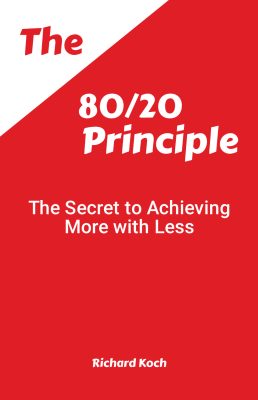
Imagine achieving more by doing less—sounds like a dream, right? This book reveals how focusing on the vital few, rather than the trivial many, can transform your life and work. The central theme is the 80/20 Principle, a concept that suggests 80% of results come from 20% of efforts. The author guides you through how to identify and focus on these high-impact areas, offering a roadmap to greater efficiency, success, and satisfaction. What makes this book stand out is its practical approach, blending theory with actionable insights that apply to business, personal growth, and everyday life.
This book is a goldmine for business professionals, entrepreneurs, and anyone seeking to maximize their productivity and effectiveness. Its primary audience includes managers, leaders, and strategists looking for innovative ways to improve performance. However, its accessibility also makes it suitable for a broader audience, including students, educators, and anyone interested in personal development. The language is clear and straightforward, making complex concepts easy to grasp, even for those new to the subject.
Ever wonder how you can achieve more with less effort?
Imagine if you could achieve the majority of your success with only a fraction of your effort. This tantalizing idea is at the heart of The 80/20 Principle: The Secret to Achieving More with Less by Richard Koch. Drawing on the 80/20 Principle, also known as the Pareto Principle, Koch demonstrates how this principle applies not just to economics but to all aspects of life. For instance, in business, it’s often found that 80% of sales come from 20% of clients. Koch’s book takes this seemingly simple concept and extends it to productivity, personal growth, and overall life satisfaction, providing readers with a clear guide on how to identify and leverage the most effective parts of their efforts.
The book begins with a compelling explanation of the 80/20 Principle’s origins in economics, where it was discovered by Italian economist Vilfredo Pareto. Pareto observed that 80% of Italy’s wealth was held by 20% of the population. Koch takes this observation and shows how it is a universal principle that can be applied to maximize efficiency and results in various domains. He offers numerous real-life examples and case studies, from successful entrepreneurs who focus on key products to individuals who transform their lives by prioritizing the most impactful activities.
Readers will learn how to apply the 80/20 Principle to their own lives through practical advice and actionable steps. Koch provides tools for analyzing tasks and activities to identify the crucial 20% that yields the greatest benefits. This approach is designed to help readers not only increase their productivity at work but also improve their personal lives by focusing on what truly matters. By learning to cut out the less important 80%, individuals can create more time for what brings the most joy and success.
The book also delves into the psychological aspects of why people often get bogged down by the unimportant 80%. Koch explores common cognitive biases and mental traps that lead to inefficiency, such as the tendency to equate busyness with productivity. He encourages readers to challenge their preconceptions and adopt a more strategic approach to both their professional and personal lives. Through self-reflection exercises and practical tips, Koch guides readers towards a more streamlined and fulfilling lifestyle.
Throughout The 80/20 Principle, Koch emphasizes the transformative potential of focusing on the few critical areas that make the most difference. He illustrates how this principle can lead to significant improvements not just in business and career but in health, relationships, and personal satisfaction. The book’s unique selling point is its broad applicability and the ease with which readers can implement its strategies, making it a must-read for anyone looking to enhance their efficiency and effectiveness in life.
The central message of The 80/20 Principle is that by identifying and focusing on the most impactful 20% of our efforts, we can achieve far greater results with much less work. This principle is like a spotlight that illuminates the most critical parts of our activities, allowing us to see clearly where our efforts are best spent. For instance, in a business context, Koch illustrates how a company might find that a small percentage of its products or services generate the majority of its profits. By reallocating resources to these high-impact areas, businesses can dramatically boost their profitability and growth.
The 80/20 Principle has had a profound impact on both business strategies and personal productivity methodologies since its publication. The book has been praised for its clear and actionable insights, making the 80/20 Principle accessible to a wide audience. Koch’s ability to translate a complex economic concept into practical advice for everyday life has garnered significant acclaim. The principle has been widely adopted in business circles, with many companies using it to streamline operations, improve customer service, and boost profitability.
One of the book’s more controversial points is its challenge to conventional wisdom about hard work and success. Koch argues that working harder is not necessarily the path to achieving more. Instead, he advocates for working smarter by identifying and focusing on the most impactful activities. This perspective has sparked debate among traditionalists who equate long hours with productivity. However, the success stories and case studies presented in the book provide compelling evidence that Koch’s approach can lead to remarkable results.
The book has received several awards and recognitions, cementing its status as a seminal work in the fields of business and personal development. Its influence extends beyond just individual readers; it has been cited in numerous other works and has inspired a wave of productivity literature that builds on the principles Koch outlines. The 80/20 Principle remains a cornerstone in the discussion of efficiency and effectiveness, continuing to inspire and guide readers towards achieving more with less.
The 80/20 Principle: The Secret to Achieving More with Less by Richard Koch presents a compelling case for focusing on the most impactful activities to maximize efficiency and effectiveness. The book’s strength lies in its clear articulation of the 80/20 Principle and its practical applicability across various domains, from business operations to personal productivity. Koch’s writing is accessible and engaging, making complex concepts easy to grasp and implement. His use of real-world examples and step-by-step guides helps readers see the tangible benefits of applying the 80/20 Principle in their own lives.
We appreciate the book’s emphasis on strategic focus and resource allocation, which challenges the conventional wisdom that all tasks are of equal importance. By highlighting the disproportionate impact of a small percentage of activities, Koch provides readers with a powerful tool for prioritizing their efforts. This approach can lead to significant improvements in both professional and personal spheres, offering a roadmap to achieving more with less effort. The clarity and practical nature of Koch’s advice make the book highly valuable for anyone looking to enhance their productivity and efficiency.
However, we also recognize some of the book’s limitations. The repetitive nature of the content and the occasional lack of depth in certain areas might detract from the overall reading experience for some readers. Additionally, the book’s assumption of the universal applicability of the 80/20 Principle can sometimes overlook the complexities and nuances of different contexts. Despite these shortcomings, the core message remains powerful and relevant, providing readers with a practical framework for optimizing their efforts.
Koch’s exploration of the psychological and behavioral barriers to applying the 80/20 Principle is insightful, although it could benefit from a deeper analysis. Addressing these cognitive biases and mental traps is crucial for fully embracing the principle and achieving sustainable change. While the book does touch on these aspects, more detailed guidance on overcoming these challenges would have enhanced its value. Nonetheless, the strategies and techniques offered are sound and can lead to substantial improvements in efficiency and effectiveness when applied diligently.
Our Recommendation
We believe The 80/20 Principle is a valuable read for anyone seeking to improve their productivity and effectiveness. Its practical insights and clear guidance make it accessible to a wide audience, from business professionals to students and individuals looking to enhance their personal lives. The book’s emphasis on focusing on the most impactful activities is a powerful lesson that can lead to significant improvements in various areas.
Despite some minor flaws, the overall message and practical advice make this book a worthwhile investment of time. We recommend The 80/20 Principle to anyone who wants to achieve more with less effort and who is willing to challenge conventional approaches to productivity and resource allocation. The principles outlined in this book can be transformative when applied thoughtfully, leading to greater efficiency, success, and personal satisfaction. Whether you’re looking to boost your business performance or streamline your daily routines, Koch’s book offers valuable tools and insights to help you achieve your goals.
The essence of The 80/20 Principle by Richard Koch is distilled into a few key topics that together form the backbone of the book’s message. One of the central topics is the idea of focusing on the vital few. Koch emphasizes that in any given context, a small number of causes or inputs often lead to a majority of the results or outputs. This idea, rooted in the Pareto Principle, challenges the common assumption that all efforts and activities are equally important. By identifying and concentrating on these high-impact areas, individuals and organizations can significantly enhance their productivity and effectiveness.
Another crucial element is the importance of strategic analysis. Koch provides tools and methods for readers to analyze their activities and determine which ones yield the most significant results. This involves a detailed examination of tasks, projects, and even relationships to pinpoint the 20% that are most productive or beneficial. This analytical approach is not just about identifying the high-impact areas but also about understanding why they are so effective. It encourages a mindset of continual assessment and improvement, leading to more informed and strategic decision-making.
The book also explores the psychological and behavioral aspects that often prevent people from applying the 80/20 Principle. Koch delves into common mental traps, such as the tendency to equate busyness with productivity or the reluctance to let go of less important tasks. He argues that overcoming these cognitive biases is essential to adopting a more efficient and effective approach to work and life. By addressing these psychological barriers, the book provides a holistic framework for implementing the 80/20 Principle, not just as a theoretical concept but as a practical strategy for achieving more with less.
Koch introduces the concept of time management through the lens of the 80/20 Principle. He suggests that by focusing on the most important tasks, individuals can make more efficient use of their time. This involves not just prioritizing tasks but also eliminating or delegating those that fall into the less important 80%. The book offers practical advice on how to identify these key tasks and how to structure one’s day around them. This approach to time management promises not only increased productivity but also a more balanced and fulfilling life.
The 80/20 Principle is also applied to personal relationships and leisure activities. Koch argues that the principle can help individuals identify the relationships and activities that bring the most joy and satisfaction. By focusing on these high-impact areas, individuals can enhance their personal lives in much the same way they can improve their professional lives. This holistic application of the 80/20 Principle underscores its versatility and its potential to transform various aspects of life, making it a comprehensive guide to achieving more with less.
Business Success Stories: Koch provides several examples from the business world to illustrate the 80/20 Principle in action. One notable example is the case of Microsoft. The company found that by focusing on fixing the top 20% of the most reported bugs, they could eliminate 80% of the system crashes. This strategic focus allowed Microsoft to significantly improve the reliability of their software with relatively less effort, demonstrating the power of the 80/20 Principle in a corporate setting.
Entrepreneurial Ventures: Koch himself is an example of applying the 80/20 Principle to entrepreneurial ventures. He describes how he focused his investment efforts on a small number of ventures that showed the most promise. By doing so, he was able to achieve substantial financial success. One of his notable investments was in Betfair, an online betting exchange that revolutionized the gambling industry. By concentrating on this high-impact investment, Koch was able to maximize his returns while minimizing his efforts.
Personal Productivity: Koch also shares personal anecdotes to illustrate how the 80/20 Principle can be applied to individual productivity. He recounts how, by identifying the most productive times of his day and the most effective tasks, he was able to reduce his working hours while achieving better results. For example, he discovered that his early morning hours were the most productive, and by focusing his most critical tasks during this time, he could achieve more in less time.
Marketing Strategies: Another compelling example involves marketing strategies. Koch cites the case of a company that realized 80% of its sales came from 20% of its products. By identifying these top-selling products and focusing their marketing efforts on them, the company was able to increase sales and profitability significantly. This targeted approach exemplifies how businesses can leverage the 80/20 Principle to enhance their marketing effectiveness and overall performance.
Health and Fitness: The book also applies the 80/20 Principle to health and fitness. Koch discusses how a small number of exercises and dietary changes can lead to the majority of health benefits. He highlights the example of focusing on compound exercises, like squats and deadlifts, which engage multiple muscle groups and provide more significant results compared to isolation exercises. This approach allows individuals to achieve their fitness goals more efficiently by concentrating on the most effective activities.
One of the key insights from the book is the importance of focusing on high-impact activities. This means identifying the 20% of tasks that contribute to 80% of your results and dedicating most of your time and resources to these tasks. For example, if you’re a salesperson, you might find that a small percentage of your clients generate the majority of your sales. By concentrating on nurturing these key relationships and spending less time on less productive ones, you can significantly boost your overall performance. This approach can be applied by analyzing your daily activities and reallocating your efforts toward the most productive ones.
Koch emphasizes the need to eliminate or delegate tasks that do not contribute significantly to your goals. This insight is particularly useful for improving efficiency and productivity. Start by making a list of all your regular activities and identifying which ones fall into the less important 80%. Once identified, look for ways to either stop doing these tasks altogether or delegate them to others. For instance, if administrative work is consuming a large portion of your time, consider hiring an assistant or using automation tools to handle these tasks, freeing you up to focus on more strategic activities.
The book also highlights the application of the 80/20 Principle to personal and professional relationships. Koch suggests identifying the relationships that bring the most value and joy to your life and focusing your energy on nurturing these connections. For example, you might notice that a few key relationships provide the majority of your emotional support and happiness. By spending more time with these individuals and less with those who drain your energy or offer little value, you can enhance your overall well-being and satisfaction. This can involve setting boundaries with less important relationships and actively investing in the ones that matter most.
In a business context, Koch advises applying the 80/20 Principle to streamline operations. This involves identifying the products, services, or processes that generate the most profit and focusing resources on them while cutting back on less profitable areas. For example, a company might discover that a small number of its products account for the majority of its revenue. By reallocating resources to these top-performing products and reducing investment in less successful ones, the company can improve its profitability and operational efficiency. This might include focusing marketing efforts on best-selling products or discontinuing underperforming lines.
Another significant insight is the application of the 80/20 Principle to marketing strategies. Koch suggests analyzing which marketing channels and tactics generate the most leads or sales and concentrating your efforts on these. For instance, if social media advertising brings in the majority of your customers, it makes sense to allocate more budget and resources to this channel while reducing spend on less effective methods like print advertising. This targeted approach can maximize your marketing ROI and drive better results. Regularly reviewing and adjusting your marketing strategies based on performance data is key to sustaining success.
Koch’s book provides valuable advice on time management by focusing on the most productive times of your day. He suggests identifying when you are most productive and scheduling your high-impact tasks during these peak periods. For example, if you are most alert and focused in the morning, plan your most critical tasks for this time and leave less demanding activities for the afternoon. This strategy can help you make the most of your productive hours and achieve more in less time. Additionally, using tools like time tracking apps can help you identify and optimize your peak productivity periods.
Personal development is another area where the 80/20 Principle can be highly effective. Koch encourages readers to focus on the activities and habits that have the greatest impact on their growth and improvement. For instance, you might find that a few key habits, like regular exercise and continuous learning, significantly enhance your overall well-being and success. By prioritizing these high-impact habits and reducing time spent on less beneficial activities, you can accelerate your personal development. This might involve setting clear goals, creating a structured plan, and regularly reviewing your progress.
Koch also applies the 80/20 Principle to financial management, suggesting that a small percentage of investments often yield the majority of returns. This insight can help you optimize your investment strategy by identifying and focusing on high-performing assets. For example, you might discover that a few stocks or funds in your portfolio generate the bulk of your investment income. By reallocating more of your capital to these top performers and reducing exposure to lower-performing assets, you can enhance your financial returns. Regularly reviewing your investment portfolio and making data-driven adjustments is essential for long-term success.
The book offers valuable advice on simplifying decision-making processes by focusing on the most critical factors. Koch suggests that by identifying and prioritizing the key elements that will have the greatest impact on the outcome, you can make more effective decisions with less effort. For instance, when evaluating business opportunities, focus on the few key metrics that matter most, such as potential profitability and market demand, rather than getting bogged down in less important details. This approach can help you make faster, more informed decisions that drive better results.
Finally, Koch emphasizes the importance of balancing work and life by applying the 80/20 Principle to personal time management. He advises identifying the activities that bring the most joy and fulfillment and making them a priority. For example, you might find that spending quality time with family and engaging in hobbies provides the most satisfaction and helps recharge your energy. By prioritizing these activities and reducing time spent on less enjoyable or unproductive tasks, you can achieve a better work-life balance. This might involve setting clear boundaries between work and personal time and being deliberate about how you spend your free time.
One of the primary strengths of The 80/20 Principle is its insightful application of a universal principle across various domains. Richard Koch effectively demonstrates how the 80/20 Principle, originally an economic observation, can be applied to business, personal productivity, relationships, and more. His ability to extend this principle beyond its traditional scope into everyday life provides readers with a powerful tool for optimizing their efforts and maximizing their results. This broad applicability makes the book valuable for a wide audience, offering practical strategies that can be easily implemented.
Koch excels in presenting his arguments with clarity and precision. He breaks down complex ideas into simple, understandable concepts, making the book accessible to readers without a background in economics or business. His writing style is straightforward and engaging, which helps to keep readers interested and motivated to apply the principles discussed. This clarity is particularly evident in his step-by-step guides and practical examples, which provide concrete ways for readers to identify and focus on their high-impact activities.
The practical applicability of The 80/20 Principle is another notable strength. Koch provides numerous actionable insights and techniques that readers can apply immediately to their personal and professional lives. From time management tips to strategies for improving business operations, the book is filled with practical advice that can lead to significant improvements in efficiency and effectiveness. This focus on actionable steps helps to bridge the gap between theory and practice, making the book not just informative but also highly useful.
Koch’s comprehensive coverage of topics related to the 80/20 Principle is impressive. He explores the principle from various angles, providing a thorough understanding of its implications and applications. This includes not only business and productivity but also personal development and lifestyle choices. By addressing a wide range of topics, Koch ensures that the book appeals to a diverse audience and offers something valuable for everyone. This breadth of coverage enhances the book’s relevance and utility.
The use of real-world examples and case studies is another significant strength of the book. Koch supports his arguments with concrete examples from his own experiences and those of well-known companies and individuals. These examples help to illustrate the practical benefits of applying the 80/20 Principle and make the concepts more relatable and tangible for readers. The inclusion of these real-world stories adds depth to the book and helps to reinforce its key messages.
One of the weaknesses of The 80/20 Principle is its tendency to be repetitive. Koch reiterates the core concept of the 80/20 Principle numerous times throughout the book, which can become redundant for readers who grasp the idea early on. While repetition can be useful for emphasizing key points, in this case, it sometimes feels excessive and may detract from the overall reading experience. Streamlining the content to avoid unnecessary repetition could have made the book more concise and impactful.
While Koch covers a wide range of topics, some areas lack the depth that could have provided more comprehensive insights. For instance, the psychological aspects of why people struggle to apply the 80/20 Principle are touched upon but not explored in great detail. A deeper analysis of the cognitive biases and behavioral patterns that hinder effective application would have added valuable context and made the book even more insightful. Expanding on these areas could have enhanced the book’s depth and usefulness.
Another critique is the assumption of the universal applicability of the 80/20 Principle. While the principle is versatile and can be applied to many areas, there are situations where it may not hold true or may be difficult to implement. Koch’s enthusiasm for the principle sometimes overlooks the complexities and nuances of different contexts. A more balanced discussion acknowledging the limitations and challenges of applying the 80/20 Principle would have provided a more nuanced perspective.
Although Koch provides numerous examples and anecdotes, the book lacks rigorous empirical evidence to support some of its claims. Many of the examples are anecdotal and drawn from Koch’s personal experiences or well-known business stories, which may not always be representative or statistically significant. Including more data-driven research and studies to substantiate the effectiveness of the 80/20 Principle in various settings would have strengthened the book’s credibility and persuasiveness. This would offer readers more confidence in the reliability of the strategies presented.
One potential blind spot of The 80/20 Principle is the oversimplification of complex systems. While the principle is broadly applicable, not all systems and processes can be boiled down to a simple 80/20 distribution. In complex organizations and ecosystems, the interactions and dependencies between different components can be far more intricate. For example, in Thinking, Fast and Slow, Daniel Kahneman explores the complexities of human decision-making, highlighting that simplification often overlooks critical factors that influence outcomes. Readers might misunderstand Koch’s message and assume that the 80/20 Principle is a one-size-fits-all solution, when in reality, a more nuanced approach is often necessary.
Koch’s book can also underestimate the challenges associated with implementing the 80/20 Principle. While the concept is straightforward, applying it effectively in real-world scenarios can be difficult due to organizational inertia, resistance to change, and deeply ingrained habits. Books like Switch: How to Change Things When Change Is Hard by Chip Heath and Dan Heath address these challenges by providing strategies for overcoming resistance and fostering change. By not fully addressing these implementation hurdles, The 80/20 Principle might leave readers ill-prepared for the practical difficulties they will face.
There is a potential for misapplication of the 80/20 Principle due to a misunderstanding of its nuances. Readers might incorrectly assume that the principle implies neglecting the 80% entirely, rather than optimizing or improving it. This misapplication can lead to significant oversight, particularly in areas where the less productive 80% still holds essential value. In The Lean Startup by Eric Ries, the focus is on continuous improvement and iterative processes, which complement the 80/20 Principle but emphasize the importance of refining all aspects of a business. Neglecting this can lead to a skewed focus that undermines long-term success.
Koch’s book tends to overlook the interdependencies within systems, which can be crucial for understanding the full impact of applying the 80/20 Principle. For example, in a business setting, the success of the 20% high-impact activities might depend significantly on the support and infrastructure provided by the remaining 80%. Books like The Fifth Discipline by Peter Senge highlight the importance of understanding systems thinking and the interdependencies within organizational dynamics. By not adequately addressing these interdependencies, Koch’s book might lead readers to underestimate the support required to sustain high-impact activities.
Another blind spot is the insufficient focus on the long-term consequences of applying the 80/20 Principle. Prioritizing short-term gains can sometimes lead to neglecting important investments in long-term growth and sustainability. Good to Great by Jim Collins discusses how companies that achieve long-term success focus on building sustainable practices and making disciplined decisions that may not yield immediate results. By emphasizing immediate efficiency gains, The 80/20 Principle might inadvertently encourage a short-term mindset that overlooks the importance of sustained effort and investment in future growth.
The book also tends to neglect the emotional and social factors that play a significant role in personal and professional productivity. Factors such as employee morale, team dynamics, and personal satisfaction can significantly influence productivity and effectiveness but are not adequately addressed by the 80/20 Principle. Books like Drive: The Surprising Truth About What Motivates Us by Daniel H. Pink explore the importance of intrinsic motivation and emotional well-being in achieving high performance. By not incorporating these elements, Koch’s book might provide an incomplete picture of what drives success in both personal and organizational contexts.
The 80/20 Principle by Richard Koch, published over two decades ago, remains remarkably relevant today. Its core message about focusing on the most impactful 20% of efforts to achieve 80% of results continues to resonate in various fields, from business management to personal development. The principle’s enduring appeal lies in its simplicity and broad applicability, which transcends specific industries or eras. As businesses and individuals seek ways to optimize their productivity and efficiency in an increasingly complex world, the 80/20 Principle provides a clear, actionable framework.
In today’s data-driven era, the 80/20 Principle aligns seamlessly with the growing emphasis on analytics and strategic resource allocation. Businesses now have access to sophisticated data analytics tools that can identify high-impact areas with precision. This makes Koch’s insights more actionable than ever, as companies can leverage data to optimize their operations, marketing strategies, and customer relations. The principle encourages a strategic focus that is essential in a competitive, fast-paced market, helping businesses streamline processes and maximize returns.
The principle’s relevance extends to personal productivity and lifestyle choices. With the rise of remote work and the increasing demand for work-life balance, individuals are seeking efficient ways to manage their time and energy. The 80/20 Principle offers a powerful strategy for prioritizing tasks and activities that contribute the most to personal and professional goals. By focusing on high-impact tasks, individuals can achieve more with less effort, leading to greater satisfaction and reduced stress. This approach is particularly valuable in an era where people are bombarded with distractions and demands on their time.
Looking ahead, the 80/20 Principle will likely continue to influence new management practices and personal productivity techniques. As the complexity of both business environments and personal lives increases, the ability to identify and concentrate on the most effective actions will become even more critical. The principle’s application to sustainability efforts, for example, can help organizations focus on the most impactful environmental initiatives, contributing to broader societal benefits. By identifying and investing in the top 20% of actions that yield 80% of environmental benefits, businesses can make significant strides toward sustainability goals.
In education and personal development, the principle encourages a focus on high-impact learning and growth opportunities. Students and professionals can use it to prioritize the most valuable courses, skills, and experiences that will have the greatest impact on their careers. This approach aligns with the increasing trend towards lifelong learning and continuous improvement, emphasizing quality over quantity in educational and developmental pursuits.
Overall, The 80/20 Principle remains a timeless guide for efficiency and effectiveness. Its principles continue to be relevant and applicable, offering valuable insights for optimizing efforts in a variety of contexts. As we move into the future, the 80/20 Principle’s focus on high-impact actions will likely remain a cornerstone of strategies for achieving success and fulfillment in both professional and personal arenas.
Identifying Key Business Drivers
The 80/20 Principle is highly relevant in identifying the key drivers of business success. By focusing on the 20% of products, services, or clients that generate 80% of the revenue, businesses can allocate resources more efficiently and maximize profitability. This approach helps organizations streamline their operations and concentrate efforts on high-impact areas, ultimately enhancing overall performance.
One major challenge in implementing this strategy is accurately identifying which 20% of activities or clients are most impactful. Data collection and analysis can be time-consuming and may require sophisticated tools and expertise. Additionally, there may be internal resistance to changing established processes or reallocating resources away from traditionally favored projects.
To overcome these challenges, businesses should invest in robust data analytics tools and train their staff to use them effectively. It’s essential to foster a culture of data-driven decision-making, where employees understand the value of focusing on high-impact activities. Regular training and workshops can help employees adapt to new tools and methodologies. Additionally, involving stakeholders in the decision-making process and clearly communicating the benefits of the 80/20 Principle can help mitigate resistance and encourage buy-in.
Optimizing Resource Allocation
Focusing on the most profitable segments allows businesses to optimize their resource allocation. By identifying and investing more in the top-performing products or services, companies can improve their market position and financial health. This targeted approach ensures that resources are used where they will have the greatest impact, reducing waste and increasing efficiency.
A potential obstacle in optimizing resource allocation is the inertia and reluctance to shift resources from less profitable areas. Departments or teams may feel threatened by the reallocation, leading to internal conflict. Moreover, reallocating resources may require significant changes in supply chain management, production processes, or marketing strategies, which can be complex and disruptive.
To address these issues, businesses should adopt a phased approach to resource reallocation. Start with pilot projects in specific areas to demonstrate the benefits before scaling up. Effective change management strategies, including clear communication, employee involvement, and continuous feedback, can help ease the transition. Providing support and training to affected teams can also reduce resistance and facilitate smoother implementation.
Enhancing Customer Focus
Applying the 80/20 Principle to customer management can significantly enhance customer focus. By identifying the 20% of customers who contribute most to the revenue and nurturing these relationships, businesses can improve customer satisfaction and loyalty. This approach helps companies tailor their services to meet the specific needs of their most valuable clients, leading to higher retention rates and increased lifetime value.
One of the challenges in enhancing customer focus is the potential neglect of the remaining 80% of customers. While they may not be the primary revenue drivers, they still represent a significant portion of the customer base and can contribute to brand reputation and word-of-mouth marketing. Balancing the focus on high-value customers without alienating the broader customer base can be difficult.
Businesses can use tiered customer service models to balance their focus. While providing exceptional service to top-tier customers, ensure that the remaining customers also receive satisfactory service. Automation and self-service options can help manage the broader customer base efficiently. Regularly review customer data to adjust strategies as needed and ensure that all customers feel valued and supported.
Streamlining Business Processes
The 80/20 Principle can be applied to streamline business processes by identifying and optimizing the most critical workflows. By focusing on the key processes that drive the majority of the outcomes, businesses can improve efficiency and reduce operational costs. This approach involves analyzing current processes, identifying bottlenecks, and implementing improvements to enhance productivity.
One of the main obstacles in streamlining business processes is resistance to change. Employees may be accustomed to existing workflows and reluctant to adopt new methods. Additionally, process optimization often requires investment in new technologies or training, which can be resource-intensive and disruptive.
To overcome these obstacles, businesses should adopt a collaborative approach to process improvement. Involve employees in the process analysis and redesign, encouraging them to provide input and suggestions. Implement changes gradually and provide training and support to help employees adapt. Investing in change management programs can also facilitate a smoother transition and ensure long-term success.
Improving Marketing Effectiveness
Applying the 80/20 Principle to marketing efforts can significantly improve their effectiveness. By identifying the 20% of marketing channels and campaigns that generate 80% of the leads or sales, businesses can focus their efforts on the most productive strategies. This targeted approach helps maximize marketing ROI and drive better results with fewer resources.
A challenge in improving marketing effectiveness is accurately tracking and analyzing marketing performance across different channels. Many businesses struggle with data silos and lack integrated systems to provide a holistic view of their marketing efforts. Additionally, shifting focus to more effective channels may require changes in marketing strategies and budgets, which can be met with resistance.
Invest in integrated marketing analytics platforms that provide comprehensive insights into performance across all channels. Use these tools to regularly review and adjust marketing strategies based on data-driven insights. Encourage a culture of continuous learning and adaptation within the marketing team to stay agile and responsive to changes in the market. Clearly communicate the benefits of focusing on high-impact channels to gain support from stakeholders.
Enhancing Employee Productivity
The 80/20 Principle can also be applied to enhance employee productivity by identifying and focusing on the tasks that yield the most significant results. Encouraging employees to prioritize high-impact activities can lead to more efficient work habits and improved overall performance. This approach involves training employees to recognize their most valuable tasks and providing them with the tools and support they need to focus on these activities.
One challenge in enhancing employee productivity is the ingrained habit of equating busyness with productivity. Employees may struggle to shift their mindset and prioritize tasks effectively. Additionally, there may be a lack of clarity or agreement on which tasks are truly high-impact, leading to confusion and inefficiencies.
Provide clear guidelines and criteria for identifying high-impact tasks. Offer training programs that teach employees how to apply the 80/20 Principle to their daily work. Use performance metrics and regular feedback to help employees track their progress and stay focused on their most important tasks. Foster a culture that values results over busyness, encouraging employees to work smarter, not harder.
The 80/20 Principle aligns seamlessly with the rise of data-driven decision-making. As businesses and organizations increasingly rely on big data and analytics, the ability to identify and focus on the most impactful activities becomes crucial. By leveraging data, companies can pinpoint the 20% of factors that drive 80% of their results, leading to more informed and strategic decisions. This trend is likely to grow, making Koch’s principles even more relevant as businesses seek to optimize their operations based on data insights.
The shift towards remote work and flexible scheduling further emphasizes the importance of the 80/20 Principle. In a remote work environment, productivity can vary greatly among employees. Identifying and focusing on high-impact tasks can help maintain efficiency and ensure that remote workers are contributing effectively. This approach also supports the trend of flexible scheduling by allowing employees to prioritize their most productive times for high-impact activities, leading to better work-life balance and higher overall productivity.
Sustainability is becoming a key focus for many organizations. Applying the 80/20 Principle to sustainability efforts can help companies identify the most impactful environmental and social initiatives. By concentrating resources on the top 20% of actions that provide 80% of the benefits, businesses can make significant strides in their sustainability goals. This targeted approach supports the growing trend of integrating sustainability into core business strategies, ensuring that efforts are both effective and efficient.
The principle of focusing on high-impact activities aligns well with the trend towards innovation and continuous improvement. In a rapidly changing market, businesses need to innovate constantly to stay competitive. By applying the 80/20 Principle, companies can identify the most promising areas for innovation and invest in these high-impact projects. This approach supports a culture of continuous improvement, where resources are directed towards the most effective innovations, driving long-term growth and success.
Personalized customer experiences are becoming a key differentiator in many industries. The 80/20 Principle can help businesses focus on the most valuable customer segments and tailor their services to meet their needs. By identifying the 20% of customers who generate 80% of the revenue, companies can develop personalized marketing and service strategies that enhance customer satisfaction and loyalty. This trend towards personalization underscores the relevance of Koch’s principles in creating targeted and effective customer experiences.
The 80/20 Principle by Richard Koch, published over two decades ago, remains remarkably relevant today. Its core message about focusing on the most impactful 20% of efforts to achieve 80% of results continues to resonate in various fields, from business management to personal development. The principle’s enduring appeal lies in its simplicity and broad applicability, which transcends specific industries or eras. As businesses and individuals seek ways to optimize their productivity and efficiency in an increasingly complex world, the 80/20 Principle provides a clear, actionable framework.
In today’s data-driven era, the 80/20 Principle aligns seamlessly with the growing emphasis on analytics and strategic resource allocation. Businesses now have access to sophisticated data analytics tools that can identify high-impact areas with precision. This makes Koch’s insights more actionable than ever, as companies can leverage data to optimize their operations, marketing strategies, and customer relations. The principle encourages a strategic focus that is essential in a competitive, fast-paced market, helping businesses streamline processes and maximize returns.
The principle’s relevance extends to personal productivity and lifestyle choices. With the rise of remote work and the increasing demand for work-life balance, individuals are seeking efficient ways to manage their time and energy. The 80/20 Principle offers a powerful strategy for prioritizing tasks and activities that contribute the most to personal and professional goals. By focusing on high-impact tasks, individuals can achieve more with less effort, leading to greater satisfaction and reduced stress. This approach is particularly valuable in an era where people are bombarded with distractions and demands on their time.
Looking ahead, the 80/20 Principle will likely continue to influence new management practices and personal productivity techniques. As the complexity of both business environments and personal lives increases, the ability to identify and concentrate on the most effective actions will become even more critical. The principle’s application to sustainability efforts, for example, can help organizations focus on the most impactful environmental initiatives, contributing to broader societal benefits. By identifying and investing in the top 20% of actions that yield 80% of environmental benefits, businesses can make significant strides toward sustainability goals.
In education and personal development, the principle encourages a focus on high-impact learning and growth opportunities. Students and professionals can use it to prioritize the most valuable courses, skills, and experiences that will have the greatest impact on their careers. This approach aligns with the increasing trend towards lifelong learning and continuous improvement, emphasizing quality over quantity in educational and developmental pursuits.
Overall, The 80/20 Principle remains a timeless guide for efficiency and effectiveness. Its principles continue to be relevant and applicable, offering valuable insights for optimizing efforts in a variety of contexts. As we move into the future, the 80/20 Principle’s focus on high-impact actions will likely remain a cornerstone of strategies for achieving success and fulfillment in both professional and personal arenas.
The Lean Startup by Eric Ries
The Lean Startup by Eric Ries offers a practical approach to innovation and business development that complements the 80/20 Principle. Ries emphasizes the importance of continuous innovation through the build-measure-learn feedback loop, which helps startups and established businesses alike to pivot quickly and avoid wasting resources. This book provides actionable strategies for efficiently managing resources and driving growth, making it an excellent companion to Koch’s focus on optimizing high-impact activities.
Thinking, Fast and Slow by Daniel Kahneman
Daniel Kahneman’s Thinking, Fast and Slow delves into the cognitive processes behind decision-making, providing a psychological foundation that complements the operational focus of the 80/20 Principle. Kahneman explores the biases and heuristics that influence our choices, helping readers understand the mental barriers that can impede the application of efficient principles. This book enriches the reader’s comprehension of why we sometimes struggle to focus on the most impactful activities and offers insights into improving decision-making processes.
Good to Great by Jim Collins
Good to Great by Jim Collins investigates the factors that allow companies to make the leap from good to great. Collins’ research-based approach identifies key characteristics such as disciplined people, thought, and action, which resonate with the 80/20 Principle’s emphasis on focusing resources on high-impact areas. This book provides a more structured framework for achieving long-term success and complements Koch’s more flexible strategy, offering a comprehensive guide to business excellence.
Drive: The Surprising Truth About What Motivates Us by Daniel H. Pink
In Drive, Daniel H. Pink explores the intrinsic motivators—autonomy, mastery, and purpose—that drive human behavior. Pink’s insights into what truly motivates individuals can enhance the application of the 80/20 Principle by ensuring that the high-impact activities identified are also fulfilling and engaging for employees. This book helps readers understand the deeper motivational factors that can lead to sustained productivity and satisfaction, aligning well with Koch’s efficiency-focused approach.
The 4-Hour Workweek by Timothy Ferriss
Timothy Ferriss’ The 4-Hour Workweek challenges conventional work practices and promotes a lifestyle design that focuses on maximizing efficiency. Ferriss advocates for outsourcing, automation, and focusing on the few activities that generate the most significant results—principles that align closely with the 80/20 Principle. This book offers practical tips and techniques for reducing work hours while achieving greater results, making it a valuable resource for readers looking to apply Koch’s ideas to their personal and professional lives.
Essentialism: The Disciplined Pursuit of Less by Greg McKeown
Essentialism by Greg McKeown promotes the disciplined pursuit of less but better. McKeown’s philosophy of focusing only on what is essential aligns perfectly with the 80/20 Principle’s emphasis on high-impact activities. This book provides a deeper exploration of how to eliminate non-essential tasks and focus on what truly matters, offering practical advice for simplifying and improving both personal and professional life. It serves as a guide for implementing the core ideas of the 80/20 Principle in a disciplined and structured manner.
Atomic Habits by James Clear
James Clear’s Atomic Habits focuses on the power of small habits and incremental changes to achieve significant results. This complements the 80/20 Principle by providing a detailed framework for creating and maintaining the high-impact habits that drive 80% of your success. Clear’s practical advice on habit formation and behavior change helps readers implement and sustain the productive activities identified through the 80/20 analysis, making it a practical companion for achieving long-term success.
Blue Ocean Strategy by W. Chan Kim and Renée Mauborgne
Blue Ocean Strategy by W. Chan Kim and Renée Mauborgne introduces the concept of creating uncontested market space to make the competition irrelevant. This strategic approach complements the 80/20 Principle by encouraging businesses to focus on innovative and high-impact strategies that can yield significant returns. The book provides a framework for thinking creatively about business growth and development, aligning well with Koch’s emphasis on focusing resources on the most productive areas.
Harvard Business Review (hbr.org)
Harvard Business Review offers a wealth of articles, case studies, and insights related to productivity, efficiency, and strategic management. Readers can explore topics aligned with the 80/20 Principle, such as prioritization, resource allocation, and high-impact decision-making. The platform provides access to cutting-edge research and practical advice from industry experts, making it a valuable resource for deepening understanding.
Coursera (coursera.org)
Coursera provides online courses from top universities and organizations on topics related to business management, productivity, and personal development. Courses like “The Science of Well-Being” from Yale University and “Business Strategy” from the University of Virginia complement the principles discussed in the 80/20 Principle by offering structured learning paths and practical applications.
TED Conferences (ted.com)
TED Conferences offer inspiring talks from leaders and thinkers across various fields, including business, technology, and personal development. Many TED Talks focus on themes relevant to the 80/20 Principle, such as efficiency, innovation, and strategic thinking. These talks provide additional perspectives and actionable insights that can enhance the reader’s application of Koch’s principles.
World Business Forum (wobi.com)
The World Business Forum is an annual conference that brings together top business leaders and thinkers to discuss the latest trends and strategies in management, leadership, and innovation. The forum provides an opportunity to learn from experts who apply principles similar to those in the 80/20 Principle, offering practical insights and networking opportunities.
Association for Talent Development (td.org)
The Association for Talent Development (ATD) is a professional organization dedicated to those who develop talent in the workplace. ATD offers resources, events, and certifications that focus on improving productivity and efficiency, aligning with the 80/20 Principle’s emphasis on high-impact activities. Membership provides access to a network of professionals and ongoing learning opportunities.
Project Management Institute (pmi.org)
The Project Management Institute (PMI) offers resources and certifications for project management professionals. PMI’s focus on efficient project execution and resource management aligns well with the principles of the 80/20 Principle. The institute provides tools, templates, and best practices for optimizing project outcomes and improving overall productivity.
The Tim Ferriss Show
The Tim Ferriss Show features interviews with top performers across various fields, exploring their routines, habits, and strategies for success. Many episodes delve into themes relevant to the 80/20 Principle, such as prioritization, efficiency, and personal productivity. The podcast offers practical tips and insights that complement the strategies discussed in Koch’s book.
HBR IdeaCast
HBR IdeaCast is a weekly podcast from Harvard Business Review that features leading thinkers in business and management. Episodes cover topics like strategic planning, innovation, and leadership, providing listeners with ideas and insights that align with the 80/20 Principle. The podcast helps listeners stay informed about the latest trends and best practices in the business world.
Productivity Masterclass: Create a Custom System that Works by Thomas Frank (Skillshare)
This Skillshare course teaches students how to develop a personalized productivity system that aligns with their unique needs and goals. The course covers essential concepts such as time management, task prioritization, and efficiency, making it a practical complement to the 80/20 Principle. Thomas Frank’s approach helps learners implement high-impact activities effectively.
Effective Business Strategy by University of Virginia (Coursera)
Offered on Coursera, this course delves into business strategy concepts that resonate with the 80/20 Principle. It covers strategic analysis, resource allocation, and competitive positioning, providing a comprehensive framework for applying Koch’s principles in a business context. The course’s structured approach helps learners understand and implement strategic decisions.
Jiro Dreams of Sushi
Jiro Dreams of Sushi is a documentary that follows Jiro Ono, an 85-year-old sushi master, and his relentless pursuit of perfection. The film illustrates the 80/20 Principle through Jiro’s focus on perfecting a few essential elements of sushi-making to achieve extraordinary results. This documentary offers a visual and inspirational representation of the principles discussed in Koch’s book.
The Minimalists: Less Is Now
The Minimalists: Less Is Now explores the concept of minimalism and its impact on productivity and life satisfaction. The film complements the 80/20 Principle by showcasing how focusing on the most important aspects of life and eliminating excess can lead to greater fulfillment and efficiency. It provides practical examples and inspiration for applying similar principles to both personal and professional lives.


Discover the key takeaways from top non-fiction books in minutes. Get the wisdom you need to succeed fast. Here, learning is quick, engaging, and always at your fingertips.
© 2025 All Rights Reserved.