Reviews
“An empowering guide to achieving your goals without wrecking your health, your sanity, or your relationships.”—Rodger Dean Duncan for Forbes
“Effortless: Make It Easier to Do What Matters Most… gives us the much-needed permission to take the path of least resistance… In a society that expects hard work, but then rewards hard work with more hard work … Effortless is profound in its simplicity.”—Vice
“Based on behavioral economics, philosophy, physics, and neuroscience, in his new book, Effortless, Greg McKeown unveils tips to working smarter, not harder. They are simple yet brilliant strategies, and therefore easy to apply.”—Ruth Gotian, PhD, for Forbes
“If you’re squandering energy on pointless tasks and struggling to complete what really matters, this book is your salvation. With brisk prose, great stories, and keen insights, it shows how to flip the script—and make the trivial stuff harder and the crucial stuff easier. In a world beset by burnout, Greg McKeown’s work is essential.”—Daniel H. Pink, New York Times bestselling author of When, Drive, and To Sell Is Human
“As much as I loved Essentialism, I think Effortless is even better—and just what the world (and at least I) desperately needs at this moment. Many will benefit from McKeown’s wisdom and great storytelling.”—James M. Citrin, leader, CEO Practice | Board Practice, Spencer Stuart
“Every once in a while, a new book comes along at just the right moment. At a time when fear, uncertainty, and our ever-growing list of responsibilities—both at work and at home—have come to feel like much too much to handle, Greg McKeown’s new book couldn’t be timelier, or more necessary.”—Eve Rodsky, New York Times bestselling author of Fair Play
“We’ve been taught that the more important the goal, the harder we must grind to achieve it, which leads to inevitable exhaustion and overwork. In his inspiring and important follow-up to Essentialism, Greg McKeown masterfully flips this script, arguing instead that the more essential the task, the more effortless we should make its completion. A much-needed corrective to burnout culture.”—Cal Newport, author of A World Without Email and Deep Work
“We all pride ourselves on being hard workers, but what should we do when we want to push ourselves even harder and have reached our upper limit? In his new book, Greg McKeown offers the solution: Instead of giving up, burning out, or sacrificing our sanity, we can find an easier path. Full of simple strategies we can adopt right away, Effortless shows that achieving more doesn’t have to be as hard as we make it out to be.”—Arianna Huffington, founder and CEO of Thrive Global
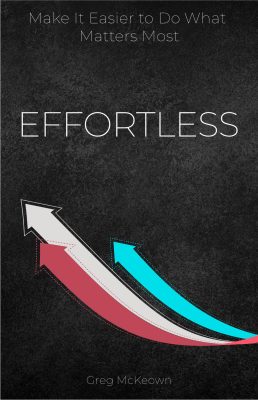
Effortless: Make It Easier to Do What Matters Most introduces a refreshing perspective on productivity and success. Instead of focusing on the traditional hustle and grind, the book advocates for finding simpler, more efficient ways to achieve important goals. The central theme revolves around making tasks easier by adopting a mindset that prioritizes simplicity and ease. This approach challenges the deeply ingrained belief that achieving significant results requires strenuous effort, and it provides practical strategies to lighten the load. What makes this book stand out is its actionable advice on reducing friction and streamlining processes, making it a unique guide in the productivity genre.
This book is ideal for anyone feeling overwhelmed by their workload, whether they are professionals, entrepreneurs, or students. The primary audience includes busy professionals seeking more effective ways to manage their tasks and responsibilities. The secondary audience comprises individuals interested in personal growth and productivity enhancement. McKeown’s accessible language and clear concepts ensure that readers from various backgrounds can easily grasp and apply the principles discussed in the book.
Have you ever felt like you’re running in place, working hard but not getting anywhere?
Imagine trying to push a boulder uphill, sweating and straining with every step, only to find out that there was a path around the hill all along. This metaphor beautifully captures the essence of Effortless: Make It Easier to Do What Matters Most by Greg McKeown. The book challenges the long-held belief that significant achievements necessitate hard, exhausting work. Instead, McKeown argues that we often make things harder than they need to be, and that by adopting an effortless mindset, we can accomplish more with less stress and strain.
McKeown begins by highlighting the common pitfalls of modern productivity. Many of us equate effort with value, believing that the more we grind, the more we achieve. However, this often leads to burnout and inefficiency. The author introduces the concept of “effortless state,” where tasks feel easy and enjoyable. By shifting our mindset and simplifying our approach, we can tap into this state more frequently. The book is filled with practical tips and strategies to help readers identify unnecessary complexities in their lives and replace them with simpler, more effective methods.
One key lesson from Effortless is the power of small, incremental changes. McKeown emphasizes that big results often come from making minor adjustments. He uses the example of how small tweaks in our daily routines can lead to substantial improvements in productivity and well-being. The book provides numerous case studies and anecdotes to illustrate how individuals and organizations have successfully implemented these changes, achieving remarkable outcomes without the usual stress and effort.
Another compelling aspect of the book is its focus on the importance of prioritizing. McKeown encourages readers to focus on what truly matters and to let go of trivial pursuits that drain energy and time. He presents a clear framework for distinguishing between essential and non-essential tasks, allowing readers to streamline their efforts and concentrate on high-impact activities. This approach not only boosts efficiency but also enhances overall satisfaction and fulfillment.
Throughout Effortless, McKeown provides actionable advice on how to make tasks easier. From simplifying decision-making processes to leveraging technology and automation, the book offers a wealth of practical solutions for reducing effort and maximizing results. Readers will learn how to break down complex projects into manageable steps, delegate effectively, and create systems that support sustained productivity. McKeown’s insights are backed by research and real-world examples, making his recommendations both credible and achievable.
The core message of Effortless is that achieving significant results doesn’t have to be a grueling endeavor. McKeown uses the metaphor of “flowing downstream” to illustrate this point. Just as water finds the path of least resistance, we too can achieve our goals by finding easier, more natural ways to work. The book emphasizes the importance of identifying and eliminating unnecessary friction in our tasks and processes. By adopting an effortless mindset, we can align our efforts with our natural strengths and rhythms, leading to greater productivity and satisfaction.
McKeown also explores the psychological barriers that prevent us from embracing an effortless approach. He discusses how perfectionism, fear of failure, and societal expectations can lead us to overcomplicate our lives. By addressing these mental blocks and cultivating a mindset of ease and simplicity, we can unlock new levels of performance and well-being. The book encourages readers to challenge the cultural narrative that equates effort with value and to instead pursue smarter, more efficient ways of working.
Effortless has made a significant impact in the field of productivity and personal development. Its revolutionary approach challenges conventional wisdom and offers a refreshing alternative to the “hustle culture” that dominates much of modern life. The book has received praise for its practical, research-backed strategies and its ability to resonate with readers across various backgrounds and professions. McKeown’s insights have been particularly valuable for individuals and organizations seeking to improve efficiency and reduce burnout.
The book has also sparked discussions about the nature of work and success. Some have hailed it as a groundbreaking guide that redefines productivity, while others have questioned whether its principles can be universally applied. Despite differing opinions, Effortless has undeniably contributed to the ongoing conversation about how we approach work and achievement in the modern world. Its emphasis on simplicity and ease offers a compelling counter-narrative to the often exhausting pursuit of success, making it a valuable addition to the literature on productivity and personal growth.
In Effortless: Make It Easier to Do What Matters Most, Greg McKeown presents a compelling case for rethinking how we approach productivity and success. His central message—that significant achievements don’t always require strenuous effort—is both refreshing and timely. McKeown’s writing is clear and engaging, filled with practical advice that readers can immediately apply to their lives. The book’s emphasis on simplifying tasks and focusing on what truly matters resonates in a world where the hustle culture often leads to burnout and inefficiency.
We appreciate McKeown’s ability to distill complex concepts into accessible strategies. His use of real-world examples and research-backed insights makes the book both credible and relatable. The actionable steps he provides, from automating repetitive tasks to creating clear boundaries between work and personal life, offer tangible ways to achieve more with less effort. McKeown’s approach to prioritizing high-leverage activities and cultivating an effortless mindset is particularly valuable for busy professionals looking to streamline their workflows and reduce stress.
However, Effortless does have its limitations. The book sometimes oversimplifies complex issues, suggesting that all tasks can be made effortless, which may not hold true in highly specialized or high-pressure environments. Additionally, some of the concepts presented are not entirely new, echoing ideas from other productivity and self-help literature. Despite these minor shortcomings, McKeown’s engaging writing style and practical focus make the book a worthwhile read.
One of the key strengths of Effortless is its broad applicability. Whether you’re an entrepreneur, a corporate executive, a student, or a busy parent, the principles McKeown outlines can help you find more ease in your daily tasks. The book’s holistic approach, which includes strategies for mental and emotional well-being, adds depth and makes it relevant across various aspects of life. McKeown’s emphasis on joy and simplicity provides a much-needed counterbalance to the often overwhelming demands of modern life.
Our Recommendation
We highly recommend Effortless: Make It Easier to Do What Matters Most to anyone feeling overwhelmed by their workload or seeking more effective ways to manage their tasks and responsibilities. McKeown’s insights are practical and actionable, offering readers a new perspective on how to achieve their goals with less stress and greater efficiency. The book’s clear and engaging writing makes complex ideas accessible, ensuring that readers from all backgrounds can benefit from its wisdom.
Ultimately, Effortless is a valuable resource for anyone looking to simplify their approach to work and life. McKeown’s principles of ease and efficiency have the potential to transform how we think about productivity and success, leading to a more balanced and fulfilling way of living. Whether you’re aiming to improve your professional performance, enhance your personal growth, or simply find more joy in your everyday tasks, Effortless offers the guidance you need to make what matters most easier to achieve.
The essence of Effortless by Greg McKeown can be distilled into a few critical elements that capture the book’s transformative approach to productivity and success. At its core, the book revolves around the idea that significant achievements do not require strenuous effort; instead, they can be realized through simplicity, ease, and strategic thinking. The following key topics encapsulate the essence of McKeown’s message and its impact.
One of the fundamental concepts McKeown introduces is the “Effortless State.” This state is characterized by a sense of flow and ease where tasks seem almost effortless. McKeown argues that by eliminating unnecessary complexities and mental blocks, we can enter this state more frequently. This involves recognizing and addressing psychological barriers such as perfectionism and fear of failure, which often lead us to overcomplicate our work. The effortless state is about aligning our efforts with our natural strengths and rhythms, allowing us to achieve more with less stress and effort.
McKeown also emphasizes the importance of “Effortless Action.” This concept focuses on simplifying the processes and systems we use to accomplish tasks. Instead of approaching work with a mindset of grinding and hustling, McKeown advocates for finding the simplest and most efficient ways to achieve our goals. This includes breaking down complex projects into manageable steps, leveraging technology, and automating repetitive tasks. Effortless action is about working smarter, not harder, and using our resources more effectively.
Another critical element is “Effortless Results.” McKeown highlights that by focusing on the essential and letting go of the non-essential, we can achieve significant results without unnecessary effort. This involves prioritizing tasks that have the highest impact and delegating or eliminating those that do not contribute meaningfully to our goals. McKeown provides frameworks and strategies for identifying and focusing on high-leverage activities, ensuring that our efforts are directed toward what truly matters. Effortless results are about maximizing outcomes with minimal input.
A key theory presented in the book is the “Effortless Mindset.” This mindset shift is about changing our beliefs and attitudes towards work and success. McKeown argues that many of us hold onto the belief that hard work and struggle are prerequisites for achievement. By adopting an effortless mindset, we can challenge this notion and open ourselves to new possibilities. This involves cultivating habits and attitudes that promote ease and simplicity, such as seeking joy in our work, practicing gratitude, and maintaining a positive outlook. The effortless mindset is about rethinking our approach to productivity and embracing a new paradigm of ease and efficiency.
The Story of the “Effortless State”
McKeown shares the story of a high-powered executive who struggled with constant stress and burnout. By applying the principles of the effortless state, this executive learned to identify and eliminate unnecessary tasks, streamline his workflow, and focus on activities that brought him joy and fulfillment. As a result, he experienced a significant increase in productivity and well-being, demonstrating how entering an effortless state can transform one’s professional and personal life.
Effortless Action in the Tech Industry
McKeown provides an example from the tech industry, where a company implemented automation tools to handle repetitive and time-consuming tasks. By leveraging technology, the company was able to reduce the workload of its employees, allowing them to focus on more creative and high-impact projects. This shift not only improved efficiency but also boosted employee satisfaction and innovation, illustrating the power of effortless action.
Effortless Results in a Non-Profit Organization
A non-profit organization struggling with limited resources and high demands applied McKeown’s strategies for achieving effortless results. By prioritizing their initiatives and focusing on high-impact activities, the organization was able to achieve its goals more effectively. They eliminated non-essential projects and reallocated their resources to areas that provided the most significant benefit to their mission. This approach led to remarkable outcomes with less effort and showcased how focusing on what truly matters can lead to effortless results.
The Effortless Mindset in Education
In the realm of education, McKeown describes a teacher who transformed her teaching methods by adopting an effortless mindset. She moved away from the traditional approach of rigorous testing and assignments, instead creating a learning environment that emphasized curiosity, creativity, and joy. Her students thrived, showing greater engagement and improved academic performance. This example highlights how changing our mindset towards work and success can lead to more effective and enjoyable outcomes.
Personal Transformation through the Effortless Mindset
McKeown shares his personal journey of embracing the effortless mindset. Initially, he adhered to the belief that hard work and struggle were essential for success. However, after experiencing burnout, he began to explore ways to simplify his approach to work and life. By adopting habits that promoted ease and joy, such as regular exercise, mindfulness, and gratitude, McKeown found that he could achieve his goals more effortlessly. His story serves as a powerful testament to the transformative potential of the effortless mindset.
Focus on High-Leverage Activities
One of the core insights from Effortless is the importance of focusing on high-leverage activities—tasks that have a disproportionate impact relative to the effort required. McKeown suggests making a list of all the tasks on your plate and identifying which ones will contribute the most to your goals. By prioritizing these tasks and letting go of less impactful activities, you can achieve more significant results with less effort. For example, if you’re a manager, instead of getting bogged down in minor administrative tasks, focus on strategic planning and team development, which will have a more substantial impact on your organization’s success.
Streamline Decision-Making Processes
McKeown highlights the inefficiency of complicated decision-making processes and suggests simplifying them to save time and reduce mental fatigue. He recommends creating clear criteria for common decisions and using checklists to standardize processes. For instance, if you frequently hire new employees, develop a checklist of essential qualifications and desired traits to streamline the interview process. This approach reduces the cognitive load and speeds up decision-making, allowing you to focus your energy on more critical tasks.
Automate Repetitive Tasks
Another key insight is the value of automation in reducing effort. McKeown encourages leveraging technology to handle repetitive and mundane tasks. Tools like automated email responses, scheduling software, and project management platforms can free up significant amounts of time. For example, using an automated email system to handle customer inquiries can reduce the workload on customer service representatives, allowing them to focus on more complex issues that require a human touch.
Embrace the Power of Small Wins
McKeown emphasizes the importance of small, incremental progress in achieving larger goals. By breaking down big projects into smaller, manageable tasks, you can maintain momentum and avoid feeling overwhelmed. He suggests setting micro-goals and celebrating small victories to keep motivation high. For instance, if you’re writing a book, set a goal to write just 500 words a day. Over time, these small wins accumulate, leading to significant progress without the stress of trying to tackle the entire project at once.
Create Clear Boundaries
Setting boundaries is crucial to maintaining an effortless state. McKeown advises clearly defining work and personal time to prevent burnout and ensure adequate rest. This involves setting specific work hours and sticking to them, as well as creating physical boundaries, such as a dedicated workspace that you can leave at the end of the day. By protecting your personal time, you ensure that you have the energy and focus needed to perform at your best when you are working.
Adopt a Mindset of Ease and Joy
McKeown introduces the idea of finding joy in your work as a way to make tasks feel effortless. He suggests identifying activities that you genuinely enjoy and finding ways to incorporate them into your daily routine. This could mean structuring your day to include short breaks for activities you love or finding aspects of your work that bring you satisfaction. For example, if you enjoy social interaction, make a point to schedule regular check-ins with colleagues. By incorporating elements of joy into your work, you can reduce stress and make tasks feel less like a chore.
Delegate Effectively
Effective delegation is another crucial insight from the book. McKeown emphasizes the need to trust others with tasks that are not within your unique skill set. By identifying team members’ strengths and assigning tasks accordingly, you can ensure that work is done more efficiently. For instance, if you’re a business owner, delegate bookkeeping tasks to a professional accountant instead of trying to manage them yourself. This allows you to focus on strategic decisions and areas where you can add the most value.
Simplify Your Goals
McKeown advises simplifying your goals to make them more achievable. Instead of setting broad, ambiguous objectives, break them down into specific, actionable steps. This clarity helps maintain focus and makes it easier to track progress. For example, instead of setting a goal to “get fit,” specify what that means for you, such as “run three times a week” or “attend yoga classes twice a week.” This specificity makes the goal more tangible and less daunting.
Practice Gratitude and Positivity
Maintaining a positive mindset and practicing gratitude can significantly impact your ability to achieve an effortless state. McKeown suggests starting each day with a gratitude journal, listing things you are thankful for. This practice helps shift your focus from challenges to opportunities and creates a more positive outlook. For example, writing down three things you’re grateful for each morning can set a positive tone for the day and make challenges feel more manageable.
Leverage Rest and Recovery
McKeown highlights the importance of rest and recovery in maintaining productivity. He advises incorporating regular breaks into your day and ensuring you get adequate sleep. This rest helps prevent burnout and maintains your cognitive functions at their peak. For instance, taking short breaks every hour to stretch or walk around can refresh your mind and improve your overall efficiency. Prioritizing rest as part of your work routine ensures sustained productivity and well-being.
Practical Applicability
One of the most notable strengths of Effortless is its practical applicability. Greg McKeown offers actionable advice that readers can implement immediately. The book is filled with real-world examples and step-by-step strategies that make it easy to translate the concepts into everyday practice. For instance, the idea of breaking down complex tasks into smaller, manageable steps is a simple yet powerful technique that anyone can use to improve productivity. The practical tips on automating repetitive tasks and simplifying decision-making processes are particularly beneficial for busy professionals seeking to streamline their workflows.
Clarity of Arguments
McKeown excels in presenting his arguments clearly and concisely. His writing is straightforward, making complex ideas accessible to a broad audience. He avoids jargon and uses relatable language, which enhances the book’s readability. The clear structure of the book, with distinct chapters focusing on specific concepts such as the effortless state, effortless action, and effortless results, helps readers easily follow and understand the progression of his ideas. This clarity ensures that readers can grasp the core messages without getting bogged down in unnecessary details.
Research Depth
The book’s insights are backed by substantial research, lending credibility to McKeown’s arguments. He draws from a wide range of studies in psychology, neuroscience, and productivity, providing a solid foundation for his recommendations. This depth of research not only supports his claims but also offers readers a deeper understanding of why certain strategies are effective. The inclusion of case studies and anecdotes further enriches the content, demonstrating how the principles of effortlessness have been successfully applied in various contexts.
Engaging Writing Style
McKeown’s engaging writing style is another significant strength of the book. He combines storytelling with practical advice, making the content both informative and enjoyable to read. His use of metaphors, such as the comparison of pushing a boulder uphill versus finding a path around the hill, effectively illustrates key concepts and keeps readers engaged. This blend of narrative and instruction ensures that the book is not only educational but also captivating, maintaining the reader’s interest from start to finish.
Focus on Mental and Emotional Well-Being
A noteworthy aspect of Effortless is its emphasis on mental and emotional well-being. McKeown recognizes that achieving an effortless state is not just about productivity; it also involves addressing psychological barriers like perfectionism and fear of failure. He offers practical strategies for cultivating a positive mindset, such as practicing gratitude and seeking joy in work. This holistic approach ensures that readers can improve their efficiency without sacrificing their mental health, making the book particularly relevant in today’s high-stress, fast-paced world.
Broad Applicability Across Contexts
The principles outlined in Effortless are versatile and can be applied across various contexts, from personal life to professional environments. McKeown provides examples that range from individual productivity hacks to organizational efficiency improvements, demonstrating the wide-ranging applicability of his concepts. Whether the reader is a student, a professional, or a business leader, they can find valuable insights that are relevant to their specific situation. This broad applicability makes the book a valuable resource for a diverse audience.
Over-Simplification of Complex Issues
One of the book’s weaknesses is its tendency to oversimplify complex issues. While the focus on making tasks effortless is appealing, some readers may find that the strategies presented do not fully address the nuanced challenges they face. For instance, in highly specialized fields where tasks require deep expertise and intensive effort, the idea of simplifying processes may not be as easily applicable. This oversimplification can make the book’s advice seem less relevant to those dealing with inherently complex or demanding work.
Lack of New Insights
Some readers might find that Effortless does not offer many new insights beyond what has already been covered in other productivity and self-help books. While McKeown’s writing is engaging and his concepts are well-presented, the core ideas of simplifying tasks, focusing on high-impact activities, and automating repetitive tasks are not entirely novel. For readers who are well-versed in productivity literature, the book may feel like a reiteration of familiar principles rather than a source of groundbreaking new strategies.
Limited Evidence for Some Claims
Although McKeown backs many of his arguments with research, there are instances where the evidence supporting his claims is somewhat limited. Some recommendations are based more on anecdotal evidence and personal experience rather than robust scientific research. For example, the idea that adopting an effortless mindset can dramatically improve productivity is appealing, but the book could benefit from more empirical data to substantiate this claim. This lack of rigorous evidence might make some readers skeptical of the effectiveness of certain strategies.
Generalization Across Different Work Contexts
Another critique of Effortless is its generalization across different work contexts. While the book aims to provide universally applicable advice, the reality is that not all work environments can accommodate the principles of effortlessness. For example, in high-stakes fields such as healthcare or emergency services, the notion of making tasks effortless might not be practical or even possible. This generalization can limit the book’s relevance for professionals working in such high-pressure, demanding industries where effort and precision are paramount.
Oversimplification of Effortless Execution
One of the potential blind spots in Effortless is the oversimplification of how easy it is to execute tasks effortlessly in complex or high-pressure environments. While McKeown provides valuable strategies for reducing effort, readers might misunderstand this as suggesting that all tasks can be made effortless with the right approach. This overlooks the reality that some professions and tasks inherently require significant effort and precision, such as those in healthcare, law, or emergency services. In these fields, the emphasis on effortlessness might come across as unrealistic or even dismissive of the complexities involved. Deep Work by Cal Newport addresses the necessity of focused, intensive effort for tasks that require deep cognitive engagement, providing a counterpoint to McKeown’s approach by emphasizing the value of undistracted, effortful work in achieving high-quality results.
Potential Misinterpretation of Minimalism
Another blind spot is the potential misinterpretation of the minimalist approach advocated by McKeown. Readers might confuse effortlessness with doing less or avoiding hard work altogether. This could lead to a reduction in productivity if individuals start neglecting essential tasks under the misconception that they should always seek the path of least resistance. McKeown’s message is about finding smarter, more efficient ways to work, not avoiding effort altogether. However, this nuance might be lost on some readers. Essentialism by Greg McKeown himself, and The One Thing by Gary Keller and Jay Papasan, both stress the importance of focusing on what truly matters but also emphasize that this often involves hard, focused work on fewer but more significant tasks.
Underestimating the Role of Discipline
McKeown’s focus on making tasks easier might inadvertently underestimate the role of discipline and routine in achieving long-term success. While simplifying tasks and reducing unnecessary effort are important, maintaining discipline and consistent routines are also crucial for achieving significant goals. Readers might overlook the importance of discipline if they interpret the book as advocating for always finding the easiest way out. Books like Atomic Habits by James Clear highlight how small, disciplined actions and routines compound over time to produce significant results, emphasizing that effort and discipline are still essential components of success.
Limited Scope for Creativity-Driven Professions
Effortless might also overlook the unique challenges faced by creativity-driven professions where effort and struggle are often integral to the creative process. For artists, writers, and designers, the process of creating something new and innovative can be inherently effortful and complex. The book’s focus on making tasks easier might not fully address the iterative, sometimes strenuous nature of creative work. The War of Art by Steven Pressfield delves into the resistance and struggle that creatives face, highlighting the necessity of pushing through difficulties to produce meaningful work. This perspective offers a balance to McKeown’s approach, acknowledging that in creative fields, effort and overcoming challenges are part of the journey to producing exceptional results.
Neglecting Systemic Barriers
Another potential blind spot is the neglect of systemic barriers that make tasks and goals inherently difficult for certain individuals or groups. McKeown’s strategies might not fully account for external factors such as socio-economic constraints, workplace culture, or institutional barriers that can impede effortlessness. For example, a single parent juggling multiple jobs and responsibilities may find it challenging to apply the principles of effortlessness due to external pressures and limitations. The Power of Habit by Charles Duhigg explores how habits and routines can be influenced by broader social and economic factors, offering insights into how systemic issues impact individual productivity and success. Acknowledging these barriers is crucial for a more comprehensive understanding of how to make tasks and goals more effortless across diverse contexts.
Inadequate Attention to Emotional Labor
Lastly, Effortless might not sufficiently address the concept of emotional labor, which involves the effort required to manage emotions and relationships in personal and professional settings. Jobs that require significant emotional labor, such as caregiving, customer service, or counseling, involve complexities that go beyond the strategies outlined in the book. These roles require a different approach to managing effort and efficiency. Emotional Intelligence by Daniel Goleman emphasizes the importance of understanding and managing emotions in achieving success, highlighting a dimension of effort that McKeown’s book might not fully cover. Incorporating strategies for managing emotional labor would provide a more holistic approach to achieving effortlessness in various aspects of life and work.
Essentialism by Greg McKeown
Essentialism by Greg McKeown, which precedes Effortless, shares a similar foundation with its focus on the disciplined pursuit of less. Both books advocate for eliminating non-essential tasks to focus on what truly matters. However, Essentialism places more emphasis on rigorous prioritization and the elimination of distractions, advocating for a methodical approach to simplifying life and work. In contrast, Effortless expands on these principles by emphasizing the ease with which essential tasks can be accomplished once unnecessary complexities are removed. The primary difference lies in their approaches: Essentialism is more about saying “no” to non-essentials, while Effortless focuses on making the essentials easier to manage.
Deep Work by Cal Newport
Cal Newport’s Deep Work offers a contrasting viewpoint with its emphasis on intense focus and the necessity of deep, undistracted work for achieving significant results. Newport argues that high-quality work requires periods of concentrated effort, which stands in contrast to McKeown’s emphasis on reducing effort. Deep Work posits that the ability to perform deep work is becoming increasingly rare and valuable, thus requiring a different kind of discipline. While Effortless seeks to simplify and ease the process, Deep Work accepts the inherent difficulty of meaningful work and advocates for embracing this challenge. Both books provide valuable insights but cater to different aspects of productivity: ease versus intensity.
Atomic Habits by James Clear
Atomic Habits by James Clear focuses on the power of small, incremental changes and the formation of good habits to achieve long-term goals. Clear’s approach is about building habits that make success inevitable, which aligns with McKeown’s idea of making essential tasks easier. However, Atomic Habits dives deeper into the psychology of habit formation and provides a more structured framework for making these changes. McKeown’s Effortless complements this by offering strategies to simplify the execution of these habits. Together, they present a comprehensive approach to productivity—Atomic Habits helps establish the right habits, while Effortless ensures these habits are maintained with minimal friction.
The Power of Habit by Charles Duhigg
Charles Duhigg’s The Power of Habit explores how habits form and how they can be changed, focusing on the habit loop of cue, routine, and reward. Duhigg provides extensive research on the neurological and psychological aspects of habits, which gives a scientific underpinning to the concepts discussed in Effortless. While McKeown emphasizes reducing effort and simplifying tasks, Duhigg provides a deeper understanding of the mechanisms behind these behaviors. Both books are complementary, as understanding the science of habits can enhance the implementation of McKeown’s strategies for making tasks effortless.
The One Thing by Gary Keller and Jay Papasan
The One Thing advocates for extreme prioritization, urging readers to focus on the single most important task that will make everything else easier or unnecessary. This concept parallels McKeown’s emphasis on identifying and focusing on high-leverage activities. However, The One Thing is more prescriptive about narrowing focus to one main objective at a time, whereas Effortless offers broader strategies to make all essential tasks easier. Keller and Papasan’s book encourages a laser focus on one thing at a time, which can complement McKeown’s strategies by helping readers identify which tasks to apply their newfound effortless techniques to.
Step 1: Identify High-Leverage Activities
Step 2: Simplify Decision-Making Processes
Step 3: Automate Repetitive Tasks
Step 4: Break Down Big Projects
Step 5: Establish Clear Boundaries
Step 6: Cultivate a Mindset of Ease and Joy
Step 7: Delegate Effectively
Step 8: Simplify Your Goals
Step 9: Practice Gratitude and Positivity
Step 10: Leverage Rest and Recovery
Streamline Decision-Making Processes
Streamlining decision-making processes can save time and reduce mental fatigue within an organization. By establishing clear criteria and using standardized checklists for common decisions, businesses can make more efficient and consistent choices. This approach helps eliminate the bottlenecks caused by indecisiveness and ensures that decisions are made swiftly, allowing employees to focus on execution.
One challenge in implementing streamlined decision-making processes is resistance to change. Employees and managers may be accustomed to more flexible, case-by-case decision-making approaches and may resist adopting rigid criteria or checklists. Additionally, there may be concerns that standardized processes oversimplify complex decisions and do not account for unique situations.
To overcome these challenges, involve key stakeholders in developing the decision-making criteria and checklists. Provide training and resources to help employees understand the benefits of streamlined processes and how they can improve efficiency and consistency. Encourage a culture of continuous improvement where feedback on the new processes is regularly gathered and used to make adjustments, ensuring that the system remains flexible enough to accommodate unique circumstances.
Automate Repetitive Tasks
Automating repetitive tasks can significantly reduce the workload on employees, allowing them to focus on more strategic and high-value activities. Implementing automation tools for tasks such as data entry, scheduling, and customer inquiries can streamline operations and improve overall efficiency. This approach also minimizes the risk of human error and ensures that routine tasks are completed consistently.
A potential obstacle in implementing automation is the initial investment in technology and training. Businesses may face financial constraints or reluctance from employees who fear that automation might replace their jobs. Additionally, integrating new technologies into existing workflows can be challenging and may disrupt daily operations temporarily.
To address these challenges, businesses should clearly communicate the benefits of automation to all employees, emphasizing that the goal is to enhance their roles rather than replace them. Start with a pilot project to demonstrate the positive impact of automation on productivity and employee satisfaction. Gradually scale up the implementation based on the success of the pilot, ensuring that adequate training and support are provided throughout the process. This approach helps build trust and buy-in from employees while managing the financial and operational impact of the transition.
Prioritize High-Leverage Activities
Focusing on high-leverage activities ensures that employees are dedicating their time and energy to tasks that have the most significant impact on the organization’s goals. By identifying and prioritizing these activities, businesses can achieve better results with less effort. This approach involves evaluating all tasks and projects to determine which ones contribute the most to the organization’s success and reallocating resources accordingly.
One challenge in prioritizing high-leverage activities is the difficulty in accurately assessing the impact of various tasks and projects. Additionally, employees may struggle to let go of low-impact activities due to habit or perceived importance. This can lead to resistance and difficulty in shifting focus to more impactful tasks.
To overcome these challenges, businesses should implement a structured evaluation process for assessing the impact of tasks and projects. Use data and performance metrics to make informed decisions about which activities to prioritize. Provide training and support to help employees understand the importance of focusing on high-leverage activities and how to identify them. Encourage a culture of continuous reassessment, where tasks and priorities are regularly reviewed and adjusted based on their impact on organizational goals.
Create Clear Boundaries Between Work and Personal Life
Establishing clear boundaries between work and personal life is essential for maintaining employee well-being and preventing burnout. By encouraging employees to set specific work hours and providing support for managing workload, businesses can create a healthier work environment. This approach helps employees recharge and return to work with renewed energy and focus, ultimately improving productivity and job satisfaction.
Implementing clear boundaries can be challenging, especially in organizations with a culture of overwork or where employees are expected to be constantly available. There may also be resistance from employees who fear that setting boundaries will negatively impact their performance evaluations or career advancement opportunities.
To address these challenges, businesses should lead by example, with managers and leaders setting and respecting boundaries themselves. Clearly communicate the importance of work-life balance and provide policies that support it, such as flexible working hours or remote work options. Encourage open communication about workload and stress levels, and provide resources for managing stress and promoting well-being. By fostering a supportive culture and providing tangible support, businesses can help employees feel confident in setting and maintaining healthy boundaries.
Cultivate a Mindset of Ease and Joy
Promoting a mindset of ease and joy within the workplace can enhance employee engagement and satisfaction. By encouraging employees to find joy in their work and incorporating elements of fun and creativity into daily tasks, businesses can create a more positive and productive work environment. This approach can lead to higher morale, increased innovation, and better overall performance.
One challenge in cultivating this mindset is the tendency for workplaces to prioritize efficiency and results over employee well-being and enjoyment. Employees may also feel pressured to maintain a serious and professional demeanor, making it difficult to introduce elements of fun and joy into the workplace.
To overcome these challenges, businesses should integrate practices that promote joy and creativity into their organizational culture. This can include team-building activities, opportunities for professional development, and recognition programs that celebrate both achievements and efforts to create a positive work environment. Encourage employees to share ideas for making work more enjoyable and provide the flexibility to implement these ideas. By prioritizing well-being and creating a supportive atmosphere, businesses can foster a culture where ease and joy are valued and actively pursued.
Implementing Effective Delegation Strategies
Effective delegation is crucial for maximizing organizational efficiency and ensuring that tasks are handled by those best suited to them. By delegating tasks appropriately, managers can focus on strategic initiatives while employees take on responsibilities that align with their skills and expertise. This approach not only improves productivity but also empowers employees and promotes professional growth.
A potential obstacle in implementing effective delegation strategies is the reluctance of managers to relinquish control. Managers may fear that tasks will not be completed to their standards or may lack confidence in their team’s abilities. Additionally, employees may feel overwhelmed by new responsibilities or unsure about how to execute delegated tasks.
To address these challenges, businesses should provide training for managers on the benefits and techniques of effective delegation. Encourage a culture of trust and support, where managers feel confident in their team’s capabilities and employees feel empowered to take on new tasks. Establish clear communication channels and provide resources and support to ensure that delegated tasks are completed successfully. Regularly review and adjust delegation strategies based on feedback and outcomes to continuously improve the process.
Focus on Employee Well-Being
There is a growing trend towards prioritizing employee well-being in the workplace. Companies are recognizing that employee health and happiness directly impact productivity and retention. McKeown’s emphasis on reducing stress and promoting ease and joy in work fits perfectly with this trend. Strategies from Effortless, like setting clear boundaries and cultivating a positive mindset, support the move towards creating healthier work environments. As businesses continue to focus on well-being initiatives, the principles in the book can provide valuable guidance on how to implement effective well-being practices.
Technology and Automation
The increasing role of technology and automation in the workplace is another trend that intersects with McKeown’s ideas. As businesses adopt more sophisticated tools to streamline operations, the book’s focus on automating repetitive tasks is particularly relevant. By leveraging technology, companies can reduce the manual workload on employees, allowing them to focus on more strategic and creative tasks. The principles in Effortless can help organizations navigate the integration of new technologies and ensure that they are used to enhance efficiency without adding unnecessary complexity.
Sustainable Work Practices
Sustainability in work practices is becoming more important as businesses seek to create long-term value while minimizing negative impacts. McKeown’s approach to simplifying tasks and reducing effort aligns with sustainable work practices by promoting efficiency and reducing burnout. As companies aim to create sustainable workflows that are both productive and manageable, the ideas in Effortless offer practical strategies for achieving these goals. The book’s emphasis on prioritizing high-impact activities and fostering a positive work environment supports the development of sustainable, resilient organizations.
Continuous Learning and Adaptation
The fast-paced nature of modern work environments requires continuous learning and adaptation. Employees and organizations need to be agile and able to quickly adjust to new challenges. The principles in Effortless can help individuals and teams stay focused and efficient amidst constant change. By simplifying decision-making processes and prioritizing essential tasks, employees can manage their workload more effectively and remain adaptable. This trend towards continuous learning and agility is well supported by McKeown’s strategies for maintaining an effortless state and achieving significant results with less effort.
The long-term influence of Effortless on its field and wider society could be significant, as it challenges the prevailing hustle culture that equates effort with value. By promoting the idea that important tasks can be achieved with less stress and strain, the book has the potential to shift workplace cultures towards more sustainable and humane practices. This shift could lead to widespread adoption of efficiency-enhancing tools and techniques that prioritize employee well-being alongside productivity.
In the realm of personal development, Effortless may inspire individuals to rethink their approach to success, encouraging them to seek joy and simplicity in their pursuits. This could foster a more balanced and fulfilling way of living, where success is measured not just by achievements but also by the ease and enjoyment with which they are accomplished. If embraced broadly, this mindset could reduce burnout and increase overall happiness and satisfaction in both professional and personal lives.
From an organizational perspective, the principles in Effortless could lead to more innovative and adaptive business practices. Companies that implement these strategies might see improved employee morale, reduced turnover, and enhanced creativity, as workers feel less overwhelmed and more empowered to focus on high-impact activities. This cultural shift could also result in more agile and resilient organizations capable of navigating the complexities of the modern business environment with greater ease.
On a societal level, Effortless might contribute to a broader conversation about the value of work-life balance and mental health. As more individuals and organizations adopt the principles outlined in the book, there could be a growing recognition of the importance of reducing unnecessary effort and complexity in all areas of life. This could lead to policy changes and initiatives that support a healthier, more balanced approach to work and productivity, ultimately fostering a society that values well-being as much as achievement.
Overall, the broader implications of Effortless suggest a future where ease and efficiency are seen as pathways to success, rather than obstacles. If widely adopted, the book’s principles could transform how we approach work and life, leading to a more balanced, fulfilling, and sustainable way of living and working.
Essentialism: The Disciplined Pursuit of Less by Greg McKeown
Essentialism by Greg McKeown is a natural companion to Effortless. It dives deeper into the importance of focusing on what truly matters and eliminating non-essential tasks. This book provides a structured approach to identifying and prioritizing essential activities, which complements the strategies in Effortless for making these activities easier. Together, these books offer a comprehensive guide to achieving more by doing less, with Essentialism focusing on prioritization and Effortless on simplifying execution.
Deep Work: Rules for Focused Success in a Distracted World by Cal Newport
Deep Work by Cal Newport presents a contrasting yet complementary perspective by emphasizing the value of intense, focused work. Newport argues that the ability to concentrate without distraction is increasingly rare and valuable. This book complements Effortless by highlighting situations where deep, effortful work is necessary to achieve high-quality results. It provides practical advice for cultivating concentration and managing distractions, which can be integrated with the effortless strategies for a balanced approach to productivity.
Atomic Habits: An Easy & Proven Way to Build Good Habits & Break Bad Ones by James Clear
Atomic Habits by James Clear offers a deep dive into the science of habit formation. Clear’s insights on how small, incremental changes can lead to significant improvements over time complement McKeown’s strategies for simplifying tasks. This book provides a detailed framework for building habits that make success inevitable, which aligns well with the principles in Effortless. Together, they provide a robust set of tools for achieving goals with minimal friction and sustained effort.
The Power of Habit: Why We Do What We Do in Life and Business by Charles Duhigg
The Power of Habit by Charles Duhigg explores the neurological and psychological foundations of habits. Duhigg’s explanation of the habit loop—cue, routine, and reward—offers valuable insights that can enhance the application of McKeown’s ideas. Understanding how habits form and how to change them can help readers implement the effortless strategies more effectively. This book complements Effortless by providing a deeper understanding of the mechanisms behind behavior change.
The One Thing: The Surprisingly Simple Truth Behind Extraordinary Results by Gary Keller and Jay Papasan
The One Thing by Gary Keller and Jay Papasan focuses on the concept of extreme prioritization, advocating for dedicating time and energy to the single most important task at any given moment. This approach complements McKeown’s focus on simplifying tasks by providing a clear method for identifying what to focus on. The combination of prioritizing the most impactful task and making it easier to accomplish aligns well with the strategies in Effortless, offering a powerful approach to achieving significant results.
Getting Things Done: The Art of Stress-Free Productivity by David Allen
Getting Things Done by David Allen offers a comprehensive system for managing tasks and projects. Allen’s methods for organizing and tracking tasks can enhance the strategies in Effortless by providing a structured approach to handling multiple responsibilities. The book’s focus on reducing stress through efficient task management aligns well with McKeown’s principles of achieving more with less effort. Together, these books provide a well-rounded approach to productivity and stress management.
Make Time: How to Focus on What Matters Every Day by Jake Knapp and John Zeratsky
Make Time by Jake Knapp and John Zeratsky offers practical techniques for reclaiming time and focusing on what matters most each day. Their approach to identifying daily highlights and creating a framework for making time for these priorities complements McKeown’s strategies for simplifying and focusing on essential tasks. This book provides actionable advice that aligns with the principles of Effortless, helping readers create more meaningful and productive days.
The War of Art: Break Through the Blocks and Win Your Inner Creative Battles by Steven Pressfield
The War of Art by Steven Pressfield addresses the internal resistance that creatives often face. Pressfield’s insights into overcoming procrastination and self-doubt provide a valuable perspective that complements McKeown’s focus on making tasks easier. This book is particularly useful for those in creative professions who need to understand the psychological barriers to effortless productivity. Together with Effortless, it offers a comprehensive approach to achieving creative success with less struggle.
TED Talks
TED Talks provide a wealth of information on productivity, personal development, and leadership. Greg McKeown’s TED Talk, “Essentialism: The Disciplined Pursuit of Less,” offers a concise overview of the principles he explores in his books. The platform also features other relevant talks on simplifying work and improving efficiency, making it an excellent resource for further learning. Visit TED Talks.
Harvard Business Review (HBR)
Harvard Business Review offers articles, case studies, and research on a wide range of business and productivity topics. It includes insights from thought leaders and experts that complement the strategies in Effortless. The site regularly publishes articles on improving work efficiency and employee well-being. Access more at Harvard Business Review.
Mind Tools
Mind Tools provides practical resources for personal and professional development. The website offers tools, articles, and guides on productivity, time management, and leadership. The content aligns well with the principles in Effortless, providing additional techniques and strategies for simplifying tasks and improving efficiency. Explore resources at Mind Tools.
World Domination Summit
The World Domination Summit focuses on themes of community, adventure, and service. It brings together creative and unconventional thinkers to discuss how to live a remarkable life in a conventional world. The event’s emphasis on simplifying and prioritizing what matters aligns with the principles in Effortless. Learn more at World Domination Summit.
TED Conferences
TED Conferences bring together speakers from various fields to share ideas and innovations. Attending a TED Conference can provide new perspectives and insights on productivity, simplicity, and achieving significant results with less effort. These events offer networking opportunities and exposure to cutting-edge thinking. Find out more at TED Conferences.
Project Management Institute (PMI)
The Project Management Institute offers resources, certifications, and events focused on improving project management practices. PMI’s emphasis on efficient project execution and strategic thinking aligns with McKeown’s principles of prioritizing high-leverage activities and simplifying tasks. Membership provides access to a wealth of knowledge and networking opportunities. Visit PMI.
Society for Human Resource Management (SHRM)
The Society for Human Resource Management provides resources and support for HR professionals. SHRM focuses on creating better workplaces, which includes strategies for improving productivity and employee well-being. The organization’s resources can help implement the principles of Effortless in organizational settings. Learn more at SHRM.
The Tim Ferriss Show
The Tim Ferriss Show features interviews with high achievers from various fields, discussing their routines, habits, and strategies for success. Many episodes focus on simplifying tasks and improving efficiency, which aligns well with the themes of Effortless. This podcast offers practical advice and inspiration for applying McKeown’s principles. Listen at The Tim Ferriss Show.
Essentialism with Greg McKeown
Greg McKeown’s podcast, “Essentialism with Greg McKeown,” explores themes of simplicity, focus, and productivity. Each episode delves into practical advice and strategies for living and working more efficiently, complementing the ideas in Effortless. The podcast features interviews with experts and thought leaders, providing additional insights and applications. Listen at Essentialism with Greg McKeown.
Coursera: Learning How to Learn
The Coursera course “Learning How to Learn” by Dr. Barbara Oakley and Dr. Terrence Sejnowski provides techniques for mastering complex subjects and improving productivity. The course’s focus on effective learning strategies complements the principles in Effortless by offering tools to simplify and streamline the learning process. Enroll at Coursera.
LinkedIn Learning: Time Management Fundamentals
LinkedIn Learning’s “Time Management Fundamentals” by Dave Crenshaw offers practical strategies for managing time and improving productivity. The course covers techniques for prioritizing tasks, reducing distractions, and creating effective workflows, which align with the principles in Effortless. This course provides actionable advice for enhancing efficiency. Access it at LinkedIn Learning.
Minimalism: A Documentary About the Important Things
Minimalism explores the benefits of living with less, focusing on how simplifying our possessions and lifestyle can lead to greater happiness and fulfillment. This documentary aligns with McKeown’s emphasis on reducing effort and focusing on what truly matters, offering a visual and impactful exploration of minimalism principles. Watch it on Netflix.
Jiro Dreams of Sushi
Jiro Dreams of Sushi is a documentary about Jiro Ono, a renowned sushi chef, and his relentless pursuit of perfection. The film highlights the importance of mastering one’s craft through focused, disciplined work, which contrasts with but also complements the idea of making tasks effortless. It provides insights into the balance between effort and mastery. Available on Amazon Prime.
The Social Dilemma
The Social Dilemma examines the impact of social media on our lives and the challenges of maintaining focus and productivity in a distracted world. This documentary complements McKeown’s strategies for reducing distractions and simplifying tasks by providing a deeper understanding of the external factors that impact our efficiency. Watch it on Netflix.


Discover the key takeaways from top non-fiction books in minutes. Get the wisdom you need to succeed fast. Here, learning is quick, engaging, and always at your fingertips.
© 2025 All Rights Reserved.