Reviews
“This book is one of the most worthwhile and immediately usable reads I have come across in a long time.” –Kiplinger
“In this book, my friend William Vanderbloemen has not only studied successful people, he has unlocked the teachable habits they practice that make them successful. That means for you, this isn’t just a book of case studies. You’re holding a manual for becoming unusually successful—as unusual as a mythical unicorn. It’s a manual based on hard data that unlocks the way you can become mythically valuable. Successful. Irreplaceable. He will teach you, as he puts it, how to become a unicorn.” — JOHN C. MAXWELL, Bestselling author
‘What makes a great leader? No one is more uniquely qualified to answer this question than William Vanderbloeman. He is to leaders what a scout is to a baseball franchise—ever in the hunt for the right player. William and his team have honed the skill of the search and have kindly shared their skill with us. I am thrilled to recommend this book.’ — MAX LUCADO, Bestselling author
‘Whether you’re a job seeker or an employer seeking exceptional staff, Be The Unicorn is indispensable. So grateful to William for synthesizing years of data down to the most essential characteristics of successful hires.’ — JIMMY MELLADO, President and CEO of Compassion International
‘My friend William has done it again. In this data-driven guide from decades of experience, he clearly outlines real-world keys to leading. I love reading people who actually do things versus theory. This book is a gem, don’t miss it.’ — DAVE RAMSEY, Bestselling author
‘No one is better at spotting and placing the ‘best of the best’ than William Vanderbloemen. In his new book, Be the Unicorn, William unpacks the 12 data-driven habits that separate the best leaders from the rest of the pack. His in-depth research mingled with years of experience creates the perfect guide to recognize the people you’re looking for as well as to take your leadership to the next level. Grab a copy for everyone on your team and get ready to grow with the best.’ — CRAIG GROESCHEL, Pastor of Life.Church and author of Lead Like it Matters
‘Nobody wants to hire the wrong person, especially the wrong senior pastor or senior leader. But it happens all the time. With Be the Unicorn, William Vanderbloemen takes the mystery out of great hiring. By the way, it will also help you become a better leader.’ — CAREY NIEUWHOF, Bestselling author of At Your Best, podcaster, and founder of The Art of Leadership Academy
‘William Vanderbloemen was an early adopter of Hubspot in part because he believes data can drive results. In his research for Be The Unicorn, he has uncovered the data that will help you stand out of the crowd and become irreplaceable.’ — BRIAN HALLIGAN, Co-Founder and Executive Chairperson of HubSpot
In a world brimming with leadership advice, this book stands out by offering a data-driven approach to becoming an exceptional leader. It distills years of research and real-world experience into 12 concrete habits that set apart the most effective leaders. The author’s unique perspective combines cutting-edge data analysis with timeless wisdom, providing readers with actionable insights to transform their leadership style. This isn’t just another leadership book; it’s a roadmap to becoming the rare and valuable “unicorn” leader that organizations desperately seek.
This book is primarily aimed at current and aspiring leaders across all sectors, from business executives to non-profit directors and entrepreneurs. Its data-driven approach will particularly appeal to those who appreciate evidence-based strategies rather than purely anecdotal advice. The secondary audience includes HR professionals, management consultants, and anyone interested in organizational behavior and leadership development. While the book tackles complex leadership concepts, Vanderbloemen’s accessible writing style makes it suitable for readers at various stages of their careers, from emerging leaders to seasoned executives looking to refine their skills.
Are you ready to transform from a good leader to a great one?
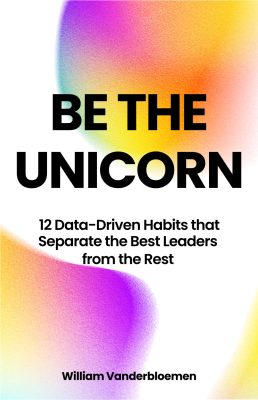
In the realm of leadership, unicorns aren’t mythical creatures—they’re the rare, exceptional leaders who stand head and shoulders above the rest. William Vanderbloemen’s Be the Unicorn: 12 Data-Driven Habits that Separate the Best Leaders from the Rest is a treasure map for those seeking to become these coveted leaders. But unlike the fantastical quests of legend, this journey is grounded in hard data and real-world experience.
Imagine a world where leadership isn’t just an art, but a science. Vanderbloemen takes us there, armed with insights gleaned from thousands of leadership assessments and interviews. He’s not just telling us what makes a great leader; he’s showing us, with numbers and charts to back it up. It’s like he’s cracked the code of leadership DNA, identifying the 12 key strands that make up the genome of exceptional leadership.
But don’t worry, this isn’t a dry academic tome. Vanderbloemen brings these data-driven insights to life with vivid stories and practical examples. From the boardrooms of Fortune 500 companies to the trenches of non-profit organizations, he illustrates how these 12 habits play out in the real world. It’s like watching a master chef explain the science behind a perfect soufflé, then showing you exactly how to make it yourself.
What sets this book apart is its universal applicability. Whether you’re leading a team of two or a multinational corporation, these habits can transform your leadership style. Vanderbloemen doesn’t just tell you what to do; he shows you how to do it, with actionable steps and exercises at the end of each chapter. It’s like having a personal leadership coach in your pocket, guiding you through the process of becoming a unicorn leader.
Readers of Be the Unicorn will learn how to cultivate emotional intelligence, master the art of delegation, and develop a growth mindset. They’ll discover the power of radical candor and learn how to build high-performing teams. But perhaps most importantly, they’ll learn how to measure and track their progress in each of these areas, turning leadership development into a data-driven process. By the end of the book, readers will have a clear roadmap for transforming themselves into the kind of leaders organizations dream about—the true unicorns of the business world.
The core message of Be the Unicorn is that exceptional leadership isn’t an innate, mysterious quality, but a set of habits that can be learned, practiced, and perfected. Vanderbloemen argues that by focusing on these 12 specific habits, anyone can dramatically improve their leadership effectiveness.
Think of these habits as the ingredients in a gourmet recipe. Just as a chef combines specific ingredients in precise ways to create a masterpiece, leaders can cultivate these habits to create their own leadership masterpiece. Some of these habits might seem obvious—like effective communication or strategic thinking. But others might surprise you, like the importance of physical fitness or the ability to disconnect from work.
Vanderbloemen’s approach is like a high-tech fitness tracker for your leadership skills. Just as a fitness tracker helps you monitor your physical health and set goals for improvement, Vanderbloemen’s framework allows you to assess your leadership health and create a targeted improvement plan. It’s not about becoming a carbon copy of someone else’s leadership style—it’s about identifying your strengths, addressing your weaknesses, and becoming the best possible version of yourself as a leader.
The significance of Be the Unicorn lies in its unique blend of data-driven insights and practical applicability. In a field often dominated by anecdotal advice and one-size-fits-all prescriptions, Vanderbloemen’s work stands out for its rigorous, evidence-based approach.
This book is like a bridge between the academic world of leadership studies and the practical world of day-to-day management. It takes complex concepts from organizational psychology and behavioral economics and translates them into actionable strategies that busy professionals can implement immediately. This makes it an invaluable resource not just for individual leaders, but for organizations looking to develop their leadership pipeline.
While the book has been widely praised for its fresh approach, it’s not without controversy. Some critics argue that reducing leadership to a set of habits oversimplifies a complex, context-dependent skill. Others question whether the data, largely drawn from Vanderbloemen’s own company’s assessments, is truly representative of all leadership contexts.
Despite these critiques, Be the Unicorn has made a significant impact in the leadership development field. It’s been featured in major business publications and has become required reading in many MBA programs. Vanderbloemen’s work has sparked important conversations about the role of data in leadership development and the potential for a more scientific approach to cultivating great leaders.
The book’s impact extends beyond the business world. Non-profit organizations and educational institutions have also embraced its principles, finding that the 12 habits are just as relevant in mission-driven contexts as they are in profit-driven ones. This broad applicability underscores the universal nature of effective leadership and the potential for data-driven approaches to improve leadership across all sectors of society.
William Vanderbloemen’s “Be the Unicorn” offers a fresh, data-driven approach to leadership development that we find both compelling and practical. The book’s strength lies in its ability to distill complex leadership concepts into 12 actionable habits, backed by extensive research and real-world examples. We appreciate the comprehensive nature of these habits, which cover both professional skills and personal attributes, acknowledging that effective leadership is as much about who you are as what you do.
The book’s emphasis on continuous improvement and growth mindset aligns well with current understanding of effective leadership development. We find the practical exercises and implementation tips particularly valuable, as they provide readers with concrete ways to apply the concepts in their daily lives. The engaging writing style and use of case studies make the book accessible and enjoyable to read, even when dealing with complex topics.
However, we also recognize some limitations in Vanderbloemen’s approach. The focus on individual leadership habits, while valuable, may overlook the importance of systemic factors and organizational contexts in shaping leadership effectiveness. We also note that the book could benefit from a more diverse cultural perspective and a deeper exploration of ethical leadership in today’s complex business environment.
Despite these limitations, we believe “Be the Unicorn” makes a significant contribution to the field of leadership literature. Its data-driven approach sets it apart from many leadership books that rely primarily on anecdotal evidence or personal experience. The book’s integration of both soft and hard skills provides a well-rounded view of what it takes to be an exceptional leader in today’s rapidly changing business landscape.
We find the book’s potential long-term impact on leadership development practices intriguing. The emphasis on specific, measurable habits could lead to more concrete, evidence-based approaches to leadership training and evaluation. Furthermore, the inclusion of personal habits like physical health and the ability to disconnect could broaden our understanding of what contributes to leadership effectiveness.
Our Recommendation
We recommend “Be the Unicorn” to a wide range of readers interested in leadership development. For aspiring leaders, the book provides a clear roadmap for developing essential leadership skills. Experienced leaders will find value in the book’s data-driven insights and practical strategies for continuous improvement. HR professionals and leadership development specialists may find the 12-habit framework useful for designing training programs and evaluating leadership potential.
However, we suggest reading this book as part of a broader leadership development journey. While it provides excellent insights into individual leadership habits, we recommend complementing it with resources that address organizational dynamics, diverse cultural perspectives, and ethical leadership. Overall, we believe “Be the Unicorn” is a valuable addition to the leadership literature, offering a fresh, evidence-based approach to becoming an exceptional leader in today’s complex business environment.
The essence of William Vanderbloemen’s Be the Unicorn lies in its data-driven approach to leadership development, centered around 12 key habits that distinguish exceptional leaders. These habits form the backbone of the book’s message, offering a comprehensive framework for leadership excellence. The first crucial habit is emotional intelligence, which Vanderbloemen argues is foundational to effective leadership. He posits that leaders who can understand and manage their own emotions, as well as recognize and influence the emotions of others, are better equipped to navigate complex interpersonal dynamics and inspire their teams. The book provides strategies for developing emotional intelligence, including self-reflection exercises and techniques for improving empathy.
Another critical habit Vanderbloemen emphasizes is the ability to delegate effectively. He challenges the common misconception that great leaders must be hands-on with every aspect of their organization. Instead, he argues that truly exceptional leaders know how to identify the strengths of their team members and entrust them with meaningful responsibilities. This not only frees up the leader’s time for high-level strategic thinking but also fosters a sense of ownership and engagement among team members.
The concept of growth mindset forms another pillar of Vanderbloemen’s leadership framework. He contends that the best leaders view challenges as opportunities for learning and improvement rather than insurmountable obstacles. This mindset not only helps leaders navigate setbacks more effectively but also creates a culture of continuous improvement within their organizations. Vanderbloemen provides practical strategies for cultivating a growth mindset, including reframing failure as feedback and actively seeking out new learning experiences.
Radical candor is another habit that Vanderbloemen identifies as crucial for exceptional leadership. This involves providing direct, honest feedback while simultaneously showing genuine care for team members. Vanderbloemen argues that this balance of challenging directly and caring personally creates an environment of trust and rapid improvement. He offers techniques for delivering difficult feedback in a way that is both kind and clear, emphasizing the importance of timely, specific comments.
The book also highlights the often-overlooked importance of physical health in leadership effectiveness. Vanderbloemen presents data showing a strong correlation between leaders’ physical fitness and their professional performance. He argues that regular exercise, proper nutrition, and adequate sleep not only improve cognitive function and energy levels but also demonstrate discipline and self-care to team members. The book provides practical tips for incorporating healthy habits into busy leadership lifestyles.
Another key habit Vanderbloemen identifies is the ability to disconnect from work. While it might seem counterintuitive, he presents compelling evidence that leaders who regularly unplug and recharge are more productive and creative in the long run. This habit involves setting clear boundaries between work and personal life, practicing mindfulness, and engaging in activities unrelated to work. Vanderbloemen argues that this not only prevents burnout but also allows leaders to bring fresh perspectives to their work.
The concept of strategic thinking is also central to Vanderbloemen’s leadership model. He emphasizes the importance of looking beyond day-to-day operations to consider long-term goals and broader industry trends. This habit involves regularly setting aside time for big-picture thinking, seeking diverse perspectives, and making decisions with a view to long-term consequences rather than just short-term gains. Vanderbloemen provides exercises to help leaders develop their strategic thinking skills, including scenario planning and trend analysis techniques.
Lastly, Vanderbloemen stresses the importance of continuous learning as a key habit of exceptional leaders. He argues that in today’s rapidly changing business environment, leaders who aren’t constantly updating their knowledge and skills quickly become obsolete. This habit involves setting aside time for reading, attending conferences, seeking mentorship, and actively soliciting feedback. Vanderbloemen provides strategies for making learning a priority, even in the face of busy schedules and competing demands.
The Empathetic CEO: Vanderbloemen illustrates the power of emotional intelligence through the case study of a tech company CEO facing a major product launch delay. Instead of reacting with anger or blame, the CEO took the time to understand the challenges faced by the development team. By demonstrating empathy and working collaboratively to find solutions, the CEO not only resolved the immediate crisis but also strengthened team morale and loyalty. This example showcases how emotional intelligence can turn potential disasters into opportunities for team building and growth.
The Delegating Founder: To demonstrate effective delegation, Vanderbloemen shares the story of a startup founder who initially tried to manage every aspect of her rapidly growing company. As the business expanded, she found herself working 80-hour weeks and still falling behind. By learning to delegate key responsibilities to her talented team members, she not only reduced her own stress but also empowered her employees and accelerated the company’s growth. This case study highlights how delegation can be a win-win strategy, benefiting both the leader and the organization.
The Resilient Retailer: Vanderbloemen uses the example of a retail chain owner to illustrate the power of a growth mindset. When faced with declining sales due to the rise of e-commerce, instead of seeing it as the end of his business, the owner viewed it as an opportunity to innovate. He invested in developing an omnichannel retail strategy, combining the strengths of physical stores with a robust online presence. This adaptability not only saved the business but led to increased market share. The case study demonstrates how a growth mindset can turn potential failures into springboards for success.
The Candid Coach: To showcase radical candor in action, Vanderbloemen presents the case of a sports team coach known for his direct communication style. The coach provided clear, sometimes brutally honest feedback to his players, but always within the context of genuine care for their development. This approach initially met with resistance but ultimately led to significant performance improvements and strong player loyalty. The example illustrates how combining direct challenges with personal care can drive exceptional results.
The Fit Executive: Vanderbloemen shares the story of a corporate executive who transformed her leadership effectiveness by prioritizing her physical health. Despite a grueling travel schedule, she committed to regular exercise and healthy eating habits. The result was not only improved energy and focus but also increased respect from her team, who were inspired by her discipline. This case study demonstrates the ripple effects that a leader’s personal habits can have on their professional performance and team dynamics.
The Unplugged Innovator: To illustrate the importance of disconnecting, Vanderbloemen presents the case of a tech entrepreneur known for his innovative products. The entrepreneur made it a habit to take regular “thinking weeks” away from the office, during which he would disconnect from work communications and engage in unrelated activities. Many of his most successful ideas came during these periods of disconnection. This example shows how stepping away from work can paradoxically lead to greater productivity and creativity.
Emotional Intelligence is the Foundation of Effective Leadership
Emotional intelligence (EI) is not just a buzzword; it’s a critical skill that can make or break a leader’s effectiveness. Vanderbloemen’s research shows that leaders with high EI consistently outperform their peers across various metrics, including team productivity and employee retention. To develop EI, start by practicing self-awareness. Keep a daily journal to track your emotional responses to different situations. Identify patterns in your reactions and consider how they might impact your team. Next, work on empathy by actively listening to your team members without interrupting or immediately offering solutions. Try to understand their perspective, even if you disagree. Finally, practice emotional regulation by developing strategies to manage stress and maintain composure in high-pressure situations. This might involve techniques like deep breathing, mindfulness meditation, or taking a short walk when you feel overwhelmed.
Delegation is a Skill, Not a Weakness
Many leaders struggle with delegation, viewing it as a sign of weakness or a loss of control. However, Vanderbloemen’s data shows that the most effective leaders are those who excel at delegation. To improve your delegation skills, start by identifying tasks that don’t require your unique expertise. Create a list of these tasks and match them with team members who have the skills and interest to take them on. When delegating, be clear about expectations, deadlines, and the level of authority you’re granting. Provide necessary resources and be available for questions, but resist the urge to micromanage. Set up regular check-ins to monitor progress and provide feedback. Remember, effective delegation isn’t about offloading work; it’s about empowering your team and freeing yourself to focus on high-level strategic tasks.
Cultivate a Growth Mindset in Yourself and Your Team
Vanderbloemen’s research reveals that leaders with a growth mindset – the belief that abilities can be developed through dedication and hard work – are more resilient, innovative, and successful in the long term. To cultivate a growth mindset, start by reframing challenges as opportunities for learning. When faced with a setback, ask yourself, “What can I learn from this?” rather than dwelling on the failure. Encourage this same mindset in your team by celebrating effort and improvement, not just results. Implement a “lessons learned” session after each project where team members share what they’ve learned, regardless of the project’s outcome. Create a culture where taking calculated risks is encouraged and mistakes are viewed as stepping stones to improvement.
Practice Radical Candor
Vanderbloemen emphasizes the power of radical candor – the ability to challenge directly while showing personal care. Leaders who master this skill create high-trust, high-performance environments. To practice radical candor, start by building personal connections with your team members. Take time to understand their goals, challenges, and motivations. When providing feedback, be specific and timely. Instead of saying, “Your presentation needs work,” try, “The data in your third slide was compelling, but the conclusion didn’t clearly tie back to our main objective. Let’s brainstorm ways to strengthen that connection.” Always balance critique with genuine care and a commitment to the person’s growth. Remember, the goal is to be kind, not nice – sometimes the kindest thing you can do is provide honest, constructive feedback.
Prioritize Physical Health for Mental Sharpness
One of the more surprising insights from Vanderbloemen’s research is the strong correlation between a leader’s physical health and their professional performance. Leaders who prioritize exercise, nutrition, and sleep tend to have higher energy levels, better stress management, and improved decision-making skills. To apply this insight, start by scheduling your workouts like you would any other important meeting. Aim for at least 150 minutes of moderate aerobic activity or 75 minutes of vigorous activity per week. Pay attention to your diet, focusing on whole foods and limiting processed foods and excessive caffeine. Set a consistent sleep schedule, aiming for 7-9 hours per night. Create a relaxing bedtime routine and avoid screens for at least an hour before bed. Remember, taking care of your physical health isn’t selfish – it’s essential for being the best leader you can be.
Master the Art of Strategic Disconnection
In our always-on digital world, Vanderbloemen’s research shows that the ability to strategically disconnect from work is a key habit of highly effective leaders. Regular periods of disconnection allow for mental recovery, creative thinking, and improved work-life balance. To implement this habit, start by setting clear boundaries around your work hours. Communicate these boundaries to your team and stick to them consistently. Designate specific times for checking and responding to emails rather than being constantly reactive. Plan regular “digital detox” periods – these could be evenings, weekends, or even week-long vacations where you completely unplug from work-related communications. During these times, engage in activities unrelated to work, such as hobbies, exercise, or spending time with family and friends. You’ll likely find that when you return to work, you’re more focused, creative, and productive.
Develop a Systematic Approach to Continuous Learning
Vanderbloemen’s data shows that the most effective leaders are lifelong learners who consistently seek out new knowledge and skills. In today’s rapidly changing business environment, continuous learning is not just beneficial – it’s essential for staying relevant and effective as a leader. To apply this insight, create a personal learning plan. Start by identifying key areas where you need to grow, both in terms of industry knowledge and leadership skills. Set specific learning goals for each quarter. These might include reading a certain number of books, attending conferences, taking online courses, or seeking out mentorship opportunities. Allocate time in your schedule for learning activities, treating them as non-negotiable appointments with yourself. Consider starting a learning journal to reflect on and consolidate new insights. Share what you’re learning with your team, both to reinforce your own understanding and to create a culture of continuous learning in your organization.
Cultivate Diverse Networks for Broader Perspectives
One of the key habits Vanderbloemen identifies in exceptional leaders is their ability to build and maintain diverse networks. Leaders with diverse networks have access to a wider range of perspectives, ideas, and opportunities, which enhances their decision-making and problem-solving abilities. To apply this insight, start by auditing your current network. Are most of your connections from similar backgrounds or industries? Identify gaps and make a conscious effort to expand your network. Attend industry events outside your immediate field. Join cross-functional projects within your organization. Seek out mentorship relationships with people from different demographic groups or professional backgrounds. When building these relationships, focus on genuine connection and mutual benefit, not just what you can gain. Regularly reach out to your diverse network for input on challenges you’re facing – you’ll likely gain valuable insights you wouldn’t have considered otherwise.
Implement Data-Driven Decision Making
Vanderbloemen’s research highlights the importance of data-driven decision making in effective leadership. Leaders who base their decisions on concrete data rather than gut feeling or tradition tend to achieve better outcomes. To apply this insight, start by identifying key performance indicators (KPIs) for your team or organization. These should be specific, measurable metrics that align with your strategic goals. Implement systems to regularly collect and analyze this data. This might involve using analytics software, conducting regular surveys, or setting up dashboards to track progress. When facing important decisions, make it a habit to ask, “What does the data tell us?” Encourage your team to back up their ideas and recommendations with data. However, remember that data should inform decisions, not make them for you – combine data analysis with your experience and judgment for the best results.
Data-Driven Approach
One of the most significant strengths of Vanderbloemen’s Be the Unicorn is its robust, data-driven approach to leadership development. Unlike many leadership books that rely heavily on anecdotes or personal experiences, Vanderbloemen grounds his insights in extensive research. He draws from thousands of leadership assessments and interviews, providing a solid empirical foundation for his 12 key habits. This approach lends credibility to his arguments and offers readers confidence that the strategies they’re learning have been proven effective across a wide range of contexts. The use of data also allows Vanderbloemen to challenge some common leadership myths and present counter-intuitive insights that might otherwise be overlooked.
Practical Applicability
Another standout strength of the book is its focus on practical applicability. Vanderbloemen doesn’t just present abstract concepts or theoretical models; he provides concrete, actionable strategies for developing each of the 12 habits. Each chapter includes specific exercises, reflection questions, and implementation tips that readers can immediately put into practice. This focus on application makes the book particularly valuable for busy professionals who are looking for practical ways to improve their leadership skills. The inclusion of real-world case studies further enhances the book’s practicality, showing readers how these habits play out in actual leadership scenarios.
Comprehensive Framework
The 12-habit framework presented in Be the Unicorn offers a comprehensive approach to leadership development. Vanderbloemen covers a wide range of leadership competencies, from emotional intelligence and strategic thinking to physical health and the ability to disconnect. This holistic approach acknowledges that effective leadership isn’t just about what you do at work, but how you manage your entire life. By addressing both professional skills and personal habits, the book provides a well-rounded guide to becoming an exceptional leader. The framework is also flexible enough to be relevant to leaders across different industries and at different stages of their careers.
Engaging Writing Style
Despite dealing with complex leadership concepts and data analysis, Vanderbloemen maintains an engaging, accessible writing style throughout the book. He balances statistical information with storytelling, using vivid examples and case studies to bring his points to life. This narrative approach makes the book both informative and enjoyable to read. Vanderbloemen also uses clear, jargon-free language, making the content accessible to readers regardless of their background in leadership theory or data analysis. The inclusion of personal anecdotes from Vanderbloemen’s own leadership journey adds a human touch to the book, helping readers connect with the material on a personal level.
Emphasis on Continuous Improvement
A key strength of Be the Unicorn is its emphasis on leadership as a continual journey of improvement rather than a fixed destination. Vanderbloemen consistently encourages readers to view leadership development as an ongoing process, providing tools for self-assessment and continuous learning. This growth mindset approach is not only motivating for readers but also aligns with current research on effective leadership development. By framing leadership skills as habits that can be cultivated over time, Vanderbloemen makes the prospect of becoming an exceptional leader feel achievable for readers at all levels.
Integration of Soft and Hard Skills
Vanderbloemen’s framework effectively integrates both soft skills (like emotional intelligence and communication) and hard skills (like strategic thinking and data-driven decision making). This balanced approach acknowledges the complexity of modern leadership roles, where technical competence must be paired with strong interpersonal skills. By giving equal weight to both types of skills, the book provides a more complete picture of what it takes to be an exceptional leader in today’s business environment. This integration also helps readers understand how different leadership competencies interact and reinforce each other, leading to a more holistic development approach.
Potential for Over-Simplification
While the 12-habit framework provides a clear and accessible approach to leadership development, there’s a risk of oversimplifying the complex and nuanced nature of leadership. By reducing effective leadership to a set of discrete habits, the book might not fully capture the contextual nature of leadership, where different situations might require different approaches. Some critics argue that this approach could lead readers to view leadership as a checklist of behaviors rather than a dynamic, adaptive skill. The book could have benefited from more discussion on how to balance and prioritize these habits in different leadership contexts.
Limited Cultural Perspective
Although Vanderbloemen’s research draws from a large sample size, there’s a potential weakness in the book’s cultural perspective. The leadership habits and examples presented largely reflect Western, particularly American, business culture. There’s limited discussion on how these leadership habits might vary or need to be adapted in different cultural contexts. In an increasingly globalized business world, this omission could limit the book’s applicability for leaders working in or with diverse cultural settings. Including more cross-cultural examples or discussing how cultural differences might impact the expression of these leadership habits would have strengthened the book’s global relevance.
Lack of Critical Discussion on Data Limitations
While the book’s data-driven approach is a significant strength, there’s a notable lack of critical discussion about the limitations of the data used. Vanderbloemen doesn’t delve deeply into the methodological details of his research or address potential biases in his data collection process. For instance, the book doesn’t extensively discuss how the leadership assessments were conducted, what specific metrics were used, or how representative the sample was across different industries or organizational levels. A more thorough examination of these aspects would have added rigor to the book’s claims and provided readers with a more nuanced understanding of how to interpret and apply the findings.
Insufficient Attention to Ethical Leadership
While Be the Unicorn covers a wide range of leadership competencies, it falls short in its treatment of ethical leadership. In today’s business environment, where corporate social responsibility and ethical decision-making are increasingly important, this omission is notable. The book could have benefited from a more explicit discussion of how ethical considerations intersect with the 12 habits, or even the inclusion of ethical leadership as a distinct habit. This additional focus would have provided a more complete picture of what it means to be an exceptional leader in the contemporary business landscape.
Overemphasis on Individual Leadership
One significant blind spot in Be the Unicorn is its focus on individual leadership traits at the expense of collective or distributed leadership models. While Vanderbloemen’s 12 habits are undoubtedly valuable for individual leaders, the book largely overlooks the growing body of research suggesting that leadership is often most effective when distributed across a team or organization. This oversight might lead readers to overemphasize their own development while neglecting the importance of fostering leadership capabilities throughout their teams. In contrast, books like The Power of Collective Wisdom by Alan Briskin et al. and Leadership Without Easy Answers by Ronald A. Heifetz offer valuable perspectives on shared leadership and adaptive challenges that require collective effort. These works could complement Vanderbloemen’s individual-focused approach, providing a more holistic view of effective leadership in complex organizational settings.
Insufficient Attention to Diversity and Inclusion
While Vanderbloemen touches on the importance of emotional intelligence and building diverse networks, Be the Unicorn falls short in addressing the critical role of diversity and inclusion in modern leadership. The book doesn’t adequately explore how leaders can create inclusive environments, navigate diverse teams, or address systemic biases in their organizations. This blind spot could lead readers to underestimate the importance of these issues in their leadership practice. Books like The Leader’s Guide to Unconscious Bias by Pamela Fuller and Mark Murphy, and Inclusion: Diversity, The New Workplace & The Will To Change by Jennifer Brown offer more in-depth explorations of these crucial leadership competencies. These works could fill the gap left by Vanderbloemen’s book, helping leaders develop skills for fostering diverse, equitable, and inclusive workplaces.
Limited Discussion of Technology and Digital Leadership
In an era of rapid technological change, Be the Unicorn doesn’t give sufficient attention to the challenges and opportunities presented by digital transformation. While the book touches on the importance of continuous learning, it doesn’t delve deeply into how leaders can navigate digital disruption, lead remote teams, or leverage emerging technologies. This oversight could leave readers ill-prepared for the digital aspects of modern leadership. Works like The Technology Fallacy by Gerald C. Kane et al. and The Digital Leader’s Handbook by David L. Rogers offer more comprehensive guidance on leading in the digital age. These books could provide valuable complementary reading, helping leaders understand how to apply Vanderbloemen’s habits in increasingly digital and technologically-driven environments.
Neglect of Systemic and Organizational Factors
While Be the Unicorn provides excellent guidance for individual leadership development, it largely overlooks the systemic and organizational factors that can impact leadership effectiveness. The book might lead readers to believe that by mastering the 12 habits, they can overcome any leadership challenge. However, this perspective doesn’t account for organizational structures, power dynamics, or industry-specific challenges that can significantly influence a leader’s ability to effect change. Books like Leadership on the Line by Ronald A. Heifetz and Marty Linsky, and Organizational Culture and Leadership by Edgar H. Schein offer more nuanced views on how organizational contexts shape leadership. These works could provide readers with a more comprehensive understanding of the complex interplay between individual leadership skills and broader organizational factors.
Lack of Focus on Crisis Leadership
While Vanderbloemen’s 12 habits are valuable in many leadership contexts, the book doesn’t adequately address the unique challenges of leading during crises or times of significant change. In today’s volatile business environment, the ability to lead through uncertainty and disruption is crucial. The absence of specific strategies for crisis leadership is a notable blind spot that could leave readers unprepared for handling unexpected challenges. Books like You’re It: Crisis, Change, and How to Lead When It Matters Most by Leonard J. Marcus et al. and The Prepared Leader by Erika H. James and Lynn Perry Wooten offer valuable insights into crisis leadership that could complement Vanderbloemen’s work. These books could help readers adapt the 12 habits to high-pressure, rapidly changing situations, filling a gap in Be the Unicorn‘s otherwise comprehensive leadership framework.
Insufficient Exploration of Followership
While Be the Unicorn focuses extensively on what makes a great leader, it pays little attention to the concept of followership and how leaders can cultivate strong followers. This oversight could lead readers to underestimate the importance of their relationships with team members and the role that effective followership plays in organizational success. The book might benefit from exploring how leaders can encourage independent thinking, constructive dissent, and initiative among their followers. Works like The Courageous Follower by Ira Chaleff and Followership: How Followers Are Creating Change and Changing Leaders by Barbara Kellerman offer in-depth explorations of the leader-follower dynamic. These books could provide valuable complementary perspectives, helping readers understand how to apply Vanderbloemen’s habits in ways that not only make them better leaders but also cultivate stronger, more engaged followers.
Good to Great by Jim Collins
While both Be the Unicorn and Good to Great aim to identify what sets exceptional leaders and organizations apart, their approaches and focuses differ significantly. Collins’ work is based on a rigorous, multi-year study of companies that made the leap from good to great performance, identifying key factors that contributed to their success. In contrast, Vanderbloemen’s book focuses more on individual leadership habits rather than organizational characteristics. Collins introduces concepts like the “Level 5 Leader” – individuals who blend personal humility with professional will – which aligns somewhat with Vanderbloemen’s emphasis on emotional intelligence and growth mindset. However, Collins places more emphasis on organizational discipline and culture, while Vanderbloemen concentrates on personal leadership habits. Good to Great provides a broader, more systemic view of organizational success, while Be the Unicorn offers more specific, actionable advice for individual leadership development.
Emotional Intelligence by Daniel Goleman
Both Vanderbloemen and Goleman emphasize the importance of emotional intelligence in leadership, but their approaches differ. Goleman’s seminal work provides a deep dive into the concept of emotional intelligence, exploring its components (self-awareness, self-regulation, motivation, empathy, and social skills) and their importance in personal and professional success. Vanderbloemen, while recognizing emotional intelligence as a key habit, doesn’t explore it in as much depth. Instead, he integrates it into a broader framework of leadership habits. Goleman’s book offers a more comprehensive understanding of emotional intelligence itself, while Vanderbloemen’s work shows how emotional intelligence fits into a larger picture of leadership effectiveness. Emotional Intelligence might be more beneficial for readers seeking to deeply understand and develop this specific skill, while Be the Unicorn provides a more holistic view of leadership competencies.
Drive by Daniel Pink
Pink’s Drive and Vanderbloemen’s Be the Unicorn both touch on motivation and performance, but from different angles. Pink’s book focuses on what motivates people, arguing that intrinsic motivators (autonomy, mastery, and purpose) are more effective than extrinsic rewards for complex, creative tasks. Vanderbloemen’s work, while touching on motivation, doesn’t explore it as deeply. Instead, he focuses on the habits that leaders need to develop to be effective, which includes motivating others but isn’t limited to it. Pink’s work could be seen as complementary to Vanderbloemen’s, providing deeper insights into one aspect of effective leadership – motivating and engaging team members. Leaders might benefit from reading both: Drive for understanding what motivates people, and Be the Unicorn for a broader set of leadership habits.
The 7 Habits of Highly Effective People by Stephen Covey
Covey’s classic and Vanderbloemen’s book share a similar structure in presenting a set of habits for personal effectiveness. However, Covey’s work is broader in scope, aimed at personal effectiveness in all areas of life, while Vanderbloemen focuses specifically on leadership. Covey’s habits are more foundational and philosophical (like “Begin with the end in mind” and “Seek first to understand, then to be understood”), while Vanderbloemen’s are more specific to leadership contexts (like delegation and strategic thinking). Covey’s book is based more on principles and personal observations, while Vanderbloemen’s is grounded in data analysis. The 7 Habits might be more beneficial for overall personal development, while Be the Unicorn is more directly applicable to leadership roles. However, both emphasize the importance of continuous improvement and the interconnectedness of personal and professional effectiveness.
Lean In by Sheryl Sandberg
While both Lean In and Be the Unicorn aim to help readers become more effective leaders, their approaches and focuses differ significantly. Sandberg’s book specifically addresses the challenges women face in leadership roles, offering advice on how to overcome barriers and advance in their careers. Vanderbloemen’s work, on the other hand, is gender-neutral, focusing on leadership habits applicable to all leaders. Sandberg’s book provides valuable insights into gender dynamics in the workplace that Be the Unicorn doesn’t address. However, Vanderbloemen’s data-driven approach offers a more comprehensive set of leadership habits that could benefit leaders of all genders. Lean In might be particularly valuable for women in leadership roles or those aspiring to such positions, while Be the Unicorn offers a broader set of leadership strategies applicable across different demographics.
Step 1: Conduct a Self-Assessment Begin your journey by conducting a thorough self-assessment based on Vanderbloemen’s 12 leadership habits. Create a detailed questionnaire for each habit, rating yourself on a scale of 1-10. For example, for emotional intelligence, you might ask yourself: “How well do I recognize and manage my own emotions?” or “How effectively do I empathize with others?” Be brutally honest in your self-evaluation. Once completed, identify your top three strengths and three areas that need the most improvement. This self-awareness will form the foundation of your personal development plan.
Step 2: Develop Your Emotional Intelligence Start by keeping a daily emotion journal. Each day, record situations that triggered strong emotions, how you reacted, and the outcomes. After a week, review your journal to identify patterns in your emotional responses. Next, practice active listening in your daily interactions. When conversing with others, focus entirely on understanding their perspective without interrupting or immediately offering solutions. Set a goal to have at least one conversation per day where you practice this skill. Additionally, incorporate mindfulness meditation into your routine. Start with just five minutes a day, gradually increasing the duration. This practice will help you become more aware of your thoughts and emotions, enhancing your overall emotional intelligence.
Step 3: Master the Art of Delegation Begin by listing all your current responsibilities. Identify tasks that don’t require your unique expertise or could be learning opportunities for team members. For each task you plan to delegate, write a clear description of the expected outcome, any relevant deadlines, and the level of authority you’re granting. Next, match these tasks with team members based on their skills and development needs. When delegating, schedule a meeting with each team member to discuss the task, provide necessary resources, and set up regular check-ins. After each delegation, reflect on the process. What worked well? What could be improved? Use these insights to refine your delegation skills over time.
Step 4: Cultivate a Growth Mindset Start by reframing your self-talk. When faced with a challenge, consciously replace phrases like “I can’t do this” with “I can’t do this yet.” Keep a “learning log” where you record new skills or knowledge you’ve acquired each week, no matter how small. Set a goal to learn one new thing related to your field every month. This could be through reading a book, taking an online course, or attending a workshop. Additionally, seek out feedback from colleagues and superiors regularly. When receiving criticism, practice viewing it as an opportunity for growth rather than a personal attack. Implement a personal “lessons learned” session after each major project or challenge, reflecting on what you’ve learned and how you can apply these lessons in the future.
Step 5: Implement Data-Driven Decision Making Begin by identifying key performance indicators (KPIs) for your role or team. These should be specific, measurable metrics that align with your strategic goals. Set up a system to regularly track these KPIs, whether through spreadsheets, dashboards, or analytics software. Make it a habit to review this data weekly. When facing important decisions, consciously ask yourself, “What does the data tell us?” Before making any significant decision, gather relevant data, analyze trends, and consider potential biases in your data. Practice presenting your ideas and recommendations with supporting data. Start small by applying this approach to one decision per week, gradually increasing as you become more comfortable with the process.
Step 6: Prioritize Physical Health Start by scheduling your workouts like you would any other important meeting. Aim for at least 150 minutes of moderate aerobic activity or 75 minutes of vigorous activity per week. Break this down into manageable chunks – for example, 30 minutes of exercise five days a week. Create a meal plan that focuses on whole foods, lean proteins, and plenty of fruits and vegetables. Prep meals in advance to avoid resorting to unhealthy options when busy. Establish a consistent sleep schedule, aiming for 7-9 hours per night. Create a relaxing bedtime routine and avoid screens for at least an hour before bed. Monitor your energy levels and productivity in relation to your physical health habits, adjusting as necessary.
Step 7: Practice Strategic Disconnection Set clear boundaries around your work hours and communicate these to your team. Designate specific times for checking and responding to emails rather than being constantly reactive. Start with two 30-minute email check-ins per day, adjusting as needed. Implement a “digital sunset” – a time each evening when you turn off all work-related notifications. Begin with small periods of disconnection, like device-free meals, and gradually work up to longer periods. Plan a quarterly “digital detox” day where you completely unplug from work-related communications. During these times, engage in activities unrelated to work, such as hobbies, exercise, or spending time with family and friends. After each period of disconnection, reflect on its impact on your stress levels, creativity, and overall well-being.
Step 8: Develop Strategic Thinking Skills Allocate time each week for big-picture thinking. Start with 30 minutes and gradually increase. During this time, reflect on long-term goals, industry trends, and potential challenges. Create a “strategy journal” where you record your thoughts and ideas. Practice scenario planning by regularly asking “What if?” questions about your industry or organization. For example, “What if our biggest competitor introduces a game-changing product?” or “What if a new regulation significantly impacts our industry?” Develop responses to these scenarios. Seek diverse perspectives by setting up regular meetings with colleagues from different departments or industries. Aim to have at least one such meeting per month. After each major decision or project, conduct a strategic review. What worked? What didn’t? How does this align with or change your long-term strategy?
Step 9: Enhance Your Communication Skills Start by recording yourself during a presentation or meeting (with permission from all participants). Review the recording, paying attention to your clarity, body language, and engagement with the audience. Identify areas for improvement. Practice active listening in your daily interactions. When someone is speaking, focus entirely on understanding their message without planning your response. Summarize what you’ve heard to ensure understanding. Work on your storytelling skills by incorporating relevant anecdotes or case studies into your presentations. Start small by adding one story to your next presentation, gradually increasing as you become more comfortable. Seek regular feedback on your communication style from trusted colleagues or a mentor. Set a goal to improve one aspect of your communication each month, whether it’s body language, clarity of message, or presentation skills.
Step 10: Foster a Culture of Continuous Learning Create a personal learning plan with specific goals for each quarter. This could include reading a certain number of books, attending conferences, or acquiring new skills. Allocate at least 30 minutes each day for learning activities. Share what you’re learning with your team, both to reinforce your own understanding and to create a culture of continuous learning. Start a book club or discussion group within your organization focused on leadership and industry trends. Aim to meet monthly. Implement a “learning from failure” practice where you and your team openly discuss mistakes and what can be learned from them. Start with your own experiences to model vulnerability and create a safe space for others. Seek out mentorship opportunities, both as a mentor and mentee. Set up regular meetings (at least monthly) to exchange knowledge and experiences.
Step 11: Build and Maintain Diverse Networks Conduct an audit of your current network. Are most of your connections from similar backgrounds or industries? Identify gaps and make a conscious effort to expand your network. Set a goal to attend at least one event per month outside your immediate field. This could be industry conferences, local business meetups, or online networking events. When building these relationships, focus on genuine connection and mutual benefit. Follow up with new contacts within 48 hours of meeting them, referencing specific points from your conversation. Set a reminder to touch base with contacts every few months to maintain relationships. Seek out mentorship relationships with people from different demographic groups or professional backgrounds. Aim to establish at least two such relationships per year.
Step 12: Implement Radical Candor Start by building personal connections with your team members. Schedule one-on-one meetings to understand their goals, challenges, and motivations. When providing feedback, be specific and timely. Instead of general comments like “Good job,” provide detailed feedback on what exactly was done well and why it was effective. Practice the “feedback sandwich” method: start with positive feedback, then provide constructive criticism, and end with encouragement. Set a goal to provide meaningful feedback to at least one team member each day. Regularly ask for feedback on your own performance and leadership style. Create a safe space for team members to share their honest opinions by responding to feedback with gratitude and a commitment to improve. Implement a system for anonymous feedback to encourage honesty. Review this feedback regularly and share your planned actions for improvement with your team.
Implement Data-Driven Leadership Development Programs
Vanderbloemen’s data-driven approach to identifying effective leadership habits provides a solid foundation for businesses to develop more targeted and effective leadership development programs. Organizations can use the 12 habits outlined in the book as a framework for assessing current leaders and identifying areas for improvement. This approach allows for more personalized development plans and can help businesses allocate their training resources more efficiently.
However, implementing such a program can face several challenges. First, there may be resistance from leaders who are uncomfortable with being assessed or who doubt the validity of the data-driven approach. Additionally, gathering and analyzing the necessary data to implement this approach can be time-consuming and resource-intensive, especially for smaller organizations. There may also be concerns about privacy and how the data will be used.
To overcome these challenges, businesses should start by clearly communicating the benefits of this approach to all stakeholders. Emphasize that the goal is growth and development, not punishment or criticism. To address resource constraints, consider starting with a pilot program for a small group of leaders before rolling it out company-wide. Partner with HR analytics experts or use specialized software to streamline the data collection and analysis process. Establish clear guidelines on data usage and privacy to alleviate concerns about how the information will be used.
Foster a Culture of Continuous Learning
The book’s emphasis on continuous learning and growth mindset can be transformative for businesses. By encouraging all employees, not just leaders, to embrace these habits, organizations can create a more adaptable, innovative workforce. This can lead to increased productivity, better problem-solving, and improved employee engagement.
However, creating such a culture can be challenging, especially in organizations with entrenched ways of working. Employees may resist change, viewing learning initiatives as additional work rather than opportunities for growth. Time constraints in busy work environments can also make it difficult for employees to prioritize learning activities.
To address these challenges, businesses should integrate learning into daily work routines rather than treating it as a separate activity. This could involve implementing regular knowledge-sharing sessions, creating a company-wide book club, or allocating a specific percentage of work time for learning activities. Leaders should model the desired behavior by openly sharing their own learning experiences and challenges. Consider implementing a reward system that recognizes and incentivizes continuous learning and application of new skills. Additionally, provide a variety of learning options (e.g., online courses, mentoring programs, job rotations) to cater to different learning styles and preferences.
Prioritize Emotional Intelligence in Hiring and Promotion
Given the book’s emphasis on emotional intelligence as a key leadership habit, businesses can benefit from prioritizing this trait in their hiring and promotion processes. This can lead to better team dynamics, improved conflict resolution, and more effective leadership overall.
However, assessing emotional intelligence can be challenging. Traditional hiring methods like interviews may not accurately capture a candidate’s EQ. There’s also a risk of bias in these assessments, as emotional intelligence can be influenced by cultural norms and may manifest differently across diverse groups.
To overcome these challenges, businesses should implement a multi-faceted approach to assessing emotional intelligence. This could include situational judgment tests, role-playing exercises, and behavioral interview questions specifically designed to evaluate EQ. Consider using validated EQ assessment tools as part of the hiring process. For internal promotions, incorporate 360-degree feedback to get a more comprehensive view of a candidate’s emotional intelligence. Provide training for hiring managers on how to accurately assess EQ and recognize their own biases in the process. Additionally, create opportunities for candidates to demonstrate their emotional intelligence skills in real work situations before making final hiring or promotion decisions.
Implement Strategic Disconnection Policies
The book’s insights on the importance of strategic disconnection can be valuable for businesses looking to improve employee well-being and productivity. Implementing policies that encourage periods of disconnection can lead to reduced stress, increased creativity, and better work-life balance for employees.
However, implementing such policies can be challenging in today’s always-on work culture. There may be resistance from management who fear a loss of productivity or responsiveness. In global organizations, different time zones can make it difficult to implement company-wide disconnection periods. Additionally, some employees may feel anxious about disconnecting, fearing they’ll miss important information or opportunities.
To address these challenges, businesses should start by clearly communicating the benefits of strategic disconnection, backed by data on its positive impact on productivity and well-being. Implement the policy gradually, starting with small steps like “no email” hours or days. Provide training on effective time management and prioritization to help employees feel more comfortable disconnecting. For global organizations, consider implementing flexible disconnection periods that can be adapted to different time zones. Set clear expectations about response times and emergency protocols to alleviate anxiety about missing critical information. Leaders should model the behavior by respecting disconnection periods and openly discussing their own experiences with strategic disconnection.
Develop a Data-Driven Decision-Making Culture
Vanderbloemen’s emphasis on data-driven leadership can be extended to create a broader culture of data-driven decision-making throughout the organization. This can lead to more objective, effective decisions and can help businesses identify opportunities and threats more quickly.
However, implementing this culture can face several obstacles. There may be a lack of data literacy among employees, making it difficult for them to effectively use and interpret data. Some may resist this approach, preferring to rely on intuition or experience. Additionally, gathering and analyzing relevant data for every decision can be time-consuming and may slow down decision-making processes.
To overcome these challenges, businesses should invest in data literacy training for all employees, not just those in analytical roles. Start with basic concepts and gradually build up to more complex data analysis techniques. Create a centralized, user-friendly data dashboard that makes relevant information easily accessible to decision-makers at all levels. Implement a decision-making framework that balances data with other factors like experience and intuition, rather than relying solely on data. This can help address concerns from those who value qualitative insights. To prevent data analysis from slowing down decision-making, establish clear guidelines on what level of data is required for different types of decisions. For minor decisions, a quick data check might suffice, while major strategic decisions might warrant more in-depth analysis.
Implement a Holistic Approach to Leadership Well-being
The book’s inclusion of physical health and work-life balance as key leadership habits suggests that businesses could benefit from taking a more holistic approach to leadership development and well-being. This could involve implementing wellness programs, encouraging regular exercise, and promoting work-life balance for all employees, particularly those in leadership positions.
However, implementing such programs can face several challenges. There may be concerns about the cost and ROI of wellness initiatives. Some employees might view these programs as intrusive or as an additional obligation. There’s also the risk of creating a culture of presenteeism, where employees feel pressured to participate in wellness activities even when they’re unwell or overwhelmed.
To address these challenges, businesses should start by conducting a needs assessment to understand what types of wellness initiatives would be most valuable to their employees. Emphasize that participation in wellness programs is voluntary and provide a variety of options to cater to different preferences and needs. To demonstrate ROI, track metrics like absenteeism rates, healthcare costs, and employee satisfaction before and after implementing wellness initiatives. Leaders should model healthy behaviors and openly discuss the benefits they’ve experienced from prioritizing their well-being. Consider offering incentives for participation in wellness programs, but be careful not to create a culture where employees feel pressured to participate. Instead, focus on creating an environment that supports and encourages healthy choices.
Foster a Culture of Radical Candor
Implementing the book’s concept of radical candor – balancing direct feedback with personal care – can significantly improve communication, performance, and relationships within the organization. This approach can lead to faster problem-solving, increased innovation, and stronger team dynamics.
However, fostering such a culture can be challenging. There may be fear of conflict or hurting others’ feelings, especially in cultures that value harmony or indirect communication. Some employees might misinterpret radical candor as an invitation for harsh criticism. There’s also the risk of power dynamics affecting the ability to give honest feedback up the organizational hierarchy.
To overcome these challenges, businesses should start by providing comprehensive training on the principles of radical candor, emphasizing both the “challenge directly” and “care personally” aspects. Create safe spaces for practicing these skills, such as structured feedback sessions or role-playing exercises. Implement a feedback system that encourages multi-directional candor, including upward feedback to leadership. Leaders should model this behavior by openly seeking and responding positively to feedback. Consider using anonymous feedback channels initially to help people feel more comfortable with candor. Regularly reinforce the difference between radical candor and obnoxious aggression or ruinous empathy. Celebrate examples of effective radical candor to reinforce its value to the organization.
Data-Driven Leadership Development
Vanderbloemen’s emphasis on data-driven leadership habits aligns with the growing trend towards evidence-based management and people analytics. As organizations continue to collect and analyze more data about their workforce, we can expect to see an increase in data-driven approaches to leadership development. This trend is likely to accelerate with advancements in artificial intelligence and machine learning, which could provide even more sophisticated insights into effective leadership behaviors. In the future, we might see personalized leadership development programs that use real-time data to provide tailored feedback and learning opportunities. Companies might use predictive analytics to identify high-potential leaders early in their careers and provide targeted development experiences. However, this trend also raises important questions about data privacy and the ethics of using personal data for leadership assessment and development. Organizations will need to navigate these challenges carefully to maintain trust and ensure fair and equitable leadership development practices.
Holistic Well-being as a Leadership Competency
The book’s inclusion of physical health and work-life balance as key leadership habits reflects a broader trend towards viewing well-being as an essential aspect of leadership effectiveness. This trend is likely to gain more traction in the future as organizations recognize the link between leader well-being and overall organizational performance. We might see more companies implementing comprehensive well-being programs for leaders, including stress management training, mindfulness practices, and physical fitness initiatives. There could be a shift towards viewing self-care not as a personal indulgence, but as a crucial leadership skill that enables sustained high performance. In the future, leader well-being metrics might be included in performance evaluations and succession planning decisions. This trend could also lead to changes in workplace design, with more organizations creating spaces that support both productivity and well-being, such as on-site fitness facilities, meditation rooms, or outdoor workspaces. However, this trend also raises questions about work-life boundaries and the potential for organizations to overstep into employees’ personal lives. Leaders will need to navigate this carefully, promoting well-being while respecting individual privacy and autonomy.
Adaptive Leadership in an Age of Disruption
While not explicitly mentioned in Vanderbloemen’s 12 habits, the book’s emphasis on continuous learning and strategic thinking aligns with the growing need for adaptive leadership in an increasingly volatile, uncertain, complex, and ambiguous (VUCA) world. As technological disruption, global crises, and rapid societal changes become the norm, leaders who can adapt quickly and guide their organizations through uncertainty will be in high demand. This trend might lead to a greater focus on developing leaders’ cognitive flexibility, scenario planning skills, and comfort with ambiguity. We might see leadership development programs that use virtual reality or advanced simulations to practice decision-making in highly uncertain environments. There could also be a shift away from hierarchical leadership structures towards more fluid, networked organizations that can adapt more quickly to change. This trend might also necessitate a reevaluation of traditional leadership competencies, with a greater emphasis on skills like systems thinking, ethical decision-making in complex situations, and the ability to lead diverse, globally distributed teams. However, this trend also raises challenges, such as how to maintain organizational stability and long-term strategic focus in an environment of constant change. Leaders will need to balance adaptability with consistency, finding ways to provide direction and stability amidst ongoing disruption.
Emotional Intelligence and Human-Centered Leadership in the Age of AI
As artificial intelligence and automation become more prevalent in the workplace, there’s likely to be an increased emphasis on the uniquely human aspects of leadership, such as emotional intelligence and relationship-building skills. Vanderbloemen’s focus on emotional intelligence as a key leadership habit aligns with this trend. In the future, we might see a bifurcation of leadership roles, with AI handling more of the analytical and routine decision-making tasks, while human leaders focus on areas where emotional intelligence and human judgment are crucial, such as building culture, managing change, and navigating ethical dilemmas. This could lead to a renewed focus on developing leaders’ empathy, active listening skills, and ability to build trust across diverse teams. We might see new technologies emerge that aim to enhance human emotional intelligence, such as AI-powered empathy coaches or virtual reality simulations for practicing difficult conversations. However, this trend also raises questions about the boundaries between human and artificial intelligence in leadership roles. Organizations will need to carefully consider how to integrate AI into leadership processes while maintaining the human touch that is crucial for effective leadership.
The long-term influence of Be the Unicorn on the field of leadership development could be significant. Its data-driven approach might inspire a shift towards more empirical, evidence-based leadership training programs. This could lead to a more rigorous, scientific approach to leadership development in both academic and corporate settings.
The book’s emphasis on specific, actionable habits could also influence how leadership is taught and evaluated in organizations. We might see a move towards more concrete, measurable leadership competencies rather than abstract qualities. The book’s holistic approach, which includes personal habits like physical health and the ability to disconnect, could broaden the scope of what’s considered relevant to leadership development. This might lead to more comprehensive, lifestyle-oriented leadership programs that consider a leader’s whole life, not just their behavior at work. In the broader societal context, if the book’s ideas gain widespread traction, we might see a shift in how we define and value leadership.
The emphasis on emotional intelligence, continuous learning, and strategic thinking could influence hiring practices, promotion criteria, and even educational curricula. There might be increased attention to developing these skills from an early age, potentially reshaping our education systems to better prepare future leaders. The book’s focus on data-driven decision making could also have wider implications, potentially encouraging a more analytical approach to leadership across various sectors, from business to politics.
However, it’s important to note that the book’s impact will depend on how its ideas are implemented and whether they stand up to further research and real-world application. If the 12 habits prove to consistently produce more effective leaders across various contexts, Be the Unicorn could become a seminal work in leadership literature, shaping leadership theory and practice for years to come. Conversely, if the habits don’t translate well to all leadership contexts or if they overlook important cultural or situational factors, the book’s long-term impact might be more limited. Regardless, Vanderbloemen’s work is likely to spark important conversations about what constitutes effective leadership in the modern era and how we can best develop the leaders of tomorrow.
Emotional Intelligence: Why It Can Matter More Than IQ by Daniel Goleman
While Vanderbloemen includes emotional intelligence as one of his 12 key leadership habits, Goleman’s seminal work provides a deep dive into this crucial concept. Emotional Intelligence offers a comprehensive exploration of what EQ is, why it’s important, and how it can be developed. Goleman’s book complements Be the Unicorn by providing a more thorough understanding of the psychological and neurological basis of emotional intelligence. It offers additional strategies for improving self-awareness, self-regulation, motivation, empathy, and social skills. For readers who want to further develop this critical leadership habit, Goleman’s book provides the scientific background and practical exercises to do so. It’s particularly valuable for leaders who want to understand the ‘why’ behind emotional intelligence’s importance in leadership, not just the ‘how’ of implementing it.
Drive: The Surprising Truth About What Motivates Us by Daniel H. Pink
Pink’s book offers a fascinating complement to Vanderbloemen’s work by delving deep into the science of motivation. While Be the Unicorn touches on motivation as part of effective leadership, Drive provides a comprehensive exploration of what truly motivates people in the modern workplace. Pink argues that the secret to high performance lies in the deeply human need to direct our own lives, to learn and create new things, and to do better by ourselves and our world. This book is particularly valuable for leaders looking to implement Vanderbloemen’s habits related to delegation and fostering a growth mindset. It offers insights into how to create work environments that tap into intrinsic motivation, leading to higher performance and job satisfaction. For readers of Be the Unicorn, Pink’s book provides additional tools for understanding and motivating team members, enhancing their ability to lead effectively.
Thinking, Fast and Slow by Daniel Kahneman
Kahneman’s groundbreaking work on decision-making and cognitive biases provides an excellent complement to Vanderbloemen’s emphasis on data-driven decision making and strategic thinking. Thinking, Fast and Slow explores the two systems that drive the way we think – one fast and intuitive, the other slower but more deliberative and logical. Understanding these systems is crucial for leaders aiming to make better decisions and avoid common cognitive traps. This book enhances Be the Unicorn‘s teachings by providing a deeper understanding of how our minds work, which can help leaders improve their decision-making processes, recognize their own biases, and make more rational choices. It’s particularly valuable for readers looking to enhance their strategic thinking skills and implement more effective data-driven decision-making processes in their organizations.
The Culture Code: The Secrets of Highly Successful Groups by Daniel Coyle
While Vanderbloemen focuses on individual leadership habits, Coyle’s book examines what makes entire teams and organizations successful. The Culture Code explores the key factors that create cohesive, high-performing cultures, offering insights that complement Vanderbloemen’s individual-focused approach. Coyle’s work is particularly relevant to leaders looking to implement Be the Unicorn‘s habits across their entire organization. It provides strategies for building safety, sharing vulnerability, and establishing purpose – all crucial elements for creating a culture where Vanderbloemen’s leadership habits can flourish. For readers of Be the Unicorn, The Culture Code offers a broader perspective on how individual leadership habits can be scaled to create organizational excellence. It’s especially valuable for leaders in positions to shape company culture and those looking to maximize the impact of their leadership on their entire team or organization.
Mindset: The New Psychology of Success by Carol S. Dweck
Dweck’s work on growth mindset aligns closely with Vanderbloemen’s emphasis on continuous learning and adaptability. While Be the Unicorn includes growth mindset as part of effective leadership, Mindset provides a deep dive into this concept, exploring how our beliefs about our abilities dramatically impact our success in work, relationships, and life. Dweck’s book offers valuable insights into how leaders can cultivate a growth mindset in themselves and their teams, complementing and expanding on Vanderbloemen’s teachings. It’s particularly useful for readers looking to fully embrace and implement the continuous learning and adaptability aspects of Be the Unicorn. The book provides additional strategies for overcoming fixed mindset tendencies and creating an environment that fosters growth and innovation. For leaders aiming to create a culture of continuous improvement in their organizations, Mindset offers crucial insights and practical strategies.
Quiet: The Power of Introverts in a World That Can’t Stop Talking by Susan Cain
Cain’s exploration of introversion offers an interesting counterpoint to traditional views of leadership, which often favor more extroverted traits. While Be the Unicorn provides a set of habits for effective leadership, Quiet reminds us that these habits might manifest differently in introverted leaders. Cain’s book is valuable for readers of Be the Unicorn who want to understand how to leverage diverse personality types in leadership roles. It offers insights into the strengths that introverted leaders bring to the table, such as deep thinking, careful decision-making, and the ability to listen deeply to others. For extroverted leaders, it provides valuable perspective on how to better understand and collaborate with introverted team members. Quiet complements Vanderbloemen’s work by broadening our understanding of what effective leadership can look like, encouraging readers to consider how the 12 habits might be expressed across different personality types.
The Infinite Game by Simon Sinek
Sinek’s book provides a valuable perspective on leadership that complements Vanderbloemen’s focus on individual habits. While Be the Unicorn offers specific behaviors for effective leadership, The Infinite Game explores the mindset needed for long-term success and meaningful impact. Sinek argues that great leaders adopt an infinite mindset, focusing on advancing a “just cause” rather than simply beating the competition. This book is particularly relevant for readers of Be the Unicorn who want to understand how to apply Vanderbloeben’s habits in service of a larger purpose. It offers insights into how leaders can create organizations that are more resilient, innovative, and inspiring by focusing on long-term value creation rather than short-term wins. The Infinite Game enhances Vanderbloemen’s work by providing a framework for thinking about leadership in a broader context, helping readers understand how to use the 12 habits to create lasting, meaningful impact in their organizations and beyond.
Harvard Business Review (HBR) HBR’s website (hbr.org) offers a wealth of articles, case studies, and research on leadership development, complementing the ideas presented in “Be the Unicorn.” Their Leadership section provides insights from top management thinkers and practitioners, offering readers a chance to explore different perspectives on effective leadership. The site’s mix of theoretical frameworks and practical advice aligns well with Vanderbloemen’s approach, making it an excellent resource for readers looking to deepen their understanding of leadership concepts.
MIT Sloan Management Review The MIT Sloan Management Review website (sloanreview.mit.edu) is an invaluable resource for readers interested in data-driven leadership approaches. Their articles often focus on the intersection of technology, analytics, and management, providing cutting-edge insights that align with Vanderbloemen’s emphasis on data-driven decision making. The site’s exploration of topics like artificial intelligence in leadership and the future of work can help readers contextualize and extend the ideas presented in “Be the Unicorn.”
Center for Creative Leadership (CCL) The CCL website (ccl.org) offers a range of resources on leadership development, including research reports, articles, and assessment tools. Their content covers many of the key areas discussed in “Be the Unicorn,” such as emotional intelligence, strategic thinking, and continuous learning. The site’s focus on practical application makes it particularly useful for readers looking to implement Vanderbloemen’s leadership habits in their own lives and organizations.
World Business Forum The World Business Forum is an annual conference that brings together global leaders to discuss current business trends and leadership strategies. Attendees can gain insights from world-renowned speakers on topics that align closely with Vanderbloemen’s 12 habits, such as innovation, decision-making, and organizational culture. The conference’s emphasis on practical, actionable insights makes it an excellent complement to the ideas presented in “Be the Unicorn.”
ATD International Conference & Exposition Organized by the Association for Talent Development, this annual conference focuses on learning and development in organizations. It offers sessions on leadership development, emotional intelligence, and data-driven decision making, all of which align with key themes in “Be the Unicorn.” The conference’s mix of theoretical presentations and hands-on workshops provides opportunities for attendees to deepen their understanding and practice of effective leadership habits.
Society for Human Resource Management (SHRM) SHRM (shrm.org) is a professional organization that provides resources, research, and networking opportunities for HR professionals. Their focus on talent management and leadership development aligns well with the themes in “Be the Unicorn.” SHRM’s webinars, conferences, and certification programs offer readers opportunities to further develop their leadership skills and stay updated on the latest trends in people management.
International Leadership Association (ILA) The ILA (ila-net.org) is a global network for those committed to leadership scholarship, development, and practice. Their resources cover a wide range of leadership topics, including many that align with Vanderbloemen’s 12 habits. The organization’s interdisciplinary approach provides readers with diverse perspectives on leadership, helping them to contextualize and expand upon the ideas presented in “Be the Unicorn.”
HBR IdeaCast Produced by Harvard Business Review, this weekly podcast features leading thinkers in business and management. Many episodes explore topics relevant to “Be the Unicorn,” such as decision-making, emotional intelligence, and organizational culture. The podcast’s interview format allows for in-depth exploration of leadership concepts, providing listeners with additional insights and practical applications of effective leadership habits.
Coaching for Leaders Hosted by Dave Stachowiak, this podcast offers actionable wisdom on leadership, management, and communication skills. Many episodes align closely with Vanderbloemen’s leadership habits, offering practical strategies for implementing these habits in real-world situations. The podcast’s focus on practical application makes it an excellent resource for readers looking to put the ideas from “Be the Unicorn” into practice.
Emotional Intelligence Masterclass (Coursera) Offered by the University of California, Davis, this online course provides a deep dive into emotional intelligence, one of the key habits discussed in “Be the Unicorn.” The course covers topics such as self-awareness, empathy, and relationship management, offering practical strategies for developing these crucial leadership skills. It’s an excellent resource for readers looking to further develop their emotional intelligence capabilities.
Strategic Leadership and Management Specialization (Coursera) This specialization, offered by the University of Illinois, covers many of the leadership habits discussed in “Be the Unicorn,” including strategic thinking, decision-making, and organizational culture. The course’s emphasis on practical application aligns well with Vanderbloemen’s approach, making it a valuable resource for readers looking to deepen their leadership skills.
Inside Bill’s Brain: Decoding Bill Gates This Netflix documentary series offers insights into the thinking and leadership style of Bill Gates, showcasing many of the habits discussed in “Be the Unicorn.” The series highlights Gates’ data-driven approach to problem-solving, his commitment to continuous learning, and his strategic thinking skills, providing viewers with real-world examples of effective leadership habits in action.
The Social Dilemma While not directly about leadership, this Netflix documentary explores the impact of social media on society, touching on themes of ethical decision-making and the responsible use of data. It provides a thought-provoking complement to Vanderbloemen’s discussions on data-driven leadership and ethical considerations in the digital age, encouraging viewers to consider the broader implications of their leadership decisions in a technology-driven world.


Discover the key takeaways from top non-fiction books in minutes. Get the wisdom you need to succeed fast. Here, learning is quick, engaging, and always at your fingertips.
© 2025 All Rights Reserved.