Reviews
“Unlocks deep insight into what it takes to become the kind of leader that leaves a legacy far beyond business results. Most people will remember the great leaders not for what they did for the business but what they did for them, how they made them feel. The generous leader is inside all of us.”—Chip Bergh, CEO, Levi Strauss and Co.
“Through real-life examples, Joe Davis provides today’s leader with an actionable guide to building leadership skills that benefit everyone.”—Joaquin Duato, CEO, Johnson & Johnson
“This book is both inspiring and entertaining. You’ll find Joe’s very personal stories about leadership during external shocks and concrete action plans immensely useful—they will make you an even better leader!”—Christoph Schweizer, CEO, Boston Consulting Group
“Joe Davis has led with generosity his entire career. Now he has given us a compelling and invaluable guide to leadership that changes lives. These are times that call for generous leadership.”—Dan Schulman, President and CEO, PayPal
“As a woman of color, working for Joe turned my stereotypical expectations of white male leadership upside down. Joe’s book holds all of these lessons and more—his actionable examples and advice will make you a stronger leader, friend, ally, spouse, parent, and collaborator in every arena.”—Jane Park, founder and CEO, Tokki
“A generous leader is an authentic leader, and Joe Davis demonstrates his authenticity through the words and actions included in his story. By leading the reader through a journey of learning, challenges, successes, and failures, Joe models how he brings his whole self to work—humbly, fully, unabashedly—and helps others unlock their potential. A great read for leaders willing to sit around the kitchen table and give of themselves to grow others.”—Ashley M. Grice, CEO and Managing Director, BCG BrightHouse
“I have worked closely with Joe at Boston Consulting Group, and I have seen his philosophy and ethos of generous leadership in action. The Generous Leader reflects the empathy, humanity, selfless leadership, and experienced insights of the author and those he has served.”—Rony Abovitz, founder of MAKO Surgical, Magic Leap, Sun and Thunder, and SynthBee
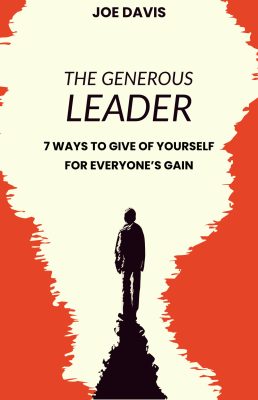
In The Generous Leader, Joe Davis challenges conventional wisdom about leadership, proposing that true success comes from generosity rather than self-interest. Drawing from his extensive experience in business and philanthropy, Davis outlines seven key principles for leaders to cultivate a spirit of giving that benefits both themselves and those around them. This groundbreaking book offers a fresh perspective on leadership, arguing that by focusing on others’ needs and fostering a culture of generosity, leaders can achieve greater success and fulfillment in both their professional and personal lives.
The Generous Leader is primarily aimed at current and aspiring leaders in business, non-profit organizations, and community groups who are looking to enhance their leadership skills and create more positive, impactful environments. The book’s principles are also applicable to professionals at any level seeking to improve their workplace relationships and personal growth. While Davis draws on complex leadership theories, he presents his ideas in an accessible, jargon-free manner, making the book suitable for readers with varying levels of leadership experience.
Is it possible that the key to unlocking your full potential as a leader lies not in taking more, but in giving more? This provocative question forms the foundation of Joe Davis’s groundbreaking book, The Generous Leader: 7 Ways to Give of Yourself for Everyone’s Gain. In a world where cutthroat competition and self-interest often dominate the business landscape, Davis presents a refreshing alternative that challenges readers to rethink their approach to leadership.
Through a blend of personal anecdotes, case studies, and practical advice, Davis introduces his seven principles of generous leadership. These principles range from cultivating empathy and active listening to promoting a culture of growth and shared success. Each chapter not only explains the principle but also provides actionable strategies for implementation in various professional settings.
One of the book’s most compelling arguments is that generous leadership is not just a feel-good philosophy, but a powerful tool for driving organizational success. Davis presents evidence showing how companies led by generous leaders often outperform their peers in areas such as employee satisfaction, customer loyalty, and long-term profitability.
The Generous Leader doesn’t shy away from addressing the potential challenges and misconceptions about generous leadership. Davis anticipates skepticism and provides thoughtful rebuttals to common objections, demonstrating how generosity can coexist with necessary business practices like maintaining profitability and making tough decisions.
Perhaps most importantly, Davis emphasizes that becoming a generous leader is a journey, not a destination. He encourages readers to start small, be patient with themselves, and persistently work on developing their generous leadership skills over time.
By reading this book, leaders will learn how to foster a more positive and productive work environment, build stronger relationships with team members and stakeholders, and achieve sustainable success through the power of generosity. They’ll discover practical techniques for balancing self-interest with altruism, and gain insights into how generous leadership can transform both their professional and personal lives.
The core message of The Generous Leader is that true leadership excellence comes from a place of generosity and service to others. Davis argues that by shifting focus from self-interest to the needs and growth of those around them, leaders can create a ripple effect of positive change that ultimately leads to greater success for all. It’s akin to the oxygen mask principle on airplanes: by first ensuring your own mask is secure, you’re better equipped to help others. Similarly, by cultivating generosity in leadership, you create an environment where everyone can thrive, including yourself.
The Generous Leader has made significant waves in the leadership and management literature landscape since its publication. Its fresh take on leadership has resonated with many professionals seeking a more fulfilling and effective approach to their roles. The book has been praised for its practical applicability and its potential to transform workplace cultures.
While some critics argue that generous leadership might be taken advantage of in competitive business environments, many industry leaders have endorsed Davis’s approach. The book has been featured on several bestseller lists and has been adopted as required reading in leadership courses at prominent business schools.
The Generous Leader has also sparked important discussions about the role of empathy and altruism in the business world, challenging long-held notions about what it takes to be a successful leader. Its impact extends beyond the business realm, influencing thinking in non-profit management, education, and public service sectors as well.
In our assessment, The Generous Leader by Joe Davis offers a fresh and timely perspective on leadership that challenges traditional notions of corporate success. We find that the book’s greatest strength lies in its ability to transform abstract concepts like empathy and generosity into practical, actionable strategies for leaders. Davis’s seven principles provide a comprehensive framework that addresses not only organizational effectiveness but also personal growth and societal impact.
We appreciate the book’s emphasis on long-term sustainability and its recognition of the changing expectations of the modern workforce. The focus on work-life integration, transparency, and corporate social responsibility aligns well with current trends in business and society. Davis’s writing style is accessible and engaging, making complex leadership concepts understandable to a wide range of readers.
However, we also note several areas where the book falls short. The lack of robust quantitative evidence to support some of its claims may leave data-driven readers wanting more. Additionally, the book’s focus on primarily corporate environments limits its applicability to other leadership contexts. We also find that Davis could have provided more guidance on overcoming organizational resistance to these new leadership principles.
The book’s treatment of cultural variations in leadership is somewhat limited, which may reduce its effectiveness in global contexts. We also observe that the challenges of leading in increasingly digital and remote environments are not adequately addressed, a significant oversight given current workplace trends.
Despite these limitations, we believe that The Generous Leader makes a valuable contribution to the field of leadership literature. Its innovative approach to transparency and its comprehensive framework for generous leadership set it apart from many traditional leadership texts. The book’s strengths in providing practical, actionable advice make it particularly useful for leaders looking to adapt their style to meet the changing expectations of the modern workforce.
We recommend The Generous Leader to both seasoned executives and aspiring leaders who are seeking to develop a more empathetic, transparent, and socially responsible leadership style. The book is particularly valuable for those in corporate environments who are grappling with changing employee expectations and increased demands for corporate social responsibility.
However, we suggest that readers complement this book with other resources that address its blind spots, particularly in areas of cultural diversity, remote leadership, and overcoming organizational resistance to change. For those seeking a data-driven approach to leadership, we recommend pairing this book with more empirically focused works. Overall, while not without its flaws, we believe The Generous Leader offers valuable insights that can help shape more effective and socially conscious leadership practices in the modern business world.
The essence of The Generous Leader revolves around seven core principles of generous leadership that Joe Davis presents as transformative tools for personal and organizational success. The first principle, “Lead with Empathy,” emphasizes the importance of understanding and sharing the feelings of others. Davis argues that empathetic leaders create stronger connections with their team members, fostering a supportive work environment that boosts morale and productivity. He provides techniques for developing empathy, such as active listening and perspective-taking exercises.
The second principle, “Cultivate a Growth Mindset,” focuses on creating an environment where learning and development are prioritized. Davis explains that generous leaders invest in their team’s growth, providing opportunities for skill enhancement and personal development. This approach not only benefits individual team members but also contributes to the overall success of the organization by creating a more skilled and motivated workforce.
“Practice Radical Transparency” is the third principle, highlighting the importance of open and honest communication in leadership. Davis contends that by sharing information freely and encouraging open dialogue, leaders build trust and create a culture of accountability. He discusses how transparency can lead to better decision-making and increased employee engagement, as team members feel more connected to the organization’s goals and challenges.
The fourth principle, “Embrace Servant Leadership,” challenges traditional top-down leadership models. Davis presents servant leadership as a philosophy where leaders prioritize the needs of their team members and stakeholders above their own. He explains how this approach can lead to increased loyalty, higher job satisfaction, and improved organizational performance. Davis provides strategies for implementing servant leadership practices in various organizational contexts.
“Foster Collaboration Over Competition” is the fifth principle, emphasizing the power of teamwork and shared success. Davis argues that generous leaders create environments where collaboration is valued over individual achievement. He discusses how this approach can lead to more innovative solutions, stronger team bonds, and ultimately better results for the organization as a whole.
The sixth principle, “Promote Work-Life Integration,” addresses the importance of supporting employees’ well-being beyond the workplace. Davis challenges the notion of work-life balance, instead advocating for a more holistic approach where personal and professional lives are harmoniously integrated. He provides examples of how generous leaders can support this integration through flexible work arrangements, wellness programs, and a culture that respects personal time.
Finally, “Give Back to the Community” rounds out the seven principles, highlighting the importance of corporate social responsibility. Davis argues that generous leaders extend their impact beyond their immediate organization to the broader community. He discusses how community involvement can enhance a company’s reputation, boost employee morale, and contribute to long-term business success.
Empathy in Action: Davis shares the story of Sarah, a tech company CEO who implemented “empathy walks” where she would spend time in different departments, experiencing the challenges her employees faced firsthand. This practice led to several process improvements and a significant increase in employee satisfaction scores.
Growth Mindset Success: The book highlights the case of TechGrow, a software company that implemented a “learning budget” for each employee. This initiative allowed staff to choose courses or conferences they wanted to attend, resulting in a 30% increase in innovative ideas presented at company meetings and a 15% reduction in turnover rates.
Transparency Turnaround: Davis recounts how Mark, a manufacturing plant manager, reversed a declining productivity trend by implementing daily team meetings where all production data and challenges were openly discussed. This transparency led to a 25% increase in efficiency as workers felt more invested in finding solutions.
Servant Leadership Impact: The example of Serve First Bank illustrates how adopting a servant leadership approach transformed a struggling local bank. By prioritizing customer and employee needs, the bank saw a 40% increase in customer satisfaction and became the market leader in their region within three years.
Collaboration Breakthrough: Davis describes how a pharmaceutical company, CollabHealth, replaced individual bonuses with team-based rewards. This shift led to increased cross-departmental collaboration, resulting in the development of a groundbreaking drug that might not have been possible under the previous competitive structure.
Work-Life Integration Success: The book showcases FlexCorp, a company that implemented a results-only work environment, allowing employees to work whenever and wherever they chose as long as they met their objectives. This approach led to a 50% reduction in stress-related sick days and a 35% increase in reported job satisfaction.
Community Impact: Davis presents the case of GreenTech, an electronics manufacturer that initiated a program to teach coding skills in underprivileged schools. This initiative not only improved the company’s local reputation but also created a pipeline of diverse talent, with 30% of their new hires coming from the program within five years.
Joe Davis posits that empathy is not just a soft skill, but a crucial leadership tool that can dramatically improve team performance and employee satisfaction. He suggests leaders can develop empathy by implementing regular one-on-one meetings with team members, focusing not just on work-related issues but also on personal goals and challenges. Davis recommends a practice he calls “empathy mapping,” where leaders spend time imagining a day in the life of their employees, considering their daily tasks, obstacles, and motivations. This exercise can lead to more informed decision-making and policy changes that genuinely benefit the team. For instance, after conducting an empathy mapping exercise, one leader in the book realized the company’s rigid clock-in system was causing undue stress for employees with caregiving responsibilities, leading to a more flexible attendance policy that boosted morale without sacrificing productivity.
Contrary to traditional notions of leaders needing to appear infallible, Davis argues that showing vulnerability can actually strengthen a leader’s position and improve team dynamics. He suggests that leaders openly admit when they don’t have all the answers and share stories of their own failures and learning experiences. This approach, Davis claims, creates a psychologically safe environment where team members feel more comfortable taking risks and sharing ideas. To implement this, Davis recommends starting team meetings with a “failure of the week” share, where leaders and team members alike can discuss recent mistakes and what they learned. One CEO in the book reported that after instituting this practice, innovative ideas from team members increased by 40% as fear of failure diminished.
Davis emphasizes the importance of creating an organization-wide commitment to continuous learning and growth. He suggests implementing a “learning budget” for each employee, allowing them to choose courses, workshops, or conferences they want to attend. Beyond this, Davis recommends creating internal “knowledge shares” where employees teach each other skills, fostering a culture of peer-to-peer learning. He also advocates for “reverse mentoring” programs, where junior employees mentor senior staff on new technologies or trends, breaking down hierarchical barriers and promoting a two-way flow of knowledge. One company featured in the book saw a 25% increase in cross-generational collaboration after implementing such a program.
Transparency, according to Davis, is a powerful tool for building trust and fostering employee engagement. He recommends regular “town hall” meetings where company financials, challenges, and strategic decisions are openly discussed. Davis also suggests creating an anonymous feedback system where employees can ask questions or raise concerns without fear of retribution. To take transparency further, he proposes the idea of “open salaries,” where pay information is made available to all employees. While acknowledging this is a controversial move, Davis provides case studies of companies that have successfully implemented this policy, reporting increased pay equity and employee trust. One such company saw employee satisfaction scores rise by 30% within a year of implementing open salaries.
Davis argues that servant leadership – putting the needs of employees and customers first – can lead to extraordinary business results. He recommends leaders regularly ask their team members, “How can I help you be more successful?” and then follow through on the responses. Davis suggests implementing a “leader as coach” model, where managers are trained in coaching techniques and spend a significant portion of their time developing their team members’ skills. He also advocates for leaders to occasionally perform front-line tasks to stay connected with the day-to-day realities of their business. One retail CEO in the book made it a policy to work in his stores’ customer service department one day each month, leading to several customer-centric policy changes that improved overall satisfaction scores.
To promote collaboration, Davis recommends redesigning reward systems to focus on team achievements rather than individual performance. He suggests implementing cross-functional projects that require employees from different departments to work together, breaking down silos and fostering a more collaborative culture. Davis also introduces the concept of “collaboration spaces” – both physical and virtual – designed specifically to facilitate group work and idea sharing. One tech company mentioned in the book created a virtual “idea marketplace” where employees could post challenges and collaborate on solutions, leading to a 50% increase in inter-departmental problem-solving.
Rather than traditional work-life balance, Davis promotes the concept of work-life integration. He suggests offering flexible working hours and remote work options where possible, focusing on results rather than time spent at a desk. Davis recommends leaders model this behavior by being open about their own life commitments and encouraging team members to do the same. He also advocates for “life-friendly” policies such as unlimited vacation time (with a required minimum to ensure people actually take time off) and sabbaticals for long-term employees. One company in the book reported a 70% decrease in burnout-related turnover after implementing these policies.
Davis argues that giving back to the community should be a strategic initiative aligned with a company’s core competencies. He suggests creating volunteer programs that utilize employees’ professional skills, benefiting both the community and the employees’ professional development. Davis recommends forming long-term partnerships with nonprofit organizations rather than one-off donations, allowing for more meaningful impact. He also introduces the concept of “impact leave,” where employees are given paid time off to work on social impact projects of their choosing. One consulting firm featured in the book saw employee retention rates improve by 25% after implementing an impact leave program, with employees reporting a stronger sense of purpose and connection to their work.
Joe Davis excels in demonstrating how empathy can be practically applied in leadership roles. Rather than simply extolling the virtues of empathy, he provides concrete strategies for its implementation. His “empathy mapping” exercise offers a tangible tool for leaders to step into their employees’ shoes, leading to more informed and compassionate decision-making. The book’s strength lies in transforming the often abstract concept of empathy into actionable steps, making it accessible for leaders across various industries and organizational levels.
The book’s advocacy for radical transparency sets it apart from many leadership texts. Davis doesn’t just suggest open communication; he pushes the envelope with ideas like open salaries and company-wide financial discussions. By providing real-world examples of organizations that have successfully implemented these practices, Davis lends credibility to these potentially controversial ideas. The strength here is in challenging traditional notions of corporate secrecy and offering a bold alternative that can foster trust and engagement.
The Generous Leader provides a holistic framework for leadership that goes beyond simple tips and tricks. Davis’s seven principles offer a comprehensive approach to leadership that touches on personal development, organizational culture, and community impact. The strength of this framework lies in its interconnectedness; each principle supports and enhances the others, creating a cohesive philosophy of leadership rather than a disconnected set of strategies.
A significant strength of the book is its balanced approach to theory and practice. For each concept introduced, Davis provides both the theoretical underpinning and practical examples of its application. This approach makes the book valuable for both academics studying leadership theory and practitioners looking for actionable insights. The case studies and real-world examples bring the theories to life, demonstrating their feasibility and impact in various organizational contexts.
Davis’s emphasis on long-term thinking and sustainability is a notable strength of the book. In an era where short-term gains often take precedence, The Generous Leader makes a compelling case for leadership practices that prioritize long-term organizational health and community impact. The book’s discussion of work-life integration and corporate social responsibility is particularly strong in this regard, offering strategies that benefit employees, organizations, and communities in the long run.
Despite tackling complex leadership concepts, the book maintains a high level of accessibility. Davis’s writing style is clear and engaging, avoiding unnecessary jargon and academic complexity. The use of anecdotes, case studies, and practical exercises throughout the book helps to illustrate complex ideas in relatable ways. This accessibility makes the book valuable for a wide range of readers, from seasoned executives to aspiring leaders.
While The Generous Leader offers valuable insights, it sometimes falls short in addressing the unique challenges faced by leaders in diverse contexts. The book’s examples and case studies tend to focus primarily on corporate environments, potentially limiting its applicability for leaders in non-profit organizations, educational institutions, or government agencies. A more diverse range of leadership contexts could have broadened the book’s appeal and usefulness.
Davis’s enthusiasm for generous leadership occasionally leads to an overly optimistic view of its implementation. The book could benefit from a more thorough examination of the potential challenges and downsides of these leadership strategies. For instance, the discussion on radical transparency could have included more analysis of situations where full disclosure might be problematic or even harmful. A more balanced approach acknowledging these challenges would have strengthened the book’s credibility and prepared readers for potential obstacles.
While The Generous Leader provides numerous anecdotes and case studies, it sometimes falls short in presenting hard data to support its claims. More quantitative research and statistical evidence would have bolstered the book’s arguments and provided a stronger foundation for its recommendations. This lack of robust empirical evidence may leave some readers, particularly those from data-driven fields, questioning the universal applicability of Davis’s principles.
The book presents many innovative leadership practices but doesn’t adequately address how to implement these in organizations with entrenched traditional leadership styles. Davis could have provided more guidance on overcoming resistance to change, particularly from middle management or in organizations with deeply ingrained cultures that may be resistant to generous leadership principles. This oversight might leave some readers struggling to apply the book’s insights in less receptive environments.
One significant blind spot in The Generous Leader is its limited consideration of how cultural differences might impact the application of generous leadership principles. Davis’s approach, while valuable, is largely rooted in Western leadership paradigms. He overlooks how concepts like radical transparency or servant leadership might be received or implemented differently in cultures with higher power distance or different communication norms. For a more nuanced understanding of leadership across cultures, readers might benefit from complementing this book with Erin Meyer’s The Culture Map, which offers insights into leading across cultural divides.
While Davis touches on the importance of empathy and inclusivity, the book doesn’t deeply explore how systemic inequalities and power imbalances within organizations might affect the implementation of generous leadership principles. There’s limited discussion on how leaders can address entrenched hierarchies or systemic biases that might hinder the effectiveness of these strategies. For a more comprehensive understanding of these issues, readers could turn to The Person You Mean to Be by Dolly Chugh, which offers strategies for recognizing and addressing unconscious bias in leadership.
Given the increasing prevalence of remote and distributed teams, especially in the wake of global events like the COVID-19 pandemic, The Generous Leader falls short in addressing the unique challenges of leading in virtual environments. The book’s strategies are primarily geared towards in-person interactions, potentially limiting their applicability in digital-first workplaces. To fill this gap, readers might find value in Leading from Anywhere by David Burkus, which specifically addresses the nuances of remote leadership.
Davis’s book doesn’t fully explore how different generations might perceive and respond to generous leadership principles. As workplaces become increasingly multigenerational, understanding these differences becomes crucial for effective leadership. The book misses an opportunity to discuss how leaders can adapt their generous leadership style to meet the varying expectations of different age groups in the workforce. For insights into leading across generations, The Gen Z Effect by Thomas Koulopoulos and Dan Keldsen could provide valuable complementary information.
While both The Generous Leader and Good to Great focus on exceptional leadership, their approaches differ significantly. Collins’s work emphasizes identifying and developing specific traits and practices that distinguish great companies from merely good ones, based on extensive empirical research. Davis, on the other hand, presents a more holistic philosophy of leadership centered on generosity and empathy. Where Collins identifies “Level 5 Leadership” as a key factor, characterized by personal humility and professional will, Davis expands on this concept by emphasizing the importance of empathy and servant leadership. However, Collins’s work provides more robust data-driven insights, which some readers might find more convincing than Davis’s anecdotal approach.
Sinek’s Leaders Eat Last shares some common ground with The Generous Leader in its focus on creating a culture of trust and putting others first. Both books emphasize the importance of empathy and creating a safe environment for employees. However, Sinek’s work delves deeper into the biological and anthropological foundations of leadership, exploring how our bodies’ chemicals influence our behavior and relationships at work. Davis’s book, while touching on similar themes, provides more practical strategies for implementation. Sinek’s book might appeal more to readers interested in the “why” behind leadership behaviors, while Davis’s work focuses more on the “how” of putting generous leadership into practice.
Greenleaf’s seminal work on servant leadership is a natural point of comparison for The Generous Leader. Both books advocate for a leadership style that prioritizes the needs of others. However, Greenleaf’s book, being the foundational text on servant leadership, provides a more in-depth philosophical exploration of the concept. Davis’s work can be seen as a modern, practical application of many of Greenleaf’s ideas, updated for contemporary business contexts. While Greenleaf’s book might appeal more to those interested in the theoretical underpinnings of servant leadership, Davis’s work offers more actionable strategies for today’s leaders.
Brown’s Dare to Lead shares The Generous Leader’s emphasis on vulnerability and empathy in leadership. Both books argue that these traditionally “soft” skills are crucial for effective leadership. However, Brown’s work is more deeply rooted in her research on shame and vulnerability, providing a unique perspective on how these factors influence leadership. Davis’s book, while touching on similar themes, offers a broader framework for generous leadership that extends beyond vulnerability to include aspects like transparency and community involvement. Readers might find Brown’s work more personally challenging, while Davis’s book offers a wider range of leadership strategies.
Scott’s Radical Candor and The Generous Leader both advocate for increased openness and honesty in leadership communication. However, their approaches differ significantly. Scott’s work focuses specifically on giving and receiving feedback, providing a framework for balancing care for employees with direct challenge. Davis’s book, while touching on the importance of open communication, takes a broader view of generosity in leadership. Scott’s approach might be seen as more confrontational, while Davis emphasizes a softer, more empathetic style. Readers looking specifically for guidance on feedback and communication might find Scott’s work more directly applicable, while those seeking a comprehensive leadership philosophy might prefer Davis’s broader approach.
Develop Empathy
Embrace Vulnerability
Foster Continuous Learning
Practice Radical Transparency
Adopt Servant Leadership Principles
Promote Collaboration
Implement Work-Life Integration
Engage in Strategic Social Responsibility
Measure and Reflect on Progress
Foster a Culture of Empathy
Implementing Davis’s principles of empathy in a business context involves creating an environment where understanding and addressing the needs of employees, customers, and stakeholders is prioritized. This can be achieved through regular empathy training sessions, implementing empathy-focused KPIs for managers, and redesigning customer service protocols to emphasize understanding and addressing customer emotions. By fostering empathy, businesses can improve employee satisfaction, customer loyalty, and overall organizational performance.
However, cultivating empathy in a business environment can be challenging. Many organizations have deeply ingrained cultures that prioritize hard metrics and immediate results over softer skills like empathy. There may be resistance from employees who view empathy as a “weak” trait in business or from managers who fear that focusing on empathy will detract from productivity. Additionally, measuring the impact of empathy initiatives can be difficult, making it hard to justify the investment to stakeholders.
To overcome these challenges, businesses can start by clearly communicating the link between empathy and business outcomes, using case studies and data from other successful organizations. Implementing a pilot program in one department can demonstrate the benefits on a smaller scale before rolling out company-wide. Regular empathy assessments and feedback sessions can help track progress and identify areas for improvement. Integrating empathy metrics into performance reviews can also reinforce its importance.
Implement Radical Transparency
Adopting radical transparency in business operations involves sharing previously confidential information such as financial data, decision-making processes, and even salary information with employees. This can be achieved through regular all-hands meetings, open-book management practices, and transparent communication channels. Radical transparency can lead to increased trust, better decision-making, and higher employee engagement.
However, implementing radical transparency can be daunting for many organizations. There are concerns about confidentiality, competitive advantage, and potential misuse of information. Some employees may feel overwhelmed by the amount of information shared, while others might misinterpret or misuse the data. There’s also the risk of sensitive information leaking to competitors or the public.
To address these challenges, businesses can implement transparency gradually, starting with less sensitive information and progressively sharing more as the organization becomes comfortable with the practice. Providing context and education alongside shared information can help employees interpret and use it appropriately. Implementing strong data security measures and clear guidelines on information usage can mitigate risks of data misuse or leaks. Regular feedback sessions can help gauge employee comfort levels and address any issues that arise.
Prioritize Continuous Learning
Emphasizing continuous learning in a business context involves creating a culture where skill development and knowledge acquisition are ongoing priorities. This can be achieved by implementing personal learning budgets, creating internal “universities” or learning platforms, and encouraging knowledge sharing through mentorship programs and regular “lunch and learn” sessions. Prioritizing continuous learning can lead to a more skilled workforce, increased innovation, and improved employee retention.
However, implementing a robust continuous learning program can face several obstacles. Time constraints in busy work environments often make it difficult for employees to engage in learning activities. There may be resistance from managers who see learning time as unproductive. Additionally, it can be challenging to measure the ROI of learning initiatives, making it difficult to justify the investment to stakeholders. Ensuring that learning is relevant and applicable to employees’ roles can also be a challenge.
To overcome these challenges, businesses can integrate learning into daily work routines rather than treating it as a separate activity. This could involve microlearning modules, on-the-job training, and project-based learning opportunities. Implementing a learning management system can help track and measure the impact of learning initiatives. Tying learning objectives to performance reviews and career progression can incentivize participation. Regularly surveying employees about their learning needs and preferences can ensure that offerings remain relevant and engaging.
Embrace Servant Leadership
Adopting servant leadership principles in a business context involves shifting the traditional top-down leadership model to one where leaders prioritize the growth and well-being of their team members. This can be implemented through leadership training programs focused on servant leadership principles, redesigning performance metrics to include measures of team development and support, and creating mentorship programs. Embracing servant leadership can lead to increased employee satisfaction, better team performance, and improved organizational culture.
However, transitioning to a servant leadership model can be challenging, especially in organizations with established hierarchical structures. There may be resistance from leaders who are accustomed to more authoritarian styles of leadership. Some may perceive servant leadership as “weak” or ineffective in competitive business environments. Additionally, the benefits of servant leadership may not be immediately apparent, making it difficult to justify the shift to stakeholders.
To address these challenges, businesses can start by educating leaders about the benefits of servant leadership, using case studies of successful servant-led organizations. Implementing a pilot program with a few teams can demonstrate the benefits on a smaller scale before rolling out company-wide. Providing ongoing coaching and support to leaders as they transition to this new style can help overcome initial discomfort. Integrating servant leadership principles into leadership development programs and succession planning can ensure long-term adoption.
Promote Work-Life Integration
Implementing work-life integration in a business context involves moving beyond traditional work-life balance concepts to create an environment where personal and professional lives can coexist harmoniously. This can be achieved through flexible working arrangements, unlimited vacation policies, and creating a culture that respects personal time and commitments. Promoting work-life integration can lead to increased employee satisfaction, reduced burnout, and improved productivity.
However, implementing work-life integration policies can face several obstacles. There may be concerns about maintaining productivity and ensuring fair workload distribution. Some managers may struggle to adapt to managing remote or flexible teams. There’s also the risk of work encroaching too much on personal time, leading to burnout. Additionally, certain roles or industries may have inherent limitations on flexibility.
To overcome these challenges, businesses can implement clear guidelines and expectations for flexible working arrangements. Training managers on how to lead remote and flexible teams effectively is crucial. Implementing results-oriented work environments (ROWE) can help shift focus from time spent working to outcomes achieved. Regular check-ins and surveys can help identify and address any issues arising from new work-life integration policies. Encouraging leaders to model healthy work-life integration practices can also help reinforce the culture.
Foster Collaboration Over Competition
Promoting collaboration over internal competition involves redesigning organizational structures and incentive systems to encourage teamwork and shared success. This can be implemented through cross-functional project teams, collaborative goal-setting processes, and team-based reward systems. Fostering collaboration can lead to increased innovation, better problem-solving, and improved organizational cohesion.
However, shifting from a competitive to a collaborative culture can be challenging. Deeply ingrained competitive practices, especially in sales-driven organizations, can be difficult to change. There may be concerns about maintaining individual accountability and recognizing high performers. Some employees may struggle to adapt to more collaborative work styles. Additionally, measuring the impact of increased collaboration can be difficult.
To address these challenges, businesses can start by clearly communicating the benefits of collaboration and how it aligns with organizational goals. Implementing pilot collaborative projects can demonstrate the benefits on a smaller scale. Redesigning performance evaluation and reward systems to recognize both individual and team contributions can help balance accountability with collaboration. Providing training on collaborative skills such as active listening, conflict resolution, and consensus-building can help employees adapt to the new approach. Regular team-building activities can also help foster a more collaborative culture.
Implement Strategic Corporate Social Responsibility
Adopting strategic corporate social responsibility (CSR) involves aligning business operations with social and environmental concerns in a way that creates value for both the company and society. This can be achieved through developing sustainable business practices, creating social impact initiatives that align with the company’s core competencies, and integrating CSR into the overall business strategy. Implementing strategic CSR can enhance brand reputation, improve employee engagement, and create long-term business value.
However, implementing strategic CSR can face several challenges. There may be concerns about the short-term costs of CSR initiatives and their impact on profitability. Some stakeholders may view CSR as a distraction from core business activities. Measuring the long-term impact and ROI of CSR initiatives can be difficult. Additionally, ensuring that CSR efforts are genuine and not perceived as “greenwashing” can be challenging.
To overcome these challenges, businesses can start by clearly linking CSR initiatives to business objectives and demonstrating how they create value for the company. Involving employees in the development and implementation of CSR initiatives can increase buy-in and engagement. Implementing robust measurement and reporting systems for CSR initiatives can help demonstrate their impact. Partnering with reputable non-profit organizations or third-party verifiers can lend credibility to CSR efforts. Regular stakeholder engagement and transparent communication about CSR activities can help build trust and support.
The principles outlined in The Generous Leader align closely with the growing trend of purpose-driven organizations. As consumers and employees increasingly seek meaning in their work and purchasing decisions, companies that prioritize social responsibility and ethical leadership are likely to gain a competitive edge. Davis’s emphasis on community involvement and servant leadership provides a framework for organizations looking to embrace this trend.
This shift towards purpose-driven business models is expected to accelerate in the coming years. We may see more B-corporations and social enterprises emerging, blending profit with positive social impact. The generous leadership principles could become essential tools for navigating this new landscape.
The book’s focus on empathy, work-life integration, and continuous learning aligns with changing expectations in the workplace, particularly among younger generations. As Millennials and Gen Z come to dominate the workforce, their preferences for flexible work arrangements, personal growth opportunities, and meaningful work are reshaping organizational cultures.
We can expect to see more companies adopting flexible work policies, investing in employee development programs, and prioritizing mental health and well-being. The generous leadership approach could provide a roadmap for leaders looking to attract and retain top talent in this evolving landscape.
Davis’s advocacy for radical transparency is particularly relevant in an era of increasing digital connectivity and information sharing. As data breaches and misinformation continue to erode public trust, organizations that prioritize openness and honesty are likely to stand out.
We may see more companies adopting open-book management practices, sharing previously confidential information with employees and stakeholders. Blockchain technology could play a role in enhancing transparency in supply chains and financial transactions. Leaders who can navigate this new era of radical transparency will be well-positioned for success.
The book’s emphasis on collaboration over competition aligns with the rise of the collaborative economy and networked organizational structures. As technology enables more decentralized and flexible ways of working, traditional hierarchies are giving way to more fluid, project-based teams.
We can expect to see more organizations adopting holacracy or other flat organizational structures. The principles of generous leadership could provide valuable guidance for leaders navigating these new organizational models, where influence often matters more than formal authority.
As artificial intelligence and automation continue to transform the workplace, the human elements of leadership emphasized in The Generous Leader may become even more crucial. Empathy, emotional intelligence, and the ability to inspire and motivate teams are likely to remain uniquely human skills.
We may see a growing emphasis on developing these “soft” leadership skills as a complement to technical expertise. The generous leadership approach could provide a framework for maintaining human connection and meaning in increasingly tech-driven workplaces.
The Generous Leader has the potential to significantly influence leadership practices in the coming years. As organizations grapple with changing employee expectations, increased focus on work-life balance, and growing demand for corporate social responsibility, Davis’s principles of generous leadership are likely to become increasingly relevant.
The book’s emphasis on empathy and servant leadership aligns well with emerging trends in workforce management, particularly in light of the growing influence of younger generations in the workplace. Millennials and Gen Z employees often prioritize purpose and personal growth over traditional career incentives, making Davis’s approach particularly appealing to organizations seeking to attract and retain top talent.
Furthermore, the book’s focus on transparency and open communication could contribute to broader discussions about corporate governance and stakeholder capitalism. As consumers and employees increasingly demand ethical and transparent business practices, Davis’s advocacy for radical transparency might influence organizational policies and communication strategies.
The book’s approach to work-life integration, rather than mere balance, could also shape future workplace policies. As remote and flexible work arrangements become more common, Davis’s ideas about focusing on results rather than time spent at a desk may gain traction, potentially influencing labor laws and organizational structures.
However, the long-term impact of The Generous Leader will likely depend on how well its principles can be adapted to diverse cultural contexts and organizational types. The book’s ideas may need to evolve to address the challenges of leading in increasingly global and virtual environments.
Moreover, the effectiveness of generous leadership in highly competitive or resource-constrained environments remains to be seen. Future research and real-world application will be crucial in determining whether Davis’s approach can consistently deliver the positive outcomes it promises across various industries and economic conditions.
In the broader societal context, if widely adopted, the principles outlined in The Generous Leader could contribute to a shift in how we view the role of business in society. By emphasizing community involvement and social responsibility as key aspects of leadership, the book aligns with growing calls for businesses to play a more active role in addressing social and environmental challenges.
Humble Leadership by Edgar H. Schein and Peter A. Schein: This book explores the concept of “humble leadership,” which aligns closely with Davis’s ideas on servant leadership and empathy. The Scheins argue for a more personal and intimate form of leadership based on relationships and open dialogue. It provides a deeper theoretical foundation for some of the principles discussed in The Generous Leader, offering readers a more comprehensive understanding of relationship-based leadership models.
The Infinite Game by Simon Sinek: Sinek’s book complements The Generous Leader by focusing on long-term thinking and purpose-driven leadership. It challenges leaders to adopt an “infinite mindset,” prioritizing long-term value creation over short-term gains. This aligns well with Davis’s emphasis on sustainability and community involvement, providing readers with additional perspectives on creating lasting organizational success.
Reinventing Organizations by Frederic Laloux: Laloux’s work explores emerging organizational models that align with many of the principles in The Generous Leader. It provides case studies of companies operating with high levels of employee autonomy, self-management, and purpose-driven missions. This book can help readers envision how generous leadership principles might be applied in innovative organizational structures.
The Culture Code by Daniel Coyle: Coyle’s book dives deep into what makes successful groups tick, complementing Davis’s ideas on collaboration and team dynamics. It offers concrete strategies for building strong, cohesive cultures, which can be valuable for leaders implementing the generous leadership approach. The book’s focus on psychological safety aligns well with Davis’s emphasis on empathy and vulnerability in leadership.
Measure What Matters by John Doerr: While The Generous Leader focuses on leadership philosophy, Doerr’s book provides a practical framework for goal-setting and performance measurement. It introduces the concept of Objectives and Key Results (OKRs), which can be a useful tool for leaders implementing Davis’s ideas on transparency and accountability. This book can help readers translate generous leadership principles into measurable business outcomes.
The Fearless Organization by Amy C. Edmondson: Edmondson’s work on psychological safety in the workplace complements Davis’s emphasis on empathy and vulnerability. It provides research-backed strategies for creating environments where people feel safe to take risks and share ideas, which is crucial for implementing many of the generous leadership principles. This book can help leaders understand the underlying dynamics of trust and openness in organizations.
Thanks for the Feedback by Douglas Stone and Sheila Heen: This book offers valuable insights into giving and receiving feedback effectively, which is crucial for implementing the open communication and continuous learning aspects of generous leadership. It provides practical strategies for overcoming defensive reactions to feedback and fostering a growth mindset, complementing Davis’s ideas on personal development and transparent communication.
The Heart of Business by Hubert Joly: Joly’s book, based on his experience turning around Best Buy, offers a real-world example of how purpose-driven, people-centric leadership can drive business success. It aligns closely with Davis’s generous leadership principles, providing readers with a concrete case study of these ideas in action. The book offers practical advice on implementing compassionate leadership in large organizations, making it a valuable companion to The Generous Leader.
Center for Servant Leadership: This website, founded by Robert K. Greenleaf, offers a wealth of resources on servant leadership, including articles, webinars, and training programs. It provides a deeper exploration of the servant leadership concept, which aligns closely with Davis’s generous leadership principles. (https://www.greenleaf.org/)
Harvard Business Review Leadership Section: HBR’s leadership section offers a wide range of articles, case studies, and research on various leadership topics, including many that align with the principles in The Generous Leader. It’s an excellent resource for staying updated on the latest leadership trends and research. (https://hbr.org/topic/leadership)
Conscious Capitalism: This organization promotes a way of doing business that aligns closely with Davis’s generous leadership principles. Their website offers resources, events, and a community for leaders interested in purpose-driven business practices. (https://www.consciouscapitalism.org/)
World Business Forum: This annual conference brings together global leaders to discuss current business trends, including many topics related to generous leadership such as purpose-driven organizations and employee engagement. It offers opportunities to hear from thought leaders and network with like-minded professionals. (https://wobi.com/wbf-nyc/)
Global Peter Drucker Forum: This annual conference focuses on management thinking and practice, often addressing themes that align with generous leadership principles such as human-centered organizations and responsible business practices. It provides a platform for deep discussions on the future of leadership and management. (https://www.druckerforum.org/)
International Leadership Association: The ILA is a global network for all those who practice, study, and teach leadership. It offers conferences, webinars, and publications that can deepen understanding of various leadership approaches, including those aligned with generous leadership. (https://www.ila-net.org/)
B Lab: While not strictly a leadership organization, B Lab oversees B Corp Certification and provides resources for businesses looking to balance profit and purpose. Its principles align closely with many aspects of generous leadership. (https://bcorporation.net/)
WorkLife with Adam Grant: Organizational psychologist Adam Grant explores the science of making work not suck. Many episodes touch on themes relevant to generous leadership, such as building trust, fostering creativity, and creating meaningful work. (Available on major podcast platforms)
HBR IdeaCast: This podcast from Harvard Business Review features leading thinkers in business and management, often discussing topics relevant to generous leadership such as employee engagement, ethical leadership, and organizational culture. (Available on major podcast platforms)
Servant Leadership: A Journey Into the Nature of Legitimate Power and Greatness: This Coursera course, offered by Case Western Reserve University, provides a deep dive into servant leadership principles, which closely align with generous leadership. It offers practical strategies for implementing these principles in various organizational contexts. (https://www.coursera.org/learn/servant-leadership)
Ethical Leadership Through Giving Voice to Values: This edX course, offered by University of Virginia, explores how to act on your values effectively and ethically in the workplace. It provides practical tools for implementing many of the principles discussed in The Generous Leader. (https://www.edx.org/course/ethical-leadership-through-giving-voice-to-values)
The New Corporation: The Unfortunately Necessary Sequel: This documentary explores how corporations are increasingly positioning themselves as socially responsible entities. It provides a critical perspective on corporate attempts at social responsibility, offering a counterpoint to some of the ideas in The Generous Leader. (Available on various streaming platforms)
Inside Bill’s Brain: Decoding Bill Gates: This Netflix documentary series offers insights into Bill Gates’ leadership style and philanthropic efforts. While not directly about generous leadership, it provides an interesting case study of a leader attempting to use business principles to solve global problems. (Available on Netflix)