Reviews
“Just like the dawn of the internet and social media, the early days of NFTs were filled with a lot of noise. Now that the dust has settled, the businesses that truly know how to use this technology are leading the way into a new digital era. The Everything Token cuts through the clutter and lays out a blueprint of what you can learn from that top 1% of companies that are using NFTs right.”— Gary Vaynerchuk, Chairman of VaynerX, CEO of VaynerMedia, and Creator & CEO of VeeFriends
“Web3 offers many new opportunities — including NFTs, which have countless use cases. Kaczynski and Kominers share valuable insights from their in-depth research and experiences with NFT communities on how businesses and brands, whether incumbent or upstart, can use them.”— Chris Dixon, Founder and Managing Partner, a16z crypto
“NFTs were a mystery to me. Thanks to this book, both the economics of NFTs and how businesses can use them are now in sharp focus and no longer mysterious. It helps, too, that the book was so much fun to read!”— Paul Milgrom, Shirley and Leonard Ely Professor of Humanities and Sciences at Stanford University and Nobel Laureate in Economics
“This framework for mastering the next wave of disruptive digital technology will be the industry standard for years to come. Simply put, The Everything Token is a must-read for business leaders.”— Jeff Charney, CEO of MKHSTRY and former CMO of Progressive Insurance and Aflac
“You can’t ask for savvier or more enthusiastic guides to the potential of NFTs than Kaczynski and Kominers.”— Alvin E. Roth, Craig and Susan McCaw Professor of Economics at Stanford University and Nobel Laureate in Economics
“You might have dismissed NFTs as irrelevant to your business, but The Everything Token does a great job explaining how this technology can be a game changer for customer engagement and acquisition. It’s a terrific learning tool for companies looking for success in Web3.” — Adam Brotman, co-CEO of Forum3, former CDO of Starbucks, and former co-CEO/President of J Crew
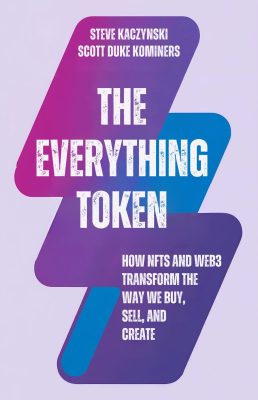
The Everything Token by Steve Kaczynski and Scott Duke Kominers is a groundbreaking exploration of the transformative potential of NFTs (Non-Fungible Tokens) and Web3 technologies. This book dives deep into how these innovations are reshaping our digital landscape, revolutionizing ownership, creativity, and commerce. Kaczynski and Kominers offer a compelling vision of a future where digital assets hold as much value and significance as physical ones. They guide readers through the complexities of blockchain technology, smart contracts, and decentralized systems, making these concepts accessible to both tech enthusiasts and curious newcomers. What sets this book apart is its balanced approach, acknowledging both the immense possibilities and the challenges of this new digital frontier.
The Everything Token caters to a diverse audience, making it accessible to both tech-savvy individuals and those new to the world of NFTs and Web3. The primary audience includes entrepreneurs, investors, and professionals in the tech and creative industries who are looking to understand and capitalize on these emerging technologies. The secondary audience comprises curious general readers interested in how digital innovations might shape the future of commerce and creativity. While the book tackles complex technological concepts, the authors have taken care to explain them in clear, engaging language, making it approachable for readers without a deep technical background. However, some familiarity with basic digital concepts would be beneficial for fully grasping the more nuanced discussions.
Imagine a world where you can own a piece of the Mona Lisa, trade virtual real estate, or sell the rights to your latest tweet. Sound far-fetched? Welcome to the reality of NFTs and Web3, as explored in The Everything Token by Steve Kaczynski and Scott Duke Kominers. This book throws open the doors to a digital frontier that’s reshaping our understanding of ownership, creativity, and commerce.
Kaczynski and Kominers take readers on a journey through the blockchain landscape, demystifying complex concepts like smart contracts and decentralized systems. They paint a vivid picture of a future where digital assets hold as much value and significance as physical ones. From digital art auctions fetching millions to virtual worlds where users create and trade their own content, the authors showcase how NFTs are already transforming various industries.
The book doesn’t shy away from the challenges and controversies surrounding this new technology. It addresses concerns about environmental impact, market volatility, and potential scams. By presenting a balanced view, Kaczynski and Kominers equip readers with the knowledge to navigate this rapidly evolving space critically.
The Everything Token goes beyond just explaining what NFTs and Web3 are; it explores their potential to revolutionize traditional business models. The authors discuss how these technologies could reshape intellectual property rights, enable new forms of crowdfunding, and create more equitable revenue streams for creators. They present case studies of successful NFT projects and analyze failed ones, offering valuable lessons for aspiring entrepreneurs and investors.
Readers of The Everything Token will gain a comprehensive understanding of the NFT and Web3 ecosystem. They’ll learn how to create, buy, and sell NFTs, understand the underlying blockchain technology, and grasp the economic principles driving this new market. The book also provides insights into the legal and regulatory landscape surrounding digital assets, helping readers navigate the complexities of this emerging field.
The central thesis of The Everything Token is that NFTs and Web3 technologies are not just a passing fad, but a fundamental shift in how we perceive and interact with digital assets. Kaczynski and Kominers argue that these innovations are ushering in a new era of the internet, one where users have greater control over their digital identities and creations.
Think of the current internet as a rental economy, where we lease our data and content to big tech companies. The authors propose that Web3 and NFTs are transforming this into an ownership economy. Just as the invention of property rights revolutionized physical economies, NFTs are doing the same for the digital world. This shift has the potential to redistribute power from centralized platforms to individual creators and users.
The Everything Token stands out as one of the first comprehensive guides to NFTs and Web3 written for a general audience. Its significance lies in its ability to bridge the gap between technical complexity and mainstream understanding. By making these concepts accessible, Kaczynski and Kominers are helping to accelerate the adoption and development of these technologies.
The book has garnered attention from both the tech community and mainstream media. It’s been praised for its balanced approach, offering both the promise and potential pitfalls of NFTs. Several tech influencers and blockchain experts have endorsed the book, citing its clarity and depth.
However, The Everything Token has also sparked debate. Some critics argue that the authors are overly optimistic about the potential of NFTs, while others claim they don’t go far enough in addressing the technology’s limitations. This controversy has only added to the book’s impact, sparking important discussions about the future of digital ownership and the internet itself.
The timing of the book’s release, coinciding with the NFT boom of 2021, has contributed to its significance. As the market experiences fluctuations, the principles and insights provided in the book remain relevant, offering a foundation for understanding the long-term implications of these technologies beyond short-term market trends.
After thoroughly examining The Everything Token by Steve Kaczynski and Scott Duke Kominers, we find it to be a valuable and timely contribution to the growing body of literature on NFTs and Web3 technologies. The authors have succeeded in crafting a comprehensive and accessible guide that introduces readers to the complex world of blockchain-based digital assets and decentralized internet structures.
We appreciate the book’s balanced approach, which presents both the exciting potential and the significant challenges of these emerging technologies. Kaczynski and Kominers have done an admirable job of breaking down complex technical concepts into understandable language without oversimplifying, making the book suitable for both newcomers to the space and those with some prior knowledge.
The use of real-world examples and case studies throughout the book is particularly effective. These illustrations not only help to clarify abstract concepts but also provide readers with a tangible sense of how NFTs and Web3 technologies are already being applied across various industries. This practical approach makes the book not just informative but also potentially actionable for readers looking to engage with these technologies.
We also commend the authors for their forward-looking analysis. Their insights into how NFTs and Web3 might evolve and impact various aspects of society and the economy are thought-provoking and valuable for anyone trying to anticipate future trends in the digital landscape.
However, we do note some limitations. The book’s accessibility sometimes comes at the cost of technical depth, which may leave more advanced readers wanting. Additionally, given the rapid pace of change in this field, some specific examples or platform details may become outdated relatively quickly.
We also feel that the book could have benefited from a more global perspective, exploring how these technologies are being adopted and adapted in different cultural and economic contexts around the world. A deeper exploration of the potential social implications, including how NFTs and Web3 might affect digital inequality, would have added valuable dimension to the analysis.
Our Recommendation
Despite these limitations, we strongly recommend The Everything Token to anyone seeking to understand the NFT and Web3 landscape. For general readers, business professionals, and policymakers looking to grasp the implications of these technologies, this book provides an excellent starting point. It offers a clear, comprehensive, and balanced overview that will equip readers with the knowledge needed to navigate this rapidly evolving space.
For those already familiar with blockchain and cryptocurrency basics who are specifically interested in NFTs and Web3, this book offers valuable insights into the latest developments and potential future trajectories. While more technically inclined readers may need to supplement this book with more specialized resources, The Everything Token remains a solid foundation for understanding the broader context and implications of these technologies. Overall, we believe this book makes a significant contribution to the public understanding of NFTs and Web3, and it will likely remain a relevant reference as these technologies continue to evolve and shape our digital future.
The essence of The Everything Token by Steve Kaczynski and Scott Duke Kominers revolves around several key topics that form the backbone of the NFT and Web3 revolution. At its core, the book explores the concept of digital scarcity and how it’s changing our perception of value in the online world. The authors argue that NFTs introduce a new paradigm where digital items can be as unique and valuable as physical ones, challenging the long-held notion that digital content is inherently infinite and therefore less valuable.
Another crucial topic is the decentralization of the internet through Web3 technologies. Kaczynski and Kominers explain how blockchain-based systems are shifting power away from centralized platforms and back to individual users. This redistribution of control has far-reaching implications for privacy, data ownership, and the democratization of online spaces. The book details how this shift could lead to more equitable online ecosystems where users have greater control over their digital identities and assets.
The book also dives deep into the concept of smart contracts, which are self-executing contracts with the terms of the agreement directly written into code. These automated agreements are the backbone of many NFT and Web3 applications, enabling trustless transactions and complex interactions without intermediaries. The authors explore how smart contracts are revolutionizing everything from digital art sales to supply chain management.
Tokenization is another key topic that The Everything Token examines in detail. The book explains how virtually anything can be represented as a token on the blockchain, from real estate to intellectual property rights. This concept opens up new possibilities for fractional ownership, increased liquidity of traditionally illiquid assets, and novel ways of representing and trading value.
The authors also tackle the economic implications of NFTs and Web3, discussing how these technologies are creating new markets and business models. They explore concepts like token economics, which studies the incentive structures built into cryptocurrency systems, and how these principles can be applied to create thriving digital economies. The book examines how NFTs are reshaping traditional industries, from art and music to gaming and virtual real estate.
Lastly, The Everything Token addresses the challenges and potential drawbacks of NFTs and Web3 technologies. The authors don’t shy away from discussing issues like environmental concerns related to blockchain energy consumption, regulatory uncertainties, and the potential for market manipulation. They provide a balanced view of these challenges, offering potential solutions and areas for future development.
Beeple’s $69 Million NFT Sale: The book discusses the landmark sale of digital artist Beeple’s NFT artwork “Everydays: The First 5000 Days” for $69 million at Christie’s auction house. This example illustrates the enormous potential value of digital art in the NFT space and how it’s challenging traditional notions of art ownership and authenticity.
NBA Top Shot: Kaczynski and Kominers explore the success of NBA Top Shot, a platform that sells NFTs of basketball highlight clips. This case study demonstrates how established brands can leverage NFT technology to create new revenue streams and engage fans in innovative ways.
Decentraland: The authors delve into Decentraland, a virtual world where users can buy, sell, and develop virtual real estate using cryptocurrency. This example showcases how Web3 technologies are enabling the creation of entire digital economies and new forms of online interaction.
CryptoKitties: The book examines CryptoKitties, one of the first popular NFT projects that allowed users to breed and trade unique digital cats. This case illustrates the concept of digital scarcity and how NFTs can create engaging, gamified experiences around collecting and trading digital assets.
Axie Infinity: Kaczynski and Kominers discuss Axie Infinity, a blockchain-based game where players can earn cryptocurrency by playing and trading in-game assets. This example demonstrates the “play-to-earn” model enabled by NFTs and how it’s creating new economic opportunities, particularly in developing countries.
The DAO Hack: The authors explore the infamous hack of The DAO, a decentralized autonomous organization built on Ethereum. This case study highlights the potential risks and challenges of smart contract-based systems and the importance of robust security measures in the Web3 ecosystem.
Kings of Leon’s NFT Album: The book examines how the band Kings of Leon released their album “When You See Yourself” as an NFT, offering special perks to token holders. This example shows how NFTs are disrupting the music industry by providing new ways for artists to connect with fans and monetize their work directly.
Sorare: Kaczynski and Kominers analyze Sorare, a fantasy football game that uses NFTs to represent player cards. This case study illustrates how NFTs can be used to create engaging experiences that bridge the gap between physical sports and digital collectibles.
Ethereum Name Service (ENS): The book discusses the Ethereum Name Service, which allows users to register human-readable domain names as NFTs. This example demonstrates how NFTs can be used for practical applications beyond digital art, potentially revolutionizing how we interact with blockchain addresses and online identities.
Uniswap: The authors explore Uniswap, a decentralized exchange built on Ethereum that uses smart contracts to facilitate token swaps. This case study showcases how Web3 technologies are disrupting traditional finance by enabling peer-to-peer transactions without intermediaries.
One of the key insights from The Everything Token is the democratization of digital ownership through NFTs. Kaczynski and Kominers explain how NFTs allow individuals to truly own and control their digital assets, much like physical property. This shift has significant implications for creators and consumers alike. To apply this insight, artists and content creators should consider tokenizing their digital works as NFTs. This can be done through platforms like OpenSea or Rarible, where creators can mint their own NFTs and set royalty percentages for secondary sales. By doing so, creators can maintain ongoing revenue streams and have more control over the distribution and pricing of their work. Consumers, on the other hand, should start viewing digital purchases as potential investments. When buying digital content, consider whether it comes with an associated NFT that proves ownership and allows for potential resale.
The book highlights the emergence of play-to-earn economics in blockchain-based games as a revolutionary concept. This model allows players to earn real-world value through in-game activities, blurring the lines between work and play. To leverage this insight, game developers should explore incorporating blockchain technology and NFTs into their games. This could involve creating in-game items as NFTs that players can truly own and trade, or implementing cryptocurrency rewards for achieving certain milestones. Players looking to benefit from this trend should research games like Axie Infinity or The Sandbox, understanding the initial investment required and the potential returns. It’s crucial to approach these games with a balanced perspective, treating them as a mix of entertainment and potential income source, rather than a guaranteed way to make money.
Kaczynski and Kominers emphasize how Web3 technologies are transforming digital identity, giving users more control over their personal data and online presence. To apply this insight, individuals should explore decentralized identity solutions like the Ethereum Name Service (ENS) or Civic. These services allow users to create blockchain-based identities that they fully own and control. Companies can leverage this trend by integrating decentralized identity solutions into their platforms, allowing users to log in with their blockchain identities rather than traditional accounts. This not only enhances user privacy but can also streamline processes like KYC (Know Your Customer) verifications. Additionally, individuals should start thinking about their digital presence as a valuable asset, curating it carefully and considering how it might be tokenized or leveraged in the future.
The book provides insights into how NFTs are reshaping intellectual property rights, offering new ways to manage and monetize creative works. To apply this, content creators should explore fractional ownership models for their intellectual property. For instance, a musician could release an album as an NFT, with token holders receiving a share of streaming royalties. This can be implemented using platforms like Royal or Opulous. Authors could consider releasing chapters of their books as individual NFTs, allowing readers to collect and trade them. For businesses, consider tokenizing patents or trademarks, allowing for more fluid trading of intellectual property rights. This could open up new revenue streams and foster innovation by making it easier for smaller entities to access and build upon existing IP.
Kaczynski and Kominers highlight how NFTs and Web3 are transforming digital marketplaces, creating more direct connections between creators and consumers. To leverage this insight, businesses should explore creating their own NFT marketplaces or integrating NFT functionality into existing platforms. This could involve partnering with blockchain development firms or using white-label solutions like Rarible’s protocol. For example, a sports memorabilia company could create a marketplace for digital collectibles, offering NFTs of iconic moments or player cards. Consumers should familiarize themselves with various NFT marketplaces, understanding the differences in fees, supported blockchains, and types of assets available. It’s also crucial to learn about wallet security and best practices for safely transacting in these new digital marketplaces.
The book explores the potential of DAOs as a new form of organizational structure enabled by blockchain technology. To apply this insight, entrepreneurs should consider structuring their startups as DAOs, particularly for projects that benefit from community governance. This can be done using platforms like Aragon or DAOhaus. Existing businesses could experiment with DAO structures for specific projects or departments, allowing for more decentralized decision-making. Individuals interested in participating in DAOs should research platforms like Snapshot for governance or Coordinape for contribution tracking. It’s important to understand the legal and regulatory implications of DAOs in your jurisdiction before fully committing to this model.
Kaczynski and Kominers discuss how NFTs are blurring the lines between physical and digital assets, creating new hybrid experiences. To apply this insight, businesses should explore creating “phygital” products – physical items with associated digital NFTs. For example, a luxury brand could release a limited edition handbag with an accompanying NFT that proves authenticity and ownership. This NFT could also unlock exclusive digital experiences or content. Real estate developers could offer virtual tours of properties as NFTs, allowing potential buyers to explore and even customize spaces before they’re built. Individuals can participate in this trend by seeking out products and experiences that offer both physical and digital components, understanding that the digital aspect may hold significant value in the future.
The book provides insights into how NFTs and Web3 are revolutionizing fundraising and investment models. To apply this, startups should explore token-based fundraising methods like Initial Coin Offerings (ICOs) or Security Token Offerings (STOs). This can be done through platforms like Polymath or Securitize, ensuring compliance with relevant regulations. Established companies could consider tokenizing shares or offering NFT-based perks to investors. For individual investors, it’s crucial to understand the risks and potential rewards of these new investment models. This involves researching projects thoroughly, understanding tokenomics, and diversifying investments across different types of digital assets.
The Everything Token excels in providing a thorough and accessible introduction to the world of NFTs and Web3 technologies. Kaczynski and Kominers have managed to distill complex technical concepts into understandable language without oversimplifying. They cover a wide range of topics, from the basic principles of blockchain technology to the intricacies of smart contracts and token economics. This comprehensive approach ensures that readers, regardless of their prior knowledge, can gain a solid foundation in these emerging technologies. The authors’ ability to explain technical concepts using relatable analogies and real-world examples makes the book particularly valuable for those new to the space.
One of the book’s major strengths lies in its balanced approach to discussing the potential and challenges of NFTs and Web3. Unlike many works in this space that tend to be overly optimistic or pessimistic, Kaczynski and Kominers present a nuanced view. They highlight the transformative potential of these technologies in areas like digital ownership, creator economics, and decentralized finance. At the same time, they don’t shy away from addressing critical challenges such as environmental concerns, regulatory uncertainties, and potential for market manipulation. This balanced perspective helps readers form a more realistic understanding of the NFT and Web3 landscape, encouraging critical thinking rather than blind enthusiasm or dismissal.
The Everything Token stands out for its extensive use of case studies and real-world examples. The authors draw from a diverse range of sources, including successful NFT projects, failed ventures, and emerging applications across various industries. These concrete examples serve multiple purposes: they illustrate theoretical concepts, demonstrate practical applications, and provide valuable lessons for readers interested in participating in the NFT and Web3 space. The inclusion of both high-profile cases (like Beeple’s $69 million NFT sale) and lesser-known but innovative projects gives readers a comprehensive view of the ecosystem’s diversity and potential.
Kaczynski and Kominers demonstrate a strong ability to analyze current trends and extrapolate future possibilities. They go beyond merely describing the current state of NFTs and Web3, offering thought-provoking insights into how these technologies might evolve and impact various aspects of society and the economy. Their discussions on the future of digital identity, the potential for NFTs in areas like education and healthcare, and the long-term implications for intellectual property rights are particularly insightful. This forward-looking approach makes the book valuable not just as a guide to the present but as a tool for understanding and preparing for future developments in the digital landscape.
Another strength of The Everything Token is its inclusion of practical guidance for readers interested in participating in the NFT and Web3 ecosystem. The authors provide step-by-step explanations for processes like creating and buying NFTs, participating in decentralized finance platforms, and navigating various blockchain networks. They also offer advice on security best practices, wallet management, and evaluating projects. This practical dimension transforms the book from a purely theoretical exploration into a useful handbook for those looking to engage with these technologies directly.
The book benefits greatly from the authors’ diverse backgrounds, combining Kaczynski’s entrepreneurial experience with Kominers’ academic expertise. This interdisciplinary approach allows for a rich exploration of NFTs and Web3 from multiple angles – technological, economic, legal, and social. The authors draw connections between these emerging technologies and established fields like economics, game theory, and intellectual property law. This multifaceted analysis provides readers with a holistic understanding of how NFTs and Web3 fit into broader societal and economic contexts.
While The Everything Token excels in providing an accessible overview of NFTs and Web3, it sometimes lacks the technical depth that more advanced readers might desire. The authors’ focus on maintaining accessibility for a general audience means that some of the more complex technical aspects of blockchain technology and cryptography are only touched upon superficially. For readers with a background in computer science or those looking for a deep dive into the technical underpinnings of these technologies, the book may feel somewhat lacking. A more detailed exploration of topics like consensus mechanisms, scalability solutions, or the intricacies of different blockchain protocols could have enhanced the book’s value for technically inclined readers.
Given the fast-paced nature of the NFT and Web3 space, one weakness of the book is its potential for rapid outdating. While the authors have done an admirable job of capturing the state of the industry at the time of writing, the landscape is evolving so quickly that some information and examples may become obsolete relatively soon. This is a common challenge for books dealing with cutting-edge technologies, but it’s particularly acute in the blockchain and NFT space. While the core principles and concepts discussed in the book are likely to remain relevant, specific platforms, projects, or regulatory developments mentioned may change significantly in a short time.
While The Everything Token covers a wide range of topics and examples, it sometimes falls short in providing a truly global perspective on NFTs and Web3. The book tends to focus more heavily on developments and case studies from North America and Europe, with less attention given to emerging markets and Global South perspectives. Given the global nature of blockchain technology and its potential for financial inclusion in developing economies, a more diverse geographical focus could have enriched the book’s analysis. Exploring how these technologies are being adopted and adapted in different cultural and economic contexts around the world would have provided a more comprehensive view of their global impact and potential.
While the authors do address some criticisms and challenges of NFTs and Web3, there’s room for a more in-depth exploration of fundamental critiques and alternative viewpoints. The book could have benefited from a more thorough examination of arguments against the widespread adoption of these technologies, including concerns about wealth concentration, the potential for exacerbating existing inequalities, or the ecological impact of proof-of-work systems. Additionally, a comparison with alternative solutions to the problems that NFTs and Web3 aim to solve could have provided readers with a more comprehensive understanding of the technology’s place in the broader landscape of digital innovation.
One potential blind spot in The Everything Token is its tendency to focus on the speculative aspects of NFTs and Web3 technologies, potentially overshadowing their practical applications and long-term value. While the book does discuss various use cases, readers might come away with the impression that the primary value of these technologies lies in their potential for financial gain through trading and investment. This perspective might lead to misconceptions about the true purpose and potential of blockchain technology, encouraging short-term thinking and speculative behavior rather than focusing on building sustainable, value-adding applications. A more balanced approach, similar to that found in Kevin Werbach’s The Blockchain and the New Architecture of Trust, could have provided a deeper exploration of how these technologies can solve real-world problems and create lasting value beyond speculation. Werbach’s book offers a more grounded perspective on the transformative potential of blockchain technology, emphasizing its ability to reshape trust relationships in various sectors of society and the economy.
While The Everything Token does touch on regulatory issues, it may underestimate the complexity and potential impact of regulatory challenges facing the NFT and Web3 space. The rapidly evolving nature of these technologies often outpaces regulatory frameworks, creating significant uncertainty for businesses and individuals operating in this space. The book could have provided a more in-depth analysis of the regulatory landscape and its potential to shape the future of NFTs and Web3. This blind spot might lead readers to underestimate the legal and compliance risks associated with participating in these markets. For a more comprehensive treatment of the regulatory aspects of blockchain and cryptocurrency, readers might turn to Primavera De Filippi and Aaron Wright’s Blockchain and the Law: The Rule of Code. This book offers a detailed examination of the legal challenges and opportunities presented by blockchain technology, providing valuable insights into how regulation might evolve to accommodate these new technologies.
The Everything Token may not fully address the scalability challenges facing blockchain networks and NFT platforms. While the book touches on some technical limitations, it doesn’t dive deep into the ongoing debates and proposed solutions surrounding blockchain scalability. This oversight could lead readers to underestimate the technical hurdles that need to be overcome for widespread adoption of NFTs and Web3 technologies. Issues like high transaction fees, network congestion, and environmental concerns related to energy consumption are crucial factors that could significantly impact the future of these technologies. For a more technical exploration of these challenges and potential solutions, readers might benefit from Siraj Raval’s Decentralized Applications: Harnessing Bitcoin’s Blockchain Technology, which offers a deeper dive into the technical aspects of building scalable decentralized applications.
One blind spot in the book is its limited exploration of how NFTs and Web3 technologies might exacerbate or potentially alleviate the digital divide. While Kaczynski and Kominers touch on the democratizing potential of these technologies, they don’t fully address the barriers to entry, such as technological literacy, access to high-speed internet, and the financial resources needed to participate in these new digital economies. This oversight could lead to misconceptions about the accessibility and inclusivity of NFTs and Web3 technologies. A more nuanced discussion of these issues, similar to that found in Virginia Eubanks’ Automating Inequality: How High-Tech Tools Profile, Police, and Punish the Poor, could have provided valuable insights into how emerging technologies can inadvertently reinforce existing social and economic inequalities. Eubanks’ work, while not specifically about blockchain, offers important perspectives on the potential unintended consequences of new technologies on marginalized communities.
The Everything Token may not fully address the challenges and importance of interoperability in the NFT and Web3 ecosystem. While the book discusses various blockchain platforms and NFT marketplaces, it doesn’t deeply explore the issues that arise from the fragmentation of the space and the need for cross-chain compatibility. This blind spot could lead readers to underestimate the complexity of creating a truly interconnected Web3 ecosystem where assets and data can freely move between different platforms and blockchains. The lack of emphasis on interoperability might result in misconceptions about the ease of integrating different blockchain systems or the potential for a single dominant platform to emerge. For a more comprehensive look at the challenges and potential solutions for blockchain interoperability, readers might turn to Imran Bashir’s Mastering Blockchain, which offers a technical deep dive into various blockchain protocols and the challenges of creating interoperable systems.
The Everything Token shares some similarities with Blockchain Revolution in its optimistic outlook on the transformative potential of blockchain technology. Both books explore how blockchain and related technologies could reshape various industries and social structures. However, Kaczynski and Kominers’ work focuses more specifically on NFTs and Web3, providing a more up-to-date analysis of recent developments in these areas. While Blockchain Revolution offers a broader overview of blockchain applications across different sectors, The Everything Token dives deeper into the specifics of digital ownership, creator economies, and the intersection of physical and digital assets. The Tapscotts’ book, published earlier, laid important groundwork for understanding blockchain’s potential, but The Everything Token builds on this foundation with more recent examples and a more nuanced understanding of the challenges facing the technology’s adoption.
Both The Everything Token and The Truth Machine examine the potential of blockchain technology to transform various aspects of society and the economy. However, Vigna and Casey’s work takes a more journalistic approach, focusing on the history and development of blockchain technology and its potential to create more transparent and efficient systems. In contrast, Kaczynski and Kominers’ book is more forward-looking, concentrating on the emerging trends in NFTs and Web3. While The Truth Machine provides valuable context on the origins and early applications of blockchain, The Everything Token offers more practical insights for readers looking to understand and participate in the current NFT and Web3 ecosystem. The books complement each other well, with Vigna and Casey’s work providing historical context and Kaczynski and Kominers’ offering a more current perspective on the technology’s evolution.
The Age of Cryptocurrency, another work by Vigna and Casey, focuses primarily on Bitcoin and other cryptocurrencies, providing a comprehensive look at the history, technology, and potential impact of digital currencies. In contrast, The Everything Token broadens the scope beyond cryptocurrencies to explore the wider implications of NFTs and Web3 technologies. While both books discuss the potential for these technologies to disrupt traditional financial systems, Kaczynski and Kominers’ work goes further in exploring non-financial applications, such as digital art, virtual real estate, and new forms of online interaction. The Age of Cryptocurrency offers a deeper dive into the monetary aspects of blockchain technology, while The Everything Token provides a more diverse range of use cases and potential applications.
Voshmgir’s Token Economy shares some common ground with The Everything Token in its exploration of how blockchain-based tokens can create new economic models and incentive structures. However, Voshmgir’s work takes a more academic and technical approach, focusing on the design principles and economic theories underlying token systems. In contrast, Kaczynski and Kominers’ book is more accessible to a general audience, using real-world examples and case studies to illustrate concepts. While Token Economy provides a deeper theoretical foundation for understanding tokenomics, The Everything Token offers more practical insights and examples of how these principles are being applied in the current NFT and Web3 landscape. The books complement each other well, with Voshmgir’s work providing the theoretical underpinnings and Kaczynski and Kominers’ offering a more practical, real-world perspective.
Educate Yourself on NFTs and Web3
Set Up Your Digital Wallet
Explore NFT Marketplaces
Make Your First NFT Purchase
Consider Creating Your Own NFTs
Explore Web3 Applications
Stay Informed and Adapt
Tokenize Intellectual Property and Digital Assets
Businesses can leverage NFTs to tokenize their intellectual property and digital assets, creating new revenue streams and enhancing brand engagement. This could involve creating limited edition digital collectibles, tokenizing patents or trademarks, or offering exclusive digital experiences to customers. For example, a fashion brand could create NFTs of its iconic designs, allowing customers to own a piece of the brand’s history in digital form.
Implementing this strategy may face challenges such as determining the appropriate valuation for digital assets, ensuring legal compliance across different jurisdictions, and managing the technical aspects of blockchain integration. There may also be concerns about potential dilution of brand value if not executed thoughtfully.
To overcome these challenges, businesses should start by conducting a thorough audit of their digital assets and intellectual property to identify suitable candidates for tokenization. Collaborating with legal experts specializing in blockchain and intellectual property law can help navigate the regulatory landscape. Partnering with established NFT platforms or blockchain development firms can address technical challenges. It’s crucial to develop a clear strategy that aligns NFT offerings with the brand’s overall digital strategy and customer expectations.
Implement NFT-Based Loyalty Programs
Businesses can revolutionize their loyalty programs by incorporating NFTs. Instead of traditional points systems, companies could offer NFT-based rewards that have inherent value and can be traded or sold by customers. These NFTs could provide exclusive access to products, services, or experiences, creating a more engaging and flexible loyalty ecosystem.
Challenges in implementing such a program include educating customers about NFTs and their value, ensuring the program complies with existing loyalty program regulations, and managing the technical infrastructure required for NFT distribution and tracking. There may also be concerns about the environmental impact of blockchain technology used for NFTs.
To address these issues, businesses should invest in comprehensive customer education initiatives, explaining the benefits and mechanics of NFT-based loyalty in simple terms. Working with legal experts to ensure compliance with loyalty program regulations is crucial. Choosing energy-efficient blockchain solutions or layer 2 solutions can help mitigate environmental concerns. Starting with a pilot program for a select group of customers can help iron out technical issues before a full-scale launch.
Explore Decentralized Autonomous Organizations (DAOs) for Governance
Businesses, particularly those in innovative or tech-focused sectors, can explore implementing DAO structures for certain aspects of their operations or for specific projects. This could involve using blockchain-based voting systems for shareholder decisions, creating decentralized investment funds, or managing open-source software projects.
Implementing DAO structures faces several challenges, including legal uncertainties surrounding DAOs in many jurisdictions, potential conflicts with traditional corporate governance structures, and the need for robust cybersecurity measures to protect voting processes. There may also be resistance from traditional stakeholders who are unfamiliar with this model.
To overcome these obstacles, businesses should start by implementing DAO structures for specific, limited projects rather than overhauling their entire governance system. Engaging with legal experts to navigate the regulatory landscape is crucial. Investing in education for board members, executives, and shareholders about the benefits and mechanics of DAOs can help build buy-in. Implementing rigorous security protocols and potentially using hybrid models that combine traditional and decentralized governance can help mitigate risks.
Leverage Web3 for Enhanced Customer Engagement
Businesses can use Web3 technologies to create more immersive and interactive customer experiences. This could involve creating virtual spaces in the metaverse for customer interaction, using blockchain for transparent supply chain tracking, or implementing decentralized identity solutions for enhanced privacy and security.
Challenges include the technical complexity of implementing Web3 technologies, potential scalability issues, and ensuring accessibility for customers who may not be familiar with these technologies. There may also be concerns about data privacy and security in decentralized systems.
To address these challenges, businesses should consider partnering with Web3 development firms or building in-house expertise through training and hiring. Starting with small-scale pilot projects can help identify and address technical issues before full implementation. Developing user-friendly interfaces that abstract the complexity of blockchain interactions can improve accessibility. Implementing robust data protection measures and being transparent about how customer data is used and stored in decentralized systems can help build trust.
Explore NFT-Based Fundraising
Businesses, particularly startups and creative ventures, can explore using NFTs as a novel fundraising mechanism. This could involve offering NFTs that represent shares in the company, future revenue rights, or exclusive access to products or services. This approach can potentially democratize investment opportunities and create a more engaged investor base.
Implementing NFT-based fundraising faces significant regulatory challenges, as it may fall under securities laws in many jurisdictions. There are also technical challenges in ensuring the security and proper execution of NFT-based investment contracts. Additionally, there may be skepticism from traditional investors unfamiliar with this model.
To overcome these obstacles, businesses should work closely with legal experts to ensure compliance with relevant securities regulations. Consider implementing a hybrid model that combines traditional investment methods with NFT-based options to cater to different investor preferences. Partnering with reputable blockchain platforms that specialize in security token offerings can help address technical challenges. Developing comprehensive educational materials for potential investors about the mechanics and benefits of NFT-based investments is crucial for building trust and understanding.
Implement Blockchain-Based Supply Chain Management
Businesses can leverage blockchain technology to create more transparent and efficient supply chains. This could involve using NFTs to represent and track individual products or shipments, creating an immutable record of a product’s journey from manufacture to sale. This can enhance traceability, reduce fraud, and build consumer trust.
Challenges in implementing blockchain-based supply chain management include the need for buy-in from all participants in the supply chain, potential scalability issues with blockchain networks, and the cost of implementation, particularly for smaller businesses. There may also be concerns about sharing potentially sensitive supply chain data on a blockchain.
To address these challenges, businesses should start by identifying specific pain points in their supply chain that blockchain could solve, rather than attempting a complete overhaul. Collaborating with industry partners to create shared standards and protocols can help ensure interoperability and reduce implementation costs. Consider using private or permissioned blockchain networks to address data privacy concerns. Implementing a phased approach, starting with a limited pilot project and gradually expanding, can help manage costs and identify issues early.
NFTs and Web3 technologies are poised to play a crucial role in the development of the metaverse. As virtual worlds become more sophisticated, NFTs could represent ownership of digital land, virtual items, and even entire virtual businesses. The concepts explored in The Everything Token provide a foundation for understanding how ownership and commerce might function in these immersive digital environments.
This trend could lead to new forms of digital real estate, virtual fashion, and immersive entertainment experiences. Businesses may need to adapt their strategies to include metaverse presence and offerings.
The book’s exploration of Web3 technologies aligns with the growing trend towards decentralized identity solutions. These systems could give individuals more control over their personal data and online presence. NFTs might serve as verifiable credentials or access tokens in such systems.
This trend could revolutionize how we manage our online identities, interact with digital services, and protect our personal information. It may lead to new paradigms in user authentication, privacy protection, and data management.
While The Everything Token focuses primarily on digital assets, the principles it discusses could extend to the tokenization of real-world assets. This trend involves representing physical assets like real estate, fine art, or commodities as tokens on a blockchain.
Such tokenization could increase liquidity for traditionally illiquid assets, enable fractional ownership, and create new investment opportunities. It may also present challenges in terms of regulatory compliance and bridging the gap between digital tokens and physical assets.
The integration of artificial intelligence with NFTs and Web3 technologies is an emerging trend that could expand on the ideas presented in the book. AI could be used to create generative NFT art, enhance the functionality of smart contracts, or create more personalized Web3 experiences.
This trend might lead to new forms of creative expression, more sophisticated decentralized applications, and novel ways of interacting with digital assets. It could also raise new questions about authorship, ownership, and the nature of creativity in the digital age.
As environmental concerns around blockchain technology grow, there’s a trend towards more sustainable solutions. This aligns with the book’s discussion of the challenges facing NFTs and Web3 technologies.
We may see a shift towards more energy-efficient consensus mechanisms, carbon-neutral NFTs, and blockchain platforms designed with sustainability in mind. This trend could address one of the main criticisms of NFTs and make them more palatable to environmentally conscious consumers and businesses.
The Everything Token has the potential to significantly influence the broader understanding and adoption of NFTs and Web3 technologies. By providing an accessible yet comprehensive overview of these complex topics, the book could play a crucial role in educating a wider audience about the possibilities and challenges of this emerging digital landscape. This increased awareness could accelerate the adoption of NFTs and Web3 technologies across various industries, potentially leading to new business models, creative expressions, and forms of digital interaction.
In the long term, the book’s insights could contribute to shaping policy and regulatory frameworks around NFTs and Web3 technologies. As policymakers and regulators grapple with the implications of these new technologies, works like The Everything Token that provide a balanced view of both the potential and the challenges could serve as valuable references. The book’s discussion of issues like digital ownership, creator rights, and the intersection of physical and digital assets could inform debates around intellectual property law, consumer protection, and financial regulation in the digital age.
The book’s exploration of how NFTs and Web3 technologies could transform various industries might inspire innovation and entrepreneurship in these areas. By highlighting successful case studies and potential applications, Kaczynski and Kominers might motivate readers to experiment with these technologies in their own fields, potentially leading to new startups, products, or services that leverage the unique properties of blockchain and NFTs.
However, the book’s long-term influence will likely depend on how the NFT and Web3 space evolves. If these technologies continue to gain traction and find meaningful applications beyond speculative trading, The Everything Token could be seen as a prescient work that helped lay the groundwork for understanding this digital revolution. On the other hand, if the space faces significant setbacks or fails to overcome current challenges, the book’s optimistic outlook might be viewed more critically in hindsight.
Regardless of how the technology develops, The Everything Token is likely to remain a valuable snapshot of a pivotal moment in the evolution of digital technology, capturing the excitement, potential, and challenges of the NFT and Web3 space in its early stages. As such, it may serve as an important historical reference for future scholars and technologists studying the development of digital economies and online interactions.
Blockchain Revolution by Don Tapscott and Alex Tapscott: This book provides a broader context for the ideas presented in The Everything Token. While Kaczynski and Kominers focus specifically on NFTs and Web3, the Tapscotts offer a comprehensive overview of blockchain technology and its potential to transform various industries. Readers will gain a deeper understanding of the underlying technology that enables NFTs and Web3, as well as a wider perspective on blockchain’s potential applications beyond the digital asset space.
Token Economy by Shermin Voshmgir: For readers interested in delving deeper into the economic principles underlying NFTs and Web3, Voshmgir’s book offers a more academic and technical exploration. It complements The Everything Token by providing a theoretical foundation for understanding token systems, crypto-economic models, and the design of decentralized networks. This book is particularly valuable for those looking to grasp the economic implications of these new technologies.
The Infinite Machine by Camila Russo: This book tells the story of Ethereum, the blockchain platform that underlies much of the NFT and Web3 ecosystem. While The Everything Token focuses on the applications and implications of these technologies, Russo’s work provides historical context and insight into the development of the infrastructure that makes them possible. Readers will gain a deeper appreciation for the challenges and innovations that led to the current state of the NFT and Web3 space.
The Truth Machine by Paul Vigna and Michael J. Casey: Vigna and Casey’s work offers a journalistic perspective on blockchain technology and its potential to create more transparent and efficient systems. It complements The Everything Token by providing a broader view of blockchain’s applications beyond NFTs and digital assets. This book is particularly useful for readers interested in understanding how blockchain technology might impact various industries and social structures.
The Age of Surveillance Capitalism by Shoshana Zuboff: While not directly about NFTs or Web3, Zuboff’s book provides crucial context for understanding the current state of the internet and the problems that Web3 aims to address. It offers a critical examination of how big tech companies exploit user data, providing a contrasting perspective to the decentralized vision presented in The Everything Token. This book helps readers understand the broader implications of Web3 technologies for privacy and data ownership.
The Sovereign Individual by James Dale Davidson and William Rees-Mogg: This prescient book, written in the 1990s, predicted many of the changes brought about by digital technologies. Its insights into the future of money, work, and governance in the digital age are highly relevant to the Web3 ecosystem discussed in The Everything Token. While some of its predictions are controversial, it offers a thought-provoking perspective on the potential long-term implications of technologies like NFTs and decentralized networks.
Cryptoassets by Chris Burniske and Jack Tatar: This book provides a more investment-focused perspective on the crypto space, which complements the broader view presented in The Everything Token. Burniske and Tatar offer insights into valuing and investing in cryptoassets, which can be valuable for readers interested in the financial aspects of NFTs and Web3 tokens. It provides a framework for thinking about these new asset classes that goes beyond the technological and social implications discussed by Kaczynski and Kominers.
The Internet of Money by Andreas M. Antonopoulos: While primarily focused on Bitcoin, Antonopoulos’s book offers valuable insights into the philosophical and social implications of decentralized technologies. It provides a passionate argument for the transformative potential of cryptocurrency and blockchain technology, which aligns with many of the ideas presented in The Everything Token. This book can help readers understand the ideological underpinnings of the Web3 movement and the vision of a more decentralized internet.
CoinDesk: This leading news site provides up-to-date information on cryptocurrencies, blockchain technology, and NFTs. It offers a mix of news, analysis, and educational content that can help readers stay informed about the latest developments in the space. (https://www.coindesk.com/)
Ethereum.org: The official website for Ethereum, one of the primary blockchain platforms for NFTs and Web3 applications. It offers extensive documentation, tutorials, and resources for understanding and working with Ethereum technology. (https://ethereum.org/)
OpenSea Blog: OpenSea, the largest NFT marketplace, maintains a blog with insights into the NFT ecosystem, creator spotlights, and updates on platform features. It’s a valuable resource for understanding the practical aspects of the NFT market. (https://opensea.io/blog)
Web3 Foundation: This organization supports the development of decentralized web technologies. Their website offers resources, research papers, and information about grants for Web3 projects. (https://web3.foundation/)
NFT.NYC: One of the largest conferences dedicated to NFTs, bringing together artists, collectors, developers, and entrepreneurs. It offers insights into the latest trends and innovations in the NFT space.
Consensus by CoinDesk: An annual blockchain and cryptocurrency conference that covers a wide range of topics, including NFTs and Web3 technologies. It features presentations from industry leaders and innovators.
ETHDenver: This community-driven conference focuses on Ethereum and related technologies. It includes workshops, hackathons, and presentations that can provide hands-on experience with NFT and Web3 development.
Blockchain Association: A U.S.-based organization that works on advancing public policy for blockchain networks. Their work is relevant for understanding the regulatory landscape around NFTs and Web3. (https://theblockchainassociation.org/)
Enterprise Ethereum Alliance: This organization brings together enterprises, startups, academics, and technology vendors to accelerate the adoption of Enterprise Ethereum. Their work is relevant for understanding how blockchain technologies are being applied in business contexts. (https://entethalliance.org/)
Unchained: Hosted by Laura Shin, this podcast features in-depth conversations with industry leaders in the crypto and blockchain space, often touching on NFT and Web3 topics. (https://unchainedpodcast.com/)
Bankless: This podcast explores the frontier of crypto and Web3, offering both beginner-friendly content and in-depth analysis of advanced topics. (https://www.bankless.com/)
The Defiant: Focused on decentralized finance (DeFi), this podcast also covers related topics like NFTs and Web3, providing insights into how these technologies are reshaping finance and beyond. (https://thedefiant.io/podcast/)
Coursera – Blockchain Specialization: Offered by the University at Buffalo and The State University of New York, this specialization provides a comprehensive introduction to blockchain technology, which underlies NFTs and Web3. (https://www.coursera.org/specializations/blockchain)
Udacity – Blockchain Developer Nanodegree: This program offers hands-on experience in building blockchain applications, which can be valuable for those looking to understand the technical aspects of NFTs and Web3. (https://www.udacity.com/course/blockchain-developer-nanodegree–nd1309)
Trust Machine: The Story of Blockchain: This documentary explores the evolution of blockchain technology and its potential to change various aspects of society. While not specifically about NFTs, it provides valuable context for understanding the technology that enables them.
The Rise and Rise of Bitcoin: Although focused on Bitcoin, this documentary offers insights into the early days of cryptocurrency and blockchain technology, providing historical context for the development of NFTs and Web3.
Banking on Bitcoin: This film explores the revolutionary potential of Bitcoin and blockchain technology. It offers a perspective on the ideological underpinnings of the crypto movement, which is relevant to understanding the motivations behind Web3 development.