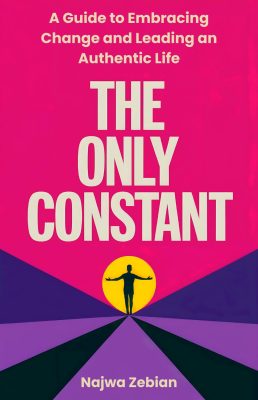
Reviews
“Dr. Najwa Zebian offers profound wisdom and healing insights, encouraging you not only to welcome change but to wholeheartedly embrace it as the path to creating the life you truly desire. With her perceptive guidance, she gently navigates the challenging experiences of loss, transitions, and heartbreak, providing manageable steps that lead you from your current reality to the future you seek. Her clear, tender, and wise advice serves as a beautiful source of encouragement for anyone facing the uncertainties of change, offering a steady hand to guide you through uncertain times.”—Todd Baratz, LMHC, creator of YourDiagnonsense and author of How to Love Someone Without Losing Your Mind
The Only Constant by Najwa Zebian is a transformative guide that challenges readers to embrace change as the cornerstone of personal growth and authenticity. Zebian draws from her own experiences as a Lebanese-Canadian poet and activist to provide a fresh perspective on navigating life’s uncertainties. This book stands out in the self-help genre by blending poetic wisdom with practical advice, offering a unique approach to finding stability in a world of constant flux. Zebian’s work is particularly notable for its focus on empowering readers to build a strong sense of self, independent of external validation.
The Only Constant is primarily aimed at individuals seeking guidance in personal development and those struggling with life transitions. The book’s message resonates particularly well with young adults and professionals navigating career changes, relationship shifts, or identity crises. Zebian’s accessible writing style and use of relatable anecdotes make the book approachable for a general audience, while her poetic insights add depth for more introspective readers. The concepts presented are universally applicable, making it a valuable resource for anyone looking to cultivate resilience and authenticity in their life journey.
Can you imagine a world where change isn’t something to fear, but a gateway to your most authentic self? This is the provocative premise at the heart of Najwa Zebian’s The Only Constant. In a society that often equates stability with success, Zebian dares to flip the script, arguing that our greatest strength lies in our ability to adapt and grow.
Zebian’s book isn’t just another self-help manual; it’s a roadmap for those lost in the wilderness of life’s unpredictability. Drawing from her own journey as a Lebanese immigrant in Canada, she weaves personal anecdotes with universal truths, creating a tapestry of wisdom that speaks to the human experience.
At its core, The Only Constant is about finding your center in a world that’s always spinning. Zebian challenges readers to look inward, to build a foundation of self-awareness that can weather any storm. She argues that true authenticity comes not from clinging to who we were, but from embracing who we’re becoming.
The book is divided into three main sections, each addressing a crucial aspect of navigating change: understanding the nature of change, developing resilience, and cultivating authenticity. Zebian’s poetic voice shines through as she guides readers through exercises and reflections designed to shift their perspective on life’s inevitable transitions.
One of the most compelling aspects of The Only Constant is Zebian’s emphasis on self-compassion. She reminds us that change often comes with discomfort, and that it’s okay to struggle. Her words serve as a gentle nudge, encouraging readers to be kind to themselves as they grow.
Readers of The Only Constant will learn how to reframe their relationship with change, turning what was once a source of anxiety into a wellspring of opportunity. They’ll discover tools for building emotional resilience, techniques for staying true to themselves in the face of external pressures, and strategies for turning life’s curveballs into stepping stones for personal growth.
The central thesis of The Only Constant is that change is not just inevitable, but essential for living an authentic and fulfilling life. Zebian posits that by embracing change rather than resisting it, we can unlock our true potential and live more genuinely. It’s like learning to dance in the rain instead of waiting for the storm to pass – Zebian teaches us that the key to happiness isn’t in controlling our environment, but in mastering our response to it.
The Only Constant has made waves in the self-help and personal development sphere for its fresh take on a timeless struggle. Zebian’s unique blend of poetic insight and practical advice has resonated with readers worldwide, earning her a spot on several bestseller lists. The book has been particularly praised for its inclusive approach, addressing universal human experiences while acknowledging the specific challenges faced by immigrants and marginalized communities. While some critics have argued that the concept of embracing change isn’t new, many readers and reviewers have lauded Zebian’s ability to make these ideas accessible and actionable. The Only Constant has been recognized for its contribution to the ongoing conversation about mental health and personal resilience in an increasingly unpredictable world.
After carefully analyzing Najwa Zebian’s The Only Constant, we find it to be a valuable addition to the self-help and personal development genre. The book’s unique perspective on change as a positive force for growth and authenticity sets it apart from many other works in this field. We appreciate Zebian’s ability to blend personal anecdotes with universal themes, making the content both relatable and widely applicable.
The book’s strengths lie in its fresh approach to change, practical exercises, and emphasis on self-compassion. Zebian’s writing style, which draws from her background as a poet, adds an engaging and lyrical quality to the text that enhances its readability and emotional impact. We also commend the book’s cultural sensitivity and inclusive approach, which makes it relevant to a diverse global audience.
However, we must note some limitations. The book could benefit from more robust scientific backing to support its claims and a more nuanced discussion of complex psychological and social issues. Additionally, a more structured framework for implementing the book’s principles could enhance its practical applicability for some readers.
Despite these drawbacks, we believe that The Only Constant offers valuable insights and tools for personal growth and navigating change. Its emphasis on authenticity and self-compassion aligns well with current trends in psychology and wellness, potentially contributing to a broader shift in how society approaches personal development.
We recommend The Only Constant to readers seeking a fresh perspective on personal growth and change management. It’s particularly well-suited for individuals facing significant life transitions, those struggling with authenticity, or anyone looking to develop greater resilience and adaptability in today’s rapidly changing world.
For optimal benefit, we suggest reading this book with an open mind and a willingness to engage with its practical exercises. While it can be read on its own, pairing it with more research-based works on psychology and personal development could provide a well-rounded approach to self-improvement. Ultimately, we believe that many readers will find valuable insights and practical strategies in Zebian’s work to help them navigate life’s constant changes with greater ease and authenticity.
The essence of The Only Constant by Najwa Zebian revolves around several key topics that form the core of her message about embracing change and living authentically. One of the primary themes is the concept of change as a catalyst for growth. Zebian argues that change, rather than being a disruptive force to be feared, is actually the driving force behind personal development and self-discovery. She encourages readers to view change as an opportunity to reassess their values, goals, and beliefs, ultimately leading to a more authentic way of living.
Another crucial topic Zebian explores is the importance of self-awareness in navigating life’s transitions. She emphasizes that understanding oneself is the foundation for making meaningful changes and adapting to new circumstances. This self-awareness involves recognizing one’s strengths, weaknesses, fears, and desires. By developing a deep understanding of oneself, Zebian suggests that individuals can make choices that align with their true selves, even in the face of external pressures or societal expectations.
Resilience is another key concept that Zebian delves into throughout the book. She presents resilience not just as the ability to bounce back from adversity, but as a proactive approach to life’s challenges. Zebian introduces strategies for building emotional and mental resilience, such as practicing mindfulness, developing a growth mindset, and cultivating supportive relationships. She argues that resilience is a skill that can be learned and strengthened over time, enabling individuals to thrive in the face of constant change.
The book also places significant emphasis on authenticity as a guiding principle for navigating change. Zebian challenges readers to question societal norms and expectations, encouraging them to define success and happiness on their own terms. She explores the concept of living authentically as a journey of continuous self-discovery and self-expression, rather than a fixed destination. This approach to authenticity involves making choices that align with one’s values and passions, even when they diverge from conventional paths.
Zebian also addresses the role of fear in resisting change and offers strategies for overcoming it. She acknowledges that fear is a natural response to uncertainty but argues that it shouldn’t be a barrier to personal growth. The book provides techniques for identifying and confronting fears, reframing negative thought patterns, and taking calculated risks. Zebian encourages readers to view fear as a sign that they’re pushing their boundaries and growing, rather than as a warning to retreat.
Another key topic in the book is the importance of letting go. Zebian explores the idea that holding onto past experiences, beliefs, or relationships that no longer serve us can hinder personal growth and authenticity. She offers insights on how to recognize when it’s time to let go and provides strategies for doing so with grace and self-compassion. This process of letting go is presented as an essential step in making room for new experiences and opportunities.
Lastly, Zebian emphasizes the power of self-compassion in the process of change and personal growth. She argues that being kind to oneself is crucial when facing challenges or setbacks. The book offers techniques for cultivating self-compassion, such as positive self-talk and mindfulness practices. Zebian suggests that by treating ourselves with the same kindness we would offer a friend, we can build the resilience and confidence needed to embrace change and live authentically.
The Butterfly Metaphor: Zebian uses the transformation of a caterpillar into a butterfly as a powerful metaphor for personal growth through change. She describes how the caterpillar must entirely break down its old form within the chrysalis before emerging as a butterfly, drawing parallels to how humans often need to let go of old identities and beliefs to grow into their authentic selves.
The Immigrant Experience: Zebian shares her personal experience of immigrating from Lebanon to Canada as a teenager. She details the challenges of adapting to a new culture, language, and way of life, illustrating how this massive change, while initially disorienting, ultimately led to personal growth and a deeper understanding of her own identity.
The Career Pivot: The book includes the story of a reader who left a high-paying but unfulfilling corporate job to pursue a passion for teaching. Zebian uses this example to illustrate how embracing change, even when it involves financial risk or societal pressure, can lead to a more authentic and satisfying life.
The Broken Relationship: Zebian recounts the experience of a woman who stayed in an unhealthy relationship out of fear of change and loneliness. She describes how the woman eventually found the courage to leave, leading to initial pain but ultimately resulting in personal growth and the opportunity for healthier relationships.
The Mindfulness Practice: The author shares her own journey with mindfulness meditation, describing how this practice helped her develop greater self-awareness and resilience. She provides specific examples of how mindfulness techniques helped her navigate challenging life transitions and make decisions aligned with her authentic self.
The Fear-Facing Exercise: Zebian describes an exercise where readers are encouraged to write down their fears about a potential change, then challenge each fear with evidence and alternative perspectives. She shares an example of a reader who used this technique to overcome anxiety about changing careers, illustrating how confronting fears can lead to empowering action.
The Letting Go Ritual: The book includes an account of a reader who performed a symbolic ritual to let go of past hurts and limiting beliefs. This individual wrote down negative thoughts on pieces of paper and then burned them, physically and emotionally releasing what no longer served them. Zebian uses this example to show how intentional acts of letting go can be powerful catalysts for change and personal growth.
The Self-Compassion Letter: Zebian shares an example of a reader who wrote a compassionate letter to themselves during a particularly challenging period of change. This exercise demonstrates how cultivating self-compassion can provide emotional support and strengthen resilience during times of transition.
Zebian emphasizes that change, rather than being a threat, is actually a powerful catalyst for personal growth and self-discovery. She encourages readers to actively seek out and welcome change in their lives, rather than avoiding it. To apply this insight, start by identifying areas of your life that have become stagnant or unfulfilling. Then, challenge yourself to make small changes in these areas. For example, if you’ve been in the same job for years and feel unchallenged, consider taking on a new project or responsibility at work. If you’re stuck in a creative rut, try learning a new skill or hobby. By deliberately introducing change into your life, you create opportunities for growth and self-discovery.
A key insight from The Only Constant is that developing deep self-awareness is crucial for living authentically and navigating change effectively. Zebian argues that understanding your own values, motivations, and patterns of behavior allows you to make decisions that align with your true self. To put this into practice, start a daily journaling habit. Spend 10-15 minutes each day reflecting on your thoughts, feelings, and actions. Ask yourself probing questions like “What made me feel energized today?” or “What situations made me feel uncomfortable and why?” Over time, this practice will help you identify your core values and authentic desires, making it easier to make decisions that align with your true self.
Zebian presents resilience not as an innate trait, but as a skill that can be cultivated over time. She provides specific strategies for building emotional and mental resilience in the face of change and adversity. One practical way to apply this insight is to practice the “growth mindset” technique. When faced with a challenge or setback, consciously reframe it as an opportunity for learning and growth. For example, if you make a mistake at work, instead of thinking “I’m not good enough,” try “This is a chance for me to improve my skills.” Additionally, build a “resilience toolkit” of coping strategies such as deep breathing exercises, physical activity, or connecting with supportive friends. Regularly practicing these techniques will strengthen your ability to bounce back from difficulties.
Zebian challenges readers to question societal expectations and define success on their own terms. She argues that true authenticity often involves making choices that may not align with conventional paths. To apply this insight, take time to critically examine your goals and aspirations. Are they truly your own, or are they influenced by societal or familial expectations? Create a personal mission statement that reflects your authentic values and aspirations. When making important life decisions, refer back to this statement to ensure you’re staying true to yourself. Don’t be afraid to take unconventional paths if they align with your authentic self, even if they face criticism from others.
An important insight from the book is the reframing of fear as a positive indicator of personal growth rather than a warning to retreat. Zebian encourages readers to view fear as a sign that they’re pushing their boundaries and expanding their comfort zones. To put this into practice, keep a “fear journal” where you document situations that make you anxious or uncomfortable. Next to each fear, write down what growth opportunity it might represent. For example, fear of public speaking might represent an opportunity to develop confidence and communication skills. Gradually expose yourself to these fear-inducing situations, starting small and working your way up. Celebrate each step you take outside your comfort zone, regardless of the outcome.
Zebian highlights the importance of letting go of past experiences, beliefs, or relationships that no longer serve us in order to make room for growth and new opportunities. To apply this insight, conduct a “life audit.” Make a list of all the major aspects of your life – relationships, beliefs, habits, possessions. For each item, ask yourself, “Does this still serve me and align with who I want to be?” If the answer is no, develop a plan to let it go. This might involve having difficult conversations, changing long-held habits, or even getting rid of physical items. Create a letting go ritual, such as writing down what you’re releasing and symbolically burning the paper, to make the process more tangible and meaningful.
Zebian emphasizes the power of self-compassion in building resilience and navigating change. She argues that treating ourselves with kindness and understanding is crucial when facing challenges or setbacks. To cultivate self-compassion, practice the “self-compassion break” technique. When you’re struggling, pause and acknowledge your difficulty (“This is a moment of suffering”). Remind yourself that struggle is a universal human experience (“Suffering is a part of life”). Then, offer yourself words of kindness and support (“May I be kind to myself in this moment”). Additionally, reframe your self-talk to be more compassionate. Instead of harsh self-criticism, speak to yourself as you would to a dear friend facing the same situation.
Zebian presents mindfulness as a powerful tool for developing greater self-awareness and adaptability in the face of change. She argues that mindfulness practices can help us respond to change more intentionally, rather than reacting automatically. To incorporate this insight, start a daily mindfulness practice. Begin with just 5 minutes a day of focused breathing or body scan meditation. Gradually increase the duration as you become more comfortable. Throughout your day, set reminders to take “mindful moments” – brief pauses where you check in with your thoughts, emotions, and bodily sensations. This increased awareness will help you notice your reactions to change more quickly and choose your responses more intentionally.
A crucial insight from The Only Constant is that living authentically is an ongoing process of self-discovery and growth, not a fixed state to be achieved. Zebian encourages readers to view authenticity as a continuous journey of aligning their actions with their evolving values and understanding of themselves. To apply this insight, set aside time each month for a personal “authenticity check-in.” Reflect on your recent choices and actions – did they align with your values and authentic self? Identify areas where you may have compromised your authenticity and brainstorm ways to realign. Remember that it’s okay for your definition of authenticity to change over time. Regularly reassess your values and update your personal mission statement to reflect your evolving authentic self.
One of the most notable strengths of The Only Constant is Zebian’s fresh and compelling perspective on change. Unlike many self-help books that focus on managing or coping with change, Zebian presents change as a positive force to be embraced and even sought out. Her approach transforms the often anxiety-inducing concept of change into an exciting opportunity for growth and self-discovery. This reframing is particularly valuable in today’s rapidly evolving world, where adaptability is increasingly crucial. Zebian’s insights help readers not just accept change, but actively leverage it for personal development.
Zebian skillfully weaves her personal experiences as a Lebanese immigrant in Canada with universal themes of identity, growth, and authenticity. This blend of personal narrative and broader insights makes the book both relatable and widely applicable. Her vivid anecdotes bring abstract concepts to life, helping readers connect with the material on an emotional level. At the same time, she extrapolates from these personal stories to offer guidance that resonates across diverse backgrounds and experiences. This balance between the personal and the universal enhances the book’s impact and accessibility.
The Only Constant stands out for its abundance of practical exercises and actionable advice. Zebian doesn’t just present theories; she provides concrete tools for readers to apply her insights in their daily lives. From journaling prompts to mindfulness exercises to fear-facing techniques, the book offers a rich toolkit for personal growth. These practical elements transform the reading experience from passive consumption to active engagement, increasing the likelihood that readers will internalize and act on the book’s teachings. The variety of exercises also caters to different learning styles and preferences, making the book’s message accessible to a wide audience.
Zebian’s focus on self-compassion as a crucial element in navigating change and living authentically is a significant strength of the book. Many self-help books emphasize willpower and discipline, potentially leading to self-criticism when readers fall short. In contrast, Zebian’s approach encourages readers to be kind to themselves throughout their journey of growth and change. This emphasis on self-compassion creates a more sustainable and psychologically healthy approach to personal development. It aligns with current psychological research on the benefits of self-compassion in fostering resilience and well-being.
Zebian’s background as a poet shines through in her writing, elevating The Only Constant above typical self-help fare. Her prose is often lyrical and evocative, making complex concepts more accessible and memorable. This poetic style doesn’t compromise clarity; instead, it enhances the book’s readability and emotional impact. Zebian’s use of metaphor and imagery helps readers grasp abstract ideas intuitively. The engaging writing style keeps readers invested in the material, increasing the likelihood that they’ll absorb and apply the book’s insights.
A notable strength of The Only Constant is its cultural sensitivity and inclusive approach. Zebian draws from her multicultural background to offer insights that resonate across diverse cultural contexts. She addresses universal human experiences while also acknowledging the specific challenges faced by immigrants and individuals from marginalized communities. This inclusivity makes the book relevant to a global audience and adds depth to its exploration of authenticity and personal growth. Zebian’s nuanced treatment of cultural identity within the context of change and self-discovery sets the book apart in the self-help genre.
While Zebian’s insights are compelling and often align with psychological principles, The Only Constant could benefit from more robust scientific backing. The book relies heavily on personal anecdotes and observations, which, while valuable, could be strengthened by incorporating more research from fields like psychology, neuroscience, and sociology. Including more empirical evidence would lend additional credibility to Zebian’s arguments and provide readers with a deeper understanding of the mechanisms behind personal change and growth.
In its effort to be accessible and inspiring, The Only Constant sometimes risks oversimplifying complex psychological and social issues. While Zebian’s positive framing of change is generally empowering, it may not fully address the very real challenges and systemic barriers that some individuals face when trying to make significant life changes. The book could benefit from a more nuanced discussion of how factors like socioeconomic status, mental health conditions, or societal expectations can complicate the process of embracing change and living authentically.
While the book’s optimistic approach to change is generally a strength, it may not adequately address situations where resistance to change might be warranted or where rapid change could be detrimental. The Only Constant could provide a more balanced perspective by exploring scenarios where careful consideration or gradual change might be more appropriate than wholesale embrace of change. A more thorough discussion of how to discern beneficial changes from potentially harmful ones would enhance the book’s practical value.
Despite offering numerous practical exercises, The Only Constant doesn’t provide a comprehensive, structured framework for personal transformation. While the flexibility of Zebian’s approach allows readers to tailor the book’s insights to their individual needs, some readers might benefit from a more systematic guide to implementing the book’s principles. A clearer roadmap or step-by-step process for embracing change and cultivating authenticity could enhance the book’s practical applicability.
One potential blind spot in The Only Constant is its focus on individual change without sufficiently addressing the role of systemic factors. While personal growth and authenticity are crucial, they exist within broader social, economic, and political contexts that can significantly impact an individual’s ability to implement change. Readers might misunderstand the extent to which personal mindset shifts can overcome systemic barriers. Books like Stamped from the Beginning by Ibram X. Kendi or The Sum of Us by Heather McGhee offer complementary perspectives on how systemic issues intersect with individual experiences and choices.
While Zebian’s multicultural background informs her work, the book may not fully explore how concepts of authenticity and personal growth vary across different cultures. In some cultures, for instance, prioritizing individual authenticity over community harmony or familial expectations might be viewed differently than in Western contexts. This could lead to misunderstandings or conflicts when applying the book’s principles in diverse cultural settings. Works like The Geography of Thought by Richard Nisbett provide valuable insights into how cultural backgrounds shape thinking patterns and concepts of self, which could complement Zebian’s approach.
The Only Constant emphasizes the value of embracing change, but it may overlook the importance of stability and consistency in certain aspects of life. While adaptability is crucial, constant change in all areas of life could potentially lead to a lack of rootedness or long-term commitment. Readers might misinterpret the book’s message as advocating for change at all costs, overlooking the value of perseverance or the benefits of maintaining certain stable elements in life. Books like Atomic Habits by James Clear, which focus on the power of small, consistent changes over time, could provide a balanced perspective to Zebian’s more dynamic approach to personal growth.
The Only Constant shares some thematic similarities with Eckhart Tolle’s The Power of Now, particularly in their emphasis on mindfulness and present-moment awareness. Both books encourage readers to let go of attachments to past experiences and future anxieties. However, where Tolle focuses on transcending the ego and achieving a state of presence, Zebian’s approach is more grounded in practical personal growth and embracing change. Zebian’s work is more accessible to readers seeking concrete strategies for navigating life changes, while Tolle’s book delves deeper into spiritual and philosophical aspects of presence.
Carol Dweck’s Mindset explores the concept of growth mindset, which aligns with Zebian’s emphasis on embracing change as an opportunity for growth. Both books encourage readers to view challenges as learning experiences rather than threats. However, Dweck’s work is more firmly rooted in psychological research and focuses specifically on how beliefs about ability impact success. Zebian’s book takes a broader approach, addressing multiple aspects of personal growth and authenticity beyond just mindset. The Only Constant may be more appealing to readers looking for a holistic guide to personal transformation, while Mindset offers a deeper dive into the specific psychology of achievement and learning.
Chris Guillebeau’s The Happiness of Pursuit shares Zebian’s emphasis on personal growth and authenticity, but approaches these themes through the lens of pursuing meaningful goals or quests. Both books encourage readers to step out of their comfort zones and embrace new experiences. However, Guillebeau’s work focuses more on external pursuits and adventures, while Zebian’s book emphasizes internal growth and change. The Only Constant may be more relevant for readers seeking personal transformation in their everyday lives, while The Happiness of Pursuit might appeal more to those looking for inspiration to embark on significant life projects or adventures.
Brené Brown’s Daring Greatly shares some common ground with The Only Constant in its exploration of vulnerability and authenticity. Both books encourage readers to embrace discomfort as a path to growth. However, Brown’s work focuses more specifically on the role of vulnerability in cultivating courage and connection, drawing heavily on her research in social work. Zebian’s book, while touching on similar themes, takes a broader approach to personal growth and change. The Only Constant may be more accessible to readers looking for a general guide to navigating life changes, while Daring Greatly offers deeper insights into the specific role of vulnerability in personal and professional life.
Spencer Johnson’s Who Moved My Cheese? is a classic book on dealing with change, often used in business contexts. Like The Only Constant, it encourages readers to embrace change rather than resist it. However, Johnson’s book uses a simple parable format to convey its message, while Zebian’s work is more expansive and personal, drawing on her own experiences and offering a wider range of strategies. Who Moved My Cheese? might be more suitable for readers looking for a quick, allegorical introduction to change management, while The Only Constant offers a more comprehensive and nuanced exploration of personal growth through change.
Embrace Change as a Catalyst for Growth
Develop Self-Awareness
Build Resilience
Challenge Societal Norms
Reframe Fear as a Growth Indicator
Practice Letting Go
Cultivate Self-Compassion
Enhance Adaptability Through Mindfulness
Cultivate Authentic Living as an Ongoing Process
Embrace Organizational Change as a Growth Opportunity
Zebian’s philosophy of viewing change as a catalyst for growth can be applied to organizational contexts. Businesses can foster a culture that not only accepts change but actively seeks it out as a means of innovation and development. This approach can help companies stay agile in rapidly evolving markets and encourage employees to contribute fresh ideas without fear of disrupting the status quo.
However, implementing this mindset across an entire organization can be challenging. Resistance to change is common in business environments, particularly among long-term employees or in companies with deeply entrenched processes. Additionally, constant change without proper management can lead to instability and employee burnout.
To overcome these challenges, businesses can start by clearly communicating the benefits of embracing change, both for the company and for individual employees’ career growth. Implementing a structured change management process can help balance the drive for innovation with the need for stability. Regular town halls or feedback sessions can allow employees to voice concerns and contribute ideas, fostering a sense of ownership in the change process.
Develop Organizational Self-Awareness
Applying Zebian’s emphasis on self-awareness to a business context involves cultivating a deep understanding of the company’s values, strengths, and areas for improvement. This can lead to more authentic branding, improved decision-making, and better alignment between company actions and stated values.
However, achieving genuine organizational self-awareness can be difficult. Large companies may struggle with siloed departments that have differing perspectives on the company’s identity. There might also be resistance to acknowledging weaknesses or areas that need improvement, particularly among leadership.
To address these issues, companies can implement regular, company-wide assessments that encourage honest feedback from all levels of the organization. Anonymous surveys can help employees feel safe sharing their true thoughts. Cross-departmental projects and rotating job assignments can break down silos and provide a more holistic view of the company. Leadership training on the importance of vulnerability and continuous improvement can help create a culture where acknowledging areas for growth is seen as a strength, not a weakness.
Build Organizational Resilience
The concept of resilience from Zebian’s work can be applied to businesses to help them weather market changes, economic downturns, or internal challenges. This involves creating flexible structures and processes that can adapt to change, as well as fostering a workforce that can bounce back from setbacks.
Implementing organizational resilience can be challenging due to the complexity of business operations. It may require significant changes to existing processes and potentially costly investments in new technologies or training. There may also be resistance from employees who feel comfortable with existing systems.
To build resilience effectively, businesses can start by conducting a thorough risk assessment to identify potential vulnerabilities. Based on this, they can develop contingency plans for various scenarios. Investing in employee training programs that focus on adaptability and problem-solving skills can help create a more resilient workforce. Regular crisis simulations or “fire drills” can help test and improve the organization’s ability to respond to challenges.
Challenge Industry Norms
Zebian’s encouragement to question societal norms can be translated into a business context as a call to challenge industry norms and conventional wisdom. This can lead to innovative products, services, or business models that set a company apart from competitors.
However, going against established industry practices can be risky. It may alienate traditional customers or partners, and there’s always the possibility that new approaches may not succeed. Additionally, regulatory constraints in some industries may limit the ability to deviate from established norms.
To mitigate these risks, companies can adopt a balanced approach of incremental innovation alongside more radical ideas. Establishing an innovation lab or skunkworks division can provide a safe space to experiment with unconventional ideas without risking the core business. Engaging closely with customers and conducting thorough market research can help ensure that challenges to industry norms are aligned with actual market needs and desires.
Reframe Organizational Fears as Growth Indicators
Applying Zebian’s perspective on fear to a business context involves viewing market threats, competitive pressures, or internal challenges as indicators of potential growth areas rather than purely as risks to be mitigated.
This mindset shift can be difficult to implement, particularly in risk-averse corporate cultures or industries where stability is highly valued. There may be resistance from stakeholders who prefer more conservative approaches to business challenges.
To overcome this, businesses can start by reframing their risk assessment processes to include potential opportunities alongside potential threats. Training programs for leadership and employees can focus on opportunity identification and innovative problem-solving. Celebrating instances where the company has successfully turned a challenge into a growth opportunity can help reinforce this mindset shift.
Practice Organizational Letting Go
In a business context, Zebian’s concept of letting go can be applied to outdated processes, products, or business models that no longer serve the company’s goals or market needs. This can free up resources for more promising initiatives and keep the company agile.
However, letting go of established elements of a business can be challenging. There may be emotional attachments to long-standing products or resistance from employees whose roles are tied to existing processes. Additionally, there’s always the risk that what’s being let go still holds value that isn’t immediately apparent.
To address these challenges, companies can implement a structured process for regularly evaluating all aspects of the business. This could involve cross-functional teams that assess products, processes, and strategies against current market needs and company goals. For significant changes, a phased approach can help manage the transition and mitigate risks. It’s also important to have a clear communication strategy to explain the rationale behind these decisions to all stakeholders.
Cultivate Organizational Self-Compassion
Zebian’s emphasis on self-compassion can be translated to an organizational context as creating a culture that acknowledges failures as learning opportunities and treats employees with kindness and understanding, particularly during challenging times.
Implementing this in a business environment can be challenging, particularly in high-pressure industries or companies with a strong focus on results. There may be concerns that too much compassion could lead to complacency or lowered standards.
To balance compassion with high performance, companies can implement policies that explicitly recognize effort and learning alongside results. Leadership training can focus on how to provide constructive feedback in a compassionate manner. Employee assistance programs and mental health resources can demonstrate the company’s commitment to employee well-being. Regular “lessons learned” sessions after both successes and failures can help create a culture where mistakes are seen as valuable learning experiences rather than causes for punishment.
Enhance Organizational Adaptability Through Mindfulness
Zebian’s advocacy for mindfulness can be applied in a business context to enhance decision-making, improve employee well-being, and increase the organization’s overall adaptability to change.
Implementing mindfulness practices in a business environment can face skepticism from those who view it as too “soft” or unrelated to business outcomes. There may also be practical challenges in finding time for mindfulness practices in busy work schedules.
To overcome these obstacles, companies can start by educating employees and leadership on the scientifically proven benefits of mindfulness for focus, stress reduction, and decision-making. Offering optional mindfulness training or meditation spaces can allow interested employees to engage without forcing it on everyone. Incorporating brief mindfulness exercises at the beginning of meetings can help normalize the practice. Over time, as benefits become apparent, more comprehensive mindfulness programs can be implemented.
The ideas in The Only Constant align well with the increasing trend towards remote work and digital nomadism. As more people embrace flexible work arrangements, the ability to adapt to change and maintain authenticity across different environments becomes crucial. Zebian’s insights on navigating cultural identities and finding stability within oneself rather than external circumstances are particularly relevant.
This trend is likely to continue evolving, with more companies adopting hybrid models and individuals seeking work-life integration rather than balance. The book’s emphasis on self-awareness and resilience will be valuable for those navigating these new work paradigms.
There’s a growing awareness of the importance of mental health and well-being, both in personal and professional contexts. Zebian’s focus on self-compassion and mindfulness aligns perfectly with this trend.
As society continues to grapple with issues like burnout and work-related stress, the book’s strategies for building resilience and maintaining authenticity under pressure will likely become even more relevant. We may see more integration of mindfulness and self-compassion practices in workplace wellness programs.
There’s an increasing demand for authenticity in branding and leadership. Consumers and employees alike are seeking genuine connections with companies and leaders.
Zebian’s insights on living authentically and challenging societal norms could inform how businesses approach their branding and how leaders interact with their teams. This trend may lead to more transparent communication strategies and leadership styles that prioritize vulnerability and genuine connection.
As technological advancements accelerate, there’s a growing emphasis on continuous learning and adaptability. Zebian’s framing of change as an opportunity for growth aligns well with this trend.
We may see more educational and professional development programs adopting this mindset, encouraging learners to seek out change rather than merely coping with it. The book’s strategies for embracing change could become part of curricula designed to prepare individuals for rapidly evolving job markets.
Globalization and digital connectivity are leading to more cross-cultural interactions in both personal and professional spheres. Zebian’s multicultural perspective and emphasis on finding authenticity across diverse contexts are particularly relevant here.
This trend may lead to a greater need for cultural intelligence and the ability to maintain one’s authentic self while navigating different cultural norms. The book’s insights could inform cross-cultural training programs and global leadership development initiatives.
The Only Constant, published in recent years, has the potential to significantly impact the self-help and personal development field. Its fresh perspective on change as a positive force aligns well with the increasing pace of change in modern society, potentially making it a go-to resource for individuals struggling to adapt to rapidly evolving personal and professional landscapes.
The book’s emphasis on authenticity and self-compassion reflects growing trends in psychology and wellness, which recognize the importance of these factors in mental health and personal fulfillment. As such, Zebian’s work may contribute to a broader shift in how society approaches personal growth, moving away from rigid self-improvement models towards more flexible, compassionate approaches.
Furthermore, Zebian’s multicultural background and inclusive approach position the book to have a significant impact in an increasingly globalized world. Its insights on navigating cultural identities and finding authenticity across diverse contexts may prove particularly valuable as societies become more interconnected and multicultural.
The book’s practical exercises and actionable advice increase its potential for long-term relevance. As readers apply these strategies and share their experiences, the book’s impact could ripple outward, influencing not just individual lives but also organizational cultures and social norms around change and personal growth.
However, the book’s long-term influence will likely depend on how well its insights hold up in the face of ongoing social, technological, and economic changes. If Zebian’s strategies prove adaptable to new challenges, The Only Constant could become a lasting contribution to the field of personal development. Conversely, if the pace or nature of change in society shifts dramatically, some aspects of the book may need to be revisited or updated to maintain relevance.
In terms of wider societal impacts, the book’s message of embracing change and living authentically could contribute to broader conversations about work-life balance, career development, and personal fulfillment. As more people adopt Zebian’s perspectives, it could lead to shifts in how organizations approach change management, how educational systems prepare students for a changing world, or how individuals approach major life decisions.
Ultimately, while it’s too early to definitively assess the book’s long-term influence, The Only Constant appears well-positioned to make a meaningful contribution to how individuals and societies navigate the challenges and opportunities of a rapidly changing world.
Mindset: The New Psychology of Success by Carol S. Dweck: This book provides a deep dive into the concept of growth mindset, which complements Zebian’s emphasis on embracing change as an opportunity for growth. Dweck’s research-based approach offers scientific backing to many of the ideas presented in The Only Constant, providing readers with a robust understanding of how our beliefs about our abilities shape our capacity for change and personal development.
Emotional Agility: Get Unstuck, Embrace Change, and Thrive in Work and Life by Susan David: David’s work on emotional agility aligns well with Zebian’s focus on adaptability and authenticity. This book offers additional strategies for navigating life’s changes with psychological flexibility, providing readers with tools to align their actions with their values even in challenging circumstances.
The Happiness of Pursuit: Finding the Quest That Will Bring Purpose to Your Life by Chris Guillebeau: While Zebian focuses on internal change and growth, Guillebeau’s book complements this by exploring how pursuing meaningful external goals can lead to personal fulfillment. This book can provide inspiration for readers looking to apply Zebian’s principles of embracing change to specific life pursuits or adventures.
Daring Greatly: How the Courage to Be Vulnerable Transforms the Way We Live, Love, Parent, and Lead by Brené Brown: Brown’s work on vulnerability and courage offers a valuable companion to Zebian’s emphasis on authenticity. This book can help readers deepen their understanding of how embracing vulnerability – a key aspect of facing change – can lead to more authentic and fulfilling lives.
The Power of Meaning: Crafting a Life That Matters by Emily Esfahani Smith: Smith’s exploration of what makes life meaningful provides a compelling complement to Zebian’s focus on authenticity and personal growth. This book can help readers connect their journey of embracing change to a larger sense of purpose and significance.
Essentialism: The Disciplined Pursuit of Less by Greg McKeown: While Zebian encourages embracing change, McKeown’s book offers a balancing perspective on the importance of focus and prioritization. This book can help readers apply Zebian’s principles more effectively by teaching them how to identify what’s truly essential in their lives.
The Culture Map: Breaking Through the Invisible Boundaries of Global Business by Erin Meyer: For readers particularly interested in Zebian’s multicultural perspective, Meyer’s book offers valuable insights into navigating cultural differences in a globalized world. This book can help readers apply Zebian’s principles of authenticity and adaptability in diverse cultural contexts, particularly in professional settings.
Atomic Habits: An Easy & Proven Way to Build Good Habits & Break Bad Ones by James Clear: Clear’s work on habit formation provides a practical complement to Zebian’s more philosophical approach to personal change. This book can help readers implement the changes inspired by The Only Constant through small, consistent actions, offering a roadmap for turning Zebian’s insights into lasting behavioral change.
Greater Good Science Center: This website, affiliated with UC Berkeley, offers a wealth of research-based articles and practical exercises on topics like mindfulness, self-compassion, and resilience, which align closely with Zebian’s teachings. (https://greatergood.berkeley.edu/)
Mindful.org: A comprehensive resource for mindfulness practices and research, offering articles, guided meditations, and courses that can help readers implement Zebian’s ideas on mindfulness and self-awareness. (https://www.mindful.org/)
The Positivity Project: This platform provides resources and tools for developing character strengths and resilience, complementing Zebian’s focus on personal growth and adaptability. (https://posproject.org/)
Wisdom 2.0: An annual conference that explores the intersection of wisdom and technology, featuring speakers and workshops on mindfulness, authenticity, and navigating change in the digital age. (https://wisdom2conference.com/)
World Domination Summit: While currently on hiatus, past events of this conference focused on non-conformity, adventure, and community – themes that align well with Zebian’s emphasis on authenticity and embracing change. (https://worlddominationsummit.com/)
International Conference on Mindfulness: This academic conference presents cutting-edge research on mindfulness, offering a scientific perspective on many of the practices Zebian advocates. (https://icm2023.org/)
International Coach Federation: For readers inspired to help others navigate change and live authentically, the ICF provides resources, training, and networking opportunities in the field of professional coaching. (https://coachingfederation.org/)
Association for Contextual Behavioral Science: This organization focuses on Acceptance and Commitment Therapy and related approaches, which align with Zebian’s emphasis on mindfulness and values-based living. (https://contextualscience.org/)
The Happiness Lab: Hosted by Dr. Laurie Santos, this podcast explores scientific research on happiness and well-being, offering insights that complement Zebian’s approach to personal growth. (https://www.happinesslab.fm/)
On Being with Krista Tippett: This podcast features deep conversations on the human experience, often touching on themes of change, authenticity, and personal growth that resonate with Zebian’s work. (https://onbeing.org/series/podcast/)
The Knowledge Project: Hosted by Shane Parrish, this podcast features interviews with world-class performers from various fields, often discussing topics related to decision-making, adaptability, and personal development. (https://fs.blog/knowledge-project-podcast/)
Mindfulness-Based Stress Reduction (MBSR) Online Course: Developed by Jon Kabat-Zinn, this course offers a structured approach to developing mindfulness skills, supporting Zebian’s emphasis on present-moment awareness. (https://palousemindfulness.com/)
Coursera – “Learning How to Learn”: This popular online course provides insights into how our brains process information and adapt to new knowledge, supporting Zebian’s ideas on embracing change and continuous growth. (https://www.coursera.org/learn/learning-how-to-learn)
The Social Dilemma: This documentary explores the impact of social media on our lives, offering a compelling perspective on the challenges of maintaining authenticity and mental well-being in the digital age.
Happy: This documentary explores the science of happiness across cultures, offering insights that complement Zebian’s focus on finding fulfillment through authenticity and personal growth.
The Minimalists: Less Is Now: This film explores the benefits of simplifying one’s life, aligning with Zebian’s ideas about letting go of what no longer serves us and focusing on what truly matters.