Reviews
“Profound…the authors are engaging guides to their field.”—Financial Times
“Corralling a wealth of fascinating examples…Sharot and Sunstein provide a revelatory investigation of a phenomenon that’s as complex as it is common. This enthralls.”—Publishers Weekly, starred review
“With intelligence and humor, Sharot and Sunstein provide guidance on how to refresh the spirit and see the world anew. If your world is starting to look grey and dull, this book might be your road map out of the comfort zone.”—Kirkus Reviews
“Look Again is a worthy addition to literature at the intersection of psychology, neuroscience, and economics, making them accessible to the general reader.”—Shelf Awareness
“One trait of history’s most creative thinkers—from Leonardo da Vinci to Albert Einstein—is that they are able to look anew and marvel at everyday things that most people have quit noticing: the alluring blueness of the sky, the passage of time, the way a light beam creates a spot of luster on a leaf. Look Again can help us all look in a fresh way at things around us. It’s a smart and fun read, and a valuable way to revitalize your life.”—Walter Isaacson, New York Times bestselling author of Steve Jobs
“Timely and important. A clear and provocative book about the power of expectation and the endless mystery of the human mind.”—Tara Westover, #1 New York Times bestselling author of Educated
“A sensational guide to a more psychologically rich life.”—Angela Duckworth, New York Times bestselling author of Grit
“In Look Again, Sharot and Sunstein offer an insightful look into the science of habituation. Their insights into the why and how of getting used to things teach us how to hack habituation to bring more joy to our lives. A surprising and delightful book.”—Annie Duke, bestselling author of Thinking in Bets
“Look Again is the perfect book to help you refresh your point of view. Sharot and Sunstein reveal why it’s easy to be lulled into complacency about anything and how to prevent falling into this trap. In the bargain, they’ll help you live a happier, healthier, wiser and more just life.”—Katy Milkman, bestselling author of How to Change
“Such a vivid, human and original book-the perfect guide to perking up everything from your creativity to your love life.”—Tim Harford, author of How To Make The World Add Up
“Look Again is a fascinating guide to how and why our biased minds get used to stuff and how we can fight through our usual adaptations. It’s a must read for anyone who wants to feel happier, stay more present, and make healthier, more effective decisions.”—Laurie Santos, Chandrika and Ranjan Tandon Professor of Psychology at Yale University and host of The Happiness Lab podcast
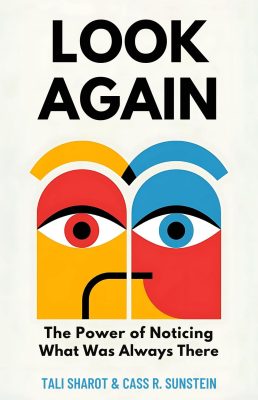
Look Again: The Power of Noticing What Was Always There by Cass R. Sunstein and Tali Sharot is a thought-provoking exploration of how we perceive the world around us and the hidden details we often overlook. This insightful book challenges readers to reconsider their assumptions and biases, offering a fresh perspective on everyday experiences. Sunstein and Sharot combine their expertise in law, behavioral economics, and neuroscience to uncover the mechanisms behind our selective attention and provide practical strategies for expanding our awareness. Through engaging anecdotes and cutting-edge research, the authors reveal how noticing the overlooked can lead to innovative solutions, improved decision-making, and a richer understanding of our environment.
Look Again is primarily aimed at curious individuals interested in psychology, decision-making, and personal growth. The book’s accessible language and relatable examples make it suitable for a general audience, requiring no specialized knowledge in neuroscience or behavioral economics. Professionals in fields such as management, education, and design will find valuable insights to enhance their work and problem-solving skills. Additionally, the book appeals to anyone seeking to improve their observational skills and decision-making processes in both personal and professional contexts. While the concepts presented can be complex, the authors’ engaging writing style ensures that readers of various backgrounds can grasp and apply the key ideas.
What if the key to unlocking innovation, solving complex problems, and making better decisions was right in front of our eyes, hidden in plain sight? This is the provocative premise of Look Again: The Power of Noticing What Was Always There by Cass R. Sunstein and Tali Sharot. The authors challenge us to question our perception of reality and explore the vast realm of information we routinely overlook.
Sunstein and Sharot take readers on a fascinating journey through the human mind, revealing how our brains filter and process information. They argue that our tendency to focus on certain aspects of our environment while ignoring others is not just a quirk of human nature, but a deeply ingrained survival mechanism. However, in our modern world, this selective attention can lead to missed opportunities and flawed decision-making.
The book is filled with eye-opening examples from various fields, demonstrating how paying attention to overlooked details can lead to groundbreaking discoveries. From the development of life-saving medical treatments to the creation of innovative business strategies, the authors show that breakthroughs often come from noticing what others have missed. They explore how famous innovators, artists, and scientists have harnessed the power of observation to change the world.
Look Again doesn’t just highlight the problem of selective attention; it offers practical strategies for expanding our awareness. The authors provide a toolkit of techniques for training our minds to notice more, from simple mindfulness exercises to more advanced cognitive strategies. They explain how these methods can be applied in various contexts, from personal relationships to professional problem-solving.
Readers of Look Again will learn how to overcome cognitive biases that limit their perception, develop a more nuanced understanding of complex situations, and tap into their creative potential. The book offers insights into improving decision-making processes, enhancing interpersonal communication, and fostering innovation in any field. By mastering the art of noticing, readers can unlock new possibilities in their personal and professional lives, gaining a competitive edge in an increasingly complex world.
The central thesis of Look Again is that our ability to notice and pay attention to overlooked details can dramatically improve our lives and the world around us. Sunstein and Sharot argue that expanding our awareness beyond our habitual patterns of perception is not just a useful skill, but a crucial ability in today’s fast-paced, information-rich environment.
The authors liken our selective attention to a spotlight on a vast, dimly lit stage. While the spotlight allows us to focus intently on specific areas, it also leaves much of the stage in darkness. The key, they suggest, is learning to move and expand that spotlight, illuminating previously unseen areas and discovering new connections and possibilities.
Look Again makes a significant contribution to the fields of cognitive psychology, decision science, and innovation studies by bridging the gap between academic research and practical application. The book has been praised for its accessible approach to complex cognitive concepts, making cutting-edge scientific insights available to a broad audience.
The authors’ interdisciplinary approach, combining insights from law, neuroscience, and behavioral economics, offers a fresh perspective on the topic of perception and decision-making. This novel synthesis has garnered attention from academics and practitioners across various fields, sparking discussions about the role of attention in areas ranging from public policy to business strategy.
While generally well-received, some critics have questioned whether the techniques proposed in the book can be effectively applied in high-stress, real-world situations. Others have debated the ethical implications of training people to notice more, particularly in contexts where privacy is a concern.
Despite these debates, Look Again has been recognized for its potential to drive innovation and improve decision-making processes. It has been featured in numerous ‘best business books’ lists and has been adopted as required reading in several MBA and executive education programs. The book’s impact extends beyond academia and business, with educators and policymakers exploring how its insights can be applied to improve learning outcomes and public services.
After a thorough analysis of “Look Again: The Power of Noticing What Was Always There” by Cass R. Sunstein and Tali Sharot, we find it to be a valuable contribution to the field of cognitive science and decision-making. The book’s interdisciplinary approach, combining insights from psychology, neuroscience, and behavioral economics, provides readers with a comprehensive understanding of how our brains process information and how we can enhance our observational skills.
We appreciate the authors’ ability to present complex concepts in an accessible manner, making the book engaging for both general readers and specialists. The abundance of real-world examples and case studies effectively illustrates the practical applications of the book’s insights across various domains of life.
The actionable strategies provided in “Look Again” are particularly commendable. Sunstein and Sharot offer a toolkit of practical techniques that readers can immediately apply to improve their noticing skills. This focus on practical application sets the book apart from more theoretical works on cognition and perception.
We also value the book’s balanced treatment of technology’s role in enhancing our ability to notice. The authors’ nuanced perspective on how to leverage technology while maintaining the irreplaceable human elements of intuition and contextual understanding is particularly relevant in today’s tech-driven world.
However, we must note several areas where the book falls short. The limited discussion of individual differences in noticing abilities and the lack of long-term studies demonstrating the sustained effects of improved noticing skills are notable weaknesses. Additionally, the book’s overemphasis on positive outcomes without a thorough examination of potential downsides or challenges presents a somewhat unbalanced view.
We also identify several blind spots in the book’s approach. The potential paradox of heightened awareness leading to information overload, the influence of cultural and contextual factors on noticing, and the role of emotional intelligence in observational skills are aspects that could have been explored more deeply. Furthermore, the ethical implications of enhanced noticing skills and the potential for confirmation bias in noticing practices are areas that warrant more attention.
Our Recommendation
Despite these limitations, we believe “Look Again: The Power of Noticing What Was Always There” offers significant value to a wide range of readers. For professionals seeking to enhance their decision-making skills, students looking to improve their learning strategies, or anyone interested in expanding their perceptual awareness, this book provides a wealth of insights and practical techniques.
We recommend this book with the caveat that readers should approach it as part of a broader exploration of cognitive science and decision-making. To gain a more comprehensive understanding, we suggest complementing “Look Again” with other works that address its blind spots, such as Daniel Levitin’s “The Organized Mind” for managing information overload, Daniel Goleman’s “Emotional Intelligence” for understanding the role of emotions in noticing, and Carol Tavris and Elliot Aronson’s “Mistakes Were Made (But Not by Me)” for insights into cognitive biases. With this holistic approach, readers can fully leverage the valuable insights offered by Sunstein and Sharot while mitigating the book’s limitations.
The essence of Look Again: The Power of Noticing What Was Always There by Cass R. Sunstein and Tali Sharot lies in its exploration of selective attention and the power of observation. The authors argue that our brains are wired to filter information, focusing on certain aspects of our environment while ignoring others. This selective attention, while necessary for survival, can lead to missed opportunities and flawed decision-making in our modern world. By learning to notice what we typically overlook, we can unlock new insights, solve complex problems, and make better decisions.
One key concept in the book is the idea of “inattentional blindness.” This psychological phenomenon occurs when we fail to notice something in plain sight because our attention is focused elsewhere. Sunstein and Sharot explain how this can happen in various contexts, from everyday life to high-stakes decision-making scenarios. They argue that understanding and overcoming inattentional blindness is crucial for personal growth and professional success.
Another critical element of the book’s message is the concept of “cognitive biases” and their impact on our perception and decision-making. The authors discuss various biases, such as confirmation bias and availability bias, that shape how we interpret and remember information. They explain how these biases can lead us to overlook important details or draw incorrect conclusions. By becoming aware of these biases, readers can learn to counteract them and make more objective observations and decisions.
The book also explores the role of expertise in noticing. Sunstein and Sharot argue that while expertise can enhance our ability to notice relevant details in our field, it can also create blind spots. Experts may become so accustomed to certain patterns that they fail to notice anomalies or new information that doesn’t fit their existing mental models. The authors stress the importance of maintaining a beginner’s mindset and staying open to new perspectives, even as we develop expertise in a particular area.
A significant portion of the book is devoted to strategies for improving our noticing skills. The authors present various techniques, from mindfulness practices to specific cognitive exercises, that can help readers expand their awareness. They emphasize that noticing is a skill that can be developed and honed over time with practice and intention. These strategies are designed to help readers break out of their habitual patterns of perception and engage more fully with their environment.
The concept of “change blindness” is another crucial element discussed in the book. This phenomenon refers to our tendency to miss significant changes in our environment, especially when they occur gradually or during a disruption in our attention. Sunstein and Sharot explain how change blindness can affect decision-making in various contexts, from personal relationships to organizational management. They provide strategies for overcoming change blindness and staying attuned to important shifts in our surroundings.
Lastly, the book explores the connection between noticing and innovation. The authors argue that many groundbreaking discoveries and inventions result from someone noticing something that others have overlooked. They discuss how cultivating a habit of keen observation can foster creativity and lead to novel solutions to complex problems. This aspect of the book is particularly relevant for entrepreneurs, researchers, and anyone looking to drive innovation in their field.
The Invisible Gorilla: Inattentional Blindness in Action: The authors discuss the famous “invisible gorilla” experiment conducted by Daniel Simons and Christopher Chabris. In this study, participants were asked to watch a video of people passing a basketball and count the number of passes. During the video, a person in a gorilla suit walks through the scene, but many participants fail to notice it because they’re focused on counting passes. This example vividly illustrates how our focused attention can cause us to miss unexpected events, even when they’re right in front of us.
The London Cab Driver Study: Expertise and Brain Plasticity: Sunstein and Sharot reference a study on London cab drivers to illustrate how expertise can change our ability to notice. The study found that experienced cab drivers had larger hippocampi (the part of the brain associated with spatial memory) compared to the general population. This example shows how repeated attention to specific details (in this case, London’s complex street layout) can physically change our brains and enhance our ability to notice relevant information in our area of expertise.
The $2 Bill Experiment: Change Blindness in Everyday Life: The book describes an experiment where a researcher asked strangers for directions. During the conversation, two other researchers carrying a door walked between the original researcher and the stranger, allowing the first researcher to switch places with someone else. Many participants failed to notice that they were now talking to a completely different person. This example demonstrates how change blindness can occur even with significant alterations in our immediate environment.
The Post-It Note Discovery: Noticing Leads to Innovation: The authors recount the story of how Post-It notes were invented. A researcher at 3M was trying to develop a strong adhesive but instead created a weak, reusable one. Initially seen as a failure, another employee noticed that this “weak” adhesive could be useful for creating bookmarks that wouldn’t damage pages. This example illustrates how noticing the potential in an apparent failure led to a highly successful product innovation.
The Checklist Manifesto: Noticing in High-Stakes Environments: Sunstein and Sharot discuss Atul Gawande’s work on checklists in medical settings. Gawande found that implementing simple checklists in hospitals significantly reduced errors and improved patient outcomes. This example shows how intentionally directing attention to critical details through a structured process can overcome the limitations of individual memory and perception, especially in complex, high-pressure environments.
One of the key insights from Look Again is the importance of developing a habit of mindful observation. Sunstein and Sharot argue that by consciously practicing awareness, we can train our brains to notice more in our daily lives. To apply this insight, start by setting aside a few minutes each day for a mindfulness exercise. Choose an everyday object or scene and observe it closely, trying to notice details you’ve never seen before. For example, examine the texture of a leaf, the pattern on your coffee mug, or the play of light and shadow in your room. As you practice, gradually extend this mindful observation to other aspects of your life, such as during meetings, while walking down the street, or when interacting with others. This habit will enhance your ability to pick up on subtle cues and details that you might have previously missed.
The book emphasizes the value of seeking out diverse perspectives to overcome our individual blind spots. Our personal experiences and biases can limit what we notice, but by actively engaging with people who have different backgrounds and viewpoints, we can expand our perceptual field. To put this insight into practice, make a conscious effort to diversify your professional and personal networks. When facing a problem or decision, seek input from colleagues or friends with different areas of expertise or life experiences. In team settings, encourage participation from all members, especially those who might typically remain quiet. Additionally, consider implementing a “devil’s advocate” role in important discussions, where someone is tasked with challenging the group’s assumptions and presenting alternative viewpoints. This approach can help uncover overlooked aspects of a situation and lead to more innovative solutions.
Sunstein and Sharot introduce several structured techniques for enhancing our ability to notice. One particularly effective method is the “5 Whys” technique. When confronted with a problem or situation, ask “why” five times to dig deeper into its root causes. For example, if a project is behind schedule, don’t stop at the first explanation. Keep asking why until you uncover underlying issues that might not be immediately apparent. Another technique is the “Reverse Assumption” method. List all the assumptions you’re making about a situation, then systematically challenge each one. This can help you identify hidden opportunities or potential pitfalls. Regularly using these structured techniques can train your mind to look beyond surface-level information and notice critical details that others might miss.
While the book primarily focuses on cognitive strategies, it also touches on how technology can be used to augment our noticing abilities. One practical application of this insight is to use data analytics tools to identify patterns and anomalies that might be difficult for humans to detect. For instance, in a business context, set up dashboards that track key metrics and alert you to unusual fluctuations. In personal life, consider using apps that track your habits or health metrics, which can help you notice patterns in your behavior over time. However, the authors caution against over-reliance on technology. Use these tools to complement, not replace, your own observational skills. Regularly step back from the data to consider what might be missing or what additional context human observation can provide.
The book introduces the concept of “deliberate defamiliarization” as a way to notice new aspects of familiar environments or situations. This technique involves intentionally changing your routine or perspective to make the familiar seem unfamiliar. To apply this, try taking a different route to work, rearranging your office furniture, or using your non-dominant hand for simple tasks. In professional settings, consider role-playing exercises where team members take on different roles or responsibilities. These practices can jolt you out of autopilot mode and heighten your awareness of your surroundings. For creative professionals, this technique can be particularly valuable. Try viewing your work from different angles, both literally and figuratively, to notice new possibilities for improvement or innovation.
Sunstein and Sharot emphasize the power of questioning as a tool for noticing. They argue that asking the right questions can direct our attention to overlooked aspects of a situation. To cultivate this skill, make a habit of asking open-ended questions in various contexts. For example, instead of asking a colleague “Did the meeting go well?”, try “What stood out to you about the meeting?”. This approach encourages more detailed and thoughtful responses, potentially revealing insights you hadn’t considered. In problem-solving situations, start by questioning your initial framing of the problem. Ask yourself, “What assumptions am I making?” or “What would this look like from a completely different perspective?”. By regularly challenging your own and others’ assumptions through questioning, you can uncover blind spots and generate more innovative solutions.
The book highlights how contrast can make previously unnoticed details suddenly apparent. This insight can be applied in various ways to enhance noticing. In visual tasks, try comparing similar objects side by side to spot subtle differences. For instance, when proofreading a document, compare it line by line with an earlier version to catch small changes. In decision-making, consciously generate contrasting scenarios or options, even if they seem unlikely. This can help highlight important factors that might be taken for granted in more similar alternatives. In personal development, regularly contrast your current self with your past self or your ideal future self. This can help you notice gradual changes in your behavior, skills, or circumstances that might otherwise go unrecognized.
A crucial insight from Look Again is the importance of intellectual humility in enhancing our ability to notice. The authors argue that overconfidence in our knowledge or perceptions can blind us to new information or alternative viewpoints. To apply this insight, practice acknowledging the limits of your knowledge and expertise. When entering discussions or making decisions, explicitly consider what you might not know or understand fully. Encourage a culture of “I don’t know, but let’s find out” in your personal and professional life. This approach opens you up to noticing new information and perspectives. Additionally, make a habit of seeking out information that challenges your existing beliefs or assumptions. This could involve reading articles from diverse sources, engaging in respectful debates, or simply asking others to critique your ideas. By maintaining intellectual humility, you remain more receptive to noticing important details or viewpoints that you might otherwise overlook.
Look Again stands out for its masterful integration of insights from various fields, including psychology, neuroscience, behavioral economics, and law. Sunstein and Sharot’s diverse backgrounds allow them to approach the topic of noticing from multiple angles, providing readers with a rich, multifaceted understanding of how our brains process information. This interdisciplinary approach not only makes the book more comprehensive but also more engaging, as it draws connections between seemingly disparate areas of study. For instance, the authors skillfully link findings from cognitive psychology experiments to real-world applications in fields like business strategy and public policy. This breadth of perspective gives readers a more holistic view of the topic and demonstrates how the skill of noticing can be applied across various domains of life.
One of the book’s major strengths lies in its abundant use of real-world examples and case studies. Sunstein and Sharot don’t just present abstract theories; they bring their ideas to life through vivid, relatable stories from diverse fields such as science, business, and everyday life. These examples serve multiple purposes: they illustrate complex concepts in accessible ways, demonstrate the practical applications of the book’s insights, and make the content more memorable. For instance, the authors’ discussion of how a scientist’s ability to notice an anomaly led to the accidental discovery of penicillin not only explains the concept of serendipitous noticing but also inspires readers to stay alert to unexpected opportunities in their own lives. This storytelling approach keeps readers engaged and helps them see how the book’s ideas can be applied in their personal and professional contexts.
Look Again excels in providing readers with concrete, actionable strategies for improving their noticing skills. Rather than simply explaining the importance of paying attention, Sunstein and Sharot offer a toolkit of practical techniques that readers can immediately apply in their daily lives. These range from simple mindfulness exercises to more complex cognitive strategies for overcoming biases and blind spots. For example, the authors provide step-by-step instructions for implementing the “5 Whys” technique to uncover root causes of problems, and they offer specific exercises for practicing “deliberate defamiliarization” to see familiar situations with fresh eyes. This focus on practical application sets the book apart from more theoretical works on cognition and perception, making it valuable for readers seeking to improve their observational skills in tangible ways.
The book offers a nuanced and balanced perspective on the role of technology in enhancing our ability to notice. While acknowledging the potential of data analytics and AI to identify patterns that humans might miss, Sunstein and Sharot also caution against over-reliance on technology at the expense of human observation. They argue for a complementary approach, where technology augments rather than replaces human perception. This balanced view is particularly valuable in today’s tech-driven world, where there’s often a tendency to either uncritically embrace or completely reject technological solutions. The authors provide thoughtful guidance on how to leverage technology to enhance noticing while maintaining the irreplaceable human elements of intuition and contextual understanding.
Despite tackling complex topics in cognitive science and behavioral economics, Look Again maintains a high level of accessibility throughout. Sunstein and Sharot have a gift for explaining intricate concepts in clear, jargon-free language without oversimplifying the subject matter. They use relatable analogies and everyday examples to illustrate abstract ideas, making the book engaging for both general readers and specialists. For instance, their explanation of cognitive biases uses familiar scenarios that readers can easily connect with, helping to demystify these psychological phenomena. This accessibility doesn’t come at the cost of depth or rigor; rather, it allows a wider audience to engage with important ideas about perception and decision-making that might otherwise remain within academic circles.
A significant strength of the book is its emphasis on noticing as a skill that can be continuously improved rather than a fixed ability. Sunstein and Sharot present a growth mindset approach to observation and awareness, encouraging readers to view their noticing abilities as malleable and capable of enhancement through practice and intention. This perspective is empowering, as it suggests that anyone can become more observant and insightful with the right techniques and consistent effort. The authors provide a framework for ongoing improvement, including suggestions for how to incorporate noticing exercises into daily routines and how to measure progress over time. This focus on continuous improvement makes the book not just a one-time read but a potential long-term guide for personal and professional development.
While Look Again provides a comprehensive overview of noticing as a general cognitive skill, it falls short in addressing how individual differences might affect one’s ability to notice or apply the book’s strategies. Factors such as personality traits, cognitive styles, or even cultural backgrounds could potentially influence how effectively someone can implement the techniques described. For instance, individuals with high levels of anxiety might find certain mindfulness exercises more challenging, or those from cultures that emphasize collective harmony might struggle with techniques that require challenging group assumptions. A more in-depth exploration of how to tailor noticing strategies to different personalities or learning styles would have made the book’s advice more universally applicable and effective.
Although the book presents numerous studies and examples to support its arguments, there’s a noticeable absence of long-term studies demonstrating the sustained effects of improved noticing skills. While the short-term benefits of many techniques are well-illustrated, readers are left wondering about the long-term impact of these practices on decision-making, creativity, or overall life outcomes. Including case studies or longitudinal research showing how individuals or organizations have benefited from sustained practice of noticing techniques over months or years would have strengthened the book’s arguments and provided more compelling evidence for the lasting value of these skills.
While the book does an excellent job of highlighting the benefits of enhanced noticing skills, it may overemphasize positive outcomes at the expense of a more balanced discussion. There’s limited exploration of potential downsides or challenges that might arise from heightened awareness. For instance, constantly questioning assumptions or noticing minute details could potentially lead to decision paralysis or increased anxiety in some situations. A more thorough examination of when not to apply certain noticing techniques, or how to balance increased awareness with the need for efficient decision-making, would have provided a more nuanced and realistic picture of the role of noticing in daily life and professional contexts.
Although the book provides a balanced view of technology’s role in enhancing noticing, it could have delved deeper into the current limitations of technological tools in this area. While data analytics and AI are mentioned as potential aids to human perception, there’s limited discussion of the biases inherent in these technologies or the types of noticing that remain uniquely human. A more critical examination of the strengths and weaknesses of technological aids to noticing, including potential ethical concerns, would have provided readers with a more comprehensive understanding of how to effectively integrate technology into their noticing practices.
One significant blind spot in Look Again is the potential paradox that can arise from heightened awareness. While the book effectively argues for the benefits of increased noticing, it overlooks the possibility that becoming too attuned to details could lead to information overload or decision paralysis. In real-world scenarios, individuals might find themselves overwhelmed by the sheer volume of information they’re now noticing, potentially hindering rather than enhancing their decision-making processes. This aspect is more thoroughly addressed in Daniel Levitin’s The Organized Mind: Thinking Straight in the Age of Information Overload, which explores strategies for managing the deluge of information in our daily lives. Levitin’s work complements Sunstein and Sharot’s by providing insights into how to filter and prioritize information once we’ve expanded our noticing capabilities. Another relevant book that tackles this issue is Blink: The Power of Thinking Without Thinking by Malcolm Gladwell, which examines the balance between conscious noticing and intuitive decision-making. Gladwell’s exploration of “thin-slicing” – the ability to make quick judgments based on limited information – offers a counterpoint to the idea that more noticing is always better.
Look Again presents noticing as a universally applicable skill but fails to adequately address how cultural and contextual factors might influence what we notice and how we interpret it. Different cultures may have varying norms about what is considered important to observe, and these cultural lenses can significantly impact the effectiveness of noticing strategies. For instance, in some cultures, direct observation might be considered rude or inappropriate in certain contexts. This blind spot could lead to misapplication of the book’s strategies in diverse cultural settings. The book The Geography of Thought: How Asians and Westerners Think Differently…and Why by Richard Nisbett provides valuable insights into how cultural backgrounds shape perception and cognition, offering a necessary complement to Sunstein and Sharot’s work. Additionally, The Culture Map by Erin Meyer explores how cultural differences affect business practices and communication, which could be particularly relevant for readers attempting to apply noticing techniques in global professional environments.
While Look Again focuses primarily on cognitive aspects of noticing, it underplays the crucial role of emotional intelligence in observational skills, particularly in interpersonal contexts. The ability to notice and correctly interpret emotional cues, subtle changes in tone, or non-verbal communication is a critical aspect of effective noticing in many real-world scenarios. This oversight might lead readers to focus too heavily on cognitive strategies at the expense of developing emotional acuity. Daniel Goleman’s Emotional Intelligence: Why It Can Matter More Than IQ provides a comprehensive exploration of how emotional awareness enhances our ability to notice and interpret social cues. Furthermore, Social Intelligence: The New Science of Human Relationships, also by Goleman, delves deeper into how our capacity for empathy and social awareness impacts our interactions and decision-making, offering valuable insights that complement the cognitive focus of Look Again.
A significant blind spot in Sunstein and Sharot’s work is the limited discussion of the ethical implications of enhanced noticing skills. While the book extols the virtues of being more observant, it doesn’t fully explore the potential ethical dilemmas that might arise from increased awareness. For instance, in professional settings, noticing confidential information or personal details about colleagues could lead to privacy concerns or ethical conflicts. In personal relationships, heightened observation might be perceived as invasive or manipulative if not balanced with respect for boundaries. Readers might misunderstand the importance of using their enhanced noticing abilities responsibly and ethically. The Ethical Brain: The Science of Our Moral Dilemmas by Michael S. Gazzaniga offers insights into the neuroscience of ethical decision-making, which could help readers navigate the moral complexities of applying enhanced noticing skills. Additionally, Ethics for the New Millennium by the Dalai Lama provides a broader philosophical framework for considering the ethical implications of our actions and perceptions, which could be valuable for readers seeking to apply noticing skills in a morally responsible manner.
Look Again might inadvertently lead readers to overlook the potential for confirmation bias in their enhanced noticing practices. While the book emphasizes the importance of noticing overlooked details, it doesn’t sufficiently address how our existing beliefs and expectations can shape what we notice, potentially reinforcing rather than challenging our preconceptions. This blind spot could result in readers believing they’re becoming more observant when they’re actually just confirming their existing biases. Carol Tavris and Elliot Aronson’s Mistakes Were Made (But Not by Me): Why We Justify Foolish Beliefs, Bad Decisions, and Hurtful Acts provides a deep dive into cognitive dissonance and self-justification, offering valuable insights into how our minds can selectively notice information that confirms our existing beliefs. Furthermore, Thinking, Fast and Slow by Daniel Kahneman explores the dual-process theory of cognition, shedding light on how our intuitive and analytical thinking systems can influence what we notice and how we interpret it. These works offer crucial perspectives that can help readers apply Sunstein and Sharot’s noticing techniques more objectively and effectively.
While Look Again focuses on enhancing our ability to notice, The Power of Habit explores how our ingrained patterns of behavior can influence what we notice and how we act. Duhigg’s work complements Sunstein and Sharot’s by providing insights into how habitual behaviors can either hinder or enhance our noticing abilities. Where Look Again emphasizes conscious strategies for improving observation, The Power of Habit delves into the unconscious routines that shape our perceptions and actions. Duhigg’s exploration of the habit loop (cue, routine, reward) offers a valuable framework for understanding why we might consistently overlook certain details or opportunities. However, while Duhigg focuses on changing habits, Sunstein and Sharot provide more specific techniques for expanding our perceptual awareness. Both books share a common goal of improving decision-making and performance, but they approach it from different angles: Look Again through enhanced noticing, and The Power of Habit through understanding and modifying behavioral patterns.
Kahneman’s seminal work on decision-making and cognitive biases shares some common ground with Look Again, but approaches the subject from a different perspective. While Sunstein and Sharot focus on techniques to enhance noticing, Kahneman explores the dual-process theory of cognition, explaining how our fast, intuitive thinking (System 1) and slower, more deliberate thinking (System 2) influence our perceptions and decisions. Thinking, Fast and Slow provides a deeper exploration of the cognitive biases that can affect what we notice, offering a valuable complement to the strategies presented in Look Again. However, where Kahneman’s work is more theoretical and explanatory, Sunstein and Sharot’s book is more practical and action-oriented. Look Again builds on the foundation laid by works like Thinking, Fast and Slow, taking the understanding of cognitive processes and turning it into actionable strategies for improving observational skills.
While Look Again approaches noticing from a cognitive science perspective, Mindfulness in Plain English explores similar concepts through the lens of Buddhist meditation practices. Gunaratana’s book focuses on developing moment-to-moment awareness, which aligns with many of the noticing techniques discussed in Look Again. However, Mindfulness in Plain English places greater emphasis on the cultivation of a non-judgmental, accepting attitude towards what is noticed, whereas Sunstein and Sharot’s work is more focused on leveraging noticing for problem-solving and decision-making. Gunaratana’s book offers a more spiritual and philosophical approach to awareness, while Look Again presents a more pragmatic, goal-oriented perspective. Both books advocate for increased awareness of our surroundings and internal states, but they differ in their ultimate aims: Mindfulness in Plain English seeks to cultivate a state of equanimity and insight, while Look Again aims to enhance performance and decision-making in various life domains.
Rob Walker’s The Art of Noticing shares a similar core premise with Look Again, focusing on the importance of paying attention to our surroundings. However, Walker’s approach is more oriented towards creativity and personal enrichment, offering 131 exercises designed to spark curiosity and enhance observation skills. While Look Again provides a more structured, scientifically-grounded approach to noticing, The Art of Noticing takes a more playful, exploratory stance. Sunstein and Sharot’s book delves deeper into the cognitive science behind noticing and its practical applications in decision-making and problem-solving, whereas Walker’s work is more focused on using noticing as a tool for inspiration and creative thinking. Both books complement each other well: Look Again offers the theoretical framework and strategic approach, while The Art of Noticing provides a wealth of practical exercises that readers can use to apply and develop their noticing skills in everyday life.
Develop a Daily Mindfulness Practice
Start by incorporating a daily mindfulness practice into your routine. Set aside 10-15 minutes each day for focused observation. Begin with a simple exercise: choose an everyday object and examine it closely, trying to notice details you’ve never seen before. As you progress, extend this practice to your surroundings. During your commute, for instance, consciously observe five new things each day. This could be architectural details on buildings you pass, the expressions of fellow commuters, or subtle changes in the environment. Keep a journal to record your observations, which will help reinforce the habit and allow you to track your progress over time.
Implement the “Five Whys” Technique
Incorporate the “Five Whys” technique into your problem-solving approach. When faced with a challenge or unexpected outcome, ask “why” five times to dig deeper into the root cause. For example, if a project is behind schedule, don’t stop at the first explanation. Keep probing until you uncover underlying issues that might not be immediately apparent. Apply this technique in both personal and professional contexts. In personal life, use it to understand recurring patterns in relationships or habits. In professional settings, use it to analyze team dynamics or process inefficiencies. Make it a habit to use this technique at least once a week, gradually increasing its frequency as you become more comfortable with the process.
Practice Deliberate Defamiliarization
Regularly engage in activities that make the familiar seem unfamiliar. This could involve taking a different route to work, rearranging your living space, or using your non-dominant hand for simple tasks. In your professional life, try approaching routine tasks from a different angle. For example, if you typically start your workday checking emails, try beginning with a creative task instead. If you usually brainstorm ideas alone, try collaborative brainstorming. Keep a log of these experiences, noting any new insights or perspectives gained. Aim to incorporate at least one defamiliarization activity into your weekly routine, gradually increasing the frequency and complexity of these exercises.
Cultivate a Questioning Mindset
Develop a habit of asking open-ended questions in various contexts. Instead of accepting situations at face value, regularly challenge your assumptions and seek deeper understanding. In conversations, replace yes/no questions with more exploratory ones. For instance, instead of asking a colleague “Was the meeting productive?”, try “What aspects of the meeting did you find most valuable?”. In your personal life, apply this to your own thoughts and beliefs. Regularly ask yourself questions like “Why do I believe this?” or “What evidence supports this assumption?”. Set a goal to ask at least three open-ended questions each day, gradually increasing this number as the habit becomes more natural.
Leverage Contrast for Enhanced Noticing
Actively seek out contrasts in your daily life to sharpen your noticing skills. In visual tasks, practice comparing similar objects side by side to spot subtle differences. This could involve comparing two seemingly identical products in a store, or two versions of a document you’re working on. In decision-making scenarios, consciously generate contrasting options, even if they seem unlikely. This can help highlight important factors that might be taken for granted in more similar alternatives. In your personal development, regularly contrast your current self with your past self or your ideal future self. Do this exercise at least once a month, writing down your observations to track changes over time.
Implement Structured Noticing Techniques in Professional Settings
Incorporate structured noticing techniques into your work routine. If you’re in a management position, introduce a “noticing round” in team meetings where each member shares an observation about the project or work environment that others might have missed. If you’re working on a long-term project, schedule regular “step-back” sessions where you deliberately view the project from different perspectives. Use techniques like mind mapping or the “six thinking hats” method to encourage diverse viewpoints. Implement these structured techniques at least once a week, gradually increasing their frequency as they prove valuable.
Enhance Noticing Through Technology
While being mindful not to over-rely on technology, use digital tools to augment your noticing skills. Set up data analytics dashboards relevant to your work or personal goals, and schedule regular review sessions to identify patterns or anomalies. Use habit-tracking apps to notice patterns in your behavior over time. Experiment with mindfulness or attention-training apps that offer guided exercises for enhancing awareness. However, balance this with periods of “tech-free” noticing to maintain and develop your innate observational skills. Aim to review your tech-enhanced noticing tools at least twice a week, adjusting and refining your approach based on what you learn.
Develop Emotional Intelligence for Enhanced Noticing
Recognize that noticing isn’t just about visual or cognitive observations, but also about emotional awareness. Practice identifying and naming your emotions throughout the day. In interactions with others, pay close attention to non-verbal cues like tone of voice, facial expressions, and body language. Keep an “emotion journal” where you record not just what happened during your day, but how you and others felt. In professional settings, try to notice the emotional undercurrents in meetings or team dynamics. Set a goal to make at least three specific emotional observations each day, gradually increasing this as your emotional intelligence develops.
Create a Personal Board of Advisors
To overcome individual blind spots, create a diverse “personal board of advisors”. This could include mentors, colleagues from different fields, friends with varied life experiences, or even authors whose works you admire (through their books). Regularly consult with this board, either in person or by reflecting on their perspectives, when faced with important decisions or when trying to notice aspects of a situation you might be overlooking. Aim to have at least one meaningful interaction or reflection session with a member of your board each week.
Implement a Regular Review and Reflection Practice
Set aside time each week for a structured review and reflection practice. Use this time to consolidate your noticing efforts from the week. Review your journal entries, analyze patterns in your observations, and identify areas where you may have missed important details. Reflect on how your enhanced noticing has impacted your decision-making and overall experiences. Use this reflection to set specific noticing goals for the coming week. Make this a non-negotiable part of your weekly routine, ideally at a consistent time and place to reinforce the habit.
Implement Structured Noticing in Team Meetings
One practical application of the book’s teachings in a business context is to implement structured noticing exercises in team meetings. This could involve dedicating the first few minutes of each meeting to a “noticing round,” where team members share observations about the project, work environment, or market trends that others might have overlooked. This practice can help uncover valuable insights, identify potential issues early, and foster a culture of attentiveness and innovation.
However, implementing this practice may face several challenges. Team members might initially feel uncomfortable sharing observations, fearing judgment or dismissal of their ideas. There may also be resistance from those who view this practice as a waste of time, especially in fast-paced business environments where every minute counts. Additionally, without proper guidance, the noticing round might devolve into a session of complaining or irrelevant observations.
To overcome these challenges, start by clearly communicating the purpose and potential benefits of this practice to the team. Provide training on effective observation and sharing techniques. Establish ground rules that encourage respectful listening and prohibit immediate criticism of shared observations. Designate a facilitator for these sessions who can guide the discussion, ensure relevance, and draw connections between observations. Begin with shorter sessions and gradually increase their duration as the team becomes more comfortable and proficient. Regularly review and showcase instances where these noticing exercises led to valuable insights or improvements to reinforce their importance.
Develop Cross-Functional Observation Teams
Another application is to create cross-functional observation teams tasked with identifying overlooked opportunities or potential issues within the organization. These teams, composed of members from different departments, can bring diverse perspectives to bear on various aspects of the business, from product development to customer service. By leveraging the power of varied viewpoints, businesses can enhance their ability to notice crucial details that might be missed by siloed departments.
Implementing this strategy can face several obstacles. There may be resistance from department heads who are reluctant to “loan out” their team members. Scheduling conflicts and competing priorities can make it difficult to coordinate cross-functional team activities. There might also be challenges in communication and collaboration due to different departmental cultures and jargon. Additionally, team members may struggle to apply their noticing skills outside their areas of expertise.
To address these challenges, start by securing buy-in from top management and emphasizing the long-term benefits of this initiative. Establish clear guidelines for time commitment and schedule regular, but not overly frequent, observation sessions. Provide training in cross-functional communication and collaboration. Implement a rotation system where team composition changes periodically to maintain fresh perspectives. Create a structured framework for observations, perhaps using the “Five Whys” technique or other methods discussed in the book. Finally, establish a system for tracking and implementing valuable insights generated by these teams to demonstrate their concrete value to the organization.
Enhance Customer Feedback Mechanisms
Applying the book’s noticing strategies to customer feedback mechanisms can significantly enhance a business’s understanding of its market. This could involve training customer service representatives in advanced noticing techniques, implementing more nuanced feedback surveys, or using AI-powered sentiment analysis tools to detect subtle patterns in customer comments. The goal is to notice not just what customers are explicitly saying, but also what they might be implying or overlooking.
Challenges in implementing this strategy include the potential for information overload, as enhanced noticing might generate an overwhelming amount of data. There’s also the risk of over-interpreting customer feedback or reading too much into minor details. Privacy concerns may arise if customers feel their behavior is being too closely scrutinized. Additionally, there may be resistance from employees who are comfortable with existing feedback systems and reluctant to change their practices.
To overcome these obstacles, start by implementing enhanced noticing techniques on a small scale, perhaps with a single product line or customer segment. Develop clear guidelines for what constitutes actionable insights to prevent information overload. Invest in data analytics tools that can help process and prioritize the increased volume of nuanced feedback. Provide thorough training for customer service representatives and analysts in both noticing techniques and ethical considerations. Be transparent with customers about how their feedback is being used and ensure all practices comply with data protection regulations. Gradually scale up the implementation as processes are refined and benefits become apparent. Regularly share success stories where enhanced noticing led to tangible improvements in products or services to build support for the initiative.
Implement “Noticing Audits” in Decision-Making Processes
Incorporating “noticing audits” into key decision-making processes can help businesses avoid blind spots and make more informed choices. This could involve having a designated team or individual review major decisions through the lens of enhanced noticing, checking for overlooked factors, unexamined assumptions, or potential unintended consequences. This practice can be particularly valuable in strategic planning, product launches, or major organizational changes.
Potential obstacles include the perception that these audits might slow down decision-making processes in fast-paced business environments. There may be resistance from decision-makers who feel their authority or expertise is being questioned. There’s also the risk of analysis paralysis, where the desire to notice every detail leads to indecision. Additionally, it may be challenging to quantify the value of these audits, especially in preventing negative outcomes that are now avoided.
To address these challenges, integrate the noticing audit seamlessly into existing decision-making frameworks rather than adding it as a separate step. Clearly define the scope and time frame for these audits to prevent delays. Frame the audits as a supportive tool for decision-makers rather than a challenge to their authority. Develop a structured checklist or framework for these audits to ensure they remain focused and efficient. Provide training in balancing enhanced noticing with decisive action. Keep records of insights generated through these audits and track decisions over time to demonstrate their value. Consider implementing a “fast track” version of the audit for time-sensitive decisions. Regularly review and refine the audit process based on feedback and outcomes.
Cultivate a “Noticing Culture” Through Gamification
To embed the practice of enhanced noticing throughout the organization, businesses can implement a gamified system that rewards employees for valuable observations. This could involve creating a company-wide platform where employees can share insights, with rewards for observations that lead to improvements or innovation. Gamification elements like leaderboards, badges, or point systems can encourage participation and make the practice of noticing more engaging.
Challenges in implementing this system include ensuring fairness in rewarding observations, as some roles or departments may have more obvious opportunities for noticing. There’s a risk of creating unhealthy competition or encouraging quantity over quality in observations. Some employees may feel uncomfortable with the public nature of sharing observations. There’s also the challenge of managing and evaluating a potentially large volume of submitted observations.
To overcome these obstacles, establish clear criteria for what constitutes a valuable observation, emphasizing quality over quantity. Implement a peer review system for submitted observations to ensure fairness and reduce the burden on management. Create different categories for observations to level the playing field across departments. Offer both individual and team-based rewards to encourage collaboration. Provide the option for anonymous submissions to address privacy concerns. Use AI or machine learning tools to help sort and prioritize submitted observations. Regularly highlight diverse examples of valuable observations to show that everyone can contribute regardless of their role. Continuously refine the system based on feedback and outcomes to maintain engagement and effectiveness.
The ideas presented in Look Again align closely with the growing trend of mindfulness in corporate settings. Many companies are already incorporating meditation and mindfulness practices into their work environments. The book’s emphasis on conscious observation and attention to detail complements these initiatives. As businesses continue to recognize the benefits of mindfulness, the noticing techniques outlined in the book are likely to gain traction. They offer a practical, goal-oriented approach to mindfulness that may appeal to results-driven corporate cultures.
As AI continues to advance, the ability to notice what machines might overlook becomes increasingly valuable. The book’s strategies for enhancing human observation skills could play a crucial role in the future of human-AI collaboration. Humans trained in advanced noticing techniques could provide the nuanced understanding and contextual awareness that AI may lack. This synergy between human noticing abilities and AI’s data processing capabilities could lead to more robust decision-making processes. It may also help in identifying potential biases or errors in AI systems.
While Look Again focuses primarily on cognitive aspects of noticing, its principles can be extended to emotional intelligence. As workplaces become more diverse and globally connected, the ability to notice and interpret emotional cues becomes crucial. The book’s noticing techniques, when applied to interpersonal interactions, could enhance empathy and communication in professional settings. This aligns with the increasing emphasis on soft skills and emotional intelligence in hiring and leadership development.
Education systems are moving towards more personalized, adaptive learning models. The noticing techniques presented in the book could play a significant role in this trend. By training students to be more observant, educators could foster more self-directed, curious learners. The book’s strategies could be integrated into curriculum design, helping students develop critical thinking skills and become more attuned to their own learning processes. This could lead to more effective, personalized education strategies.
The principles of noticing outlined in Look Again align closely with the growing emphasis on user experience (UX) and design thinking in product development. The ability to notice subtle user behaviors and unmet needs is crucial in these fields. As companies continue to prioritize user-centered design, the book’s techniques for enhancing observation skills could become invaluable tools for UX researchers and designers. This could lead to more intuitive, user-friendly products and services across various industries.
Look Again: The Power of Noticing What Was Always There has the potential to significantly influence various fields beyond its immediate scope of cognitive science and decision-making. In the business world, the book’s insights could reshape approaches to innovation and problem-solving. By emphasizing the importance of noticing overlooked details, it may inspire new methodologies for market research, product development, and strategic planning. Companies that incorporate the book’s noticing techniques into their processes might gain a competitive edge by identifying opportunities and threats that others miss.
In education, the book’s ideas could lead to the development of new teaching methodologies that focus on enhancing students’ observational skills across various subjects. This could result in a shift towards more inquiry-based learning approaches, where students are encouraged to notice and question aspects of their studies that they might typically overlook. Such a shift could foster more engaged, critical thinkers who are better equipped to tackle complex, interdisciplinary problems.
The healthcare sector might also see significant impacts from the book’s insights. By training medical professionals to enhance their noticing skills, diagnostic accuracy could improve, potentially leading to earlier detection of diseases and more personalized treatment plans. The book’s strategies could be incorporated into medical training programs, changing how future doctors and nurses are taught to observe and interact with patients.
In the realm of technology and artificial intelligence, Look Again might inspire new approaches to machine learning and data analysis. The book’s emphasis on noticing overlooked details could influence the development of AI systems that are better at identifying subtle patterns or anomalies in data, leading to more sophisticated predictive models and decision-support tools.
On a broader societal level, the book has the potential to influence how we approach complex global challenges. By encouraging a more observant, nuanced understanding of issues, it could contribute to more effective problem-solving in areas such as climate change, social inequality, and international relations. The book’s strategies for overcoming cognitive biases and expanding awareness could lead to more inclusive policy-making processes and more creative solutions to entrenched problems.
However, the long-term impact of Look Again will likely depend on how effectively its ideas are disseminated and implemented across various sectors. If the book’s strategies are widely adopted and integrated into professional training programs, educational curricula, and personal development practices, it could lead to a societal shift towards more mindful, observant approaches to daily life and decision-making. This could result in a populace that is more attuned to nuance, more resistant to manipulation, and more capable of innovative thinking.
Thinking, Fast and Slow by Daniel Kahneman: This seminal work provides a deeper understanding of the cognitive processes that underlie our ability to notice and make decisions. Kahneman’s exploration of System 1 (fast, intuitive) and System 2 (slow, deliberate) thinking complements the noticing techniques in Look Again by explaining why we often overlook important details. Readers will gain insights into the biases and heuristics that influence our perceptions, helping them to apply Sunstein and Sharot’s strategies more effectively. Kahneman’s work also offers a valuable counterpoint by highlighting the potential pitfalls of over-relying on intuitive noticing.
The Organized Mind: Thinking Straight in the Age of Information Overload by Daniel J. Levitin: Levitin’s book addresses a crucial challenge that may arise from enhanced noticing skills: information overload. As readers of Look Again develop their ability to notice more details, they may struggle with processing and organizing this increased input. Levitin offers strategies for managing and prioritizing information, making it an excellent companion to Sunstein and Sharot’s work. The book provides practical techniques for external organization that complement the internal noticing skills developed in Look Again.
Mindfulness: An Eight-Week Plan for Finding Peace in a Frantic World by Mark Williams and Danny Penman: This practical guide to mindfulness meditation offers readers a structured approach to developing the kind of present-moment awareness that underlies many of the noticing techniques in Look Again. While Sunstein and Sharot focus on cognitive strategies, Williams and Penman provide complementary practices that can enhance overall awareness and attention. The eight-week program in this book can help readers cultivate the mental state most conducive to effective noticing.
The Design of Everyday Things by Don Norman: Norman’s classic work on design thinking provides a different perspective on the importance of noticing. While Look Again focuses on enhancing individual noticing skills, Norman explores how the design of objects and systems can influence what we notice. This book can help readers apply their enhanced noticing abilities to the world of design and user experience, offering valuable insights for those in creative or technical fields. It also provides a framework for understanding why certain things are more noticeable than others, complementing the cognitive approach of Sunstein and Sharot.
Blink: The Power of Thinking Without Thinking by Malcolm Gladwell: Gladwell’s exploration of rapid cognition and intuitive judgment offers an interesting counterpoint to the deliberate noticing strategies presented in Look Again. While Sunstein and Sharot emphasize conscious observation, Gladwell delves into the power of unconscious noticing and snap judgments. This book can help readers understand the interplay between deliberate and intuitive noticing, providing a more nuanced approach to applying the techniques from Look Again.
The Invisible Gorilla: How Our Intuitions Deceive Us by Christopher Chabris and Daniel Simons: This book, based on the famous “invisible gorilla” experiment, directly addresses the phenomenon of inattentional blindness that Look Again seeks to overcome. Chabris and Simons provide numerous examples of how our intuitions about our own noticing abilities can be wildly inaccurate. This work serves as a powerful reminder of why the techniques in Look Again are so important, offering readers additional motivation to develop their noticing skills.
The Art of Noticing: 131 Ways to Spark Creativity, Find Inspiration, and Discover Joy in the Everyday by Rob Walker: While Look Again provides a scientific approach to noticing, Walker’s book offers a more creative and playful perspective. It provides numerous exercises and prompts for enhancing observation skills, making it an excellent practical companion to Sunstein and Sharot’s work. Readers can use Walker’s book to practice and reinforce the noticing techniques they learn from Look Again, applying them in varied and engaging ways.
Emotional Intelligence: Why It Can Matter More Than IQ by Daniel Goleman: Goleman’s seminal work on emotional intelligence expands the concept of noticing beyond the primarily cognitive focus of Look Again. This book helps readers apply noticing techniques to emotional and social cues, enhancing interpersonal understanding and communication. For those looking to apply enhanced noticing skills in leadership or team environments, Goleman’s insights provide valuable additional dimensions to consider.
Farnam Street (fs.blog): This website, founded by Shane Parrish, offers a wealth of articles and resources on mental models, decision-making, and cognitive science. Many of the topics covered align closely with the themes in Look Again, providing readers with additional perspectives and practical applications of noticing techniques.
Mindful.org: A comprehensive online resource for mindfulness and meditation, Mindful.org offers articles, guided practices, and courses that can help readers develop the attentional skills underlying many of the noticing techniques described in Look Again.
Harvard Business Review (hbr.org): HBR regularly publishes articles on decision-making, cognitive biases, and organizational behavior. Readers can find numerous pieces that complement and expand upon the ideas presented in Sunstein and Sharot’s book, often with a focus on practical business applications.
NeuroLeadership Summit: This annual conference brings together neuroscientists, leadership experts, and business professionals to explore how brain science can inform organizational practices. Many of the presentations and workshops align with the cognitive principles underlying Look Again‘s noticing techniques.
Association for Psychological Science (APS) Annual Convention: This conference covers a wide range of psychological research, including topics related to attention, perception, and decision-making. Attendees can gain deeper insights into the scientific foundations of noticing and its applications.
World Business Forum: While not exclusively focused on cognitive science, this conference often features speakers who address topics related to decision-making, innovation, and leadership. It provides a platform for understanding how noticing techniques can be applied in various business contexts.
Society for Judgment and Decision Making (SJDM): This interdisciplinary academic organization focuses on normative, descriptive, and prescriptive theories of decision-making. Members have access to resources, conferences, and a network of professionals interested in topics closely related to those explored in Look Again.
Association for Psychological Science (APS): APS is a leading international organization advancing scientific psychology. It provides access to cutting-edge research in areas related to attention, perception, and cognitive processes, offering readers of Look Again opportunities to deepen their understanding of the science behind noticing.
Hidden Brain: Hosted by Shankar Vedantam, this podcast explores the unconscious patterns that drive human behavior. Many episodes touch on topics related to attention, perception, and decision-making, providing engaging, real-world examples that complement the ideas in Look Again.
Choiceology: Produced by Charles Schwab and hosted by Katy Milkman, this podcast examines how psychological biases affect our decision-making. It offers practical insights into overcoming these biases, aligning well with the goals of enhanced noticing discussed in Sunstein and Sharot’s book.
The Knowledge Project: Hosted by Shane Parrish of Farnam Street, this podcast features in-depth conversations with experts from various fields about decision-making, mental models, and cognitive science. Many episodes provide valuable extensions to the concepts explored in Look Again.
Learning How to Learn (Coursera): This popular MOOC, taught by Dr. Barbara Oakley and Dr. Terrence Sejnowski, explores the science of learning and provides practical techniques for improving cognitive skills. While not specifically about noticing, many of the strategies taught can enhance the skills discussed in Look Again.
Mindfulness-Based Stress Reduction (MBSR) Online Course (Palouse Mindfulness): This free, self-paced course offers a structured approach to developing mindfulness skills. The attention and awareness cultivated through this course can significantly enhance one’s ability to notice, as discussed in Sunstein and Sharot’s book.
The Social Dilemma: This documentary explores how social media platforms are designed to capture and manipulate our attention. While not directly related to the noticing techniques in Look Again, it provides valuable insights into the challenges of maintaining focused attention in the digital age.
Inside Out: While primarily an animated film for children, Inside Out offers a creative visualization of cognitive processes, including attention and memory. It can provide an engaging way for readers to think about the internal mechanisms involved in noticing and perception.
The Mind, Explained (Netflix series): This series, narrated by Emma Stone, explores various aspects of the human mind, including episodes on attention and memory. It offers accessible explanations of cognitive processes that underlie many of the noticing techniques discussed in Look Again.