Reviews
“Readers will appreciate this well-researched book on a complex topic.” — Booklist
“Vulture Capitalism is a guide through the dissipating mist of neoliberal thought. Grace unmasks the fiction of an automatic market and reveals that it’s been economic planning all along.” — Malcolm Harris, author of Palo Alto
“Aneurin Bevan once quipped that the greatest success of wealth was to persuade poverty to use its political freedom to keep wealth in power. Grace Blakeley’s excellent new book brings up to date Bevan’s insight. Capitalism, she shows by means of pertinent case studies, is the mortal enemy of freedom and democracy. A must-read for anyone keen to put the demos back into democracy.” — Yanis Varoufakis, bestselling author of Talking to My Daughter about the Economy
“A galvanizing takedown of neoliberalism’s ‘free market’ logic, one rooted as much in history as it is in current events. Blakeley’s argument is well researched, clear, and devastating. Most important of all, she charts a path forward based in hope, democracy, and liberation.” — Naomi Klein, author of Doppelganger and The Shock Doctrine
“Impassioned and provocative, this will challenge readers’ understanding of the fundamental forces that govern economic markets.” — Publishers Weekly
“If you’ve ever wondered why you (and everyone you know) feel so out of control of the world around you, this book will give you the answer. Grace Blakeley brilliantly reveals that, for elites, economics is a weapon. This book wrests that power out of their hands.” — Ash Sarkar, journalist and activist
“Passionate … meticulous … engaging.” — Kirkus Reviews
“Blakeley’s magnificent book is frightening, yes, but it brilliantly gives the lie to the concept that the (man-made) ties that bind us cannot be undone. It arms the reader with detailed knowledge of the history we’re normally discouraged from looking into, lest we organize, fight, and very likely win the freedom and peace we deserve. It’s the sort of book that will help us make a better world.” — Rob Delaney, bestselling author of A Heart That Works
“Urgent and necessary, Vulture Capitalism brilliantly exposes the lie at the heart of capitalism – that there is no alternative – and systematically demolishes the myths that bolster its power. Rigorous and forensic, this ultimately hopeful book hands us the keys to redesign our own destiny. Another world is possible – and Grace Blakeley expertly charts the roadmap to reach it.” — Caroline Lucas, Member of Parliament, Green Party of England and Wales
“In this trenchant book, Grace Blakeley shows how it is the logic of ultra-monopoly capitalism, rather than greed of the elite or money politics, that is at the root of our socio-economic problems. Using sharp theoretical arguments and instructive real-life examples, she tells us that only greater collectivism and a democracy that goes beyond the ballot box will allow us to create a system that can restrain that logic and make society better. Read this book if you want to make fundamental changes to the world.” — Ha-Joon Chang, Professor of Economics at SOAS University of London and author of Edible Economics
In Vulture Capitalism, Grace Blakeley delivers a scathing critique of modern capitalism and its devastating effects on society. This eye-opening book exposes the dark underbelly of corporate power, revealing how big businesses exploit economic crises for their gain while ordinary people suffer. Blakeley argues that the current system of bailouts and corporate welfare has created a form of “vulture capitalism” that preys on the vulnerable and erodes democratic freedoms. With meticulous research and compelling storytelling, she uncovers the intricate web of corporate crimes, political corruption, and economic manipulation that threatens the very foundations of our society. Vulture Capitalism stands out in the genre for its unflinching examination of contemporary economic issues and its call for radical change to restore economic justice and protect democratic values.
Vulture Capitalism is primarily aimed at readers interested in contemporary economic and political issues, particularly those concerned about the growing power of corporations and the erosion of democratic freedoms. The book’s accessible language and clear explanations make it suitable for a general audience with a basic understanding of economics and politics. However, it will also appeal to students, academics, and professionals in fields such as economics, political science, and sociology who are looking for a critical analysis of modern capitalism. Additionally, activists, policymakers, and anyone seeking to understand the root causes of economic inequality and corporate malfeasance will find valuable insights in Blakeley’s work. While the book tackles complex topics, Blakeley’s engaging writing style and use of real-world examples ensure that the concepts are accessible to readers without specialized knowledge in economics.
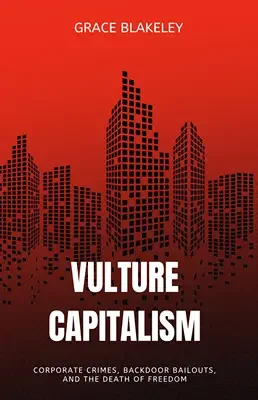
Imagine a world where corporations feast on the carcasses of failed businesses, growing fatter and more powerful with each economic crisis. This nightmarish vision is not a dystopian fiction but the reality Grace Blakeley exposes in her hard-hitting book, Vulture Capitalism: Corporate Crimes, Backdoor Bailouts, and the Death of Freedom. Blakeley tears off the mask of modern capitalism, revealing a system that has evolved to prioritize corporate profits over human welfare and democratic values.
The author takes us on a journey through the murky waters of corporate malfeasance, political corruption, and economic manipulation. She meticulously documents how large corporations have rigged the system in their favor, exploiting loopholes, influencing legislation, and leveraging their financial power to extract wealth from society. Blakeley argues that this form of capitalism has become predatory, swooping in to profit from economic downturns and leaving devastation in its wake.
One of the book’s most shocking revelations is the extent of corporate welfare and backdoor bailouts. Blakeley uncovers a pattern of government intervention that consistently favors big business at the expense of small enterprises and ordinary citizens. She shows how taxpayer money is funneled into corporate coffers through opaque mechanisms, all while public services face cuts and austerity measures.
The consequences of this vulture capitalism, Blakeley contends, extend far beyond economic inequality. She makes a compelling case that the concentration of corporate power poses a direct threat to democratic freedoms. As corporations gain more influence over political processes and public discourse, the voices of ordinary citizens are increasingly marginalized. The author warns that this trend, if left unchecked, could lead to a form of corporate authoritarianism.
Readers of Vulture Capitalism will gain a comprehensive understanding of the structural issues plaguing modern economies. They’ll learn about the historical development of corporate power, the mechanics of financial manipulation, and the intricate relationships between business and government. Blakeley equips her audience with the tools to critically analyze economic policies and corporate behaviors, empowering them to recognize the signs of vulture capitalism in their own communities and on the global stage.
The central thesis of Vulture Capitalism is that the current economic system has been corrupted to serve the interests of a small corporate elite at the expense of the broader population and democratic principles. Blakeley argues that what we’re witnessing is not a flaw in the system but its intended design – a form of capitalism that thrives on crisis and inequality.
To illustrate this point, think of the economy as a game of Monopoly where a few players start with hotels on every property while the rest barely have enough to make it past “Go.” In this rigged game, the wealthy players not only benefit from their initial advantage but also have the power to change the rules mid-game, ensuring their continued dominance. This analogy captures the essence of what Blakeley sees as the fundamental unfairness and unsustainability of vulture capitalism.
Vulture Capitalism has made significant waves in the field of political economy and public discourse on economic reform. Blakeley’s work stands out for its comprehensive analysis of the interconnected nature of corporate power, political influence, and economic policy. By connecting the dots between seemingly disparate issues, she provides a holistic view of the challenges facing modern democracies.
The book has been particularly praised for its accessibility, bringing complex economic concepts to a broader audience without sacrificing depth or rigor. This approach has helped spark conversations about economic inequality and corporate accountability among groups that might not typically engage with such topics.
Blakeley’s critique of the current economic system has not been without controversy. Some economists and business leaders have pushed back against her characterization of capitalism as inherently predatory, arguing that free markets and corporate innovation have brought significant benefits to society. However, even critics acknowledge the importance of the issues she raises regarding corporate influence and economic inequality.
While Vulture Capitalism is relatively new to the market, it has already garnered attention from policy circles and grassroots organizations alike. The book has been featured in numerous economic and political forums, with Blakeley invited to speak at conferences and universities about her findings. Its impact is evident in the growing calls for increased corporate regulation and economic reform that echo many of the book’s key points.
Grace Blakeley’s Vulture Capitalism offers a compelling and accessible critique of modern capitalism that we find both timely and thought-provoking. We appreciate the book’s comprehensive approach to examining the interconnected issues of corporate power, economic inequality, and the erosion of democratic freedoms. Blakeley’s ability to break down complex economic concepts into understandable terms makes this book valuable for readers seeking to grasp the intricacies of our current economic system.
We find the book’s use of real-world examples and case studies particularly effective in illustrating the abstract concepts Blakeley discusses. This approach grounds the theoretical critique in concrete situations that readers can relate to, enhancing the book’s impact and memorability. The historical context provided throughout the book also adds depth to the analysis, helping readers understand how we arrived at the current state of “vulture capitalism.”
However, we must note that the book’s strong critique of free-market capitalism may not resonate with all readers, particularly those who hold more conservative economic views. While Blakeley’s arguments are well-constructed, the book’s perspective could be seen as ideologically skewed, potentially limiting its appeal to a broader audience.
We also find that the book could have benefited from a more in-depth exploration of successful alternative economic models and a more global perspective on capitalist practices. Additionally, a deeper examination of the role of emerging technologies in shaping future economic landscapes would have added valuable insights to the discussion.
Despite these limitations, we believe that Vulture Capitalism makes a significant contribution to the ongoing debate about the nature and future of our economic system. The book’s strengths in accessibility, comprehensive analysis, and actionable insights outweigh its shortcomings.
Our Recommendation
We recommend Vulture Capitalism to readers seeking a critical understanding of modern capitalism and its societal impacts. The book is particularly valuable for those looking to expand their economic literacy and gain insights into the mechanisms behind corporate power and economic inequality.
For a balanced perspective, we suggest reading this book alongside works that offer different viewpoints or focus on alternative economic models. While Vulture Capitalism provides a powerful critique, engaging with a range of economic perspectives will enable readers to form a more comprehensive understanding of these complex issues. Ultimately, we believe Blakeley’s work serves as an important catalyst for critical thinking about our economic system and the potential for meaningful reform.
The essence of Vulture Capitalism lies in its exploration of the systemic flaws within modern capitalism that have led to the concentration of wealth and power in the hands of a corporate elite. Grace Blakeley argues that this form of capitalism has become predatory, actively exploiting economic crises and vulnerabilities for profit. She contends that this system undermines democratic principles and exacerbates social inequalities. The book focuses on the mechanisms through which corporations manipulate markets, influence policy, and extract wealth from society, often with the complicity of governments.
A key concept Blakeley introduces is the idea of “vulture capitalism” itself. This term encapsulates the predatory nature of modern corporate behavior, where large companies swoop in during times of economic distress to acquire assets at fire-sale prices, often with government support. This practice not only concentrates wealth but also perpetuates a cycle of economic instability. Blakeley argues that this form of capitalism goes beyond mere opportunism; it actively creates and exploits crises for profit.
Another critical element of the book is the exploration of corporate bailouts and their long-term consequences. Blakeley posits that government interventions in times of economic crisis often favor large corporations at the expense of small businesses and ordinary citizens. These bailouts, she argues, create a moral hazard where corporations are incentivized to take greater risks, knowing they will be rescued if things go wrong. This system effectively privatizes profits while socializing losses, further entrenching economic inequality.
The book also delves into the concept of financialization, which Blakeley sees as a key driver of vulture capitalism. She explains how the increasing dominance of the financial sector in the economy has led to a shift away from productive investments towards speculative activities. This trend, according to Blakeley, has hollowed out industries, suppressed wages, and created an economy increasingly prone to bubbles and crashes.
Blakeley emphasizes the erosion of democratic freedoms as a consequence of vulture capitalism. She argues that as corporations amass more wealth and power, they gain undue influence over political processes. This corporate capture of democracy, she contends, leads to policies that favor business interests over public welfare. The book explores how this dynamic undermines the fundamental principles of democratic governance and citizen representation.
The concept of neoliberalism and its role in shaping modern capitalism is another crucial aspect of Blakeley’s analysis. She traces the historical development of neoliberal policies and their impact on economic structures and social dynamics. Blakeley argues that neoliberalism has provided the ideological framework that justifies and perpetuates vulture capitalism, promoting deregulation, privatization, and the primacy of market forces over social considerations.
2008 Financial Crisis: The book extensively discusses the 2008 financial crisis as a prime example of vulture capitalism in action. Blakeley details how large financial institutions engaged in risky lending practices, particularly in the subprime mortgage market, leading to a massive economic meltdown. She then illustrates how these same institutions received enormous government bailouts, while millions of homeowners faced foreclosure and economic hardship.
Private Equity and Retail Sector: Blakeley provides a case study of how private equity firms have impacted the retail sector. She examines instances where private equity companies acquired struggling retail chains, loaded them with debt, extracted value through asset sales and cost-cutting measures, and ultimately led many to bankruptcy. This example showcases how vulture capitalism can accelerate the decline of traditional industries while enriching a small group of investors.
Tech Giants and Market Dominance: The book explores the rise of big tech companies as an example of how modern capitalism tends towards monopolization. Blakeley analyzes how companies like Amazon, Google, and Facebook have used their market power to squash competition, influence regulations, and extract data and wealth from users. She argues that their dominance extends beyond the economic sphere, shaping social interactions and even democratic processes.
Privatization of Public Services: Blakeley uses the example of privatized public services, particularly in the UK, to illustrate how vulture capitalism infiltrates essential sectors. She examines cases where privatization of services like railways, water utilities, and healthcare has led to increased costs for consumers, reduced quality of service, and significant profits for private companies, often subsidized by public funds.
Tax Havens and Corporate Tax Avoidance: The book provides examples of how multinational corporations use complex networks of offshore subsidiaries and tax havens to avoid paying their fair share of taxes. Blakeley shows how this practice deprives governments of crucial revenue, exacerbating inequality and forcing austerity measures that disproportionately affect the most vulnerable members of society.
Gig Economy and Labor Exploitation: Blakeley examines the rise of the gig economy as an example of how vulture capitalism reshapes labor markets. She discusses companies like Uber and Deliveroo, analyzing how their business models rely on classifying workers as independent contractors, thereby avoiding traditional labor protections and benefits. This case study illustrates how new forms of capitalism can lead to precarious working conditions and the erosion of workers’ rights.
The Predatory Nature of Modern Capitalism
Grace Blakeley’s Vulture Capitalism reveals how the current economic system has evolved to prioritize corporate profits over societal well-being. This insight challenges the notion that free markets naturally lead to optimal outcomes for all. To apply this understanding, individuals and policymakers should critically examine economic policies and corporate behaviors through the lens of their broader societal impact. For instance, when evaluating a company’s success, look beyond stock prices and profit margins to consider factors like employee wages, environmental impact, and contribution to local communities. Consumers can support businesses that demonstrate ethical practices and avoid those known for exploitative behaviors. Policymakers should prioritize regulations that curb predatory corporate practices, such as implementing stricter antitrust laws or mandating transparency in corporate lobbying activities.
The Myth of Trickle-Down Economics
Blakeley dismantles the theory of trickle-down economics, showing how policies favoring the wealthy and corporations have failed to benefit the broader population. This insight calls for a reevaluation of economic strategies that rely on enriching the top in hopes of indirect benefits for all. To apply this knowledge, policymakers should focus on bottom-up economic policies that directly benefit lower and middle-income groups. For example, investing in public education, healthcare, and infrastructure can create jobs and improve living standards more effectively than corporate tax cuts. Individuals can advocate for progressive taxation systems and support political candidates who prioritize policies aimed at reducing income inequality. Business leaders can implement fair wage policies and profit-sharing schemes to ensure that company success translates into benefits for all employees, not just executives and shareholders.
The Financialization of the Economy
The book highlights how the growing dominance of the financial sector has shifted focus from productive investments to speculative activities, often at the expense of real economic growth. To counter this trend, policymakers should consider implementing regulations that encourage long-term investment in productive sectors of the economy. This could include higher taxes on short-term capital gains or incentives for investments in research and development, green technology, and infrastructure. Individuals can apply this insight by diversifying their investments beyond just stocks and bonds, considering options like local business investments or community development financial institutions. Companies should prioritize reinvesting profits into product development, employee training, and sustainable practices rather than focusing solely on boosting short-term share prices through stock buybacks or financial engineering.
The Erosion of Democratic Freedoms
Blakeley argues that the concentration of corporate power poses a significant threat to democratic processes. To address this, citizens need to be more engaged in the political process and vigilant about corporate influence. Practical steps include supporting campaign finance reform initiatives, participating in local government meetings, and using tools like OpenSecrets.org to track corporate political donations. Media literacy is crucial – individuals should diversify their news sources and learn to identify corporate bias in reporting. Policymakers should strengthen lobbying regulations, requiring more transparency and implementing stricter limits on the “revolving door” between government and industry. Companies can contribute positively by voluntarily disclosing their political activities and committing to ethical lobbying practices.
The True Cost of Corporate Bailouts
The book exposes how government bailouts often favor large corporations at the expense of small businesses and taxpayers. To apply this insight, policymakers should redesign bailout programs to prioritize support for small and medium-sized enterprises, which are often more vital to local economies. This could involve setting aside a significant portion of emergency funds specifically for small businesses or implementing stricter conditions on corporate bailouts, such as limits on executive compensation and stock buybacks. Individuals can support local and independent businesses, especially during economic downturns. Investors should be wary of companies that rely heavily on government support and instead look for businesses with sustainable practices and strong fundamentals.
The Gig Economy’s Hidden Costs
Blakeley’s analysis of the gig economy reveals how new business models can lead to worker exploitation and the erosion of labor rights. To address this, policymakers should update labor laws to ensure gig workers receive appropriate protections and benefits. This could include redefining employee classification criteria or mandating minimum benefits for all workers, regardless of classification. Consumers can make informed choices about which gig economy services they use, favoring companies that provide fair wages and benefits to their workers. Workers in the gig economy should explore opportunities to organize and advocate for better conditions, possibly through new forms of digital unions or worker cooperatives.
The Role of Tax Havens in Exacerbating Inequality
The book illuminates how tax havens and corporate tax avoidance schemes deprive governments of crucial revenue and worsen economic inequality. To combat this, international cooperation is essential. Policymakers should work towards global minimum corporate tax rates and stricter regulations on offshore financial centers. At a national level, closing tax loopholes and increasing resources for tax enforcement can help ensure corporations pay their fair share. Individuals can support organizations and politicians advocating for tax justice and transparency. Consumers and investors can also pressure companies to disclose their tax practices and favor those with responsible tax policies.
The Importance of Economic Literacy
Throughout Vulture Capitalism, Blakeley emphasizes the need for broader public understanding of economic systems and policies. To apply this insight, educational institutions should prioritize economic literacy in their curricula, not just in specialized courses but as part of general education. This should include critical analysis of different economic theories and their real-world impacts. Individuals can take advantage of free online resources, such as MOOCs or educational YouTube channels, to improve their economic knowledge. Community organizations can organize workshops or discussion groups focused on economic issues. Media outlets should strive to explain economic concepts and policies in accessible terms, providing context and diverse perspectives on economic news.
Comprehensive Analysis of Modern Capitalism
Grace Blakeley’s Vulture Capitalism offers a thorough and wide-ranging examination of the current state of capitalism. The book’s strength lies in its ability to connect various aspects of the economic system, from corporate behavior and government policies to their impacts on society and democracy. Blakeley doesn’t simply focus on isolated issues but weaves together a complex narrative that illustrates how different elements of the economy interact and reinforce each other. This holistic approach helps readers understand the systemic nature of the problems she identifies, rather than viewing them as isolated incidents or aberrations.
Accessible Explanation of Complex Economic Concepts
One of the book’s most notable strengths is its ability to break down complex economic theories and concepts into understandable terms for a general audience. Blakeley avoids excessive jargon and explains financial mechanisms, policy impacts, and economic trends in clear, concise language. This accessibility is crucial, as it allows readers without a background in economics to grasp the intricacies of the issues at hand. By demystifying concepts like financialization, neoliberalism, and corporate bailouts, Blakeley empowers her readers with the knowledge to engage more critically with economic news and policies that affect their lives.
Rich in Real-World Examples and Case Studies
Vulture Capitalism is not merely a theoretical critique; it grounds its arguments in concrete, real-world examples. Blakeley draws from a wide range of case studies, from the 2008 financial crisis to the practices of tech giants and the impacts of privatization. These examples serve to illustrate her points vividly, making the abstract concepts she discusses tangible and relatable. By showing how vulture capitalism manifests in familiar situations and industries, Blakeley helps readers connect the dots between economic policies and their everyday experiences. This approach not only strengthens her arguments but also makes the book more engaging and memorable.
Strong Historical Context
The book excels in providing historical context for the development of modern capitalism. Blakeley traces the evolution of economic systems and policies over time, showing how we arrived at the current state of vulture capitalism. This historical perspective is valuable as it helps readers understand that the current economic system is not inevitable or natural, but the result of specific choices and policies implemented over decades. By illuminating the historical roots of today’s economic challenges, Blakeley offers insights into how these issues might be addressed or reversed.
Compelling Critique of Corporate Power
Blakeley presents a powerful and well-argued critique of the concentration of corporate power in modern economies. She meticulously documents how large corporations have gained outsized influence over economic policies, political processes, and social structures. The book’s strength lies in its ability to connect corporate behavior to broader societal issues, showing how the pursuit of profit often comes at the expense of public welfare, democratic freedoms, and economic stability. Blakeley’s analysis challenges readers to reconsider the role of corporations in society and the extent to which their power should be checked.
Actionable Insights for Reform
While Vulture Capitalism offers a stark critique of the current economic system, it doesn’t stop at merely pointing out problems. Blakeley provides thoughtful suggestions for reform and alternatives to the status quo. These recommendations range from policy changes to individual actions, giving readers a sense of how change might be achieved at various levels. By offering concrete ideas for addressing the issues she identifies, Blakeley ensures that the book is not just a critique but also a call to action, empowering readers to engage with and potentially influence economic systems.
Potential Ideological Bias
While Blakeley’s critique of vulture capitalism is well-argued, some readers might find the book’s perspective overly skewed towards a left-wing economic viewpoint. The strong criticism of free-market capitalism and corporate power, while valid in many respects, sometimes lacks a balanced consideration of the potential benefits or successes of capitalist systems. This apparent bias might make the book less persuasive to readers who don’t already share Blakeley’s ideological leanings, potentially limiting its impact on broader economic discussions.
Limited Exploration of Successful Alternatives
Although Vulture Capitalism offers a comprehensive critique of the current economic system, it could benefit from a more in-depth exploration of successful alternative models. While Blakeley suggests various reforms and changes, the book doesn’t provide extensive case studies of economies or societies that have successfully implemented different approaches. A more thorough examination of working alternatives could strengthen the book’s arguments and provide readers with a clearer vision of potential paths forward.
Occasional Oversimplification of Complex Issues
In its effort to make complex economic concepts accessible to a general audience, the book sometimes oversimplifies certain issues. While this approach enhances readability, it occasionally leads to a loss of nuance in the discussion of intricate economic mechanisms or policy impacts. Some readers, particularly those with a background in economics, might find that certain arguments lack the depth and complexity necessary for a full understanding of the issues at hand. This simplification, while making the book more accessible, might leave some readers wanting a more nuanced analysis of certain topics.
Insufficient Attention to Technological Impacts
Given the rapid pace of technological change and its profound effects on the economy, Vulture Capitalism could have benefited from a more extensive discussion of how emerging technologies are shaping and potentially exacerbating the issues Blakeley identifies. While the book touches on topics like the gig economy and tech giants, a deeper exploration of how technologies like artificial intelligence, blockchain, or automation might interact with or change the dynamics of vulture capitalism could have provided valuable insights into future economic challenges and opportunities.
Limited Global Perspective
One notable blind spot in Vulture Capitalism is its primarily Western-centric focus, particularly on the United States and the United Kingdom. While this perspective offers valuable insights into these economies, it may lead readers to overlook the diverse manifestations of capitalism in other parts of the world. The book’s critique might not fully apply to economies with different historical, cultural, and political contexts, such as the state-capitalist model in China or the social market economies in parts of Europe. This limitation could result in misconceptions about the universality of the issues Blakeley identifies. Readers might benefit from complementing Blakeley’s work with books that offer a more global perspective, such as Branko Milanovic’s Capitalism, Alone: The Future of the System That Rules the World, which provides a comprehensive analysis of different capitalist systems worldwide. Similarly, Ha-Joon Chang’s 23 Things They Don’t Tell You About Capitalism offers insights into various economic models and their outcomes across different cultures and regions.
Underestimation of Capitalism’s Adaptability
While Blakeley provides a compelling critique of current capitalist practices, the book may underestimate capitalism’s historical ability to adapt and evolve in response to crises and criticism. This blind spot could lead readers to view the current form of capitalism as more fixed and unchangeable than it might be. The book’s focus on the negative aspects of capitalism, while important, might overshadow the system’s capacity for reform and innovation. This perspective could potentially discourage readers from engaging in efforts to reform the system from within. For a more balanced view on capitalism’s adaptive nature, readers might turn to Joseph Schumpeter’s classic work Capitalism, Socialism and Democracy, which introduces the concept of “creative destruction” and capitalism’s evolutionary nature. Additionally, Mariana Mazzucato’s The Value of Everything: Making and Taking in the Global Economy offers a nuanced critique of modern capitalism while also highlighting its potential for positive transformation when properly directed.
Insufficient Attention to Environmental Challenges
Although Vulture Capitalism touches on various societal impacts of current economic practices, it could have devoted more attention to the pressing environmental challenges exacerbated by the current economic system. This blind spot may lead readers to underestimate the urgency and scale of environmental issues in discussions about economic reform. The book’s focus on social and economic inequalities, while crucial, might inadvertently downplay the existential threat posed by climate change and environmental degradation. To address this blind spot, readers could supplement Blakeley’s work with books that explicitly link capitalism and environmental issues. Kate Raworth’s Doughnut Economics: Seven Ways to Think Like a 21st-Century Economist offers a model for balancing social and environmental needs within economic systems. Similarly, Naomi Klein’s This Changes Everything: Capitalism vs. The Climate provides a comprehensive examination of how capitalist practices contribute to climate change and explores potential solutions.
Overlooking the Role of Innovation and Entrepreneurship
In its critique of corporate power and financialization, Vulture Capitalism may not fully acknowledge the role of innovation and entrepreneurship in driving economic progress and solving societal problems. This blind spot could lead readers to develop an overly pessimistic view of business and underestimate the potential for positive change driven by the private sector. While Blakeley’s critique of corporate excesses is valid, the lack of attention to beneficial innovations emerging from capitalist systems might result in a skewed perspective. Readers interested in a more balanced view might consider Clayton Christensen’s The Innovator’s Dilemma, which explores how disruptive innovation can challenge established corporate powers. Additionally, William Baumol’s The Free-Market Innovation Machine: Analyzing the Growth Miracle of Capitalism offers insights into how capitalist systems can foster innovation and economic growth when properly structured.
Underexploration of Digital Economy Dynamics
While Vulture Capitalism addresses some aspects of the modern digital economy, it may not fully capture the rapidly evolving dynamics of this sector and its implications for future economic structures. This blind spot could lead readers to underestimate the transformative potential of digital technologies in reshaping economic relationships and power structures. The book’s focus on traditional corporate models might not adequately prepare readers for the challenges and opportunities presented by emerging digital platforms, cryptocurrencies, and decentralized finance systems. To gain a more comprehensive understanding of these issues, readers might turn to Shoshana Zuboff’s The Age of Surveillance Capitalism: The Fight for a Human Future at the New Frontier of Power, which explores how digital technologies are reshaping economic power dynamics. Additionally, Don Tapscott and Alex Tapscott’s Blockchain Revolution: How the Technology Behind Bitcoin and Other Cryptocurrencies Is Changing the World offers insights into how emerging technologies might challenge traditional economic structures and potentially address some of the issues Blakeley identifies in her critique of vulture capitalism.
The Shock Doctrine by Naomi Klein
Vulture Capitalism shares several themes with Naomi Klein’s influential work The Shock Doctrine. Both books critique the exploitation of crises by powerful economic actors for their own gain. However, while Klein focuses on how disasters and shocks are used to push through unpopular free-market policies, Blakeley’s work provides a broader critique of the ongoing practices of modern capitalism. Klein’s book offers more historical case studies from around the world, whereas Blakeley’s analysis is more focused on contemporary economic structures in Western countries. The Shock Doctrine might be seen as laying the groundwork for understanding how vulture capitalism operates in extreme situations, while Vulture Capitalism expands this critique to the everyday functioning of the current economic system.
Capital in the Twenty-First Century by Thomas Piketty
Thomas Piketty’s Capital in the Twenty-First Century offers a comprehensive analysis of wealth and income inequality, which complements Blakeley’s work in Vulture Capitalism. While both books critique the concentration of wealth and power in modern capitalism, Piketty’s approach is more data-driven and academic, focusing on long-term historical trends in wealth accumulation. Blakeley’s work, on the other hand, provides a more accessible and politically charged critique of current corporate practices and their societal impacts. Piketty’s book offers a broader historical perspective and more detailed economic analysis, while Blakeley’s work provides a more immediate and visceral critique of contemporary capitalism.
Saving Capitalism by Robert Reich
Robert Reich’s Saving Capitalism offers an interesting contrast to Vulture Capitalism. While both books critique the current state of capitalism, Reich’s approach is more reformist, arguing that capitalism can be saved through significant policy changes and renewed focus on fair competition. Blakeley’s critique is more fundamental, suggesting that the problems are inherent to the capitalist system itself. Reich’s book provides more specific policy recommendations and focuses on the American context, while Blakeley’s work offers a broader critique of global capitalism. Readers might find Reich’s book more optimistic about the potential for reforming capitalism from within the existing system.
The Value of Everything by Mariana Mazzucato
Mariana Mazzucato’s The Value of Everything shares with Vulture Capitalism a critical view of how modern capitalism determines and distributes value. However, Mazzucato’s work focuses more on challenging the notion of value creation in modern economics, arguing that many sectors, particularly finance, extract value rather than create it. While Blakeley’s book provides a broader critique of capitalist practices, Mazzucato’s work dives deeper into the specifics of how value is measured and rewarded in the current system. The Value of Everything offers more detailed analysis of economic theory and policy, complementing Blakeley’s more accessible critique of corporate practices and their societal impacts.
Increase Economic Literacy
Examine Your Financial Practices
Engage in Local Economics
Advocate for Economic Reform
Rethink Your Career and Work Life
Practice Mindful Consumption
Foster Financial Resilience
Engage in Collective Action
Reassess Corporate Values and Mission
Businesses can apply the insights from Vulture Capitalism by critically examining their core values and mission statements. This process involves evaluating how the company’s practices align with broader societal needs and ethical considerations. Companies should consider redefining success beyond pure profit maximization, incorporating metrics related to employee well-being, environmental sustainability, and community impact.
However, implementing such changes can face resistance from shareholders who prioritize short-term financial gains. There may also be concerns about potentially sacrificing competitive advantage in a market where other companies continue to prioritize profit above all else. Additionally, redefining core values and mission statements can be a complex and time-consuming process that requires buy-in from all levels of the organization.
To overcome these challenges, companies can start by educating their board members and shareholders about the long-term benefits of a more holistic approach to business. This could involve presenting case studies of successful companies that have adopted similar practices. Implementing the changes gradually can also help mitigate resistance. Companies can begin by incorporating new metrics into their reporting processes, gradually giving these metrics more weight in decision-making over time. Engaging employees at all levels in the process of redefining the company’s values and mission can also help build organizational buy-in and create a sense of shared purpose.
Implement Ethical Supply Chain Practices
Businesses can apply Blakeley’s critique of exploitative capitalist practices by thoroughly auditing their supply chains and implementing more ethical practices. This involves ensuring fair wages and safe working conditions throughout the supply chain, as well as considering the environmental impact of sourcing decisions. Companies should aim to build long-term, mutually beneficial relationships with suppliers rather than constantly seeking the lowest-cost option.
Implementing ethical supply chain practices can be challenging due to the complexity of global supply networks and the potential for increased costs. There may be a lack of transparency from suppliers, making it difficult to verify working conditions and environmental practices. Additionally, changing long-established supplier relationships can disrupt operations and potentially lead to short-term increases in production costs.
To address these challenges, companies can start by prioritizing transparency in their supply chains. This could involve investing in technologies like blockchain to track products from source to consumer. Gradually implementing changes can help manage cost increases, starting with pilot programs in specific product lines or regions. Building industry coalitions to establish and enforce ethical supply chain standards can help level the playing field and share the costs of implementation. Companies can also educate consumers about the importance of ethical sourcing, potentially justifying slight price increases for more ethically produced goods.
Prioritize Employee Well-being and Empowerment
Applying the insights from Vulture Capitalism, businesses should focus on improving employee well-being and empowerment. This could involve implementing fair wage policies, providing comprehensive benefits packages, offering professional development opportunities, and creating pathways for employee input in decision-making processes. Companies should also consider alternative organizational structures, such as employee ownership models or cooperatives, that give workers a greater stake in the business.
Challenges in implementing these changes include potential resistance from management who may fear loss of control, concerns about increased labor costs impacting profitability, and the complexity of restructuring established organizational hierarchies. There may also be legal and regulatory hurdles to overcome, particularly when considering alternative ownership structures.
To overcome these obstacles, companies can start by piloting employee empowerment initiatives in specific departments or teams, allowing for controlled experimentation and data collection on the impacts. Providing training for managers on collaborative leadership styles can help address fears about loss of control. To manage cost concerns, businesses can implement changes gradually and offset increased labor costs through improved productivity and reduced turnover. Consulting with legal experts and studying successful case studies of alternative organizational structures can help navigate the complexities of major structural changes. Engaging employees in the process of developing these initiatives can also help ensure they meet actual worker needs and build support throughout the organization.
Adopt Sustainable and Circular Business Models
In response to Blakeley’s critique of capitalism’s environmental impacts, businesses should strive to adopt sustainable and circular business models. This involves minimizing waste, reducing energy consumption, using renewable resources, and designing products for longevity and recyclability. Companies should aim to create closed-loop systems where materials are continually reused rather than discarded.
Implementing sustainable and circular business models can be challenging due to the need for significant upfront investments in new technologies and processes. There may be a lack of established infrastructure for recycling or reusing certain materials. Additionally, shifting to more sustainable practices might initially impact profit margins, particularly if competitors continue with less sustainable but cheaper practices.
To address these challenges, companies can start by conducting a thorough audit of their current practices to identify areas where sustainable changes could also lead to cost savings, such as reducing energy consumption or minimizing waste. Implementing changes incrementally can help manage costs and allow for learning and adjustment. Collaborating with other businesses, NGOs, and government agencies can help in developing the necessary infrastructure for circular systems. Companies can also educate consumers about the importance of sustainability, potentially creating market demand for more sustainable products. Exploring green financing options and government incentives for sustainable practices can help offset initial costs.
Engage in Responsible Financial Practices
Businesses can apply Blakeley’s insights by adopting more responsible financial practices. This includes maintaining transparent accounting practices, avoiding aggressive tax avoidance strategies, and ensuring that executive compensation is reasonably tied to company performance and worker wages. Companies should also consider the broader impacts of their financial decisions, such as how stock buybacks might affect long-term investment in research and development or worker wages.
Implementing responsible financial practices can face resistance from shareholders accustomed to aggressive profit maximization strategies. There may be concerns about losing competitive advantage if other companies continue to engage in more aggressive financial practices. Additionally, changing established financial practices can be complex and may require significant adjustments to existing systems and processes.
To overcome these challenges, companies can start by educating shareholders about the long-term benefits of responsible financial practices, including enhanced reputation, reduced legal risks, and improved employee morale. Implementing changes gradually can help manage expectations and allow for adjustment periods. Companies can also advocate for industry-wide or regulatory changes to level the playing field. Enhancing transparency in financial reporting and decision-making processes can help build trust with stakeholders and demonstrate the value of responsible practices. Tying executive compensation more closely to non-financial metrics, such as employee satisfaction or sustainability goals, can help align leadership incentives with responsible practices.
Invest in Local Communities
Applying Blakeley’s critique of the disconnect between corporate success and community well-being, businesses should prioritize investing in the local communities where they operate. This could involve creating local job training programs, supporting local suppliers, investing in community infrastructure, or partnering with local educational institutions. Companies should aim to be net positive contributors to their communities rather than simply extracting value.
Challenges in implementing community investment strategies include balancing local investments with global business operations, measuring the return on investment for community initiatives, and ensuring that community investments are sustainable and truly beneficial rather than paternalistic or short-lived. There may also be concerns about how such investments impact short-term profitability.
To address these challenges, companies can start by engaging directly with community stakeholders to understand local needs and priorities. This can help ensure that investments are truly beneficial and aligned with community desires. Developing clear metrics for measuring the impact of community investments can help justify these initiatives to shareholders and demonstrate their value over time. Companies can also explore partnerships with local governments, NGOs, and other businesses to share the costs and amplify the impacts of community investments. Integrating community investment into core business strategies, rather than treating it as a separate CSR initiative, can help ensure its sustainability and demonstrate its importance to the company’s overall success.
Increasing Wealth Inequality
The wealth gap continues to widen globally. Blakeley’s analysis of vulture capitalism aligns with this trend. As the rich get richer, the middle class shrinks. This pattern reinforces the book’s critique of current economic systems. Future economic policies may need to address this disparity more aggressively. The book’s ideas could influence discussions on wealth redistribution and tax reform.
Rise of Stakeholder Capitalism
There’s a growing push for businesses to consider all stakeholders, not just shareholders. This trend aligns with Blakeley’s call for more ethical business practices. Companies are increasingly expected to balance profit with social responsibility. The book’s critique could fuel this movement. It may inspire more businesses to adopt stakeholder-centric models. This shift could reshape corporate governance and business strategy in the coming years.
Technological Disruption and Automation
Rapid technological advancement is reshaping the job market. Blakeley’s concerns about worker exploitation may intensify with increased automation. The gig economy and precarious work arrangements are likely to expand. The book’s ideas could inform discussions on Universal Basic Income and job retraining programs. Policymakers might need to reconsider labor laws and social safety nets in light of these changes.
Environmental Crisis and Green Economy
Climate change is forcing a reevaluation of economic priorities. Blakeley’s critique of profit-driven capitalism aligns with calls for sustainable practices. The transition to a green economy could address some of the book’s concerns. It may lead to new forms of economic organization and value creation. The book’s ideas could influence how we balance economic growth with environmental protection.
Decentralization of Economic Power
Blockchain and cryptocurrencies are challenging traditional financial systems. This trend aligns with Blakeley’s critique of centralized corporate power. Decentralized finance could democratize access to financial services. The book’s ideas might inform how we regulate and integrate these new technologies. It could also spark discussions on alternative economic models and community-based financial systems.
Vulture Capitalism, as a relatively new book, has the potential to significantly influence public discourse on economic issues and policy-making. By providing an accessible yet comprehensive critique of modern capitalism, it may help to shift public opinion and increase demand for substantial economic reforms. The book’s clear explanations of complex economic concepts could contribute to greater economic literacy among the general public, potentially leading to more informed civic engagement on economic issues.
In academic circles, Blakeley’s work might spark renewed debate about the nature and future of capitalism. While her critiques are not entirely new, the book’s synthesis of various strands of criticism into a coherent narrative of “vulture capitalism” could provide a useful framework for further research and analysis. It may inspire more studies into the specific mechanisms by which corporate power is exercised and maintained in modern economies.
The book’s impact on policy-making could be significant, particularly in left-leaning political circles. Blakeley’s arguments might be used to support calls for stronger regulation of corporate activities, more progressive taxation, and measures to address economic inequality. However, the book’s reception in more centrist or conservative circles may be more limited due to its strong critique of free-market capitalism.
Looking to the future, the relevance of Vulture Capitalism is likely to grow as issues of economic inequality, corporate power, and the impacts of financialization become increasingly prominent in public discourse. The COVID-19 pandemic and its economic fallout may lend additional weight to Blakeley’s arguments about the fragility and inequities of the current economic system.
However, the book’s long-term influence will depend on how well its analysis holds up in the face of rapidly changing economic conditions and technological advancements. As the digital economy continues to evolve and new forms of economic organization emerge, some of Blakeley’s critiques may need to be updated or expanded. Nonetheless, the core arguments about the concentration of economic power and the need for systemic change are likely to remain relevant for years to come.
The Shock Doctrine by Naomi Klein: Klein’s work provides a historical perspective on how crises are exploited for economic gain, complementing Blakeley’s analysis of vulture capitalism. The book explores how disasters and upheavals have been used to push through unpopular free-market policies. It offers a broader global context to the issues Blakeley discusses, examining case studies from around the world. Readers will gain a deeper understanding of how economic exploitation operates in times of crisis, enriching their grasp of the systemic issues Blakeley identifies.
Capital in the Twenty-First Century by Thomas Piketty: Piketty’s comprehensive analysis of wealth and income inequality offers a data-driven companion to Blakeley’s critique. While Blakeley focuses on contemporary corporate practices, Piketty provides a long-term historical perspective on wealth accumulation. His work demonstrates how inequality is not an accident but a feature of capitalism. Readers will benefit from Piketty’s rigorous economic analysis, which supports many of Blakeley’s arguments with extensive historical data.
The Value of Everything by Mariana Mazzucato: Mazzucato’s book challenges conventional notions of value creation in modern economies, aligning with Blakeley’s critique of exploitative capitalist practices. She argues that many sectors, particularly finance, extract value rather than create it. This book provides a deeper dive into how economic value is measured and rewarded, offering readers a more nuanced understanding of the mechanisms Blakeley criticizes. Mazzucato’s work also proposes alternative ways of structuring economic incentives, complementing Blakeley’s call for systemic change.
Doughnut Economics by Kate Raworth: Raworth presents an alternative economic model that aims to balance social needs with environmental limits. This book offers a constructive counterpoint to the problems Blakeley identifies, providing readers with a vision of what a more equitable and sustainable economic system might look like. Raworth’s “doughnut” model challenges traditional economic growth paradigms, aligning with Blakeley’s critique while offering a framework for reimagining economic success.
The Entrepreneurial State by Mariana Mazzucato: This book challenges the notion that innovation and economic progress are driven primarily by the private sector, offering a counterpoint to the narrative of corporate-led growth criticized by Blakeley. Mazzucato demonstrates how many technological breakthroughs have roots in public sector investment and research. This perspective adds nuance to the discussion of the role of government in shaping economic outcomes, enriching readers’ understanding of potential alternatives to vulture capitalism.
Winners Take All by Anand Giridharadas: Giridharadas examines how the global elite’s efforts to “change the world” often serve to maintain the status quo and their own positions of power. This book complements Blakeley’s critique by exposing the limitations of market-based solutions to social problems. Readers will gain insight into how even seemingly philanthropic efforts can perpetuate systemic inequalities, adding depth to their understanding of how vulture capitalism maintains its grip on society.
The Age of Surveillance Capitalism by Shoshana Zuboff: Zuboff’s analysis of how digital technologies are reshaping economic power dynamics offers a crucial extension to Blakeley’s critique. This book explores how tech giants extract and monetize personal data, creating new forms of economic exploitation. Readers will gain a deeper understanding of how vulture capitalism is evolving in the digital age, complementing Blakeley’s focus on more traditional corporate practices. Zuboff’s work helps contextualize Blakeley’s arguments within the rapidly changing landscape of the tech-driven economy.
Talking to My Daughter About the Economy by Yanis Varoufakis: Varoufakis offers an accessible introduction to economic concepts and critiques of capitalism, making it an excellent companion to Blakeley’s work. Written as a series of letters to his daughter, this book breaks down complex economic ideas in simple terms. It provides historical context for the development of our current economic system, helping readers better understand the roots of the issues Blakeley discusses. This book is particularly valuable for readers new to economic critique, offering a gentle onramp to the more detailed analysis in Vulture Capitalism.
Websites and Online Platforms
Economic Policy Institute (EPI): This think tank focuses on the economic conditions of low- and middle-income Americans, providing research and analysis that align with many of Blakeley’s concerns. Their website (https://www.epi.org/) offers a wealth of reports, policy proposals, and data visualizations on issues like income inequality, worker rights, and economic policy.
Institute for New Economic Thinking (INET): INET’s platform (https://www.ineteconomics.org/) provides cutting-edge research and commentary on contemporary economic issues. Their work often challenges mainstream economic thinking, offering perspectives that complement Blakeley’s critique of vulture capitalism.
The Balance: This website (https://www.thebalance.com/) offers accessible explanations of economic concepts and current events. It’s an excellent resource for readers looking to build their economic literacy and better understand the context of Blakeley’s arguments.
Conferences
World Economic Forum: While often critiqued as a gathering of global elites, the WEF’s annual meeting in Davos (https://www.weforum.org/) provides insight into how business and political leaders are thinking about economic issues. Attending or following the discussions can help readers understand the perspectives Blakeley is critiquing.
New Economy Conference: Organized by the New Economy Coalition, this conference (https://neweconomy.net/) brings together activists, scholars, and practitioners working on alternative economic models. It’s an excellent opportunity for readers inspired by Blakeley’s critique to explore practical alternatives.
Professional Organizations
American Economic Association (AEA): The AEA (https://www.aeaweb.org/) is the premier professional organization for economists in the U.S. While it represents a range of economic perspectives, its resources and publications can help readers deepen their understanding of economic debates relevant to Blakeley’s work.
International Association for Feminist Economics (IAFFE): IAFFE (http://www.iaffe.org/) promotes feminist inquiry into economic issues. Their perspective often aligns with critiques of mainstream capitalism, offering valuable insights that complement Blakeley’s analysis.
Podcasts
Pitchfork Economics: Hosted by venture capitalist Nick Hanauer, this podcast (https://pitchforkeconomics.com/) explores new economic thinking and policy ideas. It often features guests whose work aligns with Blakeley’s critique of current economic systems.
Economic Update: Hosted by economist Richard Wolff, this podcast (https://www.democracyatwork.info/economicupdate) offers a weekly analysis of economic issues from a leftist perspective. It frequently discusses topics relevant to Blakeley’s critique of vulture capitalism.
Planet Money: While not explicitly aligned with Blakeley’s perspective, this NPR podcast (https://www.npr.org/podcasts/510289/planet-money) offers accessible explanations of economic concepts and events. It can help readers build the background knowledge needed to fully engage with Blakeley’s arguments.
Courses
“Capitalism: Competition, Conflict and Crises” by Anwar Shaikh: This course on Coursera (https://www.coursera.org/learn/capitalism-competition-conflict-crisis) offers a critical examination of capitalist economies, providing theoretical depth to complement Blakeley’s analysis.
“Economics of Money and Banking” by Perry Mehrling: Available on Coursera (https://www.coursera.org/learn/money-banking), this course provides insights into how the financial system works, helping readers better understand the mechanisms of financialization that Blakeley critiques.
Documentaries and Films
Inside Job: Directed by Charles Ferguson, this documentary provides a comprehensive analysis of the 2008 financial crisis. It offers visual context for many of the issues Blakeley discusses, particularly regarding corporate malfeasance and regulatory failure.
The Corporation: This documentary explores the nature and evolution of the corporation as a legal entity. It provides historical context that enriches readers’ understanding of the corporate behaviors Blakeley critiques in her book.
Capital in the Twenty-First Century: Based on Thomas Piketty’s book of the same name, this documentary visualizes key concepts related to wealth inequality. It serves as an excellent companion piece to Blakeley’s work, offering data-driven insights into long-term economic trends.
The Big Short: While a dramatization rather than a documentary, this film offers an engaging explanation of the 2008 financial crisis. It can help readers visualize some of the complex financial mechanisms that Blakeley discusses in her critique of vulture capitalism.