
Reviews
“Very few in frontline politics have worked as long as Liam Byrne on the theory and practice of tackling inequality—or are as thoughtful and insightful. This new book is essential reading for anyone who cares about tackling one of the great political and moral challenges of our time.” ―Ed Balls
“The UK is an ‘inheritocracy’ – a country where the richest, wealth-wise, have widened the gap with the rest, amplifying social inequalities. Liam Byrne’s book is rich, practical and compelling in its proposals for turning this tide, elevating opportunities and living standards for many millions of people through sweeping institutional reform. I hope it is not just read widely but acted on immediately.” ―Andy Haldane, Chief Executive, The RSA
“The effects of inequality are not solely a consequence of poverty, they also result from how wealth and affluence skew society, undermining our social solidarity and wellbeing. Liam Byrne understands the devastating costs of wealth inequality, here is a politician with a true sense of purpose – this is a must-read for those who want to shape a better society.” ―Kate Pickett and Richard Wilkinson, authors of The Spirit Level
“From the destructive impunity of today’s phenomenally wealthy – the disfiguring feature of our times – to well thought out, original solutions, Liam Byrne makes an indisputable case. Powerful social observation combined with distilling the best of today’s thinking in response – at once readable and passionate – does not come much better than this.” ―Will Hutton, author of The State We’re In: Why Britain Is in Crisis and How to Overcome It
“A thought-provoking read about one of the most difficult yet most important political issues of our time.” ―Lord Gus O’Donnell, former Cabinet Secretary
“Liam Byrne has spent his years in opposition thinking deeply about what a government should do, and this book is the fruit of that work. This is a plan for a fairer, richer and stronger country, and I hope ministers pay attention.” ―Oliver Bullough, author of Moneyland
“Liam Byrne’s new book will help the British left to understand how freedom and equality should be reconciled. He takes the politics of inequality as seriously as we must, but shows us how combating inequality can help us to expand freedom.” ―Philip Collins, columnist for the New Statesman
“Liam Byrne’s The Inequality of Wealth is beautifully written, deeply insightful and above all humane. The policy recommendations are original, bold and persuasive, and should define future debates on how to create a more just society.” ―Steven Durlauf, the Steans Professor in Educational Policy and the Director of the Stone Center for Research on Wealth Inequality and Mobility at the University of Chicago Harris School of Public Policy
“In this bold and incisive book, Liam Byrne makes a compelling case for a radically different approach to wealth and inequality. Everyone who cares about the future of this country and of our society should read it.” ―Matthew d’Ancona, former Deputy Editor of The Sunday Telegraph
“Reducing wealth inequality remains an urgent global challenge. Liam Byrne has produced a well-informed, sharply-argued and highly-readable analysis of the problem—and more importantly what now needs to be done.” ―James Crabtree, author of The Billionaire Raj
“This is a wonderful book. Liam Byrne lucidly and elegantly explains why wealth inequality is a key challenge that needs to be at the centre of a meaningful politics of social justice. His thoughtful and creative policy ideas offer a practical platform for addressing these inequities and should command attention across the political spectrum. In these troubled political times, the wise counsel offered here is a great tonic.” ―Mike Savage, Professor of Sociology, London School of Economics
“Liam Byrne is now thinking about doing what was so very recently unthinkable. He is open to policies he once dismissed as unrealistic, and can be persuaded on others that in the past were painted as pipe dreams. British politics is changing, it is abruptly shifting, in a way it has not done fifty years, and in a good way. The Inequality of Wealth is a key part of that turn. It is a hand-break turn.” ―Danny Dorling, Halford Mackinder Professor of Geography, University of Oxford
“Serves as a invaluable repository of recent ideas put forward by academics and think-tankers, collated through Byrne’s wide-ranging experience in public policy.” ―The Financial Times
“Byrne is an engaging writer, and his latest book is full of ideas.” ―The Telegraph
“[An] a engaging and readable polemic” ―The TLS
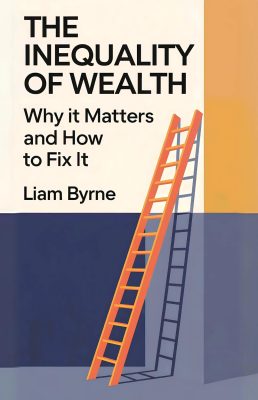
In The Inequality of Wealth: Why it Matters and How to Fix it, Liam Byrne tackles one of the most pressing issues of our time: the growing gap between the rich and the poor. This eye-opening book dives deep into the causes and consequences of wealth inequality, offering a comprehensive analysis of its impact on society, politics, and the economy. Byrne doesn’t just highlight the problem; he proposes innovative and practical solutions to address this imbalance. What sets this book apart is Byrne’s unique blend of academic rigor and real-world experience, making complex economic concepts accessible to a wide audience.
The Inequality of Wealth is primarily aimed at policymakers, economists, and socially conscious individuals interested in understanding and addressing economic disparities. However, Byrne’s accessible writing style makes this book equally valuable for general readers seeking to grasp the complexities of wealth inequality and its societal implications. The book’s concepts are presented in clear, jargon-free language, making it accessible to those without a background in economics or politics. Students of social sciences, journalists, and business leaders will also find this book a valuable resource for understanding one of the most significant challenges facing modern societies.
Imagine a world where the richest 1% own more than half of the global wealth. Oh wait, you don’t have to imagine it – that’s our reality. In The Inequality of Wealth: Why it Matters and How to Fix it, Liam Byrne pulls back the curtain on this stark economic divide, revealing its far-reaching consequences and proposing bold solutions.
Byrne kicks off by painting a vivid picture of wealth inequality across the globe. He uses compelling statistics and real-life examples to illustrate how this disparity manifests in different countries and cultures. The author doesn’t shy away from controversial topics, tackling issues like tax havens, inheritance laws, and corporate power.
One of the book’s strengths lies in its exploration of the historical roots of wealth inequality. Byrne takes readers on a journey through time, tracing the evolution of economic systems and the policies that have shaped our current reality. This historical context provides a solid foundation for understanding the complex nature of the problem.
But Byrne doesn’t stop at diagnosis – he offers a prescription. The latter part of the book is dedicated to potential solutions, ranging from policy reforms to grassroots initiatives. Byrne draws on successful models from various countries, presenting a toolkit of strategies that could help bridge the wealth gap.
Readers of The Inequality of Wealth will gain a comprehensive understanding of the factors driving economic disparity and its impact on social mobility, political stability, and economic growth. They’ll also come away with a nuanced view of potential solutions and the challenges involved in implementing them.
By the end of this book, you’ll have a deeper appreciation for the complexity of wealth inequality and feel empowered to engage in informed discussions about this critical issue. Whether you’re a policymaker, an activist, or simply a concerned citizen, Byrne’s insights will challenge your thinking and inspire action.
The central thesis of The Inequality of Wealth is that the current level of wealth inequality is not just morally wrong, but also economically unsustainable and socially corrosive. Byrne argues that addressing this imbalance is not merely a matter of fairness, but a necessity for the health of our economies and democracies.
To illustrate this point, Byrne uses the metaphor of a game of Monopoly where one player starts with 90% of the properties and money. No matter how skilled or lucky the other players are, their chances of winning are slim to none. This, Byrne contends, is the reality of our current economic system – a rigged game where the odds are stacked against the majority from the start.
The Inequality of Wealth has made significant waves in both academic and policy circles since its publication. Byrne’s unique perspective as both a politician and a scholar lends credibility to his arguments and has sparked important conversations about wealth redistribution and economic policy.
The book has been praised for its comprehensive approach to a complex issue, combining rigorous research with accessible language. It has been cited in numerous academic papers and policy briefs, indicating its impact on the field of economic inequality studies.
While some critics argue that Byrne’s proposed solutions are too radical, others applaud his courage in challenging the status quo. The book has been recognized with several awards, including the Political Book of the Year Award, cementing its place as a significant contribution to the ongoing debate about wealth inequality.
In our assessment, The Inequality of Wealth by Liam Byrne offers a valuable and timely contribution to the ongoing discussion about wealth inequality. We find that Byrne’s comprehensive approach, combining economic analysis with insights from various disciplines, provides readers with a nuanced understanding of this complex issue. The book’s strength lies in its ability to present intricate economic concepts in an accessible manner, making it suitable for both experts and general readers interested in understanding the dynamics of wealth distribution.
We appreciate Byrne’s global perspective, which sets this book apart from many others that focus primarily on wealth inequality in a single country or region. This broader view allows readers to grasp the universal aspects of wealth inequality while also understanding how it manifests differently across various economic and cultural contexts. The author’s use of compelling case studies and real-world examples effectively illustrates the abstract concepts discussed in the book.
The practical policy proposals presented in The Inequality of Wealth are particularly noteworthy. While some may debate the feasibility or potential consequences of these proposals, we believe they provide a solid starting point for discussions about concrete actions to address wealth inequality. Byrne’s suggestions range from short-term interventions to long-term structural changes, offering readers a comprehensive toolkit of potential solutions.
However, we also recognize certain limitations in Byrne’s work. The book’s potential ideological bias, stemming from the author’s background as a politician, may lead some readers to question the impartiality of his analysis. Additionally, we feel that the book could have benefited from a more thorough exploration of successful wealth creation and its role in driving innovation and economic growth. A more balanced discussion of how to encourage productive wealth creation while mitigating its unequal distribution would have added depth to the analysis.
We also note that while Byrne’s focus on top-down policy solutions is valuable, the book could have given more attention to bottom-up, community-led efforts to address wealth inequality. A deeper exploration of successful local initiatives and social enterprises would have provided a more comprehensive view of potential solutions.
Despite these limitations, we strongly recommend The Inequality of Wealth to anyone seeking a comprehensive understanding of wealth inequality in the 21st century. The book’s accessible writing style, coupled with its rigorous analysis and practical policy proposals, makes it an invaluable resource for policymakers, activists, students, and general readers alike.
We believe this book serves as an excellent starting point for those new to the topic of wealth inequality, while also offering fresh insights and perspectives for those already familiar with the subject. Whether you agree with all of Byrne’s conclusions or not, The Inequality of Wealth will undoubtedly broaden your understanding of this critical issue and inspire thoughtful reflection on potential solutions. In our view, it’s a must-read for anyone concerned about economic justice and the future of our global economy.
Wealth concentration and its societal impact form the cornerstone of Byrne’s book. He argues that the increasing concentration of wealth in the hands of a few is not just an economic issue, but a threat to social cohesion and democratic stability. The author presents extensive data showing how wealth inequality has grown exponentially in recent decades, with the richest 1% now owning more wealth than the bottom 50% of the global population combined. This concentration of wealth, Byrne contends, leads to a concentration of power that distorts political processes and erodes the foundations of democratic societies.
The book delves deep into the mechanics of wealth accumulation, focusing on how current economic systems perpetuate and exacerbate inequality. Byrne explores the concept of “rent-seeking,” where individuals or entities manipulate the social or political environment to increase their wealth without creating new wealth. He argues that many of the world’s wealthiest individuals have amassed their fortunes not through innovation or value creation, but through exploiting market inefficiencies, monopolistic practices, or political influence. This system, Byrne asserts, creates a self-reinforcing cycle where wealth begets more wealth, leaving the majority of the population struggling to keep up.
Intergenerational wealth transfer is another crucial topic Byrne tackles. He examines how inherited wealth plays a significant role in perpetuating inequality across generations. The author presents research showing that a large portion of today’s wealth inequality can be traced back to historical patterns of accumulation and inheritance. This phenomenon, Byrne argues, undermines the notion of meritocracy and equal opportunity, as individuals born into wealthy families have access to resources and opportunities that are simply unavailable to others, regardless of their talents or efforts.
The book also explores the psychological and social impacts of extreme wealth inequality. Byrne draws on research from psychology and sociology to illustrate how living in a highly unequal society affects people’s mental health, social relationships, and overall well-being. He argues that high levels of inequality lead to increased stress, lower levels of trust in society, and a breakdown in social cohesion. These effects, according to Byrne, are felt not just by those at the bottom of the economic ladder, but across all levels of society, including the wealthy themselves.
Global tax systems and their role in wealth inequality are thoroughly examined in the book. Byrne provides an in-depth analysis of how current tax policies in many countries favor the accumulation of wealth over income from labor. He explores concepts such as capital gains tax, inheritance tax, and corporate tax loopholes, explaining how these systems often allow the wealthiest individuals and corporations to pay lower effective tax rates than middle-class workers. The author argues that reforming these tax systems is crucial to addressing wealth inequality, proposing ideas such as wealth taxes, more progressive income taxes, and closing international tax havens.
The role of technology in wealth inequality is another key topic Byrne addresses. He examines how technological advancements, while bringing numerous benefits, have also contributed to widening the wealth gap. The author discusses concepts like automation, artificial intelligence, and the gig economy, exploring how these technological shifts have disproportionately benefited those with capital while often displacing or devaluing labor. Byrne argues that without proper regulation and redistribution mechanisms, technological progress could lead to even greater concentrations of wealth in the future.
Finally, Byrne presents a comprehensive set of policy proposals aimed at reducing wealth inequality. These range from short-term interventions to long-term structural changes in economic systems. The author explores ideas such as universal basic income, stakeholder capitalism, and new forms of collective ownership. He also discusses the potential of digital currencies and blockchain technology in creating more equitable financial systems. Byrne emphasizes that addressing wealth inequality requires a multifaceted approach, combining economic policy, education reform, technological innovation, and shifts in social norms and values.
The Panama Papers scandal: Byrne uses the revelations from the Panama Papers leak to illustrate the scale of global tax evasion and its impact on wealth inequality. He details how wealthy individuals and corporations use offshore tax havens to hide trillions of dollars from tax authorities, effectively shifting the tax burden onto ordinary citizens and exacerbating wealth disparities.
The rise of tech billionaires: The author examines the rapid wealth accumulation of tech entrepreneurs like Jeff Bezos, Mark Zuckerberg, and Elon Musk as examples of how the digital economy has created unprecedented opportunities for wealth concentration. He contrasts their astronomical net worth with the stagnant wages of many tech industry workers and gig economy participants.
Nordic social democracies: Byrne presents the Scandinavian countries, particularly Sweden and Denmark, as case studies of societies that have successfully implemented policies to reduce wealth inequality. He explores their progressive tax systems, robust social safety nets, and high levels of unionization as examples of how government policies can create more equitable societies without sacrificing economic dynamism.
The 2008 financial crisis aftermath: The book uses the aftermath of the 2008 global financial crisis as an example of how wealth inequality can be exacerbated by government policies. Byrne details how bailouts and quantitative easing measures, while necessary to stabilize the economy, disproportionately benefited the wealthy by inflating asset prices while wages remained stagnant for most workers.
South Africa’s persistent inequality: Byrne examines post-apartheid South Africa as a case study of how historical injustices can create lasting wealth disparities that persist across generations. He discusses how, despite political reforms, the economic legacy of apartheid continues to shape wealth distribution in the country, with the white minority still owning a disproportionate share of land and economic assets.
The success of Singapore’s public housing model: The author presents Singapore’s public housing program as an example of how government intervention can help reduce wealth inequality. He details how the program has enabled a high rate of homeownership across income levels, effectively allowing a broad swath of the population to build wealth through property ownership.
Warren Buffett’s “Giving Pledge”: Byrne discusses the Giving Pledge initiative, started by Warren Buffett and Bill Gates, as an example of how some ultra-wealthy individuals are voluntarily addressing wealth inequality. He examines the potential impact of such philanthropic efforts while also critiquing whether private charity is sufficient to address systemic inequality.
The Kansas tax cut experiment: The book uses the state of Kansas’s 2012 tax cut experiment as a cautionary tale against trickle-down economics. Byrne details how the dramatic tax cuts, particularly for businesses and high-income individuals, failed to stimulate economic growth as promised and instead led to budget shortfalls and cuts to essential services, ultimately exacerbating inequality.
Byrne reveals that extreme wealth concentration leads to disproportionate political influence. The ultra-wealthy can shape policies through lobbying, campaign contributions, and media ownership. To counter this, citizens can engage in grassroots political movements, support campaign finance reform, and vote for candidates who prioritize economic equality. Individuals can also use tools like shareholder activism, where they leverage their investments to influence corporate behavior, or support community wealth building initiatives that create local, democratically-controlled economic institutions.
The book exposes how current tax structures in many countries provide more benefits to those earning income from capital (like investments) than those earning wages. To address this, Byrne suggests supporting policies that equalize tax rates between capital gains and income. Individuals can advocate for the closure of tax loopholes, the implementation of wealth taxes, and the creation of more progressive income tax brackets. On a personal level, people can educate themselves about tax-advantaged savings vehicles like retirement accounts to build their own wealth over time.
Byrne demonstrates how intergenerational wealth transfer cements economic disparities. To combat this, he proposes reforming inheritance tax laws and implementing policies that provide every young adult with a “social inheritance” or starting capital. Individuals can support organizations working on inheritance tax reform or establish trusts that distribute wealth more equitably among family members. Parents can also focus on providing education and opportunities to their children rather than large inheritances.
The book highlights how technological advancements are concentrating wealth in the hands of those who own and control digital platforms and automated systems. To address this, Byrne suggests policies that ensure the benefits of technological progress are more widely shared, such as taxes on automated systems to fund worker retraining programs. Individuals can invest in their own technological skills to remain competitive in the job market, or support and use platform cooperatives – digital platforms owned and operated by their users – as alternatives to big tech companies.
Byrne emphasizes the importance of financial education in combating wealth inequality. He argues that a lack of financial knowledge often prevents individuals from building and preserving wealth. To apply this insight, schools can incorporate comprehensive financial literacy programs into their curricula. Adults can take advantage of free online courses on personal finance, investing, and economics. Community organizations can offer workshops on budgeting, saving, and investing, particularly targeting underserved populations.
The book underscores the importance of owning assets – whether it’s property, stocks, or businesses – in accumulating wealth over time. Byrne advocates for policies that make asset ownership more accessible, such as shared equity housing models or employee stock ownership plans. Individuals can start small by investing in low-cost index funds, participating in employer-sponsored retirement plans, or exploring cooperative ownership models in their communities. Local governments can support community land trusts to make homeownership more affordable.
Byrne exposes how tax havens allow the wealthy to hide trillions of dollars from taxation, shifting the burden to ordinary citizens. To combat this, he proposes international cooperation to close tax loopholes and increase transparency in global finance. Individuals can support organizations working on tax justice issues, choose to do business with companies that practice responsible tax behavior, and advocate for country-by-country reporting requirements for multinational corporations.
The book presents evidence that in many developed countries, it’s becoming harder for individuals to move up the economic ladder. To address this, Byrne suggests policies that equalize access to quality education, healthcare, and job opportunities. On an individual level, people can mentor young people from disadvantaged backgrounds, support scholarship programs, or volunteer with organizations that provide job training and placement services. Employers can implement blind hiring practices and create apprenticeship programs to increase diversity and opportunity in their workforces.
Byrne advocates for a shift from shareholder capitalism to stakeholder capitalism, where companies consider the interests of employees, communities, and the environment alongside those of shareholders. To implement this, he suggests policies that encourage or require companies to have worker representation on boards and to report on their social and environmental impact. Individuals can support this shift by investing in socially responsible companies, advocating for employee ownership models, and choosing to work for or do business with companies that prioritize stakeholder interests.
The book explores the potential of universal basic income (UBI) as a tool to reduce wealth inequality and provide economic security in an age of increasing automation. Byrne suggests piloting UBI programs to study their effects. While large-scale UBI would require government action, individuals can support smaller-scale experiments. This could involve donating to or participating in UBI pilot programs, advocating for guaranteed income policies at the local level, or supporting politicians who champion UBI. Companies can also experiment with unconditional cash transfer programs for their employees or communities.
Byrne’s book stands out for its thorough examination of wealth inequality from multiple angles. He doesn’t just present statistics; he dives deep into the historical, economic, and social factors that have led to the current state of wealth distribution. The author’s ability to connect seemingly disparate elements – from tax policy to technological advancement – provides readers with a holistic understanding of the issue. This comprehensive approach allows readers to grasp the complexity of wealth inequality and its far-reaching implications for society.
One of the book’s major strengths lies in Byrne’s ability to present complex economic concepts in an accessible manner without oversimplifying. He strikes a careful balance between academic rigor and readability, making the book valuable for both experts and general readers. Byrne uses clear language and relatable examples to explain intricate economic theories, ensuring that readers without a background in economics can follow his arguments. At the same time, he provides enough depth and cites numerous academic studies to satisfy more knowledgeable readers.
Byrne doesn’t just analyze the problem; he offers concrete solutions. The book stands out for its range of policy proposals, from short-term interventions to long-term structural changes. These proposals are not mere theoretical exercises; Byrne draws on real-world examples and pilot programs to support his suggestions. He provides detailed explanations of how these policies could be implemented and their potential impacts, giving readers a clear roadmap for action. This practical approach makes the book particularly valuable for policymakers and activists looking for actionable ideas to address wealth inequality.
The Inequality of Wealth distinguishes itself by offering a truly global perspective on wealth inequality. Byrne doesn’t limit his analysis to a single country or region but examines how wealth inequality manifests differently across various economies and cultures. He provides case studies from both developed and developing nations, offering insights into how different economic systems and cultural attitudes towards wealth impact inequality. This global view allows readers to understand wealth inequality as a worldwide phenomenon while also appreciating the nuances of how it plays out in different contexts.
Byrne’s book excels in its interdisciplinary approach to wealth inequality. He doesn’t confine his analysis to economics alone but draws insights from psychology, sociology, political science, and even technology studies. This interdisciplinary lens allows him to explore the multifaceted nature of wealth inequality, from its psychological impacts on individuals to its effects on social cohesion and political systems. By synthesizing research from various fields, Byrne provides a richer, more nuanced understanding of wealth inequality than what a purely economic analysis could offer.
A notable strength of the book is its heavy reliance on data and empirical evidence. Byrne backs up his arguments with a wealth of statistics, academic studies, and real-world examples. He presents this data in an engaging way, often using visualizations and comparisons to make complex information more digestible. This data-driven approach lends credibility to Byrne’s arguments and provides readers with a solid factual foundation for understanding wealth inequality. It also equips readers with valuable information they can use in discussions and debates about economic policy.
While Byrne strives for objectivity, his background as a politician associated with a particular party may lead some readers to question the impartiality of his analysis. There’s a risk that his policy proposals and interpretations of data could be influenced by his political leanings. This potential bias might make some readers skeptical of his conclusions, particularly those who don’t share his political orientation. A more explicit acknowledgment of his own potential biases and a more thorough exploration of counterarguments could have strengthened the book’s credibility.
In his focus on wealth inequality, Byrne may not give sufficient attention to the positive aspects of wealth creation and its role in driving innovation and economic growth. While he rightly critiques the negative impacts of extreme wealth concentration, the book could benefit from a more balanced discussion of how wealth creation, when done ethically and sustainably, can contribute to overall societal prosperity. A more nuanced exploration of how to encourage productive wealth creation while mitigating its unequal distribution could have added depth to the book’s analysis.
While Byrne does discuss grassroots initiatives and individual actions, the book tends to focus heavily on top-down policy solutions implemented by governments. This approach may underestimate the potential of bottom-up, community-led efforts to address wealth inequality. More extensive exploration of successful local initiatives, cooperative models, and social enterprises could have provided a more balanced view of potential solutions. Additionally, a deeper discussion of how individuals and communities can drive change even in the absence of supportive government policies could have made the book more actionable for readers feeling disempowered by the scale of the problem.
While Byrne offers numerous policy proposals, he sometimes falls short in providing detailed strategies for their implementation. Many of his suggestions, while theoretically sound, would face significant political and practical obstacles in the real world. The book could have benefited from a more thorough examination of these challenges and potential strategies to overcome them. Case studies of successful policy implementations or more detailed roadmaps for putting his ideas into practice would have enhanced the practical value of the book for policymakers and activists.
Byrne’s analysis, while comprehensive, may not fully account for the complexities of global economic interdependencies. His policy proposals, particularly those related to tax reform and wealth redistribution, could have unintended consequences in a highly interconnected global economy. For instance, aggressive wealth taxes in one country might lead to capital flight, potentially exacerbating inequality on a global scale. Branko Milanović’s Global Inequality: A New Approach for the Age of Globalization offers a more nuanced view of how national policies interact with global economic trends, providing a valuable complement to Byrne’s work.
The book may not sufficiently address how cultural attitudes towards wealth, success, and equality vary across societies and impact efforts to address inequality. What works in one cultural context may not be effective or acceptable in another. Byrne’s policy proposals, while well-intentioned, might face resistance in societies with different values and norms regarding individual wealth accumulation and redistribution. Richard Wilkinson and Kate Pickett’s The Spirit Level: Why More Equal Societies Almost Always Do Better explores this aspect more thoroughly, examining how cultural factors influence societal attitudes towards inequality.
While Byrne discusses technology’s role in wealth inequality, he may underestimate the potential for rapid technological changes to drastically alter the economic landscape. The pace of advancements in artificial intelligence, automation, and other emerging technologies could render some of his policy proposals obsolete or insufficient. Erik Brynjolfsson and Andrew McAfee’s The Second Machine Age: Work, Progress, and Prosperity in a Time of Brilliant Technologies provides a deeper exploration of how technological change is reshaping the economy and its implications for wealth distribution.
Byrne’s analysis primarily operates within the framework of traditional capitalist economies. He may not give sufficient consideration to alternative economic models that could address wealth inequality in fundamentally different ways. For instance, the potential of circular economies, degrowth models, or radical reimaginings of property rights and ownership structures are not extensively explored. Kate Raworth’s Doughnut Economics: Seven Ways to Think Like a 21st-Century Economist offers a more expansive view of alternative economic frameworks that could complement Byrne’s analysis.
Piketty’s seminal work shares Byrne’s focus on wealth inequality but takes a more historical and data-driven approach. While Byrne offers a comprehensive overview of current wealth inequality issues, Piketty delves deeper into long-term trends, arguing that the rate of return on capital typically exceeds the rate of economic growth, leading to increasing inequality over time. Piketty’s work is more academic and less accessible to general readers compared to Byrne’s book. However, it provides a stronger theoretical foundation for understanding wealth concentration. Byrne’s book, in contrast, offers more practical policy proposals and a broader examination of the societal impacts of inequality.
Stiglitz’s book aligns closely with Byrne’s in its critique of growing wealth inequality and its negative impacts on society. Both authors argue that extreme inequality is not just morally wrong but economically inefficient. However, Stiglitz, as a Nobel laureate in economics, provides a more in-depth economic analysis of how market failures and rent-seeking behavior contribute to inequality. Byrne’s work, while touching on these economic concepts, offers a more multidisciplinary approach, incorporating insights from sociology and political science. Stiglitz focuses more on the United States, while Byrne provides a more global perspective on wealth inequality.
The Spirit Level focuses on the societal impacts of income inequality rather than wealth inequality specifically. While Byrne touches on these impacts, Wilkinson and Pickett provide a more comprehensive analysis of how inequality affects various social outcomes, from health to crime rates. Their work is based on extensive statistical comparisons across different countries and U.S. states. Byrne’s book complements this approach by offering a more detailed examination of the mechanisms that create and perpetuate wealth inequality, as well as potential solutions. The Spirit Level makes a stronger case for why inequality matters, while Byrne’s work offers more insights into how it occurs and how to address it.
Giridharadas’s book offers a critique of philanthropic efforts by the ultra-wealthy to address social problems, including inequality. While Byrne discusses philanthropy as one potential solution to wealth inequality, Giridharadas argues that these efforts often serve to maintain the status quo rather than create fundamental change. Winners Take All provides a more pointed critique of the role of elites in perpetuating inequality, while Byrne’s work offers a broader analysis of systemic factors. Giridharadas’s book is more journalistic in style, featuring personal stories and interviews, whereas Byrne’s work is more policy-oriented and data-driven.
Saez and Zucman’s book focuses specifically on how the tax system contributes to wealth inequality, particularly in the United States. While Byrne discusses taxation as one aspect of wealth inequality, The Triumph of Injustice provides a more detailed historical analysis of how tax policies have evolved to favor the wealthy. Saez and Zucman offer specific tax reform proposals, similar to Byrne, but with a narrower focus on the U.S. tax system. Byrne’s book provides a more comprehensive view of wealth inequality beyond just taxation, including factors like technology, globalization, and social mobility. However, for readers specifically interested in the role of taxation in wealth inequality, Saez and Zucman’s book offers a deeper dive.
Educate Yourself on Wealth Inequality
Build and Preserve Your Own Wealth
Engage in Ethical Consumption and Investment
Advocate for Policy Changes
Promote Financial Education in Your Community
Support Wealth-Building in Underserved Communities
Engage in Workplace Advocacy
Practice and Promote Philanthropic Giving
Implement Fair Compensation Practices
Businesses can address wealth inequality by implementing fair and transparent compensation practices. This involves conducting regular pay equity audits, establishing clear salary bands, and ensuring that all employees, from entry-level to executives, receive fair compensation relative to their contributions. Companies should also consider implementing profit-sharing programs or employee stock ownership plans to allow workers to benefit from the company’s success.
However, implementing fair compensation practices can be challenging. It may require significant changes to existing pay structures, potentially leading to increased labor costs. Some high-earning employees or executives might resist changes that could reduce their compensation. Additionally, determining what constitutes “fair” compensation across different roles and levels can be complex and subjective.
To overcome these challenges, businesses can start by gradually implementing changes. Begin with transparency, sharing salary ranges for all positions. Engage employees in discussions about fair compensation and gather their input. Consider partnering with external compensation consultants to develop objective, market-based salary structures. To address potential resistance, emphasize the long-term benefits of fair compensation, such as improved employee morale, retention, and productivity.
Prioritize Stakeholder Capitalism
Businesses can adopt a stakeholder capitalism model, considering the interests of employees, customers, suppliers, communities, and the environment alongside those of shareholders. This approach involves making decisions that balance profitability with social responsibility, such as investing in employee development, supporting local communities, and implementing sustainable practices.
The main challenge in adopting stakeholder capitalism is balancing the often competing interests of different stakeholders. Short-term financial pressures from shareholders may conflict with long-term investments in employees or sustainability initiatives. Additionally, measuring and reporting on stakeholder value creation can be more complex than traditional financial metrics.
To address these challenges, businesses can start by clearly articulating their stakeholder-oriented mission and values, ensuring buy-in from board members and key investors. Develop comprehensive metrics to measure stakeholder value creation, such as employee satisfaction scores, customer loyalty indices, and environmental impact assessments. Integrate these metrics into executive compensation plans to align incentives with stakeholder objectives. Regularly communicate the long-term benefits of this approach to shareholders, highlighting how it can lead to sustainable growth and reduced risks.
Promote Diversity and Inclusion in Hiring and Promotion
Businesses can contribute to reducing wealth inequality by implementing robust diversity and inclusion programs in their hiring and promotion practices. This involves setting diversity targets, implementing blind resume screening, providing unconscious bias training, and creating mentorship programs for underrepresented groups.
Challenges in implementing diversity and inclusion initiatives include overcoming existing biases in hiring and promotion processes, resistance from some employees who may perceive these efforts as unfair, and difficulty in finding diverse candidates for certain roles or industries. Additionally, true inclusion goes beyond hiring and requires creating an inclusive culture, which can be a long-term challenge.
To overcome these obstacles, businesses should start by conducting a thorough audit of their current workforce composition and hiring practices. Use data to identify specific areas for improvement and set realistic, measurable goals. Invest in long-term partnerships with diverse professional organizations and educational institutions to build a pipeline of diverse candidates. Implement regular, mandatory unconscious bias training for all employees, especially those involved in hiring and promotion decisions. Create employee resource groups to support underrepresented employees and foster an inclusive culture.
Invest in Employee Education and Skill Development
Businesses can help address wealth inequality by investing heavily in employee education and skill development. This could involve offering tuition reimbursement programs, creating in-house training academies, partnering with educational institutions for continuing education, and providing paid time off for learning and development activities.
The main challenges in implementing comprehensive education and skill development programs are the associated costs and the potential loss of productivity while employees are engaged in learning activities. There’s also the risk that employees may leave the company after receiving valuable training, making it difficult to justify the investment.
To address these challenges, businesses can start by aligning learning and development programs with specific business needs and growth strategies. This ensures that the skills being developed are directly beneficial to the company. Implement agreements where employees commit to staying with the company for a certain period after receiving significant educational benefits. Create a culture of continuous learning by integrating skill development into daily work routines and performance evaluations. Consider partnering with online education platforms to provide flexible, cost-effective learning options.
Support Local Communities and Supply Chains
Businesses can contribute to reducing wealth inequality by actively supporting their local communities and developing equitable supply chains. This could involve prioritizing local suppliers, investing in community development projects, offering apprenticeships or internships to local youth, and providing pro bono services to community organizations.
Challenges in implementing these initiatives include potential increased costs associated with local sourcing, difficulty in finding qualified local suppliers or workers, and balancing community investments with shareholder expectations for financial returns. Additionally, managing a more diverse and localized supply chain can be more complex than working with a few large, established suppliers.
To overcome these obstacles, businesses can start by conducting a thorough analysis of their supply chain and community impact. Identify areas where local sourcing or community investment could provide mutual benefits. Develop partnerships with local educational institutions and workforce development organizations to help build the skills needed in the local community. Communicate the long-term benefits of these initiatives to shareholders, emphasizing how they can lead to a more resilient supply chain, enhanced brand reputation, and loyal customer base. Consider implementing a hybrid approach, gradually increasing local sourcing while maintaining relationships with larger suppliers to manage risk.
Advocate for Progressive Corporate Tax Policies
Businesses can play a role in addressing wealth inequality by advocating for and voluntarily adopting more progressive corporate tax policies. This could involve supporting higher corporate tax rates, closing tax loopholes, and increasing transparency in corporate tax reporting. Companies can also commit to paying their fair share of taxes in all jurisdictions where they operate, avoiding aggressive tax avoidance strategies.
The main challenge in advocating for higher corporate taxes is the potential negative impact on profitability and competitiveness, especially if competitors do not follow suit. Shareholders may resist policies that could reduce short-term returns. Additionally, navigating complex international tax laws while maintaining a commitment to fair tax practices can be challenging.
To address these challenges, businesses can start by clearly communicating the long-term benefits of fair tax practices to shareholders and stakeholders. These benefits include enhanced reputation, reduced legal risks, and contributing to stable, well-funded societies that provide the infrastructure and educated workforce businesses need to thrive. Companies can join business coalitions advocating for fair tax practices, strength in numbers can help influence policy and industry norms. Implement comprehensive tax governance frameworks that balance tax efficiency with ethical considerations. Consider obtaining third-party certifications for fair tax practices to demonstrate commitment and transparency.
Implement Sustainable and Ethical Business Practices
Businesses can contribute to reducing wealth inequality by adopting sustainable and ethical business practices. This involves considering the environmental and social impacts of all business decisions, implementing robust environmental management systems, ensuring ethical labor practices throughout the supply chain, and investing in renewable energy and circular economy initiatives.
Challenges in implementing sustainable and ethical practices include the potential for increased costs, difficulty in measuring and quantifying the impact of these initiatives, and resistance from stakeholders focused on short-term financial metrics. Additionally, ensuring ethical practices throughout complex global supply chains can be logistically challenging.
To overcome these obstacles, businesses can start by conducting a comprehensive sustainability audit to identify areas for improvement and potential cost savings. Develop clear, measurable sustainability goals and integrate them into overall business strategy and performance metrics. Invest in technologies and processes that can lead to both environmental benefits and cost savings in the long run, such as energy-efficient equipment or waste reduction initiatives. Collaborate with suppliers, industry peers, and NGOs to develop and implement best practices for ethical and sustainable operations. Regularly report on sustainability efforts and their impacts to build trust and demonstrate the value of these initiatives to stakeholders.
The rise of automation and artificial intelligence will likely exacerbate wealth inequality. As more jobs become automated, those who own the technology will see their wealth grow. Meanwhile, many workers may face unemployment or underemployment. Byrne’s ideas on universal basic income and stakeholder capitalism could become even more relevant. These trends might necessitate new forms of wealth redistribution and job retraining programs.
There’s growing international momentum for global tax reform. This aligns with Byrne’s proposals for addressing tax havens and ensuring fair corporate taxation. The OECD’s efforts to implement a global minimum corporate tax rate could be a step in this direction. However, implementation challenges remain. The effectiveness of such reforms in reducing wealth inequality will be a key area to watch.
More companies are adopting stakeholder-oriented models, considering the interests of employees, communities, and the environment alongside shareholders. This trend aligns with Byrne’s advocacy for a more inclusive form of capitalism. We may see more businesses implementing profit-sharing schemes, employee ownership, and community investment programs. The long-term impact of this shift on wealth distribution will be crucial to monitor.
The growth of decentralized finance (DeFi) and cryptocurrencies could reshape wealth distribution. These technologies have the potential to democratize access to financial services. However, they also risk creating new forms of wealth concentration. Byrne’s ideas may need to be adapted to address the unique challenges and opportunities presented by these emerging financial technologies.
The transition to a green economy in response to climate change will have significant implications for wealth distribution. This shift could create new opportunities for wealth creation in sustainable industries. At the same time, it risks leaving behind workers and communities tied to fossil fuel industries. Byrne’s proposals for just transition policies and green job creation may become increasingly relevant in this context.
The Inequality of Wealth by Liam Byrne has the potential to significantly influence both academic discourse and public policy debates on wealth inequality. Its comprehensive approach, combining economic analysis with insights from other disciplines, could inspire more holistic research on the causes and consequences of wealth concentration.
In the short term, Byrne’s practical policy proposals may gain traction among policymakers and activists seeking concrete solutions to address wealth inequality. His ideas on reforming tax systems, implementing universal basic income, and promoting stakeholder capitalism could shape policy discussions and potentially influence legislation in various countries.
The book’s global perspective on wealth inequality could contribute to a more nuanced understanding of how this issue manifests differently across cultures and economic systems. This could lead to more tailored approaches to addressing inequality in different contexts, moving beyond one-size-fits-all solutions.
Byrne’s emphasis on the link between wealth inequality and democratic stability may spark renewed interest in the political dimensions of economic disparity. This could lead to increased research and public discourse on how wealth concentration affects political processes and social cohesion.
In the long term, if Byrne’s arguments gain wide acceptance, we might see a shift in societal attitudes towards wealth accumulation and distribution. This could potentially influence corporate behavior, with more companies adopting stakeholder-oriented models, and shape individual choices around consumption, saving, and investing.
The book’s discussion of how technological advancements impact wealth distribution could inform future policy decisions around regulating emerging technologies and ensuring their benefits are more equitably shared. This might lead to new approaches in areas like education and workforce development to prepare for technological disruptions.
However, the long-term impact of the book will likely depend on how economic and political landscapes evolve. If wealth inequality continues to grow despite current efforts to address it, Byrne’s analysis and proposals may gain more urgency and influence. Conversely, if other global challenges like climate change or geopolitical conflicts take center stage, the focus on wealth inequality might diminish.
Ultimately, The Inequality of Wealth has the potential to serve as a comprehensive reference point for understanding and addressing wealth inequality in the 21st century. Its influence may extend beyond academia and policy circles to shape public understanding of this complex issue, potentially catalyzing grassroots movements and individual actions to create a more equitable economic system.
The Color of Money by Mehrsa Baradaran: This book provides a deep dive into the racial wealth gap in the United States, offering a historical perspective on how banking and credit policies have contributed to wealth inequality along racial lines. It complements Byrne’s work by focusing specifically on the intersection of race and wealth, providing readers with a more nuanced understanding of how systemic racism has shaped economic disparities.
Doughnut Economics by Kate Raworth: Raworth presents an alternative economic model that balances essential human needs with planetary boundaries. This book offers a fresh perspective on how to create a more sustainable and equitable economy, complementing Byrne’s ideas by proposing a radically different framework for thinking about economic progress and wealth distribution.
The Value of Everything by Mariana Mazzucato: Mazzucato challenges conventional wisdom about value creation in the economy, arguing that many of the most valuable contributions to society are undervalued in our current system. This book provides a thought-provoking counterpoint to traditional economic thinking, offering readers a new lens through which to consider Byrne’s arguments about wealth and value.
The Deficit Myth by Stephanie Kelton: Kelton introduces readers to Modern Monetary Theory (MMT), challenging conventional wisdom about government spending, taxes, and deficits. This book offers a different perspective on how governments can fund programs to address inequality, providing an interesting contrast to some of Byrne’s more traditional policy proposals.
The Great Demographic Reversal by Charles Goodhart and Manoj Pradhan: This book examines how demographic changes will impact the global economy, potentially reversing many of the trends that have contributed to rising inequality. It offers a long-term perspective on economic shifts that could affect wealth distribution, providing readers with a broader context for considering Byrne’s ideas.
The Code of Capital by Katharina Pistor: Pistor examines how the legal system plays a crucial role in creating and maintaining wealth inequality. This book complements Byrne’s work by focusing on the often-overlooked legal structures that underpin wealth concentration, offering readers a deeper understanding of the systemic nature of inequality.
The Tyranny of Merit by Michael J. Sandel: Sandel challenges the idea that a meritocratic system is inherently fair, arguing that it can actually exacerbate inequality and social divisions. This book provides a philosophical perspective on the moral dimensions of inequality, offering a thought-provoking complement to Byrne’s more policy-focused approach.
Invisible Women by Caroline Criado Perez: While not directly about wealth inequality, this book examines how gender bias in data collection and analysis leads to systemic disadvantages for women. It complements Byrne’s work by highlighting a specific dimension of inequality that is often overlooked in broader economic analyses, providing readers with a more comprehensive understanding of the multifaceted nature of societal disparities.
World Inequality Database: This platform provides comprehensive data on income and wealth inequality worldwide. It’s an excellent resource for those looking to dive deeper into the statistics behind wealth inequality trends discussed in Byrne’s book.
Tax Justice Network: This independent international network provides research, analysis, and advocacy on international tax, financial regulation, and wealth inequality. Their website offers a wealth of information on tax havens and corporate tax avoidance strategies mentioned in the book.
Inequality.org: A project of the Institute for Policy Studies, this website provides news, analysis, and commentary on wealth and income inequality. It’s a great resource for staying updated on current events and policy discussions related to the themes in Byrne’s book.
World Economic Forum Annual Meeting: While not exclusively focused on wealth inequality, this annual conference in Davos, Switzerland, brings together global leaders to discuss pressing economic issues, including wealth distribution and inclusive growth.
OECD Forum: This annual conference organized by the Organisation for Economic Co-operation and Development often includes sessions on inequality, inclusive growth, and related policy issues, providing insights into global efforts to address wealth inequality.
International Association for Research in Income and Wealth (IARIW): This organization brings together economists, statisticians, and other social scientists interested in income and wealth research. Their conferences and publications offer cutting-edge research on topics related to Byrne’s book.
Association for Public Policy Analysis and Management (APPAM): This professional organization is dedicated to improving public policy and management. Their conferences and resources often address issues of economic inequality and related policy solutions.
The Pitchfork Economics: Hosted by Nick Hanauer, this podcast explores new approaches to economics and policy, often touching on issues of wealth inequality and potential solutions.
Inequality.org Podcast: Produced by the Institute for Policy Studies, this podcast features in-depth discussions on various aspects of economic inequality, providing additional context to the issues raised in Byrne’s book.
“The Challenge of World Poverty” on edX: This free online course from MIT explores the economic lives of the poor and the various strategies aimed at alleviating global poverty, providing valuable context for understanding wealth inequality on a global scale.
“Inequality and Democracy” on Coursera: Offered by Utrecht University, this course examines the relationship between economic inequality and democratic politics, complementing Byrne’s discussion of the political implications of wealth concentration.
Capital in the Twenty-First Century: Based on Thomas Piketty’s book of the same name, this documentary provides a visual exploration of wealth and income inequality over the past two centuries, offering a historical perspective on the issues discussed in Byrne’s book.
Inequality for All: Featuring former U.S. Labor Secretary Robert Reich, this documentary examines the widening income gap in America and its implications for the economy and democracy, providing a U.S.-centric complement to Byrne’s global perspective.
The Price We Pay: This documentary investigates how multinational corporations use tax havens to avoid paying their fair share, directly addressing one of the key issues Byrne discusses in his book.


