Reviews
“‘The decisions you make are like a portfolio of investments.’ I believe that almost everything can be viewed as a portfolio — whether it’s a set of products a single company decides to make, the schools and jobs and skills an individual invests in, and all kinds of life decisions. The question is, how do we make sure that portfolio as a whole advances you toward your goals — even though any individual decision within it is a win or loss? In this new book, Annie provides exercises for how to decide. All of us — not just investors — should be obsessed with making better decisions.” —Marc Andreessen, cofounder of Netscape and Andreessen Horowitz
“How to Decide is a delightful, practical guide to making better decisions in a complex world. Annie Duke explains exactly how to cut through the biases that prevent most of us from making wise choices and offers readers a toolkit for learning from the past and tackling the future in an uncertain world. I look forward to assigning this book to my Wharton students for many years to come.”—Katy Milkman, Professor at The Wharton School of The University of Pennsylvania and host of the Choiceology podcast
“What a phenomenal achievement! Written with zest, flair, and compassion, it’s a ton of fun, and it’s also packed with original ideas.”—Cass R. Sunstein, author of How Change Happens
“Annie Duke gives you the tools you need and tells you how to use them effectively. Smart and practical, How to Decide is the best user’s guide to decision-making that you’ll find.” —Michael J. Mauboussin, author of The Success Equation
“This is a vitally important book. Simple, powerful and generous, it should be required reading.”—Seth Godin, author of This is Marketing
“No one could explain the process of high-stakes decision-making better than Annie Duke, or make it as entertaining and insightful as How to Decide. The first decision you should make is to read this book immediately!”—Garry Kasparov, chess grandmaster and author of Winter is Coming
“How to Decide is the perfect guide to decision making that you didn’t even know you needed. Clear, engaging, and thought-provoking, it forces even those of us to re-examine our thought processes and question the innermost workings of our minds.”—Maria Konnikova, author of The Biggest Bluff
“Many books teach us why we make bad choices. Few help us make better ones. At long last, Annie Duke has tackled that problem. Her handbook for decision-making isn’t just evidence-based and practical—it’s fun too.”—Adam Grant, bestselling author of Originals and Give and Take
“You can’t learn how to ride a bicycle by reading physics textbooks. You need to get on the bike and practice. And you can’t become a better decisionmaker by reading micro-economics textbooks. You need to practice by working through the real-world exercises in this state-of-the-art book.”—Philip Tetlock, author of Superforecasting
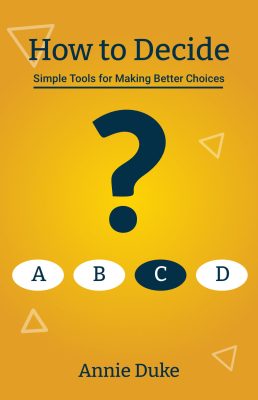
How to Decide: Simple Tools for Making Better Choices offers readers a practical guide to mastering the art of decision-making. The central theme revolves around understanding the process of making better choices through a structured approach. Duke provides a toolkit of strategies designed to help individuals evaluate options, anticipate potential outcomes, and make informed decisions. What sets this book apart is its unique blend of personal anecdotes, scientific research, and actionable advice, making complex decision-making accessible to everyone. Duke’s background as a professional poker player and decision strategist brings a fresh perspective, emphasizing that good decisions are less about luck and more about process.
This book is particularly beneficial for professionals, business leaders, and entrepreneurs who need to make high-stakes decisions regularly. However, its principles are universally applicable, making it valuable for anyone looking to improve their decision-making skills, whether in personal or professional contexts. The language and concepts are presented in an accessible manner, ensuring that even those without a background in psychology or decision science can easily grasp and apply the ideas.
Imagine you’re at a fork in the road, unsure which path to take, each one promising different outcomes. This is the essence of decision-making, a theme explored masterfully in How to Decide: Simple Tools for Making Better Choices by Annie Duke. The author, drawing from her experience as a professional poker player, lays out a roadmap for navigating the complexities of choices we face daily. Duke’s approach is both practical and relatable, offering tools to help readers make more informed and confident decisions.
The book begins with the compelling idea that we often overestimate the importance of outcomes and underestimate the value of the decision-making process itself. Duke argues that a good decision does not necessarily lead to a good outcome, just as a bad decision might occasionally yield a favorable result. This separation of process and outcome is a central theme, encouraging readers to focus on improving their decision-making framework rather than obsessing over results.
Throughout How to Decide, Duke provides a wealth of practical tools and techniques. She introduces concepts such as “resulting” – the flawed practice of judging decisions based solely on their outcomes – and presents strategies to counteract this bias. The book is filled with exercises and real-life examples that help readers practice these tools, reinforcing the idea that good decision-making is a skill that can be developed and honed.
One of the book’s strengths is its accessibility. Duke distills complex psychological concepts into easy-to-understand language, making the book suitable for a wide audience. Whether you’re a seasoned executive or a student, the lessons within are applicable to various aspects of life. From business and finance to personal relationships and health, the decision-making strategies Duke outlines are universally relevant.
By the end of the book, readers will have gained a deeper understanding of the mechanics of decision-making. They will learn how to break down decisions into manageable parts, assess the quality of their choices, and avoid common pitfalls that lead to poor outcomes. How to Decide equips readers with the tools to approach decisions with clarity and confidence, transforming the often-daunting process into a more structured and rewarding experience.
The core message of How to Decide revolves around the idea that the quality of our decisions is not solely determined by their outcomes. Annie Duke uses the metaphor of poker to illustrate this point, where even the best players can lose a hand due to factors beyond their control. The key to becoming a better decision-maker, Duke argues, lies in refining the process rather than fixating on the results.
Duke emphasizes the importance of understanding probabilities and making decisions based on incomplete information. She introduces the concept of “expected value” – a statistical measure used to determine the likely outcome of a decision. By focusing on expected value, individuals can make choices that, over time, lead to better overall results, even if some decisions do not pan out as hoped.
How to Decide has made a significant impact in the fields of business and personal development, earning praise for its practical approach to a universal challenge. Duke’s background as a professional poker player and decision strategist adds a unique perspective, blending insights from psychology, game theory, and behavioral economics. The book has been recognized for its ability to demystify the decision-making process and provide actionable advice that readers can implement immediately.
One of the more controversial points in the book is Duke’s assertion that we should separate decision quality from outcome quality. This idea challenges the common practice of judging decisions based solely on their results, prompting readers to rethink their approach to evaluation and accountability. By focusing on the process, Duke argues, we can improve our long-term decision-making capabilities and reduce the influence of luck or chance.
How to Decide: Simple Tools for Making Better Choices by Annie Duke is a remarkable guide that stands out for its practicality and accessibility. As we journey through the book, Duke’s expertise shines through, offering readers a set of tools that are easy to grasp and apply in various aspects of life. Her background as a professional poker player and decision strategist enriches the narrative with unique insights, making the content both relatable and compelling.
Duke’s ability to translate complex psychological and probabilistic concepts into straightforward, actionable advice is one of the book’s greatest strengths. We find her emphasis on separating decision quality from outcome quality particularly enlightening. This perspective encourages us to focus on improving our decision-making processes rather than being overly concerned with results influenced by factors beyond our control. By adopting this mindset, we can develop a more resilient and thoughtful approach to making choices.
The book’s structure is designed to engage and educate simultaneously. Duke combines storytelling with scientific research, making the reading experience enjoyable and informative. Her use of real-life examples and personal anecdotes helps to illustrate her points effectively, providing readers with concrete scenarios to understand and apply the concepts discussed. This blend of theory and practice ensures that the book is not just a theoretical exploration but a practical manual for improving decision-making skills.
However, How to Decide is not without its shortcomings. The repetitive nature of some content and the limited scope of examples might detract from the overall experience for some readers. Additionally, the book’s heavy emphasis on probabilistic thinking might be challenging for those who are less comfortable with mathematical concepts. Despite these minor drawbacks, the book’s strengths far outweigh its weaknesses, making it a valuable resource for anyone looking to enhance their decision-making abilities.
Our Recommendation
We wholeheartedly recommend How to Decide to a wide audience, from professionals and business leaders to students and individuals seeking personal growth. The book’s practical insights and tools are universally applicable, making it an excellent guide for navigating the complexities of modern life. Whether you are making high-stakes business decisions or everyday personal choices, Duke’s strategies will help you approach each decision with clarity and confidence.
In conclusion, How to Decide is a must-read for anyone interested in refining their decision-making skills. Annie Duke’s clear and engaging writing style, combined with her practical advice and unique perspective, makes this book a standout in its genre. By embracing the principles outlined in the book, readers can transform their approach to decision-making, leading to better outcomes and a more thoughtful, process-oriented mindset. This book is not just about making better decisions; it’s about adopting a framework that will serve you well in all aspects of life.
How to Decide: Simple Tools for Making Better Choices by Annie Duke revolves around several critical elements that collectively define the essence of the book. One of the primary topics Duke addresses is the separation of decision quality from outcome quality. She emphasizes that a good decision doesn’t always guarantee a good outcome and vice versa. This distinction encourages readers to focus on refining their decision-making process rather than being overly concerned with the results, understanding that many factors influencing outcomes are beyond one’s control.
Another key concept is the idea of “resulting,” which is the common mistake of evaluating decisions based solely on their outcomes. Duke argues that this practice leads to flawed thinking and can prevent us from learning from our decisions effectively. By focusing on the decision-making process itself, individuals can improve their strategies and make more informed choices over time. This shift in perspective is fundamental to developing better decision-making habits.
Duke introduces the concept of “expected value,” a statistical measure that helps determine the likely outcome of a decision based on probabilities and potential rewards. This concept is essential for making rational decisions, especially in situations with uncertainty. By calculating the expected value, readers can weigh their options more accurately and choose paths that are more likely to yield positive long-term results, even if individual outcomes may vary.
The book also covers the importance of conducting pre-mortems, which are hypothetical exercises where you imagine a decision has failed and then work backward to identify potential pitfalls. This proactive approach helps in identifying and mitigating risks before they become real problems. By anticipating obstacles and considering alternative scenarios, individuals can make more robust decisions and avoid common mistakes.
Duke also explores the role of intuition in decision-making. While intuition can be valuable, she cautions against relying on it exclusively. She advocates for a balance between intuitive judgment and analytical thinking, suggesting that intuition should be informed by experience and supplemented with data and structured analysis. This balanced approach helps in making more accurate and reliable decisions.
Poker and Decision-Making: Annie Duke draws extensively from her experience as a professional poker player to illustrate key concepts. She explains how poker is a game of incomplete information, where players must make decisions based on limited data and probabilities. This analogy is used to highlight the importance of focusing on the decision-making process rather than the outcome, as even the best poker players can lose a hand due to factors beyond their control.
Pre-Mortem Example: Duke shares a case study from the business world where a team conducted a pre-mortem for a major project. By imagining the project had failed and identifying the reasons for its failure, the team was able to uncover potential risks and address them proactively. This exercise led to the successful completion of the project, demonstrating the value of pre-mortems in improving decision-making.
Expected Value in Business Decisions: To explain the concept of expected value, Duke uses the example of a company deciding whether to launch a new product. By calculating the expected value based on potential sales, market conditions, and production costs, the company can make a more informed decision about whether the product launch is likely to be profitable. This approach helps the company weigh the risks and benefits objectively, leading to better strategic choices.
Resulting in Sports: Duke also uses sports analogies to illustrate the concept of resulting. She describes how a football coach might be criticized for a decision to go for a risky play based on the outcome of the game. However, if the decision was made based on sound strategy and probabilities, it should be judged on those merits rather than the result. This example helps readers understand the pitfalls of resulting and the importance of evaluating decisions based on their quality rather than their outcomes.
Balancing Intuition and Analysis: An example Duke provides involves a healthcare professional making a diagnosis. While the doctor might rely on intuition based on years of experience, Duke emphasizes the importance of supporting that intuition with data and analysis. By combining intuitive judgment with structured thinking, the doctor can make more accurate diagnoses, illustrating the need for a balanced approach in decision-making.
Separate Decision Quality from Outcome Quality: One of the most crucial insights from Duke’s book is the idea that decision quality and outcome quality are not always correlated. To apply this, individuals should evaluate their decisions based on the process used rather than the result. For example, if you’re deciding whether to invest in a stock, focus on whether your decision was based on sound research and analysis, not just whether the stock performs well afterward. This helps in refining your decision-making framework, making you less susceptible to the randomness of outcomes.
Conduct Pre-Mortems: Duke advocates for conducting pre-mortems to anticipate potential failures before they occur. To apply this, imagine a project or decision has failed and then work backward to identify what could have led to that failure. For instance, if you’re launching a new product, gather your team and brainstorm all possible reasons for its failure, such as market conditions, production issues, or marketing mishaps. This exercise helps in identifying risks and preparing contingency plans, ultimately leading to more robust decisions.
Use Expected Value: Understanding and applying the concept of expected value is another key insight. To use this in practice, quantify the potential outcomes of a decision and their probabilities, then calculate the expected value to determine the best course of action. For example, if you’re considering two job offers, list the potential benefits and drawbacks of each, along with their likelihoods, and choose the one with the highest expected value. This method ensures that your decisions are based on logical and probabilistic reasoning.
Avoid Resulting: Resulting, or judging decisions based solely on their outcomes, is a common pitfall. To avoid this, regularly review your decision-making process without considering the outcomes. For instance, if you made a strategic business decision that didn’t pan out, examine whether the decision was based on sound principles and available information at the time, rather than the unfavorable result. This practice helps in learning from your decisions and improving your process over time.
Balance Intuition with Analysis: Duke suggests balancing intuition with analytical thinking. To apply this, when faced with a decision, use your intuition to generate initial ideas and hypotheses, then back them up with data and structured analysis. For example, a marketer might have an intuitive sense that a particular campaign will succeed but should still analyze market data and consumer behavior to validate that intuition. This balanced approach leverages both experience and evidence, leading to more reliable decisions.
Create Decision Trees: Decision trees are a useful tool for visualizing and analyzing decisions. To implement this, map out your decision options and possible outcomes in a tree format. For example, if you’re deciding whether to expand your business, create a tree with branches representing different expansion strategies and their potential outcomes, including best-case, worst-case, and most likely scenarios. This visualization helps in understanding the complexities and interdependencies of your choices.
Embrace Probabilistic Thinking: Adopting a probabilistic mindset is essential for making better decisions. To practice this, always consider the likelihood of different outcomes and factor them into your decision-making process. For instance, if you’re planning a major event, assess the probability of various risks, such as weather conditions or vendor issues, and prepare accordingly. By thinking in probabilities, you can better manage uncertainty and make more informed choices.
Implement Feedback Loops: Creating feedback loops helps in refining your decision-making process. To do this, establish mechanisms for reviewing and learning from your decisions regularly. For example, after completing a project, hold a debriefing session with your team to discuss what went well and what could be improved. Use this feedback to adjust your strategies and improve future decision-making. This continuous improvement cycle enhances your ability to make better choices over time.
Utilize Decision Journals: Keeping a decision journal is another effective technique recommended by Duke. To apply this, document your significant decisions, including the reasoning, information considered, and expected outcomes. For instance, if you’re deciding on a major purchase, write down your thought process and review it later to see how accurate your predictions were. This practice helps in identifying patterns in your decision-making and provides valuable insights for future choices.
Seek Diverse Perspectives: Incorporating diverse viewpoints can significantly enhance decision quality. To apply this, actively seek input from individuals with different backgrounds and expertise when making important decisions. For example, if you’re developing a new product, consult with team members from various departments, such as marketing, engineering, and customer service, to get a well-rounded perspective. This diversity of thought can uncover blind spots and lead to more innovative solutions.
Practical Insights: How to Decide excels in providing practical insights that readers can immediately apply to their lives. Annie Duke’s background as a professional poker player and decision strategist lends credibility to her advice. She shares concrete tools, such as decision trees and pre-mortems, which are easy to understand and implement. These tools help readers navigate complex decisions by breaking them down into manageable steps. Duke’s ability to translate theoretical concepts into actionable strategies is one of the book’s greatest strengths, making it not just informative but also highly useful.
Clarity of Arguments: Duke’s writing style is clear and concise, making complex concepts accessible to a broad audience. She avoids jargon and uses everyday language, which helps in demystifying the decision-making process. Each argument is logically structured, with supporting evidence and examples that reinforce her points. This clarity ensures that readers can follow her reasoning and apply her suggestions without feeling overwhelmed. The straightforward presentation of ideas is particularly beneficial for readers who may not have a background in psychology or decision science.
Engaging Writing Style: The book is engaging and easy to read, thanks to Duke’s use of anecdotes and real-life examples. Her experience in poker provides a unique lens through which she views decision-making, making the content more relatable and interesting. Duke’s storytelling ability keeps readers hooked, as she seamlessly weaves personal stories with scientific research. This narrative style not only makes the book enjoyable but also helps in illustrating complex ideas in a way that is memorable and impactful.
Research Depth: Duke backs her arguments with extensive research from psychology, behavioral economics, and cognitive science. She references studies and experiments that provide empirical support for her claims, adding credibility to her advice. This thorough research ensures that the strategies she recommends are grounded in scientific evidence, which enhances their reliability. The depth of research also means that readers can trust the book as a credible source of information on decision-making.
Focus on Process over Outcome: One of the book’s standout strengths is its emphasis on the decision-making process rather than the outcomes. Duke’s argument that a good process can lead to better long-term results, regardless of individual outcomes, is a powerful message. This focus helps readers shift their mindset from result-oriented thinking to process-oriented thinking, which can lead to more consistent and improved decision-making. By teaching readers to separate the quality of decisions from their results, Duke provides a framework for continual improvement.
Repetitive Content: One of the notable weaknesses of How to Decide is the occasional repetition of concepts. While reinforcing key ideas can be helpful, Duke sometimes reiterates points to the extent that it feels redundant. This repetition can make parts of the book feel longer than necessary and may disengage readers who have already grasped the concept. A more streamlined approach could have maintained the book’s clarity while being more concise.
Lack of Depth in Some Areas: While the book is thorough in many respects, there are areas where it could have provided deeper insights. For instance, Duke briefly touches on the role of emotions in decision-making but doesn’t explore this topic in great detail. Given that emotions play a significant role in many decisions, a more comprehensive discussion on how to manage emotional influences would have been valuable. This omission leaves a gap in the otherwise well-rounded discussion on decision-making.
Limited Scope of Examples: Although Duke’s use of personal anecdotes from her poker career is engaging, it can also be limiting. The frequent reliance on poker examples may not resonate with all readers, especially those unfamiliar with the game. A broader range of examples from different fields and everyday situations could have made the book more relatable to a wider audience. By diversifying the examples, Duke could have ensured that her insights are universally applicable.
Overemphasis on Probabilistic Thinking: While probabilistic thinking is a core theme of the book, Duke’s emphasis on it might be overwhelming for some readers. Not everyone is comfortable with or adept at thinking in probabilities, and this focus could potentially alienate those who struggle with mathematical concepts. Providing alternative frameworks or simplifying the discussion on probabilities could have made this aspect of the book more accessible.
Overlooking the Role of Emotions: One of the significant blind spots in How to Decide is its limited discussion on the role of emotions in decision-making. While Annie Duke touches on the subject, she does not delve deeply into how emotions can influence and sometimes derail rational decision processes. Emotions are integral to many decisions, and understanding how to manage them is crucial. Books like Thinking, Fast and Slow by Daniel Kahneman and Emotional Intelligence by Daniel Goleman offer more comprehensive insights into how emotions impact our choices and provide strategies to mitigate their negative effects. Integrating more of these concepts could have made Duke’s framework more robust and practical for everyday decisions.
Cultural Differences in Decision-Making: Another overlooked aspect is the influence of cultural differences on decision-making processes. Duke’s strategies are largely presented from a Western perspective, which may not fully apply to individuals from different cultural backgrounds. Decision-making styles can vary significantly across cultures due to differences in values, social norms, and risk tolerance. Books like The Culture Map by Erin Meyer and Culture and Leadership Across the World by Jagdeep S. Chhokar, Felix C. Brodbeck, and Robert J. House provide valuable insights into how culture shapes decision-making. Including discussions on cultural variations would have broadened the book’s applicability and relevance to a global audience.
Overemphasis on Rationality: Duke’s approach in How to Decide heavily emphasizes rational and probabilistic thinking, which, while valuable, may not always be practical in real-world scenarios where decisions need to be made quickly and with incomplete information. This rational focus might lead readers to undervalue intuition and experience, which also play critical roles in decision-making. Gary Klein’s The Power of Intuition and Malcolm Gladwell’s Blink: The Power of Thinking Without Thinking argue for the importance of intuition, especially in high-pressure situations where quick decisions are necessary. Acknowledging the balance between rational analysis and intuitive judgment would have provided a more holistic view.
Lack of Focus on Long-Term Implications: Duke’s book tends to focus on immediate decision-making tools and strategies but somewhat neglects the long-term implications of these decisions. Understanding how decisions fit into broader life goals and long-term plans is crucial for making choices that are not only effective in the short term but also beneficial in the long run. Books like The 7 Habits of Highly Effective People by Stephen R. Covey and Principles: Life and Work by Ray Dalio emphasize aligning decisions with long-term objectives and values. Incorporating such perspectives would help readers make decisions that are not only sound in the present but also aligned with their future aspirations.
Insufficient Discussion on Group Decision-Making: Group decision-making dynamics are another area where How to Decide could have provided more insight. Many decisions are made within teams or organizations, where groupthink, diverse perspectives, and conflicts can significantly impact the decision process. While Duke provides valuable tools for individual decision-making, she does not extensively address the complexities of making decisions in a group context. Books like Groupthink by Irving L. Janis and The Wisdom of Crowds by James Surowiecki explore the challenges and benefits of collective decision-making. Including strategies for navigating group dynamics would have made Duke’s advice more comprehensive and applicable to organizational settings.
Underestimating the Complexity of Implementation: Finally, while Duke offers practical tools and exercises, the book sometimes underestimates the complexity of implementing these strategies in real life. Factors such as time constraints, resource limitations, and resistance to change can hinder the application of even the best decision-making frameworks. Books like Switch: How to Change Things When Change Is Hard by Chip Heath and Dan Heath and The Lean Startup by Eric Ries discuss the practical challenges of implementing new strategies and offer solutions for overcoming these obstacles. Acknowledging these real-world complexities and providing additional guidance on overcoming them would have enhanced the practical applicability of Duke’s advice.
Thinking, Fast and Slow by Daniel Kahneman: Thinking, Fast and Slow by Daniel Kahneman offers a comprehensive exploration of the two systems of thought: the fast, intuitive system, and the slow, deliberative system. Kahneman’s work dives deeply into cognitive biases and heuristics, providing a thorough examination of how our thinking can be systematically flawed. In contrast, How to Decide by Annie Duke focuses more on practical tools and strategies for improving decision-making rather than dissecting the underlying cognitive processes. While Kahneman provides a theoretical foundation, Duke offers actionable advice, making her book more immediately applicable for readers looking to enhance their decision-making skills. However, Duke’s book could benefit from incorporating more of Kahneman’s insights into cognitive biases to give readers a fuller understanding of the pitfalls they might face.
Blink: The Power of Thinking Without Thinking by Malcolm Gladwell: Malcolm Gladwell’s Blink explores the power and pitfalls of snap judgments and intuition. Gladwell argues that intuition can be remarkably accurate in certain contexts, emphasizing the importance of trusting one’s gut instincts. Annie Duke, on the other hand, advocates for a balanced approach that combines intuition with analytical thinking. While Duke acknowledges the value of intuition, she cautions against relying on it exclusively and stresses the importance of structured decision-making processes. This difference in emphasis highlights a key distinction: Gladwell celebrates the power of quick thinking, while Duke promotes a more measured and systematic approach to making choices.
The Power of Intuition by Gary Klein: Gary Klein’s The Power of Intuition is centered on how experienced professionals make quick, effective decisions based on their deep knowledge and experience. Klein’s research into naturalistic decision-making contrasts with Duke’s emphasis on probabilistic thinking and structured tools. Klein’s work underscores the effectiveness of intuitive expertise in complex, dynamic environments, suggesting that experience can lead to better decision-making. Duke, while acknowledging the role of experience, focuses more on decision-making frameworks that can be universally applied regardless of one’s level of expertise. This comparison shows that while Klein trusts the power of honed intuition, Duke provides a toolkit for those who may not have the benefit of extensive experience.
Nudge: Improving Decisions About Health, Wealth, and Happiness by Richard H. Thaler and Cass R. Sunstein: Nudge by Richard Thaler and Cass Sunstein explores how small changes in the way choices are presented can significantly influence decision outcomes. Their concept of “choice architecture” emphasizes the design of environments that make it easier for people to make better decisions. Duke’s How to Decide also aims to improve decision-making but focuses more on individual strategies rather than environmental modifications. While Nudge advocates for external interventions to guide better choices, Duke empowers readers with personal tools and techniques. This contrast highlights different approaches to enhancing decision-making: one through altering the external context and the other through refining internal processes.
Adopting a process-oriented approach involves focusing on the quality of the decision-making process rather than just the outcomes. This shift can lead to more consistent and thoughtful decisions across the organization. It encourages employees to develop thorough and well-considered decision processes, thereby improving long-term outcomes.
Shifting to a process-oriented culture can be challenging, as it requires changing the existing mindset and evaluation metrics within the organization. Employees and managers who are accustomed to result-based evaluations may resist this change. Additionally, it might be difficult to measure the quality of decision processes objectively.
To overcome these challenges, businesses should start by providing training sessions that emphasize the importance of a process-oriented approach and how it can lead to better long-term outcomes. Implementing decision-making workshops and integrating these concepts into performance reviews can also help. Developing clear criteria and metrics for evaluating decision processes can ensure that this shift is systematically adopted throughout the organization.
Integrating pre-mortems into the decision-making process allows teams to anticipate potential failures and develop strategies to mitigate risks before they become real issues. This proactive approach can enhance project planning and execution, leading to more robust and resilient business strategies.
One of the main challenges of conducting pre-mortems is the additional time and resources required for these exercises. Teams might view them as unnecessary or overly pessimistic. Additionally, there can be a tendency to underestimate potential risks or dismiss them due to cognitive biases.
To address these challenges, businesses should highlight the long-term benefits of pre-mortems in preventing costly mistakes and enhancing project success rates. Encouraging a positive and constructive atmosphere during these exercises can help mitigate feelings of pessimism. Leadership support and clear scheduling of pre-mortem sessions as a standard part of project planning can ensure consistent implementation.
Decision trees can help visualize different options and their potential outcomes, making complex decisions more manageable. This tool can be particularly useful for strategic planning, risk assessment, and scenario analysis in business contexts.
The main obstacle in utilizing decision trees is the perceived complexity and the time required to create them. Teams might lack the necessary skills or experience to develop and interpret decision trees effectively. Additionally, there might be resistance to adopting new tools and methodologies.
Providing training and resources on how to construct and use decision trees can alleviate these concerns. Businesses should also integrate decision tree software and tools into their regular decision-making processes to simplify the creation and analysis of decision trees. Encouraging team collaboration during the development of decision trees can also enhance understanding and acceptance.
Adopting a probabilistic mindset involves considering the likelihood of various outcomes and making decisions based on these probabilities. This approach can improve risk management and strategic decision-making, leading to more informed and balanced business choices.
Many employees may be unfamiliar with probabilistic thinking or uncomfortable with the mathematical aspects involved. There can also be a tendency to rely on intuition or experience rather than probabilistic analysis, especially in high-pressure situations.
To foster probabilistic thinking, businesses should provide training on basic probability and statistical concepts relevant to decision-making. Using real-world examples and case studies can make these concepts more relatable and easier to understand. Encouraging the use of probabilistic tools and software in daily operations can also help integrate this mindset into the organizational culture.
Establishing regular feedback loops allows organizations to review and learn from past decisions, fostering a culture of continuous improvement. This approach can help identify patterns, correct mistakes, and refine decision-making processes over time.
Implementing feedback loops can be time-consuming and may face resistance from employees who are not accustomed to regular reviews and critiques. There might also be challenges in collecting and analyzing feedback effectively.
To overcome these challenges, businesses should schedule regular review sessions and debriefings as part of their standard operating procedures. Encouraging open and constructive feedback can create a supportive environment for continuous improvement. Utilizing feedback management tools and platforms can streamline the process of collecting, analyzing, and implementing feedback.
Encouraging a balanced approach that combines intuition with analytical thinking can enhance decision quality. This approach leverages the strengths of both intuitive judgment and structured analysis, leading to more comprehensive and well-rounded decisions.
Balancing intuition and analysis can be challenging, as individuals may have a natural preference for one approach over the other. There might also be difficulty in determining when to rely on intuition versus when to conduct a detailed analysis.
Providing training on the strengths and limitations of both intuitive and analytical decision-making can help employees understand when and how to use each approach. Encouraging collaborative decision-making can also integrate diverse perspectives and methodologies, balancing intuition with analysis. Establishing guidelines for when to prioritize data-driven decisions versus intuitive judgments can provide clarity and consistency.
Incorporating diverse viewpoints can significantly improve the quality of decisions by uncovering blind spots and generating innovative solutions. Encouraging diversity in decision-making teams ensures a wide range of experiences and insights.
Achieving true diversity in decision-making can be challenging due to existing biases and organizational structures. There might also be resistance to changing established teams or processes to include more diverse perspectives.
To foster diversity, businesses should implement policies that promote inclusivity and actively seek diverse candidates for decision-making roles. Providing diversity and inclusion training can help mitigate biases and encourage openness to different viewpoints. Creating diverse decision-making committees and encouraging cross-functional collaboration can also enhance the range of perspectives considered.
Keeping a decision journal helps document the reasoning, information considered, and expected outcomes for significant decisions. This practice can provide valuable insights for future decision-making and foster accountability.
Maintaining a decision journal can be seen as burdensome or unnecessary by busy professionals. There might also be concerns about the confidentiality and security of the information recorded.
To encourage the use of decision journals, businesses should emphasize their long-term benefits for improving decision-making quality. Providing digital tools and templates can simplify the process of maintaining a journal. Ensuring that decision journals are secure and accessible only to authorized individuals can address confidentiality concerns. Regularly reviewing and discussing journal entries during team meetings can reinforce their value and encourage consistent use.
Data-Driven Decision-Making
Data-driven decision-making is becoming increasingly important in today’s business environment. As organizations collect vast amounts of data, the ability to analyze and utilize this information effectively is critical. Annie Duke’s emphasis on probabilistic thinking and the use of decision trees aligns well with this trend. Her methods help individuals and businesses make more informed choices based on data rather than intuition alone. This approach is likely to become even more relevant as data analytics technologies advance and become more accessible.
Behavioral Economics Integration
The principles of behavioral economics are gaining traction in both academic and business circles. Duke’s insights into cognitive biases and the importance of separating decision quality from outcomes fit neatly into this framework. As more organizations seek to understand and mitigate the effects of biases on decision-making, Duke’s strategies provide practical tools for doing so. Her work complements other significant contributions in behavioral economics, helping to bridge the gap between theory and practical application.
AI and Machine Learning
AI and machine learning are transforming decision-making processes in many industries. These technologies can analyze large datasets, identify patterns, and make predictions, which aids in making more informed decisions. Duke’s focus on structured decision-making processes can enhance the integration of AI tools. By applying her techniques, businesses can better interpret AI outputs and make decisions that are not solely reliant on algorithms. This hybrid approach can lead to more robust and reliable outcomes.
Remote and Hybrid Work
The rise of remote and hybrid work environments presents new challenges for decision-making. In these settings, clear and structured decision-making processes become crucial. Duke’s emphasis on clarity, pre-mortems, and feedback loops can help distributed teams make better decisions, even when they are not physically together. Her methods can improve communication and coordination, ensuring that remote teams remain aligned and effective in their decision-making.
Continuous Learning and Adaptation
The concept of continuous learning and adaptation is critical in today’s rapidly changing world. Duke’s strategies, such as maintaining decision journals and implementing feedback loops, support this trend by encouraging ongoing improvement and learning from past decisions. As industries evolve and new challenges arise, the ability to adapt and refine decision-making processes will be essential. Duke’s book provides a framework for fostering a culture of continuous improvement, which is vital for long-term success.
The long-term influence of How to Decide on its field and wider societal impacts could be substantial. By equipping individuals with practical tools and a better understanding of decision-making processes, Annie Duke’s book has the potential to improve decision quality across various domains, from personal finance to business strategy. As more people adopt these techniques, there could be a shift towards more thoughtful and less outcome-focused decision-making, reducing the influence of randomness and luck on perceived success.
In the business world, Duke’s emphasis on process over outcomes could lead to more resilient and adaptive organizations. Companies that adopt her strategies may become better at navigating uncertainty and managing risks, leading to more sustainable growth. This process-oriented mindset could also foster a culture of continuous improvement, where decisions are regularly reviewed and refined, enhancing overall organizational effectiveness.
On a societal level, if educational institutions incorporate Duke’s decision-making frameworks into their curricula, future generations could develop stronger critical thinking and analytical skills. This shift could lead to a more informed and rational citizenry, capable of making better decisions in complex situations. The ripple effect of improved decision-making could extend to various societal issues, such as public policy and healthcare, where better choices can lead to more effective solutions and improved outcomes.
Additionally, Duke’s focus on separating decision quality from outcome quality could influence how success is measured in different fields. In professional sports, for example, coaches and players might be evaluated more on their strategic decisions rather than just game results. In academia, researchers could place greater emphasis on the rigor of their methodologies rather than just the significance of their findings. This broader application of Duke’s principles could lead to more nuanced and fair assessments of performance and success.
Overall, the broader implications of How to Decide suggest that Annie Duke’s work could play a key role in fostering a more rational, process-oriented approach to decision-making across multiple sectors, leading to better outcomes and more equitable evaluations of success.
Thinking, Fast and Slow by Daniel Kahneman
Thinking, Fast and Slow by Daniel Kahneman delves into the dual systems of thought that influence our decisions: the fast, intuitive system and the slow, deliberate system. This book provides a deeper understanding of cognitive biases and heuristics that affect decision-making. It complements How to Decide by offering a theoretical foundation for the practical tools and strategies Annie Duke discusses. Readers will gain insights into the psychological underpinnings of their choices, enhancing their ability to apply Duke’s methods effectively.
Blink: The Power of Thinking Without Thinking by Malcolm Gladwell
Malcolm Gladwell’s Blink explores the power and pitfalls of snap judgments and intuition. While Annie Duke emphasizes structured decision-making processes, Gladwell highlights situations where quick thinking can be remarkably effective. This book provides a contrasting viewpoint that helps readers appreciate the value of intuition in certain contexts. Together, these books offer a balanced perspective on when to rely on gut feelings and when to adopt a more analytical approach.
The Power of Intuition by Gary Klein
The Power of Intuition by Gary Klein examines how experienced professionals make quick, effective decisions based on their deep knowledge and expertise. Klein’s research into naturalistic decision-making contrasts with Duke’s focus on probabilistic thinking and structured tools. This book is a valuable complement to How to Decide, offering insights into how intuition and experience can lead to better decisions in complex, dynamic environments. Readers can learn to balance analytical and intuitive approaches in their decision-making processes.
Nudge: Improving Decisions About Health, Wealth, and Happiness by Richard H. Thaler and Cass R. Sunstein
Nudge by Richard Thaler and Cass Sunstein explores how small changes in the way choices are presented can significantly influence decision outcomes. The concept of “choice architecture” aligns with Duke’s emphasis on creating structured decision-making environments. This book provides practical examples of how to design better choices for oneself and others, enhancing the application of Duke’s strategies in everyday life and business contexts. Readers will find valuable insights into improving decision-making through environmental modifications.
Predictably Irrational: The Hidden Forces That Shape Our Decisions by Dan Ariely
Dan Ariely’s Predictably Irrational investigates the hidden forces and cognitive biases that lead people to make irrational decisions. This book complements How to Decide by highlighting the various ways our decisions can go awry and providing strategies to counteract these biases. Ariely’s engaging style and real-world experiments offer readers a deeper understanding of why they make certain choices, enhancing their ability to implement Duke’s practical decision-making tools more effectively.
Switch: How to Change Things When Change Is Hard by Chip Heath and Dan Heath
Switch by Chip Heath and Dan Heath focuses on how to implement change in personal and organizational contexts. The book’s insights into overcoming resistance and fostering change are valuable for readers looking to apply Duke’s decision-making strategies. By understanding the psychological barriers to change, readers can better implement the structured decision-making processes advocated in How to Decide. This book offers practical advice on making lasting changes, which is essential for improving decision-making habits.
The Lean Startup: How Today’s Entrepreneurs Use Continuous Innovation to Create Radically Successful Businesses by Eric Ries
Eric Ries’ The Lean Startup emphasizes the importance of iterative processes and learning from failure in business ventures. This concept aligns with Duke’s focus on pre-mortems and feedback loops. Ries’ methodology of building, measuring, and learning complements Duke’s structured decision-making tools, providing a framework for continuous improvement. Entrepreneurs and business leaders will find this book particularly useful in applying Duke’s strategies to foster innovation and resilience in their organizations.
Grit: The Power of Passion and Perseverance by Angela Duckworth
Grit by Angela Duckworth explores the importance of perseverance and passion in achieving long-term goals. This book complements How to Decide by emphasizing the role of sustained effort and resilience in successful decision-making. Duckworth’s research on grit provides valuable insights into how individuals can persist through challenges and setbacks, reinforcing Duke’s message about the importance of focusing on the decision-making process rather than outcomes. Readers will find inspiration and practical advice on cultivating the perseverance needed to improve their decision-making skills over time.
Harvard Business Review (HBR)
The Harvard Business Review (HBR) website (hbr.org) offers a wealth of articles and resources on decision-making, leadership, and management. The platform provides insights from leading experts and researchers, helping individuals and businesses enhance their decision-making processes. HBR’s case studies, research articles, and expert opinions complement the strategies discussed in How to Decide, offering deeper understanding and practical applications.
Coursera
Coursera (coursera.org) provides online courses from top universities and institutions that cover various aspects of decision-making and cognitive biases. Courses like “Introduction to Probability and Data” and “Behavioral Finance” can help deepen your understanding of probabilistic thinking and decision-making frameworks. These courses are a great supplement to the teachings of Annie Duke, providing structured learning paths and expert instruction.
Decision Sciences Institute (DSI) Annual Conference
The Decision Sciences Institute (DSI) Annual Conference is a premier event for professionals and academics interested in decision-making and quantitative analysis. Attendees can learn about the latest research, methodologies, and best practices in decision sciences. This conference offers valuable networking opportunities and sessions that align well with the principles discussed in How to Decide.
Behavioral Decision Research in Management (BDRM) Conference
The Behavioral Decision Research in Management (BDRM) Conference focuses on the intersection of psychology and decision-making in management. It is an excellent venue for gaining insights into how cognitive biases and behavioral factors influence decisions in organizational settings. This conference complements Duke’s emphasis on understanding and mitigating biases in decision-making.
Society for Judgment and Decision Making (SJDM)
The Society for Judgment and Decision Making (SJDM) is an interdisciplinary organization dedicated to the study of normative, descriptive, and prescriptive theories of decision-making. Membership provides access to journals, newsletters, and conferences that can enhance your understanding of decision-making processes. SJDM’s resources and community support the continuous learning and application of decision-making strategies.
Association for Psychological Science (APS)
The Association for Psychological Science (APS) offers resources and publications on psychological research, including decision-making and cognitive biases. APS conferences, workshops, and publications provide valuable insights and updates on the latest findings in the field. Engaging with APS resources can deepen your understanding of the psychological aspects of decision-making discussed in Duke’s book.
The Knowledge Project
Hosted by Shane Parrish, The Knowledge Project podcast explores decision-making, mental models, and critical thinking with experts from various fields. Episodes often feature in-depth discussions on topics related to those in How to Decide, providing additional perspectives and practical advice. This podcast is a valuable resource for anyone looking to improve their decision-making skills.
Freakonomics Radio
Freakonomics Radio, hosted by Stephen Dubner, delves into the hidden side of everything, including decision-making and behavioral economics. The podcast features interviews with leading thinkers and explores real-world applications of decision-making theories. Listening to Freakonomics Radio can provide context and deeper insights into the principles covered in Duke’s book.
Decision-Making for Leaders by Wharton Executive Education
This online course offered by Wharton Executive Education focuses on enhancing decision-making skills for leaders. It covers frameworks, tools, and techniques to make better strategic decisions. The course content aligns well with the strategies in How to Decide and provides additional practical applications for business leaders.
The Science of Everyday Thinking by The University of Queensland on edX
This course on edX explores how we think and make decisions daily. It covers cognitive biases, heuristics, and strategies to improve decision-making. The course offers a broader context for understanding the principles in How to Decide and helps in applying these concepts to everyday scenarios.
Inside Out
Inside Out is an animated film that explores the role of emotions in decision-making. While it is a family-friendly movie, it provides valuable insights into how different emotions influence our choices. The film aligns with Duke’s brief discussion on emotions and decision-making, offering a visual and engaging way to understand this aspect.
The Big Short
The Big Short is a film that depicts the financial crisis of 2008, focusing on the decision-making processes of key players. It highlights the impact of cognitive biases, risk assessment, and probabilistic thinking in high-stakes environments. This movie complements Duke’s focus on probabilistic thinking and the importance of structured decision-making processes in avoiding catastrophic outcomes.