Reviews
“Since implementing the entrepreneurial operating system outlined in [Traction], my company has been more productive than ever… The book brings proven business best practices from the top thought leaders in business into one hands-on manual that you can apply today.”—Dan Moshe, founder and CEO of Tech Guru, for The Business Journals’ “The most important business books ever written”
“Implementing [Traction‘s] structured approach at Avondale has had a tremendous impact on our leadership’s productivity and has improved operations throughout the organization.”—Karl Stark and Bill Stewart, cofounders, Avondale
“The concepts and tools that have been masterfully captured in the pages of this book have provided some of the magic that has helped us grow our business 300 percent over the last five years. Don’t miss it!”—Craig Erlich, CEO, pulse220
“The concepts in this book have changed my life! I’m now able to let go of the day to day, knowing I have developed a team that can efficiently handle the details. We have consistently grown every year for the last four years in a very tough market, while the competition has struggled.”—Ronald A. Blank, President, The Franklin Companies
“Having coached and trained over 13,000 entrepreneurs, I know the challenges they face. This book is a must for any business owner and their management team. Traction provides a powerful, practical, and simple system for running your business.”—Dan Sullivan, President and Founder, The Strategic Coach
“With the Traction tools in place, we now have faster growth, increased profitability and great people that we enjoy working with. Our growth rate has averaged over 20 percent per year. These results put us in a position to sell our company to a public company for above-normal multiples and reacquire the company after just a year and a half.”—Rob Dube, President, Image One
“The Traction principles have helped me build a solid leadership team, crystallize our plan, and create the discipline to take the organization to the next level.”—Sam Simon, President & CEO, Atlas Oil Company
“Traction is far and away the most potent and useful approach I’ve ever seen for running a successful company. The content is bulletproof! You have to read this book.”—Vince Poscente, Bestselling author of The Age of Speed
“The concepts in this book have revolutionized our enterprise. We are highly profitable, adroit, flexible, and have a results-oriented culture. Working with Gino’s tools has made a meaningful difference in who we are today.”—Albert M. Berriz, CEO, McKinley
“The tools are sensible, effective, and a must for any organization, entrepreneur, or leader. I personally use them within my national real estate valuation company and this year we grew 150 percent, after being in business for more than 14 years.”—Darton Case, President, The Entrepreneurs’ Organization
“The concepts in Traction saved our company from mediocrity and propelled us to excellence. They have provided us with the tools to deal with any situation that might arise and better yet, to head off some situations at the pass. We now have all the right people in the right seats doing the right jobs.-Rob Tamblyn, President, The Benefits Company
“By applying the Traction disciplines we have been able to grow revenue by 50 percent over the last three years and profit exponentially more.”—Robert Schechter, C.L.U., Ch.F.C., Chairman, Schechter Wealth Strategies
“Traction is a must-read. What you will learn are the same tools that have enabled me to grow my business 100 percent over the last three years while staying balanced and having fun. This book will change your life.”—Bernie Ronnisch, President, Ronnisch Construction Group
If you’re feeling overwhelmed by the day-to-day operations of your business and struggling to gain traction, this book offers a solution. It introduces the Entrepreneurial Operating System (EOS), a comprehensive model designed to help business owners and leaders achieve their vision. This practical guide provides actionable steps to streamline processes, improve team alignment, and drive growth. What sets it apart is its blend of real-world insights with a clear, step-by-step framework, making complex business principles accessible and actionable for entrepreneurs and executives alike.
Traction is ideal for business owners, entrepreneurs, and leaders of small to medium-sized enterprises who are looking to take their companies to the next level. It is also beneficial for managers and executives seeking to implement a more structured approach to business operations. The book’s straightforward language and practical examples make it accessible even to those without a formal business education. Secondary audiences include business consultants and coaches who want to enhance their toolkit with a proven operating system.
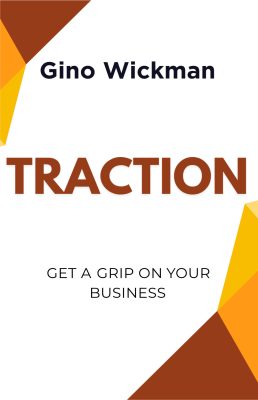
Imagine trying to drive a car with a fogged-up windshield, navigating through busy streets with no clear vision of the road ahead. That’s how many business owners feel when managing their companies without a structured operating system. Traction: Get a Grip on Your Business by Gino Wickman clears the fog, providing entrepreneurs with a crystal-clear framework to steer their businesses toward success. Wickman introduces the Entrepreneurial Operating System (EOS), a practical methodology that has transformed countless businesses by simplifying complex concepts into actionable steps.
In Traction, Wickman uses compelling real-world examples to illustrate how the EOS can be applied to various business challenges. From setting clear, measurable goals to ensuring that every team member is aligned with the company’s vision, the book breaks down the process into manageable components. One of the key tools discussed is the Vision/Traction Organizer, which helps businesses define and communicate their core values, long-term objectives, and quarterly priorities. This tool alone has been a game-changer for many companies, fostering better communication and more effective execution.
The book is divided into six key components: Vision, People, Data, Issues, Process, and Traction. Each component addresses a specific aspect of business operations, providing detailed guidelines and tools to improve efficiency and growth. For instance, the People component focuses on building a strong team by placing the right people in the right seats. Wickman emphasizes the importance of having a culture fit and ensuring that everyone in the organization is contributing to its success. The Data component, on the other hand, stresses the need for measurable metrics to track progress and make informed decisions.
Readers will learn how to implement the EOS in their own businesses, starting with a self-assessment to identify areas for improvement. The book offers practical advice on how to hold effective meetings, solve problems more efficiently, and create a culture of accountability. Wickman also shares insights on how to manage change and overcome resistance, ensuring that the EOS is successfully adopted by the entire organization. By the end of the book, readers will have a comprehensive toolkit to transform their business operations and achieve their vision.
Perhaps the most valuable aspect of Traction is its focus on simplicity and practicality. Wickman’s writing is straightforward and devoid of jargon, making the concepts accessible to anyone, regardless of their business background. The book’s actionable steps and clear explanations ensure that even the most overwhelmed business owner can start making positive changes immediately. Wickman’s years of experience and success stories from companies that have implemented the EOS add credibility and inspire confidence in readers.
The central message of Traction is that any business, regardless of its size or industry, can achieve significant growth and success by implementing a structured operating system. Gino Wickman likens the EOS to the engine of a car, which, when well-maintained and properly tuned, powers the vehicle smoothly and efficiently. Without a strong engine, even the most beautifully designed car cannot perform at its best. Similarly, businesses need a robust operating system to drive their operations and achieve their goals. The EOS provides a clear roadmap for business owners, helping them identify their vision, build a strong team, and maintain accountability at all levels.
Traction has made a significant impact on the field of business management and entrepreneurship, offering a practical alternative to traditional management theories. Its success can be attributed to its simplicity, accessibility, and proven effectiveness. The book has been widely adopted by businesses around the world, with many reporting substantial improvements in their operations and performance. The EOS has become a popular framework among business coaches and consultants, further solidifying its reputation as a valuable tool for driving growth and success.
The book’s emphasis on practical, actionable steps sets it apart from other business books that often focus on abstract concepts. Traction provides readers with concrete tools and techniques that can be immediately applied to their businesses. This pragmatic approach has resonated with many entrepreneurs and business leaders, making Traction a must-read for anyone looking to improve their business operations. The book has also sparked discussions about the importance of having a structured operating system and the role of accountability in achieving business success.
While Traction has been praised for its practicality and effectiveness, it has also faced some criticism. Some argue that the EOS is too rigid and may not be suitable for all types of businesses. Others believe that the book oversimplifies the complexities of business management. Despite these criticisms, the overwhelming majority of readers and businesses have found Traction to be an invaluable resource, demonstrating its widespread appeal and impact.
As we reflect on Traction: Get a Grip on Your Business by Gino Wickman, it’s clear that the book offers a robust and practical framework for business owners looking to streamline their operations and achieve sustainable growth. Wickman’s Entrepreneurial Operating System (EOS) is a well-structured, easy-to-follow methodology that breaks down the complexities of running a business into manageable components. By focusing on key areas like vision, people, data, issues, process, and traction, the book provides actionable insights that can be immediately applied to improve business performance.
We appreciate the clarity and practicality of Wickman’s writing. His ability to distill complex concepts into simple, relatable language makes Traction accessible to a wide audience, from seasoned entrepreneurs to those just starting their business journey. The book is filled with real-world examples and case studies that illustrate how the EOS can be implemented effectively. This practical approach not only helps readers understand the concepts but also inspires confidence that they can achieve similar results in their own businesses.
One of the standout features of Traction is its comprehensive toolset. The Vision/Traction Organizer, People Analyzer, and Scorecard are just a few examples of the valuable resources provided. These tools are designed to help business owners diagnose their current challenges, create a clear plan for improvement, and track their progress over time. The emphasis on accountability and measurable outcomes ensures that businesses remain focused and disciplined in their efforts to achieve their goals.
While the book excels in many areas, it is not without its limitations. Some readers may find the EOS framework too rigid or prescriptive, particularly if their business operates in a highly dynamic or creative environment. Additionally, the reliance on anecdotal evidence may leave some readers wanting more empirical research to back up Wickman’s claims. However, these shortcomings do not significantly detract from the overall value of the book, especially given its practical focus and actionable advice.
Wickman’s emphasis on building a strong organizational culture and aligning the team around a shared vision is particularly relevant in today’s business environment. As companies navigate the challenges of remote work, digital transformation, and market volatility, the principles outlined in Traction provide a stable foundation for maintaining cohesion and driving performance. The book’s focus on regular meetings, clear communication, and structured problem-solving is highly applicable in both traditional and modern business contexts.
Overall, we believe Traction: Get a Grip on Your Business is an invaluable resource for business owners and leaders seeking to improve their operations and achieve sustainable growth. The EOS framework offers a practical, step-by-step approach that can be adapted to various industries and business sizes. Wickman’s clear and engaging writing style, combined with the comprehensive toolset provided, makes this book a must-read for anyone looking to enhance their business management skills.
We highly recommend Traction to entrepreneurs, business owners, and managers who are ready to take their businesses to the next level. Whether you’re struggling with day-to-day operations, seeking to align your team around a common vision, or looking to create a more disciplined and accountable organization, Traction provides the insights and tools needed to drive meaningful change. By implementing the principles and strategies outlined in the book, you can build a stronger, more resilient business capable of achieving its full potential.
Traction: Get a Grip on Your Business by Gino Wickman distills the essence of successful business operations into the Entrepreneurial Operating System (EOS), a holistic model designed to help businesses gain clarity, focus, and traction. The key topics that encapsulate the essence of the book’s message include Vision, People, Data, Issues, Process, and Traction. Each of these components plays a crucial role in creating a well-functioning business that can achieve its goals and thrive in a competitive environment.
The Vision component emphasizes the importance of having a clear and shared vision within the organization. It involves defining core values, purpose, and long-term objectives, and ensuring that all team members are aligned with these goals. By doing so, businesses can create a strong sense of direction and purpose, which is essential for guiding decision-making and driving growth.
People are the cornerstone of any successful business, and Wickman stresses the need for having the right people in the right seats. This involves identifying individuals who not only have the skills and experience required for their roles but also fit well with the company’s culture and values. Building a strong team with clear roles and responsibilities ensures that everyone is working towards the same objectives and contributing to the overall success of the business.
Data is another critical element, focusing on the importance of measurable metrics to track progress and make informed decisions. Wickman advocates for using key performance indicators (KPIs) to monitor various aspects of the business, from sales and marketing to operations and customer satisfaction. Having reliable data allows businesses to identify trends, spot potential issues early, and adjust strategies as needed to stay on track.
Addressing Issues effectively is essential for maintaining momentum and avoiding disruptions. The EOS provides a structured approach to problem-solving, encouraging businesses to identify, discuss, and resolve issues promptly. This proactive approach helps prevent small problems from escalating into major obstacles and keeps the organization moving forward.
Processes are the backbone of efficient operations, and Wickman emphasizes the importance of documenting and standardizing key processes within the business. This ensures consistency, reduces errors, and improves overall efficiency. By having clear, documented processes, businesses can streamline operations, improve training and onboarding, and maintain high-quality standards.
Finally, Traction is about executing the vision and plans effectively. It involves setting clear priorities, holding regular meetings to review progress, and maintaining accountability at all levels. Wickman’s focus on disciplined execution ensures that businesses stay focused on their goals and make steady progress toward achieving them.
Vision/Traction Organizer: Wickman introduces the Vision/Traction Organizer (V/TO) as a key tool to help businesses articulate and communicate their vision. The V/TO helps organizations define their core values, long-term goals, marketing strategies, and quarterly priorities. For instance, a mid-sized manufacturing company used the V/TO to clarify its mission and align its team around a five-year growth plan. This alignment helped the company double its revenue within three years by ensuring everyone was working towards the same objectives and focusing on key strategic initiatives.
Right People, Right Seats: A case study of a tech startup highlights the importance of having the right people in the right seats. The startup struggled with high employee turnover and low morale until it implemented the EOS People Analyzer tool. This tool helped the company evaluate employees based on their alignment with core values and their ability to perform their roles effectively. By making strategic changes and ensuring the right cultural fit, the startup improved its retention rates and significantly enhanced team productivity, leading to accelerated growth.
Scorecard for Data: In the book, Wickman shares an example of a retail business that transformed its operations by implementing a Scorecard system to track key metrics. The Scorecard included KPIs such as weekly sales, customer satisfaction scores, and inventory levels. By regularly reviewing these metrics, the business could identify underperforming areas and take corrective actions promptly. This data-driven approach helped the company optimize its inventory management, improve customer service, and increase overall sales.
Issues Solving Track: A marketing agency applied the EOS Issues Solving Track (IDS) to address recurring client dissatisfaction. The IDS process involves Identifying the issue, Discussing possible solutions, and Solving the problem with actionable steps. By systematically addressing each complaint and involving the entire team in the problem-solving process, the agency was able to improve its client retention rates and enhance the quality of its services. This structured approach to solving issues not only resolved immediate problems but also prevented similar issues from arising in the future.
Documenting Processes: A construction company benefited greatly from documenting its core processes as advocated by Wickman. Before implementing EOS, the company faced inconsistencies in project execution and frequent delays. By mapping out and standardizing its processes for project management, quality control, and client communication, the company improved its efficiency and reduced errors. This consistency led to higher client satisfaction and more repeat business, demonstrating the power of well-documented processes.
Meeting Pulse: Wickman’s concept of the Meeting Pulse was applied by a financial services firm to improve communication and accountability. The firm instituted regular weekly and quarterly meetings to review progress, discuss issues, and set priorities. These structured meetings helped keep the team aligned and focused, ensuring that everyone was aware of their responsibilities and the company’s goals. This disciplined approach to meetings reduced misunderstandings, fostered better teamwork, and kept the firm on track to achieve its strategic objectives.
Clarify Your Vision: One of the core insights from Traction is the importance of having a clear, shared vision for your business. This means defining your core values, long-term goals, and strategic priorities. The Vision/Traction Organizer (V/TO) is a powerful tool to help with this. To apply this insight, gather your leadership team and work through the V/TO to articulate your mission, values, and goals. Make sure everyone in the organization understands and is aligned with this vision. Regularly revisit and update your vision to ensure it remains relevant and inspiring.
Right People, Right Seats: Wickman emphasizes the need for having the right people in the right roles, a concept he calls “Right People, Right Seats.” This means ensuring your team members not only fit your company’s culture but also excel in their specific roles. Use the People Analyzer tool to evaluate employees based on core values and job performance. Make tough decisions if necessary to reassign or let go of those who do not fit. Regularly review your team structure to ensure optimal performance and cultural alignment.
Data-Driven Decisions: Making informed decisions based on reliable data is crucial. Wickman advocates for creating a Scorecard that tracks key performance indicators (KPIs) relevant to your business. To apply this insight, identify the critical metrics that drive your business success, such as sales figures, customer satisfaction scores, and operational efficiency. Regularly review these metrics in team meetings to identify trends and make adjustments as needed. Ensure that all team members understand the importance of these metrics and how their roles contribute to achieving them.
Effective Problem Solving: Handling issues promptly and effectively is another key insight. The Issues Solving Track (IDS) process—Identify, Discuss, Solve—provides a structured approach to problem-solving. To apply this, create a dedicated time in your meetings to address issues using the IDS process. Encourage open communication and honest discussion to identify the root causes of problems. Assign actionable steps to team members and follow up to ensure resolution. This approach prevents small issues from becoming major obstacles and promotes a proactive problem-solving culture.
Documented Processes: Wickman stresses the importance of having documented and standardized processes to ensure consistency and efficiency. To implement this, map out your core business processes, such as sales, customer service, and operations. Create detailed documentation that outlines each step and make it accessible to all relevant employees. Regularly review and update these processes to adapt to changing business needs. Training new employees becomes easier and operational efficiency improves when everyone follows the same procedures.
Regular and Productive Meetings: The concept of the Meeting Pulse is crucial for maintaining alignment and accountability. Wickman suggests having regular weekly and quarterly meetings with a clear agenda to review progress, discuss issues, and set priorities. To apply this, schedule recurring meetings with your team and stick to a structured agenda. Start each meeting with a review of your Scorecard, discuss any issues using the IDS process, and conclude with setting action items. This consistent meeting rhythm keeps everyone focused and ensures continuous progress toward your goals.
Establishing Accountability: Creating a culture of accountability is essential for achieving business success. Wickman’s EOS framework includes tools like the Accountability Chart to define roles and responsibilities clearly. To implement this, develop an Accountability Chart that outlines who is responsible for what within your organization. Ensure that every team member knows their specific duties and how their work contributes to the overall success of the business. Regularly review this chart and make adjustments as needed to reflect changes in the business structure or strategy.
Long-Term and Short-Term Goals: Balancing long-term vision with short-term execution is vital. The EOS framework helps businesses set clear, achievable quarterly priorities known as Rocks. To apply this insight, start by defining your long-term goals and then break them down into quarterly Rocks. Ensure that these Rocks are specific, measurable, and achievable. Review progress toward these goals in your weekly meetings and adjust as necessary. This approach ensures that you make consistent progress toward your long-term vision while staying focused on immediate priorities.
Simplify and Focus: Wickman highlights the importance of simplifying business operations and focusing on what truly matters. To put this into practice, identify the key drivers of your business success and eliminate unnecessary complexities. Streamline processes, reduce redundant tasks, and focus your efforts on activities that add the most value. Encourage your team to prioritize their work and concentrate on high-impact tasks. This focus and simplicity lead to greater efficiency and better results.
Foster a Healthy Organizational Culture: Creating and maintaining a healthy organizational culture is crucial for long-term success. Wickman suggests that a strong culture is built on shared core values and clear communication. To apply this insight, actively promote and reinforce your company’s core values in all aspects of your business. Encourage open and honest communication among team members and create an environment where feedback is valued and acted upon. Recognize and reward behaviors that align with your core values to strengthen the cultural fabric of your organization.
Practical Applicability: One of the greatest strengths of Traction is its practical applicability. Gino Wickman provides actionable steps and tools that business owners can immediately implement. The Entrepreneurial Operating System (EOS) is designed to be straightforward and easy to follow, making it accessible to readers without a deep business background. The practical nature of the advice means that readers can see real results quickly, which is highly motivating and reinforces the value of the book.
Clarity of Arguments: Wickman excels at presenting clear and compelling arguments throughout the book. His writing is straightforward, avoiding jargon and complex language that can often alienate readers. This clarity ensures that the concepts and strategies he introduces are easy to understand and apply. The use of real-world examples further enhances the clarity, as readers can see how the EOS principles work in practice.
Structured Framework: The book’s structured framework is another significant strength. The Entrepreneurial Operating System is broken down into six key components—Vision, People, Data, Issues, Process, and Traction—each of which is thoroughly explained and accompanied by specific tools and techniques. This systematic approach helps readers to implement the EOS in a step-by-step manner, ensuring that no critical aspect of business operations is overlooked.
Engaging Writing Style: Wickman’s engaging writing style makes Traction a pleasure to read. He balances informative content with a conversational tone, which keeps readers interested and engaged. The mix of short and long sentences mimics natural human conversation, making the book easy to follow. Wickman’s ability to distill complex concepts into simple, relatable language is a testament to his skill as a writer and educator.
Comprehensive Toolset: The book provides a comprehensive toolset that covers all aspects of running a business. From the Vision/Traction Organizer to the People Analyzer and Scorecard, Wickman equips readers with practical tools that they can use to diagnose and improve their business operations. This toolkit is one of the standout features of the book, offering tangible resources that go beyond theoretical advice.
Focus on Accountability: Wickman’s emphasis on accountability is another strength. He underscores the importance of creating a culture where team members are held accountable for their roles and responsibilities. The EOS framework includes tools like the Accountability Chart and regular meeting rhythms to ensure that accountability is maintained. This focus helps businesses to stay on track and ensures that everyone is contributing to the company’s success.
Rigidity of the System: One of the main criticisms of Traction is the perceived rigidity of the EOS framework. While the structured approach can be beneficial, it may not suit all types of businesses or leadership styles. Some readers might find the system too prescriptive, lacking the flexibility to adapt to unique business environments or specific industry needs. This rigidity could limit the book’s applicability for some entrepreneurs who prefer a more fluid and adaptive approach to business management.
Limited Evidence Base: While Wickman provides numerous case studies and examples, the book lacks a robust evidence base to support the efficacy of the EOS. Much of the evidence presented is anecdotal, based on Wickman’s experiences and those of his clients. This reliance on anecdotal evidence might leave some readers skeptical about the universal applicability of the EOS principles. A more extensive discussion of empirical research or broader statistical data would strengthen the book’s arguments.
Overemphasis on Small and Medium Enterprises: Traction primarily targets small and medium-sized enterprises (SMEs), which means some of its principles may not translate well to larger organizations or corporations. The challenges faced by larger businesses can differ significantly from those of SMEs, and the book does not address these nuances in depth. Readers from larger companies might find the advice less relevant or insufficient for their complex organizational structures and broader market challenges.
Simplification of Complex Issues: Wickman’s approach, while clear and accessible, sometimes oversimplifies complex business issues. For instance, the process of ensuring the “right people in the right seats” involves more than just alignment with core values and job performance. It also includes nuanced aspects of team dynamics, individual motivations, and long-term career development, which the book does not fully explore. This simplification might lead some readers to overlook critical elements necessary for comprehensive business management.
Overlooked Role of External Factors: One potential blind spot in Traction is the underemphasis on external factors that can significantly impact a business. While the EOS focuses heavily on internal processes and structures, it doesn’t thoroughly address how external economic conditions, market trends, or regulatory changes can affect business operations. Books like Good to Great by Jim Collins provide a more balanced view, examining how external factors alongside internal practices contribute to a company’s success. Collins discusses the importance of understanding and adapting to the external environment, which complements the internal focus of Traction.
Lack of Emphasis on Leadership Development: Wickman’s book offers robust tools for operational efficiency but does not extensively cover the development of leadership skills. Effective leadership is crucial for implementing and sustaining any operating system. Leaders Eat Last by Simon Sinek emphasizes the importance of leadership in building a strong organizational culture and driving long-term success. Sinek’s focus on leadership development can provide valuable insights for readers of Traction who need to cultivate their leadership abilities to ensure the successful application of the EOS.
Insufficient Focus on Innovation: Traction provides a structured approach to business operations but may not adequately address the need for innovation and creativity. In rapidly changing markets, businesses must innovate continuously to stay competitive. The Innovator’s Dilemma by Clayton Christensen explores the challenges of innovation within established companies and offers strategies for fostering a culture of innovation. By integrating Christensen’s insights, readers can better understand how to balance the structured approach of the EOS with the need for ongoing innovation.
Cultural Differences in Implementation: Another blind spot is the assumption that the EOS can be universally applied without considering cultural differences. Business practices and workplace dynamics can vary significantly across different cultures, which can affect the implementation of the EOS. The Culture Map by Erin Meyer provides a framework for understanding and navigating cultural differences in business settings. Meyer’s work highlights the importance of adapting management practices to fit the cultural context, an aspect that Traction does not fully address.
Oversimplification of People Dynamics: Wickman’s approach to team building and management is practical but can oversimplify the complexities of human dynamics. For example, the concept of “right people in the right seats” does not fully consider individual career aspirations, personal conflicts, or the psychological aspects of team dynamics. Drive by Daniel H. Pink delves into the intricacies of human motivation and offers deeper insights into what drives individuals in a professional setting. Pink’s exploration of autonomy, mastery, and purpose provides a more nuanced understanding of managing and motivating teams, which can enhance the people-focused strategies in Traction.
Limited Scalability for Larger Organizations: While Traction is highly effective for SMEs, its scalability for larger organizations with more complex structures is limited. Larger businesses face unique challenges that require more sophisticated solutions. Scaling Up by Verne Harnish addresses the specific needs of growing companies, offering advanced strategies for scaling operations, managing larger teams, and maintaining organizational culture during growth. Harnish’s book provides a complementary perspective for leaders of larger enterprises seeking to implement the EOS in a more scalable way.
Technological Integration: Traction does not extensively cover the integration of technology into business processes, which is a critical component of modern business operations. As businesses increasingly rely on technology for efficiency and innovation, understanding how to effectively integrate and leverage technology is essential. The Lean Startup by Eric Ries emphasizes the importance of using technology and agile methodologies to drive growth and adapt quickly to market changes. Ries’s insights into technology integration can help readers of Traction enhance their operational strategies with modern technological tools.
Good to Great by Jim Collins: Traction and Good to Great both aim to provide frameworks for business success, but they approach this goal from different angles. Good to Great is grounded in extensive research, analyzing companies that have made the leap from good to great over a sustained period. Collins focuses on principles such as the Hedgehog Concept, the Flywheel Effect, and Level 5 Leadership, emphasizing the importance of disciplined people, disciplined thought, and disciplined action. In contrast, Traction offers a more prescriptive and practical methodology through the Entrepreneurial Operating System (EOS), which is designed for immediate implementation. While Collins provides a broader theoretical foundation, Wickman’s book is more of a step-by-step guide for business owners looking for concrete actions they can take right away.
The E-Myth Revisited by Michael E. Gerber: Both Traction and The E-Myth Revisited focus on helping small businesses overcome common pitfalls, but their strategies differ significantly. Gerber’s book discusses the myths surrounding small businesses and emphasizes the importance of working on your business rather than in it. He introduces the concept of creating systems to ensure consistency and scalability. Wickman, on the other hand, builds on this idea by providing a detailed framework for implementing these systems through the EOS. While Gerber’s approach is more conceptual and geared toward changing the entrepreneur’s mindset, Wickman’s method is practical, offering tools and techniques that can be immediately applied.
Scaling Up by Verne Harnish: Scaling Up and Traction both target business growth, but they cater to different stages of the business lifecycle. Scaling Up is intended for companies that are beyond the startup phase and are looking to scale their operations significantly. Harnish’s book provides strategies for managing cash flow, building an executive team, and maintaining a company’s culture during rapid growth. Traction is more focused on businesses that are struggling to gain initial traction or are in the early stages of growth. Wickman’s EOS offers a foundational operating system that can help businesses stabilize and prepare for scaling. In essence, Scaling Up can be seen as a follow-up to Traction, providing advanced strategies for businesses that have already implemented a solid operating system.
Drive by Daniel H. Pink: Drive and Traction intersect in their discussion of people and motivation but approach the topic from different perspectives. Pink’s book explores the science of human motivation, arguing that autonomy, mastery, and purpose are the key drivers of motivation. Traction also emphasizes the importance of having the right people in the right seats and building a strong organizational culture, but it focuses more on practical tools for assessing and managing teams. While Drive provides a deeper understanding of the psychological aspects of motivation, Traction offers actionable steps to ensure that these motivational drivers are aligned with business goals.
Establishing a clear vision is crucial for any business looking to achieve long-term success. This involves defining the company’s core values, mission, and long-term objectives. Using the Vision/Traction Organizer (V/TO) from Traction, businesses can articulate their vision in a structured and coherent manner, ensuring that all team members are aligned with the company’s goals. This step helps create a unified direction and fosters a sense of purpose among employees.
One of the main challenges in establishing a clear vision is achieving consensus among the leadership team. Different leaders might have varying ideas about the company’s direction, which can lead to conflicts and inconsistencies in the vision statement. Additionally, communicating this vision effectively to all employees can be a significant hurdle, especially in larger organizations where not everyone is directly involved in strategic planning.
To overcome these challenges, businesses should engage in facilitated workshops with the leadership team to discuss and agree upon the core values and long-term objectives. Using an external facilitator can help manage conflicts and ensure that all voices are heard. Once the vision is established, it should be communicated consistently across the organization through meetings, internal newsletters, and visual aids such as posters and intranet pages. Regularly revisiting and reinforcing the vision helps keep it at the forefront of employees’ minds.
Building the right team involves ensuring that you have the right people in the right seats. This means hiring individuals who not only have the necessary skills and experience but also fit well with the company’s culture and values. The People Analyzer tool from Traction can help businesses evaluate current employees and new hires to ensure they meet these criteria.
A significant challenge in building the right team is accurately assessing cultural fit and potential during the hiring process. Misjudgments can lead to high turnover rates and low morale among employees. Additionally, transitioning existing employees to new roles or letting go of those who do not fit can be difficult and disruptive.
To address these challenges, businesses should develop a rigorous hiring process that includes behavioral interviews, cultural fit assessments, and trial periods to evaluate potential hires. For existing employees, regular performance reviews and feedback sessions can help identify mismatches early. When transitioning employees or making difficult decisions about letting someone go, it’s important to handle the process with transparency and empathy, offering support such as career counseling or severance packages.
Data-driven decision making involves using key performance indicators (KPIs) to track progress and inform business decisions. Creating a Scorecard that includes relevant metrics helps businesses monitor performance in real-time and make informed adjustments to strategies and operations. This approach ensures that decisions are based on objective data rather than intuition or guesswork.
One challenge in implementing data-driven decision making is determining which metrics are most relevant and ensuring accurate data collection. Businesses might struggle with data overload, where too much information complicates rather than clarifies decision making. Additionally, there can be resistance from employees who are accustomed to making decisions based on experience and intuition.
To overcome these obstacles, businesses should start by identifying a few key metrics that are directly tied to their strategic goals. These should be clearly defined and easily measurable. Training employees on the importance of data-driven decision making and providing tools and resources for accurate data collection and analysis can help ease the transition. Regularly reviewing and refining the Scorecard ensures it remains relevant and useful.
Streamlining processes involves documenting and standardizing key business procedures to ensure consistency and efficiency. This can significantly reduce errors, improve productivity, and enhance overall operational performance. By using process documentation and checklists, businesses can ensure that tasks are completed correctly and consistently.
The main challenge in streamlining processes is the time and effort required to document existing procedures and the resistance from employees who might be used to informal ways of working. Additionally, processes need to be flexible enough to adapt to changing business needs, which can be difficult to manage.
To address these challenges, businesses should prioritize documenting the most critical processes first, focusing on areas that have the highest impact on performance. Involving employees in the documentation process can help reduce resistance and ensure that the procedures are practical and realistic. Regularly reviewing and updating process documentation ensures it remains current and effective.
Regular and productive meetings are essential for maintaining alignment and accountability within the organization. Implementing a Meeting Pulse, as suggested in Traction, involves scheduling regular weekly and quarterly meetings with clear agendas to review progress, discuss issues, and set priorities. This structure helps keep everyone focused and ensures continuous progress toward goals.
One challenge with regular meetings is ensuring they are productive and not just a formality. Meetings can often become unproductive if they lack a clear agenda or if participants are not engaged. Additionally, finding a consistent time that works for all team members, especially in global or remote teams, can be challenging.
To overcome these challenges, businesses should establish a standard agenda template for each meeting that includes reviewing the Scorecard, discussing issues using the IDS process, and setting action items. Assigning roles such as meeting facilitator, timekeeper, and note-taker can help keep meetings on track. For global or remote teams, leveraging technology such as video conferencing and scheduling tools can help find times that accommodate different time zones and ensure participation.
Creating a culture of accountability involves clearly defining roles and responsibilities and holding team members accountable for their performance. Using an Accountability Chart helps businesses delineate who is responsible for what, ensuring that all tasks and objectives have clear ownership. This step fosters a sense of responsibility and ensures that everyone contributes to the company’s success.
A challenge in creating a culture of accountability is overcoming resistance from employees who might be uncomfortable with increased scrutiny or responsibility. Additionally, ensuring that accountability measures are fair and consistent across the organization can be difficult, especially in larger companies with diverse teams.
To address these challenges, businesses should communicate the benefits of accountability clearly, emphasizing how it contributes to overall success and individual growth. Providing training and resources to help employees understand their roles and how to meet expectations is crucial. Regular performance reviews and feedback sessions should be conducted to reinforce accountability and recognize achievements. Ensuring transparency and fairness in how accountability measures are applied helps build trust and commitment among employees.
The rise of remote work and digital transformation is one of the most significant trends in today’s business environment. Traction’s emphasis on clear communication, documented processes, and regular meetings aligns well with the needs of remote teams. With employees scattered across different locations, having standardized procedures and clear accountability becomes even more critical. The tools and strategies from the EOS can help businesses maintain cohesion and productivity in a remote setup. As digital transformation continues, these principles will remain relevant. Businesses will need to adapt their processes to leverage new technologies while ensuring that their core operations stay streamlined and efficient.
Another current trend is the growing emphasis on data-driven decision making. Companies are increasingly relying on data analytics to inform their strategies and operations. Traction underscores the importance of using key performance indicators (KPIs) and maintaining a Scorecard to track progress. This approach fits perfectly with the trend towards data-centric business management. As businesses continue to collect more data, the ability to analyze and act on this information will be crucial. The EOS framework provides a solid foundation for integrating data into everyday decision-making processes.
Agile and lean practices have become mainstream in many industries, especially in tech and manufacturing. These methodologies emphasize flexibility, continuous improvement, and customer-focused development. Traction shares these values by promoting regular review cycles, problem-solving frameworks like the IDS process, and a focus on efficiency through documented processes. As more businesses adopt agile and lean approaches, the EOS’s structured yet adaptable system will help them stay organized and responsive to change.
Employee well-being is gaining attention as companies recognize its impact on productivity and retention. Traction highlights the importance of having the right people in the right seats, which directly ties into ensuring job satisfaction and alignment with company culture. As businesses continue to prioritize mental health and work-life balance, the EOS’s focus on building strong, supportive teams will become increasingly valuable. Implementing strategies that ensure employees feel valued and engaged will help businesses attract and retain top talent.
Sustainability and corporate responsibility are becoming essential components of modern business strategies. Companies are being held accountable for their environmental and social impacts. Traction can support these efforts by providing a framework for integrating sustainability goals into the company’s vision and operations. By clearly defining and tracking sustainability metrics, businesses can ensure that their efforts in this area are consistent and impactful. As the pressure for corporate responsibility grows, having a structured approach to these initiatives will be crucial for long-term success.
Traction, first published over a decade ago, remains highly relevant in today’s business environment. Its enduring popularity can be attributed to its practical and straightforward approach to business management, which continues to resonate with entrepreneurs and business leaders. The need for clear, actionable frameworks for running a business is timeless, and the principles outlined in Traction are applicable across various industries and business sizes.
The book’s emphasis on accountability, measurable metrics, and structured problem-solving aligns well with modern management practices that prioritize efficiency and data-driven decision-making. As businesses increasingly face complex challenges and a rapidly changing market landscape, the tools and strategies provided by the EOS are more valuable than ever. The rise of remote work and digital transformation has further underscored the importance of having well-documented processes and clear communication channels, both of which are core tenets of Wickman’s framework.
Looking to the future, Traction is likely to maintain its relevance as businesses continue to seek out reliable and effective management systems. The book’s focus on simplicity and practicality makes it adaptable to new trends and technologies, ensuring that it can evolve alongside the changing needs of the business world. Moreover, as more businesses adopt the EOS, its principles are becoming more widely recognized and integrated into standard business practices, potentially influencing future management theories and practices.
The broader societal impact of Traction can also be seen in its contribution to the entrepreneurial ecosystem. By providing a clear roadmap for business success, Wickman has empowered countless entrepreneurs to build sustainable and successful businesses, which in turn contributes to economic growth and job creation. The book’s practical advice helps demystify the complexities of running a business, making entrepreneurship more accessible to a broader audience.
In summary, Traction has established itself as a foundational text in business management literature, with a practical approach that remains highly relevant today. Its principles are likely to continue shaping the way businesses operate and grow, ensuring its lasting influence in the field.
Good to Great by Jim Collins is an essential read for anyone interested in understanding how companies transition from being average to exceptional. Collins’ research-based approach provides a solid theoretical foundation that complements the practical, hands-on strategies offered in Traction. By exploring concepts like the Hedgehog Principle and Level 5 Leadership, readers can gain deeper insights into the qualities that drive long-term success and how these principles can be integrated with the EOS framework.
The E-Myth Revisited by Michael E. Gerber tackles the common misconceptions about starting and running a small business. Gerber’s emphasis on creating systems to ensure consistency and scalability is a perfect precursor to the EOS methodology detailed in Traction. This book helps entrepreneurs understand the importance of working on their business rather than just in it, providing a mindset shift that is crucial for implementing the structured processes outlined by Wickman.
Scaling Up by Verne Harnish offers advanced strategies for growing companies that have already established a solid operational foundation. Harnish’s focus on cash flow management, building executive teams, and maintaining culture during rapid growth expands on the foundational elements of Traction. This book is particularly useful for businesses that are looking to scale their operations significantly while still adhering to the structured principles provided by the EOS.
Drive by Daniel H. Pink explores the science of human motivation, offering valuable insights into what drives individuals in a professional setting. Pink’s concepts of autonomy, mastery, and purpose provide a deeper understanding of how to motivate and engage employees, complementing Wickman’s emphasis on having the right people in the right seats. This book helps leaders foster a work environment that aligns with the motivational drivers of their team members, enhancing overall performance and satisfaction.
The Lean Startup by Eric Ries introduces agile methodologies and continuous innovation, which are crucial for businesses in dynamic industries. Ries’s focus on iterative development, validated learning, and pivoting complements the structured approach of the EOS by offering strategies for staying adaptable and innovative. This book is particularly useful for startups and tech companies that need to balance operational efficiency with the need to rapidly respond to market changes.
Leaders Eat Last by Simon Sinek delves into the role of leadership in building strong organizational cultures. Sinek’s exploration of how leaders can create environments where people feel safe and valued aligns well with Wickman’s focus on team alignment and accountability. This book provides additional insights into the human side of management, helping leaders understand the importance of trust and collaboration in achieving business success.
The Culture Code by Daniel Coyle examines the elements that create successful group cultures, offering practical advice on building cohesive teams. Coyle’s emphasis on psychological safety, shared vulnerability, and purpose-driven leadership enriches the concepts of team dynamics and culture presented in Traction. This book is particularly useful for leaders looking to deepen their understanding of what makes a strong and resilient organizational culture.
Start with Why by Simon Sinek explores the importance of having a clear purpose and how it drives success and inspires action. Sinek’s concept of the Golden Circle—starting with “why” before addressing the “how” and “what”—provides a compelling framework for understanding the deeper motivations behind business operations. This complements the vision-setting exercises in Traction, helping businesses articulate their core purpose and align their strategies accordingly.
EOS Worldwide: The official EOS Worldwide website (https://www.eosworldwide.com) is a comprehensive resource for anyone looking to implement the Entrepreneurial Operating System. The site offers a wealth of information, including articles, videos, tools, and downloadable resources to help businesses get started with EOS. It also provides access to certified EOS Implementers who can offer personalized guidance and support.
Harvard Business Review: Harvard Business Review (https://hbr.org) is an invaluable resource for in-depth articles and case studies on business management, leadership, and organizational development. The platform features contributions from leading experts in the field and provides insights that complement the strategies outlined in Traction. Subscribing to HBR can keep business leaders updated on the latest trends and research.
EOS Conference: The annual EOS Conference (https://www.eosconference.com) brings together entrepreneurs, business leaders, and EOS Implementers to share experiences, learn from industry experts, and deepen their understanding of the EOS framework. The conference includes keynote speeches, breakout sessions, and networking opportunities, making it an excellent platform for gaining new insights and practical tips.
Entrepreneurship Conferences: Attending general entrepreneurship conferences like Startup Grind Global Conference (https://www.startupgrind.com) can provide broader perspectives on business management and growth. These events feature successful entrepreneurs, investors, and thought leaders who share their experiences and offer advice on scaling businesses, innovation, and leadership.
Entrepreneurs’ Organization (EO): The Entrepreneurs’ Organization (https://www.eonetwork.org) is a global network of entrepreneurs that provides peer-to-peer learning, networking, and mentorship opportunities. EO offers resources, events, and forums where members can share insights and support each other in implementing strategies like those found in Traction.
National Small Business Association (NSBA): The National Small Business Association (https://www.nsba.biz) advocates for small businesses and offers resources on business management, legal issues, and policy updates. Joining NSBA can provide valuable support and information for business owners looking to apply the EOS principles effectively.
Tractionville: The Tractionville podcast (https://www.tractionville.com) features stories and insights from business leaders who have successfully implemented the EOS. Hosted by experienced EOS Implementers, the podcast provides practical advice, real-life examples, and inspiration for businesses at various stages of their EOS journey.
How I Built This: The How I Built This podcast (https://www.npr.org/sections/how-i-built-this) by NPR, hosted by Guy Raz, explores the stories behind some of the world’s best-known companies. While not focused solely on EOS, the podcast offers valuable insights into entrepreneurship, leadership, and business growth that align with the principles of Traction.
EOS Implementer Base Camp: The EOS Implementer Base Camp (https://www.eosworldwide.com/implementer-base-camp) is a training program designed for individuals who want to become professional EOS Implementers. The course covers the EOS Model, tools, and processes in-depth, providing participants with the skills needed to guide businesses through the EOS implementation.
Coursera Business Management Courses: Platforms like Coursera (https://www.coursera.org) offer a range of business management courses from top universities. Courses on leadership, strategic management, and organizational behavior can provide additional knowledge and skills that complement the EOS framework. These courses offer flexible learning options for busy professionals.
The Social Network: The film The Social Network provides a dramatized look at the founding of Facebook. While it doesn’t directly discuss EOS, it offers insights into the challenges of scaling a startup, leadership conflicts, and the importance of having a clear vision and strategy, themes that resonate with the principles of Traction.
StartUp.com: The documentary StartUp.com follows the rise and fall of the dot-com company GovWorks. It provides a real-world look at the challenges and pitfalls of entrepreneurship, making it a useful case study for those looking to understand the importance of strong business foundations and operational systems as advocated in Traction.