Reviews
“Start with Why is one of the most useful and powerful books I have read in years. Simple and elegant, it shows us how leaders should lead.”-WILLIAM URY, coauthor of Getting to Yes
“Start with Why fanned the flames inside me. This book can lead you to levels of excellence you never considered attainable.”-GENERAL CHUCK HORNER, air boss, Desert Storm
“Each story will force you to see things from an entirely different perspective. A perspective that is nothing short of the truth.”-MOKHTAR LAMANI, former ambassador, special envoy to Iraq
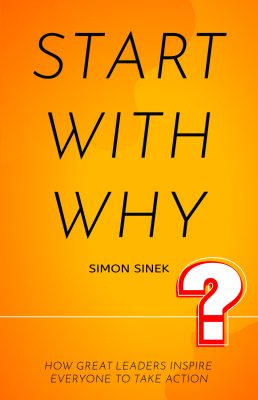
In this groundbreaking work, Simon Sinek introduces a powerful concept that has the potential to transform how we approach leadership and inspiration. The book presents the idea of the “Golden Circle,” a simple yet profound model that explains why some organizations and leaders can inspire while others simply can’t. At its core, the book argues that people don’t buy what you do; they buy why you do it. This fresh perspective challenges conventional wisdom and offers a new framework for building businesses, leading movements, and inspiring action. Through engaging stories and clear examples, the author demonstrates how starting with “why” can drive innovation, foster loyalty, and create lasting success in any field.
Start with Why is primarily geared towards business leaders, entrepreneurs, and managers who are looking to inspire their teams and create more purpose-driven organizations. However, its principles are broadly applicable, making it valuable for anyone interested in personal development, marketing, or understanding human motivation. The secondary audience includes students of business and leadership, as well as individuals seeking to find more meaning in their work or personal lives. Sinek’s writing style is accessible and engaging, using everyday language and relatable examples to explain complex concepts. This approach makes the book’s ideas digestible for readers at various levels of business experience, from seasoned executives to those just starting their careers.
Picture a world where every great leader, from Martin Luther King Jr. to Steve Jobs, shared a common thread in their approach to inspiring others. This is the world Simon Sinek unveils in Start with Why: How Great Leaders Inspire Everyone to Take Action. Sinek presents a revolutionary idea: the most influential leaders and organizations in the world all think, act, and communicate in the same way – and it’s the complete opposite of how everyone else does it.
Imagine a target with three concentric circles. The outermost circle represents “What” an organization does, the middle circle represents “How” they do it, and the innermost circle – the bull’s eye – represents “Why” they do it. Sinek calls this the Golden Circle. Most companies and individuals start from the outside and work their way in, focusing first on what they do, then how they do it. But truly inspirational leaders and organizations, Sinek argues, start with the why.
Take Apple, for instance. While their competitors might say, “We make great computers. They’re beautifully designed, simple to use, and user-friendly,” Apple’s message is entirely different. They start with why: “In everything we do, we believe in challenging the status quo and thinking differently.” This is how Apple inspires customer loyalty that borders on fanaticism, even when they venture into new product categories.
Throughout the book, Sinek provides numerous examples of leaders and organizations that have harnessed the power of starting with why. From the Wright brothers outpacing better-funded competitors in the race for flight, to Martin Luther King Jr. inspiring millions with his “I Have a Dream” speech, Sinek demonstrates how starting with why can create movements, build empires, and change the world.
Readers of Start with Why will learn how to articulate their own ‘why’ and use it to inspire others. They’ll discover the biological basis for why the Golden Circle works, rooted in the structure of our brain. They’ll understand how to build a culture where everyone in the organization knows the why, creating a sense of belonging and driving innovation. Most importantly, they’ll learn how to shift their thinking from the outside-in to the inside-out, potentially transforming their leadership style, their organizations, and even their lives.
The core message of Start with Why is simple yet profound: people don’t buy what you do; they buy why you do it. Sinek argues that the most successful leaders and organizations in the world – from Apple to Martin Luther King Jr. – all start with why. They understand their purpose, cause, or belief that inspires them to do what they do.
To illustrate this concept, consider the difference between these two elevator pitches:
The second pitch, which starts with why, is far more compelling. It doesn’t just tell you what the company does; it tells you why they exist. This approach speaks to the part of the brain that controls decision-making and behavior. When we communicate from the inside out, we’re talking directly to the part of the brain where gut decisions happen.
Sinek’s Golden Circle theory posits that this why-centric approach aligns with the biology of human decision-making. The neocortex, the newest part of the brain, corresponds with the “what” level – it’s responsible for rational and analytical thought. The limbic brain, which is responsible for feelings like trust and loyalty, corresponds with the “why” and “how” levels. When we communicate from the inside out, starting with why, we’re talking directly to the part of the brain that influences behavior.
Start with Why has had a seismic impact on the fields of leadership, marketing, and organizational culture since its publication in 2009. Its significance lies not just in its novel approach to understanding what drives human behavior and decision-making, but in its practical applicability across various sectors.
In the business world, Sinek’s ideas have revolutionized how companies approach branding and customer loyalty. Many organizations have shifted their focus from what they do to why they do it, resulting in more authentic connections with customers and employees alike. This shift has been particularly noticeable in the tech industry, where companies increasingly emphasize their mission and values alongside their products.
The book’s impact extends beyond the corporate sphere. Non-profit organizations have used Sinek’s principles to articulate their missions more effectively and inspire greater support. In politics, candidates have applied the “Start with Why” approach to craft more compelling campaign messages. Even in education, teachers and administrators have used these concepts to motivate students and create more purposeful learning environments.
Sinek’s TED Talk based on the book, “How Great Leaders Inspire Action,” has become one of the most-watched TED Talks of all time, with over 60 million views. This widespread exposure has helped cement the book’s ideas in popular culture and business discourse. The phrase “Start with Why” has become a common refrain in leadership seminars and business strategy sessions worldwide.
While widely acclaimed, the book has faced some criticism. Some argue that Sinek’s theory oversimplifies complex business realities and that not all successful companies follow the “Why-How-What” model. Others point out that starting with why is not always sufficient – execution and adapting to market realities are equally crucial. Despite these critiques, the book’s core message continues to resonate with millions, challenging leaders to think differently about how they inspire action and build lasting success.
Simon Sinek’s Start with Why offers a compelling and thought-provoking perspective on leadership and organizational success. We find that the book’s central premise – that great leaders and organizations inspire action by clearly communicating their purpose or “why” – is both intuitively appealing and potentially transformative. Sinek’s Golden Circle model provides a simple yet powerful framework for understanding and applying this concept, and his use of diverse, real-world examples helps to illustrate its broad applicability.
We appreciate Sinek’s engaging writing style and his ability to distill complex ideas into accessible language. The biological grounding of his theory, linking the Golden Circle to the structure of the brain, lends credibility to his arguments and helps readers understand why starting with “why” can be so effective. Moreover, the practical advice and tools provided throughout the book, such as the Why Discovery Process and the Celery Test, offer tangible ways for readers to apply these concepts in their own lives and organizations.
However, we also recognize several limitations in Sinek’s work. The book relies heavily on anecdotal evidence and could benefit from more rigorous, empirical support for its claims. Additionally, in its focus on the importance of “why,” the book sometimes underplays the significance of effective execution and the influence of external factors on organizational success. We also note that the book’s central idea, while powerful, is sometimes overstated as a universal solution, potentially oversimplifying the complexities of leadership and organizational behavior.
Despite these limitations, we believe that Start with Why offers valuable insights that can benefit a wide range of readers. For leaders and aspiring leaders, the book provides a fresh perspective on how to inspire and motivate others. For organizations, it offers a framework for developing a more compelling brand identity and fostering a stronger, more cohesive culture. Even for individuals not in leadership positions, the book’s emphasis on understanding and articulating one’s purpose can be personally enlightening and potentially career-enhancing.
Our Recommendation
We recommend Start with Why to readers interested in leadership, organizational behavior, and personal development. The book’s ideas are particularly valuable for those in positions of influence – be it in business, non-profit organizations, or public service – who are looking for ways to inspire action and create lasting impact. However, we suggest approaching the book with a critical mindset, considering its ideas in conjunction with other leadership and management theories.
For the most comprehensive understanding, we recommend pairing Start with Why with books that address some of its blind spots, such as Jim Collins’ Good to Great for a more data-driven approach to organizational success, or Daniel Pink’s Drive for a deeper dive into individual motivation. By combining Sinek’s inspiring vision with these complementary perspectives, readers can develop a more nuanced and well-rounded approach to leadership and organizational development.
The essence of Simon Sinek’s Start with Why revolves around the Golden Circle theory, which proposes that inspirational leadership and successful organizations begin with understanding and communicating their purpose – their “why.” This concept forms the cornerstone of Sinek’s philosophy, arguing that people are not primarily motivated by what a company does, but rather why they do it. The Golden Circle consists of three concentric circles: the outermost representing “What” an organization does, the middle circle representing “How” they do it, and the innermost circle – the core – representing “Why” they do it. Sinek contends that most organizations communicate from the outside in, starting with the clearest thing (what they do) and moving inward. However, inspired organizations think, act, and communicate from the inside out, beginning with their purpose or belief.
Another key topic in the book is the biological basis for the power of “why.” Sinek explains that the human brain’s structure aligns with the Golden Circle. The neocortex, the newest part of the brain, corresponds with the “what” level and is responsible for rational and analytical thought. The limbic brain, which handles emotions, behavior, and decision-making, aligns with the “why” and “how” levels. By communicating from the inside out, leaders can speak directly to the part of the brain that influences behavior, fostering stronger connections and inspiring action.
The concept of authenticity is crucial in Sinek’s framework. He argues that for the “why” to be effective, it must be genuine and consistently upheld. Organizations and leaders must walk the talk, ensuring their actions align with their stated purpose. This authenticity builds trust and loyalty among employees and customers alike. Sinek emphasizes that a clear and authentic “why” serves as a north star, guiding decision-making and helping organizations stay true to their core purpose even in challenging times.
The book also explores the idea of the “split” that occurs in many organizations as they grow. Initially, a company’s founder embodies the “why,” inspiring others with their vision and purpose. However, as the organization expands, there’s often a disconnect between the inspirational leaders at the top and those managing day-to-day operations. Sinek argues that to maintain long-term success, organizations must find ways to keep their “why” alive at all levels, ensuring that every employee understands and can articulate the company’s purpose.
Lastly, Sinek introduces the concept of the “celery test” as a metaphor for staying true to one’s “why.” The celery test posits that if your “why” is to be healthy, you’ll consistently choose foods like celery at the grocery store, regardless of what others are buying or recommending. Similarly, organizations with a clear “why” make decisions that align with their core purpose, even if these choices seem counterintuitive to others. This consistency reinforces the organization’s identity and helps attract like-minded customers and employees.
Apple Inc.
Sinek frequently uses Apple as a prime example of a company that starts with why. While other computer companies focus on what they do (make computers) and how they do it (they’re well-designed and user-friendly), Apple starts with why they exist: to challenge the status quo and think differently. This why permeates everything Apple does, from their innovative product design to their marketing strategies. It explains why Apple can successfully branch into diverse product categories – from computers to music players to phones – while maintaining a loyal customer base. Apple’s why resonates with customers who share their values, creating a connection that goes beyond the products themselves.
Wright Brothers
The Wright brothers’ story illustrates how starting with why can drive success even in the face of seemingly insurmountable odds. While their well-funded competitor, Samuel Pierpont Langley, was motivated by the prospect of fame and fortune, the Wright brothers were driven by the belief that powered flight would change the course of the world. This powerful why enabled them to persist through numerous setbacks and ultimately achieve success. Despite having less funding and education than Langley, their clear sense of purpose attracted a team of passionate individuals who shared their vision, contributing to their eventual triumph.
Martin Luther King Jr.
Sinek points to Martin Luther King Jr.’s “I Have a Dream” speech as a masterclass in starting with why. King didn’t simply outline what needed to change in America or how to achieve civil rights. Instead, he began by articulating his dream – his why – of a better, more equal America. This powerful why resonated with people across the nation, inspiring them to join the civil rights movement. King’s ability to clearly communicate his why enabled him to rally 250,000 people to Washington D.C. for his speech, despite the lack of modern communication technology and the fact that many attendees faced personal danger by participating.
Walmart
Sinek uses Walmart as an example of how losing sight of the why can impact a company. Walmart’s original why, as articulated by founder Sam Walton, was to help people save money so they could live better lives. This why drove Walmart’s decisions and contributed to its massive success. However, Sinek argues that in recent years, Walmart has shifted focus to what they do (sell products at low prices) rather than why they do it. This shift has led to decisions that, while potentially profitable in the short term, have damaged the company’s reputation and employee morale. This example underscores the importance of maintaining a strong connection to the organization’s why, even as it grows and evolves.
Southwest Airlines
Southwest Airlines serves as an example of how a clear why can guide decision-making and differentiate a company in a crowded market. Southwest’s why is to democratize the skies, making air travel accessible to everyone. This why informs everything from their low-cost model to their fun, casual company culture. Sinek points out that when other airlines began charging for checked bags, Southwest chose not to, despite the potential for increased revenue. This decision, while seemingly counterintuitive from a profit standpoint, aligned perfectly with their why of making travel accessible. As a result, Southwest has maintained strong customer loyalty and consistently outperformed other airlines in customer satisfaction.
The Power of Starting with Why
The most fundamental insight from Sinek’s book is the importance of starting with why. Organizations and leaders who clearly articulate their purpose – their reason for existence beyond making money – are more likely to inspire loyalty and commitment from both employees and customers. To apply this insight, leaders should take time to reflect on and clearly define their organization’s core purpose. This ‘why’ should be simple, actionable, and emotive. Once defined, it should be communicated consistently across all levels of the organization. For example, a tech company might define its why as “To empower creativity through technology.” This why would then guide product development, marketing strategies, and even hiring decisions. By consistently referring back to this why, the company can create a coherent narrative that resonates with both employees and customers.
The Golden Circle and Human Biology
Sinek’s Golden Circle model aligns with how the human brain processes information. The outermost circle (What) corresponds to the neocortex, responsible for rational thought, while the inner circles (How and Why) align with the limbic brain, which handles emotions and decision-making. This insight explains why starting with why is so effective – it speaks directly to the part of the brain that influences behavior. To leverage this insight, leaders should structure their communication from the inside out, starting with why, then how, and finally what. For instance, instead of saying “We make great computers. They’re beautifully designed and easy to use. Want to buy one?”, a company might say “We believe in challenging the status quo and thinking differently. We do this by creating beautifully designed, user-friendly products. We just happen to make great computers. Want to buy one?” This approach taps into emotions first, making the message more compelling and memorable.
The Importance of Consistency
Sinek emphasizes that for the ‘why’ to be effective, it must be consistently upheld throughout the organization. This consistency builds trust and reinforces the organization’s identity. To apply this insight, leaders should ensure that every decision, from major strategic moves to day-to-day operations, aligns with the organization’s why. This might involve creating a decision-making framework that always references the why. For example, when considering a new product launch, the team should first ask, “Does this align with our why?” If the answer is no, the idea should be reconsidered or adapted. Additionally, leaders should regularly share stories and examples of how the organization’s actions align with its why, reinforcing this connection for both employees and customers.
The Split and Maintaining the Why
As organizations grow, there’s often a disconnect between the inspirational leaders at the top and those managing day-to-day operations, leading to what Sinek calls “the split.” To prevent this, organizations must find ways to keep their why alive at all levels. One practical application of this insight is to implement a robust onboarding process that clearly communicates the organization’s why to new employees. Regular training sessions and team meetings can be used to reinforce the why and discuss how it applies to different roles. Leaders can also create a mentorship program where senior employees who embody the why guide newer team members. Additionally, recognition programs can be designed to highlight employees who exemplify the organization’s why in their work, further reinforcing its importance.
The Celery Test
Sinek introduces the concept of the “celery test” as a metaphor for staying true to one’s why. This insight underscores the importance of making decisions that consistently align with the organization’s core purpose, even if these choices seem counterintuitive to others. To apply this insight, leaders can create a decision-making checklist that includes the question, “Does this align with our why?” For every major decision. For instance, if a company’s why is about promoting health, they should consistently choose “healthy” options (like celery) in their product lineup, marketing strategies, and partnerships, even if less healthy options might be more immediately profitable. This consistency reinforces the organization’s identity and attracts like-minded customers and employees.
The Law of Diffusion of Innovation
Sinek applies the Law of Diffusion of Innovation to explain how ideas and products spread. He argues that to reach the tipping point of mass-market success, you need to win over the early adopters, who are most inspired by your why. To leverage this insight, organizations should focus their initial marketing efforts on communicating their why to potential early adopters. This might involve creating targeted campaigns that emphasize the organization’s purpose and values rather than just product features. For example, a sustainable fashion brand might launch with a campaign focused on their mission to revolutionize the fashion industry’s environmental impact, rather than simply highlighting their clothing designs. By winning over the early adopters who resonate with this why, the brand can build a loyal following that will help spread their message to the broader market.
The Role of Energy in Leadership
Sinek discusses the importance of energy in leadership, arguing that great leaders are often those who can transfer their energy to others. This energy comes from a clear sense of why. To apply this insight, leaders should focus on cultivating and projecting positive energy rooted in their why. This might involve starting team meetings with a brief reminder of the organization’s purpose and how the day’s work contributes to it. Leaders can also practice storytelling, sharing anecdotes that illustrate the impact of the organization’s why. Additionally, leaders should pay attention to their non-verbal communication, ensuring that their body language and tone convey enthusiasm and conviction when discussing the organization’s purpose. By consistently embodying and projecting this energy, leaders can inspire and motivate their teams more effectively.
Compelling Central Concept
Simon Sinek’s Start with Why presents a powerful and memorable central concept: the Golden Circle. This simple yet profound model provides a clear framework for understanding why some leaders and organizations inspire while others don’t. The idea that great leaders communicate from the inside out, starting with “why” rather than “what” or “how,” is both intuitive and revolutionary. It offers a fresh perspective on leadership and organizational success that challenges conventional wisdom. The strength of this concept lies in its broad applicability – from business to politics to personal life – making it relevant to a wide audience. Sinek’s articulation of this idea is clear and compelling, providing readers with a new lens through which to view leadership and inspiration.
Biological Grounding
One of the book’s significant strengths is its grounding of the Golden Circle concept in human biology. Sinek explains how the structure of the brain aligns with the Golden Circle, with the limbic brain (responsible for feelings and decision-making) corresponding to the “why” and “how,” and the neocortex (responsible for rational thought) aligning with the “what.” This biological explanation lends credibility to Sinek’s theory and helps readers understand why starting with “why” is so effective. By connecting his ideas to neuroscience, Sinek provides a compelling rationale for his approach that goes beyond mere business strategy, anchoring it in human nature itself.
Engaging Storytelling
Sinek’s use of storytelling is a standout strength of the book. He skillfully weaves together anecdotes and case studies from a variety of fields to illustrate his points. From the Wright brothers’ race for flight to Martin Luther King Jr.’s “I Have a Dream” speech, Sinek draws on diverse examples that bring his concepts to life. These stories not only make the book more engaging and readable but also demonstrate the universal applicability of the “Start with Why” concept. By showing how his ideas play out in real-world scenarios, Sinek helps readers see how they might apply these principles in their own lives and organizations.
Practical Applicability
Start with Why excels in providing practical, actionable advice for readers. Sinek doesn’t just present his theory; he offers concrete steps for how to discover, articulate, and communicate one’s “why.” He provides tools like the “Why Discovery Process” and the “Celery Test” that readers can immediately put into practice. This focus on applicability makes the book valuable not just as a theoretical text, but as a practical guide for leaders and organizations looking to inspire others and achieve long-term success. The book’s insights can be applied at both personal and organizational levels, enhancing its utility for a wide range of readers.
Clarity and Accessibility
Another strength of the book is its clarity and accessibility. Despite dealing with complex ideas about leadership and human behavior, Sinek presents his concepts in clear, straightforward language. He avoids jargon and uses relatable analogies to explain his ideas. This accessibility makes the book valuable for readers at all levels, from seasoned executives to those just starting their careers. The clear structure of the book, with each chapter building on the previous ones, helps readers grasp and retain the key concepts. Sinek’s writing style is engaging and conversational, making the book a pleasure to read despite its serious subject matter.
Challenging Conventional Wisdom
Start with Why stands out for its willingness to challenge conventional business wisdom. Sinek argues against the common focus on what a company does or how it does it, instead emphasizing the importance of why. This perspective challenges readers to think differently about leadership, marketing, and organizational culture. By questioning established practices and offering a new paradigm, Sinek encourages critical thinking and innovation. This contrarian approach adds value to the book, as it pushes readers out of their comfort zones and inspires them to reconsider their assumptions about what drives success in business and leadership.
Limited Empirical Evidence
While Sinek’s ideas are compelling and intuitively appealing, the book lacks rigorous empirical evidence to support its claims. The majority of the evidence presented is anecdotal, relying heavily on case studies and stories. While these examples are engaging and illustrative, they don’t provide the kind of systematic, data-driven support that would make the argument more robust from a scientific standpoint. The book would be strengthened by the inclusion of more quantitative research or controlled studies that demonstrate the effectiveness of the “Start with Why” approach compared to other leadership strategies.
Oversimplification of Complex Issues
In his effort to present a clear and compelling narrative, Sinek occasionally oversimplifies complex business and leadership issues. The book tends to present the “Start with Why” approach as a universal solution, potentially overlooking other important factors that contribute to organizational success. For instance, while having a strong “why” is undoubtedly important, factors like market conditions, competition, and operational efficiency also play crucial roles in a company’s success. The book might benefit from a more nuanced discussion of how the “why” interacts with these other factors, and acknowledgment of situations where starting with “why” might not be the most effective approach.
Limited Discussion of Potential Drawbacks
While Sinek presents a strong case for the benefits of starting with why, he provides limited discussion of potential drawbacks or challenges associated with this approach. For example, an overemphasis on “why” could potentially lead to inflexibility or difficulty adapting to changing market conditions. Additionally, the book doesn’t fully address how organizations should handle situations where different stakeholders have conflicting “whys.” A more balanced presentation that acknowledges and addresses potential criticisms or limitations of the approach would strengthen the overall argument and provide readers with a more comprehensive understanding of how to apply these ideas in real-world situations.
Repetitiveness
While the clarity of Sinek’s writing is a strength, the book sometimes becomes repetitive. The central idea of the Golden Circle and the importance of starting with why is restated frequently throughout the book. While repetition can be useful for reinforcing key points, some readers might find this approach tedious, especially in the later chapters. The book could potentially benefit from a more concise presentation of the core ideas, with additional space dedicated to exploring their implications and applications in greater depth.
Overemphasis on Inspiration at the Expense of Execution
One significant blind spot in Start with Why is its heavy focus on inspiration and motivation without equal attention to execution and operational excellence. While Sinek convincingly argues for the power of a strong “why,” he may underestimate the importance of “how” and “what” in achieving long-term success. This oversight might lead readers to mistakenly believe that having a compelling purpose is sufficient for success, potentially neglecting the crucial aspects of strategy implementation and operational efficiency. In reality, many organizations with inspiring missions fail due to poor execution or inability to adapt to market realities. Jim Collins’ Good to Great addresses this blind spot by emphasizing the importance of disciplined people, thought, and action in addition to having a core purpose. Similarly, Larry Bossidy and Ram Charan’s Execution: The Discipline of Getting Things Done provides a complementary perspective, focusing on the nitty-gritty of turning inspirational ideas into practical results. These books offer a more balanced view, suggesting that while starting with why is important, excellence in how and what is equally crucial for sustained success.
Assumption of Universal Applicability
Sinek presents the “Start with Why” approach as a universally applicable principle, which may be an oversimplification. The book doesn’t adequately address how this principle might need to be adapted or modified in different cultural contexts, industries, or organizational structures. For instance, in some cultures, the emphasis on individual purpose and inspiration might not align with more collective or hierarchical values. Additionally, in certain industries or job roles, a clear sense of why might be less critical than specific technical skills or efficiency. This blind spot could lead readers to apply the principle too rigidly across all situations. Erin Meyer’s The Culture Map offers valuable insights into how leadership and communication principles vary across cultures, which could help readers adapt Sinek’s ideas to diverse global contexts. Meanwhile, Clayton Christensen’s The Innovator’s Dilemma presents scenarios where a company’s core purpose might actually hinder its ability to adapt to disruptive changes in the market, providing a counterpoint to Sinek’s emphasis on unwavering adherence to one’s why.
Underestimation of External Factors
Start with Why may lead readers to underestimate the impact of external factors on organizational success. While a strong sense of purpose is undoubtedly important, it’s not a panacea for all business challenges. The book doesn’t fully explore how companies should balance their why with external market demands, competitive pressures, or changing consumer preferences. This blind spot might cause leaders to become too inward-focused, potentially missing crucial external signals or opportunities. Michael Porter’s Competitive Strategy offers a valuable complement to Sinek’s work, focusing on how external industry forces shape a company’s success. Additionally, Rita McGrath’s The End of Competitive Advantage discusses the need for continuous adaptation in fast-changing markets, which might sometimes require flexibility in how a company’s why is expressed or pursued.
Potential for Misalignment Between Personal and Organizational Why
While Sinek emphasizes the importance of organizational why, he doesn’t fully explore the potential conflicts that can arise when an individual’s personal why doesn’t align with their organization’s why. This oversight might lead to oversimplified expectations about employee engagement and loyalty. In reality, even in organizations with strong, well-communicated purposes, individuals may struggle if their personal values or goals don’t align with the company’s mission. This misalignment can lead to job dissatisfaction, reduced performance, or high turnover, issues not deeply addressed in Start with Why. Daniel Pink’s Drive: The Surprising Truth About What Motivates Us offers a more nuanced view of motivation, discussing how autonomy, mastery, and purpose interact to drive individual performance. Similarly, Amy Wrzesniewski’s research on job crafting, explored in books like The Job Crafting Exercise, provides insights into how individuals can find meaning in their work even when there isn’t perfect alignment with the organization’s overarching purpose.
Overlooking the Challenges of Maintaining a Consistent Why
Sinek presents the idea of an organization’s why as something that, once discovered, remains constant. However, he doesn’t fully address the challenges organizations face in maintaining a consistent why over time, especially as they grow, merge, or pivot. In reality, an organization’s purpose may need to evolve in response to changing market conditions, societal expectations, or strategic shifts. The book doesn’t provide much guidance on how to navigate these changes while still maintaining authenticity and employee buy-in. Jim Collins and Jerry Porras’s Built to Last offers a more dynamic view of corporate vision, discussing how companies can preserve core values while stimulating progress and adapting to change. Additionally, John Kotter’s Leading Change provides valuable insights into how organizations can manage significant transitions, which might include shifts in their fundamental purpose or how it’s expressed.
Good to Great by Jim Collins
While Simon Sinek’s Start with Why focuses on the importance of purpose and inspiration in leadership, Jim Collins’ Good to Great takes a more data-driven approach to understanding what makes companies excel. Collins and his research team studied companies that made the leap from good performance to great results, sustaining these for at least 15 years. Unlike Sinek’s emphasis on the “why,” Collins identifies several key factors, including disciplined people, disciplined thought, and disciplined action. Both books highlight the importance of having a clear purpose, with Collins referring to it as a company’s “Hedgehog Concept” – the intersection of what a company is passionate about, what it can be the best in the world at, and what drives its economic engine. However, Collins places equal emphasis on the “who” (getting the right people on the bus) and the “how” (culture of discipline), aspects that receive less attention in Sinek’s work. While Start with Why provides a compelling argument for inspirational leadership, Good to Great offers a more comprehensive framework for organizational excellence that balances purpose with execution.
Drive: The Surprising Truth About What Motivates Us by Daniel Pink
Daniel Pink’s Drive offers an interesting counterpoint to Sinek’s Start with Why. While both books deal with motivation, they approach it from different angles. Sinek focuses on how leaders can inspire others by clearly communicating their purpose, while Pink delves into the intrinsic factors that motivate individuals. Pink argues that true motivation comes from three elements: autonomy, mastery, and purpose. While this aligns with Sinek’s emphasis on purpose, Pink’s work suggests that purpose alone is not enough – people also need to feel a sense of control over their work (autonomy) and the opportunity to improve their skills (mastery). Pink’s book is based on a wider range of scientific research than Sinek’s, offering a more nuanced view of human motivation. Where Start with Why might lead readers to believe that a strong organizational purpose is sufficient to motivate employees, Drive suggests that organizations need to create environments that support individual growth and self-direction alongside a compelling purpose.
The Innovator’s Dilemma by Clayton Christensen
Clayton Christensen’s The Innovator’s Dilemma presents a different perspective on organizational success compared to Sinek’s Start with Why. While Sinek argues that a clear and consistent why is crucial for long-term success, Christensen’s work shows how a company’s core purpose and values can sometimes hinder its ability to adapt to disruptive changes in the market. Christensen demonstrates how even well-managed companies that listen to their customers and have a strong sense of purpose can still fail when faced with disruptive innovations. This presents a challenge to Sinek’s idea that a strong why is always beneficial. The Innovator’s Dilemma suggests that sometimes companies need to be willing to cannibalize their own successful products or pivot away from their established purpose to survive in rapidly changing markets. While Sinek’s work is valuable for understanding how to inspire and lead, Christensen’s book offers crucial insights into the challenges of maintaining relevance in dynamic business environments.
Emotional Intelligence by Daniel Goleman
Daniel Goleman’s Emotional Intelligence provides an interesting complement to Sinek’s Start with Why. While Sinek focuses on the importance of communicating purpose to inspire others, Goleman emphasizes the role of emotional intelligence in effective leadership. Goleman argues that traits like self-awareness, self-regulation, motivation, empathy, and social skills are crucial for leadership success. This adds a layer of complexity to Sinek’s model – it’s not just about having and communicating a strong why, but also about having the emotional intelligence to connect with and inspire others effectively. Where Sinek’s work might lead readers to focus primarily on clarifying and articulating their purpose, Goleman’s book encourages leaders to develop a broader set of interpersonal skills. The combination of these perspectives suggests that truly effective leadership requires both a clear sense of purpose and the emotional intelligence to connect that purpose with others in a meaningful way.
Discover Your Personal Why Start by identifying your personal “why” – your core purpose, cause, or belief. This is the foundation for applying Sinek’s principles to your life. Begin by reflecting on moments when you felt most fulfilled or proud. What were you doing? Why did it matter to you? Consider your values, passions, and the impact you want to have on the world. Write down your thoughts and look for patterns. Try to articulate your why in a simple statement that captures your purpose. For example, “To inspire others to reach their full potential” or “To create innovative solutions that improve people’s lives.” Remember, your why should be action-oriented, positive, and focused on the contribution you’ll make to others, not just personal gain.
Align Your Actions with Your Why Once you’ve identified your personal why, evaluate how well your current actions align with it. Look at your job, your hobbies, your relationships, and your daily habits. Are they in harmony with your purpose? If not, start making changes. This doesn’t necessarily mean quitting your job immediately, but it might involve seeking out projects that better align with your why, or finding ways to incorporate your purpose into your current role. Outside of work, consider volunteering for causes that resonate with your why, or starting a side project that allows you to express your purpose. Make a list of specific actions you can take in the next month to bring your life into better alignment with your why.
Communicate Your Why Effectively Practice articulating your why clearly and compellingly. Develop a brief “why statement” that you can share when introducing yourself or explaining your motivations. Remember Sinek’s Golden Circle – start with why, then how, then what. For example, instead of saying “I’m a software developer who creates mobile apps,” you might say “I believe in using technology to connect people (why). I do this by developing intuitive mobile applications (how) that help people stay in touch with their loved ones (what).” Practice this statement until it feels natural. Use it in networking events, job interviews, or when meeting new people. Pay attention to how people respond and refine your message over time.
Apply the Why to Decision Making Use your why as a guiding principle for decision-making in both your personal and professional life. When faced with a choice, ask yourself, “Which option best aligns with my why?” This can help you make decisions that are true to your core purpose. For major decisions, create a decision-making framework that explicitly includes your why as a criterion. For example, if you’re considering a job offer, evaluate not just the salary and benefits, but also how well the company’s mission and the role itself align with your personal why. Keep a journal of these decisions and reflect on how following your why impacts your satisfaction and success over time.
Develop Your How and What While Sinek emphasizes the importance of why, don’t neglect your how and what. Your how represents your strengths and the methods you use to bring your why to life. Your what is the tangible manifestation of your why. Conduct a self-assessment of your skills and strengths. How can these serve your why? What skills might you need to develop to better express your why? Create a personal development plan that focuses on honing the skills and acquiring the knowledge that will help you better achieve your why. Set specific, measurable goals for skill development and regularly review your progress.
Create a Why-Centric Personal Brand Develop a personal brand that clearly communicates your why. This goes beyond just a why statement – it should permeate all aspects of your professional presence. Review your resume, LinkedIn profile, and other professional materials. Do they clearly convey your why, or are they just a list of what you’ve done? Revise them to tell a coherent story that starts with your why. In your work, look for opportunities to take on projects or responsibilities that showcase your why in action. Document these experiences and share them as part of your personal brand narrative. Consider starting a blog or creating content that explores themes related to your why, establishing yourself as a thought leader in your area of purpose.
Build a Why-Aligned Network Surround yourself with people and organizations that share or support your why. Identify influencers, thought leaders, and organizations in your field that align with your purpose. Follow them on social media, read their content, and engage with their ideas. Attend events, conferences, or meetups where you’re likely to connect with like-minded individuals. When networking, focus on building relationships based on shared purpose rather than just exchanging business cards. Look for mentors who have successfully aligned their careers with their why and can guide you on your journey. Consider joining or starting a mastermind group of individuals with aligned purposes to support and challenge each other.
Inspire Others with Your Why As you become more aligned with your why, look for opportunities to inspire others. This could involve mentoring junior colleagues, speaking at events, or simply sharing your story with friends and family. Practice telling stories that illustrate your why in action – people connect with and remember stories better than abstract concepts. When leading projects or teams, start by clearly communicating the why behind the work. Help team members connect their individual roles to this larger purpose. In your personal life, discuss your why with your family and involve them in activities that support your purpose. By consistently living and sharing your why, you can inspire others to discover and pursue their own purpose.
Regularly Reflect and Refine Your why is not static – it may evolve as you grow and gain new experiences. Set aside time regularly, perhaps quarterly, to reflect on your why and how well you’re living it. Ask yourself: Does my why still feel true and motivating? Am I making the impact I want to make? What have I learned about myself and my purpose since the last reflection? Use journaling, meditation, or conversations with trusted friends to deepen your understanding of your why. Be open to refining or even changing your why if you find it no longer truly represents your core purpose. Remember, the goal is authenticity and alignment, not rigidly sticking to a statement that no longer serves you.
Measure Your Why-Driven Success Develop personal key performance indicators (KPIs) that measure how well you’re living your why, not just traditional measures of success like salary or job title. These might include the impact you’re having on others, your level of fulfillment, or specific outcomes related to your purpose. For example, if your why is about environmental conservation, you might track the number of sustainable practices you’ve implemented or the amount of waste you’ve reduced. If it’s about education, you might measure the number of people you’ve mentored or the learning outcomes of your students. Regularly review these KPIs and use them to guide your decisions and actions. Celebrate your successes and learn from the areas where you fall short. This approach will help you stay motivated and focused on what truly matters to you, rather than getting distracted by external measures of success that may not align with your why.
Discover and Articulate the Organization’s Why
The first step for any business applying Sinek’s principles is to discover and clearly articulate its “why” – its core purpose beyond making money. This involves deep reflection on why the company was founded, what problems it aims to solve, and what impact it wants to have on the world. The leadership team should engage in exercises to uncover the organization’s true purpose, looking beyond products or services to the underlying motivation that drives the company. Once identified, this why should be distilled into a clear, compelling statement that can guide all aspects of the business.
However, discovering and articulating an authentic why can be challenging, especially for established companies that may have lost sight of their original purpose. There might be disagreement among leadership about what the true why is, or resistance to change from those comfortable with the status quo. Additionally, there’s a risk of creating a why statement that sounds good but doesn’t truly reflect the company’s core purpose, leading to cynicism and disengagement among employees.
To overcome these challenges, consider bringing in an external facilitator to guide the process of discovering the why. This neutral party can help navigate disagreements and push for authenticity. Involve employees at all levels in the process through surveys, focus groups, and workshops to ensure the why resonates throughout the organization. Once a why is identified, test it thoroughly: Does it inspire action? Does it feel authentic? Does it align with the company’s history and values? Be prepared to iterate until you find a why that truly captures the organization’s purpose and inspires both leaders and employees.
Align Organizational Structure and Processes with the Why
Once the why is established, the next step is to align the entire organization – its structure, processes, and decision-making – with this core purpose. This might involve restructuring departments, redefining roles, or changing performance metrics to better reflect the why. For example, if a company’s why is about empowering creativity, it might need to flatten its hierarchy and create more autonomous teams. If it’s about environmental sustainability, it might need to overhaul its supply chain and production processes.
The main challenge in this step is the scale of change required, which can be disruptive and costly. Employees may resist changes to familiar processes or structures. There may be short-term financial impacts as the organization adjusts. Additionally, it can be difficult to translate an abstract why into concrete operational changes, especially in large or complex organizations.
To address these challenges, implement changes gradually and strategically. Start with pilot programs in specific departments or teams to test new structures or processes before rolling them out company-wide. Develop a comprehensive change management plan that includes clear communication about why changes are being made and how they connect to the organization’s purpose. Provide training and support to help employees adapt to new ways of working. Create cross-functional teams to identify and implement changes, ensuring diverse perspectives are considered. Regularly assess the impact of changes and be willing to adjust the approach based on feedback and results.
Embed the Why in Company Culture and Communication
For the why to truly drive the organization, it needs to be deeply embedded in the company culture and consistently communicated both internally and externally. This involves integrating the why into all aspects of employee experience, from recruitment and onboarding to daily operations and leadership practices. Externally, the why should guide marketing, customer interactions, and stakeholder communications.
A significant challenge is maintaining consistency and authenticity in how the why is expressed across different contexts and over time. There’s a risk of the why becoming a mere slogan rather than a lived experience. In large organizations, different departments or regional offices might interpret or apply the why inconsistently. Additionally, external pressures like market changes or financial challenges might tempt the organization to act in ways that contradict its stated why.
To address these challenges, develop a comprehensive communication strategy that outlines how the why will be expressed in different contexts. Create guidelines and training programs to help employees understand how to apply the why in their specific roles. Regularly share stories and examples of the why in action to make it tangible and relatable. Integrate the why into performance reviews and recognition programs to reinforce its importance. Externally, ensure all marketing and communications are filtered through the lens of the why before being approved. Regularly audit company decisions and actions against the why, and be transparent about instances where the organization may have fallen short, using these as learning opportunities.
Align Product Development and Innovation with the Why
The organization’s why should guide product development and innovation efforts. New products, services, or initiatives should clearly connect to and advance the company’s core purpose. This might involve reimagining existing product lines, exploring new markets that align with the why, or innovating in ways that more directly fulfill the organization’s purpose.
A key challenge is balancing purpose-driven innovation with market demands and financial realities. There might be pressure to pursue profitable opportunities that don’t align closely with the why, or to maintain existing product lines that no longer fit the company’s purpose. Additionally, purpose-driven innovation might require longer development timelines or higher initial investments, which can be difficult to justify in traditional financial models.
To overcome these challenges, develop a why-centric innovation framework that helps evaluate new ideas and opportunities against the organization’s purpose. Train product development and innovation teams in this framework and involve them in discussions about the why to ensure they understand and can apply it effectively. Create specific funds or resources for purpose-aligned innovation to ensure it’s not overshadowed by short-term market pressures. Develop new metrics for evaluating success that go beyond immediate profitability to include alignment with and advancement of the company’s why. Communicate clearly with stakeholders about the long-term value of purpose-driven innovation to gain support for initiatives that might not show immediate financial returns.
Develop Why-Aligned Leadership
To fully embrace Sinek’s principles, organizations need leaders at all levels who understand, embody, and can effectively communicate the why. This involves developing leadership capabilities that go beyond traditional management skills to include purpose-driven inspiration, authentic communication, and the ability to connect day-to-day operations with the larger organizational purpose.
A significant challenge is that many leaders may be more comfortable with or skilled at traditional, results-oriented management approaches. They might struggle to shift to a more purpose-driven leadership style. There’s also a risk of inauthenticity if leaders try to communicate a why they don’t genuinely believe in or understand. Additionally, in large organizations, ensuring consistency in why-aligned leadership across different departments or regions can be difficult.
To address these challenges, invest in comprehensive leadership development programs that focus on purpose-driven leadership. These should include not just skills training but also personal development work to help leaders connect with and articulate their own why and how it aligns with the organization’s. Implement mentoring or coaching programs where leaders skilled in why-based leadership can guide others. Include why-aligned leadership capabilities in succession planning and promotion criteria to ensure the next generation of leaders is equipped to carry forward the organization’s purpose. Regularly bring leaders together to share experiences and best practices in leading with why, fostering a community of purpose-driven leadership across the organization.
Measure Why-Aligned Performance
To ensure the why truly drives the organization, it’s crucial to develop new ways of measuring success that go beyond traditional financial metrics. This involves creating key performance indicators (KPIs) that reflect how well the organization is living its why and the impact it’s having in line with its purpose. These might include measures of customer or employee satisfaction, social or environmental impact metrics, or indicators of innovation aligned with the company’s purpose.
A major challenge in implementing why-aligned performance measurement is the difficulty of quantifying purpose-related outcomes, which are often intangible or long-term. There might be resistance from stakeholders accustomed to traditional financial metrics, particularly if why-aligned activities don’t show immediate profitability. Additionally, there’s a risk of creating perverse incentives if why-aligned metrics are poorly designed or implemented.
To overcome these challenges, start by clearly defining what success looks like in terms of living the organization’s why. Work with experts in impact measurement to develop robust, meaningful metrics that truly capture purpose-aligned performance. Implement these new metrics gradually, initially running them alongside traditional measures to help stakeholders understand their value. Educate investors and board members about the long-term benefits of purpose-driven performance. Be transparent about the challenges and limitations of measuring purpose-aligned performance, and be willing to refine metrics over time based on learnings. Consider tying executive compensation to these new metrics to ensure leadership remains focused on the why.
Foster Why-Driven Partnerships and Collaborations
Extend the organization’s why beyond its boundaries by seeking partnerships and collaborations with other entities that share or complement the company’s purpose. This might involve forming alliances with like-minded companies, partnering with non-profits or social enterprises, or collaborating with research institutions or government agencies on initiatives that advance the organization’s why.
A key challenge in this area is finding partners whose why truly aligns with the organization’s, rather than forming superficial collaborations that don’t advance the core purpose. There might be legal or competitive concerns about close collaboration with other entities. Additionally, managing partnerships across different organizational cultures and operating models can be complex and time-consuming.
To address these challenges, develop a rigorous vetting process for potential partners that evaluates not just strategic fit but alignment of purpose. Create clear guidelines for partnerships that outline how the collaboration will advance both parties’ why. Invest in relationship-building at multiple levels of partnering organizations to ensure deep understanding and alignment. Be willing to walk away from potentially lucrative partnerships if they don’t truly align with the organization’s why. Develop metrics to evaluate the success of partnerships in advancing the company’s purpose, not just their financial or operational outcomes. Regularly review and refresh partnerships to ensure they continue to serve the organization’s why as both entities evolve.
Rise of Purpose-Driven Organizations
The ideas presented in Simon Sinek’s Start with Why align closely with the growing trend of purpose-driven organizations. As consumers become more socially and environmentally conscious, they increasingly seek out companies that stand for something beyond profit. This shift is evident in the rise of B Corporations, which are certified to meet rigorous standards of social and environmental performance, accountability, and transparency. Sinek’s emphasis on starting with why provides a framework for organizations to articulate and embody their purpose, potentially positioning them to thrive in this evolving landscape. In the future, we may see a more widespread adoption of purpose-driven business models, with companies competing not just on product quality or price, but on the strength and authenticity of their why. This could lead to a reimagining of corporate structures, with purpose becoming a central organizing principle rather than an afterthought or marketing tool.
Evolving Employee Expectations
The concept of starting with why dovetails with changing employee expectations, particularly among younger generations entering the workforce. Millennials and Gen Z increasingly prioritize purpose and meaning in their work over traditional incentives like high salaries or job security. Sinek’s ideas provide a roadmap for organizations to attract and retain talent by clearly articulating their purpose and helping employees connect their individual roles to this larger why. As this trend continues, we may see a shift in how companies approach recruitment, onboarding, and employee engagement. Job descriptions might lead with the organization’s why, interviews could focus on aligning personal and organizational purpose, and performance reviews might include metrics on how well an employee embodies and advances the company’s why. In the long term, this could lead to a more fulfilled workforce and potentially higher productivity and innovation as employees find greater meaning in their work.
Authenticity in Leadership
Sinek’s emphasis on authentic, purpose-driven leadership aligns with a growing demand for transparency and authenticity in all aspects of business. In an era of social media and instant information sharing, leaders who can clearly articulate and genuinely embody their organization’s why are likely to be more trusted and effective. This trend towards authentic leadership may continue to grow, potentially reshaping our understanding of what makes an effective leader. Traditional leadership skills like strategic thinking and decision-making may be supplemented or even supplanted by abilities like inspiring others through purpose and fostering a sense of belonging. Leadership development programs of the future might focus more on helping leaders discover and articulate their personal why and align it with their organization’s purpose. This could lead to a new generation of leaders who are more introspective, values-driven, and capable of inspiring deep commitment from their teams and stakeholders.
Integration of Purpose and Technology
As technology continues to advance rapidly, Sinek’s ideas about the importance of why could play a crucial role in guiding its development and application. In a world where artificial intelligence, robotics, and other emerging technologies are reshaping industries and job roles, having a clear sense of purpose could help organizations and individuals navigate these changes. Companies might use their why as a compass for technological innovation, ensuring that new developments align with and advance their core purpose rather than being adopted merely for efficiency or competitive advantage. On a broader scale, the concept of starting with why could influence how society approaches major technological challenges and opportunities. For instance, in addressing issues like climate change or space exploration, starting with a clear, compelling why could help align diverse stakeholders and drive sustained effort towards these complex, long-term goals.
Globalization of Purpose
As businesses become increasingly global, Sinek’s concept of starting with why could play a vital role in creating cohesive, purpose-driven multinational organizations. The idea of a unifying why could serve as a powerful tool for bridging cultural differences and aligning diverse teams around a common purpose. However, this globalization of purpose also presents challenges, as different cultures may interpret or respond to a why in varying ways. In the future, we might see the emergence of more nuanced, culturally adaptive approaches to articulating and implementing an organization’s why across different global contexts. This could lead to new models of global organizational culture that balance unity of purpose with local cultural sensitivity. Additionally, as global challenges like climate change and inequality become more pressing, we might see the emergence of collaborative, purpose-driven initiatives that span traditional boundaries between nations, sectors, and industries, all united by a compelling global why.
The ideas presented in Simon Sinek’s Start with Why have the potential for significant long-term influence on leadership theory and practice. By emphasizing the importance of purpose in inspiring action, Sinek’s work could contribute to a shift away from transactional leadership models towards more transformational approaches. This could lead to organizations placing greater emphasis on developing and communicating their core purpose, potentially resulting in more engaged employees and loyal customers.
In the broader business world, Sinek’s ideas might influence how companies approach branding and marketing. Rather than focusing primarily on product features or benefits (the “what” and “how”), companies might increasingly center their messaging around their core purpose or mission (the “why”). This could lead to more purpose-driven marketing campaigns and potentially more authentic connections between brands and consumers.
The book’s emphasis on starting with why could also impact how entrepreneurs approach building new businesses. Rather than starting with a product idea, more founders might begin by clarifying their purpose and then developing products or services that align with that purpose. This could potentially lead to more mission-driven startups and social enterprises.
In the field of organizational psychology, Sinek’s work might stimulate more research into the relationship between organizational purpose and employee motivation, engagement, and performance. This could lead to new insights into how companies can create more meaningful work environments and foster stronger organizational cultures.
The book’s ideas could also influence education and career guidance. If Sinek’s assertion that people are more fulfilled when their work aligns with their personal why is widely accepted, it might lead to more emphasis on helping students and job seekers identify their core purpose and find careers that align with it. This could potentially lead to changes in career counseling practices and even in how educational curricula are designed.
In the public sector, Sinek’s ideas might influence how government agencies and non-profit organizations communicate their missions and engage with the public. This could potentially lead to more inspiring public service campaigns and more effective fundraising efforts for charitable organizations.
On a societal level, the widespread adoption of Sinek’s ideas could contribute to a cultural shift towards more purpose-driven living. This might manifest in various ways, from individuals seeking more meaningful work to companies taking stronger stances on social and environmental issues.
However, it’s important to note that the long-term impact of Sinek’s work will depend on how his ideas are implemented and whether they stand up to rigorous empirical testing over time. While the concept of starting with why is compelling, its effectiveness in various contexts and its impact on long-term organizational performance will need to be validated through further research and real-world application.
Good to Great by Jim Collins
Jim Collins’ Good to Great offers an excellent complement to Sinek’s Start with Why by providing a data-driven approach to understanding what makes companies excel. While Sinek focuses on the importance of purpose, Collins identifies several key factors that contribute to a company’s transition from good to great, including disciplined people, disciplined thought, and disciplined action. Collins’ concept of the “Hedgehog Concept” – the intersection of what a company can be the best at, what drives its economic engine, and what it’s deeply passionate about – aligns well with Sinek’s emphasis on “why,” but provides a more comprehensive framework for organizational success. By reading Good to Great alongside Start with Why, readers can gain a more balanced understanding of how purpose interacts with other crucial elements of business excellence.
Drive: The Surprising Truth About What Motivates Us by Daniel Pink
Daniel Pink’s Drive provides a valuable counterpoint to Sinek’s work by delving deeper into the intrinsic factors that motivate individuals. While Sinek focuses on how leaders can inspire others by clearly communicating their purpose, Pink argues that true motivation comes from three elements: autonomy, mastery, and purpose. This book offers a more nuanced view of human motivation, suggesting that a strong organizational purpose (the “why”) is important but not sufficient on its own. Pink’s work is grounded in a wider range of scientific research than Sinek’s, offering readers a more comprehensive understanding of motivation in both personal and professional contexts. By pairing Drive with Start with Why, readers can develop a more holistic approach to inspiring and motivating themselves and others.
The Innovator’s Dilemma by Clayton Christensen
Clayton Christensen’s The Innovator’s Dilemma presents a different perspective on organizational success that serves as an interesting counterpoint to Sinek’s work. While Sinek argues that a clear and consistent why is crucial for long-term success, Christensen demonstrates how even well-managed companies with a strong sense of purpose can fail when faced with disruptive innovations. This book challenges readers to consider how an organization’s core purpose might need to evolve in the face of dramatic market changes. By reading The Innovator’s Dilemma alongside Start with Why, readers can develop a more nuanced understanding of how to balance a strong sense of purpose with the need for adaptability in rapidly changing business environments.
Conscious Capitalism by John Mackey and Raj Sisodia
Conscious Capitalism builds on the idea of purpose-driven business that Sinek introduces in Start with Why, offering a more comprehensive framework for how businesses can simultaneously create financial, social, and environmental value. Mackey and Sisodia argue for a stakeholder-centric business model that aligns closely with Sinek’s emphasis on starting with why. However, they go further by outlining how this approach can be implemented across all aspects of a business, from leadership and culture to stakeholder integration and conscious management. This book provides practical strategies for turning the kind of purpose-driven approach Sinek advocates into a comprehensive business philosophy, making it an excellent follow-up read for those inspired by Start with Why.
The Culture Code by Daniel Coyle
While Sinek focuses on the importance of why in inspiring action, Daniel Coyle’s The Culture Code delves into how great organizational cultures are built and maintained. Coyle’s research complements Sinek’s work by showing how a strong sense of purpose (the why) can be translated into tangible cultural practices that foster belonging, collaboration, and innovation. Through a series of case studies, Coyle identifies key skills that leaders can develop to build cohesive, purpose-driven teams. By reading The Culture Code in conjunction with Start with Why, readers can gain insights into how to create organizational cultures that not only have a strong sense of purpose but also effectively embody and advance that purpose in day-to-day operations.
Tribal Leadership by Dave Logan, John King, and Halee Fischer-Wright
Tribal Leadership offers a unique perspective on organizational culture that complements Sinek’s focus on purpose. The authors present a model of five tribal stages that organizations progress through as they develop more effective cultures. Their work suggests that the most successful organizations operate at a stage characterized by a noble cause or shared values, which aligns closely with Sinek’s concept of why. However, Tribal Leadership goes beyond Start with Why by providing a framework for understanding how organizational culture evolves and how leaders can guide their organizations to higher cultural stages. This book offers practical strategies for leaders looking to implement Sinek’s ideas about purpose-driven leadership within the context of organizational culture change.
The Infinite Game by Simon Sinek
For readers particularly inspired by Sinek’s ideas in Start with Why, his later work The Infinite Game provides a natural extension of these concepts. In this book, Sinek applies the concept of finite and infinite games to business and leadership, arguing that adopting an infinite mindset – one focused on continuous adaptation and improvement rather than “winning” – is crucial for long-term success. This perspective builds on the idea of purpose-driven leadership introduced in Start with Why, showing how a strong sense of why can guide organizations in playing the “infinite game” of business. By reading both books, readers can gain a more comprehensive understanding of Sinek’s philosophy and how it applies to long-term organizational strategy and leadership.
TED.com TED.com hosts Simon Sinek’s original TED Talk, “How Great Leaders Inspire Action,” which introduced the concepts from Start with Why to a global audience. The platform also features numerous other talks on leadership, purpose, and organizational culture that can complement and expand on Sinek’s ideas. Viewers can explore talks by leaders from various industries discussing how they’ve implemented purpose-driven approaches in their organizations, providing real-world context to the concepts presented in the book.
SimonSinek.com Simon Sinek’s official website offers a wealth of resources related to the concepts introduced in Start with Why. Visitors can find articles, videos, and tools to help them discover their own why and implement Sinek’s ideas in their personal and professional lives. The site also provides information about Sinek’s other books and speaking engagements, allowing readers to deepen their engagement with his work.
Harvard Business Review (hbr.org) The Harvard Business Review website offers numerous articles on purpose-driven leadership, organizational culture, and related topics that can provide additional context and perspectives to complement Start with Why. Many of these articles are written by leading academics and business practitioners, offering evidence-based insights and practical applications of concepts related to organizational purpose and leadership.
World Business Forum The World Business Forum is an annual conference that brings together global leaders to discuss critical business issues, including purpose-driven leadership and organizational culture. Attendees can hear from thought leaders, including Simon Sinek himself in some years, and learn how major companies are implementing purpose-driven strategies. The conference provides opportunities for networking and deeper engagement with the concepts presented in Start with Why.
Conscious Capitalism Conference This annual conference, organized by the Conscious Capitalism organization, focuses on purpose-driven business practices and stakeholder-centric models. While not directly associated with Sinek’s work, the conference explores many themes that align with and expand upon the ideas in Start with Why. Attendees can learn from business leaders who are successfully implementing purpose-driven approaches in their organizations.
Conscious Capitalism Conscious Capitalism is a non-profit organization that promotes purpose-driven business practices. Members can access resources, attend events, and connect with like-minded professionals who are working to implement the kind of purpose-driven leadership Sinek advocates for in Start with Why. The organization’s focus on stakeholder integration and conscious culture aligns well with Sinek’s emphasis on the importance of why in organizational success.
B Lab B Lab is the non-profit organization behind B Corporation certification, which recognizes companies that meet high standards of social and environmental performance, accountability, and transparency. While not directly related to Sinek’s work, B Lab’s focus on purpose-driven business models aligns closely with the ideas presented in Start with Why. Engaging with B Lab’s resources and community can provide readers with practical examples of how companies are putting purpose at the center of their operations.
“A Bit of Optimism” with Simon Sinek Simon Sinek hosts his own podcast, “A Bit of Optimism,” where he explores themes related to leadership, purpose, and organizational culture. While not exclusively focused on the concepts from Start with Why, the podcast often touches on these ideas and provides listeners with the opportunity to hear Sinek expand on his thinking and apply it to current events and challenges.
“HBR IdeaCast” by Harvard Business Review The Harvard Business Review’s podcast, “HBR IdeaCast,” frequently features discussions on leadership, organizational culture, and purpose-driven business that can complement the ideas in Start with Why. Episodes often include interviews with business leaders and academics, providing diverse perspectives on how to implement purpose-driven approaches in various organizational contexts.
“Finding Your Why” on Udemy Udemy offers a course titled “Finding Your Why” that is based on Simon Sinek’s work. This course provides a structured approach to help individuals and organizations discover and articulate their why, offering practical exercises and tools to apply the concepts from Start with Why in real-life situations.
“Inspirational Leadership: Leading with Sense” on Coursera While not directly based on Sinek’s work, this course from HEC Paris on Coursera explores many themes that align with Start with Why. It focuses on how leaders can create meaning and purpose in organizations, providing a broader context for the ideas Sinek presents in his book.
The Social Dilemma While not directly related to Sinek’s work, this documentary explores the impact of social media on society and raises important questions about the purpose and ethics of tech companies. It provides an interesting case study for viewers to consider in light of Sinek’s emphasis on the importance of why, illustrating the potential consequences when companies lose sight of their core purpose.
The Biggest Little Farm This documentary follows a couple as they work to develop a sustainable farm, driven by a clear sense of purpose. While not explicitly about organizational leadership, the film illustrates many of the principles Sinek discusses in Start with Why, showing how a strong sense of purpose can guide decision-making and perseverance in the face of challenges.
Joy This biographical film tells the story of Joy Mangano, an entrepreneur who builds a business empire starting from a strong sense of purpose. While dramatized, the film provides an engaging illustration of how a clear why can drive innovation and success, aligning with many of the principles Sinek outlines in Start with Why.