Reviews
“This is the SEAL Leadership book we have been waiting for. Poignant, powerful, practical. A must read for every leader.” ―Roger Ailes, Chairman and CEO, Fox News Channel and Fox Business Network, and chairman, Fox Television Stations
“Leif and Jocko are the real deal. I’m honored to have served with them. They led SEALs in the fight through the hell that was the Battle of Ramadi. This book shows how they did it.” ―Marcus Luttrell, U.S. Navy SEAL and #1 national bestselling author of Lone Survivor
“The smartest, most revolutionary management approach since Jack Welch’s Six Sigma.” ―Don Imus, radio host, Imus in the Morning
“Finally, a leadership book that actually demonstrates how to truly lead. Riveting, engaging, and free from the usual cliché platitudes, this book is strikingly impactful and will dramatically improve leaders of all types.” ―Amy Brandt Schumacher, entrepreneur, executive, and philanthropist
“Extreme Ownership provides huge value for leaders at all levels. An inspiring and page-turning read, the leadership lessons are easy to digest and implement. It provides a powerful SEAL framework for action to lead teams in high-stakes environments. This book made me a better leader and enabled my entire team step up our game!” ―Jared Hamilton, founder and CEO, DrivingSales
“One of the best books on leadership I’ve ever read and a tremendous war story book as well.” ―Marc Andreessen
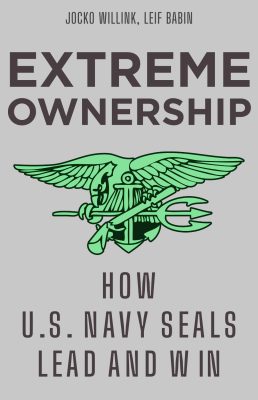
Extreme Ownership dives deep into the mindset and principles that enabled U.S. Navy SEALs to succeed in the most demanding environments. The book’s central theme revolves around the concept of “extreme ownership,” where leaders take full responsibility for everything in their world. By sharing gripping combat stories and translating them into actionable leadership strategies, the authors present a unique perspective on leadership and management that stands out in the genre. What makes this book unique is its blend of military experience with practical business advice, offering a compelling and transformative approach to leadership.
Extreme Ownership is ideal for leaders at all levels, from corporate executives to front-line managers, who seek to enhance their leadership capabilities. Secondary audiences include military enthusiasts, entrepreneurs, and anyone interested in personal development. The book’s language is accessible and straightforward, making complex leadership concepts easy to understand and apply, even for those without a military background.
What does it take to lead in the most extreme situations imaginable?
Imagine being in the heat of battle, where every decision can mean the difference between life and death. In Extreme Ownership: How U.S. Navy SEALs Lead and Win, Jocko Willink and Leif Babin transport readers to the chaotic streets of Ramadi, Iraq, where they commanded one of the most decorated units in SEAL history. The book begins with a gripping account of a friendly fire incident that could have ended in disaster but instead became a powerful lesson in leadership and accountability. This story sets the stage for the authors’ main argument: true leaders own everything in their world, from mission success to personal failures.
The authors introduce the concept of “extreme ownership” by recounting their experiences in combat and linking these lessons to challenges faced by leaders in any field. The principles they share are not limited to the battlefield but are applicable to the boardroom, classroom, or any leadership scenario. They emphasize the importance of taking responsibility, leading with humility, and understanding that there are no bad teams, only bad leaders. The book is structured around these principles, each illustrated with real-life examples from their military careers and their work with businesses through their consultancy, Echelon Front.
Readers will learn how to apply the lessons of Extreme Ownership in their own lives, gaining insights into leadership that go beyond the superficial. The book teaches how to lead oneself before leading others, how to build and maintain a cohesive team, and how to execute complex strategies effectively. By reading this book, leaders can develop the mental toughness needed to face any challenge and inspire those around them to achieve their best.
One particularly compelling example shared in the book is the story of a failed mission where miscommunication and lack of accountability led to tragic results. Instead of placing blame, Willink and Babin used the incident to stress the necessity of clear communication and complete ownership of outcomes. This approach not only salvaged future missions but also built stronger, more resilient teams. This powerful narrative underscores the book’s central theme and makes it clear that effective leadership requires more than just technical skills—it demands character and commitment.
The authors’ backgrounds as Navy SEALs add a unique perspective to their lessons, providing a level of credibility and intensity rarely found in traditional leadership books. Their firsthand experiences of life-and-death situations lend weight to their advice and make their insights particularly compelling. Readers will be captivated by the vivid recounting of combat missions and the seamless translation of these experiences into practical leadership strategies.
At its heart, Extreme Ownership is about taking complete responsibility for every aspect of one’s leadership role. Willink and Babin argue that leaders must own everything in their world, from the successes to the failures. This philosophy is vividly illustrated through the metaphor of a ship’s captain who cannot blame the storm or the crew for a shipwreck—ultimately, it is the captain’s responsibility to navigate safely. This idea of extreme ownership means accepting accountability not just for one’s actions but for the actions of the entire team.
Extreme Ownership has made a significant impact in the field of leadership and management, offering a fresh perspective that challenges conventional wisdom. The book has been praised for its practical, no-nonsense approach and its ability to translate military leadership principles into actionable business strategies. Its popularity is evident in its status as a New York Times bestseller and the widespread acclaim it has received from both military and corporate leaders.
The book’s contribution to the discourse on leadership is its emphasis on personal accountability and the elimination of excuses. This perspective can be controversial, as it places the onus entirely on the leader, challenging the common practice of attributing failures to external factors. However, it is precisely this unwavering stance on responsibility that sets the book apart and makes it a valuable resource for leaders seeking to improve their effectiveness.
In addition to its commercial success, Extreme Ownership has been recognized for its innovative approach to leadership training. Willink and Babin’s consultancy, Echelon Front, has helped numerous organizations implement these principles, resulting in measurable improvements in performance and team dynamics. The book has also inspired a wave of follow-up works and discussions, cementing its place as a cornerstone text in modern leadership literature.
Extreme Ownership by Jocko Willink and Leif Babin offers a compelling and practical guide to leadership, drawing from the authors’ extensive military experience. The book’s strength lies in its clear, actionable principles that can be applied across various leadership contexts. By emphasizing personal accountability and responsibility, Willink and Babin provide a refreshing perspective that challenges leaders to take ownership of their actions and outcomes. The vivid storytelling and real-life examples from the battlefield make the concepts more relatable and impactful, helping readers understand the importance of these principles in high-stakes environments.
The practical applicability of the book’s lessons is one of its most significant advantages. Whether you are a corporate executive, a manager, or someone aspiring to lead, the principles outlined in Extreme Ownership can help you improve your leadership skills. The emphasis on clear communication, prioritizing tasks, and empowering team members are all essential components of effective leadership. The book’s straightforward and engaging writing style makes it accessible to readers from various backgrounds, ensuring that the concepts are easy to grasp and implement.
However, Extreme Ownership does have its limitations. The repetitive nature of some themes can make the book feel redundant at times. Additionally, the heavy focus on military examples might not resonate with all readers, particularly those from non-military backgrounds. The book also tends to present solutions in a somewhat simplistic manner, which might not fully address the complexities of real-world leadership challenges. Furthermore, the lack of emphasis on emotional intelligence and diversity means that some critical aspects of modern leadership are not adequately covered.
Despite these shortcomings, Extreme Ownership remains a valuable resource for anyone looking to enhance their leadership capabilities. The book’s core message of taking full responsibility is a powerful reminder that true leadership starts with oneself. By adopting the principles of extreme ownership, leaders can foster a culture of accountability and continuous improvement within their teams, ultimately leading to better performance and success.
Our Recommendation
We believe Extreme Ownership is an essential read for current and aspiring leaders. Its emphasis on personal accountability and clear, practical advice makes it a standout in the leadership genre. The authors’ unique perspective, grounded in their military experiences, offers valuable insights that are applicable across various contexts. The book’s engaging narrative style ensures that readers remain interested and motivated to apply the lessons learned.
For those looking to build a solid foundation in leadership, Extreme Ownership provides a robust framework that can be applied to both professional and personal settings. While it may not cover every aspect of modern leadership, its core principles are timeless and universally relevant. We recommend this book to anyone seeking to improve their leadership skills, foster a culture of accountability, and drive their team towards success. Whether you are navigating the corporate world, managing a team, or leading a community initiative, the lessons from Extreme Ownership will serve you well in your journey.
At the core of Extreme Ownership lies the concept that leaders must take full responsibility for their actions and the actions of their teams. This principle is central to every lesson and story shared in the book. Willink and Babin argue that by accepting total accountability, leaders can inspire trust, foster a culture of responsibility, and drive their teams to succeed. This approach removes the habit of blaming external factors for failures, encouraging leaders to find solutions and improve continuously.
A key topic is the idea that there are no bad teams, only bad leaders. This concept challenges leaders to look inward and evaluate their own effectiveness rather than blaming their team members for poor performance. Willink and Babin illustrate this with the rigorous training environment of the SEALs, where leadership quality directly impacts team success. By adopting this mindset, leaders can identify areas for personal growth and foster a more cohesive, motivated team.
Another critical element is the necessity of clarity and simplicity in communication. In high-stakes environments like combat, complex instructions can lead to confusion and failure. The authors emphasize that clear, concise communication is essential for effective leadership. By simplifying their messages, leaders can ensure that their teams understand the objectives and can execute tasks efficiently.
The importance of decentralized command is another fundamental principle discussed in the book. Willink and Babin highlight the need for leaders to empower their subordinates to make decisions. This approach not only develops the skills and confidence of team members but also ensures that decisions can be made swiftly and effectively at all levels. By trusting their teams, leaders can focus on strategic oversight rather than getting bogged down in micromanagement.
The balance between discipline and flexibility is also a recurring theme. The authors stress that while strict adherence to plans and protocols is necessary, leaders must also be adaptable to changing circumstances. This balance allows leaders to maintain order and direction while being responsive to unforeseen challenges. By fostering both discipline and adaptability, leaders can navigate their teams through complex and dynamic situations.
Friendly Fire Incident in Ramadi: One of the most compelling examples shared in Extreme Ownership is the story of a friendly fire incident during the Battle of Ramadi. In this case, a chaotic combat situation led to a SEAL team mistakenly engaging friendly forces. Instead of shifting the blame, Jocko Willink took full responsibility for the incident. This act of extreme ownership not only defused potential conflicts within the team but also set a powerful example of accountability. The incident underscored the importance of taking responsibility and learning from mistakes, reinforcing the book’s central message.
Boat Crew Training: Another illustrative example is the SEAL training exercise involving boat crews. During this exercise, teams compete in a series of physically and mentally demanding tasks. Initially, one crew consistently lagged behind while another excelled. By swapping the leaders of the two teams, the authors demonstrated that leadership quality directly impacts team performance. The previously underperforming team quickly improved under new leadership, while the high-performing team began to struggle. This example vividly illustrates the principle that there are no bad teams, only bad leaders.
Mission Planning and Briefing: The book also discusses the importance of simplicity in mission planning and briefing. In one example, a mission plan initially included complex and detailed instructions that overwhelmed the team. By simplifying the plan and focusing on clear, concise objectives, the team was able to execute the mission successfully. This experience highlighted the need for clarity and simplicity in communication, ensuring that all team members understood their roles and the overall mission goals. This principle is crucial for effective leadership in both military and business environments.
Operation Phantom Fury: Willink and Babin share an example from Operation Phantom Fury, where decentralized command played a crucial role. During the operation, leaders on the ground had the authority to make critical decisions without waiting for approval from higher-ups. This empowerment allowed for rapid response to emerging threats and opportunities, significantly contributing to the operation’s success. The example demonstrates the importance of trusting team members and enabling them to act autonomously while maintaining overall strategic direction.
Training the Iraqi Security Forces: The balance between discipline and flexibility is illustrated in the authors’ experience training the Iraqi Security Forces. Initially, the training was rigid, focusing strictly on established protocols. However, the trainers quickly realized that adapting to the unique cultural and operational context of the Iraqi forces was essential. By incorporating flexibility into their training approach while maintaining core principles, the SEALs were able to effectively train and build capable local forces. This example highlights the necessity of balancing strict discipline with adaptability to achieve optimal outcomes in diverse situations.
Extreme Ownership: The central insight of the book is the principle of extreme ownership. This means taking full responsibility for all aspects of your team’s performance, both successes and failures. To apply this, leaders should refrain from blaming external factors or team members when things go wrong. Instead, they should analyze what they could have done differently and take steps to improve. For example, if a project deadline is missed, instead of blaming team members for delays, the leader should examine their planning process, communication, and how they could have provided better support or resources.
No Bad Teams, Only Bad Leaders: Another critical insight is that there are no bad teams, only bad leaders. This concept emphasizes that the success of any team is directly tied to the quality of its leadership. To implement this, leaders should focus on developing their own skills and ensuring they set clear expectations, provide necessary training, and foster a positive team culture. When faced with poor performance, leaders should first look at their own actions and decisions before criticizing their team members. This can involve conducting honest self-assessments and seeking feedback from peers and subordinates.
Simple Communication: Effective communication is another key takeaway. Willink and Babin stress that clear, concise communication is crucial for successful operations. To apply this, leaders should strive to simplify their messages and ensure that all team members understand their roles and objectives. This can be done by avoiding jargon, using straightforward language, and checking for understanding through feedback loops. For example, before a team meeting, a leader might distill key points into bullet points and ensure everyone has a chance to ask questions and confirm their tasks.
Prioritize and Execute: The book also highlights the importance of prioritizing tasks and executing them efficiently. In high-pressure situations, it’s essential to focus on the most critical tasks first. Leaders can apply this by regularly assessing their workload and identifying the top priorities that will have the most significant impact. Creating a prioritized task list and tackling the most important tasks first helps ensure that critical objectives are met. This approach can be particularly useful in crisis management or when juggling multiple projects.
Decentralized Command: Decentralized command is another vital concept from the book. This means empowering team members to make decisions within their areas of responsibility. To apply this, leaders should delegate authority appropriately and trust their team members to handle tasks without constant oversight. This involves providing clear guidelines and boundaries, but also allowing for autonomy. For example, in a business setting, a manager might empower a project lead to make key decisions about their project while ensuring they understand the overall strategic goals.
Leading Up and Down the Chain of Command: Willink and Babin emphasize the importance of leading both up and down the chain of command. This means not only managing your team effectively but also communicating and supporting those above you. To apply this, leaders should ensure they keep their superiors informed of progress and challenges while also advocating for their team’s needs. This might involve regular updates to higher management, as well as seeking feedback and input from team members to ensure their voices are heard.
Discipline Equals Freedom: A counterintuitive but crucial insight from the book is that discipline leads to freedom. By adhering to strict standards and routines, leaders and their teams can achieve greater efficiency and flexibility. To implement this, leaders should establish clear routines and expectations, but also allow room for creativity and adaptability within those frameworks. For instance, a leader might enforce a strict timeline for project milestones but encourage team members to find innovative solutions to meet those deadlines.
Managing Ego: The book also discusses the importance of managing ego in leadership. Ego can blind leaders to their own mistakes and prevent them from accepting feedback. To apply this, leaders should cultivate humility, actively seek feedback, and be willing to admit when they are wrong. This involves creating an environment where constructive criticism is welcomed and viewed as a tool for growth rather than a personal attack. Leaders can practice this by regularly asking for feedback from their team and demonstrating a willingness to make changes based on that feedback.
Planning and Preparation: Willink and Babin highlight the critical role of thorough planning and preparation in achieving success. Effective leaders invest time in planning to anticipate potential challenges and prepare for various scenarios. To implement this, leaders should engage in detailed planning sessions, develop contingency plans, and conduct rehearsals when possible. For example, before launching a new product, a team might run simulations of the launch process to identify potential issues and develop solutions in advance.
Mindset of Winning: Lastly, the book emphasizes the importance of cultivating a mindset geared towards winning. This involves maintaining a positive, can-do attitude and fostering a culture of perseverance and resilience within the team. Leaders can apply this by setting ambitious goals, celebrating small victories, and encouraging a culture of continuous improvement. For instance, a sales team leader might set challenging targets but also recognize and reward incremental progress to keep the team motivated and focused on achieving their ultimate goals.
Compelling Storytelling: One of the book’s most significant strengths is its compelling storytelling. Jocko Willink and Leif Babin use vivid, real-life combat stories from their time as Navy SEALs to illustrate their leadership principles. These narratives are not only engaging but also help to ground the abstract concepts in concrete experiences. This approach makes the book more relatable and memorable, as readers can visualize the high-stakes scenarios where these lessons were learned. The intense and authentic accounts of battlefield decisions provide a gripping context that enhances the impact of the leadership lessons.
Clear and Practical Lessons: Extreme Ownership excels in presenting clear and practical lessons that can be easily applied to various leadership contexts. The principles of taking full responsibility, simplifying communication, prioritizing tasks, and empowering team members are articulated in a straightforward manner. The authors break down complex leadership challenges into manageable concepts that readers can implement in their daily lives. This practical applicability makes the book valuable not only for military leaders but also for business executives, managers, and anyone in a leadership role.
Integration of Military and Business Insights: The integration of military and business insights is another strong point. Willink and Babin successfully bridge the gap between their experiences in the military and the challenges faced by leaders in the corporate world. By showing how military principles of leadership can be adapted to business environments, they offer a unique perspective that enriches the reader’s understanding of effective leadership. This cross-disciplinary approach provides a fresh take on leadership that stands out from more conventional business books.
Authenticity and Credibility: The authors’ backgrounds as Navy SEALs lend a high level of authenticity and credibility to their insights. Their firsthand experiences in life-and-death situations give weight to their advice, as they have applied these principles under extreme pressure. This credibility is further enhanced by the success of their consultancy, Echelon Front, where they have helped numerous organizations implement the concepts outlined in the book. Readers are likely to trust and value the lessons from leaders who have proven their effectiveness in the most challenging environments.
Emphasis on Accountability: The book’s emphasis on accountability is both powerful and timely. In a world where finger-pointing and blame-shifting are common, Extreme Ownership stands out for its uncompromising stance on taking responsibility. This focus on extreme ownership encourages leaders to look inward and continuously improve, fostering a culture of accountability within their teams. This principle is crucial for building trust and integrity in any organization, making the book’s message highly relevant and impactful.
Engaging Writing Style: The engaging writing style of Extreme Ownership makes it an enjoyable and accessible read. The authors avoid jargon and overly technical language, opting instead for a conversational tone that draws readers in. This approach helps to demystify complex leadership concepts and keeps readers engaged from start to finish. The mix of short and long sentences, along with the use of direct and impactful language, enhances the readability and appeal of the book.
Repetitive Themes: One critique of the book is the repetitive nature of some themes. While the core principles of extreme ownership, clear communication, and decentralized command are crucial, the authors tend to revisit these concepts multiple times throughout the book. This repetition can sometimes feel redundant and may detract from the overall impact of the message. Readers might find that certain chapters echo earlier content, leading to a sense of déjà vu rather than new insights.
Lack of Diversity in Examples: Another weakness is the lack of diversity in examples. Most of the case studies and anecdotes are drawn from the authors’ experiences in the military, which, while compelling, may not always resonate with readers from different backgrounds. While the book successfully translates military lessons to business contexts, it could benefit from a broader range of examples that include more varied industries and scenarios. This would help to illustrate the universal applicability of the principles and make the book more relatable to a wider audience.
Simplistic Approach to Complex Problems: The book’s approach to solving leadership challenges can sometimes come across as overly simplistic. While the principles of extreme ownership and clear communication are undoubtedly powerful, the real-world application of these concepts can be more nuanced. The book sometimes glosses over the complexities and intricacies of leadership situations, presenting solutions that may seem too straightforward. Readers facing multifaceted leadership dilemmas might find that the book does not fully address the depth of their challenges.
Heavy Focus on Personal Responsibility: While the emphasis on personal responsibility is a major strength, it can also be seen as a limitation. The book places a heavy burden on leaders to take ownership of all outcomes, which, while empowering, can also be overwhelming. In reality, some factors are beyond a leader’s control, and the book’s uncompromising stance on accountability might not fully acknowledge this. This perspective could potentially lead to undue stress and burnout for leaders who feel they must shoulder the entire weight of their team’s performance.
Lack of Emphasis on Emotional Intelligence: The book also overlooks the role of emotional intelligence in leadership. While Extreme Ownership focuses on accountability and decision-making, it doesn’t sufficiently address the importance of empathy, emotional awareness, and interpersonal skills. Emotional intelligence is critical for building strong relationships, managing stress, and navigating complex social environments. Emotional Intelligence 2.0 by Travis Bradberry and Jean Greaves provides valuable insights into these aspects, offering practical tools for leaders to enhance their emotional intelligence and improve their overall effectiveness.
Potential Misinterpretation of Decentralized Command: The concept of decentralized command is another area where misunderstandings might arise. While empowering team members to make decisions is essential, the book might lead some leaders to adopt a hands-off approach without providing adequate guidance and support. Effective delegation requires a balance of autonomy and oversight, ensuring team members have the resources and knowledge they need to succeed. Leaders Eat Last by Simon Sinek explores the importance of creating a supportive environment where team members feel valued and understood, emphasizing the leader’s role in nurturing trust and cooperation.
One-Dimensional View of Leadership Styles: The book presents a somewhat one-dimensional view of leadership, primarily focusing on the authoritative style prevalent in military contexts. While this approach can be effective in certain situations, it may not be suitable for all leadership scenarios. Different circumstances require different leadership styles, from democratic to transformational to servant leadership. The Leadership Challenge by James M. Kouzes and Barry Z. Posner offers a broader perspective on leadership, emphasizing the importance of adapting one’s style to fit the needs of the team and the specific challenges they face. This flexibility can enhance a leader’s effectiveness across various contexts.
Neglecting the Role of Mentorship: Lastly, Extreme Ownership doesn’t adequately explore the role of mentorship in leadership development. Mentorship is a vital component of professional growth, providing guidance, support, and valuable insights from experienced leaders. By fostering mentor-mentee relationships, leaders can help their teams develop essential skills and navigate their careers more effectively. Mentor Leader by Tony Dungy emphasizes the significance of mentorship, showing how leaders can inspire and develop the next generation through active mentorship and coaching. This perspective adds a valuable dimension to the understanding of effective leadership practices.
The Five Dysfunctions of a Team by Patrick Lencioni: The Five Dysfunctions of a Team provides a framework for understanding and overcoming common challenges that teams face. Unlike Extreme Ownership, which focuses on individual responsibility and leadership, Lencioni’s book addresses team dynamics and the importance of trust, conflict resolution, commitment, accountability, and results. Lencioni’s approach is more holistic, emphasizing the role of each team member in creating a cohesive and effective team. While Extreme Ownership can sometimes come across as top-down in its approach, Lencioni’s book encourages leaders to foster a collaborative environment where team members feel empowered to contribute and take ownership collectively.
Leaders Eat Last by Simon Sinek: Simon Sinek’s Leaders Eat Last contrasts with Extreme Ownership by focusing on the leader’s role in creating a culture of trust and safety. Sinek argues that leaders must prioritize the well-being of their team members to build strong, resilient organizations. This perspective complements the accountability emphasized in Extreme Ownership but adds a layer of empathy and support that is less pronounced in Willink and Babin’s narrative. Sinek’s concept of the “Circle of Safety” suggests that when employees feel secure, they are more likely to take risks and innovate, which can be a valuable addition to the principles of extreme ownership.
The Leadership Challenge by James M. Kouzes and Barry Z. Posner: The Leadership Challenge presents a comprehensive model of leadership that is more varied than the approach in Extreme Ownership. Kouzes and Posner outline five practices of exemplary leadership: modeling the way, inspiring a shared vision, challenging the process, enabling others to act, and encouraging the heart. Their framework is broader and more adaptable to different contexts compared to the more rigid structure of extreme ownership. While Willink and Babin focus on accountability and decision-making, Kouzes and Posner offer strategies for motivating and inspiring teams, encouraging innovation, and building strong relationships. This makes The Leadership Challenge a more versatile guide for leaders in diverse industries.
Emotional Intelligence 2.0 by Travis Bradberry and Jean Greaves: Emotional Intelligence 2.0 offers a different angle by emphasizing the role of emotional intelligence (EQ) in effective leadership. Bradberry and Greaves argue that EQ is a critical component of leadership that influences how leaders manage their own emotions and interact with others. This focus on emotional awareness and interpersonal skills is less prominent in Extreme Ownership, which centers on accountability and operational effectiveness. Integrating insights from Emotional Intelligence 2.0 can provide leaders with a more balanced skill set, combining the hard skills of decision-making and accountability with the soft skills of empathy and relationship-building.
Inclusify by Stefanie K. Johnson: Inclusivity is a key theme in Stefanie K. Johnson’s Inclusify, which is not explicitly addressed in Extreme Ownership. Johnson’s book discusses how leaders can create inclusive environments that leverage diverse perspectives for greater innovation and performance. This approach complements the principles in Extreme Ownership by emphasizing the value of diverse teams and the need for leaders to foster a culture where all voices are heard. By incorporating inclusivity, leaders can enhance the effectiveness of the principles outlined by Willink and Babin, ensuring that they are applied in a way that maximizes the potential of all team members.
Taking Extreme Ownership:
No Bad Teams, Only Bad Leaders:
Clear and Simple Communication:
Prioritize and Execute:
Decentralized Command:
Balance Discipline and Flexibility:
Manage Ego:
Action Plan
Step 1: Adopt the Mindset of Extreme Ownership
Step 2: Conduct Regular Self-Assessments
Step 3: Simplify Communication
Step 4: Prioritize and Execute
Step 5: Delegate and Empower
Step 6: Balance Discipline and Flexibility
Step 7: Cultivate Humility and Seek Feedback
Adopt Extreme Ownership as a Core Value
Adopting extreme ownership as a core value within a business means encouraging all employees to take full responsibility for their roles and the outcomes of their actions. This principle can transform organizational culture, fostering a sense of accountability and proactive problem-solving. Leaders must model this behavior, demonstrating how to own both successes and failures. By integrating extreme ownership into the company’s values, businesses can create a culture where everyone is motivated to contribute to the organization’s success and continuously improve.
Implementing extreme ownership can be challenging, especially in organizations where blame-shifting and finger-pointing are prevalent. Employees may resist this change, fearing that taking full responsibility could jeopardize their job security. Additionally, existing leaders may struggle to adapt to this mindset if they are accustomed to deflecting blame.
To overcome these obstacles, businesses should start by providing training and workshops on the principles of extreme ownership. Leaders should be the first to adopt and demonstrate these behaviors, setting the example for others to follow. Establishing a supportive environment where employees feel safe to take risks and learn from mistakes without fear of retribution is crucial. Regularly recognizing and rewarding those who embody extreme ownership can also reinforce this value across the organization.
Simplify Communication Processes
Effective communication is essential for organizational success. Businesses should strive to simplify their communication processes, ensuring that messages are clear, concise, and easily understood by all employees. This involves reducing unnecessary jargon, using straightforward language, and establishing clear channels for information dissemination. Simplified communication can enhance understanding, reduce errors, and increase efficiency within the organization.
One of the primary challenges in simplifying communication is overcoming entrenched habits and existing communication structures. Employees and leaders alike may be accustomed to using complex language and convoluted processes, making it difficult to transition to a simpler approach. Additionally, there may be resistance to change, with some team members feeling that their expertise or authority is being undermined by the push for clarity.
To address these challenges, businesses should start by conducting an audit of their current communication practices to identify areas for improvement. Providing training on effective communication techniques and the importance of clarity can help shift mindsets. Leaders should model simplified communication, demonstrating its benefits in practice. Implementing standardized templates and tools for common communication tasks can also streamline processes and ensure consistency across the organization.
Empower Employees Through Decentralized Command
Decentralized command involves empowering employees at all levels to make decisions within their areas of responsibility. This approach can increase agility, foster innovation, and enhance employee engagement by giving team members a sense of ownership over their work. By delegating authority and encouraging autonomy, businesses can ensure that decisions are made closer to the action, allowing for more responsive and effective operations.
A potential obstacle to implementing decentralized command is the fear of losing control. Leaders may be reluctant to delegate authority, worrying that employees might make poor decisions or deviate from organizational goals. Additionally, employees may lack the confidence or skills to make decisions independently, leading to hesitation and inaction.
To overcome these challenges, businesses should invest in training and development programs to build employees’ decision-making skills and confidence. Leaders should clearly define the boundaries of authority and provide guidelines to ensure alignment with organizational objectives. Regular check-ins and feedback sessions can help monitor progress and address any issues early on. Creating a culture of trust, where employees feel supported and empowered to take initiative, is essential for the successful implementation of decentralized command.
Prioritize and Execute Critical Tasks
Prioritizing and executing critical tasks is crucial for achieving organizational goals. Businesses should establish clear priorities, focusing on the most important and impactful tasks. This involves setting specific, measurable objectives and creating action plans to achieve them. By prioritizing effectively, organizations can allocate resources efficiently, avoid distractions, and ensure that key initiatives are completed on time.
One challenge in prioritizing and executing tasks is the tendency to become overwhelmed by competing demands and urgent issues. Employees and leaders may struggle to distinguish between what is important and what is merely urgent, leading to a reactive rather than proactive approach. Additionally, there may be resistance to changing established workflows and processes.
To address these challenges, businesses should implement frameworks like the Eisenhower Matrix to help categorize tasks based on their importance and urgency. Providing training on time management and prioritization techniques can equip employees with the skills they need to focus on critical tasks. Leaders should regularly review and adjust priorities based on organizational goals and changing circumstances. Establishing clear metrics for success and holding regular progress reviews can help keep teams on track and accountable.
Foster a Culture of Continuous Improvement
Creating a culture of continuous improvement involves encouraging employees to seek out opportunities for growth and development. This means promoting a mindset where learning from mistakes, seeking feedback, and striving for excellence are valued and rewarded. By fostering continuous improvement, businesses can enhance innovation, increase efficiency, and drive long-term success.
Implementing a culture of continuous improvement can be challenging, particularly in organizations where the focus has traditionally been on maintaining the status quo. Employees may be resistant to change, fearing that their current skills and knowledge may become obsolete. Additionally, there may be a lack of resources or support for continuous learning and development initiatives.
To overcome these challenges, businesses should provide ongoing training and development opportunities for employees at all levels. Leaders should model a commitment to continuous improvement by actively seeking feedback and demonstrating a willingness to learn and adapt. Establishing systems for capturing and sharing best practices, as well as recognizing and rewarding innovative ideas and improvements, can reinforce this culture. Creating an environment where experimentation and learning from failure are encouraged can help shift mindsets towards continuous improvement.
Develop Emotional Intelligence in Leadership
Emotional intelligence (EQ) is critical for effective leadership. Businesses should prioritize developing emotional intelligence among their leaders, focusing on skills such as empathy, self-awareness, and interpersonal communication. High EQ can improve relationships, enhance team dynamics, and lead to better decision-making.
One obstacle to developing EQ in leadership is the misconception that emotional intelligence is an innate trait rather than a skill that can be developed. Leaders may be resistant to EQ training, viewing it as less important than technical skills or strategic thinking. Additionally, there may be a lack of structured programs or resources for developing emotional intelligence within the organization.
To address these challenges, businesses should provide training programs that emphasize the importance of EQ and offer practical techniques for developing these skills. Leaders should be encouraged to participate in EQ assessments and coaching sessions to identify areas for improvement. Integrating EQ development into leadership development programs and performance evaluations can reinforce its importance. Creating a culture that values empathy and emotional awareness can help embed these principles into the fabric of the organization.
Remote and Hybrid Work: The principles of Extreme Ownership are particularly relevant in the context of remote and hybrid work. As more companies adopt these models, leaders face the challenge of managing distributed teams. Extreme ownership emphasizes accountability and clear communication, which are critical when team members are not co-located. Leaders must trust their teams to work independently while maintaining high standards. This approach can help ensure productivity and cohesion despite physical distances.
Agile and Flexible Organizations: Agility and flexibility are becoming essential in today’s rapidly changing business environment. Companies need to adapt quickly to market shifts and new technologies. Extreme Ownership supports this by promoting decentralized command and empowering team members to make decisions. This can lead to faster responses and more innovative solutions. Businesses that adopt these principles can navigate uncertainty and capitalize on new opportunities more effectively.
Focus on Accountability: There is a growing emphasis on accountability in corporate culture. Stakeholders demand transparency and responsibility from organizations. Extreme Ownership aligns with this trend by encouraging leaders to take full responsibility for their actions and decisions. This mindset can foster a culture of integrity and trust within the company. As accountability becomes more critical, the book’s principles will likely gain even more relevance.
Leadership Development and Training: Investing in leadership development is increasingly recognized as vital for organizational success. The teachings of Extreme Ownership offer valuable frameworks for training new leaders. Programs that incorporate these principles can prepare leaders to handle complex challenges and drive their teams toward excellence. As companies prioritize leadership training, the book’s concepts will remain influential.
Technological Advancements: With the rise of artificial intelligence and automation, the nature of work is evolving. Leaders must navigate these changes while maintaining team morale and effectiveness. Extreme Ownership provides tools for clear communication and decisive leadership, which are crucial in managing transitions. Embracing these principles can help leaders integrate new technologies smoothly and maintain high performance.
Extreme Ownership has the potential to significantly influence the field of leadership and management in the long term. Its emphasis on personal accountability and responsibility challenges traditional leadership models that often place blame on external factors. By advocating for extreme ownership, the book encourages leaders to adopt a mindset of continuous improvement and self-reflection, which can lead to more effective and resilient organizations. This shift towards personal accountability can transform corporate cultures, promoting a sense of ownership and initiative among employees at all levels.
In a broader societal context, the principles of Extreme Ownership can contribute to a culture of responsibility and proactive problem-solving. As more leaders adopt these principles, the ripple effect can lead to communities and organizations that are more accountable and less prone to blame-shifting. This can foster environments where individuals are encouraged to take initiative, learn from their mistakes, and strive for excellence. The book’s impact can extend beyond the corporate world, influencing educational institutions, non-profits, and government agencies to prioritize accountability and ownership in their operations.
Moreover, the book’s military-based approach to leadership can inspire a greater appreciation for the discipline and rigor associated with military training. While not all aspects of military leadership are directly transferable to civilian contexts, the core principles of discipline, accountability, and teamwork can be universally applied. This can lead to a more disciplined and organized approach to leadership across various sectors, enhancing overall efficiency and effectiveness.
The long-term influence of Extreme Ownership also lies in its potential to shape future generations of leaders. As the book becomes a staple in leadership training programs and business schools, its principles will be ingrained in the mindset of emerging leaders. This can lead to a new wave of leadership that prioritizes accountability, clear communication, and empowerment. By shaping the leadership philosophy of tomorrow’s leaders, Extreme Ownership can contribute to the development of more ethical, effective, and resilient organizations and communities.
Furthermore, the book’s success has paved the way for other works by Willink and Babin, expanding their influence through a series of books and training programs. The ongoing dissemination of their principles through workshops, seminars, and consulting engagements ensures that the impact of Extreme Ownership will continue to grow. As these ideas permeate different industries and sectors, the foundational concepts of extreme ownership will become integral to the leadership lexicon, driving a shift towards more responsible and accountable leadership practices.
The Five Dysfunctions of a Team by Patrick Lencioni: The Five Dysfunctions of a Team offers a deep dive into the common pitfalls that teams face, which complements the leadership principles in Extreme Ownership. Lencioni’s exploration of trust, conflict, commitment, accountability, and results provides a comprehensive framework for understanding and improving team dynamics. This book is a valuable read for those looking to build cohesive, high-performing teams and provides practical strategies to overcome challenges.
Leaders Eat Last by Simon Sinek: Simon Sinek’s Leaders Eat Last focuses on creating environments where people feel safe, valued, and inspired. This complements Extreme Ownership by highlighting the importance of empathy and trust in leadership. Sinek’s concept of the “Circle of Safety” can help leaders build stronger, more resilient organizations. It offers a broader perspective on how to foster a supportive culture while maintaining accountability.
Drive: The Surprising Truth About What Motivates Us by Daniel H. Pink: Drive by Daniel H. Pink explores the science of motivation, providing insights into what truly drives people to perform at their best. This book complements Extreme Ownership by offering a deeper understanding of intrinsic motivation and how leaders can create environments that foster autonomy, mastery, and purpose. Pink’s research-backed approach provides practical strategies for enhancing motivation and engagement in teams.
The Dichotomy of Leadership by Jocko Willink and Leif Babin: The Dichotomy of Leadership, also by Jocko Willink and Leif Babin, serves as a follow-up to Extreme Ownership. It addresses the balance required in leadership, such as being aggressive yet cautious, disciplined yet flexible. This book deepens the concepts introduced in Extreme Ownership and provides additional real-world examples and practical advice. It is an essential read for those who want to refine their leadership skills further.
Emotional Intelligence 2.0 by Travis Bradberry and Jean Greaves: Emotional Intelligence 2.0 emphasizes the importance of emotional intelligence in effective leadership. This book complements Extreme Ownership by focusing on self-awareness, self-regulation, social skills, and empathy. Developing emotional intelligence can enhance a leader’s ability to connect with their team, manage stress, and navigate interpersonal challenges. It provides practical tools for assessing and improving emotional intelligence.
The Leadership Challenge by James M. Kouzes and Barry Z. Posner: The Leadership Challenge offers a comprehensive model for effective leadership based on five practices: modeling the way, inspiring a shared vision, challenging the process, enabling others to act, and encouraging the heart. This book provides a broader framework that complements the focused principles in Extreme Ownership. Kouzes and Posner’s research-based approach provides a well-rounded perspective on leadership that is applicable in various contexts.
Team of Teams: New Rules of Engagement for a Complex World by General Stanley McChrystal: Team of Teams by General Stanley McChrystal explores how organizations can adapt to complexity and change by fostering teamwork and decentralized decision-making. This book complements Extreme Ownership by providing a real-world example of how these principles were applied in a military context to improve organizational effectiveness. McChrystal’s insights into leadership and collaboration are valuable for leaders facing rapidly changing environments.
Mindset: The New Psychology of Success by Carol S. Dweck: Mindset by Carol S. Dweck delves into the concept of fixed and growth mindsets and how they influence success. This book complements Extreme Ownership by emphasizing the importance of adopting a growth mindset to overcome challenges and achieve personal and professional growth. Dweck’s research provides practical advice for developing resilience and a positive attitude toward learning and improvement.
Echelon Front: Echelon Front is the leadership consultancy founded by Jocko Willink and Leif Babin. The website (https://echelonfront.com/) offers various resources, including articles, videos, and information about their leadership training programs. It provides deeper insights into the principles of Extreme Ownership and practical applications for businesses and individuals.
Harvard Business Review: The Harvard Business Review website (https://hbr.org/) is a comprehensive resource for leadership and management insights. It features articles, case studies, and research on effective leadership practices, including themes related to accountability, communication, and team dynamics. HBR can help deepen readers’ understanding of the broader context of leadership discussed in Extreme Ownership.
LinkedIn Learning: LinkedIn Learning (https://www.linkedin.com/learning/) offers a wide range of courses on leadership, communication, and management. These courses can help individuals apply the principles from Extreme Ownership in their professional lives. Topics include emotional intelligence, decision-making, and strategic leadership.
Global Leadership Summit: The Global Leadership Summit is an annual conference that brings together leaders from various fields to share insights and strategies. The summit covers themes such as personal responsibility, communication, and team management, which align with the principles of Extreme Ownership. Attendees can gain practical knowledge and network with other professionals committed to leadership excellence.
Leadercast: Leadercast is a conference series that focuses on empowering leaders to be more effective and impactful. The events feature speakers from diverse backgrounds who share their experiences and leadership philosophies. Themes often include accountability, resilience, and empowering teams, making it a valuable resource for those interested in Extreme Ownership.
Society for Human Resource Management (SHRM): SHRM (https://www.shrm.org/) is a professional organization that provides resources and support for HR professionals. It offers training, certification, and a wealth of articles and research on leadership and management. SHRM’s focus on creating effective workplace cultures aligns well with the principles in Extreme Ownership.
International Coach Federation (ICF): The ICF (https://coachingfederation.org/) is dedicated to advancing the coaching profession by setting high standards and providing certification. It offers resources for leadership coaching and development, which can help professionals apply the lessons from Extreme Ownership in coaching contexts.
Jocko Podcast: The Jocko Podcast, hosted by Jocko Willink, delves into leadership, discipline, and personal responsibility. Each episode features in-depth discussions on various aspects of leadership and often includes guest speakers who share their experiences. This podcast is a direct extension of the principles found in Extreme Ownership and provides ongoing learning opportunities.
The Tim Ferriss Show: The Tim Ferriss Show (https://tim.blog/podcast/) features interviews with high-achievers from different fields, focusing on their routines, strategies, and philosophies. Many episodes cover leadership and management themes, offering practical insights that complement the teachings of Extreme Ownership.
MIT Sloan Executive Education: MIT Sloan offers executive education programs (https://executive.mit.edu/) that cover advanced leadership and management topics. Courses such as “Leading Change in Complex Organizations” provide strategic frameworks that align with the principles of Extreme Ownership, helping leaders to implement these concepts in high-level business contexts.
Coursera – Leadership and Management Courses: Coursera (https://www.coursera.org/) offers a variety of leadership and management courses from top universities and institutions. These courses cover key areas such as communication, team dynamics, and strategic decision-making, providing additional tools to apply the lessons from Extreme Ownership effectively.
Restrepo: Restrepo is a documentary that follows a platoon of U.S. soldiers deployed in Afghanistan’s Korengal Valley. It provides an unfiltered look at the challenges and leadership decisions faced in combat, paralleling the experiences shared in Extreme Ownership. This film offers valuable context on the realities of military leadership.
Free Solo: Free Solo is a documentary about rock climber Alex Honnold’s attempt to climb El Capitan without ropes. While not directly about leadership, the film highlights themes of personal responsibility, mental discipline, and strategic planning, which resonate with the principles of Extreme Ownership. It is an inspiring example of what it means to take full ownership of one’s goals and actions.