
Reviews
Shortlisted for the Financial Times and Schroders Business Book of the Year
“Whatever you think of Mr. Musk, he is a man worth understanding— which makes this a book worth reading.” — The Economist
“With Elon Musk, Walter Isaacson offers both an engaging chronicle of his subject’s busy life so far and some compelling answers…” — Wall Street Journal
“Walter Isaacson’s new biography of Elon Musk, published Monday, delivers as promised — a comprehensive, deeply reported chronicle of the world-shaping tech mogul’s life, a twin to the author’s similarly thick 2011 biography of Steve Jobs. Details ranging from the personally salacious to the geopolitically volatile have already made the rounds — the rare example of a major book publication causing a news cycle in its own right…What Isaacson’s biography reveals through its personalized lens on Musk’s work with Tesla, SpaceX, OpenAI, and more is not only what Musk wants, but how and why he plans to do it. The portrait that emerges is one that resembles a hard-charging, frequently alienating Gilded Age-style captain of industry, with a particular fixation on AI that ties everything together….Isaacson’s book is like a decoder ring, tying the mercurial Musk’s various obsessions into a coherent worldview with a startlingly concrete goal at its center.” — Politico
“[The book] has everything you’d expect from a book on Musk—stories of tragedy, triumph, and turmoil…. While the stories are fascinating and guaranteed to spark a mountain of coverage, founders and entrepreneurs will also unearth valuable lessons.” — Inc.
“Isaacson has gathered information from the man’s admirers and critics. He lays all of it out…. The book is bursting with stories….A deeply engrossing tale of a spectacular American innovator. ” — New York Journal of Books
“One of the greatest biographers in America has written a massive book about the richest man in the world. This fast-paced biography, based on more than a hundred interviews…[is] a head-spinning tale about a vain, brilliant, sometimes cruel figure whose ambitions are actively shaping the future of human life.”—Ron Charles on CBS Sunday Morning
“A painstakingly excavation of the tortured unquiet mind of the world’s richest man… Isaacson’s book is not a soaring portrait of a captain of industry, but rather an exhausting ride through the life of a man who seems incapable of happiness.” —The Sunday Times
“An experienced biographer’s comprehensive study.” —The Observer
“Walter Isaacson’s all-access biography… Its portrait of the tech maverick is fascinating.” —The Telegraph
“Isaacson boils Musk down to two men… the result is a beat-by-beat book that follows him insider important rooms and explores obscure regions of his mind.” —The Times
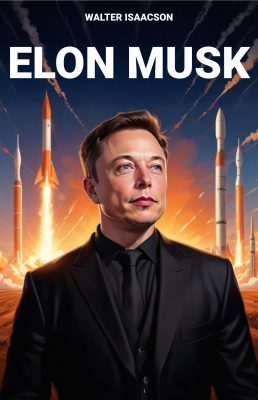
This groundbreaking biography dives deep into the complex world of one of the most influential and controversial figures of our time. Through unprecedented access and hundreds of hours of interviews, Isaacson paints a vivid portrait of Elon Musk’s relentless drive, innovative thinking, and the chaos that often surrounds him. The book explores Musk’s ventures in electric cars, space exploration, and social media, revealing the man behind the headlines and offering insight into the mind that’s reshaping our future. It’s a rollercoaster ride through the triumphs and tribulations of a modern-day industrialist, innovator, and provocateur.
Elon Musk caters to a diverse readership, from tech enthusiasts and business professionals to casual readers fascinated by larger-than-life personalities. The primary audience includes entrepreneurs, innovators, and those interested in the intersection of technology and business. It’s equally appealing to readers curious about leadership styles, the challenges of running multiple companies, and the personal cost of relentless ambition. Isaacson’s accessible writing style makes complex technological and business concepts digestible for the general public, while still offering enough depth to satisfy more knowledgeable readers. The book’s exploration of Musk’s controversial decisions and personality quirks also attracts those interested in psychology and the nature of genius.
In the vast expanse of Silicon Valley, where dreams of changing the world collide with the harsh realities of business, one figure looms larger than life: Elon Musk. Walter Isaacson’s Elon Musk is a rocket ride through the tumultuous life of a modern-day industrialist who’s equal parts visionary and villain, genius and loose cannon. From the dusty roads of Pretoria to the launchpads of Cape Canaveral, Isaacson charts Musk’s relentless pursuit of his goals, painting a portrait of a man driven by an almost manic desire to solve humanity’s greatest challenges – even if it means pushing himself, his employees, and the boundaries of what’s possible to the breaking point.
The biography unfolds like a sci-fi novel, chronicling Musk’s journey from a bullied schoolboy in South Africa to the mastermind behind companies that are redefining transportation on Earth and beyond. Isaacson takes us inside the factories of Tesla, where electric cars roll off the production line in a symphony of innovation and chaos. We peek behind the curtain at SpaceX, witnessing the heart-stopping launches that have reignited America’s space ambitions. The narrative doesn’t shy away from Musk’s forays into artificial intelligence with Neuralink or his controversial takeover of Twitter, providing a front-row seat to the high-stakes gambles that have become Musk’s trademark.
But Elon Musk is more than just a highlight reel of entrepreneurial victories. Isaacson delves deep into the psyche of his subject, exploring the childhood traumas, the relentless work ethic, and the often abrasive personality that have shaped Musk into the polarizing figure he is today. Through hundreds of hours of interviews with Musk, his family, friends, employees, and critics, Isaacson weaves a complex tapestry of a man who inspires both fierce loyalty and intense hatred, often in equal measure.
The book doesn’t pull punches when it comes to Musk’s failures and controversies. From production hell at Tesla to explosive rocket failures at SpaceX, from defamation lawsuits to Twitter wars, Isaacson presents an unvarnished look at the cost of Musk’s ambition – both to himself and to those in his orbit. It’s a cautionary tale about the thin line between visionary leadership and harmful hubris, raising questions about the price of progress and the role of billionaire industrialists in shaping our future.
Readers of Elon Musk will gain unprecedented insight into the mind of one of the most influential figures of our time. They’ll learn about the ruthless decision-making process behind world-changing innovations, the management style that pushes teams to achieve the impossible, and the personal philosophy that drives Musk to tackle problems others deem unsolvable. The book offers a masterclass in high-stakes entrepreneurship, showing both the dizzying heights of success and the crushing lows of failure. It’s an exploration of what it takes to change the world, for better or worse, and the toll such ambition exacts on the individual and society at large.
The core message of Elon Musk is that transformative innovation often comes at a steep price, both personal and societal. Isaacson paints Musk as a modern Prometheus, bringing the fire of revolutionary technology to humanity, but suffering greatly for his audacity. Like a high-wire act performed without a net, Musk’s approach to business and innovation is thrilling, dangerous, and not for the faint of heart.
Elon Musk stands as a defining work in the canon of business biographies, offering a real-time chronicle of one of the most impactful innovators of the 21st century. Its significance lies not just in its subject matter, but in its timing – capturing Musk at the height of his influence and controversy, providing context for the headlines that seem to follow him daily.
The book has sparked intense debate in tech, business, and cultural circles. Supporters praise its unfiltered look at the inner workings of companies that are shaping our future, while critics argue it’s too sympathetic to Musk’s more questionable behaviors. It’s been hailed as a must-read for aspiring entrepreneurs and a cautionary tale about the dangers of unchecked ambition.
Isaacson’s work has garnered widespread attention, topping bestseller lists and earning critical acclaim for its depth of research and engaging narrative style. It’s been recognized as a finalist for several prestigious literary awards in the non-fiction category, cementing its place as a significant contribution to the field of biographical writing and business literature.
The book’s exploration of Musk’s approach to innovation and management has already influenced discussions in boardrooms and business schools alike. It’s prompted a reexamination of leadership styles in high-pressure, high-stakes industries, and reignited debates about the role of disruptive innovators in addressing global challenges like climate change and space exploration.
Walter Isaacson’s Elon Musk offers an unprecedented look into the life and mind of one of the most influential and controversial figures of our time. We find the book to be a compelling and insightful exploration of Musk’s journey, from his troubled childhood in South Africa to his current status as a multi-billionaire shaping the future of multiple industries.
The book’s greatest strength lies in its unparalleled access to Musk himself, as well as to his family, friends, employees, and critics. This allows Isaacson to paint a nuanced and multifaceted portrait that goes beyond the public persona. We appreciate the balanced approach Isaacson takes, not shying away from Musk’s flaws and controversies while also giving credit to his undeniable achievements and vision.
The narrative is engaging and accessible, making complex technological and business concepts understandable to a general audience. We found the book’s exploration of Musk’s approach to innovation, problem-solving, and risk-taking to be particularly valuable, offering insights that could be applied across various fields.
However, we also note some limitations. The book’s focus on Musk as an individual genius may underplay the collective effort behind his achievements. Additionally, while the book touches on ethical concerns and long-term implications of Musk’s ventures, we believe these areas could have been explored more deeply.
We also caution readers that due to the rapidly evolving nature of Musk’s ventures, some information in the book may become outdated quickly. Readers should be prepared to supplement their understanding with current news and developments.
Our Recommendation
We strongly recommend Elon Musk to a wide range of readers. For those interested in business, technology, and innovation, the book offers valuable insights into the mind of a transformative entrepreneur and the inner workings of some of the most disruptive companies of our era. General readers will find an engaging and thought-provoking biography that not only tells the story of an extraordinary individual but also illuminates the technological and economic forces shaping our world.
However, we suggest approaching the book with a critical mind. While it provides an intimate and detailed account, readers should consider supplementing it with other sources for a more comprehensive understanding of the industries Musk operates in and the broader implications of his work. Despite these caveats, we believe Elon Musk is an essential read for anyone seeking to understand the forces driving technological innovation in the 21st century and the complex figure at the center of many of these developments.
The essence of Walter Isaacson’s Elon Musk lies in its exploration of several key themes that define Musk’s approach to business, innovation, and life. At the core of Musk’s philosophy is the concept of “first principles thinking,” a problem-solving approach that breaks down complex problems into their most basic elements and then rebuilds solutions from the ground up. This mindset has allowed Musk to challenge established norms in industries ranging from automotive to aerospace, often finding innovative solutions where others saw only insurmountable obstacles. The book illustrates how this approach led to breakthroughs like reusable rockets at SpaceX and the mass-market electric car at Tesla.
Another crucial element is Musk’s unwavering focus on mission-driven goals. Unlike many entrepreneurs who prioritize profit, Musk is portrayed as someone who puts the mission – whether it’s accelerating the world’s transition to sustainable energy or making humanity a multi-planetary species – above all else. This mission-first mentality often leads to decisions that seem irrational from a traditional business perspective but align with Musk’s long-term vision. It’s a double-edged sword, driving incredible innovation but also leading to financial precarity and conflicts with investors and regulators.
The book also delves into Musk’s management style, which Isaacson describes as a high-pressure, high-stakes approach that pushes both individuals and organizations to their limits. Musk’s leadership is characterized by impossibly high standards, a relentless work ethic, and a willingness to make rapid, often unilateral decisions. This style has produced remarkable results but also led to high turnover rates, burnout among employees, and accusations of a toxic work environment. Isaacson explores the tension between the effectiveness of this approach in achieving seemingly impossible goals and its human cost.
A significant portion of the book is dedicated to Musk’s relationship with risk and failure. Musk is portrayed as someone who not only tolerates risk but actively seeks it out, believing that the potential rewards of his ventures justify betting everything. This attitude has led to several near-death experiences for his companies, particularly Tesla and SpaceX, which have teetered on the brink of bankruptcy multiple times. Isaacson examines how Musk’s comfort with risk has allowed him to push forward where others might have given up, but also how it has created intense pressure and instability for those around him.
The concept of vertical integration is another key theme in the book. Musk’s companies, particularly Tesla and SpaceX, are known for bringing much of their manufacturing and design in-house rather than relying on suppliers. This approach gives Musk’s companies greater control over their products and supply chains, allowing for rapid iteration and innovation. However, it also increases complexity and financial risk. Isaacson explores how this strategy has been both a key to Musk’s success and a source of significant challenges.
Lastly, the book grapples with the idea of the “great man” theory of innovation and progress. Musk is presented as a figure who believes in the power of exceptional individuals to drive change, often at the expense of collaborative or institutional approaches. This belief in his own exceptional abilities has driven Musk to take on challenges that others deemed impossible, but it has also led to conflicts with employees, partners, and regulators who find his style autocratic or reckless. Isaacson examines the tension between the undeniable impact of Musk’s individual drive and vision and the potential downsides of concentrating so much power and decision-making in one person’s hands.
The Falcon 1 Launches: One of the most vivid examples of Musk’s persistence and willingness to risk everything is the story of SpaceX’s early Falcon 1 rocket launches. After three failed launches, which had depleted SpaceX’s funds and brought the company to the brink of bankruptcy, Musk decided to push forward with a fourth launch attempt. This decision was made against the advice of many and required Musk to invest his last remaining personal funds. The fourth launch succeeded, saving the company and securing a contract with NASA that put SpaceX on the path to becoming a major player in the space industry. This example illustrates Musk’s high-risk, high-reward approach and his unwavering commitment to his goals even in the face of repeated failures.
Tesla’s Production Hell: The book provides an in-depth look at Tesla’s struggles to mass-produce the Model 3, a period Musk referred to as “production hell.” This example showcases Musk’s hands-on management style and his willingness to make radical changes to achieve his goals. During this period, Musk slept on the factory floor, made sweeping changes to the production line, and pushed his team to extremes to meet production targets. The Model 3 eventually became a success, but the process took a significant toll on Musk, his employees, and Tesla’s finances. This case study highlights both the effectiveness and the human cost of Musk’s high-pressure approach to problem-solving.
The Hyperloop Announcement: Isaacson recounts the story of Musk’s Hyperloop announcement as an example of his approach to inspiring innovation. Frustrated with California’s plans for a high-speed rail system, Musk publicly proposed the concept of the Hyperloop – a high-speed transportation system using pods in low-pressure tubes. Rather than develop it himself, Musk released the concept as an open-source design, challenging others to make it a reality. This example demonstrates Musk’s belief in the power of bold ideas to drive progress, even if he’s not the one to execute them directly. It also showcases his strategy of using public announcements and challenges to shape the direction of technological development.
The Twitter Takeover: The book covers Musk’s controversial acquisition of Twitter, providing insight into his decision-making process and management style. This example shows Musk’s willingness to make bold, unexpected moves and his belief in his ability to transform established companies. The Twitter saga illustrates Musk’s approach to leadership in a new context, outside of his usual realm of hardware and engineering. It highlights his comfort with public controversy, his rapid and sometimes erratic decision-making, and his belief in the importance of free speech platforms in the digital age. The ongoing challenges and changes at Twitter under Musk’s leadership serve as a real-time case study of his management philosophy applied to a social media company.
First Principles Thinking as a Problem-Solving Tool
One of the most powerful insights from the book is Musk’s reliance on first principles thinking. This approach involves breaking down complex problems into their most basic elements and then building solutions from the ground up, rather than relying on analogies or established practices. To apply this in your own life or business, start by questioning assumptions and asking “why” repeatedly until you reach the fundamental truths of a situation. For example, when Musk approached the challenge of building rockets, he didn’t accept the high costs of traditional aerospace manufacturing. Instead, he broke down the components of a rocket to their raw materials and found ways to source and manufacture them more efficiently. This approach can be applied to any field – whether you’re developing a new product, solving a business challenge, or even addressing personal issues. Begin by identifying the core problem, stripping away assumptions, and rebuilding your solution based on fundamental truths and laws of physics or economics.
Mission-Driven Leadership as a Motivational Force
The book highlights how Musk’s unwavering focus on mission-driven goals has been a key factor in his companies’ successes. Unlike many entrepreneurs who prioritize profit or market share, Musk consistently puts the mission – such as accelerating the world’s transition to sustainable energy or making humanity a multi-planetary species – at the forefront. To apply this insight, clearly define a compelling, ambitious mission for your organization or personal goals that goes beyond financial success. Ensure this mission addresses a significant problem or aspiration that can inspire and motivate others. For instance, if you’re running a software company, your mission might be to democratize access to education through technology. Regularly communicate this mission to your team and stakeholders, and use it as a guiding principle for decision-making. When faced with challenges or opportunities, always ask how they align with your core mission. This approach can help attract talented, passionate individuals to your cause and provide a sense of purpose that drives innovation and perseverance through difficulties.
Vertical Integration for Innovation and Control
Isaacson’s book reveals how Musk’s strategy of vertical integration – bringing much of the design, manufacturing, and even sales processes in-house – has been crucial to the success of companies like Tesla and SpaceX. This approach gives Musk’s companies greater control over their products and supply chains, allowing for rapid iteration and innovation. To apply this insight, consider which aspects of your business or project would benefit from more direct control. While full vertical integration might not be feasible or necessary for every company, identifying key components or processes that are critical to your competitive advantage and bringing them in-house can yield significant benefits. For example, a food company might choose to develop its own sustainable packaging solutions instead of relying on external suppliers. This could lead to cost savings, improved quality control, and the ability to innovate more quickly in response to market demands or environmental concerns. However, it’s important to balance the benefits of vertical integration with the increased complexity and capital requirements it often entails.
Embracing Risk and Failure as Paths to Success
One of the most striking insights from Musk’s biography is his relationship with risk and failure. Musk is portrayed as someone who not only tolerates risk but actively seeks it out, believing that the potential rewards justify betting everything. To apply this mindset, start by reframing how you view failure. Instead of seeing it as a negative outcome, consider it a necessary step in the learning and innovation process. Set ambitious goals that push you out of your comfort zone, and be prepared to fail fast and learn quickly. For instance, if you’re developing a new product, consider releasing a minimum viable product early and iterating based on user feedback, rather than striving for perfection before launch. Create a culture (in your organization or personal life) that celebrates calculated risk-taking and views setbacks as valuable data points rather than defeats. However, it’s crucial to balance this approach with responsible risk management – have contingency plans in place and avoid putting all your resources into a single, high-risk venture unless you’re prepared for the potential consequences.
Hands-On Leadership in Times of Crisis
The book provides numerous examples of Musk’s hands-on approach to leadership, particularly during times of crisis. Whether sleeping on the factory floor during Tesla’s “production hell” or personally reviewing designs at SpaceX, Musk’s direct involvement in solving critical problems is a recurring theme. To apply this insight, be prepared to immerse yourself deeply in the most pressing challenges facing your organization or project. This doesn’t mean micromanaging every aspect, but rather identifying the most critical issues and being willing to roll up your sleeves to understand and address them directly. For example, if your company is facing a major product quality issue, spend time on the production line, talk directly with customers, and work alongside your team to find solutions. This approach not only helps in quickly resolving problems but also demonstrates commitment and builds respect among team members. However, it’s important to balance this hands-on approach with empowering your team and avoiding burnout.
Leveraging Public Perception and Media
Isaacson’s biography shows how Musk has masterfully used public announcements, social media, and media coverage to shape narratives around his companies and projects. To apply this insight, develop a strategic approach to public communication and media relations. Craft compelling narratives around your work that capture public imagination and align with broader societal trends or aspirations. For instance, if you’re launching a new sustainable product, consider how you can tie its story to larger conversations about climate change and environmental responsibility. Use social media platforms to engage directly with your audience, share behind-the-scenes glimpses of your work, and respond to criticism or praise in real-time. However, be mindful of the double-edged nature of this approach – while it can create buzz and support for your initiatives, it also opens you up to increased scrutiny and potential backlash. Develop a clear communication strategy and be prepared to manage both positive and negative attention.
Cultivating a High-Performance Culture
The book details Musk’s approach to creating a high-performance culture in his companies, characterized by extremely high standards, long working hours, and a willingness to quickly remove underperforming employees. While this approach has led to remarkable achievements, it’s also been a source of controversy and burnout. To apply this insight in a more balanced way, focus on creating a culture of excellence without sacrificing employee well-being. Set ambitious but achievable goals, and clearly communicate the expectations and potential rewards to your team. Implement regular performance reviews and provide constructive feedback to help employees improve. Encourage a culture of continuous learning and innovation by providing resources for skill development and rewarding creative problem-solving. However, also prioritize work-life balance and mental health support to prevent burnout. For example, you might set up a system where periods of intense work are balanced with adequate recovery time, or implement flexible working arrangements that allow employees to manage their energy more effectively while still meeting high performance standards.
Unparalleled Access and Depth of Research
Walter Isaacson’s Elon Musk stands out for its exceptional level of access to the subject and the depth of research conducted. Isaacson spent two years shadowing Musk, conducting hundreds of hours of interviews not only with Musk himself but also with family members, friends, employees, and critics. This unprecedented access allows Isaacson to provide a nuanced, multifaceted portrait of Musk that goes beyond the public persona. The book offers intimate details of Musk’s childhood, his relationships, and his decision-making processes during crucial moments in his companies’ histories. For instance, Isaacson’s presence during SpaceX launches and Tesla’s production crises gives readers a fly-on-the-wall perspective that few biographies can match. This level of detail and insider information makes the book an invaluable resource for understanding one of the most influential figures of our time.
Balanced Portrayal of a Complex Figure
One of the book’s greatest strengths is its balanced portrayal of Musk. Isaacson doesn’t shy away from Musk’s controversies or character flaws, presenting a warts-and-all picture of a man who is both visionary and deeply flawed. The book explores Musk’s abrasive management style, his Twitter outbursts, and the personal toll his ambitions have taken on his relationships and mental health. At the same time, Isaacson gives credit to Musk’s undeniable achievements and the positive impact of his work on industries like electric vehicles and space exploration. This balanced approach allows readers to form their own opinions about Musk, rather than being presented with a one-sided hagiography or hit piece. For example, Isaacson’s treatment of the Thai cave rescue controversy presents multiple perspectives, allowing readers to understand both Musk’s intentions and the problematic nature of his actions.
Insightful Analysis of Leadership and Innovation
Elon Musk offers valuable insights into leadership and innovation that extend beyond its subject. Isaacson’s analysis of Musk’s management style, decision-making processes, and approach to problem-solving provides lessons applicable to a wide range of fields. The book’s exploration of concepts like first principles thinking, mission-driven leadership, and the role of risk-taking in innovation offers practical takeaways for entrepreneurs, business leaders, and innovators. For instance, the detailed account of how Musk approached the challenges of reusable rockets at SpaceX serves as a case study in innovative problem-solving and perseverance in the face of repeated failures.
Compelling Narrative Style
Isaacson’s skill as a storyteller shines through in Elon Musk. Despite dealing with complex technical and business concepts, the book maintains a gripping narrative flow that keeps readers engaged. Isaacson weaves together Musk’s personal story with the histories of his companies and broader industry trends, creating a rich tapestry that contextualizes Musk’s achievements and controversies. The author’s ability to explain complex technological concepts in accessible language makes the book appealing to a wide audience, from tech enthusiasts to casual readers interested in business biographies. Vivid anecdotes and well-placed quotes bring scenes to life, such as the dramatic description of the first successful Falcon 1 launch or the tense boardroom battles at Tesla.
Timely and Relevant Content
The book’s strengths are amplified by its timeliness and relevance. Isaacson captures Musk at a pivotal moment in his career, as his influence extends beyond his companies to shape public discourse on issues like artificial intelligence, sustainable energy, and space exploration. The inclusion of recent events, such as Musk’s acquisition of Twitter, makes the book feel current and connected to ongoing debates about the role of technology in society and the power of tech billionaires. By placing Musk’s story within the broader context of 21st-century technological and economic shifts, Isaacson creates a work that is as much about our changing world as it is about one man’s journey.
Potential for Rapid Outdating
While the book’s timeliness is a strength, it also presents a weakness in the form of potential rapid outdating. Musk’s companies and personal ventures are evolving at such a rapid pace that significant developments may occur shortly after publication, potentially making portions of the book feel outdated quickly. For example, the ongoing saga of Musk’s leadership at Twitter or new developments at Tesla and SpaceX could shift the narrative in ways not captured by the book. This weakness is somewhat inherent to writing about such a dynamic figure, but it may leave readers feeling that they need to seek out additional sources for the most current information.
Limited Exploration of Broader Ethical Questions
While Isaacson touches on ethical concerns surrounding Musk’s actions and the impact of his companies, some readers may find the exploration of these issues insufficient. The book could have delved deeper into questions about the concentration of power in the hands of tech billionaires, the long-term societal implications of Musk’s ventures, or the ethical considerations of technologies like brain-computer interfaces (Neuralink). A more thorough examination of these broader ethical questions would have provided additional context and depth to the narrative. For instance, a more extensive discussion of the environmental impact of lithium mining for electric vehicle batteries or the potential consequences of private control over space exploration could have added valuable perspectives to the book.
Potential Bias Due to Close Access
While the unprecedented access Isaacson had to Musk is generally a strength, it also raises questions about potential bias. Spending two years in close proximity to a subject can potentially lead to a degree of Stockholm syndrome or over-identification with the subject’s perspective. Although Isaacson makes efforts to present a balanced view, some readers might question whether the extensive time spent with Musk has influenced the author’s objectivity. This concern is particularly relevant when discussing controversial aspects of Musk’s behavior or decision-making. A more explicit acknowledgment of this potential bias and additional perspectives from critics or industry experts might have addressed this weakness.
Overemphasis on Individual Genius
One significant blind spot in Elon Musk is the potential overemphasis on individual genius at the expense of recognizing the collective effort behind Musk’s achievements. While the book does mention key employees and collaborators, there’s a risk that readers might come away with an oversimplified “great man” theory of innovation and progress. This perspective could lead to misconceptions about the nature of technological advancement and business success, potentially undervaluing the importance of teamwork, institutional knowledge, and supportive ecosystems. In reality, even visionary leaders like Musk rely heavily on the expertise and hard work of thousands of employees, partners, and predecessors. For a more balanced view on the collaborative nature of innovation, readers might consider The Innovators by Walter Isaacson himself, which explores the group dynamics behind digital innovation. Additionally, Loonshots by Safi Bahcall offers insights into how organizations, not just individuals, can foster groundbreaking ideas.
Limited Analysis of Structural Advantages
Another blind spot in the book is the limited analysis of the structural advantages that have contributed to Musk’s success. While Musk’s intelligence, drive, and innovative thinking are undoubtedly crucial factors, the book could have explored more deeply the role of existing technological infrastructure, government subsidies, and societal conditions that enabled his ventures to thrive. This oversight might lead readers to underestimate the importance of timing, policy environments, and pre-existing technological foundations in entrepreneurial success. A more comprehensive understanding of these factors is crucial for anyone hoping to apply lessons from Musk’s story to their own endeavors. For a broader perspective on the interplay between individual innovators and their historical context, readers might turn to The Code: Silicon Valley and the Remaking of America by Margaret O’Mara. This book provides a nuanced look at how government funding, cultural factors, and existing technological ecosystems shaped the rise of tech giants.
Underexploration of Global Perspectives
While Elon Musk provides a detailed look at its subject’s impact on American industry and culture, it may fall short in exploring the global implications and perspectives on Musk’s work. This blind spot could lead to a somewhat U.S.-centric view of Musk’s influence and the industries he’s disrupting. For instance, the book could have delved deeper into how Musk’s companies are perceived and are impacting markets in China, Europe, or developing nations. This limitation might cause readers to overlook important global dynamics in areas like electric vehicle adoption, space exploration, or social media governance. For a more global perspective on technological disruption and its varied impacts across different societies, readers might consider The Future Is Asian by Parag Khanna, which explores how Asian countries are shaping technological and economic trends. Additionally, AI Superpowers: China, Silicon Valley, and the New World Order by Kai-Fu Lee offers insights into the global AI race and how different cultural and political contexts shape technological development.
Insufficient Attention to Long-Term Consequences
While Elon Musk does touch on the potential long-term impacts of Musk’s various ventures, there’s a risk that it doesn’t fully grapple with the far-reaching consequences of the technologies and business models Musk is pioneering. This blind spot could lead readers to focus too heavily on short-term innovations without considering their extended implications for society, the environment, and future generations. For example, while the book discusses the immediate impact of Tesla on the automotive industry, it might not sufficiently explore the long-term consequences of widespread electric vehicle adoption on global resource extraction, energy grids, or urban planning. Similarly, the long-term implications of SpaceX’s plans for Mars colonization or Neuralink’s brain-computer interfaces might benefit from more in-depth exploration. To gain a broader perspective on the long-term impacts of current technological trends, readers might turn to The Precipice: Existential Risk and the Future of Humanity by Toby Ord, which examines the potential long-term consequences of various technological developments. Additionally, The Age of Surveillance Capitalism by Shoshana Zuboff offers a critical look at the long-term societal impacts of data-driven business models, which could provide valuable context for understanding the potential consequences of Musk’s ventures in areas like social media and artificial intelligence.
Power Play: Tesla, Elon Musk, and the Bet of the Century by Tim Higgins
Isaacson’s Elon Musk and Higgins’ Power Play both offer in-depth looks at Musk and Tesla, but with notably different approaches and emphases. While Isaacson’s book provides a broader view of Musk’s life and various ventures, Higgins focuses more specifically on Tesla’s journey and Musk’s role within it. Higgins, a Wall Street Journal reporter, relies more heavily on third-party sources and documents, which results in a somewhat more skeptical portrayal of Musk. In contrast, Isaacson’s extensive personal access to Musk allows for more intimate insights but potentially at the cost of some objectivity. Power Play delves deeper into the boardroom drama and internal conflicts at Tesla, offering a more detailed look at the company’s near-death experiences and the toll of Musk’s management style on employees. Isaacson’s book, while touching on these issues, places them within the broader context of Musk’s other ventures and personal life. Readers interested specifically in Tesla’s history and the electric vehicle industry might find Higgins’ book more focused, while those seeking a comprehensive understanding of Musk as a multi-faceted entrepreneur would likely prefer Isaacson’s work.
The Space Barons: Elon Musk, Jeff Bezos, and the Quest to Colonize the Cosmos by Christian Davenport
Davenport’s The Space Barons provides an interesting counterpoint to Isaacson’s Elon Musk in its treatment of the commercial space race. While Isaacson’s book covers SpaceX as one of Musk’s many ventures, Davenport focuses exclusively on the competition between private space companies, particularly those led by Musk and Bezos. This narrower focus allows Davenport to provide more context on the broader space industry and the historical significance of private companies entering a field long dominated by governments. The Space Barons offers a more balanced view of Musk’s contributions to space exploration by placing them alongside those of his competitors, particularly Bezos’ Blue Origin. In contrast, Isaacson’s book, while acknowledging other players, naturally centers more on Musk’s perspective and achievements. Davenport’s book also delves deeper into the policy implications and government relationships involved in private space ventures, an area that receives less attention in Isaacson’s more personally focused biography. Readers particularly interested in the space industry and how Musk fits into the larger picture of commercial space exploration would find Davenport’s book a valuable complement to Isaacson’s broader biography.
The Everything Store: Jeff Bezos and the Age of Amazon by Brad Stone
While focused on a different tech titan, Stone’s The Everything Store provides an interesting comparison to Isaacson’s Elon Musk in terms of approach and scope. Both books attempt to capture the essence of a transformative entrepreneur and the companies they’ve built. However, Stone’s book is more focused on Amazon as a company, with Bezos as the central figure, while Isaacson’s work is more directly a biography of Musk that encompasses his various ventures. Stone’s book provides a deeper dive into the business strategies and corporate culture of a single company, offering more industry-specific insights. In contrast, Isaacson’s book spans multiple industries, providing a broader view of Musk’s impact across different sectors. The Everything Store also spans a longer historical period, tracing Amazon’s growth from a startup to a global giant, while Isaacson’s book, despite covering Musk’s early years, focuses more intensely on recent events and ongoing developments. Both books grapple with the immense influence their subjects have had on modern business and technology, but Isaacson’s portrayal of Musk tends to be more personal, likely due to his unprecedented access, while Stone’s portrayal of Bezos remains somewhat more distant and analytical.
Cultivate First Principles Thinking
Develop a Mission-Driven Approach
Embrace Calculated Risk-Taking
Develop Hands-On Leadership Skills
Foster a Culture of Innovation
Develop Vertical Integration in Your Skill Set
Foster a Culture of First Principles Thinking
Organizations can benefit significantly from adopting Musk’s approach to first principles thinking. This involves encouraging employees at all levels to challenge assumptions, break down complex problems into their fundamental truths, and build solutions from the ground up. By fostering this mindset, companies can drive innovation, solve seemingly intractable problems, and gain a competitive edge in their industries.
However, implementing this approach can face resistance from employees accustomed to traditional problem-solving methods. It may also be time-consuming initially, as teams learn to break down problems and rebuild solutions. Additionally, some employees might feel uncomfortable challenging established norms or questioning senior leadership’s assumptions.
To overcome these challenges, companies can start by providing training sessions on first principles thinking, using real-world case studies to demonstrate its effectiveness. Leaders should model this behavior by openly questioning assumptions and encouraging others to do the same. Implement a reward system that recognizes innovative solutions derived from first principles thinking. Create “innovation labs” or dedicated time for employees to work on problems using this approach, gradually integrating it into the company’s regular problem-solving processes.
Develop a Strong Mission-Driven Culture
Musk’s companies are characterized by their strong, ambitious missions that inspire employees and attract top talent. Businesses can apply this by developing a clear, compelling mission that goes beyond profit-making to address significant challenges or improve the world in some way. This mission should guide decision-making at all levels and be consistently communicated both internally and externally.
Implementing a mission-driven culture can be challenging, particularly for established companies with entrenched practices. Employees may be skeptical of new mission statements, seeing them as empty corporate rhetoric. There may also be conflicts between short-term financial goals and longer-term mission-oriented objectives.
To address these issues, involve employees in the process of defining or refining the company’s mission. Ensure that the mission is authentic and aligns with the company’s core competencies and values. Regularly communicate how specific projects and decisions align with the mission. Adjust performance metrics and incentives to reflect mission-aligned goals, not just financial targets. Leaders should consistently model mission-driven decision-making and celebrate examples of employees embodying the mission in their work.
Embrace Calculated Risk-Taking
Musk’s approach to risk, as detailed in the book, involves taking bold, calculated risks to achieve ambitious goals. Businesses can adopt this mindset by encouraging innovation, being open to disruptive ideas, and not being paralyzed by the fear of failure. This approach can lead to breakthrough products or services and help companies stay ahead in rapidly changing markets.
However, increased risk-taking can lead to financial instability, stakeholder concern, and potential legal or regulatory issues. There’s also the challenge of balancing risk-taking with responsible business practices and employee well-being. Some employees or departments may resist taking on additional risk, preferring safer, more established approaches.
To implement this strategy effectively, companies should develop a robust risk assessment framework that allows for bold moves while maintaining responsible oversight. Create a “portfolio” approach to projects, balancing high-risk, potentially high-reward initiatives with more stable endeavors. Establish clear guidelines for what constitutes acceptable risk and ensure all employees understand these parameters. Develop a culture that views failures as learning opportunities, conducting thorough post-mortems on both successes and failures. Provide training on risk assessment and management to empower employees at all levels to make informed decisions.
Implement Vertical Integration Strategies
Musk’s companies, particularly Tesla and SpaceX, are known for their high degree of vertical integration. This approach can provide greater control over the supply chain, faster innovation cycles, and the ability to create truly differentiated products. Businesses can consider adopting aspects of this strategy by bringing critical components of their value chain in-house or developing closer partnerships with key suppliers.
Vertical integration can be capital-intensive and increase operational complexity. It may also reduce flexibility and tie up resources that could be used elsewhere. There’s a risk of losing focus on core competencies or spreading resources too thin. Additionally, it may be challenging to develop expertise in new areas quickly.
To overcome these challenges, companies should start by identifying the most critical components of their value chain where vertical integration could provide a significant competitive advantage. Begin with small-scale pilot projects to test the viability of integration before committing to large-scale changes. Develop partnerships or joint ventures as an intermediate step towards full integration. Invest in robust project management and cross-functional teams to handle the increased complexity. Maintain relationships with external suppliers as a backup and to stay informed about industry developments.
Cultivate a Hands-On Leadership Style
The book highlights Musk’s hands-on approach to leadership, including his deep involvement in engineering and design decisions. Business leaders can adopt elements of this style by staying closely connected to the core work of their organizations, participating directly in solving critical problems, and maintaining a deep understanding of their products or services.
This leadership style can be time-consuming and may lead to micromanagement if not balanced properly. It may also create bottlenecks in decision-making if leaders become too involved in day-to-day operations. Some employees might feel disempowered or that their expertise isn’t trusted.
To implement this effectively, leaders should focus their hands-on involvement on the most critical or strategic areas of the business. Establish clear boundaries for when and how they’ll be directly involved to avoid micromanagement. Develop strong deputies and empower them to handle most operational decisions. Use hands-on experiences to inform high-level strategy and to stay connected with the challenges faced by employees. Regularly rotate through different areas of the business to maintain a broad understanding without becoming bogged down in any one area.
Leverage Public Relations and Social Media
Musk’s masterful use of public relations and social media to shape narratives around his companies is a key theme in the book. Businesses can learn from this by developing a more active and strategic approach to public communication, using social media and other platforms to build brand awareness, engage with customers, and shape public perception of their products or services.
However, a more active public presence can also increase scrutiny and the risk of public relations crises. It requires careful management to maintain consistency across all communication channels. There’s also the risk of leadership becoming distracted by public engagement at the expense of core business operations.
To implement this strategy effectively, develop a clear communication strategy that aligns with the company’s mission and values. Create guidelines for social media use by executives and employees. Invest in training for key spokespersons on effective public communication. Develop a rapid response team to handle potential PR crises. Use data analytics to measure the impact of public communications and adjust strategies accordingly. Balance public engagement with a focus on delivering tangible results in the core business.
Acceleration of Sustainable Technologies
The book’s exploration of Musk’s efforts in electric vehicles and solar energy aligns with the growing trend towards sustainable technologies. As climate change concerns intensify, Musk’s approach to rapidly scaling green tech solutions is likely to become increasingly relevant. Companies and entrepreneurs may look to Tesla’s model of vertical integration and aggressive innovation to accelerate the development and adoption of sustainable technologies. This trend could extend beyond transportation and energy to areas like agriculture, construction, and manufacturing. Musk’s emphasis on making sustainable options not just environmentally friendly but also desirable and high-performance could shape how future green technologies are developed and marketed.
Rise of Private Space Exploration
SpaceX’s success in revolutionizing space launch technology reflects a broader trend towards the commercialization of space. This trend is likely to accelerate in the coming years. More private companies may enter the space industry, driving down costs and increasing innovation. We might see the emergence of space tourism, asteroid mining, and even the beginnings of Mars colonization efforts. Musk’s approach to vertical integration and rapid prototyping in the space industry could become a model for other companies in this field. The book’s insights into SpaceX’s development process could provide valuable lessons for future space entrepreneurs.
Artificial Intelligence and Brain-Computer Interfaces
Musk’s involvement in AI research through OpenAI and his work on brain-computer interfaces with Neuralink point to future trends in human-machine interaction. As AI continues to advance, we may see increased focus on ensuring its safe and beneficial development, a concern often voiced by Musk. The development of brain-computer interfaces could revolutionize fields like healthcare, education, and human augmentation. Musk’s approach to tackling these complex, multidisciplinary challenges could inspire other entrepreneurs and researchers in these fields. The ethical considerations raised in the book regarding these technologies are likely to become increasingly important in public discourse.
Evolving Models of Corporate Leadership
Musk’s unconventional leadership style, as detailed in the book, may influence future trends in corporate governance and leadership. We might see a shift towards more hands-on, technically involved CEOs, particularly in technology-driven industries. The idea of a CEO as a public figure and brand ambassador, exemplified by Musk’s use of social media and public appearances, could become more common. However, this might be balanced against growing calls for more accountable and less personality-driven corporate leadership. The book’s exploration of the benefits and drawbacks of Musk’s leadership style could inform these evolving models of corporate governance.
Intersection of Technology and Transportation
The book’s coverage of Tesla’s innovations points to a future where technology and transportation are increasingly intertwined. This trend extends beyond electric vehicles to areas like autonomous driving, hyperloop technology, and urban air mobility. Musk’s approach to reimagining entire industries rather than making incremental improvements could inspire similar disruptive innovations in transportation and other sectors. The integration of AI, sustainable energy, and advanced materials in transportation, as pioneered by Tesla, is likely to accelerate. This could lead to fundamental changes in urban planning, logistics, and personal mobility in the coming decades.
The publication of Walter Isaacson’s Elon Musk is likely to have significant long-term implications, both within the realm of business literature and in broader societal discourse. As a comprehensive biography of one of the most influential and controversial figures of our time, the book is poised to shape public perception of Musk for years to come. Its detailed accounts of Musk’s decision-making processes, management style, and personal philosophies will likely influence how business schools and aspiring entrepreneurs approach innovation and leadership.
The book’s exploration of Musk’s companies and their disruptive impact across multiple industries may accelerate discussions about the role of technology in addressing global challenges like climate change and space exploration. Isaacson’s portrayal of Musk’s relentless pursuit of ambitious goals could inspire a new generation of entrepreneurs to take on similarly grand challenges. However, it may also prompt more critical examination of the potential downsides of such single-minded focus, particularly in terms of work-life balance and employee well-being.
In the realm of policy and regulation, the book’s insights into Musk’s companies and their sometimes tense relationships with government agencies could inform ongoing debates about how to regulate emerging technologies and powerful tech companies. Policymakers and regulators might draw lessons from the successes and controversies detailed in the book as they grapple with issues ranging from autonomous vehicles to private space exploration.
The book’s treatment of Musk’s use of social media and his approach to public relations could influence how other business leaders and public figures manage their public personas in the digital age. Musk’s unconventional and often controversial communication style, as documented by Isaacson, may prompt discussions about the benefits and risks of CEO activism and direct engagement with the public through social media platforms.
On a broader cultural level, Isaacson’s Elon Musk is likely to fuel ongoing debates about the role of billionaire entrepreneurs in shaping our collective future. The book’s nuanced portrayal of Musk’s achievements and flaws could contribute to more sophisticated public discourse about the power and responsibility of tech leaders in addressing global challenges. It may also intensify scrutiny of the societal impacts of concentrating so much influence in the hands of a few visionary individuals.
Lastly, the book’s exploration of Musk’s ventures in areas like artificial intelligence, brain-computer interfaces, and space colonization could stimulate wider public interest and debate about these emerging technologies. By making these complex topics more accessible to a general audience, Isaacson’s book may encourage broader participation in discussions about the ethical implications and potential societal impacts of these transformative technologies.
The Innovators by Walter Isaacson
Isaacson’s The Innovators serves as an excellent companion to his biography of Elon Musk. While Elon Musk focuses on a single innovator, The Innovators provides a broader historical context of digital innovation. It traces the development of computers and the internet through the stories of numerous pioneers, offering readers a perspective on how collaborative efforts and incremental advancements lead to revolutionary changes. This book helps balance the “great man” narrative that might emerge from Musk’s biography, showing how innovation often stems from a complex interplay of individuals, teams, and societal factors. Readers will gain a deeper appreciation of the technological ecosystem that enabled Musk’s achievements and how his work fits into the broader tapestry of technological progress.
Zero to One by Peter Thiel and Blake Masters
Zero to One offers a complementary perspective on innovation and entrepreneurship from another prominent Silicon Valley figure. Thiel’s philosophy of creating unique, monopoly-like businesses contrasts with and complements Musk’s approach of entering established industries to revolutionize them. The book’s emphasis on the importance of proprietary technology and vertical progress aligns with many of Musk’s strategies while offering a different framework for thinking about startup creation and technological advancement. Readers will find valuable insights into the mindset of successful tech entrepreneurs and can compare Thiel’s more theoretical approach with Musk’s hands-on style as described in Isaacson’s biography.
The Everything Store by Brad Stone
Stone’s account of Jeff Bezos and the rise of Amazon provides an interesting counterpoint to Musk’s story. Both Bezos and Musk are innovative entrepreneurs who have transformed multiple industries, but their approaches and leadership styles differ significantly. The Everything Store offers readers a chance to compare and contrast these two influential figures, their companies’ cultures, and their impact on modern business and technology. The book’s exploration of Amazon’s customer-centric approach and long-term thinking provides an alternative model of innovation and scaling to that seen in Musk’s companies. This comparison can enrich readers’ understanding of different paths to entrepreneurial success in the tech age.
Liftoff by Eric Berger
For readers particularly intrigued by the SpaceX portion of Musk’s story, Berger’s Liftoff offers a deeper dive into the early years of the company. This book focuses specifically on SpaceX’s first four launches, providing intricate details about the technical challenges, financial struggles, and the team’s perseverance during this critical period. While Isaacson’s biography covers SpaceX as part of Musk’s broader story, Liftoff allows readers to immerse themselves in the day-to-day realities of starting a private space company. It offers additional context for understanding the magnitude of SpaceX’s achievements and the nature of innovation in the aerospace industry.
The Age of AI by Henry Kissinger, Eric Schmidt, and Daniel Huttenlocher
Given Musk’s involvement in AI development and his frequently expressed concerns about AI safety, The Age of AI provides valuable context for this aspect of his work. Written by a diverse team including a former U.S. Secretary of State, a former CEO of Google, and an MIT professor, this book offers a broad perspective on the implications of AI for society, politics, and human identity. It explores both the potential benefits and risks of AI advancement, providing readers with a framework for understanding the importance of the AI safety issues Musk often discusses. This book can help readers better appreciate the significance of Musk’s AI-related ventures and concerns within a larger geopolitical and philosophical context.
Ludicrous by Edward Niedermeyer
For readers seeking a more critical perspective on Musk and Tesla, Niedermeyer’s Ludicrous offers a counterpoint to the often laudatory coverage the company receives. As an auto industry analyst, Niedermeyer provides a detailed examination of Tesla’s history, challenging some of the narratives around the company’s success and Musk’s leadership. While more skeptical than Isaacson’s balanced biography, this book encourages readers to think critically about Musk’s achievements and the challenges facing Tesla. It provides valuable industry context and raises important questions about the future of electric vehicles and the role of charismatic leadership in tech companies.
Team of Teams by General Stanley McChrystal
While not directly related to Musk or his industries, McChrystal’s Team of Teams offers valuable insights into leading complex organizations in fast-paced, unpredictable environments. This perspective is highly relevant to understanding the management challenges in Musk’s various companies. The book’s focus on adaptability, information sharing, and decentralized decision-making provides an interesting contrast to Musk’s often centralized, top-down leadership style. Readers can use the principles outlined in Team of Teams to critically evaluate Musk’s approach to managing his diverse business empire and consider alternative models for organizing innovative, fast-moving companies.
Tesla’s Official Website https://www.tesla.com/ Tesla’s official website offers detailed information about the company’s products, technologies, and mission. Visitors can explore the specifications of Tesla’s electric vehicles, learn about their energy products, and stay updated on the company’s latest innovations. The site also includes investor relations information, providing insight into Tesla’s financial performance and strategic direction.
SpaceX’s Official Website https://www.spacex.com/ SpaceX’s website is an excellent resource for those interested in the company’s space exploration efforts. It provides real-time updates on launches, detailed information about SpaceX’s rockets and spacecraft, and insights into their plans for future missions. The site also includes a wealth of multimedia content, including high-quality videos of launches and landings.
OpenAI’s Blog https://openai.com/blog/ While Musk is no longer directly involved with OpenAI, the organization’s blog remains a valuable resource for understanding the cutting-edge developments in artificial intelligence that Musk has been vocal about. The blog features in-depth articles on AI research, ethical considerations in AI development, and potential societal impacts of advanced AI systems.
TED Conference https://www.ted.com/ The annual TED conference brings together thought leaders from various fields to share innovative ideas. Elon Musk has been a speaker at TED, and the conference often features talks on topics relevant to his work, such as sustainable energy, space exploration, and artificial intelligence. The TED website hosts a vast library of recorded talks, including several by Musk himself.
Web Summit https://websummit.com/ Web Summit is one of the largest technology conferences in the world, covering a wide range of topics including electric vehicles, space technology, and artificial intelligence. While Musk doesn’t always attend, the conference frequently features speakers from his companies and discusses trends relevant to his work.
Electric Vehicle Association (EVA) https://www.myeva.org/ The Electric Vehicle Association is a non-profit organization dedicated to promoting the use of electric vehicles. It provides resources for EV owners and enthusiasts, including information on the latest EV technologies, policy updates, and networking opportunities. Membership in EVA can provide deeper insights into the electric vehicle industry that Musk has been instrumental in shaping.
Space Studies Institute (SSI) https://ssi.org/ The Space Studies Institute, founded by Gerard K. O’Neill, is dedicated to the human settlement of space. While not directly associated with Musk or SpaceX, SSI’s mission aligns closely with Musk’s vision of making humanity a multi-planetary species. The organization’s research and publications offer valuable context for understanding the broader field of space colonization efforts.
Lex Fridman Podcast Lex Fridman, an AI researcher at MIT, hosts in-depth conversations with thought leaders in technology, science, and beyond. While Musk himself has been a guest, the podcast regularly features discussions on topics relevant to his work, including AI, space exploration, and sustainable energy. Fridman’s technical background allows for nuanced discussions that can deepen listeners’ understanding of the technologies Musk is working with.
Third Row Tesla Podcast This podcast focuses specifically on Tesla and the broader electric vehicle industry. Hosted by Tesla enthusiasts and shareholders, it offers detailed discussions of Tesla’s technology, business strategy, and impact on the automotive industry. While it tends to have a pro-Tesla bias, it provides in-depth information and analysis that can complement a reading of Isaacson’s biography.
Sustainability Entrepreneurship https://www.coursera.org/learn/sustainable-business-entrepreneurship This course, offered by the University of Colorado System, explores how entrepreneurship can address sustainability challenges. It provides valuable context for understanding Musk’s approach to sustainable energy and transportation, covering topics such as sustainable business models, innovation for sustainability, and the role of technology in addressing environmental challenges.
SpaceTech: How Entrepreneurs and Investors Spot Opportunities in the Space Sector https://www.edx.org/course/spacetech-how-entrepreneurs-and-investors-spot-oppor This online course from the Tokyo Institute of Technology explores the business side of the space industry. It covers topics such as space technology trends, investment strategies, and the challenges of space entrepreneurship. The course can provide valuable insights into the industry context in which SpaceX operates.
Return to Space This Netflix documentary, directed by Jimmy Chin and Elizabeth Chai Vasarhelyi, focuses on SpaceX’s mission to revolutionize space travel. It provides behind-the-scenes footage of SpaceX operations and includes interviews with Musk and other key figures in the company. The film offers a visual complement to the SpaceX portions of Isaacson’s biography, allowing viewers to see the company’s work in action.
The Musk Factor: How Elon Musk Shaped the Public Imagination This documentary explores Musk’s impact on public discourse and technological development. It features interviews with industry experts, critics, and admirers, providing a balanced look at Musk’s influence. The film can offer additional perspectives to complement Isaacson’s biography, helping viewers understand Musk’s place in the broader cultural and technological landscape.


